Religion

Members of Panevėžys Union of the Blind and Visually Impaired Interested in Jewish History

Members of Panevėžys Union of the Blind and Visually Impaired Interested in Jewish History

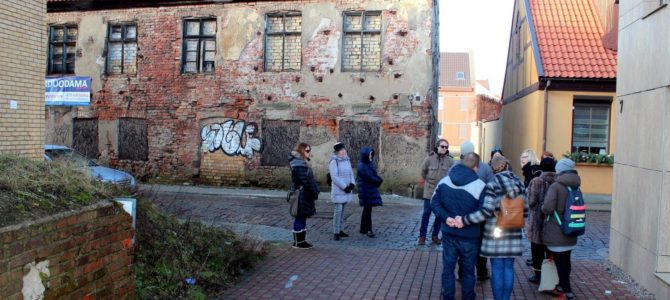
The Panevėžys Jewish Community continues its educational outreach efforts despite difficult times. This time an elderly group from the Union of the Blind and Visually Impaired visited the Panevėžys Jewish Community. They have been following the weekly installments in the newspaper Panevėžio balsas dedicated to Jewish life, and requested a face-to-face meeting to learn firsthand about Jewish history before the Holocaust. In late July Panevėžys Jewish Community chairman Gennady Kofman spoke to them about the prewar history, but also what happened during the war and after. The guests said they realized the idea of Jews as money-lenders was a stereotype and that many important and famous Jews had lived in Panevėžys. They expressed surprise when they were told about the Joint Distribution Committee. THey also learned of the famous rabbi Josef Kaufman who restored the Ponevezh yeshiva which still operates today in Israel.

The guests asked different questions and heard about Jewish businesspeople, teachers and doctors, including famous Panevėžys doctor Abraham Mer and others. Plans were made for a next meeting, and guests and hosts exchanged gifts. The guests left entries in the guest book.

Condolences

We are saddened to report the death of long-time Community member and member of the minyan Chaim Zagin. He passed away August 3. He was born in 1928. Our deepest condolences to his children and loved ones.

Šolom, Akmenė! Project a Big Success

Šolom, Akmenė! Project a Big Success

Four-and-a-half-days and the results was, according to the local Akmenė newspaper Vienybė, “a great success.”

Participants and guests from Šiauliai and Vilnius said the same thing about the “Šolom, Akmenė” activities and events last week. There was the same positive reaction towards the Friday evening conference dedicated the remembering the shtetl, lessons on Sabbath traditions with treats and the concert.

There was a creative workshop for youth held before, with visiting and cleaning-up Jewish cemeteries in Vegeriai, Klykoliai, Viekšniai and Tryškiai, in a grand plan to digitize the grave epitaphs there.

Vilna Gaon Statue Vandalized Again

Vilna Gaon Statue Vandalized Again

For the second time in two months, the stone statue commemorating the Vilna Gaon located at what is thought to have been his residence in Vilnius was vandalized by application of an unknown liquid.

Police reported they received a report of the newest act of vandalism at 5:20 P.M. local time on Sunday. Vilnius district police department representative Julija Samorokovskaja told Baltic News Service a tourist guide reported an unknown liquid, possibly some acid, had been poured over the monument.

“A report was received that sometime during a two-day time period acid possibly had been poured on the Vilna Gaon statue. A tourist guide made the report,” she said. She also said an criminal investigation had been launched for incitement to hatred, and that the physical damage done would be calculated more accurately later.

Lithuanian Governments Sells Great Synagogue Ruins to Goodwill Foundation

Lithuanian Governments Sells Great Synagogue Ruins to Goodwill Foundation

The Lithuanian Government has sold the remains of the Great Synagogue of Vilnius to the Goodwill Foundation which administers compensation from the Lithuanian state for Jewish property seized in the Holocaust.

Lithuanian culture minister Dr. Mindaugas Kvietkauskas reported the remains of the building were sold to the Goodwill Foundation by reducing compensation paid to that organization by 1,244 euros. “These are the ruins, the foundation, uncovered during archaeological digs. The buildings were damaged during World War II and razed during the Soviet era,” Kvietkauskas said. The minister reported the Goodwill Foundation requested the sale indicating the ruins would be used to commemorate the former Great Synagogue, “to fulfill Jewish cultural and religious goals.” In 2017 the ruins were listed on the registry of cultural treasures. Annual archaeological digs at the site have uncovered spectacular and unique finds.

Last spring the Government transferred administration of the site to the Cultural Heritage Protection Department.

Archaeological digs have been taking place regularly at the Great Synagogue complex since 2011, with partial financing from the Goodwill Foundation. In July last year two rooms were discovered containing old books, and exploration of the mikvot or ritual baths continued. There has been discussion on how best to commemorate the site for many years. Vilnius mayor Remigijus Šimašius said the former synagogue complex will be commemorated in 2023 when Vilnius marks its 700th birthday. The brick-and-mortar synagogue was built in the 17th century, replacing an earlier wooden one. It has been said the Great Synagogue of Vilnius was the largest and most decorative synagogue in the Polish-Lithuanian Commonwealth.

Full story in Lithuanian here.

Tisha B’Av

Tisha B’Av

Tisha B’Av, the ninth day of the month of Av which begins this evening, July 29, is the Jewish day for mourning the loss of both Temples in Jerusalem, the first in 586 BC and the second in AD 70, and other tragedies which have befallen the Jewish people through history. Jews mourn, fast and read from Eicha (Lamentations) and the Kinnot (dirges from the Bible and later) during Tisha B’Av.

Jews mark Tisha B’Av today as the world is undergoing rapid changes: a global pandemic with no clear end in sight and closed national borders, economic crises and civil unrest. We know the Second Temple fell because of disagreements between Jews. Tisha B’Av today resonates deep sadness for the Temple and for the reality in which find ourselves now. Not just the pandemic, but the deep, incomprehensible division of society.

This new kind of physical and moral division of the people compels us to mourn even more the loss of unity and common goals.

Year of Vilna Gaon and Litvak History Becomes City-Wide Celebration in Kaunas

Year of Vilna Gaon and Litvak History Becomes City-Wide Celebration in Kaunas

The year 2020 has provided the Kaunas Jewish Community with new friends and partners. The Lithuanian parliament passed a resolution last year naming 2020 the Year of the Vilna Gaon and the Year of Litvak History. Until now this has largely been a celebration on paper, but the city of Kaunas turned it into a real celebration with projects and events.

One such was called the Kaunas Musical Guide to Jewish History by the Kauno Santaika group. Most people in the large group of Kaunas residents who took an interest were probably participating in these kinds of unconventional tours for the first time, accompanied by a live orchestra throughout their excursion. The first tour route was accompanied by a guest from Vilnius, the Trimitas national woodwind orchestra. The second was accompanied by Ąžuolynas from Kaunas. The highly knowledgeable Dr. Marija Oniščik told the story of the many former Jewish buildings and sites visited. The tenor Edgaras Davidovičius joined the second tour at the renovated fountain on Freedom Alley in Kaunas and performed the legendary songs of the crooner Daniel Dolski.

Others included the wonderful young team Kaunas Piano Fest who held a competition of works by Litvak composers withing the frame of the festival, and the final concert of the festival, with a very limited audience because of indoor restrictions on gatherings, dedicated not just to the celebratory year of 2020 declared by the Lithuanian parliament, but also to the anniversary of the liquidation of the Kovna [Kaunas] ghetto.

Robertas Lozinskis and Anna Szałucka performed this concert live, while Nathan Cheung performed as if live from a recording. It was very pleasing the organizers invited members of the Kaunas Jewish Community to this concert. Those interested can listen to the performances on the youtube channel of the Kaunas Piano Fest group.

It is our sincere hope these new friends and partners will continue their cooperation with the Kaunas Jewish Community next year as well.

More photos below.

Šiauliai Regional Jewish Community Invites You to “Sholom, Akmenė” Events July 24

Šiauliai Regional Jewish Community Invites You to “Sholom, Akmenė” Events July 24

The Šiauliai Regional Jewish Community invites everyone to participate in “Sholom, Akmenė” events at the Akmenė Cultural Center (Sodo street no. 1, Akmenė, Lithuania) on July 24.

12:00 Conference “Memories of the Shtetl in Our Hearts”

Šiauliai Regional Jewish Community members Frida Šteinienė and Josifas Buršteinas will share their childhood memories, young participants at a creative workshop will speak about digitization efforts to record and preserve the Jewish cemeteries in the Akmenė region and Daumantas Todesas will share the secrets of making Sabbath treats. Also, Rita Ringienė will read excerpts from Indrė Daščioraitė’s work in 2001 recording the memories of Augustina Rušinaitė (1922-2007).

2:00 Jewish market (outside the Cultural Center)

The conference will be followed by a Jewish market set up by the Šiauliai Regional Jewish Community showcasing traditional Litvak treats on offer, with haggling required. The organizers are promising a lot of fun at the market.

6:00 Sabbath concert

The Jewish music concert, already a tradition at the Akmenė Days celebrations, will be performed by students from the music schools in the Akmenė region and from the Sholem Aleichem Gymnasium in Vilnius. The concert will teach traditions of the Sabbath evening in artistic form.

All events are free and open to the public. Organizers are asking participants to adhere to the authorities’ current recommendations for preventing corona virus infection. The events will be filmed and photographed.

Teachers Invited to International Centropa and ESJF Seminar

Centropa, the Central European research and documentation center, and ESJF, the European Jewish Cemeteries Initiative, are pleased to announce registration is open to a teacher training seminar called “Teaching Jewish Heritage: How to Include Jewish Cemeteries in the Education Process” to be held in Kaunas on August 25 and 26.

The series of seminars will be directed by specialists in the fields of Jewish cemetery studies and Jewish history education. Participants will be given the resources necessary for presenting Jewish heritage meaningfully and in an interesting way in the classroom.

Lithuanian teachers and NGO representatives are invited to participate. The conference will be held in Lithuanian and English with synchronous translation.

Please register by July 22 at this address: https://bit.ly/2Cx6Zxo

Large Jewish Community Lived in Švenčionys Region Before Holocaust

Large Jewish Community Lived in Švenčionys Region Before Holocaust

The Švenčionys region of Lithuania is a multicultural place where Lithuanians live alongside Poles, Russians, Belarussians, Jews and people of other ethnicities.

The Švenčionys Jewish Community was reconstituted in 2013. It is now headed by the energetic Švenčionys native Moshe Shapiro (aka Moisiejus Šapiro).

There was a large Jewish community living in the Švenčionys region in the period between the two world wars. In fact there were five synagogues operating there.

Jews there set up an herbal pharmaceuticals factory and different workshops in the center of the town of Švenčionys. Jewish effort, initiative and expertise were involved in all fields of production and business.

Litvak Heritage in Lithuania: Where to Find the Most Interesting Stories and Sites

Litvak Heritage in Lithuania: Where to Find the Most Interesting Stories and Sites

by Raimonda Mikalčiūtė-Urbonė, 15min.lt

The year 2020 has been named the Year of the Vilna Gaon and Litvak History, so this year is a good opportunity to discover the interesting and unique Jewish heritage sites we have right here in our own country.

So far this is niche tourism. Although there is an abundance of Jewish heritage sites in Vilnius, Kaunas and the regions, many tourists still don’t know, for example, when they’re vacationing in Palanga or Druskininkai, the Jewish histories of these resort towns. How can we get ethnic Lithuanians interested in the long and interesting history of the Litvaks and the sites which stand witness to this history? We discussed this with interlocutors in this article.

Faina Kukliansky: There Needs to Be a Common Litvak Heritage Policy

Lietūkis Garage Massacre Commemorated June 26

Lietūkis Garage Massacre Commemorated June 26

The Kaunas Jewish Community and members of the public gathered in Kaunas June 26 at the site of the infamous Lietūkis garage massacre of Jews by Lithuanians in the early days of the Holocaust in the last days of June of 1941. Relatives of victims attended as well. The ceremony was followed by kaddish for the Jews buried at the Slobodka (Vilijampolė) and Žaliakalnis Jewish cemeteries in Kaunas.

Vilna Gaon Monument Vandalized June 26

Vilna Gaon Monument Vandalized June 26

That statue commemorating the notional residence of the Vilna Gaon and the shulhoyf where the Great Synagogue and a number of other shuls once stood, built around the Gaon’s residence, was vandalized on June 26 using acid.

This Country Would Never Have Become the Jerusalem of Lithuania Had It Not Been a Safe and Tolerant Place

This Country Would Never Have Become the Jerusalem of Lithuania Had It Not Been a Safe and Tolerant Place

Just before quarantine was announced the Bagel Shop received an important visitor. The interview done several months ago remains just as important and perhaps even more so now. We spoke about the importance of ethnic food to Jews living in Lithuania and about a people’s right to have ethnic foods. We await the re-opening of the Bagel Shop Café with bated breath and hope to continue this conversation in front of an audience.

Bagel Shop Interview with Meghan Luckett, Cultural Attaché at the US embassy in Vilnius

Interview by Dovile Rūkaitė, LJC project manager.

Do you like bagels? What’s your favorite kind?

Yes, of course we love bagels. My favorite are everything bagels, we buy them at your bagel shop and in the market and eat them almost every week. We make bagel sandwiches with baked egg, spices and all kinds of stuff. One of our colleagues is a great cook, she makes us homemade bagels. Once we brought her some from Trader Joe’s and she made us excellent everything bagels. My wife is a great cook, she bakes sometimes, but we usually buy them because they are very good.

Jewish Culture Week in Krakės: Let’s Learn about the Krakės Jewish Community

Jewish Culture Week in Krakės: Let’s Learn about the Krakės Jewish Community

Photo: Krakės Jewish cemetery

The Jewish Culture Week in Krakės: Let’s Learn about the Krakės Jewish Community project will take place from June 16 to 18 in Krakės in the Kėdainiai district of Lithuania. More information is available here:
https://www.facebook.com/events/2751960485049357

Robertas Dubinka, director
Krakės Cultural Center

Laisvės alley no. 1, LT – 58242, Krakės, Kėdainiai region
tel. 8 347 38274, mob. 8 615 85084
email: krakiukc@gmail.com

On the Article “Did Kazys Škirpa Rescue a Jewish Rabbi?”

On the Article “Did Kazys Škirpa Rescue a Jewish Rabbi?”

by professor Pinchos Fridberg

Vilnius, obzor.lt

Information for my webpage readers

For your consideration, the article “On the Article ‘Did Kazys Škirpa Rescue a Jewish Rabbi?'”

This article of mine was created simultaneously with the Russian version “По поводу публикации «Kazys Škirpa išgelbėjo žydų rabiną?» Казис Шкирпа спас раввина?” of June 1, 2020, at obzor.lt

You might well ask, “Why did you post a Lithuanian text on a Russian instead of a Lithuanian newspaper internet site?” I will tell you frankly:
Lithuanian sites won’t publish me.

It is a strange thing that the New York Times and Radio Free Europe/Radio Liberty quote me, and yet I am an undesirable author on Lithuanian sites.

Would you believe that in 2013 Artūras Račas, who was then the director of the Baltic News Service news agency, wrote an article about me called “Dear Jewish ‘professor,’ your anti-Semitism is wearisome: dedicated to Pinchos Fridberg” in which he passed on to me some great advice:

“Dear Pinchos, you who call yourself ‘professor,’ …

“stick a gag in your mouth, crawl under the table and be quiet.”

Amehaye Club Hiring

Amehaye Club Hiring

The Amehaye Club at the Lithuanian Jewish Community’s Social Programs Department is looking for a medical doctor, a program director and camp counselors (including volunteer counselors). The professional positions require a teaching certificate, sound knowledge of Jewish traditions and history and experience working at Jewish children’s camps, specifically for the upcoming Amehaye camp this summer from July 13 to 24. Applicants should be members of the Lithuanian Jewish Community and affiliate member organizations. The most important qualification love of working with children and a calling to teach.

Please send your motivational letter and résumé/CV by email to karjera2020@lzb.lt before June 16. We will contact each selected applicant.

Lithuanian Post Office to Issue Stamp Commemorating 300th Birthday of Gaon Friday

Lithuanian Post Office to Issue Stamp Commemorating 300th Birthday of Gaon Friday

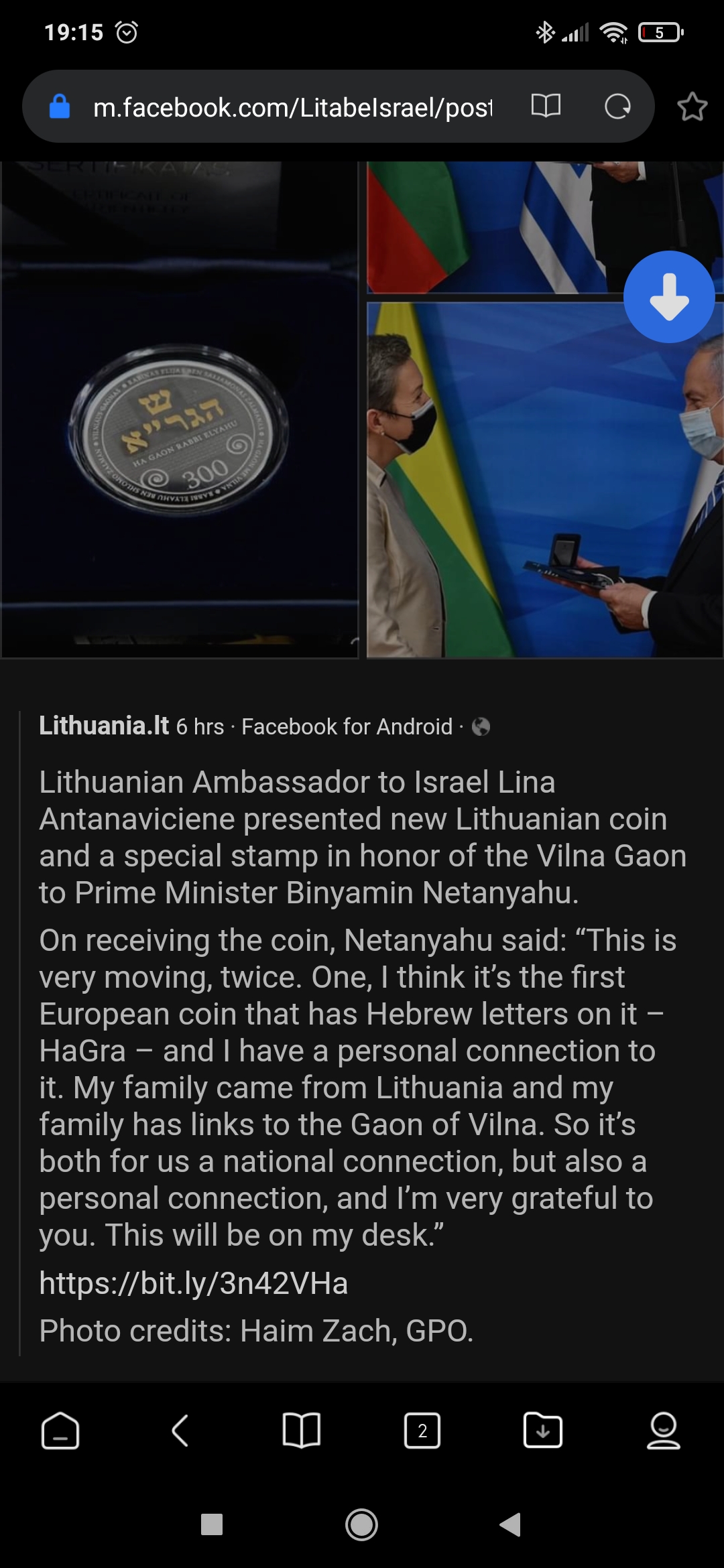
The Lithuanian Post Office will issue a special stamp commemorating the 300th anniversary of the birth of the Vilna Gaon on Friday, June 5. The nominal value of the stamp is 81 euro cents, meaning it will be valid for sending letters abroad.

The stamps have a print-run of 20,000. The issue will also feature a first-day release envelope for sale. Post-marking stamps on the first day of issuance will take place at the Central Post Office in Vilnius, located at Gedimino prospect no. 7, on Friday.

The JUDVI & AŠ design group (Victoria Sideraitė-Alon, Jūratė Juozėnienė and Albinas Šimanauskas) designed the postal stamp celebrating the Vilna Gaon.

The letter shin (ש) appears near the top of the postage stamp with a stylized crown atop the final branch symbolizing the spiritual authority of the Vilna Gaon. According the gematria the value of this letter is 300, as Lithuania celebrates the 300th anniversary of the birth of the Gaon this year. Underneath is a stylized Torah scroll along with an open book, an allusion to the Decalogue, the two slabs of stone Moses received on Sinai inscribed by God with His Commandments, and at the same time representing the tradition of a pair of windows on the façade of the synagogue. The coloring of the symbols and characters and the graphic design was based on the stylization of the decor of ancient Jewish writings.

New Virus, Old Disease, but There Is a Treatment

New Virus, Old Disease, but There Is a Treatment

by Robert Singer, chairman and CEO, Spero group, senior advisor to the Combat Anti-Semitism Movement

An old virus has appeared alongside the novel COVID-19 pandemic. There’s nothing novel about this old disease. It’s instantly recognizable without a microscope. It’s the virus of anti-Semitism, the ancient hatred of the Jewish people.

Like the corona virus, anti-Semitism can mutate over time. Like the corona virus, it ignores borders, it infects both young and old and it can strike in Islamic, Christian and other societies alike.

In Shiite Iran and Sunni Pakistan, where anti-Semitism is rampant, Muslim preachers, bloggers and ordinary citizens rushed to blame the Jews for the outbreak of COVID-19 infections. Similar accusations have also been heard in the United States. Since the Orthodox Jewish community in New Rochelle, New York was among the first to be infected, many people, both online and offline, blamed Jews for the outbreak.

Full editorial here.