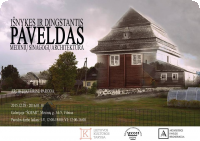

The Lithuanian Cultural Heritage Department under the Ministry of Culture has posted a PDF file on their website about wooden synagogues in Lithuania and their potential as tourist attractions called “Road of Wooden Synagogues”:
The Road of Wooden Synagogues
The 16th and the 17th centuries were a period of rapid growth and expansion for Jewish communities in Lithuania. These communities could not exist without a synagogue which was their socio-economic, administrative and spiritual centre. The synagogue was where members of the community prayed, studied Torah, and dealt with the problems of the entire community or those of individual members. The synagogue was the first building which a newly established Jewish community would construct as soon as possible to fulfill their vital needs, and thus, of course, they would use the most widespread and cheapest material for constructing the building. The material that served this purpose in the territory of Lithuania was wood which was also used widely in Lithuanian folk architecture. Later, after becoming economically stronger, the Jewish community would build a stone synagogue right next to the wooden one thus forming a courtyard of synagogues. The importance of wooden synagogues would then decrease slightly. Jewish people gathered in wooden synagogues during holidays. Due to the risk of fire, these synagogues would in most cases not be heated therefore they acquired the name cold synagogues (in the territory of the Grand Duchy of Lithuania.)