
Holocaust

Searching for Jewish Roots in Panevėžys

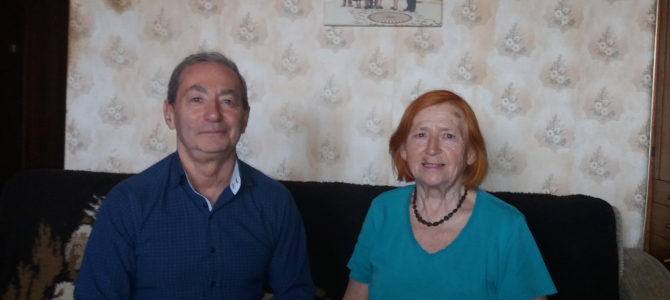
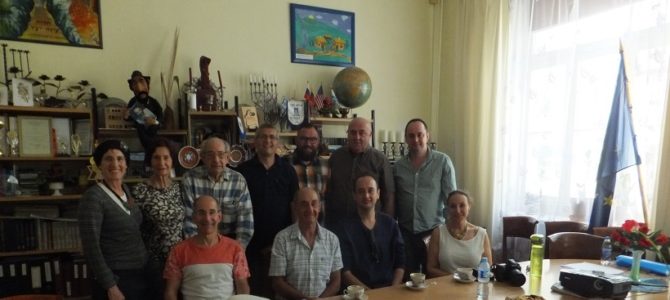
Descendants of the Navias and Frame families led by the guide Viljamas Žitkauskas visited the Panevėžys Jewish Community to find out more about their genealogies and great-grandparents.

They told their family histories over tea. Their Litvak roots go back to the town of Raguva where their great-grandfather Isaak Frame was born in 1894 and where he then lived, eventually owning a leather workshop. Their great-grandmother came from Pašventinys in the Šiauliai region.

Isaak Frame and the Navias families emigrated to South Africa in the early 20th century. Sometime between 1900 and 1910 many members of the family emigrated separately to Canada, England, Palestine and China.

Panevėžys Jewish Community chairman Gennady Kofman told the visitors about the Jewish history of Panevėžys in the interwar period, screened a documentary film for them and answered their questions. The guests were keenly interested in the photographs in the series “Fragments of the Jewish History of Panevėžys” from the Panevėžys Jewish Community’s history museum.

The visitors thanked the chairman for his hospitality and historical information.
Zenowiusz Ponarski Book Presentation

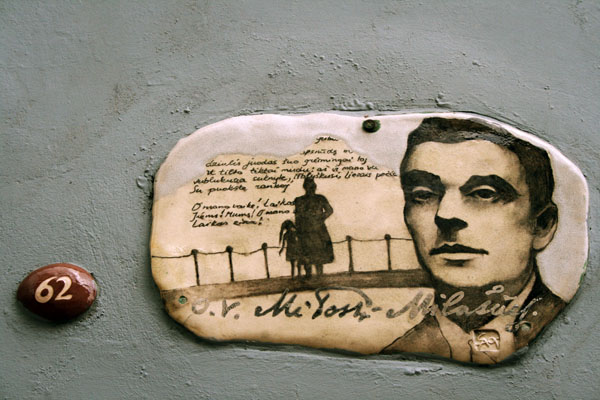
The Lithuanian National Martynas Mažvydas Library will host the Vilnius Polish Institute’s presentation of Zenowiusz Ponarski’s book “Friend of Lithuania and the Birds. On Oskar Miłosz” and discussion called “Czesław Miłosz and Oskar Miłosz: Diplomats in the Service of Poland and Lithuania” at 6:00 P.M. on Monday, May 14, at the library located at Gedimino prospect no. 51, Vilnius.

The event is being co-organized by the Polish Institute, the library and Znad Wilii magazine. The author, Zenowiusz Ponarski, was born in Vilnius in 1921 and lived in Szczecin in Poland after World War II. He currently resides in Toronto, Canada. The author of many books about notable 20th century Polish and Lithuanian people, in this book he goes beyond the facts of the lives and work of Oskar Miłosz as known from his cousin Czesław and provides completely new and hitherto unknown material. Oskar Miłosz was an ardent proponent of Lithuanian independence during World War I, acquired Lithuanian citizenship and served as a member of the first Lithuanian legation to the League of Nations. The discussion following the book presentation is intended to reveal both Miłoszes’ contributions to Poland and Lithuania. Panelists are to include poet, writer and publisher of this book Romuald Mieczkowski, Naujoji Romuva magazine editor Andrius Konickis, VU lecturer Dr. Darius Kuolys, Dr. Józef Szostakowski representing the Władysław Syrokomla museum in Bareikiškės, Lithuania, and others. The event and discussion will be held in Polish with synchronous translation to Lithuanian. The event is free and open to the public.

More information in Polish here.

The Silenced Muse: The Life of a Murdered Jewish Lithuanian Poet

by Laima Vincė

On a beautiful hot day in the summer of 1941, at a bend in the road that leads out of the village of Panemunėlis towards Kavoliškės, a group of men, known to local people as baltaraiščiai or “those who wear white armbands,” essentially local Lithuanians who collaborated with the occupying Nazi forces, arrived on bicycles. They left the bicycles in the forest across the road from an isolated farmstead that belonged to the farmer, Petras Šarkauskas.

They began to dig ditches in the forest. They did not have much success because tree roots prevented them from digging very deep. So they gave it up and took their shovels to the other side of the road and began digging in the boggy land that belonged to the Kavoliškis manor.

Full text here.

VE Day at the Jewish Cemetery in Vilnius

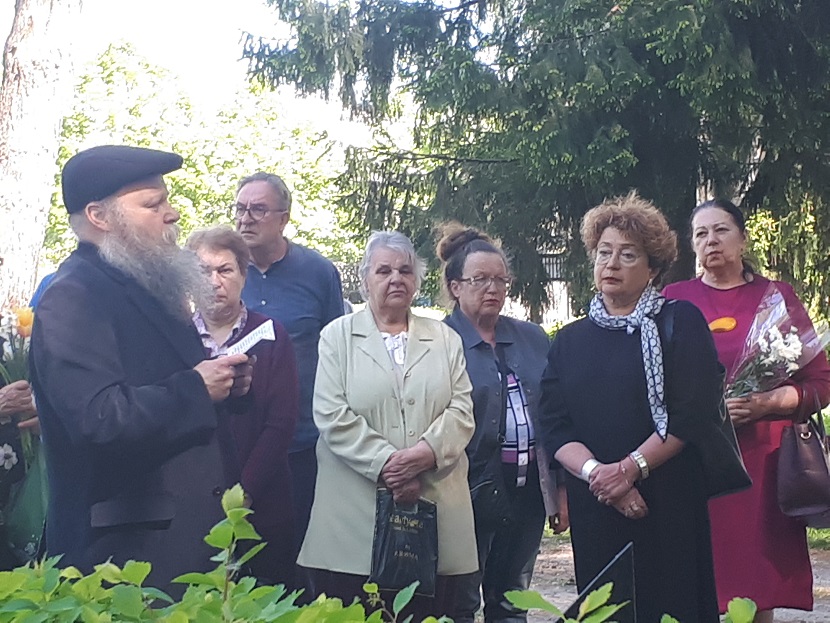
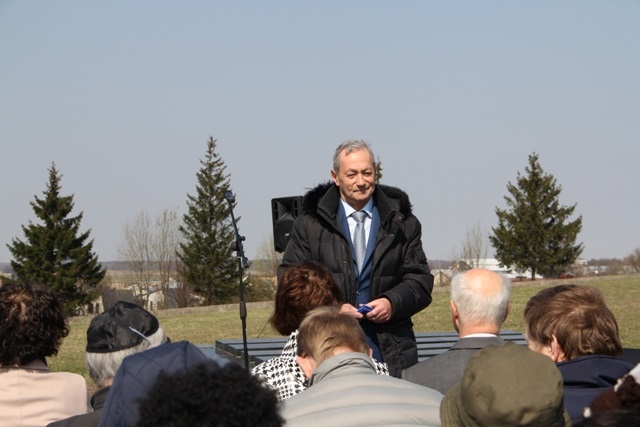
May 8 is VE Day, marking the victory of the Allies against the Nazis in Europe. At a monument to Vilnius ghetto underground resistance leader Yitzhak Vitenberg and partisan Sheina Madeisker in the Jewish cemetery on Sudervės road in Vilnius, veterans and members of the Jewish community gathered Tuesday to pay their respects to those who fought and died, and the victims of the war.

Lithuanian Jewish Community chairwoman Faina Kukliansky said it was difficult for Jews to call the day a holiday. “Is it a holiday when you have lost most of the members of your family?” she asked in her brief speech at the monument. “Those who survived carry within the pain of loss. The only thing which can be called a holiday is the end of the horror of war, and to thank Almighty God for that,” she added.

Shmuel Yatom, cantor at the Choral Synagogue, performed kaddish.

Kaunas Jewish Community Honors Rescuers

Kauno žydų bendruomenė pagerbė gelbėtojus

It is the duty of the Kaunas Jewish Community to remember the rescuers of Jews as well as the victims of the Holocaust, the quiet heroes and true apostles of humanity who risked life and family to help.

For more than two decades now the KJC has attempted to thank these Righteous Gentiles by inviting them to an annual event among friends. Of course it is inadequate and there is no way to truly thank them. As these heroes slowly fall to the attrition of age, their places among the ranks are assumed by their children and grandchildren in this gathering which has become a large family. The heads of school tolerance centers are also invited to attend and this year 8th graders Diana and Barbora performed dances and songs from the ghetto in Yiddish. The KJC thanks everyone for making this year’s event a success, including the great organizational work by KJC Rescuers Committee chairwoman Judita Mackevičienė.

Lost Shtetl Museum Construction Begins


Photo: Gintaras Šiuparys

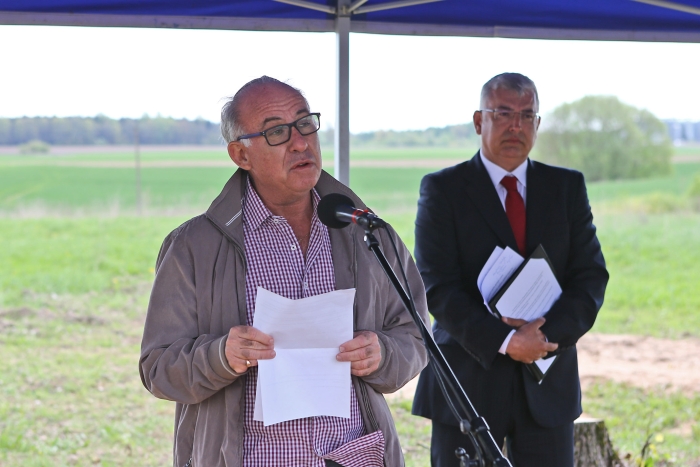
A ceremony was held Friday to mark the beginning of construction work on the Lost Shtetl museum in Šeduva, Lithuania. The museum will be a completely new kind of experience using modern technology to present the history and culture of and to commemorate the former Litvak shtetl.

Marija Dautartaitė delivered a welcome on behalf of Lithuanian president Dalia Grybauskaitė, followed by speeches by speaker of the Lithuanian parliament Viktoras Pranckietis, prime minister Saulius Skvernelis, foreign minister Linas Linkevičius, Lithuanian Jewish Community chairwoman Faina Kukliansky, Vilna Gaon State Jewish Museum director Markas Zingeris, US ambassador to Lithuania Anne Hall, Finnish ambassador to Lithuania Christer Michelson, genealogist and education Eli Rabinowitz from South Africa and Australia, Holocaust film director Saulius Beržinis and Šeduva Jewish Memorial Fund founder and museum project manager Sergey Kanovich.

Also attending were ambassadors and heads of mission from the embassies of the United Kingdom, Ireland, Sweden, France, Germany, Russia and Romania, as well as members of the municipal and regional governments and interested citizens from all parts of Lithuania.

Site Selected in Vilnius for Commemorating Righteous Gentiles

In a letter to the Lithuanian Jewish Community dated April 28, 2018, Vilnius mayor Remigijus Šimašius agreed to a 2016 proposal by the LJC to erect a statue to honor rescuers of Jews from the Holocaust in the garden of the Church of the Missionaries near Ona Šimaitė street, renamed after the prolific rescuer several years ago. The walled-in garden area of the church was the site of the final selection of Jews for life and death after the liquidation of the Vilnius ghetto. Šimašius said an alternate site, Rūdninkų square inside the former ghetto, was no longer a fruitful option.

The Lithuanian Jewish Community thanks all parties for inter-agency cooperation in solving an issue of national importance, commemorating those who risked life and family to rescue Jews.

Lithuanian Economics Minister Meets with Chairwoman of the Lithuanian Jewish Community

Lithuanian economics minister Virginijus Sinkevičius met with Lithuanian Jewish Community chairwoman Faina Kukliansky and discussed the function, content and language of amendments to the law on the protection of consumer rights. The minister said more precise amendments would be tabled in the near future in order to avoid misinterpretations and in light of suggestions made.

“I am encouraged by the frank and constructive conversation with the chairwoman of the Lithuanian Jewish Community. I believe this legislative package needs to be corrected so that no one has doubts about it, so that it wouldn’t be misinterpreted and wouldn’t become a means for distorting historical truth. In consideration of that, I will register [for consideration at parliament] the amendments needed in the very near future,” minister Sinkevičius said.

At a plenary session of parliament in late March, 93 MPs voted in favor of amendments proposed by the Government, 11 abstained and none voted against. The final version of the proposed amendments were drafted before the current leadership of the Economics Ministry took the post.

The Lithuanian Jewish Community expressed concerns over the amendments which would ban retail sales of goods which “distort the historical facts of Lithuania, belittle Lithuania’s history, independence, territorial integrity or constitutional order.” The Community pointed out this would serve as stimulus for the adoption at the national level of one official and “acceptable” version of Lithuanian historical events, which wouldn’t serve in the teaching of actual history but rather would become a censored interpretation of history.

To mark Victory Day we invite you to come honor those who fought fascism and the victims of World War II at 12 noon on May 8 at the Sudervės road Jewish cemetery in Vilnius. A bus will carry passengers there from Pylimo street no. 4 in Vilnius and departs at 11:10 A.M. For more information and to register call (8 5) 2613 003 or email info@lzb.lt

Vilnius U Rector Presents Holocaust Survivor “Return of Memory” Diploma in Israel

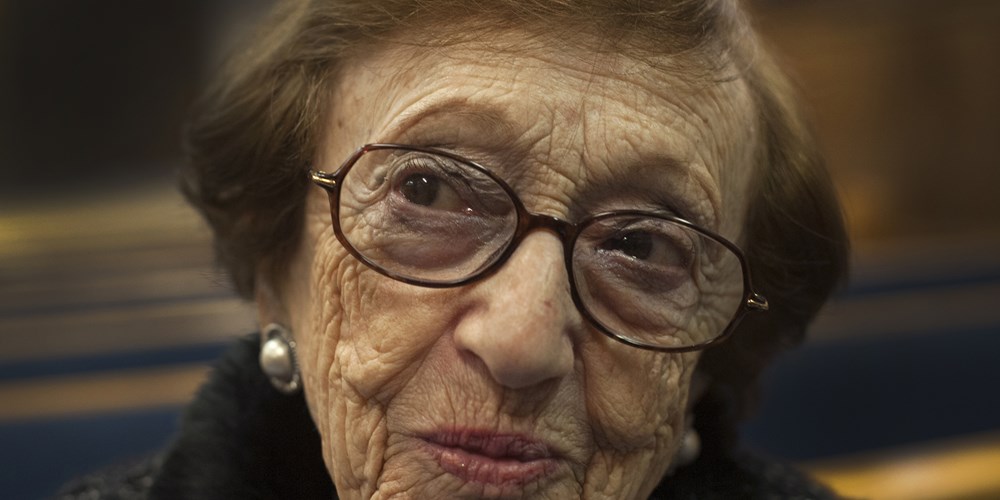
Vilnius University rector professor Artūras Žukauskas presented Estera Klabinaitė Grobman (98) a “return of memory” diploma May 1 in Arad, Israel. Grobman is a Holocaust survivor who was imprisoned in the Kaunas ghetto and the Stutthof concentration camp. She is the only surviving member of a group of students who experienced the Holocaust. In her youth she dreamt of being a chemist, matriculated at university, but only studied one year. In 1941, when WWII and the Holocaust began in Lithuania, she was removed from the student rolls because of her Jewish ethnicity.

Vilnius Ghetto Diary makes Top 7 List of Lithuanian Books for April

The Vilnius Ghetto Diary of Yitzhak Rudashevski was named as one of the top 7 books for April on the 15min.lt website’s monthly list. The diary was recently published in Lithuanian translation with the original Yiddish provided as the second half of the book. Other works recommended on the list included Lithuanian translations of Abraham B. Yehoshua’s Mar Mani [Mr. Mani], Isabel Allende’s Más allá del invierno [In the midst of Winter] and others, and original Lithuanian works such as Marius Burokas’s latest book of poetry Švarus buvimas [Clean Existence].

Monument to Jan Zwartendijk in Kaunas

Kaunas deputy mayor Simonas Kairys Thursday announced the plan to commemorate Dutch consul Jan Zwartendijk who rescued Jews during World War II.

Following four years of work between partners in Lithuania and the Netherlands, the deputy mayor said: “This day is truly extraordinary. Kaunas is like an outdoor museum city with many strata and signs testifying to different time periods. I think Kaunas has demonstrated many times over the city is strong when its content is strong and when the city is able to show that content to others.

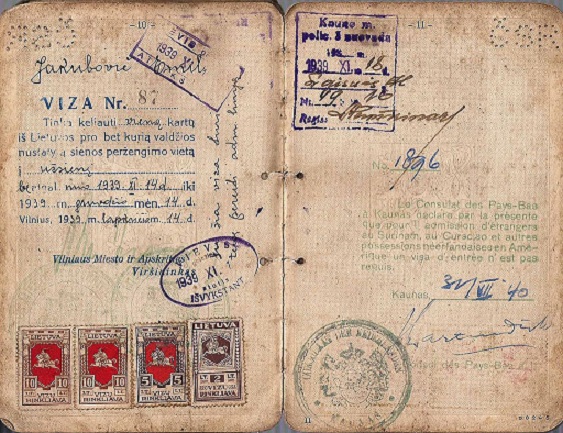
Honorable Dutch consul Jan Zwartendijk issued so-called Curaçao end-visas to complement Japanese transit visas Chiune Sugihara issued Jews in Kaunas during the early days of World War II.

Full story in Lithuanian here.

Press Release

LITHUANIAN CENTER FOR HUMAN RIGHTS
PRESS RELEASE
FOR IMMEDIATE RELEASE

April 25, 2018, Lithuania

Personal Stories from the Holocaust Told in New Website

“’We drank tea using the observational method: we would hang a sugar cube by a string and sip tea while looking at it. This didn’t make the tea taste any sweeter, but it cheered us up,’ wrote Tamara Lazersonaite in her memoirs. She was the daughter of professor Vladimir Lazersonas, the pioneer of clinical psychology in Lithuania. Professor Lazersonas and his family drank their ostensibly sweetened tea in the Kovno Ghetto.” This is how the Lazersonas family, who were part of Kaunas intelligentsia before the start of World War II, are introduced in the new website stumblingstones.lt.

The pioneer of clinical psychology in Lithuania and his wife, doctor Regina Lazersoniene-Safochinskaite were incarcerated in the Kovno Ghetto. They both later died in concentration camps. Only two of the three Lazersonas children survived the Holocaust.

Lithuanian National Library Hosts Lecture “The Problem of Holocaust Memory in Current Lithuanian Historiography”

The Lithuanian National Martynas Mažvydas invites the public to a lecture in Lithuanian called “The Problem of Holocaust Memory in Current Lithuanian Historiography” by Klaipėda University professor Hektoras Vitkus at 5:30 P.M. on April 26.

Holocaust studies are expanding constantly at academic institutions in different countries. This topic has also received attention from scholars working in different disciplines in Lithuania and sometimes becomes the topic of public discussion. Even so, the question remains of how much scholarly attention is being devoted to the problem of Holocaust memory in Lithuania. This lecture will discuss the specific and topical issue of the place Holocaust memory occupies in current-day Lithuanian historiography.

Dr. Vitkus will examine the following questions: what concepts of Holocaust memory exist in contemporary Lithuanian historiography and what are their connection to global theoretical approaches to Holocaust memory? Has Holocaust memory research become an integral part of Holocaust historiography in Lithuania? Is there firm foundation for claiming Holocaust research and methodologies for such research are not yet being taken seriously by Lithuanian historians and at the current time independent studies remain exclusively in the scholarly fields of sociology and psychology?

Everyone is invited to the lecture which will be held in Lithuanian.

Lithuanian Jewish Community Statement on Proposed Amendment to Consumer Rights Law

The Lithuanian Jewish Community would like to bring the reader’s attention to amendments to the Law on the Protection of Consumer Rights currently being considered by the Lithuanian parliament which would ban retail sales of goods which “distort the historical facts of Lithuania or belittle Lithuania’s history, independence, territorial integrity or constitutional order.”

The LJC finds this expanded language for amending the consumer rights protection law raises real concerns about the possible suppression of the ability of members of society to make use of their basic right to self expression, and also raises questions about the likelihood of suppression of future attempts to restore historical justice. These amendments could exert a disproportionately large and negative influence on possible discussions regarding the role of Lithuanians in carrying out the Holocaust and would further lead towards a single “acceptable” judgment of the events of Lithuanian history, formulated at the state level, which would not serve the purpose of really learning and teaching history, but would instead become a censored interpretation.

The LJC believes the adoption of these amendments would give rise to conflict in society. The LJC calls for a consideration of the real need for these amendments and their objectivity, and calls upon legislators to realize anti-Semitism is not on the decline in Europe at the current time. On the contrary, the example of neighboring state which have adopted laws on “the appropriate” interpretation of history recall the era of institutionalized anti-Semitism. Many expressions of hate are encountered in Lithuania as well, and the LJC believes the adoption of these amendments poses the danger of increasing anti-Semitism in Lithuania.

The LJC points to a 2013 decision adopted by the Constitutional Court of the Republic of Lithuania in the case “On the Adherence of the Law of the Republic of Lithuania on Education to the Constitution of the Republic of Lithuania,” which stated that no specific position or ideology can be declared mandatory and forced on the individual, and that the state must remain neutral regarding beliefs and does not have the right to set some sort of mandatory belief system.

Openness and freedom of speech and expression must remain strong and unifying values in Lithuania. In our country insuring human rights and the battle against hate crimes must be our active concern, just as actively as the calls for fighting for the protection of consumer rights by adopting these amendments.

Commemorating Warsaw Ghetto Uprising, Lauder Appeals to Poles and Jews to Remember “Common Bonds” and “Truths”

Press Release
April 19, 2018

World Jewish Congress delegation travels to Poland to commemorate 75th anniversary of Warsaw Ghetto Uprising

In address at official state ceremony, WJC president Ronald S. Lauder appeals to Poles and Jews to remember “common bonds” and “the truth”

WARSAW–World Jewish Congress president Ronald S. Lauder spoke Thursday at Poland’s official state ceremony commemorating the 75th anniversary of the Warsaw Ghetto Uprising at the Monument to the Ghetto Heroes, following an address by Polish president Andrzej Duda. In his address, Lauder appealed to both Poles and Jews to remember “our shared history, our friendship, our common bonds, and the truth,” and to “stand together now to make sure that our children and our grandchildren never know the true horrors that took place right her, 75 years ago.”

In his address, Polish president Duda described the events of April 1943 as an “uprising of the people who decided to keep their dignity… Did they think they would become heroes…no for sure they were not thinking about that… But today all of us are bowing our heads very low to their courage determination bravery… They perished for dignity, they perished for freedom but they perished for Poland because they were Polish citizens… Poles and Jews deeply care about having one shared historical truth.”

Memorial Plaque Unveiled on Ninth Fort Mass Murder Field

At the field of mass murder at the Ninth Fort in Kaunas a ceremony to unveil a memorial plaque took place April 13. The plaque commemorates the Jews deported from Frankfurt murdered on November 25, 1941, at the Ninth Fort.

Kaunas Jewish Community chairman Gercas Žakas, Israeli ambassador to Lithuania Amir Maimon, deputy Lithuanian foreign minister Darius Skusevičius, Kaunas municipality deputy director of administration Nijolė Putrienė, Frankfurt Administration Cultural Department director Johannes Promnitz and representatives of the Brueder-Schoenfeld Forum participated. The memorial plaque was the result of cooperation between the Kaunas Ninth Fort Museum, the Kaunas municipality, the Brueder-Schoenfeld Forum organization and the Frankfurt municipality.

Užupis Jewish Cemetery Commemorative Monument Proposal Approved by LJC Advisory Group


The heritage issues advisory group of the Lithuanian Jewish Community has learned of plans for renovating the Užupis Jewish cemetery tendered by the Vilnius municipality and a composition called Arch made of desecrated headstone fragments used as stairs during the Soviet era.

The international creative team behind the Arch are architect Viktorija Sideraitė Alon, creator/designer Albinas Šimanauskas and Israeli architect consultant Anna Perelmuter. The composition uses a symbol created by the Litvak American painter Samuel Bak.

The heritage issues advisory group of the Lithuanian Jewish Community helps solve outstanding Lithuanian Jewish heritage issues professionally and effectively. The group includes Barbara Kirshenblatt-Gimblett, POLIN Polish Jewish museum advisor to the director and senior curator of exhibits; Assumpció Hosta, general secretary of the AEPJ; writer Sergejus Kanovičius, founder of Maceva and the Šeduva Jewish Memorial Fund; professor James E. Young of University of Massachusetts, Near Eastern Studies, English, Judaism; Samuel Kassow, doctor of philosophy, POLIN senior researcher specializing in 19th century history and the history between the world wars; Lyudmila Sholokhova, PhD, YIVO director of archives and library; and Sergey Kravtsov, senior researcher, Jewish Art Center, Hebrew University.

Experts unanimously supported the artists’ idea for commemorating the Jewish cemetery and offered a number of useful suggestions and observations which will be taken into consideration.

This week members of the advisory group plan to discuss the project proposals with the mayor and city administration specialists.

Later the project ideas and visualizations will be presented to the public.

Study Shows Americans Forgetting Holocaust


Sonia Klein, now 92, survived Auschwitz and Majdanek concentration camps. “We are not here forever,” she said of the dwindling number of fellow survivors. Photo: Debbie Egan-Chin/NY Daily News via Getty Images file

A fifth of millennials aren’t sure they’ve ever heard of the Holocaust.

In 1945, Sonia Klein walked out of Auschwitz. Every day of the 73 years since she has been haunted by the memory of what happened there, and the fate of the millions who never made it out of the Nazi death camps.

But Klein wonders, once she and the few survivors still alive are gone, who will be left to remember?

“We are not here forever,” said Klein, now 92. “Most of us are up in years, and if we’re not going to tell what happened, who will?”

Klein’s worries are borne out by a comprehensive study of Holocaust awareness released Thursday, Holocaust Remembrance Day, which suggests that Americans are doing just the opposite.

Full story here.