
Holocaust

Lithuania Marks Day of Mourning and Hope June 14

Lithuania Marks Day of Mourning and Hope June 14

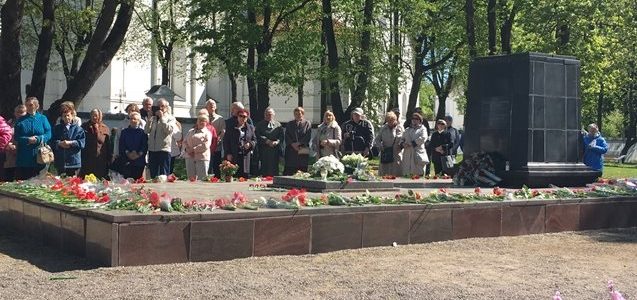
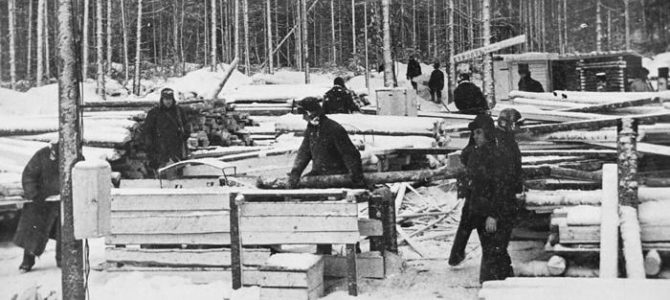
Mass deportations to Stalin’s camps began on this day in 1941.

About 17,500 people were deported from Lithuania between June 14 and 18, 1941, (the fates of 16,246 have been determined so far), a number derived from the 4,663 arrested and 12, 832 people officially deported. The deportations were a huge loss and tragedy for Lithuania. Not all those deported were ethnic Lithuanians: about 3,000 Jews, according to various sources, were also deported and about 375 Jews died at the camps and in exile.

Jews deported to Siberia resisted the brutality and terror of the oppressive Soviet organs with a deep spirituality and faith. In 1941 about 1.3 percent of the total Lithuanian Jewish population were deported, and as a percentage constitute the largest group by ethnicity deported from Lithuania.

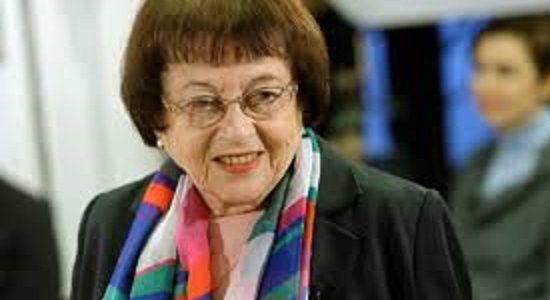
Santariškės Children’s Hospital doctor Rozalija Černakova tells the story of what happened to her grandfather and family. Her grandparents were deported with their families. Rozalija’s parents were still children when they were deported: her mother 11 and her mother’s brother 8. They were sent to the Altai region. That’s where Rozalija was born.
Lithuanian Supreme Court to Hear Noreika Appeal

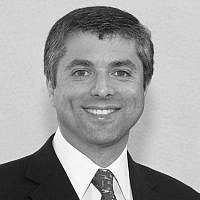
Grant Gochin, an LA-resident Litvak as well as a Lithuanian citizen and a member of the Lithuanian Jewish Community, has reported the Lithuanian Supreme Court will hear his appeal of a lower court’s dismissal of his case against the Center for the Study of the Genocide and Resistance of Residents of Lithuania regarding the latter’s finding WWII-era Lithuanian captain Jonas Noreika was not culpable in Holocaust crimes. As reported earlier, Gochin has been waging a battle for several years now to have the finding reversed and a commemorative plaque to Noreika removed from its location in central Vilnius. Following the earlier court’s finding Gochin didn’t have “standing,” the Center for the Study of the Genocide and Resistance of Residents of Lithuania issued a non-attributed document which the International Holocaust Remembrance Alliance (IHRA) said fell within its definition of anti-Semitism.

IHRA response here.

Gochin’s appeal here.

Commemorative Plaque to Mark Site of Former YIVO HQ in Vilnius

Commemorative Plaque to Mark Site of Former YIVO HQ in Vilnius

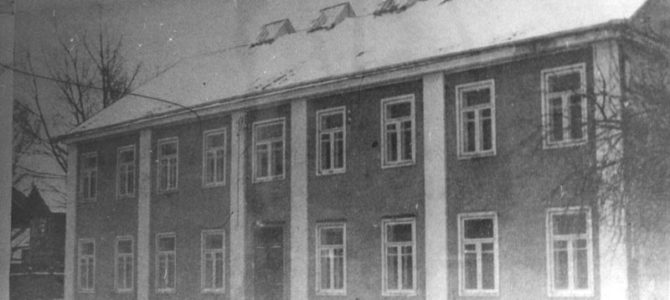
The Lithuanian Foreign Ministry and the Lithuanian Jewish Community invite the public to attend an unveiling ceremony of a plaque to commemorate the site of the former headquarters of YIVO in Vilnius at 3:00 P.M. on June 20 at the building now located at Vivulskio street no. 18 in Vilnius. YIVO, the most significant center for the study of Jewish culture, history and languages in Eastern Europe, was located near this site from 1925 to 1941. Its founder moved its activities to New York which became world headquarters following the German invasion in 1941.

Participants at the ceremony are to include YIVO director Jonathan Brent and YIVO board of directors deputy chairwoman Irene Pletka.

Sabbath with Designer Agnė Kuzmickatė

Sabbath with Designer Agnė Kuzmickatė

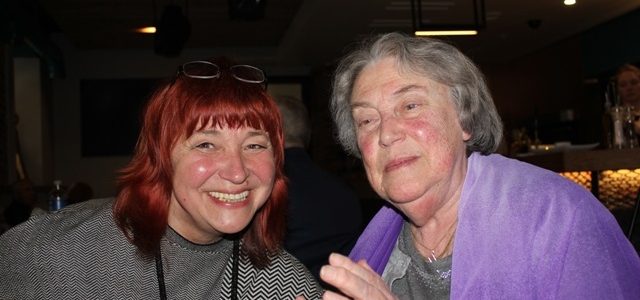
For a number of years now the Lithuanian Jewish Community has been inviting artists and special guests to celebrate Sabbath with the community. Last Friday LJC executive director Renaldas Vaisbrodas presented Lithuanian designer Agnė Kuzmickatė to members. She holds a doctorate and is sometimes called butterfly queen because of her use of her butterflies in her designs.

Renaldas led the discussion and tendered questions to the famous young designer, starting with questions about her family. Her father is the philosopher Bronislovas Kuzmickas, PhD, who was a founding member of Sąjūdis, the Lithuanian independence movement, who went on to become a member of parliament, a signatory to the Lithuanian declaration of the restoration of independence and served as deputy to parliamentary speaker Vytautas Landsbergis.

Agnė Kuzmickatė’s grandmother Gita Jekentienė was at a children’s summer camp in Palanga, Lithuania, when World War II arrived. She and some of the other children were evacuated to safer locations in the Soviet Union. When she spoke of her family, Agnė Kuzmickatė repeatedly returned to her grandmother Gita’s experience and said she only know understood how her grandmother’s environment shaped her. She said she and her grandmother often spoke about Jewish identity, about the Yiddish language and the tragic loss of family, all of whom, except for her grandmother’s brother, were murdered at the Ninth Fort in Kaunas. Returning to Lithuania after the war, her grandmother experienced all sorts of bullying and name-calling because she was Jewish. Agnė Kuzmickatė said she had never experienced this and everyone at school respected her because of her father’s activities on behalf of independent Lithuania.

New Litvak History Exhibit in Cape Town

New Litvak History Exhibit in Cape Town

URM.lt

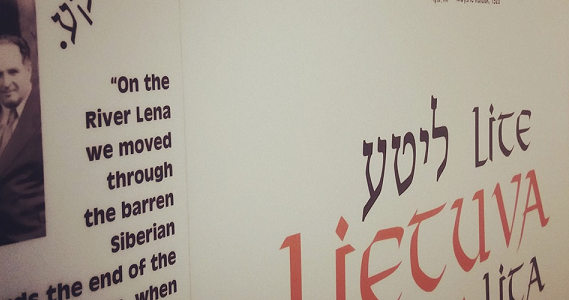
The Lithuanian Embassy to South Africa presented a mobile exhibit at the South African Jewish Museum in Cape Town June 6 called “One Century Out of Seven. Lithuania, Lite, Lita.” The installation informs viewers of different aspects of Jewish history in Lithuania from the time of the Grand Duchy to the present. The exhibit travelled to South Africa’s second-largest city from the Holocaust and Genocide Center in Johannesburg.

Lithuanian ambassador Sigutė Jakštonytė welcomed the large audience including members of the Cape Town Jewish community and members of the parliament of the Republic of South Africa. She told them the Lithuanian parliament had named 2020 the Year of the Vilna Gaon and Litvak History in appreciation of the Litvak contribution to the Lithuanian state and to preserve the memory of Holocaust victims. The ambassador also thanked the museum in Cape Town for four years of close cooperation.

The exhibit at the South African Jewish Museum in Cape Town runs till the end of June.

Unusual Holocaust Memorial to Be Unveiled in Biržai

Unusual Holocaust Memorial to Be Unveiled in Biržai

DELFI.lt

An event to commemorate the Jews of Biržai and Holocaust victims is to be held on Sunday, June 16, including honoring rescuers of Jews, a memorial procession and the unveiling of a 30-meter-long Holocaust memorial.

The Biržai Jewish Cultural and History Association, the Biržai regional administration and the Sėla Museum in Biržai are organizing the event. Partners include the Israeli embassy to Lithuania, the Lithuanian Foreign Ministry and the secretariat of the International Commission to Assess the Crimes of the Nazi and Soviet Occupational Regimes in Lithuania.

Jewish Community Remembered in Kalvarija

Jewish Community Remembered in Kalvarija

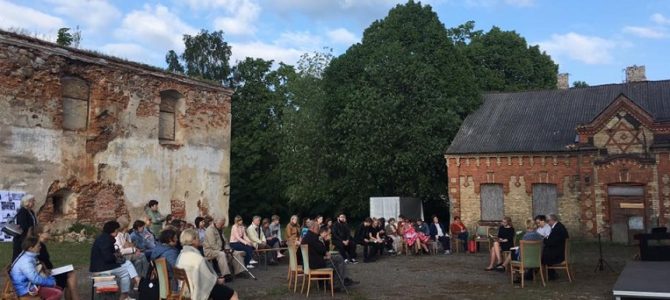
In the period between the two world wars, the Jewish population was the majority population in Kalvarija, Lithuania. The architecture of the old town, a unique synagogue complex (with a winter and summer synagogue and the Talmud school) and the only surviving Jew, Moishe Segalis–all of this stands as a testimony to that time. For four Saturdays in a row now, as spring blossoms forth, there have been readings from Icchokas Meras’s novel “Lygiosios trunka akimirką” held near the synagogues in Kalvarija and in their courtyards. Lithuanian Jewish Community executive director Renaldas Vaisbrodas attended the final reading on May 24.

Students and soloists from the Sonantem choir in Kalvarija read from the work about the life of the Vilnius ghetto and about life which can be decided by the movement of a single piece on the game board.

A youth initiative invited the local community to an informal meeting with the relatives of those who once lived in Kalvarija, with our ancestors and neighbors.

Merkel: German Synagogues, Jewish Schools Require Police Protection

Merkel: German Synagogues, Jewish Schools Require Police Protection

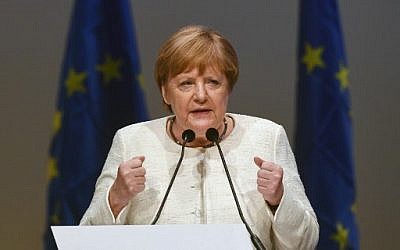
German chancellor Angela Merkel said Tuesday her country should remain vigilant regarding growing nationalist tendencies in Europe because of Germany’s Nazi past. “It’s clear we have to view these [nationalist movements] in a specific context, the context of our past,” she said in an interview with Christiane Amanpour on CNN. “That means we must be more vigilant than others.” Merkel condemned growing anti-Semitism in Germany and remarked: “unfortunately we have always had a certain amount of anti-Semites.”

Full description of interview in Lithuanian here.

Vilnius: Jerusalem of the North, Jerusalem of Lithuania

Vilnius: Jerusalem of the North, Jerusalem of Lithuania

15min.lt

A New, Free Tourist Route: Why Vilnius Was Called the Jerusalem of the North

With those who fled coming back and traditional Jewish holidays again becoming part of city life, Jewish culture is experiencing a renaissance in Vilnius. Now there will be another opportunity to discover why Vilnius was called the Jerusalem of the North. A free new tourist route called “Discover Jewish Heritage in Vilnius” will help tell the stories of the Jews who lived and worked in Vilnius, according to a press release from the Vilnius municipal tourism and business growth agency Go Vilnius, which has compiled this guidebook as a way to learn about the world-famous Litvaks whose humble origins were in Vilnius, to discover what traces of them remain and to learn about the history of the Jewish community of Vilnius, including the best of times and the most tragic of times.

Full story in Lithuanian here.

Small but Significant Features of Jewish History in Vilnius

Small but Significant Features of Jewish History in Vilnius


bernardinai.lt

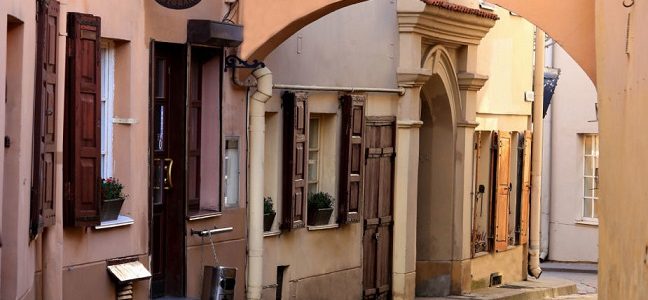
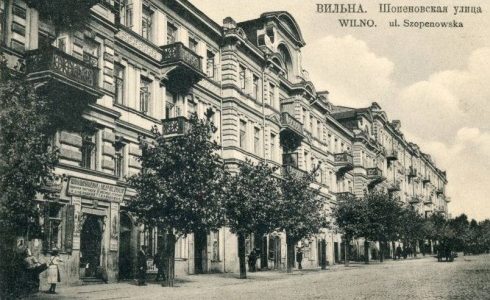
Before World War II a large Jewish community lived in Vilnius whose cultural, religious and social traces are only recalled today in statues and commemorative plaques. It’s a rare resident of the city who knows why Vilnius was called the Jerusalem of Lithuania, who knows what an active community life bustled on the narrow streets of the Old Town and how the tragic events of World War II changed forever the face of the Lithuanian capital.

For many years Vilnius was a Jewish spiritual and academic center. Besides some faded inscriptions in Hebrew characters on buildings which were part of the Vilnius ghetto, there are more surviving traces of the history of this people. Before World War II Jews accounted for more than a third of all city residents.

Today we invite you to discover with us some small details of this history, small but important to our city.

Full text in Lithuanian here.

Victory Day Celebration Snapshots from Kaunas

Victory Day Celebration Snapshots from Kaunas

The Kaunas Jewish Community enthusiastically celebrated Victory Day marking the victory against Nazi Germany, continuing a long-time tradition. This year no World War II veterans attended, but their widows and children, who heard their stories firsthand of the battles and horrors, did.

Many of those attending were personally freed by the Allies and their victory marked the end of their inhumane suffering and degradation. For them, this day is both one to commemorate the dead, but also an opportunity to celebrate life and its joys. Vocalist Aleksandras Rave performed his own songs and Michail Javič on saxophone enlivened the ceremony which was funded by the Goodwill Foundation.

Markas Petuchauskas on the Presentation of His Book in Germany

Markas Petuchauskas on the Presentation of His Book in Germany

I’d like to expand on the information about the book presentations in Germany by talking about the topics which were discussed at the Leipzig International Book Fair and the presentation held at the Lithuanian embassy where, besides Grigorij H. von Leitis, Lithuanian honorary consul professor Wolfgang von Stetten and Michael Lahr, the executive director of the Lahr von Leitis Academy and Archive, also took part.

I talked about the presentations of the Vilnius ghetto theater which have lodged themselves so colorfully in my memory, about the people who started that theater, the remarkable artists of the Jerusalem of Lithuania. Their figures loom large among the ranks of the great Litvaks of the world: Chaim Soutine, Jacques Lipchitz, Neemija Arbit Blatas, Ben Shahn, Emmanuel Levinas, Jascha Heifetz, Romain Gary and others.

Much space in the book is devoted to the branch of the Petuchovski (Petuchowski, Petuchauskai) family who in the second half of the 19th century moved to Germany and attained world-renown as active rabbis and philosophers of the Litvak persuasion.

The first of those to speak about the Vilnius ghetto theater, I demonstrated how that cramped stage was able to contain a vast cultural continent, a unique theater now widely recognized as such. Thanks to the theater, the ghetto became a symbol of spiritual resistance to the Nazis. The ideas of patience, tolerance and unity came to the fore in the spiritual resistance of the Vilnius ghetto. These ideas called out with the entire experience of the European Holocaust, urging unity against Naziism, giving form to the goal of nations recognizing the principles of Western democracy to come and join together.

Markas Petuchauskas
Author of Der Preis der Eintracht [German translation of The Price of Concord]
May 21, 2019

Markas Petuchauskas’s Book Price of Concord Presented in Berlin

Markas Petuchauskas’s Book Price of Concord Presented in Berlin

The Lithuanian embassy in Germany on May 15 hosted a presentation of Markas Petuchauskas’s memoires The Price of Concord now translated into German as Der Preis der Eintracht, published by the LIT Verlag publishing house in Germany. Mark Roduner translated the book which was originally published in English. The director Grigory von Leit, with Litvak roots, read excerpts from the book. A discussion with the author followed. The vent was organized by the embassy of the Republic of Lithuania to Germany in cooperation with the Lietis Academy and Archive and the Lithuanian Culture Institute.

This isn’t the first time the German translation of Litvak drama critic Markas Petuchauskas was presented in Germany. Back in March there were two presentations of the book at the Leipzig International Book Fair.

The Price of Concord is a compendium of more than five decades of conversation with a number of theater figures, artists and musicians in which keen observations and sudden realizations and correspondence with different well-known personalities turn into a seamless book, one of whose sections contains complex moments of a fairly diverse life. Petuchauskas goes beyond discussion of episodes remembered from childhood and loss of family members leading to the pain experienced during occupation, and recalls the goodness, understanding and help of so many people encountered in the course of life.

Musical Evening “The Sounds of Music and Janusz Korczak”

Musical Evening “The Sounds of Music and Janusz Korczak”

Time: 5:30 P.M., May 15, 2019
Place: Central Library of the City of Vilnius

The Dr. Janusz Korczak Center and the Central Library of the City of Vilnius are pleased to invite you to an evening of music entitled Sounds of Music and Janusz Korczak.

Markas Volynskij and Marija Duškina will perform Yiddish songs.

Dr. Janusz Korczak Center director I. Belienė will be master of ceremonies.

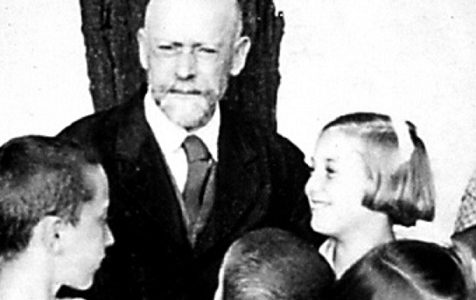
Janusz Korczak’s real name was Henrik Goldshmit and was also known as Stary Doktor (Old Doctor) and Pan Doktor (Mr. Doctor). He was born in Warsaw on July 22, 1878, and died in August of 1942 at Treblinka. He was a doctor, teacher, writer, publicist and Jewish public figure. He was the originator of children’s rights and the idea that children should enjoy equal rights.

The Central Library of the City of Vilnius is located at Žirmūnų street no. 6 in Vilnius.

Šiauliai Regional Jewish Community Commemorates Fallen Soldiers

Šiauliai Regional Jewish Community Commemorates Fallen Soldiers

The Šiauliai Reigional Jewish Community this year as in years past commemorated the soldiers who fell in World War II, laying bouquets of flowers and observing a moment of silence with bowed head at the military cemetery in Šiauliai in memory of all who died.

Community members came together to socialize and share memories and experiences of those dark times after the ceremony.

Small gifts were presented to survivors of the war and the Holocaust.

Rescuers Celebrated in Kaunas

Rescuers Celebrated in Kaunas

The Kaunas Jewish Community continued this year its spring tradition of commemorating those who rescued Jews from the Holocaust.

Rescuers and the rescued came together again in a warm celebration of friendship and humanity. Professor Saulius Kaušinis who spoke at this year’s event said it and the stories behind could serve as an example of peace and peaceful coexistence in today’s world troubled by conflict, hate and terrorism.

This year the commemoration coincided with Holocaust Day and six candles were lit in memory of the six million Jews murdered in Europe.

Tenth-grade Art Gymnasium student Patricija Pugžlytė performed a piece from Schindler’s List on cello. Actress Kristina Kazakevičiūtė, herself the daughter of a rescuer, helped create an atmosphere of reflection and at the same time joy, and after all the point of the ceremony was to celebrate life. The saxophonist Michail Javič also performed.

It was sad to note the dwindling ranks of both the rescuers and the rescued, but at the same time it was a great joy to see their children and grandchildren there who were eager to share their family stories.

Panevėžys Jewish Community Marks Victory Day

Panevėžys Jewish Community Marks Victory Day

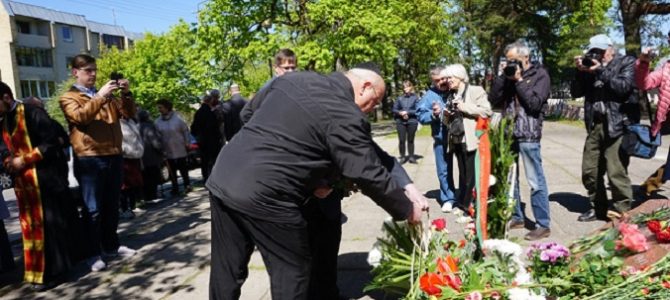
The Panevėžys Jewish Community kicked off commemoration of Victory Day, the day Nazi Germany capitulated to the Allies, at the Monument to the Unknown Soldier at the Ramygala cemetery, then moved on to the monument on Krekanavos street in Panevėžys where veterans and the public gathered. Among the fallen soldiers there are thousands of Jewish surnames of infantry, sergeants and officers who sacrificed their lives during World War II in Lithuania.

Panevėžys Jewish Community members attended all of the events and laid wreaths. They held an additional ceremony at the monument marking the former gate of the ghetto in the city where they remembered Holocaust victims.

A group of religious Jews from South Africa (mainly Cape Town and Johannesburg) led by Rabbi Moshe Saltzman attended the latter. Many had relatives who died in the Holocaust in Lithuania. In the first year of WWII about 13,000 Jews were killed in Panevėžys. The South Africans are visiting cities and towns around Lithuania to commemorate victims of the Holocaust. Kaddish was performed and extracts from the local yizkor were read during the ceremony.

Why Does the Founder of an International Corporation Talk about a Small Lithuanian Town?

Why Does the Founder of an International Corporation Talk about a Small Lithuanian Town?

by Romas Sadauskas-Kvietkevičius, DELFI.lt

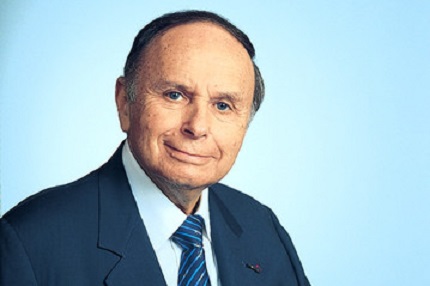
According to Felix Zandman, the founder of the famous semiconductors producer Vishay International, whenever a new company client asked what the name of the corporation means, he told them about his grandmother and the mass murder of the Jews of Veisiejai.

Vishay is the Jewish name of Veisiejai used from the 18th century to the Holocaust. Survivors scattered around the world carried with them memories of their town and local placenames. The large Jewish population of the small town migrated before the war as well, and by the end of the 19th century of the 1,540 local inhabitants, 974 were Jewish. The Jewish population was rounded up and shot with other Jews from the Lazdijai district at Katkiškė village. The town of Veisiejai was probably best known for Ludovik Zamenhof, or Dr. Esperanto, who lived there in 1886 and 1887.

Felix Zandman passed away in 2011. His company had turnover in earlier years of $2.6 billion and employed over 20,000 people, or about 10 times the population of Veisiejai today.

Full story in Lithuanian here.

Irena Vesaitė Awarded Polish Prize

Irena Vesaitė Awarded Polish Prize

Kauno diena

The Borders ethnic, cultural and art foundation in Sejny, Poland, awarded its “Person on the Edge” prize to Lithuanian professor Irena Vesaitė Thursday.

“Her intellectual courage and active community work has made Vesaitė a true moral authority in Lithuania and Europe. The path upon which she found meaning and her goal is the path of the teacher who understands life itself as art,” foundation director Krzysztof Czyżewski said in a press release from the Ministry of Culture.

The press release said the professor was awarded the prize for her practice of the ethos of the marginalized, her art and her philosophy of life which were an inspiration to all recipients of the prize and a pillar of support in moments of doubt.

Full story in Lithuanian here.