Holocaust

Lithuanian Jewish Community Celebrates Leonidas Melnikas’s Birthday

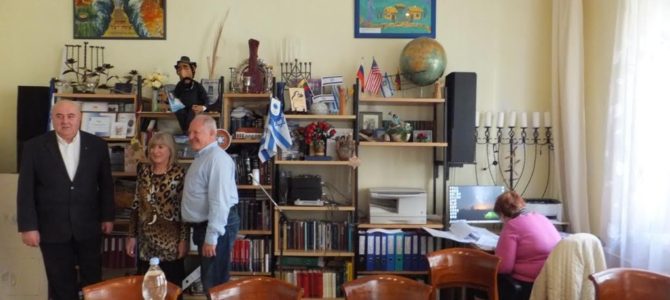
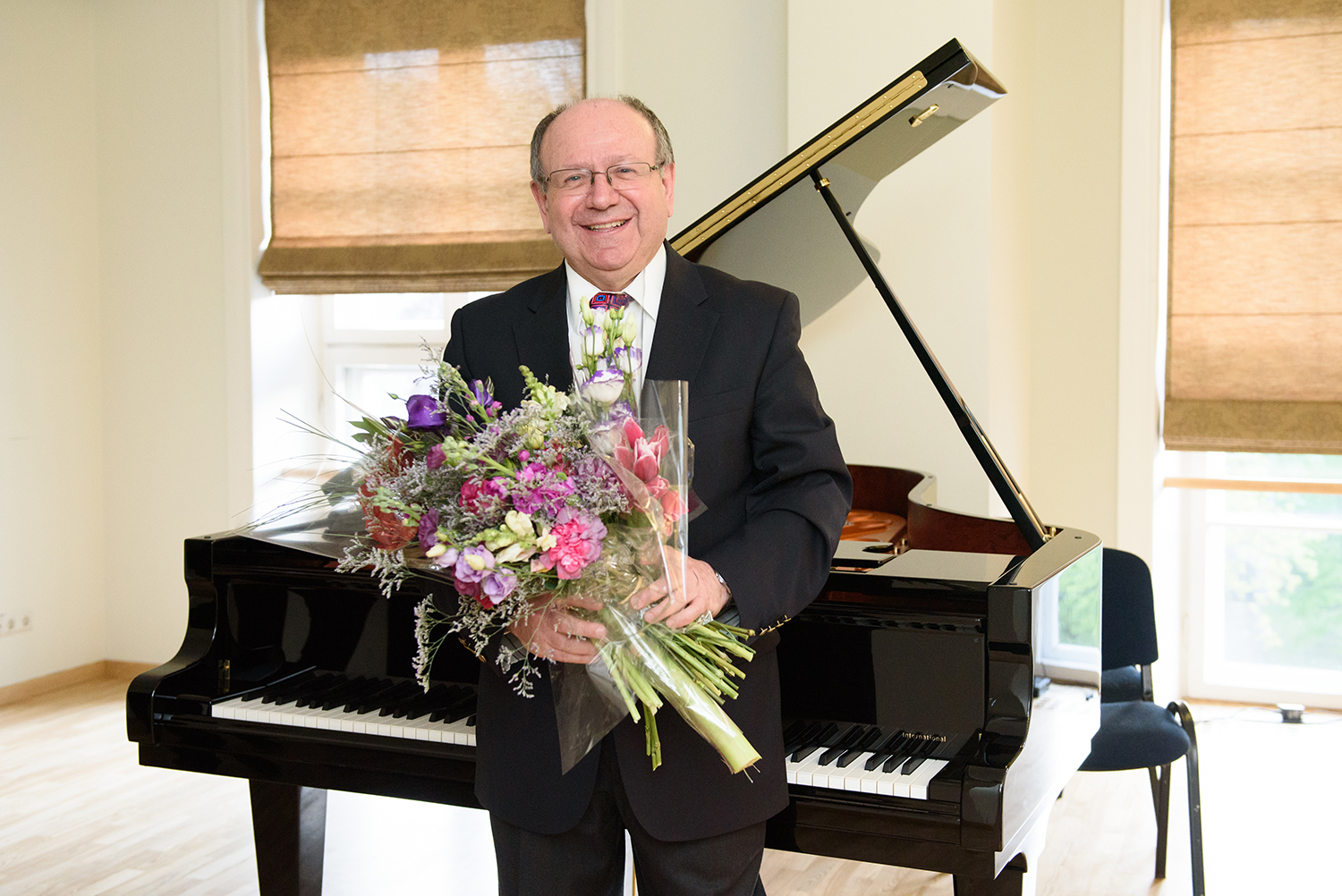
The Destinies program of evening cultural events celebrated the birthday of Lithuanian musician and composer Dr. Leonidas Melnikas last Thursday, May 11.

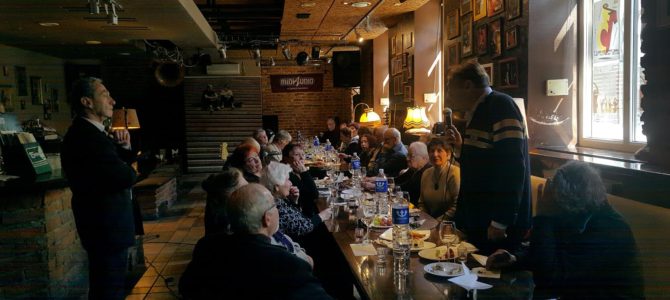
The evening began at the Jascha Heifetz hall at LJC headquarters in Vilnius with the airs of a tango, an overflow crowd and the birthday boy smiling on stage. Leonidas Melnikas is a piano player, organ player, musicologist, a tenured doctor, the head of his cathedral at the Lithuanian Academy of Music and Theater, chairman of the academy’s senate and professor. He’s also a member of the board of directors of the Lithuanian Jewish Community. He turned 60 Thursday.

The birthday celebration was part of the Destinies program of evening cultural events initiated and organized by LJC deputy chairwoman Maša Grodnikienė, who used the occasion to honor the memory of Melnikas’s father Isaiah Melnik, who would have turned 110 that same day. He was a well-known pharmacist at the Vilnius Central Pharmacy (on what is now Gedimino prospect) and at the Žvėrynas Pharmacy in Vilnius, where he made his own preparations in his time. He survived both Stutthof and Dachau. He was beloved by all and was a calm and warm person who enjoyed attending all sorts of concerts. His son Leonidas’s musical career began when his mother took him to the Ąžuoliukas school. His first teacher was the famous pianist Nadežda Duksdulskaitė. “My entire childhood was illuminated by my parents, the very best, the very wisest people, and family remains extremely important to me,” Melnikas said of himself before embarking on a performance of tango melodies with violinist Boris Traub, cellist Valentinas Kaplūnas and accordion player Gennady Savkov.

Attend Opening Ceremonies for New Judaica Studies Center

The Judaica Studies Center of the Lithuanian National Martynas Mažvydas Library was officially established May 3, 2017, but will only open to the public May 22 and May 23 with several events and exhibitions.

The Center’s main function is to further research on the Jewish documentary heritage, carrying out educational and informational projects and publicizing the results. The Center is an open enterprise and aimed at educational cooperation. According to its mission statement, the Center actively publicizes information about the Jewish textual heritage at its events, in the national and international media and on the internet, and also conserves collections of modern Judaica publications.

Program:

May 22

1:00 P.M. Opening ceremony (foyer, fifth floor)
2:00 P.M. Launch of exhibit People and Books of the Strashun Library (exhibit hall, third floor)

May 23

1:00 P.M. Samuel Kassow (USA) lecture Uniqueness of Jewish Vilna (conference hall, fifth floor)
2:30 P.M. Presentation The Vilnius YIVO Project (conference hall, fifth floor)

Full announcement in Lithuanian at the Lithuanian National Martynas Mažvydas Library web page here.

Dukstyna Primary School of Ukmergė Tours Sugihara House in Kaunas

Vida Pulkauninkienė, coordinator of the Tolerance Education Center at the Dukstyna Primary School in Ukmergė (Vilkomir), and a group of students from the Center visited the Sugihara House museum in Kaunas May 15. They viewed the memorial exhibit there, a chronicle of events in Kaunas from 1939 to 1940, a virtual exhibit of Japanese diplomat Chiune Sugihara’s deeds in Lithuania and an audio-visual exhibition about the daily life of Jewish refugees in Lithuania. They also learned about how Jews saved themselves, travelling to Kobe, Japan, on the visas Sugihara issued, then on to the USA, New Zealand and other countries.

Museum director Simonas Dovidavičius led the tour.

The group also visited the site of the former Slobodka ghetto in Kaunas, guided by Daiva Žemaitienė, also a Tolerance Education Center coordinator.

The Ukmergė Jewish Community set up the field trip as part of a continuing education project with financial aid from the Goodwill Foundation.

Pakruojis Wooden Synagogue Restored

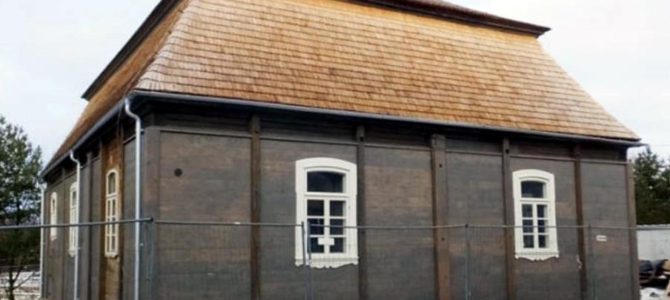
Following renovation, the wooden synagogue in Pakruojis, Lithuania, is to open its doors to the public Friday. The synagogue is to house the Pakruojis Regional Juozas Paukštelis Library. The women’s gallery and a permanent exhibition will remind visitors of Jewish life and history in the region. The Pakruojis synagogue was built in 1801 and is believed to be the oldest surviving wooden synagogue in Lithuania. It was renovated and painted in 1885.

Full story in Lithuanian here.

LitvakSIG Delegation Visits Lithuania


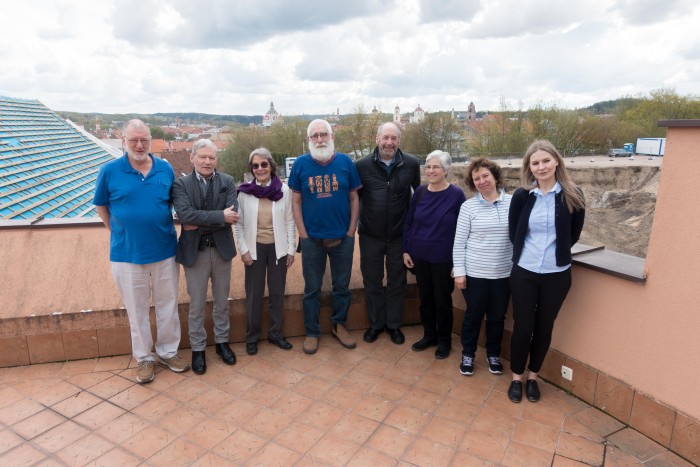
LitvakSIG delegation visit Tolerance Center, Vilna Gaon Museum, Carol Hoffman third from left

The Litvak genealogical web site LitvakSIG‘s board of directors have recently been travelling around Lithuania as part of their important work. The board currently includes nine members: Amy Wachs, Barry Halpern, Carol Hoffman, Dorothy Leivers, Garri Regev, Jill Anderson, Phil Shapiro, Ralph Salinger and Russ Maurer. Six of the nine board members visited Lithuania this past week to meet with archivists and members of the Vilnius and regional Jewish communities. We managed to interview Carol Hoffman at the Bagel Shop Café in Vilnius last Sunday.

§§§

Tell us something about yourself.

My names is Carol Hoffman. I was born and raised in the United States. My father was born here in Lithuania in 1892 in Kapčiamiestis, in Yiddish it’s Kopcheve. My mother was born in the United States but her mother was born in Kapčiamiestis, in Kopcheve, in about 1858. So my entire family from my mother’s side and from my father’s side are Litvaks.

So, my entire family are Litvaks, they’re from the same place, from the same shtetl, and I was raised with a strong sense of being my brother’s keeper. I came to Israel in 1972 with three young children and a husband and we settled in the northern part of Israel. I worked as a librarian and a teacher of computer science in the university for many, many years, and I retired seven years ago when began working full-time as a volunteer for LitvakSIG. This is my seventh or eighth or ninth trip to Lithuania, I’m not sure. My first trip was in 2000. I had never been here. I met Regina Kopelevich on the border and we went to … Kopcheve and then to Vilnius. So I feel the strong sense of roots.

Presentation of Jews of Vilkaviškis at Lithuanian National Library

The Lithuanian National Martynas Mažvydas Library is hosting a presentation of the book “Dingusios tautos pėdsakais’ [Traces of a Lost People] by Antanas Žilinskas, the long-serving director of the Vilkaviškis Regional History Museum who has collected material about the Jews once resident in Vilkaviškis over many years, the contents of the book published in 2015. The event will also feature a meeting with Ralph Salinger, an Israeli historian specializing in the history of the Jews of Vilkaviškis. The public event is to be held in Lithuanian and English at 4:00 P.M. on May 12 at the library in Vilnius.

Jews were living in Vilkaviškis in the 16th century when queen Bona Sforza allotted a forest for the Jews to construct a synagogue. The Vilkaviškis synagogue appeared in 1623. There was a Jewish gymnasium in Vilkaviškis from 1919 to 1940. There were around 150 shops in the town, of which about 130 were Jewish. In 1939 there were officially 3,609 Jews living in and around the town, constituting 45 percent of the population.

Kaunas Jewish Community Commemorates Victims of WWII

On May 9 the Kaunas Jewish Community commemorated the victims of the Holocaust and World War II and recalled victory and the joy of liberation from the Nazi terror. Memories sweet, bittersweet and sad were shared by the widows and children of veterans at the evening event, and Abraham Leizerson recalled his attempts to join the war effort as a very young man. Aleksandr Rave’s song performance unified and brought together the crowd, while Lucija Laverenova unexpectedly lightened the mood with a comedy routine. Basia Šragienė helped organize the event, as she did two years ago with her husband, now the late WWII veteran Shmuel Shrage, whose bright spirit lives on in our memory.

Vilkomir Remembers Victory

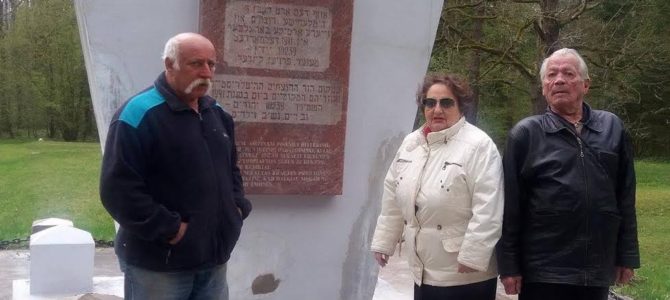
The Ukmergė Jewish Community marked the 72nd anniversary of Victory Day commemorating the victims of mass murder in the Pivonija forest.

Community members also visited the graves of late members of the community and war veterans at the Old Believers cemetery.

First University Department of Holocaust Studies Opens in Germany

Deutsche Welle reports the first university chair in the country for Holocaust Studies has been created. The department will operate under the History and Philosophy Faculty at the Goethe University in Frankfurt. Uni VP Manfred Schubert-Zsilavecz said the city is an appropriate fit for Holocaust studies and that his university has Jewish roots.

The new department will deal exclusively with the genocide of Jews under the Nazis in Germany and Europe. Historian Sibylle Steinbacher is to head the department. The German state of Hesse will finance the department to the amount of 150,000 euros annually.

Hesse state minister of science and education Boris Rhein called the establishment of the new department long overdue in Germany. Although 70 years have passed since the Nazis were driven from power in Germany, he says it will never be possible to fully comprehend the Holocaust. Rhein said while the current generation isn’t legally responsible for the crimes of the Nazis, it is part of the solution in the present and future. One of the priority fields of research at the new department will be research on the ethical and moral mechanisms for justifying and denying the Holocaust.

jewish.ru

Abi Men Zet Zich Club Celebrates Victory Day

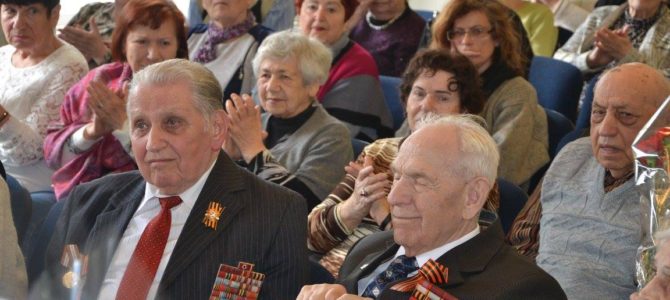
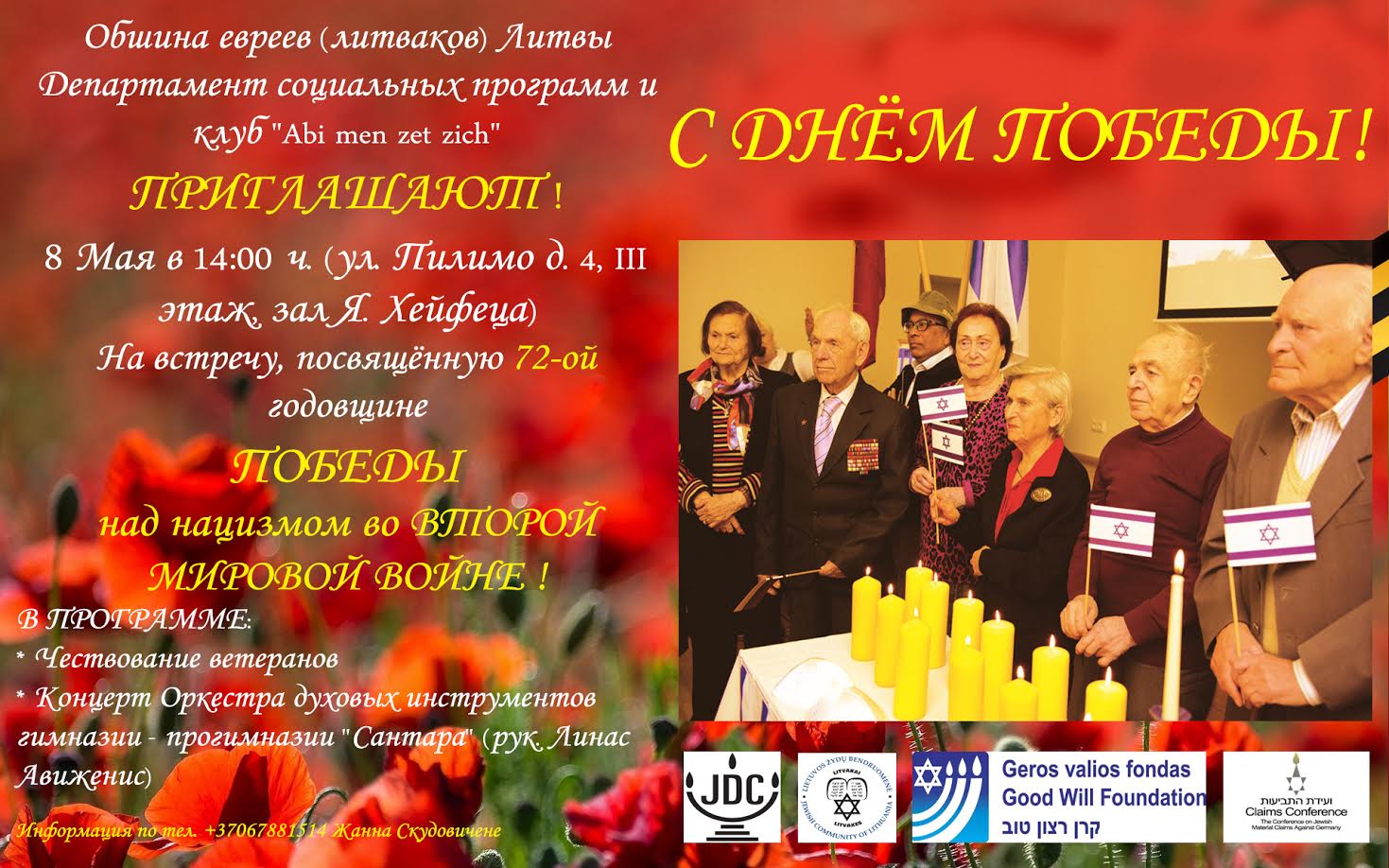
The Lithuanian Jewish Community celebrated Victory Day 2017 inviting the public to the Abi Men Zet Zich Club at the Community. The event included a ceremony to honor the heroes of World War II, our veterans and Community members.

An overflow crowd of about 140 people crammed into the hall and foyer to honor the memory of the fallen and to celebrate humanity’s victory over the Nazi death machine. Time has taken its toll on our veterans and now there are only 14 Jewish WWII veterans still living in Vilnius.

The event was organized by LJC Social Programs Department coordinator Žana Skudovičienė with the aid of volunteers and colleagues, with musical performances by Michailas Filipovas ( Jablonskis), Vadim Volkov and Rita Alterman. The Bagel Shop Café and Natali Restaurant catered the event and Arikas Krupas provided special beverages to the veterans as he has for many years now.

Our thanks go to everyone who took part and especially to the students in the woodwind orchestra of the Santara Gymnasium and Pre-Gymnasium in Vilnius and orchestra conductor Linas Avižienis.

Thank You

LJC Social Programs Department coordinator Žana Skudovičienė thanks everyone who helped make this year’s Victory Day celebrations at the Community such a success for our members and veterans. About 140 people attended Community events for VIctory Day on May 8. A big “thank you!” goes out to the singers Michailas Filipovas ( Jablonskis), Vadim Volkov and Rita Alterman, and to the Bagel Shop Café and Natali Restaurant for the wonderful treats, and to Arikas Krupas who has provided and paid for special beverages for the veterans for many years now. Thank you!

Lithuanian Jewish Community Marks 72nd Victory Day

On March 8 Lithuanian Jewish Community members and veterans marked the 72nd anniversary of the Allied victory over the Nazis.

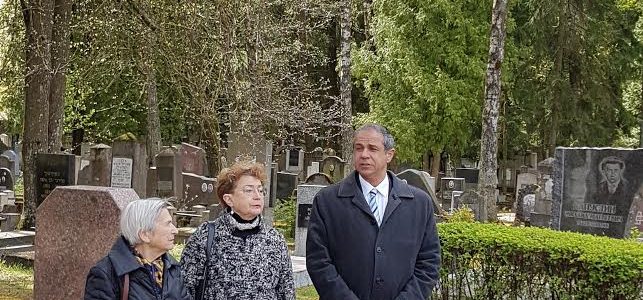
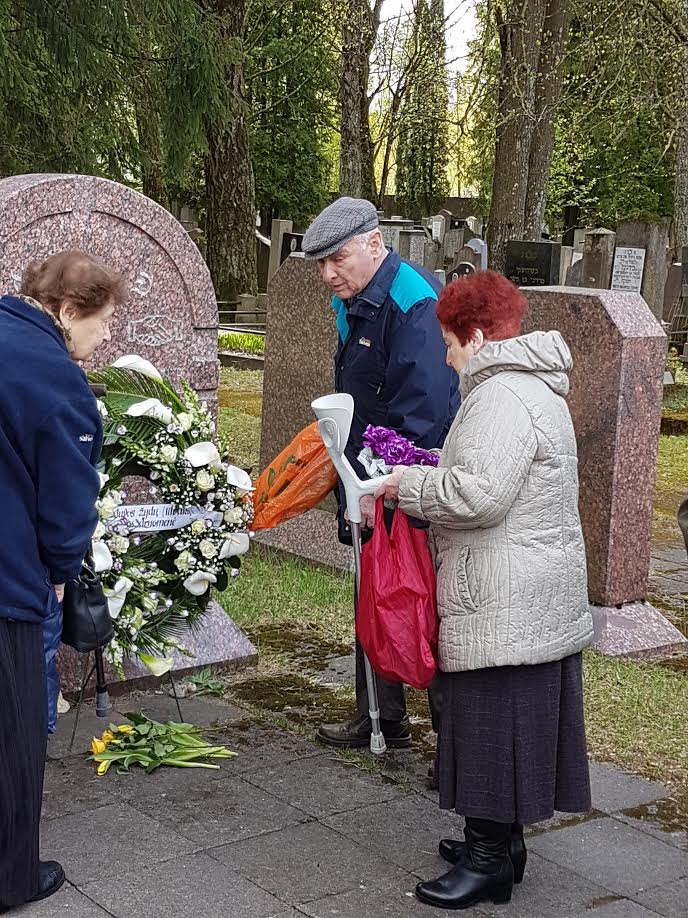
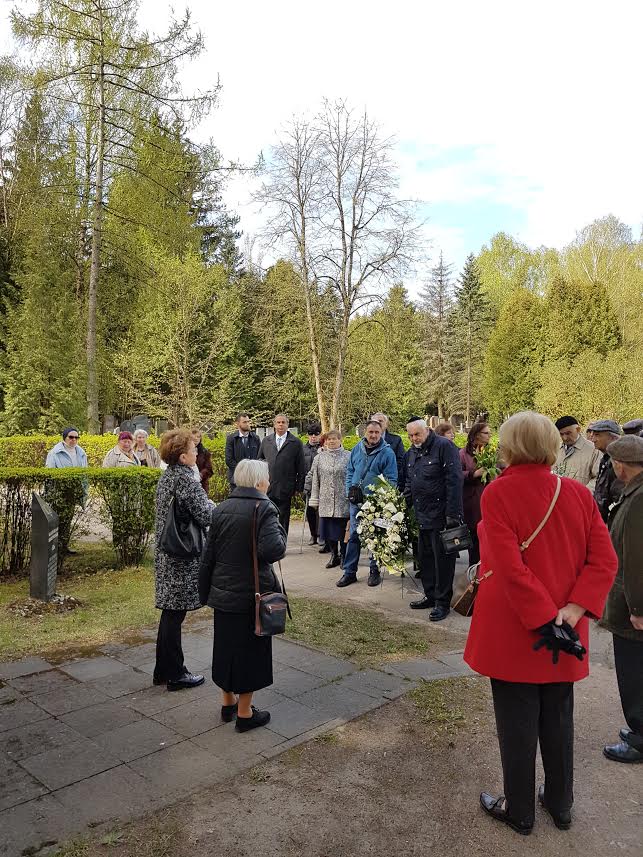
Victims of fascism, leaders of the ghetto resistance movements, teachers and children were remembered at the Vilnius Jewish Cemetery on Sudervės road. The names of murdered Jews of Vilnius are remembered on the gravestones of surviving members of their families. The Sudervės road Jewish cemetery is a working cemetery, although it is sometimes intentionally confused with the Šnipiškės cemetery for propaganda purposes in the foreign media when the topic is the alleged on-going “destruction of the Jewish cemetery.” In the near future the Sudervės road Jewish cemetery will feature monuments indicating remains removed from the Šnipiškės cemetery and reinterred here in earlier years.

Victory Day celebrations included a ceremony for veterans at the LJC headquarters in Vilnius in the afternoon, during which dinner was served and participants were treated to a concert.

South African Couple Visits Panevėžys Jewish Community

Panevėžio žydų bendruomenėje svečiai iš Pietų Afrikos Respublikos

South African attorneys Jonathan and Sheli Schlosberg visited the Panevėžys Jewish Community where chairman Gennady Kofman told them about the history of the Jews in the Panevėžys region, community events to teach Jewish history and other social, educational and cultural activities.

There are over 30 mass murder sites where Jews were shot and mass graves in the Panevėžys district. The guests were interested in the history of the Jewish graveyard in the city of Panevėžys. They made use of the opportunity to visit the cemetery site and learned in 1966 the cemetery was destroyed and the headstones used to decorate the walls of the Juozas Miltinis Drama Theater there.

Panevėžys Jewish Community chairman Gennady Kofman presented small token gifts to the guests including Jewish calendars and star of David ornaments. The guests expressed gratitude for the comprehensive survey he provided and wished success to the Panevėžys Jewish Community.

Lithuanian State Celebrates VE Day at Ponar Mass Murder Site

Paneriuose pagerbtas Antrojo pasaulinio karo aukų atminimas

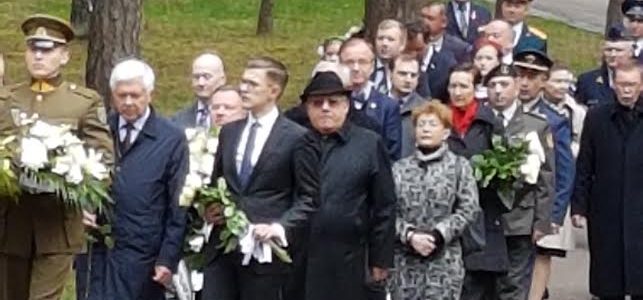
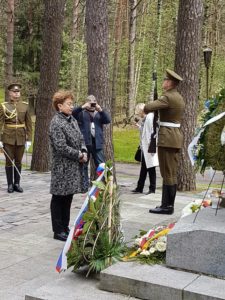
Lithuanian Jewish Community chairwoman Faina Kukliansky attended a ceremony sponsored by the state of Lithuania to celebrate VE Day at the Holocaust mass murder site Ponar Monday. VE or Victory in Europe Day marks the date the three main allies in the anti-Nazi coalition, the United States, United Kingdom and Soviet Union, achieved victory against Nazi Germany. It is marked on March 8 in the West and March 9 in Russia and most other former republics of the USSR. At Ponar a Lithuanian honor guard laid wreathes in the name of the president. The Lithuanian Foreign Ministry sent invitations to the event to foreign embassies. The Lithuanian state held similar ceremonies at other grave sites as well.

Austria Adopts IHRA Definition of Anti-Semitism

Dear Friends,

For those who missed this information on our website and newsletter, we are happy to inform you that on April 25, 2017, the Austrian Government, at the initiative of its minister of foreign affairs Mr Sebastian Kurz, adopted the International Holocaust Remembrance Alliance’s (IHRA) working definition of anti-Semitism.

The Austrian Government noted this working definition was the first to be approved by an intergovernmental organization and should aid in the identification of and combating anti-Semitism.

Austria follows the United Kingdom in adopting the definition.

Source: https://holocaustremembrance.com/media-room/news-archive/austrian-government-adopts-working-definition-antisemitism

Best regards,
The EJC team

European Jewish Congress (EJC)
Tel : +3225408159
Fax : +3225408169
Web : www.eurojewcong.org

US Public Television Airs Documentary on Jewish Vilna


Photo courtesy PBS

by Geoff Vasil

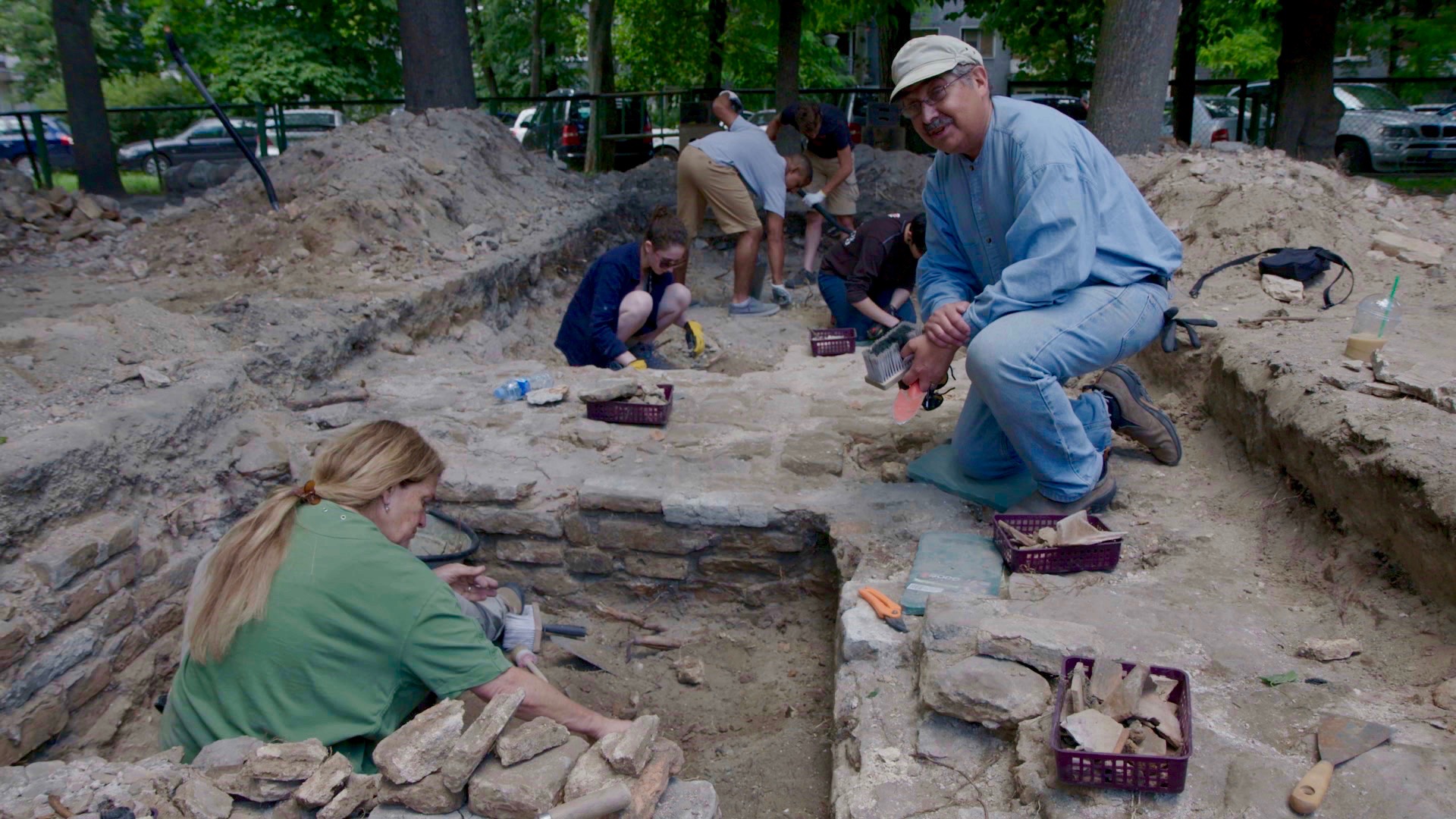
Owen Palmquist’s documentary on two sites in Jewish Vilna aired last week on the US public television network PBS’s NOVA program. According to the director, there are rumblings of a broadcast in Lithuania, but so far there are no concrete plans to show it here.

The documentary is called Holocaust Escape Tunnel and focuses on two sites in and near Vilnius: the former Great Synagogue, which was damaged in World War II and torn down by the Soviets in the early 1950s, and the Ponar mass murder site outside Vilnius, where more than 70,000 people were murdered during the Holocaust.

Obviously Ponar got top billing. Last summer as director Owen Palmquist was shooting the footage with his crew, he said they hadn’t settled on any definite title and hadn’t decided what to feature yet, but he had the idea he wanted to talk about the rich Litvak Jewish culture of Vilnius. Focusing on the Holocaust actually makes more sense within the American context, since Lithuania is generally seen as one of the more enthusiastic societies to take up arms and murder Jews during World War II. It’s an easier sell to media managers. Litvak history is complicated and spans centuries; the Holocaust is immediate and “in your face.”

Lithuanian Jewish Community Appeal on UNESCO Resolution

Lithuanian Jewish Community
Pylimo street no. 4, Vilnius

To: His excellency, the minister Linas Linkevičius,
Lithuanian Foreign Ministry

APPEAL

May 2, 2017

Honorable minister,

The Lithuanian Jewish Community and world Jewish organizations please ask you to consider new draft proposals for the United Nations Educational, Scientific and Cultural Organization’s (UNESCO’s) resolution “On Occupied Palestine,” which condemn the State of Israel for “military operations taking the lives of civilian victims in the Gaza Strip” and proclaiming that historical holy sites of the Jewish people, Rachel’s Tomb and the Cave of the Patriarchs, belong to Palestine.

The content of the resolution, in opposition to UNESCO’s mission, displays a specific political tone, is extremely unfair to Israel and serves the interests of only one set of the parties, closing the door on bilateral negotiations between the State of Israel and Palestine. UNESCO is being exploited as a political instrument, exacerbating already strained relations between the states involved.

We ask you please in casting the vote of the Republic of Lithuania at the meeting of the UNESCO executive board to make a decision not opposed to the most progressive democracy in the Near East and the cultural, scientific and educational partner of the Republic of Lithuania.

Respectfully,
Faina Kukliansky, chairwoman

Old Jewish Cemetery in Šeduva Receives Special Mention in Europa Nostra Heritage Protection Awards

Šeduvos žydų kapinių įamžinimą įvertino Europos Komsijos įkurta Europa Nostra!

Work in Šeduva, or more precisely work already completed, hasn’t gone unnoticed by Europa Nostra, the heritage protection organization established by the European Commission.

Europa Nostra under a jury selected by the European Commission awarded the Lost Shtetl Project special mention.

Special mentions in the EU Prize for Cultural Heritage/Europa Nostra Awards 2017 were made public today by Europa Nostra and the European Commission. This year the jury granted special mention to 13 heritage achievements from 11 European countries taking part in the EU Creative Europe program.

Special mention goes to outstanding contributions in the conservation and enhancement of European cultural heritage which are particularly appreciated by the jury but did not make it into the final selection to receive an award.

Old Jewish cemetery in Šeduva, Lithuania

In restoring and maintaining the Jewish cemetery in the town of Šeduva, the local community has succeeded in its efforts to restore, commemorate and respectfully maintain the memory of members of their community who, since the Holocaust, no longer live in the town.

For more information, see:
http://www.europanostra.org/2017-eu-prize-cultural-heritage-europa-nostra-awards-special-mentions/

Lithuania Again Supports Israel in UNESCO Dispute with Palestinians


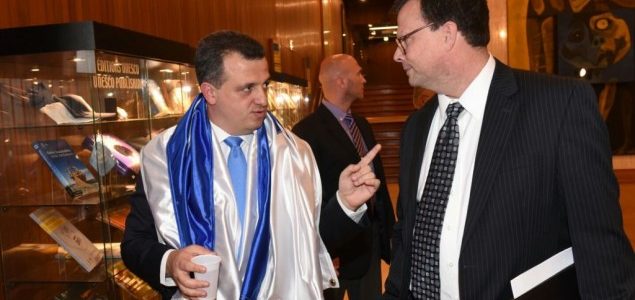
Israeli ambassador to UNESCO Carmel Shama-Hacohen draped in Israeli flag speaks at UNESCO HQ in Paris May 2

Vilnius, May 2, BNS–Lithuania Tuesday voted against a UNESCO resolution condemning Israel’s actions in Jerusalem and the Gaza Strip Tuesday. Positions of EU member-states on the issue differ, but a document tabled by Arab member-states of UNESCO passed with a majority of votes. The UNESCO resolution calls Israel an occupational power in Jerusalem, condemns earth-works conducted by Israel in the Old Town there and condemns Israel’s blockade of Gaza.

Members of UNESCO’s executive council voted on the resolution. Lithuania remains a member of the executive body until 2019. The Lithuanian Foreign Ministry expressed opposition to attempts to exploit the UNESCO format for political purposes.

“We appreciate the efforts of the authors of the UNESCO resolution ‘Occupied Palestine’ to find compromise. We understand the special significance of the holy sites (of the Old Town of Jerusalem) for the monotheistic religions,” press representative for the Lithuanian foreign minister Rasa Jakilaitienė said in comment sent to BNS.

“We are certain protection of the world cultural heritage in the Palestinian territories and Jerusalem demands the involvement of all the interested parties. We are in favor of balanced actions and the avoidance of politicization. Attempts to exploit the UNESCO format for political purposes could serve to discredit this organization,” the Lithuanian diplomat stated.