
History of the Jews in Lithuania

Vilnius Mayor Calls Crematorium in Jewish Cemetery Inappropriate

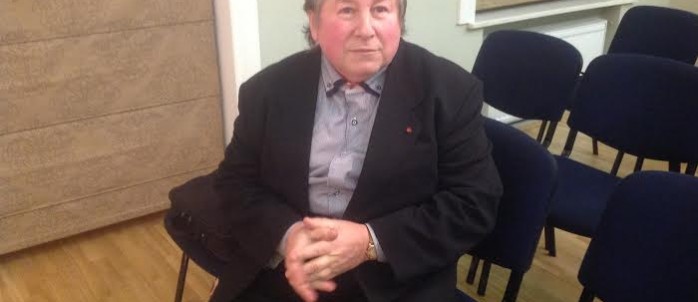
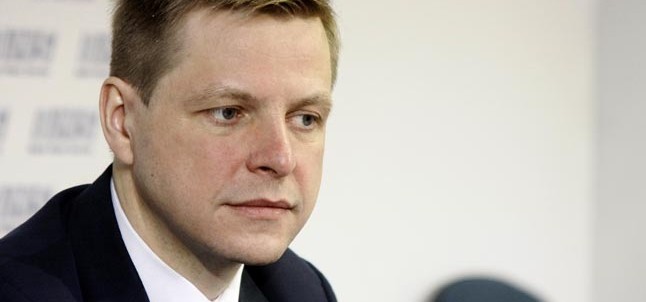
Šimašius

Vilnius, February 20, BNS–A plot of land next to the old Jewish cemetery on Olandų street is inappropriate for a crematorium and Vilnius residents will be asked their opinion on the need and location for such an operation, Vilnius mayor Remigijus Šimašius said.

“It has to be acknowledged that this is the territory of a Jewish cemetery and it’s obvious that in Vilnius, where 40,000 Jews lived before World War II, because of the association, a crematorium in the Jewish cemetery is simply inappropriate. For that reason alone there should be no crematorium at that location,” the mayor told BNS. He confirmed the council would be presented with the decision not to approve a crematorium on Olandų street in the Lithuanian capital. The mayor also said results of a poll of public opinion on the issue of the need for and location of a crematorium in Vilnius would be presented soon. “I think there is a need among some residents of Vilnius. We ordered a poll of residents of Vilnius to identify what sort of locations are most likely, where residents would like to see a crematorium,” mayor Šimašius said. He said a final decision would be made following the public opinion poll on “where to encourage investments” in the city.
Delegation from Argentine Rabbinate Visits Panevėžys Jewish Community

Panevez vasaris

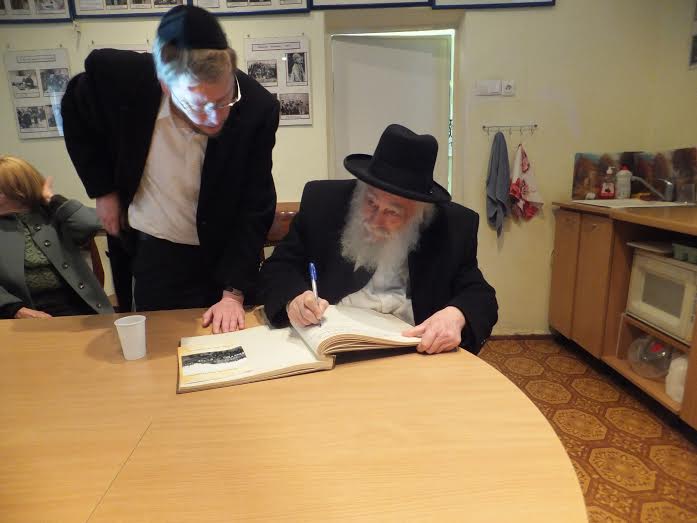
Rabbi Shmuel Arieh Levin from Argentina visited the Panevėžys Jewish Community on February 15. He arrived with eight members of his religious community. The purpose of the visit was for the delegation to observe with their own eyes the state of the Jewish community in Panevėžys, to learn more about their history, to learn about the world-renowned yeshiva and to find out more about the founder of the Ponevezh yeshiva, Rabbi Yosef Shlomo Kahaneman, the Ponovezher Rov and chief rabbi and former member of the Lithuanian parliament who founded in 1919 the yeshiva where 500 students from Europe studied. Rabbi Kahaneman and his eldest son, who had diplomatic status, left for America in 1940, and during World War II moved the Ponevezh yeshiva to, or reëstablished it in Bene Berak (Bnei Brak, with a sister institution in Ashdod), Israel. Rabbi Levin was graduated from the Ponevezh yeshiva in Israel and personally knew Rabbi Kahaneman and his son Elias Kahaneman. Today the world-famous yeshiva where more than 1,000 students study is led by his grandson, Rabbi Eliezer Kahaneman (Cohenman).

Lithuanian Jews, Fostering Lithuanian Independence since 1918. An excerpt from Vilius Kavaliauskas’s book

sarasas2
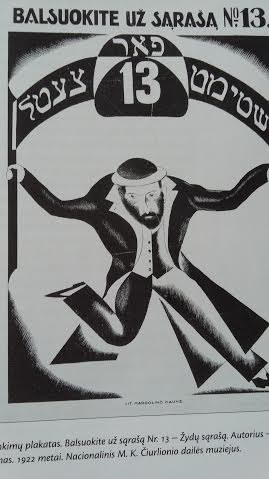
Election poster. Vote for List Number 13–the Jewish List.

A translated excerpt from Vilius Kavaliauskas’s book “Pažadėtoji žemė – Lietuva,” or “Lithuania, the Promised Land”:

After independence was reestablished and the Lithuanian state was established on democratic principles on February 16, 1918, one of the most important events in Lithuanian Jewish history was the Jewish Affairs Institute established by the independent state in 1919, which in essence performed the functions of a government ministry. Dr. Maksas Soloveičikas became minister without portfolio.

From 1918 to 1926 Lithuania’s Jewish population successfully involved themselves in the country’s governance structures and actively ran for posts in elections to municipal bodies and the parliament of the Republic of Lithuania. There were a number of Jewish members of the ministerial cabinet of the Lithuanian government as well: minister without portfolio for Jewish affairs [sic] Jokūbas Vygodskis, Maksas Soloveičikas, Bernardas Fridmanas (from Panevėžys, judge at the Panevėžys District Court in 1925) and Simonas Rozenbaumas.

Doctor of philosophy Maksas Soloveičikas (1883-1957) was exceptional for his erudition and education. He studied in Petropol [Petrograd, Leningrad, Saint Petersburg. etc.], Germany and Switzerland. He was an active member of the Zionist movement and a Jewish press correspondent. He spoke Russian with his fellow ministers. In 1921 he was elected to the World Zionist executive committee in London.

The cabinet of ministers tolerated the Jewish community’s aspiration to turn the ministry into a political institution while the Vilnius question remained unsolved. When the Christian democrats came to power in 1924, the accreditation for the ministry was withdrawn and the ministry ceased to exist.

Opening of Exhibit “YIVO in Vilnius: The Legend Begins”

YIVO-d5281c3b6c78a6447dd232c1c135c8d3.jpg

You are invited to the opening of the exhibit “YIVO in Vilnius: The Legend Begins” at the Lithuanian National Museum at Arsenalo street no. 1 in Vilnius at 4:00 P.M., February 18. Exhibit curators: Dr. Lara Lempertienė and Dr. Giedrė Jankevičiūtė.

The exhibit was created to celebrate the 90th anniversary of the creation of YIVO in Vilnius. It includes previously unseen material from Lithuanian state collections on the history and work of YIVO. It demonstrates how YIVO’s work gave stimulus to the intellectual life of the Jews of Vilnius and the wider Central and Eastern European arena. It also presents the city and urban community as a source of inspiration and as the historical and cultural hearth and sustenance for the institute’s work. The exhibit was first shown at the Galicia Jewish museum in Cracow from September 30 to November 8, 2015. The exhibit to open in Vilnius contains additional material.

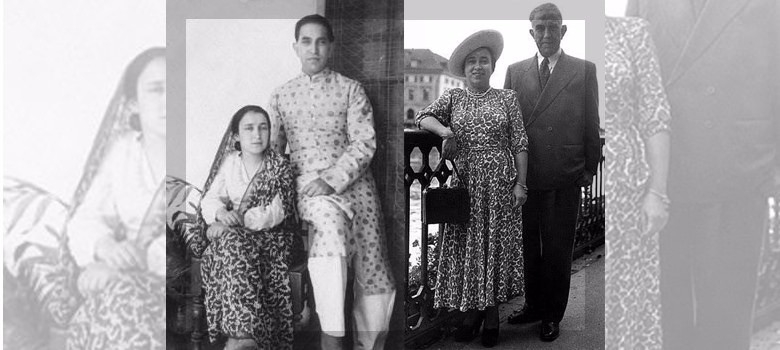
A Story of the Holocaust and the AIDS Epidemic: The Romance of an Indian Muslim Freedom Fighter and a Lithuanian Jewish Woman

headerphoto

by Kenneth X. Robbins and John Mcleod

In 1992 the editor of the Times of India telephoned one of Mumbai’s most prominent businessmen, Dr. Yusuf K. Hamied. The editor asked Hamied “as a Muslim leader” his opinion on the communal riots then taking place in the city. Hamied replied: “Why aren’t you asking me as an Indian Jew? Because my name is Hamied? My mother was Jewish!” His maternal grandparents perished in the Holocaust.

Lithuanian Jewish Heritage Becoming Ever More Topical

Simno sinagoga

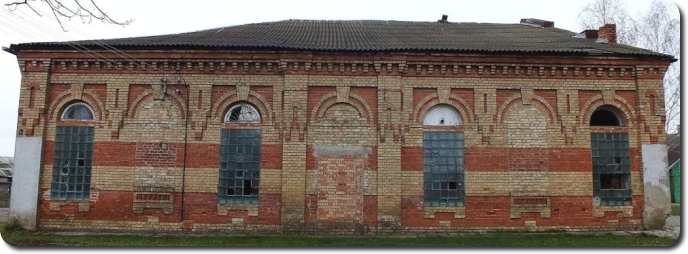
A new cultural heritage site has been added to the Lithuanian registry of cultural treasures: the Simnas brick synagogue at Laisvės street no. 4 in Simnas, in the Alytus region. The synagogue’s outer form has survived almost intact to the present day. “Jewish cultural heritage has become ever more topical recently. Municipalities and regional administrations are striving to make surviving Jewish cultural heritage in their jurisdictions known, its value is being understood, and it is being made public and resurrected to live again. The number of positive examples keeps growing. Frequently more remote small towns are known in the world only because of the surviving Jewish cultural heritage and thus draw tourists,” Diana Varnaitė, director of the Cultural Heritage Department under the Lithuanian Ministry of Culture, said.

Full story in Lithuanian here.

Panevėžys Jewish Community Marks International Holocaust Day

Pa1

The Jewish community, students and general public gathered on a rainy and overcast January 26 in Panevėžys at the Sad Jewish Mother statue to mark Holocaust Remembrance Day.

Panevėžys Jewish Community chairman Gennady Kofman spoke first, saying a lack of concern is the worst crime in the world and is responsible for innocent people dying. The genocide of the Jews of Lithuania is a global tragedy, as is the genocide of the Jews of Europe, which must never happen again, he said.

Hundredth Anniversary of Birth of Vladas Varčikas, Rescuer of Jews, Teacher, Violinist

fa094381-1734-477d-8407-eee257e1537b

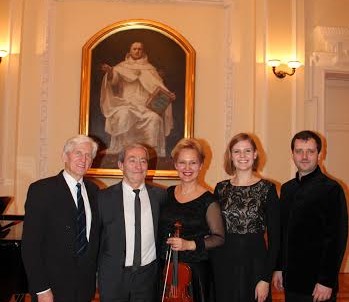
The Kaunas Jewish Community and the Sugihara Foundation “Visas for Life” invited friends who knew Vladas Varčikas and all who wanted to pay their respects to this gigantic figure, a rescuer of Jews, humanitarian, teacher and violinist, to celebrate hsi 100th birthday with a concert in the Grand Hall at Vytautas Magnus University in Kaunas. The hall was filled to capacity and overflowing despite the frozen weather.

Kaunas Jewish Community member Stasys Makštutis began to tell the story of Varčikas and the story was continued by his grandmother, Elena Andriuškevičienė, who was rescued from the Kaunas ghetto by Varčikas and survived to later become his colleague. Varčikas’s students, students of his students and their children performed music and shared their memories of the man. Actress Kristina Kazakevičiūtė, whose daughter was a student of Varčikas, read out director Kama Ginkas’s recollections of Varčikas, the man who saved him. She also read passages from Reinhard Kaiser’s book about Edwin Geist, whose compositions were rescued for posterity by Varčikas.

Houses That Talk: A Book about Vokiečių Street in Vilnius

You’re invited to the presentation of the book “Houses That Talk: Sketches of Vokiečių Street in the Nineteenth Century” by Dr, Aelita Ambrulevičiūtė at 6:00 P.M., January 22, at the Jewish Culture and Information Street at Mėsinių street no. 3 in Vilnius.

The book provides a picture of the commercial life of the street in the 19th century. It details in English and Lithuania the history of 32 former buildings on the street, their owners and the commercial enterprises which operated in them. There is a presentation of stores and store owners and goods, banks and other businesses. The book is full of photographs from the late 19th and early 20th century.

The author and Sigita Pūkienė, director of the publishing house Aukso žuvys, are scheduled to attend the event.

Academic Insight into the Holocaust Experience

Academic Insight into the Holocaust Experience

by Ruth Reches

A well-rounded understanding of the psychological and other effects of the Holocaust is relevant both in the academic and social spheres. It is imperative that we grasp the extent of the Holocaust and understand it fully in order to avoid such a disastrous phenomenon in the future. There are many academic sources which portray and fully examine the Holocaust from the moral, philosophical, economic, political and other points of view. Psychological research on the Shoahm however, has only just begun. Without such research an understanding of the extent of the Holocaust is incomplete and the evaluation of its meaning incorrect.

Catastrophes and especially their psychological impacts always capture the attention of psychologists. There is a wide variety of research focusing on the psychological effects of, for instance, natural disasters or military conflicts. A common feature in researching these catastrophes is the fact that scholars concentrate on temporally more proximate consequences. Usually such research is carried out right after the event takes place or in the course of a few years. Long-term psychological effects are under-researched but it is this particular area which is of key importance: it allows us to evaluate the fundamental outcomes which do not fade easily.

Report from the A Mehaye Winter Camp 2015

713

Pavel Guliakov, the LJC’s new director ew coordinator of youth programs, reports the A Mehaye winter camp is drawing to a close and was a wonderful success.

He said the winter camp is the largest annual youth program event with the greatest participation and requiring the most organizational work. This year a parents’ committee was called to help with organization and to draw up safety measures, rules and disciplinary measures, Guliakov reported.

A team of young but incredibly responsible and talented coordinators, counselors and professionals aided the camp leaders in their work this year. Guliakov noted there was a high level of comfort and familiarity because all of the members of the time except one (the Judaism coordinator) had themselves participated as children in Community youth programs, and besides working as camp guides were involved in all sorts of other outside activities including Jewish music and dance, art workshops and even professional cinematography.

Jewish Cultural Heritage in Lithuania

The Cultural Heritage Department under the Lithuanian Ministry of Culture has posted a PDF document called Jewish Cultural Heritage in Lithuania:

Jewish Cultural Heritage in Lithuania

Jews settled in the territory of historic Lithuania during the rule of Grand Duke Gediminas in the first half of the 14th century. Economic and historic conditions in the Lithuanian lands proved to be conducive for the emergence of a unique community of Lithuanian Jews, which later became known as the Litvaks. The growing Lithuanian Jewish communities attracted rabbis, who were knowledgeable and experienced in the field of education. Jewish quarters were formed in each town, with a synagogue and a synagogue yard as a prayer house and schooling and administrative centre of the local community. As the authority of Lithuania-based rabbis grew and the Lithuanian Jewish communities prospered, yeshivas, Jewish spiritual high schools, were founded in various Lithuanian towns. From the end of the 19th century, and with yet greater intensity after World War I, a network of secular educational institutions developed in the Republic of Lithuania, in Vilnius, and in the surrounding areas, offering instruction in the Yiddish and Hebrew languages. Local printing houses produced sacred and secular books needed for the educational process. All this collectively created a solid foundation for the Jewish press and high culture—theatre, art and literature—to grow and flourish. The Lithuanian Jewry, like Jewish people everywhere else in Europe, was subjected to the horrors of the Holocaust in 1941–1945. Their cultural heritage fell victim to the destruction alongside its creators. In present day Lithuania, the quiet witnesses of this formerly glorious culture can be encountered in various Lithuanian towns and villages.

Maestro Anatolijus Šenderovas at the “Destinies” Series at the LJC

likimai7

The twenty-second installment of the “Destinies” series regularly organized by Lithuanian Jewish Community deputy chairwoman Maša Grodnikienė featured one of the most famous of contemporary Lithuanian composers, National Prize recipient Anatolijus Šenderovas. Kamilė Rupeikaitė-Mariniuk, PhD, deputy director of the Vilna Gaon Jewish State Museum and an expert in cantillation and music, led the conversation with the composer.

Šenderovas, considered modern composer of unique talent, spoke cheerfully of his life and his musical career. Lithuanians seem quite proud of their composer. His works are performed by many musicians and orchestras, and new variations upon them constantly appear. Many people turned out for the “Destinies” event and left the auditorium inspired by his amazing energy.

Darbėnai: Žemaitijan, Jewish, Japanese

Darbėnai, getting more beautiful by the day, has finished erasing its blemishes. Maintaining respect for its past, the town has reconstructed its main square and the areas around it, and has finally torn down the Soviet Palace of Culture which had become an abandoned eye-sore long ago. There’s only one thing left for the residents of Darbėnai to do: to come to terms with historical memory and let the Jewish past back into town, and learn how to live with it.

by Jūratė Kiliulienė, veidas.lt

While the ever-more-frequent chill winter winds still haven’t brought snow, the beauty of the small town is plain to see. Most likely the residents themselves still haven’t got used to it, and the changes so pleasant to the eye are a topic of conversation among the townspeople, who can now show the place off to outsiders. After archaeological digs, the sidewalks and pavement have been put back in order, there are new street lights and modern benches. Several years back the changes began in Darbėnai from the center, the old Market Square. In line with the preferences of residents, here, in front of the pre-war Jewish houses, paving stones were laid.

Full story in Lithuanian here.

When Chiune Sugihara Celebrated Hanukkah in Lithuania

Hanukkah, 1939.
Kaunas.

I told him the story of how Judah Maccabee led his men into war against the powerful Greeks, who had defiled the temple, and how their tiny force defeated the much greater armies of Antiochus. Judah and his followers liberated Jerusalem, and set about rededicating the temple, but when they went to light the lamps they could find only enough oil to burn for one day. Keeping the faith, they used the one small cruse they had, and God made the oil burn for eight full days. This is how Chanukah became the festival of lights. Each evening the shammers, the one candle used to light all the others, was used to light one more candle, until on the eighth day all eight candles were burning.

The tables were laden with the best of food and drinks, including some Japanese food which [aunt] Anushka supplied from her shop. We also had veal with small roasted potatoes, roast duck in orange sauce, and many other wonderful things.

Mr. Sugihara also asked me about our family life and my hobbies. When I told him that I collected stamps, he invited me to come and visit him at the consulate. He said he would give me some stamps from Japan.

Review of Holocaust Fiction by Former Lithuanian Cultural Minister

The Lithuanian news, culture and religion website bernardinai.lt has published a review of a work of fiction by the former Lithuanian minister of culture about a Jewish child surviving the Holocaust in Lithuania.

Rimgailė Kasparaitė reviewed Saulius Šaltenis’s book “Žydų karalaitės dienoraštis,” or “Diary of a Jewish Princess,” published by Tyto alba publishers in Vilnius in 2015. The newspaper and website Lietuvos rytas provided a short synopsis of the book on their page kultura.lrytas.lt, describing it thus:

“‘Žydų karalaitės dienoraštis’ is a novel about young Jewish girl Estera Levinsonaitė’s life in Lithuania during and after the war in the family of a young couple in love. Naked and covered with blood, she crawls to the home of Vladas and Milda on their wedding night…

Tirkšliai Wooden Synagogue Gets Legal Protection

lz

A new cultural heritage site has been placed on the list of Lithuanian cultural treasures: the wooden synagogue of Tirkšliai in the Mažeikiai region of Lithuania. The synagogue is believed to be the earliest synagogue in the region built in the late classical style. Cultural Heritage Department director Diana Varnaitė said: “Wooden synagogues are now a rarity in Europe. Bearing in mind how the world values heritage made of wood from the past, we must understand that wooden synagogues are priceless.” She said she was glad another wooden synagogue had been added to the list of cultural treasures and that it will facilitate preserving the site. Antanas Eičas, head of the Telšiai section of the Cultural Heritage Department, said the Žemaitija region is exceptional for its wooden architecture and especially its wooden churches and synagogues. “The Tirkšliai synagogue built in the first half of the 19th century has been listed on the cultural treasures registry. It is now the only remaining wooden synagogue in the Mažeikiai region. It and the former Seda synagogue are from a similar late classical period. Up until World War II there was also wooden Jewish houses of prayer in Viekšniai, Židikai, Leckava, Laižuva and Pikeliai. Let’s preserve this rare and unique cultural heritage treasure,” Eičas commented.

Full story in Lithuanian here.