
History of the Jews in Lithuania

Oldest Jewish Community in South Africa Looks Back over 175 Years

gardens3

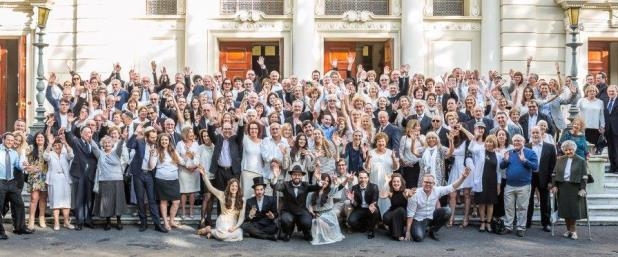
The oldest Jewish congregation in South Africa, Cape Town’s Gardens Shul, celebrated its 175th anniversary recently. The community was established in 1841. The initial service was held in the house of Benjamin Norden and under the leadership of Joel Rabbinowitz the first synagogue in South Africa, the Gardens Shul, was erected in 1862. Philip Krawitz, a recipient of the prestigious Yakir award from Keren Hayesod-United Israel Appeal in Jerusalem and called “the unofficial mayor of the Jewish community in Cape Town,” in other words, the Cape Town Jewish Community chairman, spoke at the birthday celebrations.

pk

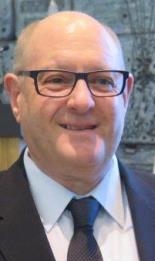
Address by Philip Krawitz
Gardens Synagogue 175th Anniversary Celebration
March 31, 2016

The Role of Jewish Business in South Africa: “A Light unto Nations”

Cast your mind back a few years… You leave your Sea Point Apartment designed by Dennis Fabian and built by the Berman Brothers. You hop into your Toyota bought from the Sanks. You pop into Pick ‘n Pay (founded by Raymond Ackerman) for some groceries. You’re off to Artscape to watch a matinee starring Aviva Pelham in La Traviata. Thereafter you’re off to the Spur (don’t tell the Rabbi!) created by Allen Ambor. (By the way, they now serve kosher burgers.) Tomorrow you’ll visit the V&A where you’ll find an outfit for your granddaughter from Jonni Katz’s Earthchild. Perhaps you’ll even get a chance to get a new down jacket from Cape Union Mart, sneakers from Barry Selby’s “The Athletes Foot” or a suit from Arie Fabian’s Fabiani. And if you’re feeling peckish, you grab a cappuccino from Ian Halfon’s Balducci. Charge it all to Kantor & Koseff’s Investec Card. Fortunately your Liberty Life Pension cheque (thanks to Donny Gordon) will more than cover your expenses. Indeed you could be forgiven for believing that the whole world is Jewish!

Litvak Won’t Give Grandchildren Pancake Recipe

pp

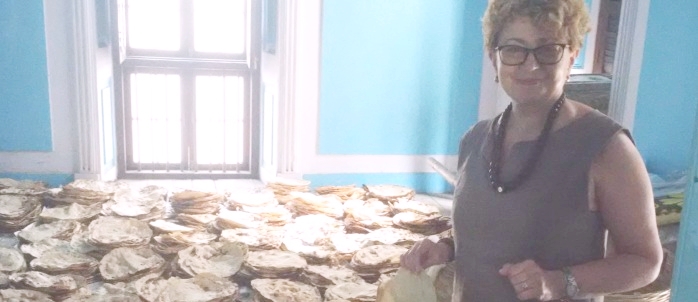
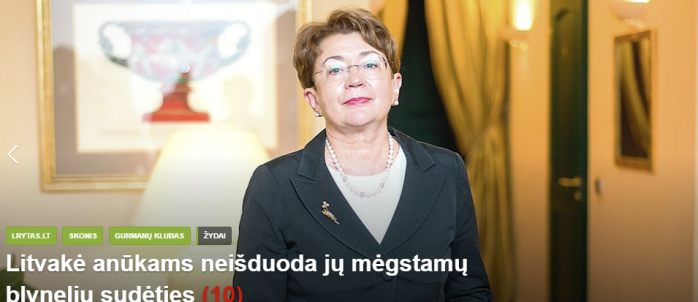
As kosher cafés open around Vilnius and it’s possible to eat kosher food and bagels, Lithuanians are rediscovering Jewish culture with an emphasis on cuisine. That pleases the chairwoman of the Lithuanian Jewish Community, attorney Faina Kukliansky, 61.

Jewish cuisine has always been popular in Lithuania. And it’s no wonder, since many Jews have lived in our country from ancient times, the Lifestyle Section of the Lietuvos rytas newspaper writes.

Some dishes which everyone thinks are traditional Lithuania are actually borrowings from Jews.

One such is potato pancakes, called latkes in Jewish cuisine. Kugel is also of Jewish origin.

Many are shocked to discover that even zeppelins, of which we are so proud, are also somewhat connected with Jews. They travelled to our country about 100 to 150 years ago from northern Germany together with Jews.

Read the entire article in Lithuanian here.
img class=”alignnone wp-image-9629″ src=”http://www.lzb.lt/wp-content/uploads/2015/07/lr.png” alt=”lr” width=”83″ height=”26″ />

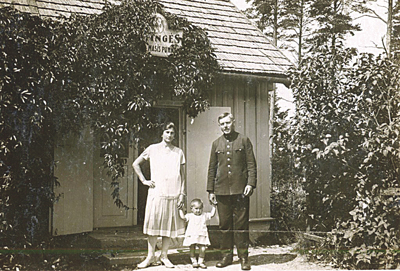
Katerina and Benediktas Bagdanavičius: Last Hope of the Jews of Darbėnai

Bagdonavciai
by Romualdas Beniušis

I recently discovered the case-file of the deportation of the Bagdanavičius family in the archives. It is a unique document from the Soviet period testifying to the will and sacrifice of the family during the Nazi occupation of 1941 to 1944 in rescuing completely innocent people of the small town of Darbėnai from genocide, and to the bitter lot of the deportees later.

Who were they, Katerina and Benediktas Bagdanavičius, the quiet heroes of the village of Būtingė who without regard to danger to them and their family reached out a helping hand to people condemned to death simply for having been born Jews?

Full story in Lithuanian here.

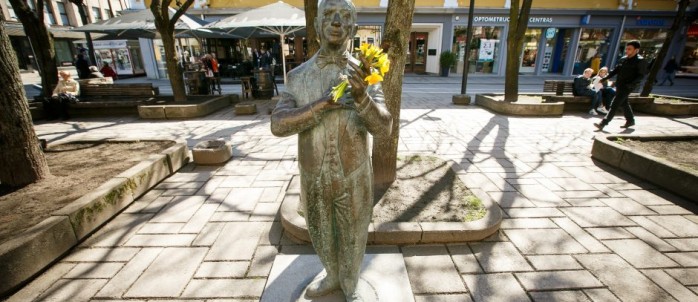
Kaunas Jewish Community Celebrates 125th Anniversary of Birth of Daniel Dolski

dolskis-7

The Kaunas Jewish Community is celebrating the 125th anniversary of the birth of Daniel Dolski in Vilnius. Dolski was a pioneer of the Lithuanian stage. Highly educated and extremely charming, he debuted on the Russian stage, moved to Western Europe after the October Revolution and settled in Kaunas in late 1929, becoming a pioneer on the popular Lithuanian musical stage. He was one of the first to perform popular songs in the Lithuanian language, having learned it over the course of a half year upon his return.

Full story in Lithuanian here.

Israeli Ambassador Hails Lithuanian Makabi and Maccabiah Games Medal Winners

Israeli ambassador to Lithuania Amir Maimon and the Lithuanian Makabi Athletics Club held a reception April 14 to celebrate victories by Lithuanian Makabi athletes at the World Maccabiah Games held in Israel and the European Maccabi Games.

Lithuanian Jewish Community chairwoman Faina Kukliansky attended along with Lithuanian Olympic Committee leaders and Sholem Aleichem Gymnasium principal Miša Jakobas, members of the board of the Lithuanian Makabi Athletics Club, 25 Maccabiah medal winners, reporters and others.

The Israeli ambassador greeted the assembly and a film was shown about the first Maccabiada in Israel in 1932 and the last European Maccabi Games in 2015.

Chairwoman Kukliansky in her speech noted the major role the Lithuanian Makabi Athletics Club has played in Lithuanian Jewish life and the contributions made by long-time Lithuanian Makabi Athletics Club president Semionas Finkelšteinas.

Litvaks Didn’t Suffer Enough to Deserve Lithuanian Citizenship?

Grant profile pic

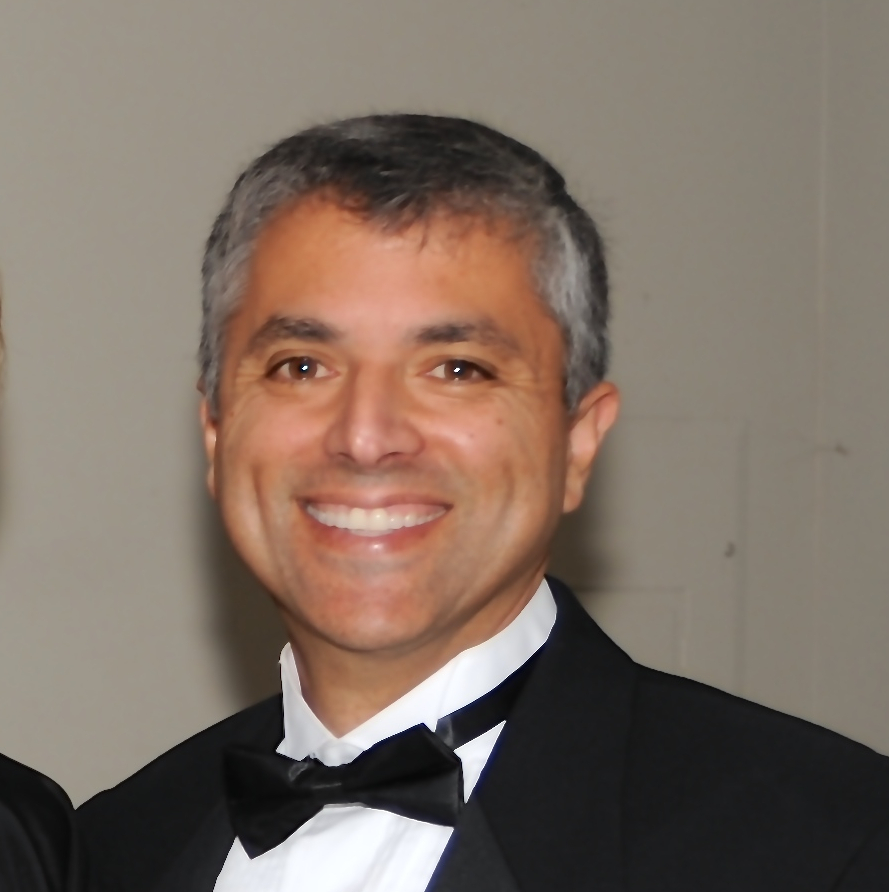
by Grant Gochin

Lithuanian officials state that Jews were not oppressed in Lithuania:

In an astonishing display regarding the ignorance of rampant anti-Semitism in inter-war Lithuania, Lithuanian Foreign Minister Linas Linkevicius stated that there was “no violence, repressions or anything like that at the time”, against Jews in Lithuania during the period 1918 – 1939. Based on this assumption, Lithuania intends to deny citizenship applications for descendants of Lithuanian Jews. The belief that Jews did not suffer enough, in Interwar Lithuania, to warrant citizenship is simply preposterous.

http://www.baltictimes.com/litvaks_continually_rejected_restoration_of_lithuanian_citizenship/

At the beginning of the 20th Century, Jews represented about 14% of Lithuania’s population. In May 1915, the Czarist regime deported and exiled approximately 100,000 Lithuanian Jews to the Russian interior. After the war ended, Lithuanian Jews, who had lived in Lithuania for centuries and often constituted half of the population of many towns, were promised that the new independent Lithuanian state would be tolerant to minorities. Jews provided considerable political support for Lithuania in international forums and enlisted into the Lithuanian army to defend their country’s independence. A great many war medals were awarded to these soldiers for their extraordinary bravery and many lost their lives fighting for Lithuanian independence. In return for their contributions, the government granted full autonomy to the Jewish community and created a Cabinet-level Ministry for Jewish Affairs. Unfortunately, these promises were not kept; in 1923 funding for this Ministry was withdrawn, and in 1924 the Ministry was abolished. Sadly, the Ministry had served little purpose, because in 1923 the Lithuanian Government reportedly rounded up and expelled Jews whom they considered to be “alien”.

About Taverns, the Vilna Gaon and the Shared History of Lithuanians and Jews

by Nijolė Bulotaitė

American academic Glenn Dynner is teaching a module at the History Faculty of Vilnius University called “Socio-cultural History of Ethnic Minorities in the Central and Eastern European Context.” The professor specializes in the history of Eastern European Jews and has written several books, including “Men of Silk: The Hasidic Conquest of Polish Jewish Society” (Oxford University Press, 2008) and “Yankel’s Tavern: Jews, Liquor and Life in the Kingdom of Poland” (Oxford University Press, 2014). What prompted the professor to take an interest in taverns and Lithuanian and Polish Jews, and what has he discovered? We asked him those questions in Vilnius recently.

Q. Why Poland and Lithuania exactly? Was Jewish life here somehow special?

A. When I was a naïve American student, as soon as I started professor Antony Polonsky’s class at Brandeis University I learned the majority of the world’s Jews lived in Poland and Lithuania before the Holocaust. The professor was my doctoral dissertation supervisor later. I learned three quarters of the world’s Jews in the 19th century lived in Eastern and Central Europe. My problem was I didn’t know any languages. At first I had to learn Hebrew, then Polish, Yiddish and several more. Only then did all the rich sources become available to me. Not many Americans are able to do research in this area because the languages are rather difficult, and it’s difficult for us Americans to learn languages.

Full interview in Lithuanian here.

Inventor of Israeli Flag Remembered in Klaipėda

l

A memorial plaque commemorating David Wolffsohn, a Zionist activist who created the Israeli flag, has been unveiled in Klaipėda, Lithuania. Earlier a plaque was placed in the same city to honor Wolffsohn’s teacher, Isaac Rülf. The new plaque has been placed next to that one.

“David Wolffsohn was born in Darbėnai. To avoid serving in the Tsar’s army his father sent him to Klaipėda to study. This is where he met Isaac Rülf,” Klaipėda Jewish Community leader Feliksas Puzemskis explained.

Wolffsohn attended the Israelite Religious School then located on Grįžgatvio street. He was born in 1856 and arrived in Klaipėda, then the German city of Memel, just after turning 16. Rabbi Rülf got him involved in Zionist activities. At the First Zionist Congress in Basel, Switzerland, Wolffsohn ordered made a flag to his specifications which was hung at the congress hall. It was accepted as the official Zionist flag at the Second Zionist Congress held in Switzerland in 1898, and the State of Israel later adopted the design as the official flag, upon declaration of Israel as an independent state in 1948.

Joint Visits Panevėžys

JointPan
JOINT atstovai lankosi Panevėžyje

AN event was held at the Panevėžys Jewish Community April 6 to welcome honored guests during their brief visit. One of them, Lee Seidler, arrived with his family. American Joint Distribution Committee director Diana Fiedotin and JDC representative in the Baltic states Moni Beniosev also came and took an interest in the history of the Jews of Panevėžys, visited Jewish sites and viewed the stele on Zikaro street, which was named Joint Street in 1923 in honor of the Joint Distribution Committee.

Remembering Jewish Vilna in Painting

Vilnius topografija

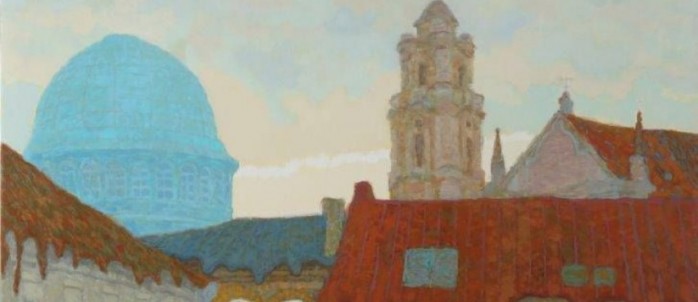
The catalog of the exhibit of Lithuanian painting and photographs called “Zakhor. Remember. Topography of Images of Jewish Vilnius” will be launched at the Lithuanian Jewish Community at 7:00 P.M. on Thursday, April 14. The catalog and exhibit are the work of curators Linas Liandzbergis, Elke-Vera Kotowski and Gabrielė Žaidytė. The exhibit has been at show at the Old Town Hall in Vilnius and at the Konrad Adenauer Foundation in Berlin.

From May to August the exhibit will grace the halls of the Cape Town Jewish Museum and the Johannesburg Holocaust Museum in South Africa, then travelling on to Israel, Argentina and other destinations where sizeable populations of Litvaks live. The presentation, to be attended by Dr. Julius Schoeps, director of the Moses Mendelssohn Center and the Center for Jewish Studies Berlin-Brandenburg, is also to include a short film documenting earlier showings of the exhibit. Improvisational jazz is to be performed at the presentation by Lithuanian musician Kęstutis Vaiginis.

Rakija Klezmer Orkestar

Rakija klezmer1

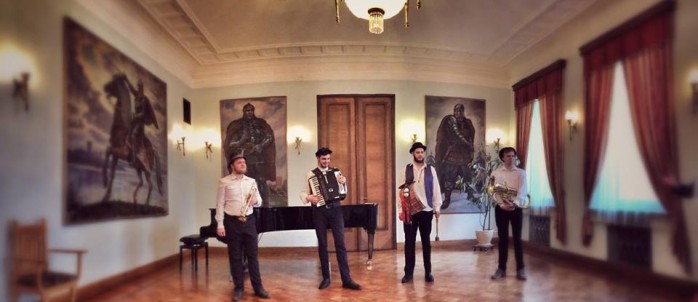
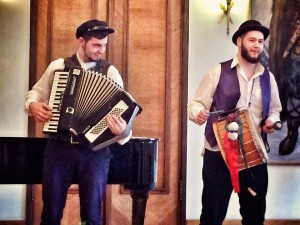
Rakija Klezmer Orkestar is a klezmer group which formed three years ago in Kaunas, Lithuania. They have performed Hanukkah concerts at the Lithuanian Jewish Community.

Rakija Klezmer2

The group say they want to revive Litvak klezmer traditions. The four-set will soon become five with addition of Mantas Ostreika on saxophone. The other members are Darius Bagdonavičius, Mikas Kurtinaitis, Skirmantas Rumševičius and Povilas Jurkša.

International Meeting of Young Rabbis at Panevėžys Jewish Community

rabinaiP

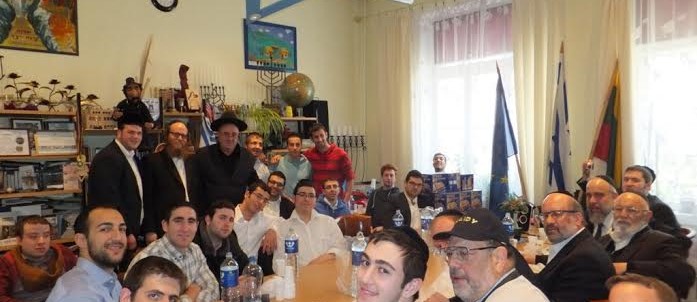
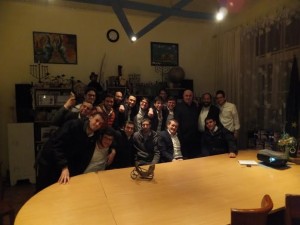
Two groups of young rabbis from Canada, England, France, Israel, Japan and the United States came to the Panevėžys Jewish Community April 7, interested in Jewish life before World War II and now. The first group was led by Rabbi Meir Wunder, who leads trips by high school students to Panevėžys annually. The young people were interested in the life of Rabbi Yosef Shlomo Kahaneman.

Kahaneman was born in the village of Kuliai in 1886 and studied at the yehsivas in Plungė and Telšiai before going on to the yeshiva in Novogrudok, now in Belarus. He became yeshiva director. He lived with his family in Panevėžys from 1919 to 1940. In 1923 he became a Lithuanian MP. In Panevėžys he set up a poorhouse, an orphanage and the Yavne Jewish religious school for girls, and headed the yeshiva. Later he and his son moved to Israel where he continued to maintain Litvak religious traditions. On the wall of an orphanage he founded are the names of the yeshivas of Lithuania. The Panevėžys yeshiva was also restored in 1919 due to his efforts.

rabinaiP1

The second group was led by Rabbi Tuvia Konn and Rabbi Nesivos Tours. They spoke about how they had heard of the Bokhrim yeshiva and became interested in the city of Panevėžys, and when there was opportunity to visit, they gladly came in search of their roots. They visited Jewish sites in Panevėžys and viewed a film about the history of the Jews of Panevėžys which they said opened a window onto the past.

Documentary Filmmaker Visits Panevėžys Jewish Communtiy

filmavimas

A documentary film crew shot footage at the Panevėžys Jewish Community April 8 for a new film about Panevėžys Jewish architecture before World War II. Panevėžys Jewish Community chairman Gennady Kofman spoke about the history of Panevėžys Jews to an audience of the director and guests from the Margarita Rimkevičaitė Technical School.

Order of Malta to Aid Lithuania’s Righteous Gentiles

April 6, 2016–Lithuanian president Dalia Grybauskaitė met Wednesday with Righteous Gentiles, or people who rescued Jews during World War II in Lithuania. The ambassadors of the Order of Malta, Germany and Israel and the leaders of the Order of Malta Relief Organization and the Lithuanian Jewish Community attended the meeting.

During friendly conversation over tea, the outstanding achievements of these brave Lithuanians were remembered and thoughts were shared on their problems, concerns and the help they need. The Order of Malta project to aid Righteous Gentiles in Lithuania was presented. All Righteous Gentiles still living in Lithuania are quite elderly and many of them live in isolation and need help.

A benefit concert was held in Munich to raise money for the Righteous Gentiles in Lithuania. More than 123,000 euros were raised for this purpose from that concert.

Baron Christian von Bechtolsheim, the ambassador of the Order of Malta to Lithuania, said: “The Maltese in Lithuania take care of many ill, elderly and isolated people. But Righteous Gentiles are special. These noble and courageous people were not afraid and risked their own lives to rescue their neighbors and countrymen from death. Now it’s our turn to help them.”

Lithuanian Psychologist: Three Years Ago I Believed the Double Genocide Theory

rb
Rasa Bieliauskaitė, photo: Ugnius Babinskas

Three Years Ago I Believed the Double Genocide Theory
by Geoff Vasil

So said Rasa Bieliauskaitė, a psychologist specializing in trauma therapy, at what was, for Lithuania, a remarkable meeting of the minds recently.

The Vilnius Jewish Public Library hosted a panel discussion featuring historians and psychologists on the topic of the Holocaust and collective memory.

In their introductory statements several of the speakers, including Bieliauskaitė, mentioned Rūta Vanagaitė’s new book about the Lithuanian Holocaust, and the unexpected popularity of that book became the backdrop for much of the conversation which lasted several hours and which became a much larger discussion when distinguished members of the audience chimed in towards the end.

Lithuanian Prime Minister Thanks Fayerlakh Ensemble

To the Vilnius Cultural Center Jewish song and dance ensemble

Fayerlakh

Dear guardians of ethnic tradition,

There is no doubt the identity of a people resides in the depths of their folklore where a unique world of music beckons to us and symbolic meanings cavort. For many a year now the Fayerlakh ensemble in their concerts have brought lovers of folklore together and have popularized Yiddish culture wonderfully.

Inventive musicians, great singers and expressive dancers have come together nicely under the Fayerlakh flag. And so your concerts are dominated by a sense of beauty and cohesion. Your playful appearances are eagerly awaited by many admirers around the world.

You are probably the only ensemble in Europe who so creatively, cleverly and tightly present your own musical sources and roots.

I sincerely congratulate the entire Fayerlakh collective on the beautiful 45th anniversary of your establishment.

Let your music ring out widely across the nations for many centuries. Celebrate and preserve your foundational values. I wish you great success, creative talent and many happy meetings with the real lovers of folklore on all continents.

Algirdas Butkevičius
March 22, 2016
Vilnius

Old Prescriptions from the Interwar Period Recall the Kukliansky Pharmacy in Veisiejai

Receptas2

Danutė Selčinskaja, director of the Rescuers and Commemoration Department of the Vilna Gaon State Jewish Museum, has sent us an image of a new item worthy of display at a museum: prescriptions from the Kukliansky Pharmacy which operated in the period between the wars. This pharmacy, the only one in Veisiejai, Lithuania, operated right up until the Holocaust. The pharmacists managed to escape and were rescued by people from Sventijanskas. At the present time there is a Veisiejai Regional History Museum operating in Veisiejai. Museum director Regina Kaveckienė scanned two new items, prescriptions, which were brought to the museum by a relative of an elderly female pharmacist from the town who is no longer alive.

Danutė Selčinskaja sent the regional history museum the Vilna Gaon museum’s mobile exhibit “The Rescued Child Tells the Story…” which she created. This includes a film about the rescue of the Kukliansky family. The regional history museum shows the film to students every year. A young woman from the Kapčiamiestis School Museum who lives with her parents in Sventijanskas said everyone there had already seen the film, which is being passed around as a DVD from person to person, and it has caused a great deal of excitement there. The people understand what happened and recognize the people and places portrayed in the film.

Businessman with Litvak Roots Has Successful Chain of Restaurants

Brozinas PA

The first time South African Litvak Robert Brozin came to Lithuania, he was most surprised by the fact it was in color. It sounds funny, one of the creators of the large restaurant chain Nando’s says, but that his first impression of the land of all four of his grandparents because he’d only seen Lithuania in black and white photographs before. When he cam back again for the fifth time in late March, he already had a number of interests going here, both business and representing the Litvak community in South Africa.

“Most Jews in South Africa have roots in Lithuania. There is a total of about 80,000 Jews here and I think about 95 percent have Lithuanian roots. It’s an interesting fact that the Jewish community in South Africa is very tight-knit, and the majority of Jews who have remained living in South Africa marry Jews from the community. My son is also married to a Litvak girl. We still maintain many Litvak traditions in the family and even have dishes from Lithuania…”

Read more in Lithuanian here.

Lithuania to Investigate Jewish Treasures Stolen by Nazis

March 23, BNS–Investigation into cultural treasures the Nazis stole from Jews in Lithuania has begun, the newspaper Lietuvos žinios reports.

Last week a meeting of the International Commission for Assessing the Crimes of the Nazi and Soviet Occupational Regimes in Lithuania reached agreement on conducting several large studies, commission chairman Emanuelis Zingeris confirmed. He said the Rosenberg task force drew up lists of rare and valuable items held by Jewish organizations, libraries and museums before the war even started. “So we’re asking for additional research, which is being performed by researchers in Lithuania and abroad. I believe we will approach the German Government on with a request for clarification, because there shouldn’t be any lingering doubts regarding this,” Zingeris said.

He also spoke about the items listed in the book “Lietuvos inkunabulai” [Incunabula of Lithuania] by Nojus Feigelmanas from the Strashun library in Vilnius. “There are clear indications there were four incunabula in this library in Hebrew which the Germans took. The incunabula were printed in an Italian city in 1475. They are priceless,” Zingeris commented. His commission’s work was resumed by presidential decree in the fall of 2012. After a break of eight years, the renewed commission met again in 2013. As reported at that time, the commission only discussed technical and financial issues at that meeting. The chairman said the subcommittee investigating crimes of the Soviet occupational regime would meet in early summer this year.

BNS_logotipas