History of the Jews in Lithuania

Happy Birthday to Aleksandras Rutenbergas

Sveikiname Aleksandrą Rutenbergą su jubiliejumi!

The Lithuanian Jewish Community sends heart-felt birthday greetings to its loyal member Aleksandras Rutenbergas on the occasion of his 70th birthday, wishing him much energy and excellent health!

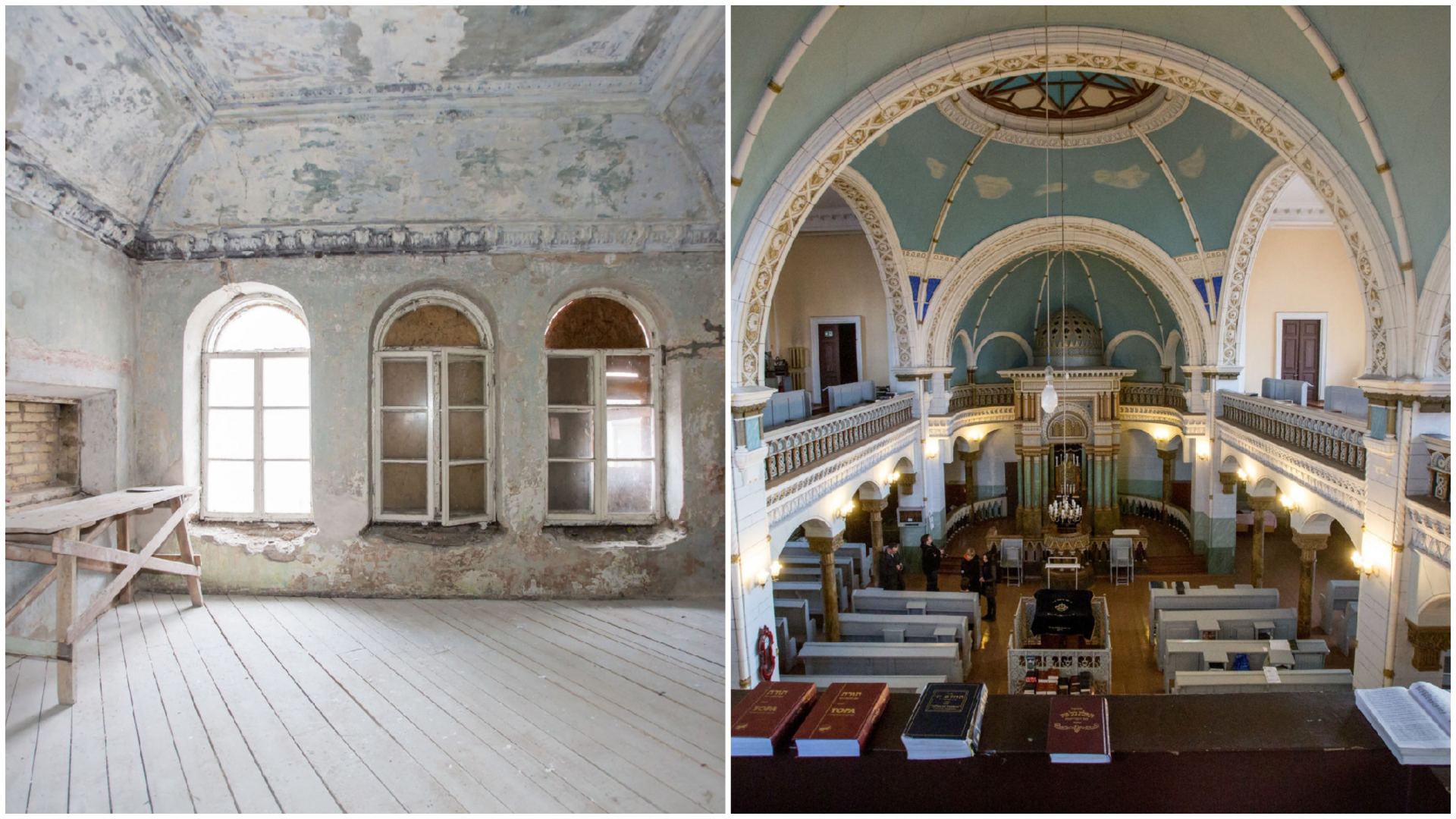
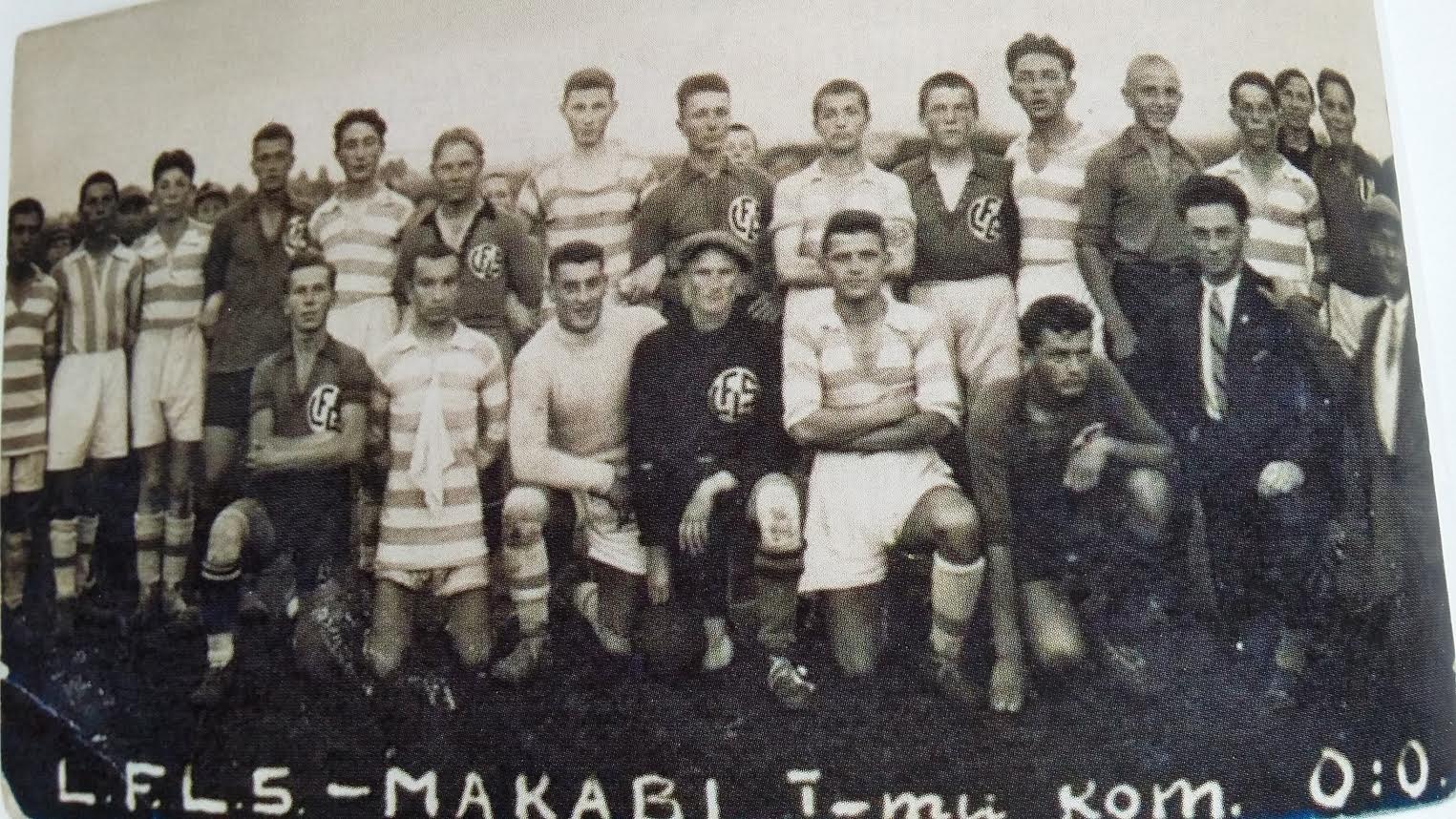
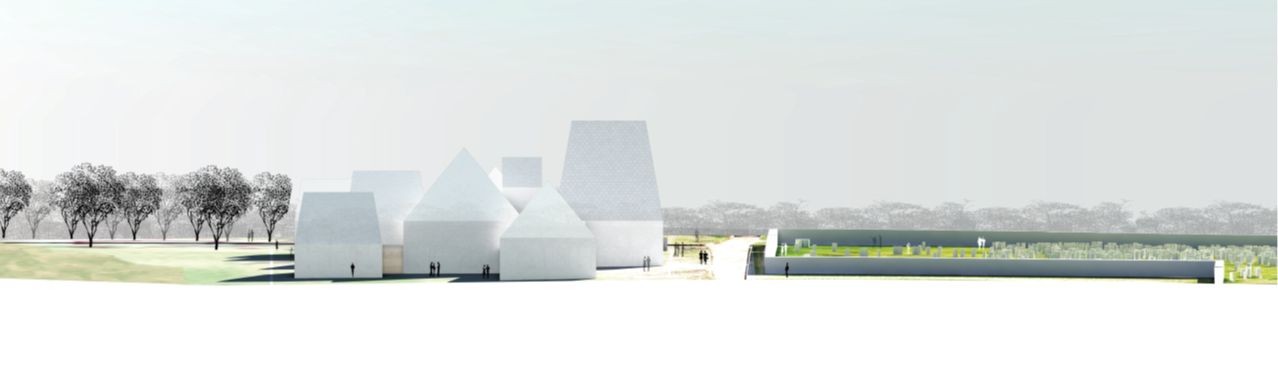
Aleksandras is an interesting and highly-educated person, a great economist who contributed to the restructuring of the Lithuanian economy in the early period of independence. For 10 years now he has served as the director of the Jewish Cultural Support Center Foundation. The foundation, which restored and refurbished what is now the Tolerance Center of the Vilna Gaon State Jewish Museum, is supported by Austria. Aleksandras comes from a well-known Litvak family and his parents survived the Holocaust in the ghettos and concentration camps. He is deeply engaged with Jewish heritage and is an active member of the executive board of the Lithuanian Jewish Community, and participates in the activities of the Makabi athletics club.

Aleksandras, we wish you a continued interesting life and that you would achieve all that your heart desires!

Happy birthday!

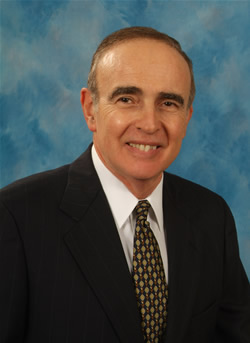
About Sheryl Sandberg’s Parents, the Sandberg Family

A few days ago we learned the great-grandmother of the world-famous woman Sheryl Sandberg lived in Vilnius. After looking into Sheryl’s family history, it turned out her parents were active participants in the battle for the right of Jews to emigrate from the Soviet Union.

Sheryl Sandberg was born in Washington, D. C., in 1969 and was the eldest of three children. Her parents were English teacher Adele Einhorn and famous ophthalmologist Joel Sandberg. In 1970 there were active in fighting for the right of Soviet Jews to emigrate to Israel. In 1975 the married couple were arrested in Kishniev, the capital of Soviet Moldova where they had to come to meet with those who wanted to leave the Soviet Union, and both were expelled from the country.

Not many people remember the anti-Zionist booklets the Soviet Union published in the millions of copies, condemning “foreign emissaries” sent by the West into the USSR, who actually sought to make contact with Jews in their struggle for their human rights, to provide moral support and aid to them. The Israeli press has written of Joel Sandberg who helped Soviet Jews from 1970 to 1980. The well-known ophthalmologist Joel Sandberg of Miami is one of a number of activists in the American Jewish community who fought the battle for the right of Soviet Jews to emigrate.

Sandberg Joel

An attempt to protest by a group of 16 refuseniks (otkazniki) in Leningrad by hijacking a plane in 1970 was a major event at the time. The ringleaders were sentenced to death, but following protests from the international community, the Soviets reduced it to long terms of imprisonment. This encouraged American Jews to support more strongly Jews living in the Soviet Union. In an interview Joel Sandberg, recalling those times, said the main goal of the Americans was to help those protesting against the emigration ban and those wishing to exit the USSR. Out of the thousands refuseniks in Kiev in 1979, only 70 people were granted exit visas a year later, while requests by 3,000 more were rejected.

Lithuanian Women’s Magazine Features Amit Belaitė on Cover

16486907_10154232463426867_5335691874283383955_oA popular magazine for young Lithuanian women has featured Amit Belaitė, the head of the Lithuanian Union of Jewish Students, on its February cover, with a long interview with her and a series of fashion photographs inside.

“Cover girl: Amita honors her people’s past with deeds,” the cover proclaims.

The feature on page 10 is called “Living History”:

“The Jewish girl Amita Belaitė (24) is completing her studies this year at Vilnius University. During her university career this active defender of human rights was able to establish the Lithuanian Union of Jewish Students, to become the vice president and a member of the executive board of the European Union of Jewish Students, to start a Jewish history project called Mayses fun der Lites/Stories from Lithuania, to become a Living Library volunteer and for all of those activities to receive a tolerance award. Amita, who selected social health studies as her major, said her professional career over those years would have been much more difficult if not for her love of her cherished boyfriend, the economist Rokas Grajauskas (31).”

More information in Lithuanian here.

Lithuanian State Auditors Find Compensation for Jewish Property Used Appropriately

BNS_logotipas

Vilnius, February 9, BNS–The Lithuanian State Auditor has no complaints on the use of compensation for Jewish religious communal property this year, although they found irregularities last year.

The State Auditor’s Office reported finding no violations in the 2016 audit of the use of such funds.

The year prior to that auditors said the foundation dispensing the funds had used some monies from the state allocated under the Lithuanian law on goodwill compensation for pre-Holocaust Jewish real estate had been used in the 2012-2015 period for matters not defined in the law, namely, to pay for administrative expnses of the disbursing foundation. In 2016 the Lithuanian parliament amended the law to allow for the Goodwill Foundation to pay its own administrative costs.

An Exhibit Leading to Love and Understanding between People and Nations

by Galina Romanova

On January 31 the cozy hall of the Nalšia Museum was packed to the gills for the ceremonial opening of an exhibit of interest to the whole world, and especially Catholics called “Pope Francis’s Visit to Israel.” Israeli embassy deputy chief of mission Efrat Hochstetler, Švenčionys regional administration head Rimantas Klipčius, regional administration council members, other public figures and locals from the town and region of Švenčionys attended the opening.

Nalsia6

Israeli embassy press attaché Liana Jagniatinskytė recalled how the embassy came up with the idea of this exhibit and “released it into the wild,” sending the exhibit to small towns and larger cities throughout Lithuania.

Klipčius said he was glad friendship between Israel and the Švenčionys region keeps growing, thanking Israeli ambassador and frequent guest to the region Amir Maimon. The director of the regional administration spoke about the Pope’s trip to Israel and recalled Pope John Paul II’s visit to Lithuania just as the country broke free from the Soviet Union. He finished his optimistic speech with a nice gesture, presenting flowers and souvenirs to Hochstetler, who was in the region for the first time.

Fifth International Jascha Heifetz Violin Competition in Vilnius

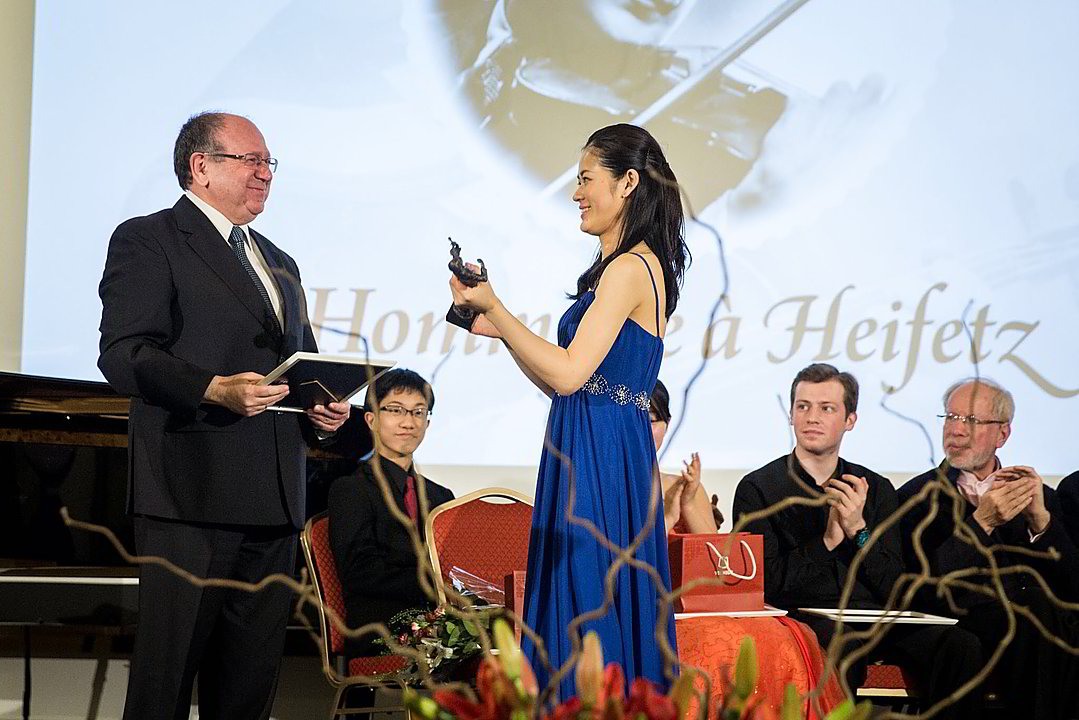
The fifth annual Jasche Heifetz violin contest will take place in Vilnius February 13-19, 2017. The Jascha Heifetz contest is one of the most significant musical competitions held in Vilnius celebrating the enduring legacy of the great Litvak violin virtuoso.

Although the 20th century produced so many excellent violinists, Heifetz stands out as the star of the highest magnitude within that constellation.

He was born in Vilnius in 1901 to a Jewish family. Vilnius was home to many nationalities, and Heifetz preserved the memory of his multicultural hometown and the life and musical traditions of his home. He began the climb to greatness in 1907 in Kaunas as a six-year-old prodigy. In 1912 he received European recognition for his talent in Berlin, and in America, beginning in 1917, he achieved world acclaim. Heifetz’s mastery has become the template for all modern violinists. The scholar Yuri Grigoryev believes the essential feature which set Heifetz apart from all others was actually the inspiration he took from the architecture of Old Vilnius, manifesting in architectonic grandiosity, classical sensibility and variety of expression.

Once George Bernard Shaw, won over by Heifetz’s performance, warned the artist in a letter the next day: “If you provoke a jealous God by playing with such superhuman perfection, you will die young. I earnestly advise you to play something badly every night before going to bed, instead of saying your prayers. No mortal should presume to play so faultlessly.” But God was kind to the artist. His art became part of the eternal repertoire of Grand Music and Vilna has the honor to be remembered as his birthplace.

Profesorius Jurgis Dvarionas

Full story in Lithuanian here.

Lithuanian Jewish Community Birthdays in February

LŽB 2017m. vasario mėnesio jubiliatai

Vilnius Jewish Community:

Jelizaveta Rodionova (February 3)
Aleksandras Rutenbergas (February 7)
Viktor Chramcov (February 8)
Jefim Pesin (February 10)
Isaak Štargot (February 12)
Ravelis Kozlovas (February 14)
Šura Cechanovskaja (February 15)
Valerij Šulman (February 20)
Inesa Fainštein (February 21)
Valentina Ivanuškina (February 23)
Vladimir Savenkov (February 27)

Kaunas Jewish Community:

Feiga Tregerienė (February 17)
Maksimas Rudekas (February 19)

Klaipėda Jewish Community:

Michail Muruzov (February 15)
Igor Zamanskij (February 26)

Šiauliai Jewish Community:

Garold Vaisbrod (February 13)
Chaimas Šeras (February 24)

Raseiniai:

Antanas Kaplanas (February 22)

Nemenčinė:

Grigorijus Kušneris (February 2)

Righteous Gentile Gražbylė Venclauskaitė Has Died

Graz1

On February 1 at the age of 105 attorney and honorary citizen of the city of Šiauliai Gražbylė Venclauskaitė passed away. She was born in 1912 to a notable and special family, each member of which individually and as a family became part of history and inseparable components of the life and growth of Šiauliai and Lithuania. In deepest sorrow the Lithuanian Jewish Community mourns her loss. The Community had been preparing a greeting to her on her birthday, noting all the accomplishments of her and her family rescuing both Jews and Lithuanians. The State of Israel recognized Venclauskaitė’s bravery in saving Holocaust victims, bestowing the title of Righteous Gentile.

Venclauskaitė had become a symbol of the city of Šiauliai, embodying optimism and quick wit, and was a living legend. She will likely be buried next to her father Kazimieras Venclauskis, the first mayor of Šiauliai in independent Lithuania before World War II.

Lithuanian Holocaust Survivor Speaks at Lithuanian School

Sulamit

As part of the international project Face of Dialogue, Holocaust survivor Sulamita Lev spoke to 7th and 8th graders at the Pope John Paul II Pre-Gymnasium in Vilnius on January 24. She was accompanied by Lithuanian Jewish Community Executive Secretariat and Protocol Officer Monika Antanaitytė. The event began with a presentation by students of Lithuanian Jewish history, the performance of several songs and dancing to Hava Nagila.

Full story in Polish on the school website here.

Full story in Lithuanian on the school website here.

Letter from Šilalė Affirms Respect for Jewish Cemetery

The Lithuanian Jewish Community has received a letter following publication of an interview with the sole survivor of the Holocaust in Šilalė, Lithuania, Ruvin Zeligman, who spoke about the disrespect shown the memory of the 1,500 Jews murdered there and the lack of care shown the Jewish cemetery and mass murder site.

Silale1

We received a letter from Jurgita Viršilienė, senior specialist of the Education, Culture and Sports Department of the Šilalė regional administration, and from the alderman of Šilalė, denying the facts about which Zeligman spoke.

Lithuanian Political Illusions: The “Policy” of the Lithuanian Provisional Government and the Beginning of the Holocaust in Lithuania in 1941

The Lithuanian Jewish Community is publishing a series of articles by the historian Algimantas Kasparavičius, a senior researcher at the Lithuanian History Institute.

kasparavicius

Part 4

By their June 25, 1941, meeting, the Provisional Government resolved to “move towards the organization of police in Kaunas, and expand partisan activities in the countryside where gangs of Bolsheviks, Communists and Jews still remain.” [1] On June 26 the PG sent a request to just-arrived Wehrmacht commandant von Pohl, asking: “1) to step-up even more the cleansing operation, 2) to allow our partisan units to operate more widely.” [2] At the same meeting that day acting prime minister professor Juozas Ambrazevičius stated “the partisans of Lithuanian work in contact with the Lithuanian Activist Front and the Provisional Government,” and where military action had already subsided “the operation of the partisans becomes police functions and as sharp-shooters.” [3] These weren’t empty words. The mechanism which had been wound up began to spin. For instance, the Alytus TDA platoon noted in their operations report for the beginning of July that “according to reports from citizens 36 Communists, 9 Red Army soldiers and a larger number of Jews had been apprehended and are in detention.” [4] It’s characteristic the Lithuanian official accurately listed the number of Communists and Red Army soldiers arrested without bothering to count the Jews arrested. If anyone knows at least a little bit about the propaganda content of the calls to action issued by the LAF and has an understanding of the internal logic and semantics of the Lithuanian language, I believe that person has a clear understanding of what that signifies and why the situation was described in this manner and not a different manner in the report by the Lithuanian official.

On July 17, 1941, Alytus district administrator Antanas Audronis reported to Provisional Government interior minister colonel Jonas Šlepetis: “The are carrying out arrests and conducting searches, and fulfilling quotas for Communists, robbers and rumor-mongers. The quotas are turned over to the local German military command. By German order 82 Communists have been shot in the district. There are 389 under arrest and approximately 345 more Communists need to be arrested.” [5] If this document isn’t a typical example of Nazi collaboration, then what does collaboration even mean?

On July 16, 1941, Alytus district police chief and aviation captain Stasys Stasys Krasnickas–Krosniūnas gave a speech to his subordinates: “Jewry, as an inbred people who under the red banner as a cover want to enslave all of humanity through the means of the highest kind of sadism and turn us into animals, has been very quickly dealt with through the radical measures of the führer of the German people. We must consider that this problem has already been solved, but there still appears one or another Lithuanian, even a police officer, who attempts to solve this problem in their own way. I tell you there can not be two different opinions on this problem. There is and should be only one opinion, it must be executed 100%, and it is clearly set out in Adolf Hitler’s book Mein Kampf.” [6]

Sole Jewish Survivor of Holocaust in Šilalė Says Old Jewish Cemetery Cattle Pasture Now

Until World War II, the majority of the residents of the western Lithuanian town of Šilalė were Jews. The brick synagogue was built sometime around 1910 to 1914 at what is now the corner of V. Kudirkos street and Maironio street. There is a hardware store there now. The old Jewish cemetery is now pasture for livestock, with just the Holocaust mass murder site next to it fenced off.

Zeligmanas

Lithuanian Jewish Community member Ruvin Zeligman is the sole survivor of approximately 1,500 Šilalė Jews murdered in the Holocaust. He was 10 when World War II began in Lithuania in 1941.

Although he hasn’t lived in Šilalė for many years now, when he speaks he still falls into the western Lithuanian dialect. His wife also comes from the region and they speak in dialect at home.

Zeligman remembers the great fire which ravaged the town in 1939, burning down his family home and the entire street, taking a terrible toll on the town’s mainly wooden buildings.

How do you remember Šilalė when you lived there with your parents and family?

At that time about 60% of Šilalė’s population was Jewish. My father was a religious figure: the cantor, mohel [performer of circumcision], a religious teacher and a reznik [a man educated in the rules of kosher slaughter]. My father graduated from the famous Telz yeshiva. He was a respected man and he helped the local residents of Šilalė with his knowledge of medicine, healing the sick. There were four of us children in the family. Mother took care of the home and the children. We lived well, back then each of us, the four children, had a golden goblet at home and mother used to bring out a silver candleholder for holidays.

Zeligmanas Ruvinas2
Zeligman lights candles for the murdered Jews of Šilalė at the Choral Synagogue in Vilnius

Holocaust Remembrance Day Commemoration in Šešuoliai

Holokausto aukų minėjimo diena Šešuoliuose

On January 27 Stanislovas Budraitis, the chairman of the community of villages of the Šešuoliai aldermanship, organized and held an observance of International Holocaust Remembrance Day. The Šešuoliai administration building hosted an exhibit of photographs called Jews Are Our Neighbors and an exhibit of the book Lietuvos žydai [Jews of Lithuania]. Šešuoliai alderwoman Jolanta Lukšienė gave a welcome speech to those who gathered for the event.

Uk01

Stanislovas Budraitis, an historian, gave a presentation called “The Contribution of Jewish Culture to the History of Lithuania,” Želva Gymnasium Museum director Zita Kriaučiūnienė gave a report called “Jewish Life in Želva,” Molėtai Regional History Museum director Viktorija Kazlienė read her “Memories of Jews of the Molėtai Region,” Sketches of the Almanac editor Vytautas Česnaitis read “Jews of Ukmergė in the Pages of the Almanac” and Anita Albužienė, a member of the Ukmergė Jewish Community, recalled tragic events and shared them with those present.

A menorah with candles was lit at the former Jewish house of prayer and participants vitisted four mass murder sites 2 kilometers from Šešuoliai on the way to Želva. Members of the Ukmergė Jewish Community and the Gutman family, now resident in Vilnius but originally from Šešuoliai, participated in the commemoration.

Monument to Lithuanian Holocaust Victims Unveiled in Waldkirch

Vokietija memorialas6

Badishe Zeitung

Waldkirch Unveils Memorial to the People Murdered in Lithuania

In 1941 Waldkirch resident SS officer Karl Jäger gave the order for the murder of 138,272 people in Lithuania. Last weekend a memorial to the victims, the vast majority of whom were Jews, was unveiled in Waldkirch.

The five basalt columns, representing the fifth commandment “Thou shalt not kill,” and two information plaques were unveiled by mayor Roman Götzmann and historian Wolfram Wette.

World Jewish Congress News

WJC13

urm

The Lithuanian embassy to South Africa launched an exhibition of photography by Raimondas Paknys January 26 called “Sounds of Silence” at the Holocaust Centre in Durban in the run-up to International Holocaust Remembrance Day. Ambassador Sigutė Jakstonytė said in an embassy press release the opening was part of the Lithuanian Foreign Ministry joining the World Jewish Congress campaign #WeRemember. Paknys’s 30 photographs portray synagogues and other material Jewish heritage in Lithuania which survived the Holocaust and was neglected by the Soviets. Visitors were also informed of Jewish heritage reconstruction projects underway in Lithuania. The exhibit was shown to the public in Vilnius, London, Jerusalem and Paris before coming to Durban.

UN Marks Holocaust Day with Sugihara Presentation

Minint Tarptautinę Holokausto aukų atminimo dieną, Jungtinėse Tautose pristatyta Č. Sugiharos istorija

The film Persona Non Grata: The Chiune Sugihara Story (2014) was shown at the United Nations in New York to January 25 as part of International Holocaust Remembrance Day commemorations. Lithuania’s permanent representative to the UN Raimonda Murmokaitë spoke at the event and said Sugihara showed one man’s conscience, pity and courage can change the world.

Japanese permanent rep to the UN Koro Bessho and UN under-secretary-general for communications and public information Cristina Gallach also spoke, and director Cellin Gluck fielded questions about his film. More than 400 people attended. The event was sponsored by the UN and the permanent Japanese and Lithuanian missions.

Meeting with Dr. Antony Polonsky

Polonskis bendr

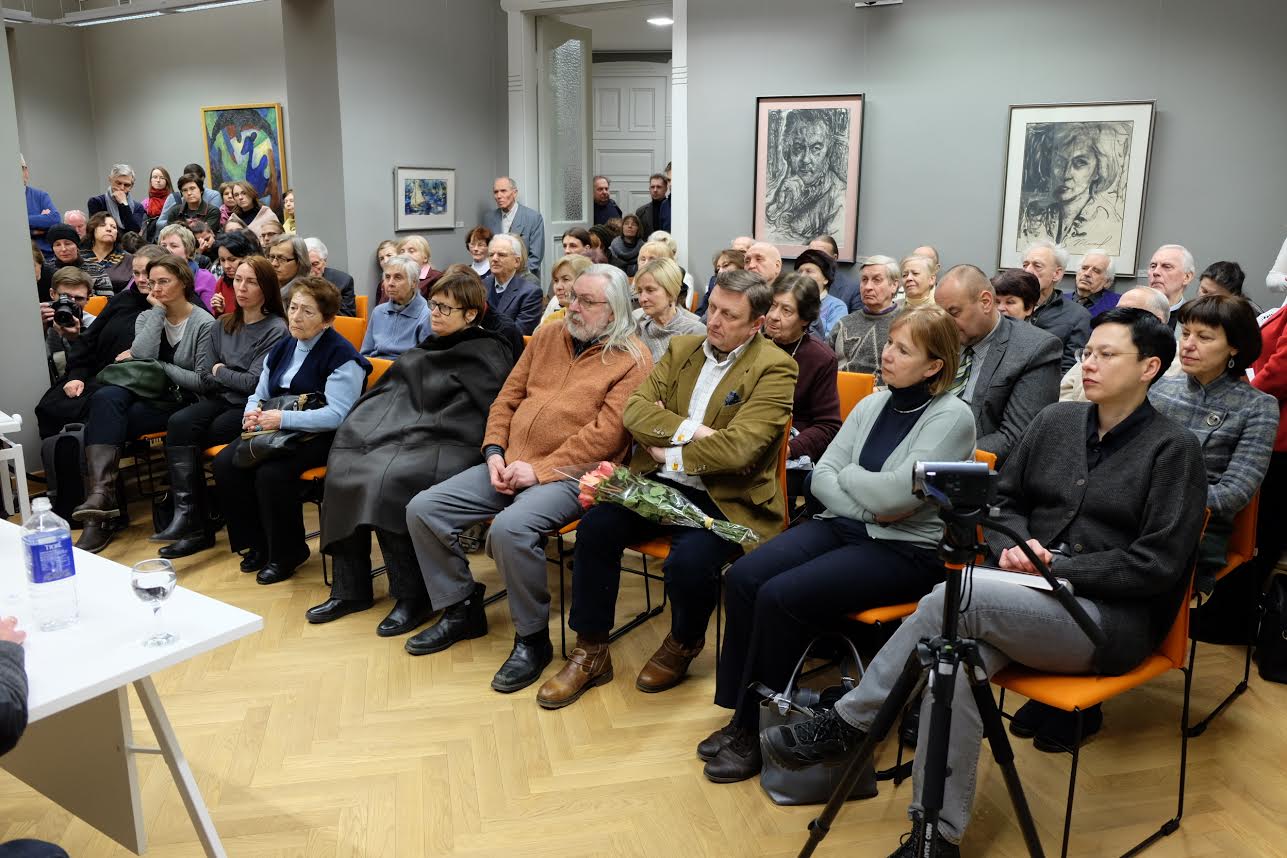
LJC members and members of the public attended a meeting with professor Antony Polonsky, whose book on Jewish history in Lithuania, Poland and Russia has been translated to Lithuania. Professor Šarūnas Liekis moderated the discussion.

The Brandeis professor is one of the most authoritative scholars of Eastern European Jewish history. His new book Jews in Poland and Russia provides an exhaustive view of the historical, political and cultural evolution of Jewish communities in these countries. Litvaks haven’t been left out, of course, and form a major part of the book.

In the 18th century the Polish-Lithuanian Jewish community was the largest in the world. The author elected not to look at Jewish history through the prisms of conflict and suffering, but instead to seek out the different principles by which the communities organized Jewish life and life with other communities.

Sale

International Holocaust Remembrance Day in Brussels

ejc

The assembly of the European Jewish Congress and a ceremony to mark International Holocaust Remembrance Day were held in Brussels. Lithuanian Jewish Community chairwoman and the heads of other European Jewish communities participated at the events.

EJCasambleja2

More photos here.

Panevėžys Marks International Holocaust Day

On November 1, 2005, the United Nations General Assembly adopted a resolution and called upon the world to mark January 27 every year as International Holocaust Remembrance Day. On that day in 1945 as World War II was still going on the prisoners of the Auschwitz concentration camp were liberated. This was the largest Nazi death camp where about 1.5 million people including the elderly and children were murdered, of whom about 1 million were Jews.

Lithuanian is a member of the International Holocaust Remembrance Alliance which actively participates in international programs to combat anti-Semitism. In 1941 Nazi Germany occupied Lithuania and over a few months the majority of the Lithuanian Jewish community had been murdered. Some Lithuanian Jews were sent as labor to ghettos set up in the cities. The Panevėžys ghetto was liquidated on August 17, 1941. About 13,500 Jews were shot. Studies by the International Commission show 200,000 Jews were exterminated. There are more than 200 mass murder sites in Lithuania, and about the same number of old Jewish cemeteries.

Paa5 getas

The date was marked on January 26 at the Sad Mother statue in Memory Square in the Jewish cemetery in Panevėžys. Participating were Panevėžys mayor Rytis Mykolas Račkauskas, Panevėžys city council member Alfonsas Petrauskas, teachers and students from the Margarita Rimkevičaitė Services and Business School and the J. Miltinis Gymnasium, members of the Panevėžys Jewish Community and city residents. Mayor Račkauskas spoke and laid a wreath, and city council member Petrauskas also spoke. Panevėžys Jewish Community chairman Gennady Kofman recalled the horrible facts of Jewish extermination, Lithuanian-Jewish cooperation and mutual aid, and thanked Lithuanians who rescued Jews. He laid a wreath before the memorial. Jewish calendars from the LJC and stars of David paid for by Panevėžys Jewish Community member Jurij Grafman were passed out to participants. Wreathes and flowers were also laid at the Ghetto Gates monument. A documentary film about the Auschwitz-Birkenau camp was screened at the Panevėžys Jewish Community, a conference was held and there was discussion on the facts in the cases of heroic rescuers of Jews.