Yiddish

World Jewish Congress Israel Delegation Visits LJC

WJC IZ7

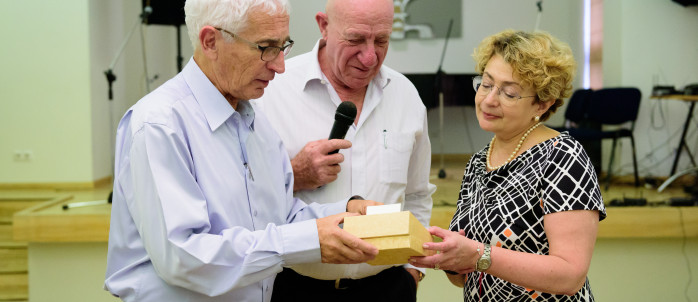
A delegation from World Jewish Congress Israel visited the Lithuanian Jewish Community. The delegation included WJC Israel chairman Shai Hermesh (former MK), member of the board of directors J. Moshe Leshem, foreign relations council director Dr. Laurence Weinbaum, Knesset Christian Allies Caucus chairman MK Robert Ilatov, MK Yakov Margi, KCAC director Josh Reinstein and WJC Israel director general Sam Grundwerg. WJC Israel visits national capitals annually to meet with members of national parliaments and Christian community leaders to establish contacts and discuss shared problems, set up Israeli support groups and increase understanding of Jewish problems. This sort of support is especially sought by Israel now, when the Jewish state is increasingly facing isolation in the international arena and especially in the EU. Last year delegations visited Russia, Poland, Latvia and Estonia.

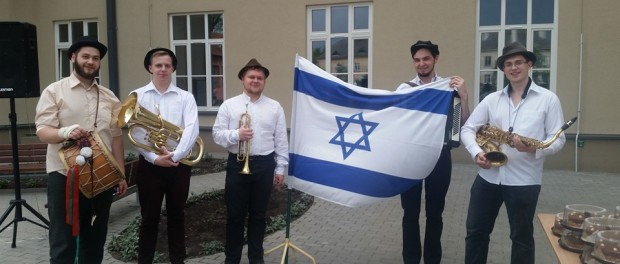
On June 1 the delegation visited the Lithuanian Jewish Community, met LJC chairwoman Faina Kukliansky and were greeted with a musical welcome of Jewish song and dance provided by the Fayerlakh ensemble, which warmed everyone’s hearts and facilitated better communication. Former MK, current vice president of the WJC and leader of WJC Israel Shai Hermesh shared with everyone heartwarming news he received on the trip to Lithuania.

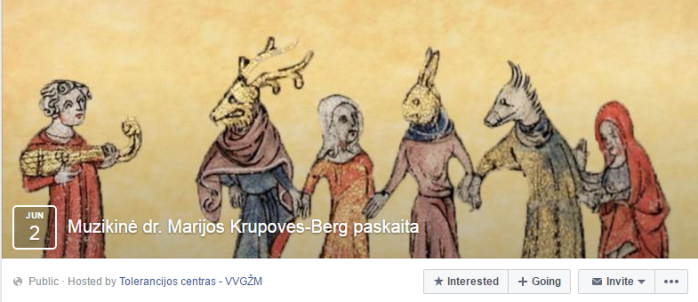
Concert of Lithuanian Ethnic Minority Music and Lesson with Dr. Marija Kuprove-Berg

mk

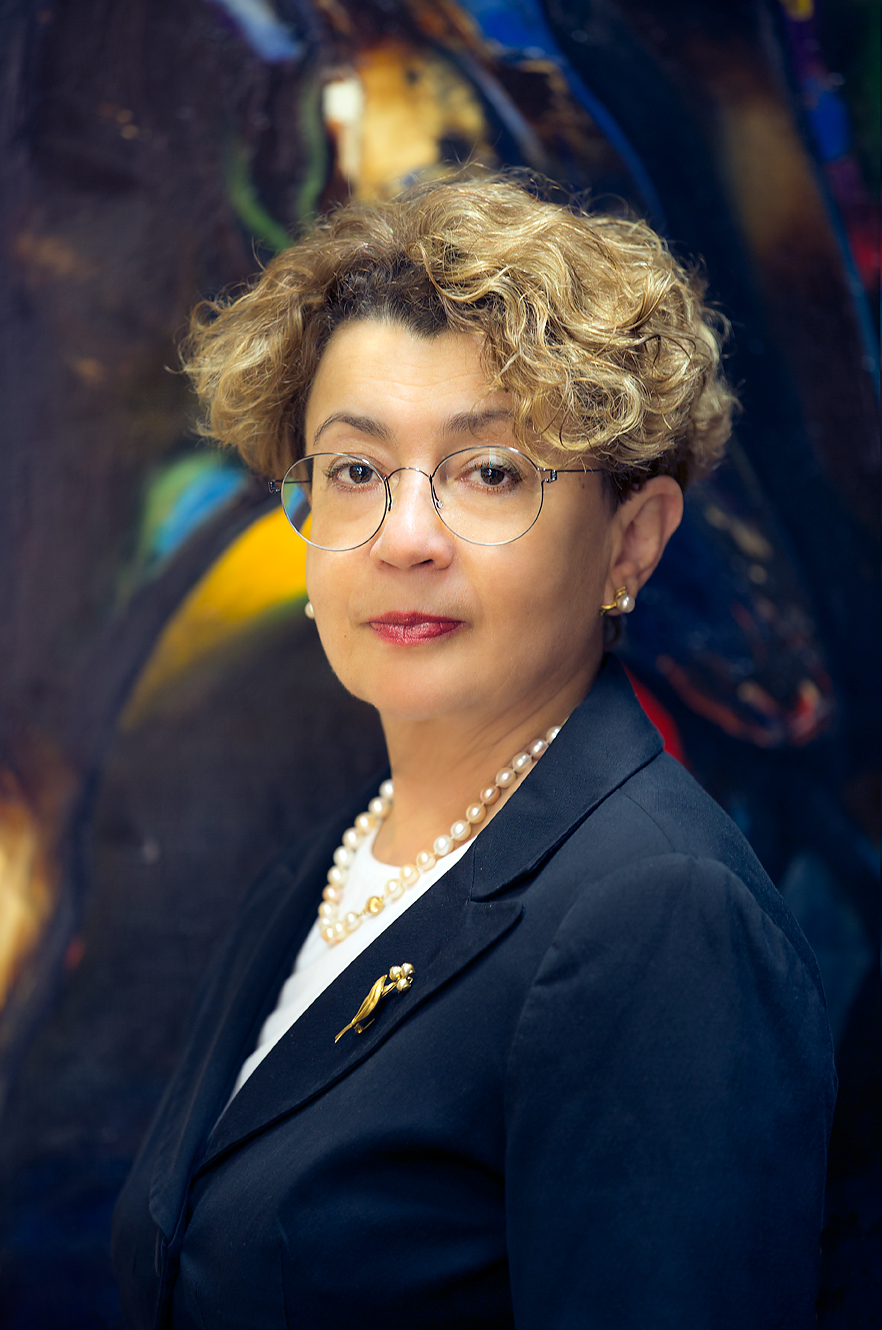
Marija Kuprove-Berg will perform at the Tolerance Center, Naugarduko street no. 10/2, at 6:00 P.M. on Thursday, June 2, 2016. Violinist Vytautas Mikeliūnas will also perform. A lecture will be held in English as well. The event is being held by the Lithuanian Literature and Folklore Institute and the Tolerance Center of the Vilna Gaon State Jewish Museum. Entrance is free to the public.

Dr. Marija Kuprove-Berg’s repertoire includes songs in all the minority languages of Lithuania, including Yiddish, Ashkenazic Hebrew, Romany, Tartar and others, and embraces Karaïte musical traditions as well.

YIVO Awarded $260,000 by NEH

YIVO Receives $260,000 Grant from the National Endowment for the Humanities
May 16, 2016

New York, NY – The YIVO Institute for Jewish Research (YIVO) is pleased to announce that is a recipient of a major grant from the National Endowment for the Humanities (NEH) for the Vilna Collections Project, a seven-year initiative to preserve, digitize and virtually reunite YIVO’s prewar archives and library located in New York City and Vilnius, Lithuania, through a dedicated web portal.

The NEH’s Division of Preservation and Access has awarded $260,000 over two years for the processing, conservation and digitization of rare archival documents rescued from the destruction of the Holocaust. The materials, looted by the Nazis and recovered with the help of the U.S. Army, were brought to New York in the late 1940s. They are a diverse resource on Jewish life, community and culture in Europe. They span the range from handwritten autobiographies by Jewish youth and humble folktales and folk songs to the archives of scholars, such as that of Simon Dubnow, known as the father of Russian Jewish history. They include photographs, Yiddish theater and political posters and the administrative records of Yiddish and Hebrew schools and yeshivas.

As City University of New York historian Jack Jacobs noted in a letter of support for YIVO’s application to the NEH, “It is simply impossible to write a dissertation or do any serious research project related to Eastern European Jewry without consulting the YIVO materials.”

Full story here.

Lithuania to Grant 30,000 Euros to Vilnius YIVO Project in 2017

maxw

The Lithuanian Ministry of Culture plans to allocate 30,000 euros in 2017 for the Vilnius YIVO project.

The Vilnius YIVO project is a seven-year endeavor to preserve, digitize and join together virtually two pre-war YIVO collections in New York and Vilnius. The project will also attempt to recreate digitally the Strashun library, one of the largest collections of judaica in pre-war Europe. YIVO, the Lithuanian Central State Archives and the Lithuanian Martynas Mažvydas National Library are partners in the project.

The project covers approximately 10,000 rare and unique books and publications and around 1.5 million documents. Material includes literary works, correspondence, memoirs, theater posters, photography, rare books, brochures, newspapers, political pamphlets and documentation of religious and communal activities.

lrkm.lrv.lt

LJC Chairwoman Speaks on Lithuanian National Radio about Citizenship for Litvaks

MILDAR-0065web

Lithuanian Jewish Community chairwoman Faina Kukliansky was one of three distinguished guests on the late morning Aktualiju studijas [News Studio] program on Lithuanian radio May 12.

“This question keeps bothering me: when did the institution of citizenship, when did that institution stop, when was it interrupted? Was it when the person was imprisoned in the ghetto? When he was transported to the concentration camp? Nobody saved those passports anywhere. You see this is such an inhumane, such an unintelligent step when you look to the future. But as the chairwoman of the Lithuanian Jewish Community I would like to say, that Litvaks are welcome in our community, with or without a passport, and we would be very proud if our Lithuanian Jewish Community grew thanks to those people who left Lithuania. So we gladly invite and welcome them without regard to their political status,” Faina Kukliansky said during the discussion.

The main topic for the show as “Why don’t we want to grant citizenship to Litvaks?” The introductory blurb for the show was: “Lithuanian Jews–Litvaks–are not just people who have achieved great things in the world, they contributed greatly to the strengthening of the Lithuanian state as well. They sought Lithuanian independence and they fought in the battles for independence [in 1918-1919]. Unfortunately, almost all of them were murdered during World War II. Only a small portion survived. Today some Lithuanian bureaucrats don’t want to grant citizenship to the small group of Jews who want it. Why not?”

The other two guests were former Lithuanian prime minister, current deputy parliamentary speaker MP Gediminas Kirkilas and the historian Alvydas Nikžentaitis.

The audience was invited to call in and pose questions.

LJC Lecture Series

The lectures are held Sundays at the Lithuanian Jewish Community, Pylimo street no. 4, Vilnius

12:00 noon May 15

Marking the 100th anniversary of the death of Sholem Aleichem (March 2, 1859-May 13, 1916)

Fiddler on the Roof, part one

12:00 noon May 22

Fiddler on the Roof, part two

Learning Yiddish in Lithuania

vilna ellen cassedy

The sky above was a brilliant blue, with puffy clouds, as I crossed the courtyard of Vilnius University on my way to Yiddish class. I had come to the capital of Lithuania to learn the language once spoken by Eastern European Jews on both sides of the Atlantic, among them my grandfather and many other family members. I’d come to walk the streets my ancestors had walked. And I’d come to see how Lithuanians were engaging with the Jewish past.

“Dear students,” our teacher said, “you must study Yiddish not only with your eyes but also with your nose.” Acquiring this beloved language was not just a skill but an art, requiring not only our heads but our hearts.

Full article here.

Kaunas Jewish Community Celebrate Last Day of Passover

PesK11

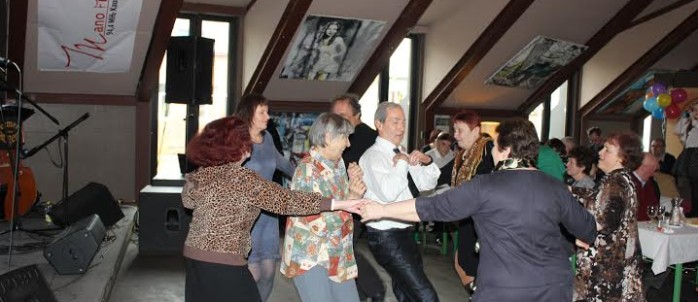
Kaunas Jewish Community members gathered at the Punto Jazz café to celebrate the last day of Passover. They were treated to a surprise concert by the family klezmer group Klezmer Klangen, reportedly performing their first concert in Kaunas ever. The crowd seemed to love them and there was much dancing. The band performed tight songs in Yiddish with good choreography down to their smallest member, four-year-old Ramunė. While the klezmer musicians took breaks, celebrants took to the stage to compete in now-traditional Passover skits. The last day of Passover coincided with the birthday celebration of Veronika Pečkienė who wasn’t forgotten amid the general party-going and was plied with flowers and birthday greetings.

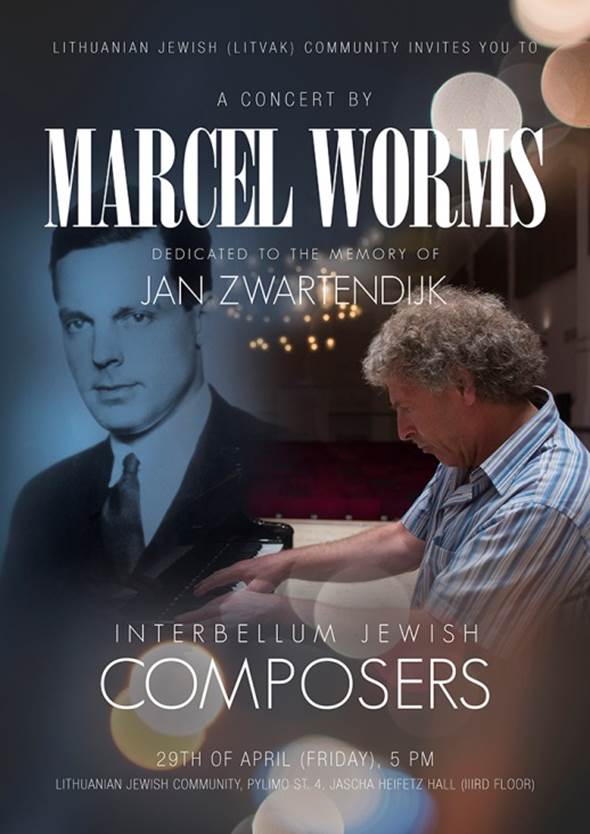
Interwar Jewish Composers

image001

a concert dedicated to the memory of
Jan Zwartendijk
Dutch diplomat and Righteous Gentile

5:00 P.M., Friday, April 29
at the Lithuanian Jewish Community, Pylimo street no. 4, Vilnius

Program:

Rosy Wertheim (1888 – 1949)
6 Morceaux de Piano

Erwin Schulhoff (1894 – 1942)
Suite dansante en Jazz (1931)

Gideon Klein (1919 – 1945)
Sonata for Piano (1943)

Alexander Tansman (1897 – 1886)
Sonatine Transatlantique (1930)

Szymon Laks (1901 – 1983)
Blues

Anatolijus Šenderovas (1945 – )
Sonatina (1973)

Leo Smit (1900 – 1943)
Deux Hommages

Dick Kattenburg (1919 – 1944)
Tempo di blues (1940)
Two Waltzes

George Gershwin (1898 – 1937)
3 Preludes for Piano (1926)

About Taverns, the Vilna Gaon and the Shared History of Lithuanians and Jews

by Nijolė Bulotaitė

American academic Glenn Dynner is teaching a module at the History Faculty of Vilnius University called “Socio-cultural History of Ethnic Minorities in the Central and Eastern European Context.” The professor specializes in the history of Eastern European Jews and has written several books, including “Men of Silk: The Hasidic Conquest of Polish Jewish Society” (Oxford University Press, 2008) and “Yankel’s Tavern: Jews, Liquor and Life in the Kingdom of Poland” (Oxford University Press, 2014). What prompted the professor to take an interest in taverns and Lithuanian and Polish Jews, and what has he discovered? We asked him those questions in Vilnius recently.

Q. Why Poland and Lithuania exactly? Was Jewish life here somehow special?

A. When I was a naïve American student, as soon as I started professor Antony Polonsky’s class at Brandeis University I learned the majority of the world’s Jews lived in Poland and Lithuania before the Holocaust. The professor was my doctoral dissertation supervisor later. I learned three quarters of the world’s Jews in the 19th century lived in Eastern and Central Europe. My problem was I didn’t know any languages. At first I had to learn Hebrew, then Polish, Yiddish and several more. Only then did all the rich sources become available to me. Not many Americans are able to do research in this area because the languages are rather difficult, and it’s difficult for us Americans to learn languages.

Full interview in Lithuanian here.

Lox on Bagels: An Answer to Eggs Benedict?

OLYMPUS DIGITAL CAMERA

A Bit about Bagels

The history of the bagel is surrounded by myth and legend but seems to begin in the 12th century. One version has it that a Church ban on commercial Jewish bakeries was responsible for its appearance. In 1264 Polish grand duke Bolesław the Pious issued his Statute of Kalisz or Charter for Jews of Grand Poland which allowed Jews to freely by, sell and touch bread in common with Christians. In response a group of Polish bishops forbade Christians from buying any food at all from Jews, as it were anathema. As Moses ben Israel Isserles put it in the 16th century” “it is preferable to live on dry bread and in peace in Poland” than to remain in better conditions in lands more dangerous for Jews. At some point Jews were allowed to work with bread which was boiled, and they created the bagel to comply with his ruling, according to this version. In 1610 the first mention appears of the word “bagel” in Yiddish in the written sources, in regulations issued by the Jewish council of Kraków, which stated that bagels were to be given as a gift to women in childbirth.

Whatever the case, the bagel was popular among Jews in Eastern Europe, and came with them to America in the 19th and 20th centuries.

Lithuanian Prime Minister Thanks Fayerlakh Ensemble

To the Vilnius Cultural Center Jewish song and dance ensemble

Fayerlakh

Dear guardians of ethnic tradition,

There is no doubt the identity of a people resides in the depths of their folklore where a unique world of music beckons to us and symbolic meanings cavort. For many a year now the Fayerlakh ensemble in their concerts have brought lovers of folklore together and have popularized Yiddish culture wonderfully.

Inventive musicians, great singers and expressive dancers have come together nicely under the Fayerlakh flag. And so your concerts are dominated by a sense of beauty and cohesion. Your playful appearances are eagerly awaited by many admirers around the world.

You are probably the only ensemble in Europe who so creatively, cleverly and tightly present your own musical sources and roots.

I sincerely congratulate the entire Fayerlakh collective on the beautiful 45th anniversary of your establishment.

Let your music ring out widely across the nations for many centuries. Celebrate and preserve your foundational values. I wish you great success, creative talent and many happy meetings with the real lovers of folklore on all continents.

Algirdas Butkevičius
March 22, 2016
Vilnius

Kaunas Jewish Community Honors Most Active Members

Kau7

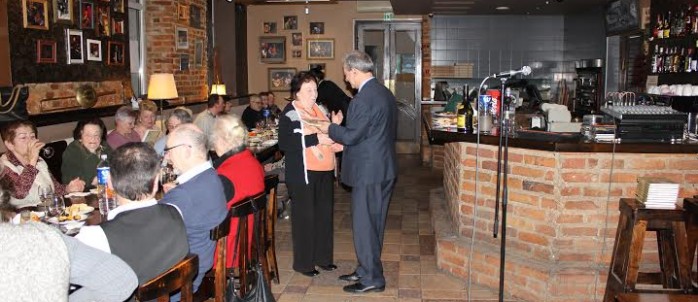
Continuing a long-standing tradition, the Kaunas Jewish Community invited its most active members to a party to thank them. Participants in various clubs, students of Yiddish, people seeking a deeper knowledge of Jewish history and traditions and volunteers in different campaigns, events and cultural activities gathered for a dinner, live music and lively conversation. Kaunas Jewish Community chairman Gercas Žakas thanked everyone and said since Jews are known as the People of the Book, he was passing out books as well, about Jewish history and other Jewish topics.

Makabi Club Book Launch

Makabi knyga

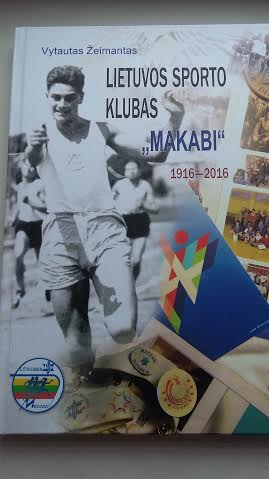
A large group turned out for the launch of the new book “Lietuvos sporto klubas ‘Makabi’ 1916-2016” [The Lithuanian Athletics Club Makabi, 1916-2016] at the Lithuanian Jewish Community on the last day of February, 2016. The appearance of the book is a milestone not just for the Lithuanian Jewish Community, but for Lithuanian sport as a whole, because Makabi is the oldest athletics club in Lithuania. The book tells the story of the origins of Makabi a century ago, activities in the first Lithuanian Republic, how the club was reconstituted after Lithuanian independence from the Soviet Union and its activities since then over the last 25 years. It includes information on Makabi’s participation at European and World Maccabiah Games and other sporting events, and showcases athletes. The book is richly illustrated with photographs depicting the history of Makabi.

This year is the 100th anniversary of the club, which began in German-occupied Vilnius. On October 23, 1916, the Makabi Jewish Sports and Gymnastics Association was established in the ancient Lithuanian capital. Kaunas Makabi was established in 1919. The entire Maccabee athletics movement took place as part of the early spread of Zionism.

Rabbi Heschel’s “Sabbath” Issued in Lithuanian by Catholic Publisher

A new Lithuanian edition of “Sabbath” by Abraham Heschel (1951), translated by Asta Leskauskaitė and published by Katalikų pasaulio leidiniai [Catholic World Publications] was launched at the Vilnius Book Fair last week.

Rabbi Heschel became a rabbi at age 16 and was graduated from the Vilna Mathematics and Natural Science Gymnasium in Vilnius before going on to study under some of the greatest Jewish teachers in Germany. He was arrested by the Gestapo and deported to Poland in October of 1938. He fled to Britain weeks before the Nazi invasion of Poland, and then went on to the United States in early 1940, where he became one of the most important and respected Jewish thinkers of the mid-20th century. His first book, apparently, “Der Shem Hamefoyrosh: Mentsch,” was written when he was a member of the Jung-Vilne group of writers in Vilnius, a book of poems in Yiddish published in Warsaw in 1933. Heschel’s poems attracted attention, including a letter of praise Chaim Nachman Bialik sent to the author from Israel.

LJC Gesher Club Meets for Havadalah

IMG_0016

The Gesher Club of the Lithuanian Jewish Community invited members and friends to a ceremony to end the Sabbath, havdalah, on Saturday, February 13. Many community members attended a Gesher evening for the first time. The decorations, beautifully set tables and pleasant music set the mood for celebration. Organizer of the event and LJC program coordinator Žana Skudovičienė greeted each guest individually with a smile. Skudovičienė, who took over administration of the Gesher Club to fill the gap left by Junona Berznitski’s departure as administrator, has many years of experience doing organizational work.

Vilnius Choral Synagogue cantor Shmuel Yatom led the havdalah ceremony. He spoke about the significance of the ceremony and of maintaining tradition. “The word havdalah, it’s verbatim translation from Hebrew means to separate or usher out. This is the meaning of this brief but beautiful symbolic ritual of Judaism which ends the Sabbath, because havdalah separates the Sabbath from other days, in other words, it separates the holy day from daily life. The ceremony is not mandatory according to the Torah. According to the Talmud, Sabbath celebration began in the fourth or fifth century before the Common Era. The havdalah ceremony evolved as the conclusion of the Sabbath to prepare the individual for the coming work week, and the havdalah ceremonies are for our soul, to provide another opportunity to become focused together before the beginning of the week, to gather strength and to ask for G_d’s blessing. According to Judaic tradition, havdalah begins at dusk when you can see at least three stars in the sky. After darkness falls, the havdalah candle is lit.”

Opening of Exhibit “YIVO in Vilnius: The Legend Begins”

YIVO-d5281c3b6c78a6447dd232c1c135c8d3.jpg

You are invited to the opening of the exhibit “YIVO in Vilnius: The Legend Begins” at the Lithuanian National Museum at Arsenalo street no. 1 in Vilnius at 4:00 P.M., February 18. Exhibit curators: Dr. Lara Lempertienė and Dr. Giedrė Jankevičiūtė.

The exhibit was created to celebrate the 90th anniversary of the creation of YIVO in Vilnius. It includes previously unseen material from Lithuanian state collections on the history and work of YIVO. It demonstrates how YIVO’s work gave stimulus to the intellectual life of the Jews of Vilnius and the wider Central and Eastern European arena. It also presents the city and urban community as a source of inspiration and as the historical and cultural hearth and sustenance for the institute’s work. The exhibit was first shown at the Galicia Jewish museum in Cracow from September 30 to November 8, 2015. The exhibit to open in Vilnius contains additional material.

The Smell of Fresh Jewish Bagels Returns to Vilnius

Beigel1

The Bagel Shop, a new kosher food café, opens its doors February 4. The café will prepare kosher food and different traditional sweets according to the rules of Judaism. The Bagel Shop’s main draw will be freshly-baked bagels and bagel sandwiches. Adhering to the strictest rules, the bagels will be made under the supervision of a rabbi versed in kosher food rules.

Bagels are a traditional European Jewish food product often referred to as a “baronka” in Lithuania in the past, and when cooked may be cut in half and made into a sandwich. The book Joy of Yiddish furnishes one version of the origin of the bagel, according to which the recipe for bagels was created in Cracow at the beginning of the 17th century, and that bagels were given then as gifts to women giving birth. The bagel was supposed to symbolize the “wheel of life” because of its roundness. The bagel’s popularity quickly grew and spread to other countries where Jews speaking Yiddish lived, and was quickly adopted in America, where today about five million bagels are baked daily!

For the Love of Yiddish

Sara Ziv, chairwoman of the National Authority for Yiddish Culture, is optimistic about the future of the mama-loshn in Israel.

When Eliezer Ben Yehuda was reviving the modern Hebrew Language a century ago, Yiddish was the lingua franca for the majority of Europe’s Jews and even further afield as the great waves of migration spread Yiddish culture and language to the America’s and even to Palestine.

In 1939, around 11 million of the world’s Jewish population of 16 million spoke Yiddish, but then the Holocaust decimated the great Yiddish speaking masses and in the nascent state of Israel, Yiddish ran up against the emergence of Hebrew culture and was sidelined and even frowned upon.

Full story here.
jpost

Vilnius Yiddish Institute Announces Summer Program for 2016

main_photo

The Vilnius Yiddish Institute at the Vilnius University announces the Vilnius Yiddish Summer Program for 2016 to take place from July 17 to August 12, 2016, and offering four levels of intensive language instruction for beginners, intermediate, higher intermediate and advanced students.

For more information please contact Indrė Joffytė, program coordinator: info@judaicvilnius.com

http://judaicvilnius.com/

Vilnius Yiddish Institute
Universiteto g. 7
Vilnius 01513
Lithuania