Contestants will perform in the fifth International Nechama Lifshitz Song Contest at the Lithuanian Jewish Community at 6:00 P.M. on October 28. There will be snacks, coffee and an opportunity to meet the contestants following the concert.
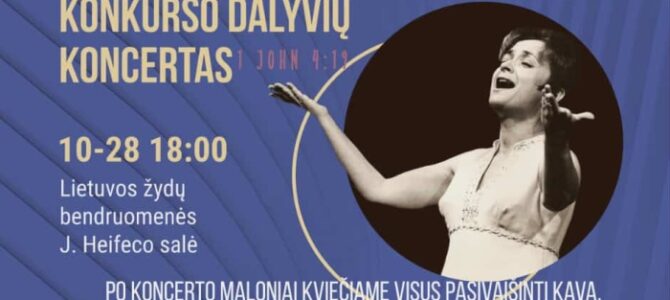


Contestants will perform in the fifth International Nechama Lifshitz Song Contest at the Lithuanian Jewish Community at 6:00 P.M. on October 28. There will be snacks, coffee and an opportunity to meet the contestants following the concert.
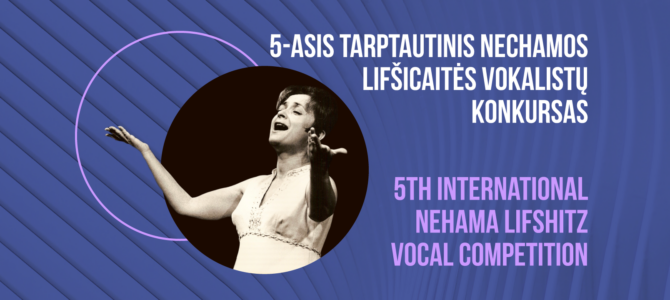
For the fifth time now the International Nehama Lifshitz Song Contest will bring together highly talented young performers from around Lithuania and the world. The contest named after the songstress from Lithuania called the Jewish nightingale encourages young perfomers to popularize Jewish song, to discover diverse musical compositions and to spread artistic cooperation internationally.
The competition is open to people from the age of 10 to 35 with performances over four evenings of classical Jewish melodies, works in Hebrew and Yiddish imparting centuries of stories, emotions and culture. This year the organizers are doing something new, with vocal mastery lessons provided by professor Claudia Visca of the Vienna Music and Performance Arts University and voice teacher Sofia Mazar from the Jerusalem Music and Dance Academy.
The public is invited to attend the performances. The Yiddish song contest takes place starting at 3:00 P.M. on October 26 at the Lithuanian Jewish Community in Vilnius. The Lithuanian Academy of Music and Theater will host the remaining evenings as well as voice lessons from October 27 to 30. Audience members will be treated to a concert by the finalists as the jury decides on a winner. All performances will be free and open to the public. Stay tuned for more information.

The Lost Shtetl Museum, after several years of construction and preparation and missed opening dates, finally opened its doors to the public in Šeduva, Kithuania on September 20.
According to visitors and experts, the museum is unlike any other in Lithuania. A large collection of authentic objects tells the story of the Jewish shtetl Šeduva, but also of all shtetls in Lithuania and the region. Some of the texts and exhibits are funny, and portray situations, trials and tribulations from daily life, love letters, immigration plans and excitement for upcoming holidays.
The museums thematic sections and exhibit items are complemented by tactile and olfactory details which might be ignored at first but provide an overall impression, according to one visitor.
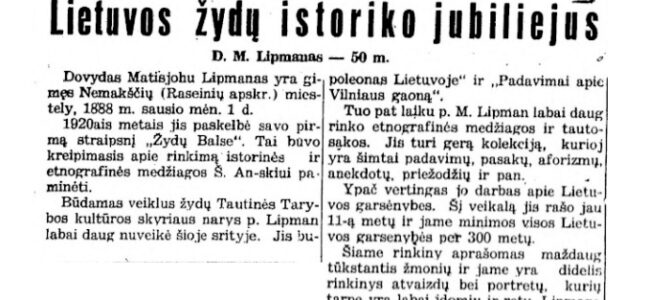
To mark Lithuania’s Jewish Victims of Genocide Remembrance Day, Audra Girijotė will give a presentation about Dovydas Matishohu Lipmanas at the synagogue in Čekiškė, Lithuania (Tsaykishok in Yiddish). Lipman was perhaps the most famous writer from the small town, and focused on the history of the Jewish community there, in Kaunas, Žemaitija and in Lithuania in general. He also wrote about the Vilna Gaon and was a frequent contributor to Yiddish periodicals. Born in 1888 in the village of Nemakščiai in the Raseiniai district, Lipman lived in and around Čekiškė from 1925 to his murder. He bought and ran a pharmacy there while writing a number of books. He was a qualified pharmacist with a degree from Dorpat (Tartu). He was murdered just outside the village in late July, 1941, by Stanislovas Gudavičius, a commander of local Lithuanian white-armbanders, according to Lithuanian historian Alfredas Rukšėnas.
Audra Girijotė is a writer and journalist who has been researching the life and death of Dovydas Lipmanas over the last several years.
Time: 1:00 P.M., September 23
Place: Čekiškė synagogue, Lašišos street no. 21, Čekiškė, Kaunas district
JewishGen yizkor for Tsaykishok here.
More biographical information in Lithuanian and English here.
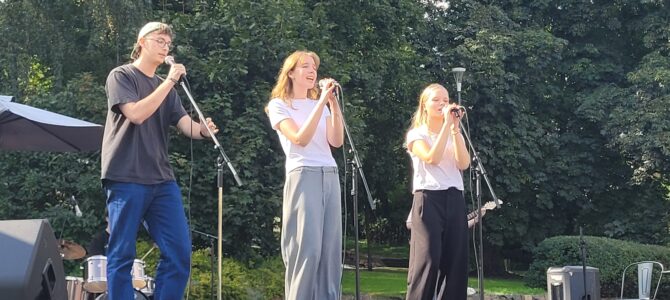
The 21st annual European Day of Jewish Culture held on the first Sunday in September had the theme People of the Book this year. The Lithuanian Jewish Community celebrated in Vilnius with learning as well as song, dance and food during a day-long program that went well into the late evening.
The main venues were the Choral Synagogue with basic Yiddish and Hebrew lessons and a tour, and the Cvi Park Israeli street food kiosk and performance space at Petras Cvirka Park across the street from the LJC. Tours, sampling of food, Jewish Vilna toursm concerts by Fayerlakh and klezmer groups, entertainment by writer, thinker and self-professed professonial clown Arkadijus Vinokuras and a concert by the Kiryat Ono youth quartet were just some of the activities that day.
Photographs follow.
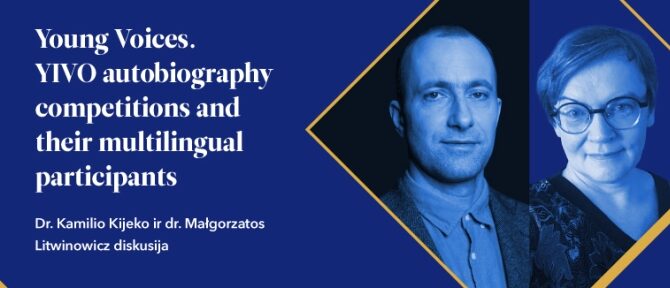
The Lithuanian National Library will host a discussion called “Young Voices: YIVO Autobiography Competitions and Their Multilingual Participants” with Polish researchers Kamil Kijek and Małgorzata Litwinowicz in the library’s conference hall on the fifth floor at 6:00 P,M, on Tuesday, September 16. Kijek will discuss biographies by young people written in Yiddish and submitted to writing contests sponsored by YIVO. Litwinowicz will present youth biographies written in Polish and submitted. Judaica Research Center director Lara Lempertienė will moderate. The event will be in English.
More information in Lithuanian available here.
by Anthea Gerrie, Hewish Chronicle, August 24
The Jews of Šeduva were murdered 84 years ago. Now a new museum will commemorate their shtetl way of life
Eighty-four years ago more than 600 Jews, men, women and children, of the shtetl of Šeduva in rural Lithuania were executed in the forest outside the town. Now the finishing touches are being made to a museum which will commemorate the shtetl way of life which was extinguished in the Holocaust, not just in Seduva or Lithuania, but all over Eastern Europe.
The Lost Shtetl Museum will use cutting-edge technology to recreate the sights and sounds of everyday pre-war Jewish life, based on the history of Šeduva and more than 200 similar small Lithuanian towns, and the thousands more communities in neighboring Latvia, Belarus, Poland and Ukraine which were wiped off the map forever.
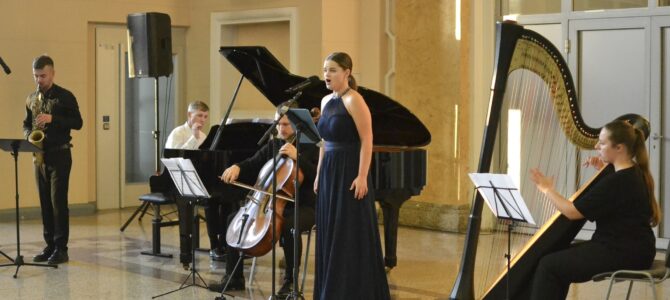
For the second time in two years the Kaunas train station became the venue for concerts celebrating the European Day of Jewish Culture last Sunday.
Kaunas Jewish Community chairman Gercas Žakas welcomed the audience to the concert.
Young soprano Giedrė Kisieliūtė who sang in English, Lithuanian, Yiddish, Hebrew and French, was accompanied by a classical music quintet directed by Tadas Daujotas. Daujotas a;so b;ew the shofar horn at the event.
Photographs by Rūta Ravinskaitė below.

Sunday is the annual European Day of Jewish Culture. This year the theme is People of the Book. The Lithuanian Jewish Community has a full day of events planned starting in the morning. Some events require prior registration, see below. Unless otherwise noted, events will take place at the Lithuanian Jewish Community at Pylimo street no. 4. The outdoor Cvi Park space is across the street from there. The Choral Synagogue is located about 300 meters away on Pylimo street as you go towards the train and bus station.
Program:
10:30 A.M. Beginner’s Hebrew lesson with Ruth Reches at the Choral Synagogue in Vilnius. Register here.
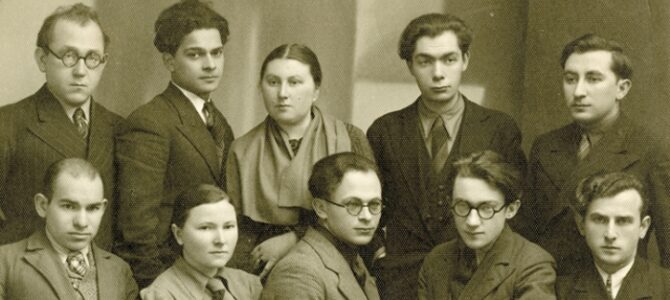
Marking 100 years since the YIVO was founded in Vilnius, the Martynas Mažxydas National Library in Vilnius will open an exhibit at 5:00 P.M. on Thursday, September 4, and running till the end of the year entitled “YIVO Centennial: Origins, Journey, Legacy.”
The opening ceremony with keynote speech and a musical performance takes place on the third floor at 5:00 P.M. The action then moves to the 5th floor with a presentation and tasting of Litvak cuisine, culminating in a guided tour by National Library Judaica Center director and exhibit curator Lara Lempertienę.
The event is free and open to everyone.
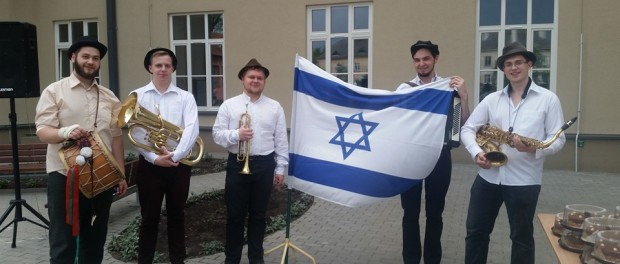
The Rakija Klezmer Orkestar will perform a free concert in the square in front of Government House in Vilnius at 5:00 P.M. on Friday, September 5, as part of the city’s Vilnius Days celebrations and the Cities Embracing Jewish Heritage project. For more information, click here.

The Ieva Simonaitytė Public Library in Klaipėda is pleased to host a presentation by Akvilė Grigoravičiūtė, Yiddish literary researcher and translator, on changes to Litvak identity in the early 20th century as illustrated in Yiddish literary works.
The event is scheduled from 5:30 to 6:30 P.M. on Wednesday, September 10.
Called “Yiddish Literature in Interwar Lithuania,” the author discusses the evacuation of Jews from the borderlands in Tsarist Russia during the First World War and the lasting effects that had on Jewish identity. She characterizes Lithuanian Yiddish literature in the 1920s as showcasing separation, alienation and solitude. In the 1930s, she says, a new Jewish identity began to coalesce, tied organically to the culture and society of the Republic of Lithuania. Her presentation will include passages from Yiddish writers, literary clubs and publications from 1918 to 1940
The library is located at Herkaus Manto street no. 25 in Klaipeda. For those unable to attend, the lecture will be live-streamed via the internet, register here.
For more information in Lithuanian, click here.
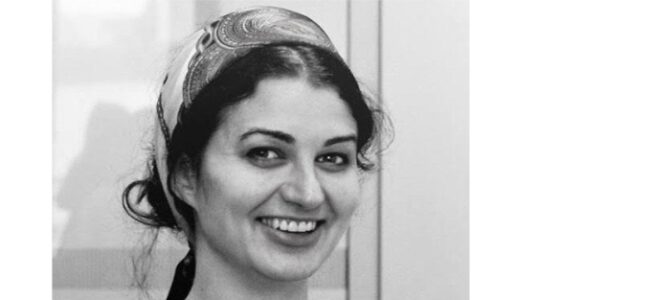
Miglė Anušauskaitė, a noted Lithuanian cartoonist as well as translator and Judaica scholar, will give a presentation in Lithuanian on humor in Jewish poetry at the Lithuanian National Library at 6:00 P.M. on Thursday, August 4. This is the first installment in a series of events and lectures dedicated to an exhibit of works by Tania Mouraud, the French artist. The Mourand exhibition runs till November 9 at the Lithuanian National Art Museum, Gostauto street no. 1, Vilnius, and is titled “In Honor of Revived Pain” [loose translation].
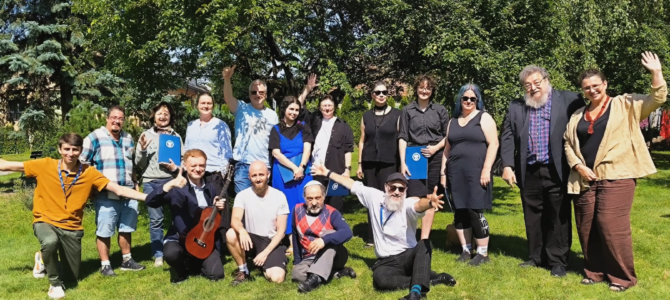
The two-week International Yiddish Courses hosted by the Lithuanian Jewish Community and the Sholem Aleichem ORT Gymnasium brought students together from around the world with Yiddish song, excerpts from classical texts, comedy and the lore of Jewish Vilne.
“I would like to thank all the organizers who helped us hold the annual courses. We are so happy that Jewish students from Lithuania and from abroad are studying Yiddish, that they are interested in it as a language, but also as a tradition, partially religious, including food and songs. All this together constitutes Jewish culture which we strive to preserve,” Lithuanian Hewish Community chairwoman Faina Kukliansky commented.
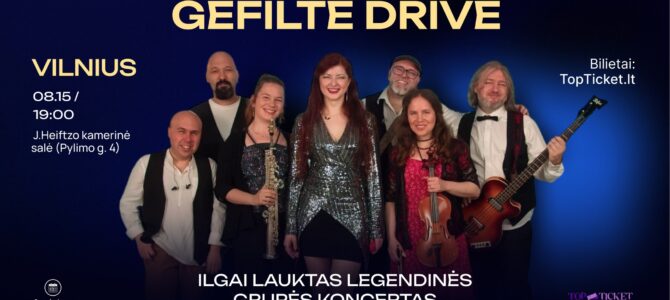
The neoklzmer group Gefilte Drive from Israel will perform a concert in Vilnius next week. Cost of tickets starts at €35. Tickets are available here.
Description from the ticket vendor:
A neoklezmer band blending East and West, kosher rock’n’roll and Odessa-style romance. Songs in Yiddish, Russian, English and even backyard Odessa hits translated into Hebrew. It’s the music of our grandparents, reimagined through the lens of modern sound and heartfelt expression.
Youtube channel: https://www.youtube.com/@GefilteDrive
Time: 7:00 P.M., Friday, August 15
Place: Lithuanian Jewish Community, Vilnius
The Lithuanian National Martynas Mažvydas Library continues celebrations the 10tth anniversary of teh founding of the YIVO Jewish research institute in Vilnius with a lecture by Silvia Hansman titled “Reflections of Vilnius in Buenos Aires: The YIVO Institute in Argentina” next week,
Silvia Hansman is director of the lesser-known YIVO chapter in Buenos Aires. She’s an historian, translator of Yiddish manuscrupts and archivist with 30 years experience leading archival research projects in the USA and Argentina.
The YIVO chapter was founded in Buenos Aires at the same time the headquarters in Vilnius and chapters in Berlin and New York were founded, back in 1925.
The lecture is free and open to the public, and will be in English. For more information in Lithuanian, click here.
Time: 6:00 P.M., Thursday, August 7
Place: Second floor, National Library, Gedimino prospect no. 51 Vilnius
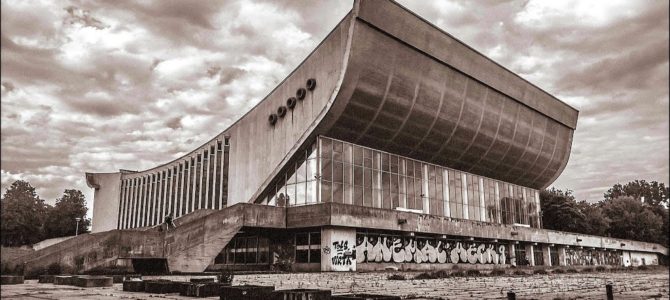
The Lithuanian Jewish Community, uniting 32 organizations across Lithuania and abroad, is deeply surprised by the unilateral decision made by the Government under the leadership of Gintautas Paluckas to disregard a project previously approved back in 2024 for the memorialization of the old Šnipiškės (Shnipishok, formerly Piromont neighborhood) Jewish cemetery and the existing commemorative site at the Palace of Sports. This project has been under development for several years and was carefully coordinated by a working group composed of representatives from the Lithuanian Jewish Community, the European Jewish Cemetery Preservation Committee, the American Jewish Committee’s Department of International Affairs and other organizations dedicated to preserving Jewish heritage.
The solutions proposed so far have ensured appropriate respect for the Jews buried in the cemetery as well as historical events related to Lithuania’s struggle for independence and the victims of the tragic events of January 13, 1991, at the Vilnius television tower.
We emphasize the decision to alter the intentand content of the memorial was made without prior consultation with the Lithuanian Jewish Community or any other Jewish organizations anywhere. We were not informed of any changes to the original plans.
The Lithuanian Jewish Community will refrain from further commenting on this decision for now because we have not received confirmed information regarding the content of this new plan nor the reasons behind this change in course.
Nevertheless, we wish to note that such actions undermine trust in our state and damage Lithuania’s reputation in the eyes of strategic partners.
Faina Kukliansky, chairwoman
Lithuanian Jewish Community
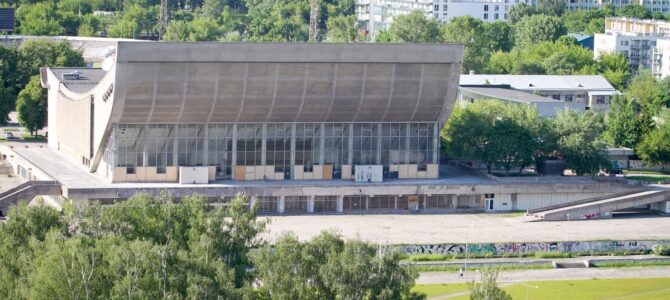
The Lithuanian and Russian news portals madeinvilnius.lt and ru.delfi.lt are reporting Lithuanian prime minister Gintautas Paluckas (Social Democratic Party) has renewed government plans to refurbish the former Palace of Sports complex in central Vilnius and to renovate the Jewish cemetery where it was built and which surrounds the building.
Paluckas is facing calls to stand a confidence vote in parliament following revelations of sweet-heart loan deals and large discounts for real estate purchases.
According to both news sites, Paluckas wants to renovate the large but decrepit building for use as a conference center, the same plan floated by earlier governments. This iteration of the on-going talk of renovation now includes plans by the PM to install a museum within that space for commemorating the first meeting of Sąjūdis there, and victims of the January 13, 1991, Vilnius television tower massacre. Sąjūdis officially became a political party there and went on to contest elections to the Lithuanian Supreme Soviet against the Lithuanian Communist Party led by Algirdas Brazauskas. Original member of Sąjūdis and later Brazauskas supporter Arvydas Juozaitis is currently completing a boom on the history of the early Lithuanian independence movement which includes a detailed description of that founding meeting, according to pre-publiicty from the author himself.
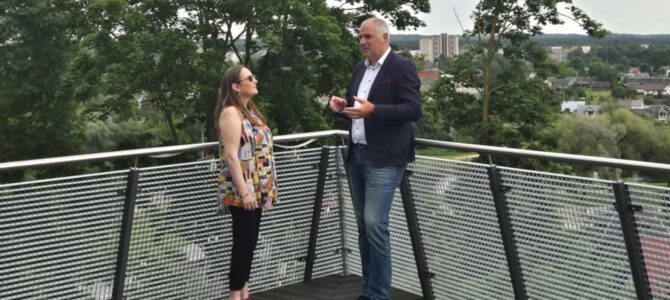
Natania Ramba visited Ukmergė this week with her film crew. She’s filming a documentary about Jews from Ukmergė, or Vilkomir in Yiddish.
Her grandfather also came from Vilkomir.
Ukmergė Jewish Community chairman Artūras Taicas was interviewed for the film.
The Jewish population was almost entirely murdered during the Holocaust.
Taicas showed Ramba around the city just a short drive north of Vilnius, including Jewish heritage sites.
They plan to show the film to descendants of Jews from Vilkomir and to Litvals in general in Mexico and the United States.
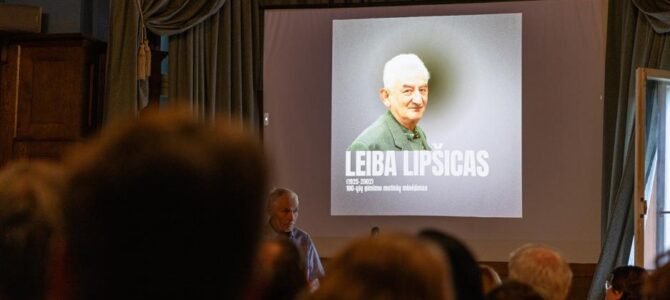
from the newspaper Šiaulių kraštas
The Chaim Frenkl Villa of the Aušra Museum in Šiauliai hosted a celebration of the 100th anniversary of the birth of Leiba Lipshitz on July 16. Lipshitz chronicled Jewish life in Šiauliai, researched regional history and was a well-known publix figure. People called him a walking encyclopedia. He survived the Stuthoff and Dachau concentration camps but lost his entire family in the Holocaust. He went back to his hometown and dedicated the rest of his life to documenting Jewish history and life in Šiauliai.
Historian Jonas Kiriliauskas delivered a presentation of Lipshitz and his views on life at the ceremony.