Learning

Vatican Says Anti-Semitism Intolerable

Vatican Says Anti-Semitism Intolerable

Photo: Archbishop Paul Richard Gallagher, courtesy Vatican.

Great strides forward have been in recent decades in Jewish-Catholic relations, with better recognition on both sides allowing for more mutual understanding at the theological but also the social and political levels, Holy See secretary for relations with states Paul Richard Gallher said as part of a campaign by the Israeli embassy to the Vatican called #StopAntiSemitism.

Archbishop Gallagher in a video message posted last Thursday reiterated the Holy See’s commitment against intolerance towards people of Jewish heritage. He said the “Nostra Aetate” [In Our Age] declaration defining relations between the Church and non-Christian religions adopted by the Vatican II Council 55 years ago has helped broaden dialogue between Jews and Christians.

Archbishop Gallagher highlighted two points in Nostra Aetate: its emphasis on the Jewish roots of the Christian faith and the condemnation of anti-Semitism in every form and species.

“In this regard, much progress has been made in recent years,” the archbishop affirmed. “Mutual knowledge has led to a better understanding on theological, social and political levels, including bilateral Agreements by which diplomatic relations between the Holy See and the State of Israel have been established,” the Vatican reported on its official news website.

Op-Ed: My Grandfather’s Role in the Nazi Occupation Is Forcing a Reckoning in Lithuania

Op-Ed: My Grandfather’s Role in the Nazi Occupation Is Forcing a Reckoning in Lithuania

Photo: Silvia Foti holds a photograph of her grandfather Jonas Noreika at her home in Chicago in 2019. (Jose M. Osorio/Chicago Tribune)

by Silvia Foti

A little bronze plaque hanging on a library wall in a city most Americans know nothing about is at the epicenter of a battle over the Holocaust.

In the last six years, this modest plaque in Vilnius, the capital of Lithuania, inspired 20 legal actions in five courts, vigilante action by a disgruntled citizen with a sledgehammer, a scandal for the city’s mayor and candlelit vigils by protesters seeking to resurrect it in a grander incarnation.

The power of this plaque comes from a question of whether its honoree is guilty of murdering thousands of Jews in Lithuania. Those who want the plaque up say its namesake is a brave patriot who fought against the Communists, took orders from Nazis and had no idea his signature would lead to murdered civilians. By extension, it’s about more than one person’s guilt or innocence–it’s about the guilt or innocence of Lithuania.

Full opinion piece here.

Virtual Sabbath with Progressive Rabbi in Odessa

Virtual Sabbath with Progressive Rabbi in Odessa

Female rabbi Julia Gris led the virtual ceremony on Zoom linking Vilnius and Odessa to greet the Sabbath April 2. The virtual Sabbath was set up in such a way participants were able to read the text of the Torah together with the rabbi and sing along .

Julia was born and raised in a Jewish family in Bryansk, the main city in Russia’s Bryansk oblast on the border with Belarus. At the age of 13 she became a student at the Jewish Sunday school of the Jewish Information and Education Center and went on to teach there, and became coordinator of her city’s first Jewish youth club. She was graduated from Bryansk Pedagogical University in 1999 specializing in math and information technology, but had pictured herself since the age of 18 as serving progressive Judaism exclusively. “It was exactly this movement which gave equal rights to men and women and taught how to follow the commandments in a meaningful way,” she explained.

After completing courses at Mahon, the community’s professional training institute, in 2000, Julia was invited to go work in Odessa where a progressive Jewish community was being formed just then.

International Roma Day

We marked International Roma Day April 8 and our partners the Roma Social Center invite readers to listen to the Roma anthem adopted by the World Romani Congress in 1971, “Gelem, Gelem,” an opportunity to love beyond pain. Our greetings to the entire Roma community.

On Yom HaShoah, Why We Must Remember the Holocaust…

On Yom HaShoah, Why We Must Remember the Holocaust…

Dear friend,

It is now 76 years since the death camp at Auschwitz was liberated. As we commemorate Yom HaShoah today, it is useful to take a look at how the Holocaust is affecting public morality all these years later — and how it is still being abused.

It is both helpful and not helpful to talk about the Holocaust when discussing the disturbing resurgence of antisemitism in the world today.

On the one hand, as reflected in ADL’s pyramid of hate, it is instructive to recognize, as the history of the Holocaust demonstrates, that things can escalate from stereotypes, to discrimination to anti-Jewish legislation to mass murder if hate is not addressed early on. The Holocaust continues to teach us that society cannot be complacent, so that so-called low levels of hate won’t mutate into much more serious and devastating manifestations, culminating in genocide.

100-Meter Dash Champion Mykolas Preis Dead at 104

100-Meter Dash Champion Mykolas Preis Dead at 104

Mykolas Preis died at the age of 104 in Israel March 31. He was twice the Lithuanian champion of the 100-meter dash in the interwar period. He was buried at the Har haMenukhot cemetery in Jerusalem next to his wife Olia. Preis’s family emigrated to Israel in 1973. The Lithuanian Jewish Community remembers Mykolas Preis as an outstanding doctor and athlete. Our deepest condolences to his family.
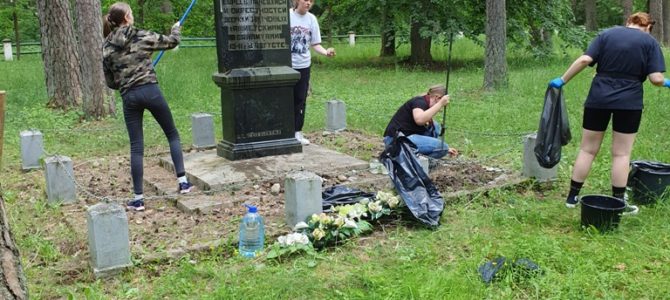
Preis was the last interwar Lithuanian track champion. He took first place two years in a row, in 1939 and 1940, running the 100-meter dash in 11.5 seconds both times.

Preis was the senior medical doctor at the Sports Medicine Center located on Rožių alley in Vilnius in 1948. His contemporaries spoke of him as a great organizer as well as athlete. According to the Makabi records he came to prominence as a runner in 1938. Preis shared his memories of childhood and adolescence in the book “Lietuvos sporto klubo ,Makabi 1916–2016” [Lithuanian Makabi Athletics Club, 1916-2016] and spoke about his many friends and the influence of his caring and warm teacher Rozalija Sondeckienė when he attended the Šiauliai Boys’ Gymnasium.

Symbolic Commemoration of Holocaust Victims at Ponar

Symbolic Commemoration of Holocaust Victims at Ponar


Press Release
April 7, 2021
Vilnius

Symbolic Commemoration of Holocaust Victims at Ponar

A symbolic ceremony to honor victims of the Holocaust will take place at 12 noon on April 8, Yom haShoa, the Israeli Day of Remembrance of Holocaust Victims and Heroes, at the Ponar Memorial Complex outside Vilnius. Adhering to all safety requirements, members of the Lithuanian Jewish Community, diplomats and surviving Vilnius ghetto prisoners will place stones and flowers at monuments and the mass graves and the cantor will perform kaddish, a prayer for the dead.

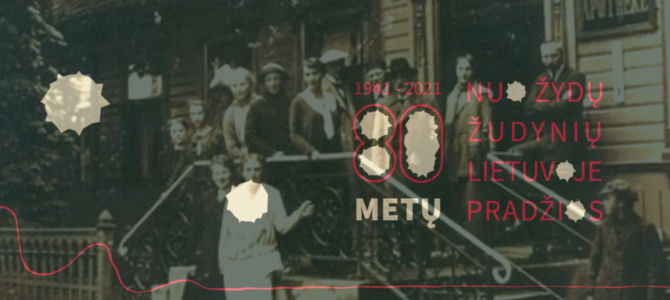
“The March of the Living traditionally took place on this occasion, repeating the final march of those condemned to death from the railroad station to the Ponar Memorial Complex, but due to the pandemic situation, this year this won’t be a mass commemoration. Only a few of us are gathering, carrying out the responsibility to preserve and pass on to future generations the memory of the Holocaust. This year is the 80th anniversary of the beginning of the Holocaust in Lithuania, after all. With us today is an eye-witness to those horrific events, Kaunas ghetto inmate Dovydas Leibzonas,” Lithuanian Jewish Community chairwoman Faina Kukliansky said.

President Rivlin Thanks LJC for Commemorative Coin

President Rivlin Thanks LJC for Commemorative Coin

President of Israel Reuven Rivlin has sent a letter to the Lithuanian Jewish Community thanking the LJC for presenting him a Lithuanian commemorative coin celebrating the 300th anniversary of the birth of the Vilna Gaon.
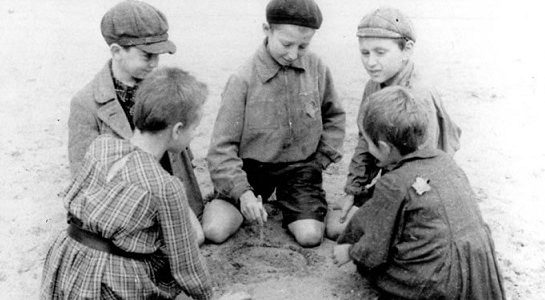
“I was especially moved by this gesture as the President of the State of Israel and as a proud descendant of the Vilna Gaon,” president Rivlin wrote in his letter.

He continued: “The gift, indeed, reflects the strong and everlasting ties between us, Jews in the State of Israel and Jewish communities in the diaspora, and reflects the historic ties between Israel and Lithuania.”

President Rivlin ended his letter by calling himself a proud Litvak and sending warm greetings from Jerusalem to all members of the Community.

And the Winners Are…

And the Winners Are…

We invited readers to participate in the traditional Purim carnival mask and costume contest by dressing up and sending in photographs, as well as drawings and photographs of home-made hamentaschen and recipes for such. We are pleased to announce that after long consideration of many more entries than anticipated we have finally narrowed the field down to a list of winning entries.

And the winners are…

Lilia Dulkė, in the category of best costume among grown-ups;

Mark Svešnikov, best costume for children;

Viljamas and Aleksandra Žitkauskai, best family costumes;

Marija Jurkevičiūtė, best mask;

Consolation prize for youngest contestant goes to…. Adam Segal!

And prizes go to Ronas, Lara and Glorija Rozovskiai for sending in the most photographs with different costumes!

We would like to thank all who participated and wish those who didn’t win this year greater success next Purim.

This is How It Was Done in Vilne…

This is How It Was Done in Vilne…

Photo: Pinchos Fridberg, the only Jew left in the Lithuanian capital of Vilnius who was born there before the Nazis invaded in 1941. By Brendan Hoffman for the New York Times.

by professor Pinchos Fridberg, an alter vilner id [an old Jew born and raised in Vilnius]

Rebe, will there ever come a time when the words Vilne and Yidish will be inseparable again?”
Saydn nor mit Meshiakh’n ineinem.” [Not unless it comes with the Messiah.]

Introduction

The article “Как это делалось ин Вилнэ…” [This Is How It Was Done in Vilne] became the main feature for issue no. 505 of the international magazine “Мы Здесь” [We Are Here] in 2015. More than 7,000 people read it, and I began receiving letters from people whom I didn’t know.

The largest Russian-language weekly newspaper in Lithuania “Обзор” [Review] reprinted this article on its website on March 8, 2021.

The article concerns the history of Jewish Vilnius.

I think it might be interesting to non-Russian-language readers as well. *

“This is How It Was Done in Vilne…”

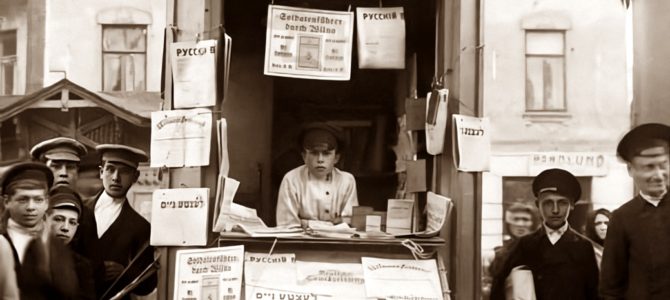
As I was putting my archive in order, I came across a small program for a concert to celebrate the 10th anniversary of the Jewish volunteer collectives. This program is more than half a calendrical century old. I think the reader might be interested to see “how it was done in Vilne.” The program contains over 30 photographs. I will present a few of them. I believe it has long been time for them to be revived on the wider internet.

Choral Synagogue in Vilnius Opens Virtual Doors

Choral Synagogue in Vilnius Opens Virtual Doors

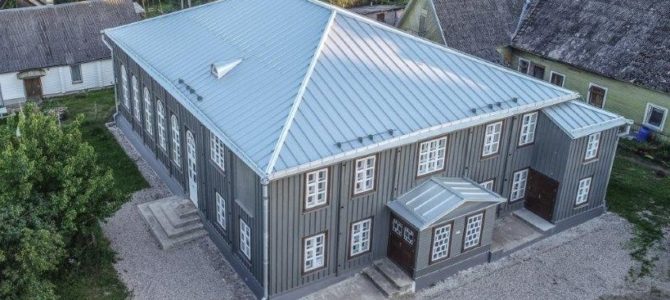
The Lithuanian Jewish Community is inviting the public to take a virtual tour of the only synagogue operating in Vilnius according to all Jewish laws, the Choral Synagogue. The virtual guided tour will demonstrate the synagogue itself and also offers tourists the chance to learn about Jewish cultural and culinary traditions and the High Holy Days.

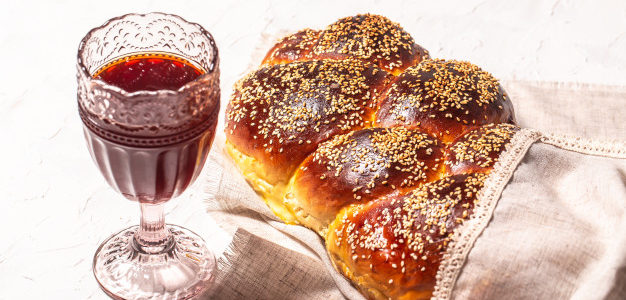
The virtual tour covers the synagogue’s interior, the mikva, the kosher kitchen and the only surviving matzo-making machine in Lithuania, as well as Jewish religion, philosophy, traditional holidays, lifestyles and Jewish sacred songs. Virtual lessons are available in the kosher kitchen for those wanting to learn about the Jewish culinary tradition. Over six millennia strict traditions have developed for religious and secular holidays for making certain foods for specific holidays, for example, only round loaves of challa are baked and fish heads prepared for the Rosh Hashanah table, doughnuts and potato pancakes are fried for Hanukkah and hamantaschen, pastries filled with poppy seeds, are made for Purim.

Around 10,000 tourists visit the Choral Synagogue annually, many of them the Litvak descendants of Holocaust survivors living in diaspora around the world, and also local residents, students, and social partners in the field of culture and tourism in Lithuania and abroad. Visiting the synagogue is being restricted because of the corona virus, so a virtual tour has been set up for Lithuanians and for Litvaks living abroad who are able to visit at least virtually the synagogue of their parents’ youth or adolescence.

Lithuanian Jewish Community chairwoman Faina Kukliansky said the virtual introduction to Jewish culture and tradition strengthens the multicultural expression of the city community and popularizes Jewish cultural heritage.
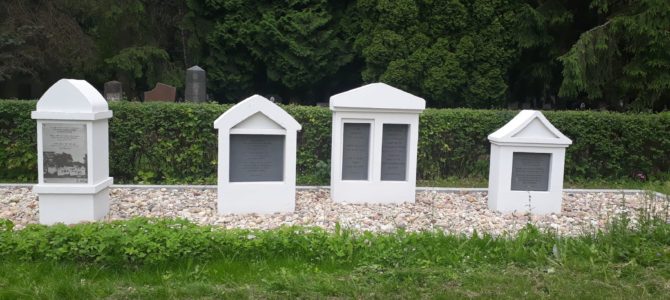
The Lithuanian Cultural Council is financing the project called “Choral Synagogue of Vilnius: Prayer, Kitchen, Mikva.”

Art Creates Tolerance Project Features Samuel Bak

Art Creates Tolerance Project Features Samuel Bak

www.DELFI.lt

The Vilnius Gaon Jewish History Museum and the EZCO creative agency are presenting an initiative called “Art Creates Tolerance” inspired by the life and work of Samuel Bak.

The project’s goal is to use Vilnius-born Holocaust survivor Samuel Bak’s art “to encourage public discussion using modern multimedia on the past and socially-sensitive issues of the present, to find historical signs and to discover the value of tolerance,” according to museum director Kamilė Rupeikaitė.

The project will use the museum’s existing physical and virtual exhibits about Bak and expand them with new exhibits.

Full story in Lithuanian here.

Regional Jewish Communities Celebrate Passover and Send Greetings

Regional Jewish Communities Celebrate Passover and Send Greetings

Gennady Kofman, chairman, Panevėžys Jewish Community:

Happy Passover, one of the most important holidays on the Jewish religious calendar.

Passover holiday greetings to all. We wish you a happy time talking with your families.

This is the evening of sacrifice which took place before God led the Israelites out of Egypt. During Passover we eat unleavened bread, matzo. The first, second and last evening are marked with a large dinner with strict traditions: the head of family reads a passage from the Book of Exodus, prayers and a collection of liturgical hymns. A hand-washing ceremony is performed before eating. Before the end of the holiday meal a beautiful cup with grape juice is placed and the door is left open, and this is called “Elijah’s cup.”

The Seder Table: A Jewish Tradition Unchanged for Millennia

The Seder Table: A Jewish Tradition Unchanged for Millennia

Passover, the most important Jewish holiday which lasts for eight days, begins on March 27 this year. The date for celebrating Passover is set by the lunar calendar: the first full moon after the vernal equinox. The name of the holy day comes from “pesakh,” meaning passed over, recalling the story of the Angel of Death which passed over the Israelites before Moses led the slaves out of Egypt.

“The symbolic meaning of this holiday is that it wasn’t separate Jewish families which came out of Egypt, but a single, united Jewish people. The Jewish people throw off the yoke of slavery and leave in order to reach the Promised Land, and there create their nation,” Lithuanian Jewish Community chairwoman Faina Kukliansky explained.

Passover Traditions over the Millennia

Keeper of Jewish cultural and religious traditions Natalija Cheifec said although the exodus from Egypt occurred more than 3,300 years ago, Passover traditions have remained almost unchanged over the many centuries. The main feature of the eight-day holiday is the seder dinner when the Hagada is read out, prayers are made and people sit at the seder table and eat from the seder plate, or ke’are.

EJC: EU Grant for Jewish Communities Confirmed

EJC: EU Grant for Jewish Communities Confirmed

Dear Presidents,
Dear Friends,

For the last few years, one of SACC to the EJC’s objectives has been to increase its cooperation with the European institutions to enhance security, support and preparedness for our communities.

The European Council Declaration of 6 December 2018 on the fight against anti-Semitism underlined that the security of Jewish people is an immediate necessity and requires timely action.

Our engagement with the European Commission, in particular at the Working Group for the Protection of Public Spaces, has strengthened our belief in the importance of working together with other communities and finding synergies in the fight against hatred and terror.

Helping other communities with the security challenges that they face is of course in line with Jewish core values and with our mission.

WJC Video Guide to Passover

WJC Video Guide to Passover

A time to reflect, learn and continue to fight for justice, freedom and rule of law

Katharina von Schnurbein, coordinator on combating anti-Semitism and fostering Jewish life, endorsing the tradition of asking questions in a video guide to Passover produced by the World Jewish Congress (WJC), reflects on the following:

“It’s been thousands of years since Moses led the Jews out of Egypt, yet Jews still read the story of this miracle each year. What can the world learn from the story of Passover in 2021?”

Hagada in Three Languages for Community Members

Hagada in Three Languages for Community Members

The Lithuanian Jewish Community is making available Hagada for the first night of Passover in Hebrew, Lithuanian and Russian. To order, call +370 678 81 514 from 10:00 A.M. to 6:00 P.M. and pick up your order at Pylimo street no. 4 in Vilnius before 2:00 P.M. on March 26.

Maša Rolnikaitė, Girgoriy Shur Holocaust Books to be Given to All Lithuanian Schools, Libraries

Maša Rolnikaitė, Girgoriy Shur Holocaust Books to be Given to All Lithuanian Schools, Libraries

by Eugenijus Bunka

When you speak with those who aren’t there, it’s called Memory. Therefore Maša Rolnikaitė’s book “I Must Tell” [Turiu papasakoti] and Grigoriy Shur’s “Entries: Chronicle of the Vilnius Ghetto, 1941-1944” [Užrašai: Vilniaus geto kronika 1941-1944 m.] are books of Memory. And in memory of those whose lives were cut short, as they began or half-way through, who were consumed in the flames of the Holocaust.

Not one of the people mentioned in these books died a natural death. That inherent human right was taken from them.

They died without notice in World War II, but Maša and Grigoriy who had stood with them spoke loudly.

If a Red Army soldier hadn’t found Maša frozen, lying in a snow drift on the final death march from the Stutthof concentration camp, this book would not exist. The diary she kept hidden on her person would have been buried with her. But she survived and now in eighteen languages her story tells the world what humanity may never allow to happen again.