Learning

Farwell My Friend: Three Things I Learned from Elie Wiesel

Dear Friends,

Please find below Moshe Kantor’s opinion article published in the Newsweek following the sad loss of Prof. Elie Wiesel.

Kind regards,
The EJC team

European Jewish Congress (EJC)
Tel : +3225408159
Fax : +3225408169
Web : www.eurojewcong.org

FAREWELL MY FRIEND: THREE THINGS I LEARNED FROM ELIE WIESEL

The world has lost one of its premier moral voices, writes the president of the European Jewish Congress.

BY MOSHE KANTOR

The great French writer Victor Hugo once said that “adversity makes men.” There is no one in the history of humanity for whom this is more true than the late great Elie Wiesel. The world has lost one of its premier moral voices. His early life was fashioned in darkness, but he brought light to our world with his words of hope and peace. His courage to see good when he saw so much unspeakable evil should remain a legacy, not just for the Jewish people, but for mankind. Our view of life can be determined by interactions with extraordinary people. If you are lucky, each of us will meet one person who will change our world. For me, that was Elie Wiesel.

Judah Passow Thanks LJC Chairwoman Faina Kukliansky for Celebration for Return of Torah

Juda Passow dėkoja LŽB ir pirmininkei F.Kukliansky už Toros sugrįžimo šventę

“I just want to thank you once again for making possible such a moving and memorable day with the Lithuanian Jewish community,” Judah Passow said in the note.

“It was an honour and a privilege to be with all of you. I’m especially grateful to you for the time and effort you put into making what began as an idea a year ago into a reality,” he wrote.

Judah Passow’s father, professor David Passow at Philadelphia University, received a Rockefeller Foundation grant to commemorate Jewish life behind the iron curtain in 1960. When he went to Vilnius that same year, local Jewish leaders asked him to take away with him one of two Torah scrolls which were used in the Vilnius ghetto and survived the Holocaust intact, saying they were unsure what the future held for Jews in the Soviet Union. The Passows protected the Torah ever since then, for 56 years, and used it for three bar mitzvahs in the family. When he came to Vilnius last year for a showing of his photography work, Judah Passow met Lithuanian Jewish Community chairwoman Faina Kukliansky and the idea was fleshed out of returning the scroll to Vilnius. Just last week Passow returned the Torah dating from the time of Vilna Gaon, with a silver decoration his mother Aviva Passow made for the scroll.

Global Media Carry Discovery of Escape Tunnel at Ponar

News of the discovery of the tunnel used by the burners’ brigade to escape from the mass murder site of Ponar near the Lithuanian capital has been picked up by media around the world. The Lithuanian Jewish Community received a report from the Lithuanian ambassador to India that Indian media are reprinting an article about it from the Washington Post.

A team of experts from Israel, Lithuania, the United States and Canada found the escape tunnel, new killing pits, overgrown paths taken by the victims to the execution site and the distribution of human ashes and crushed bone at the site.

The burners’ brigade was formed by the Nazis to exhume the corpses of Jews shot at Ponar, burn them in large piles and crush to dust whatever bones or teeth survived the fire. They knew they were condemned to death and over a period of time excavated a tunnel from their place of confinement.

Remembering Elie Wiesel: A Tribute from a Friend and Disciple

Dear Friends,

Together with the entire Jewish people and, indeed, the world, we are in mourning today for one of the greatest writers, teachers, and human rights activists of our age. Elie Wiesel not only survived the Shoah–he transcended its horrors and became the voice first of its survivors and then of the conscience of humankind.

Below are my recollections of, and tribute and farewell to, my friend and mentor for more than 55 years, published in Tablet Magazine. The link is:

http://www.tabletmag.com/jewish-news-and-politics/206702/remembering-elie-wiesel-a-tribute-from-a-friend-and-disciple

May his memory be a blessing and a source of strength to his beloved wife Marion, his son Elisha, daughter in law Lynn, his grandchildren, his stepdaughter Jennifer, the entire Jewish people and to us all.

Menachem Rosensaft

Picking Up the Pieces

top
by Geoff Vasil

“Don’t get too close!” an attractive and sunburned young Lithuanian warned at the edge of a large pit just behind what was the Great Synagogue of Vilnius. He’s friendly and it quickly becomes clear he’s the lead archaeologist on the dig, but he’s just as quick to point out he’s formally the lead archaeologist, but Dr. Richard Freund of the University of Hartford in Connecticut is the real force behind the whole initiative.

Mantas Daubaras is doing his doctoral thesis at the Lithuanian Institute of History on a Neolithic site far to the west in Lithuania. He has no personal connection to Jewish Vilna and approaches it as he would any site, dispassionately.

“Yesterday we found what we think is the ritual bath,” he explains, pointing to a small hole in the top of what looks like a vaulted brick ceiling. They sent a camera in to take a look and found a large space terminated by rubble and fill. Does it connect to the Great Synagogue? He doesn’t know yet, but it looks as if it extends right up to the line where they think the back wall of the synagogue once stood.

Celebration to Welcome Torah Scroll at Choral Synagogue

Toros įnešimo šventė Vilniaus choralinėje sinagogoje vyko birželio 27d.

The Lithuanian Jewish Community is tremendously grateful to Judah Passow for his initiative in bringing the 350-year-old Torah scroll back to Vilnius.

Those assembled at the Choral Synagogue in Vilnius June 27 waited in anticipation of something extraordinary: for the carrying in of a 350-year-old Torah scroll, from the period when the Vilna Gaon walked among us, a witness to the Vilnius of the 17th century, experiencing all the passages and changes together with the Jews, used for innumerable bar mitzvah ceremonies until it ended up in the Vilnius ghetto during World War II, and miraculously survived the Holocaust.

In 1960 professor Passow of the University of Philadelphia in the United States came to Vilnius after receiving support from the Rockefeller Foundation to commemorate Jewish communal life behind the iron curtain. Jews in Vilnius asked him to take with him one of two Vilnius ghetto Torah scrolls to survive the Holocaust, uncertain about the future of Jewish life in the Soviet Union. That’s how the Torah entered into the Passow family and was used in three bar mitzvahs. The family protected the scroll for 56 years. Last year the professor’s son, London-based photojournalist Judah Passow, came to Vilnius for an exhibition of his photographic works and spoke with LJC chairwoman Faina Kukliansky. This year he’s come back with the Torah scroll with a silver ornament his mother made.

Romanian Mazel Tov Klezmer Band Concert Big Hit

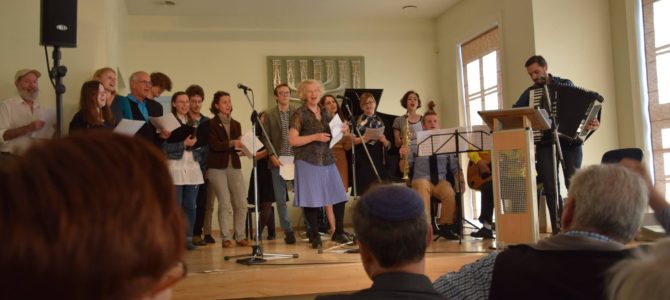
The concert by klezmer band Mazel Tov from Cluj, Romania, June 29 at the Lithuanian Jewish Community was a great success with a large turnout and heavy applause. Romanian ambassador to Lithuania Dan Adrian Balanescu welcomed the audience and noted Romania’s current presidency of the International Holocaust Remembrance Alliance. In May IHRA member-state representatives met in Bucharest and adopted a definition of anti-Semitism. The ambassador said Romania’s presidency will continue to focus on fighting Holocaust denial and anti-Semitism.

The concert in Vilnius was held on the 75th anniversary of the massacre of Jews in Iaşi, Romania, the largest mass murder of Jews in Romania. About 14,000 Jews were murdered. Before World War II some 800,000 Jews lived in Romania. After the war there were 400,000. Today there are 4,000.

Happy Birthday to Levas Jagniatinskis on His 90th!

Jagniatinskis1

May he live in health to 120!

Levas Jagniatinskis and his family were active participants in the reestablishment of the Lithuanian and Vilnius Jewish Communities around the time of Lithuanian independence from the Soviet Union. In 1992 he was elected to the Community’s Council of World War II Veterans and worked with recompense, putting finances in order and organizing events with the veteran’s council and the executive board of the Lithuanian Jewish Community. Those first years were financially hard for the Community, and so he donated his car three times per week winter and summer, parking it in the courtyard of the LJC for use by the Community. He was very active in preparing documents for the Claims Conference and tried to find greater funding for the Community. His son was one of the organizers of the Community’s union of scholars, Vilnor, and later became its director. When he left, the union stopped operating. The family’s third generation, his granddaughters, began attending children’s events put on by the Community, and now, in adulthood, continue their activities, trying to mitigate the losses from the Holocaust.

Jacques Lipchitz Exhibit at the Tolerance Center

Skulptūros iš nacionalinio Žoržo Pompidu meno ir kultūros centro jau Lietuvoje

The Tolerance Center of the Vilna Gaon State Jewish Museum is proud to present an exhibit of sculpture by Jacques Lipchitz (1891-1973). The sculptures are on loan from the Metropolitan Museum in New York, the Chicago Art Institute and museums located around the world. The exhibit opens June 1.

Museum director Markas Zingeris said organizing the exhibit was fraught with difficulties. “This exhibit, dedicated to the 125th birthday of the sculptor, was carefully planned over several years. To put it playfully, it would have been easier to get the president of France here than to borrow sculptures from Paris museums. First we had to convince representatives of the Pompidou Center and the Musée d’art et d’histoire du Judaïsme to consent to the transport of 5 sculptures and 2 paintings by Lipchitz. Once we had agreement, we had to ensure proper conditions for transporting the art works, since some of the sculptures are made of very fragile materials,” Zingeris recalled.

In Latvia Leaders Ahead of Curve on Jewish Programming for Young Adults

When I spoke to Benny Fischer, president of the European Union of Jewish Students back in April, he told me European Jewish communities must focus more on programming and investment for students and young adults.

“Communities stop investing in members aged 18 to 35,” he said. “They do not see the urgency in investing in this particular group of people and it’s reflected in the inclusion of young people in community politics and work” which he described as “shocking.” Young adults are “the exact age group where you have to invest,” for it is out of this cohort that the next generation of community leaders will emerge.

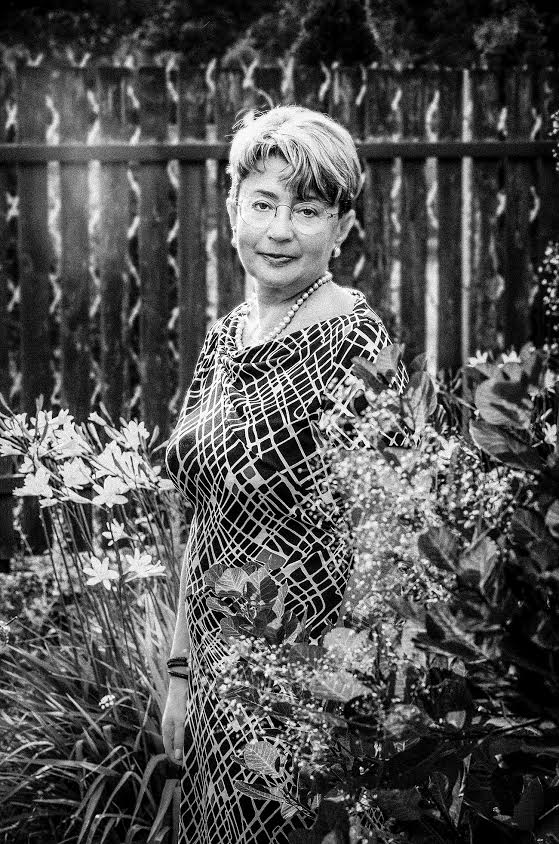
Indeed, but perhaps on this, the Jewish community of Latvia is ahead of the curve–and might provide an instructive example to other communities across Europe. Last month I met Inna Lapidus-Kinbere, who has been running the Jewish Community Center (JCC) in Riga for two years. She moved to Latvia from Estonia after she completed her master’s degree and after meeting and then marrying someone from the Latvian Jewish community, with whom she now has two children. Energetic and highly engaged, her phone didn’t stop ringing throughout our entire meeting.

Read full story here.

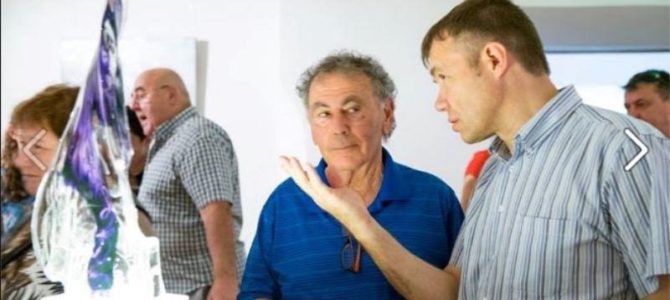
Samuel Kukliansky Remembered at 25th Anniversary of Lithuanian University

Minint Mykolo Romerio Universiteto 25-metį, pagerbtas Samuelio Kuklianskio atminimas

Samuel Kukliansky, father of Lithuanian Jewish Community chairwoman Faina Kukliansky, has had a tree planted in his memory at a ceremony to mark the 25th anniversary of the founding of the Mykolas Romeris University in Vilnius (known as the Law University before 2004). Samuel Kukliansky, Lithuanian attorney, scholar of law, criminology expert, was also a professor at the university and a post-doctoral fellow in social sciences.  He was born and raised in Veisiejai, Lithuania. After surviving the Holocaust, he was graduated from the Law Faculty of Vilnius University in 1953 with the qualifications of attorney. He was a life-long scholar and published more than 150 academic papers on different aspects of criminology.

On June 23 Mykolas Romeris University celebrated honored alumni and friends. The event to mark the 25th anniversary of the post-Soviet incarnation of the university included the release of a book including those who have contributed to the university along with the names of rectors, professors, teachers and students. An arboretum of Japanese cherry trees and ash trees was planted to honor past professors, alumni and friends of the university. Rector Dr. Algirdas Monkevičius said at the ceremony to open the garden it was intended as a gift from the university community to the founders and boosters of the university, to the neighborhood and to the city of Vilnius.

Lithuanian Jewish Community Chairwoman Kukliansky Comments on Baltic Pride 2016 March

P6181929-1-1024x768s

A large crowd of upwards of 2,000 people turned out June 18 in Vilnius for the Baltic Pride march for equality. The marchers included several foreign ambassadors—Israeli ambassador Amir Maimon, Norwegian ambassador Dag Malmer Halvorsen and others—as well as Lithuanian and European politicians human rights activists, LGBT community members and supporters, social organizations and large delegation from Vilnius University. Marchers carried flags and banners identified with thr gay rights movement and different organizations as well as the national flags of Lithuania, Latvia, Estonia, the United Kingdom, Israel, Russia, the United States, Sweden and others.

Lithuanian Jewish Community chairwoman Faina Kukliansky also attended and said she believes the march is not about gay or lesbian rights, but basic human rights, the right to be who one is.

“There are those who protest, who don’t like this right, they are disgusted and they don’t like people who are different. I would advise such people to read some medical literature. Being gay or lesbian is not a disease. One doesn’t need to be cured of it, and these people don’t have to be fixed. We should accept them as they are,” Faina Kukliansky pointed out.

Discussion of Litvak Heritage Protection at Lithuanian Government

Vyriausybėje aptarti Lietuvos žydų paveldo ir istorinių vietų išsaugojimo klausimai

On June 23 a second sitting of the commission investigating issues associated with Litvak culture and history was held at the Lithuanian Government. Discussion included Litvak heritage, protection of Jewish cemeteries and mass graves, plans for the Ponar Memorial Complex, restoration of property and inclusion of the Lithuanian Jewish Community in centennial celebrations of the restoration of the Lithuanian state.

“Lithuania is proud of her rich history and opulent ethnic culture legacy. That includes synagogues, communal buildings, different documents and other heritage. I can say resolutely that it is very important to us to maintain existing Jewish heritage sites and to adapt them for public use,” first deputy chancellor and chairman of the commission Rimantas Vaitkus said.

Removal of Jewish Headstones from Electric Substation Begins in Lithuanian Capital

Sostinėje pradėta ardyti pastotė iš sunaikintų Žydų kapinių paminklinių akmenų
photo: Saulius Žiūra

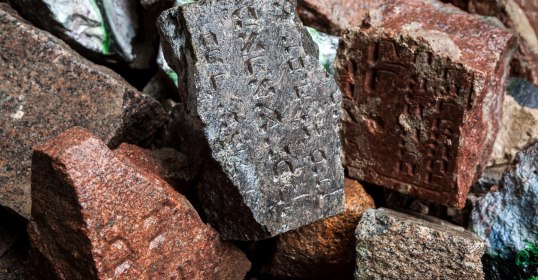
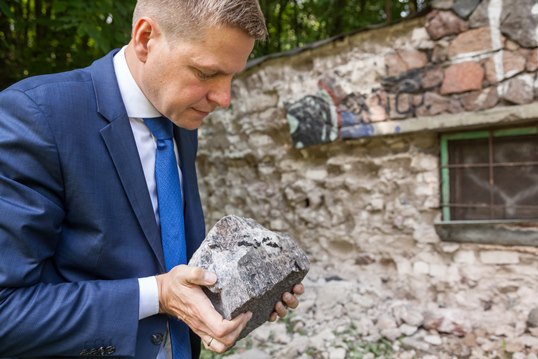
Vilnius mayor Remigijus Šimašius is keeping his promise: now that the centralized hearing season is over, work has begun to remove part of an electric transformer station whose construction during the Soviet era employed stones from Jewish graves. The mayor today surveyed the work to disassemble the electric substation on Olandų street. After consulting with the Lithuanian Jewish Community, the decision was made to remove the headstone fragments to the site on Olandų street where a Jewish cemetery memorial is being constructed.

It’s clear that 26 years after the declaration of Lithuanian independence, it has long been time to get rid of such symbols of disrespect for our history. Today the Jewish headstones are being removed from the substation and will be used for a Jewish cemetery memorial on Olandų street. We consulted with the Lithuanian Jewish Community on how to return the fragments of gravestones in the most honorable manner, showing due respect to the memory of the dead,” Vilnius mayor Šimašius said.

Full story in Lithuanian here.

Jewish Gravestones Removed from Electric Substation

Iš elektros pastotės išimami žydų antkapių akmenys

VILNIUS, June 22, BNS–This week removal began of fragments of Jewish headstones used in the construction of an electric substation in Vilnius. The fragments will be removed to the Jewish cemetery on Olandų street to be used in a Jewish cemetery memorial to be erected there, the municipality informed BNS. “Currently work is underway to remove stones set in different walls,” Kęstutis Karosas, acting director of the city’s Heating and Water Department said. The plan is to remove all the stones by September 1.

The cost to the municipality is unknown so far. Karosas said payment will be made for work done. The electric substation on Olandų street was constructed during the Soviet period using headstones from the Jewish cemetery there. Jewish headstones, especially from the cemetery on Olandų street, were used all over Vilnius for construction during the Soviet era.

Archaeologists Find Burners Brigade Tunnel at Ponar

Mokslininkai žydų žudynių vietoje Paneriuose aptiko pabėgimo tunelį

A team of archaeologists from the US, Canada, Israel and Lithuania have discovered the escape tunnel dug by the burners’ brigade at Ponar as well as new killing pits.

“New pits were discovered, overgrown paths were also found along which the victims were taken, and the ashes of burnt corpses distributed over the area. And also, the most important thing, the act of resistance, the escape tunnel, about which so much is said in the literature… Now without margins of error its length has been measured, about 30 meters, very exactly, Markas Zingeris, director of the Vilna Gaon State Jewish Museum told Lithuanian Radio and Television Wednesday.

He said the findings at Ponar will lead to new information stands and exhibits. The tunnel might also become part of the new museum planned at Ponar.

Archaeologists Dig at Vilnius Great Synagogue

Vilniaus Didžioji sinagoga žydams buvo svarbi, kaip katalikams Vatikanas

VILNIUS, June 21, BNS–A team of experts from the United Kingdom, Canada, Israel and Lithuania is starting to investigate the remains of the Great Synagogue of Vilnius and other buried buildings.

An international team of archaeologists using non-invasive geophysical techniques plans to investigate the remnants of a mikvah buried 2 meters below the surface under a school built by the Soviet regime after 1960.

“Our geophysical studies can map below the street without destroying any infrastructure and then to identify exactly where to dig, map and retrieve artifacts to understand the historical context,” one researcher said.

Romanian Klezmer Concert

The Romanian embassy in Vilnius and the Lithuanian Jewish Community invite you to a concert by the klezmer group Mazel Tov from Cluj, Romania, called

Rumania, Rumania,

lekhaim briderlakh!


at 7:00 P.M. on Wednesday, June 29, at the Lithuanian Jewish Community, Pylimo street no. 4, Vilnius

350-Year-Old Torah Scroll Returns to Vilnius

350 m. skaičiuojatis toros ritinys grįžta į Vilniaus choralinę sinagogą

The Vilnius Jewish Religious Community cordially invites you to celebrate this extraordinary event, the return of the Torah scroll, at the Vilnius Choral Synagogue.

This 350-year-old Torah scroll, which survived the destruction of the Vilnius ghetto during World War II and was taken out of the country to protect it, is finally coming home.

The ceremony of bringing in the Torah is to take place at 1:00 P.M. on Monday, June 27, at the Choral Synagogue in Vilnius.

The Vilnius Jewish Community is tremendously grateful to Judah Passow for his initiative in returning the Torah scroll. The family of London-based photojournalist Judah Passow safeguarded the Torah scroll for 56 years after it left Vilnius. The ceremony will feature a short presentation of the history of the Torah and what this most important book means.