
Learning

LJC Criticizes Vilnius Municipality Invitation to Celebrate 1941 Uprising

Vilnius, June 27, BNS–The Lithuanian Jewish Community Wednesday criticized an invitation to the public from the Vilnius municipality to mark the anniversary of the 1941 uprising.

According to the Community’s statement, in June of 1941 “Lithuania won a brief and very conditional freedom essentially in exchange for becoming a Nazi ally.”

The LJC said the Lithuanian Activist Front which staged the uprising against the Soviet government became a tool of anti-Semitic policy in Lithuania and the Provisional Government never passed any act condemning the mass murder of Jews.

“The LJC can’t remain indifferent when several days ago in the heart of the capital a celebration was held, while flags of mourning should have flown in the country to mark the first victims of the Holocaust in Lithuania,” the statement said.

The uprising in June, 1941, is supposed to have been a struggle the restore Lithuanian statehood destroyed by the Soviet occupation, but critics say the insurgents and the Provisional Government were not favorable towards Jews.

The invitation published on the internet page of the Vilnius municipality claims the 1941 uprising demonstrated the resolution of Lithuanians to fight the Bolshevik occupation.

“In June, 1941, to avenge for those murdered and family members deported to Siberia and other northern regions of the Soviet Union, the sons and daughters of our nation, relying only upon their own bravery and themselves, were able to drive out the hated occupier and albeit briefly (June 22 to 28, 1941) restore Lithuanian statehood and the independence lost due to the culpability of their politicians and military leaders,” the Vilnius municipality’s invitation said.

Kaunas Remembers Lietūkis Garage Victims

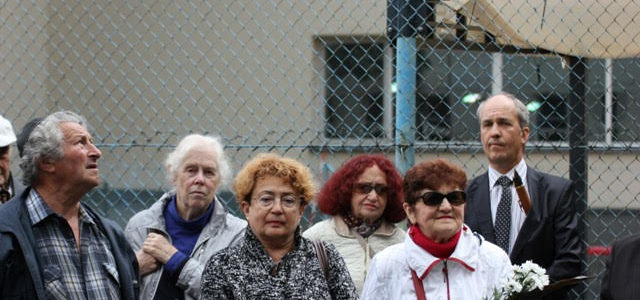
On an overcast Monday afternoon members of the Kaunas Jewish Community, friends of the Community and those who care honored the victims of the Lietūkis garage massacre. Lithuanian Jewish Community chairwoman Faina Kukliansky recalled the historical event when in the first days of World War II in Lithuania when one group of citizens brutally tortured and murdered another group of citizens just because they were Jews as a crowd looked on in the middle of the day. She spoke about enduring myths about Jews, the Holocaust and the reasons the Holocaust happened.

Kaunas Jewish Community chairman Gercas Žakas and ghetto inmate Fruma Kučinskienė recalled what their family members said about those horrible and not-so-distant times and the still living, blood-curdling images fixed in memory.

Chairman of the Kaunas chapter of Sąjūdis [Lithuanian independence movement] Raimundas Kaminskas and Ninth Fort Museum deputy director Marius Pečiulis both expressed condolences to Holocaust victims and their descendants and apologized for the crimes of their countrymen.

All speakers expressed a common idea: the need to educate children, not just to talk about the historical facts, crimes against humanity and genocide, but to try to figure out together with children how and why these sorts of crimes occur, what happens to the human mind, psyche and spirit so that a person loses all sense of humanity and commits inconceivable acts.

Israelis Visit Panevėžys

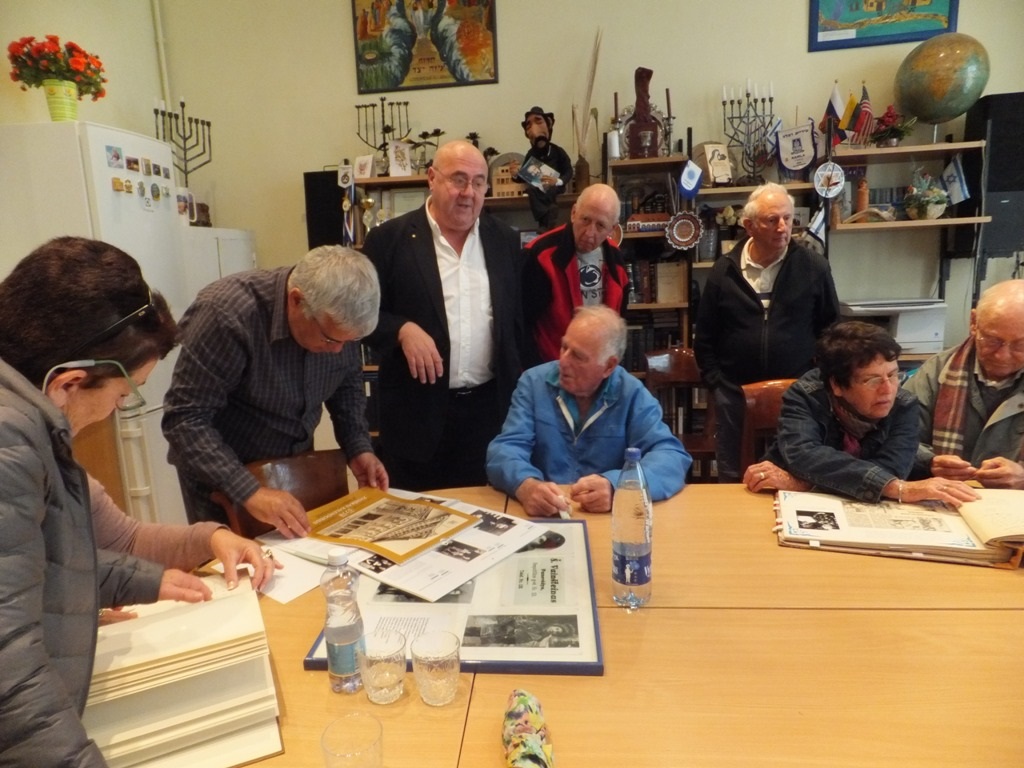
For the fourth year now Edit Perry from Israel has led delegations of visitors to Panevėžys and the Panevėžys Jewish Community. This year, on June 25, the guide and teacher led a group of 23 people from Tel Aviv and other locations in Israel engaged in researching Jewish heritage and history. They are university students who study Jewish history during the academic year and spend their summers actually visiting locations connected with the life of their forefathers in Lithuania and Poland.

Community member Jurij Smirnov shared his experience of the Holocaust as a child in the concentration camps in Šiauliai and Panevėžys, the death of family members and how he came to Panevėžys with surviving family.

Following the discussion, the visitors viewed a photography exhibition and Panevėžys Jewish Community chairman Gennady Kofman presented a brief history of the Jews of the Panevėžys region before World War II. All visitors were given a Jewish calendar published by the Lithuanian Jewish Community featuring drawings and paintings of Lithuanian synagogues by Gerardas Bagdonavičius made before the war.

Lithuanian Mini-Maccabiah Games Celebrate 100th Anniversary of Lithuania

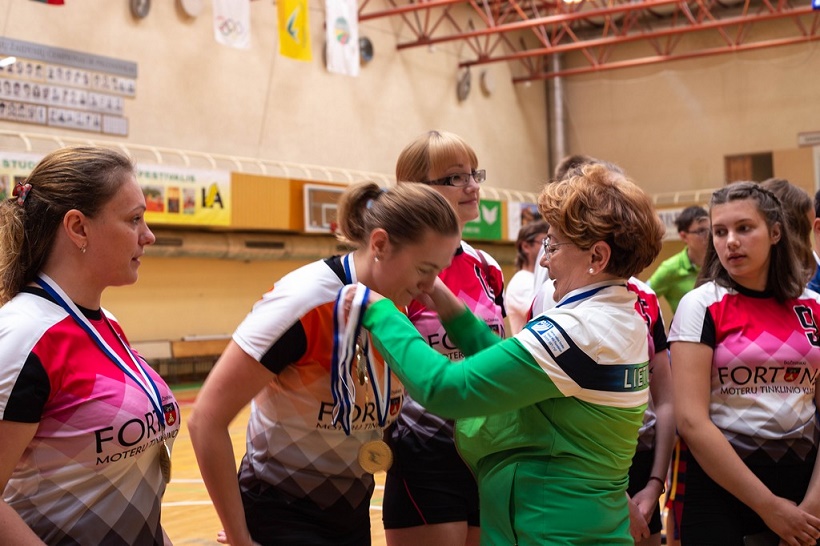
Lithuanian Makabi Athletics Club held a mini-Maccabiah games event celebrating 100 years of Lithuanian independence Sunday at the Educology University in Vilnius. Athletes from Vilnius, Kaunas, Panevėžys, Šalčininkai, Lentvaris and Israeli exchange students from Kaunas competed. All participants received participation medals and the youngest contestant, Grytė Vaisbrodė, received a participation trophy. Best athletes in all team sports received personal trophies. Lithuanian Jewish Community chairwoman Faina Kukliansky and Makabi vice president Daumantas Levas Todesas welcomed and congratulated athletes.

Competition was held in indoor football, 3-on-3 basketball, volley ball, table tennis (men’s and women’s), chess and badminton (men’s and women’s).

A luncheon was held following the competition.

Conference to Preserve Jewish Heritage in Pušalotas, Lithuania

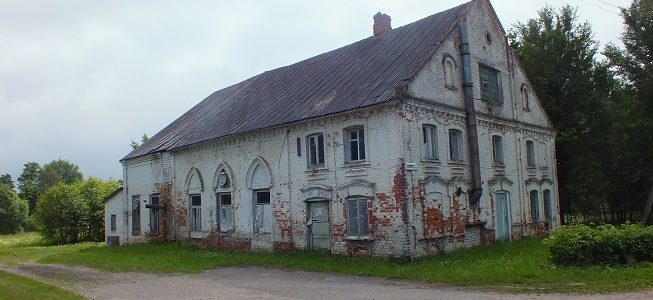
A conference and inspection tour took place in Pušalotas, Lithuania, June 15, of the synagogue there known as “Yoshke’s house” which also included a Jewish primary school. The synagogue was built by Howard Margol’s great-grandfather, all of whose relatives lived in Lithuania during Tsarist times. One of Margol’s relatives is former Israeli prime minister and long-time leader of the Labor Party Ehud Barak.

The inspection tour in Pušalotas included members of the Panevėžys Jewish Community, Israeli ambassador to Lithuania Amir Maimon, members of the Pušalotas community, officials from the Lithuanian Cultural Heritage Department and staff from the Lithuanian Jewish Community, Pasvalys regional administration chairman G. Gegužinskas, Lithuanian MP A. Matulas, Pušalotas township alderwoman P. Stravinskienė and Pušalotas community chairman A. Kumpauskas, among others. They inspected the synagogue which is in critical condition. For 75 years it hasn’t been used as a synagogue and was left derelict for some time. Margol and family had a commemorative plaque placed on the synagogue and put the old Pušalotas Jewish cemetery in order in 2005. The external structure of the synagogue is intact and authentic, and it could be restored and used by the local community.

Happy Birthday to Grigory Kanovich

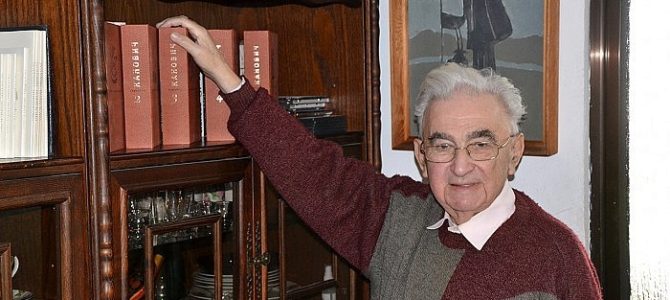
Happy birthday to Grigory Kanovich who celebrates his 89th this week.

This year the re-established Lithuanian Jewish Community celebrates its 30th anniversary. Looking back on the time of national revival, back to 1989 when the founding meeting of the Lithuanian Jewish Cultural Association took place, we remember Grigory Kanovich was elected the organization’s first chairman. Kanovich is an internationally acclaimed writer, winner of Lithuania National prize in Art and Culture for 2014, an honorable citizen of Jonava, chairman emeritus of the LJC and the recipient of the Order of Lithuanian Grand Duke Gediminas, third degree. He currently lives in Israel.

We appreciate our first chairman (1989-1993) and writer, author of the novel “A Kid for Two Pennies” which was adapted and performed by the Little Theater in Vilnius as “Smile Upon Us, Lord,” and which won first prize at the Baltic and Northern European Theater Festival. It was truly an unforgettable play and several generations of people find much meaning in it.

Living in Israel, Grigory Kanovich wrote the novel “Jewish Park,” recognized best Israeli novel in Russian in 1997.

The entire Lithuanian Jewish Community is so proud of you, beloved Grigory, and we all wish you the happiest birthday from the bottom of our hearts, and wish you great health, happiness and love.

YIVO Director Jonathan Brent Visits Vilnius

YIVO executive director and CEO Jonathan Brent led a delegation visiting Vilnius earlier this week. The Lithuanian Jewish Community cherishes our long-term cooperation and meaningful work with YIVO in preserving the Jewish cultural heritage in Lithuania and the world. We thank the United States embassy for their invitation to attend a reception for Jonathan Brent.

Solomonas Atamukas’s Book on Lithuanian Jews Launched at Lithuanian Jewish Community

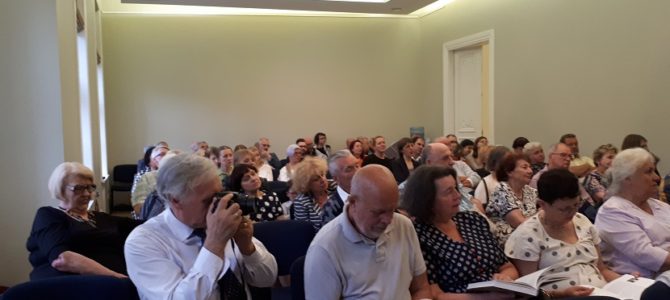
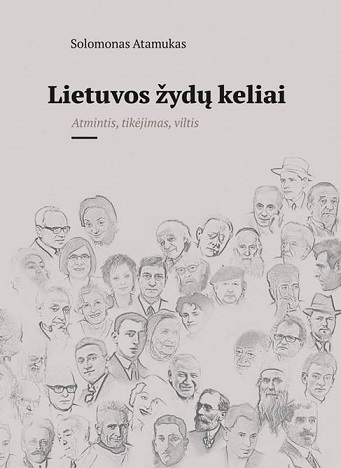
A new book by the late scholar and historian Dr. Solomonas Atamukas (1918-2014) was lauched June 11 in the Jascha Heifetz Hall at the Lithuanian Jewish Community in Vilnius. The book, “Lietuvos žydų keliai: atmintis, tikėjimas, viltis” [Paths of the Jews of Lithuania: Memory, Faith, Hope] was written and intended by the author to be a continuation of his first book. Late in life Dr. Atamukas suffered health problems and in order to insure the continuation of his first book would be published, enlisted the help of his son, daughter, grandson and daughter-in-law, who performed careful research and collection of information. According to his daughter, long-serving deputy chairwoman of the Lithuanian Jewish Community Maša Grodnikienė, the family paid for the publication of both books.

This is a useful new source for the reader interested in Litvak history. It contains 458 biographical sketches, called biograms in the book, of Litvaks, arranged by country of residence. The book contains large amounts of information about world-famous Litvaks, their origins in Lithuania, education, work and achievements. The author sought to collect as much information and write as many biograms as possible about Holocaust survivors.

Lithuania Marks Day of Mourning and Hope on June 14

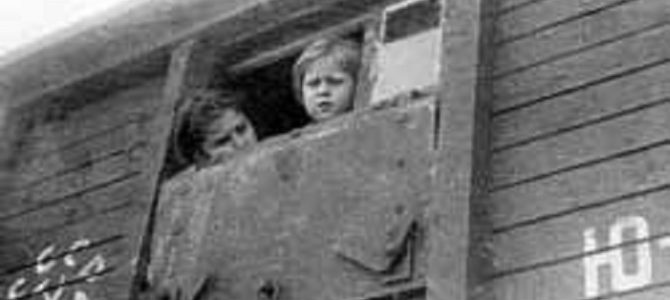
At 3 o’clock in the morning on June 14, 1941, NKVD officers began mass arrests of Lithuanian citizens. Entire families of Lithuanians and Jews were deported to Siberia deep in the Soviet Union. More than 30,000 people from Lithuania were taken away in one week. They were sent to Siberia in sealed rail cars.

Lithuania marks this anniversary as the Day of Mourning and Hope in honor of those who died in exile.

Kaunas Mayor Invites Public to Unveiling of Zwartendijk Monument

Kaunas mayor Visvaldas Matijošaitis has issued public invitations to attend a ceremony to unveil a monument to WWII-era Dutch diplomat Jan Zwartendijk across from the Knygų Ministerija bookshop at Laisvės Alley no. 29 in Kaunas at 3:30 P.M., Friday, June 15. Zwartendijk issued the so-called Curaçao final-destination visas to Jews fleeing the Holocaust in Lithuania.

Unexpected Guests Visit Panevėžys Jewish Community

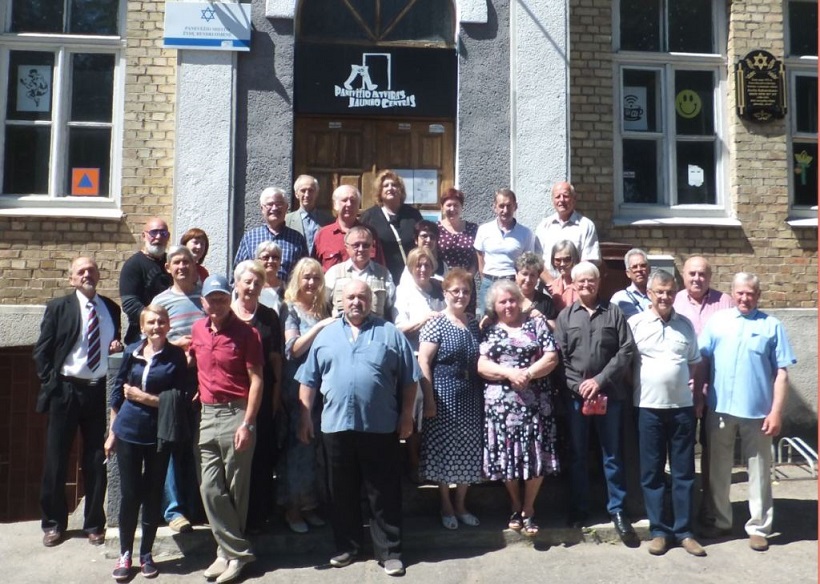
A group of former classmates now living in Israel, Russia and the United States have visited Panevėžys together. They attended a school which began operating in Panevėžys after liberation from the Nazis in September, 1944. Many of the students were Jewish. One such is David Dworkin, who now lives in Miami, Florida. His father was an airman and the commander of a military unit. Another is Semion Zuselevič Šteiman who lived on Ramygalos street with his parents. His children Genadij, Leonard and Jevgenij also attended the school. Vladimir Maksimičiov lived in Panevėžys and is a member of the Panevėžys Jewish Community. His brothers Genadij and Baruch also attended the same school after the war.

Panevėžys Jewish Community chairman Gennady Kofman told the guests the history of Jewish schools in Panevėžys, include the Yavne girls’ religious gymnasium which some of the visitors attended before the war, built in 1922 by Rabbi Josef Shlomo Kahaneman. It was closed down in June of 1940 along with all other Jewish schools, gymnasia and high schools in Lithuania. The chairman also told the guests about community activities and treated them to kosher wine and matzo.

The visit was useful to the Panevėžys Jewish Community as well as the visitors and the chairman said he’s grateful so many people have come and shared new photographs and documents with the community over the last 20 years.

Those wishing to visit during summer should contact beforehand the chairman of the Panevėžys Jewish Community, who might be able to help locate old homes, former teachers and places where parents and grandparents once worked.

Old Kalvarija Synagogue Springs Back to Life

Leading Polish musical group Vocal Varshe performed a concert of Jewish song last week at the old synagogue complex in Kalvarija, Lithuania, where services were last held more than 77 years ago.

The Polish group sang and played accordion to a full house. The windows were opened and the music reverberated throughout the former shtetl where Jews were the majority population before the Holocaust. A local youth choir sang a Jewish song at the beginning of the concert to honor the victims.

Construction began on a synagogue in “Jewish Calvary” in 1713 when the ruler of the Polish-Lithuanian Commonwealth, Augustus II, granted the kahilla a charter to engage in different forms of trade and manufacturing, to set up cemeteries and to build synagogues not taller than the highest church.

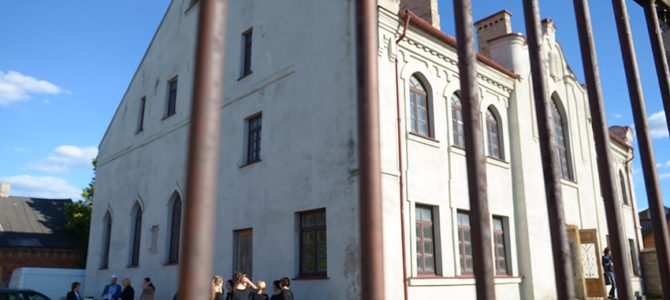
The Kalvarija synagogue complex is listed on the Lithuanian registry of protected cultural treasures. It includes the Baroque synagogue built in the 18th century, the electric synagogue built in the latter half of the 19th century and the adjacent Talmud school and rabbi’s residence built at the turn of the 19th and 20th centuries.

Polish Group Vocal Varshe Performs at Sacred Site in Vilnius

Vocal Varshe, a group of musicians from Poland, performed songs in Hebrew, Yiddish and Ladino at the site of the former Great Synagogue in Vilnius, destroyed after World War II, on the evening of June 6, 2018. The event was organized by the Polish Institute in Vilnius and the Lithuanian Jewish Community. The Polish musicians from Warsaw performed songs from the Warsaw and Vilnius ghettos.

LJC executive director Renaldas Vaisbrodas began the event with the poem Vilne by Moshe Kulbak.

Vilnius mayor Remigijus Šimašius greeted the audience and said the concert venue reminded the public, Polish and Lithuanian residents of Vilnius, that more could have been done to save Jews from the Holocaust. He also called for an appropriate commemoration at the site, whether that be partial reconstruction of the synagogue or some other form, to remind future generations of what happened. He said this would serve to unite the different ethnic communities in Vilnius.

LJC chairwoman Faina Kukliansky thanked the musicians for coming and performing and the Vilnius mayor who granted permission for the concert at the site infused with the spirit of the teachings of the Vilna Gaon.

International Forum of Jewish Scouts Director Alain Silberstein Visits Kaunas

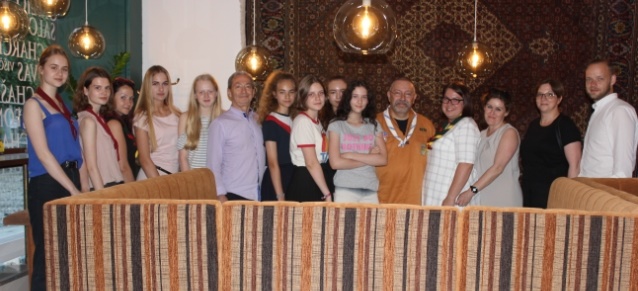
International Forum of Jewish Scouts director Alain Silberstein during his visit to Lithuania last week visited Kaunas where he met with the chairman of the Kaunas Jewish Community, scouts and young people. The French visitor gave an enthusiastic presentation of the Tsofim Yehudim program, plans to expand Jewish scouting activities in Europe and plans to revive Jewish scouting in Lithuania. He reminded his audiences this movement was very active in Lithuania before the Holocaust. Girls who attended the meeting at the KJC said they found his presentation very interesting and inspiring. Scouting, as presented, allows everyone to find themselves and to get involved in activities they love most, and also provides the opportunity to expand one’s horizons to activities which might not have appeared interesting at first. The Jewish scouting movement is attractive because of the values it espouses, its orientation towards Jewish culture and traditions and its tolerance. The ideas interested the audiences in Kaunas and there are great hopes the Jewish scouting movement will return to Lithuania.

Vocal Varshe Concert at the Winter Synagogue in Kalvarija

The Vocal Varshe group from Poland will perform a concert of Jewish songs in Yiddish and Hebrew including songs from the Warsaw and Vilnius ghettos at the synagogue located at Sodų street no. 18 in Kalvarija, Lithuania, at 7:00 P.M. on June 7. Entry is free. Limited transportation from Vilnius will be provided with a small bus leaving the Lithuanian Jewish Community at 4:00 P.M. on June 7 and returning sometime between 10:00 P.M. and 11:30 P.M. Please contact neringa@lzb.lt if you want to make use of this limited transportation.

Interview with Mizrachi Feminist and Litvak Dr. Smadar Lavie

Visiting lecturer Dr. Smadar Lavie recently returned to Vilnius and agreed to a short interview for www.lzb.lt.

I came here for my father’s posthumous degree. They had a big ceremony. I said I didn’t grow up as a Litvak, I grew up as a shvartze, because my mother is Yemeni, and Israel has lots of racism by the Ashkenazi Jews towards the Mizrachi Jews. So now that you’re talking to me, almost all of my classmates were Ashkenazi, children of survivors, and they didn’t have grandparents. They were very envious that I had a Yemeni grandmother. My grandmother was very nice to my friends because they didn’t have grandparents. I didn’t know why. It was just … over there. We use to call it “over there.”

So where did you study then?

I grew up in Holon, it’s a suburb of Tel Aviv, and I went to Bialik elementary school. I did my BA at Hebrew University in Jerusalem and my PhD is from University of California, Berkeley.

Pianist Golda Vainberg-Tatz to Perform in Vilnius

St. Catherine’s Church at Vilniaus street no. 30 in Vilnius will host a concert by pianist Golda Vainberg-Tatz from the USA/Israel at 7:00 P.M. on Thursday, June 7.

Vilnius Municipal ST. CHRISTOPHER CHAMBER ORCHESTRA

Artistic Director: MODESTAS BARKAUSKAS

Conductor: DONATAS KATKUS

Program:

From Lithuania to Santiniketan: Schlomith Flaum and Rabindranath Tagore

English and Lithuanian editions of Dr. Shimon Lev’s book “From Lithuania to Santiniketan: Schlomith Flaum and Rabindranath Tagore” (originally written in Hebrew) were launched at the Lithuanian Jewish Community on the evening of May 31 with pageantry, live Indian music and dance, readings of selections and speeches by the author, the Lithuanian intelligentsia and members of the diplomatic corps.

Shovana Narayan, recipient of a national award in India and classical Indian dance master, performed several pieces based on Tagore’s poetry with two assistants to kick off the event. Narayan is related to Rabindranath Tagore.

Judita Gliauberzonaitė read selections of Tagore’s poetry in Lithuanian.

Lithuanian Jewish Community chairwoman Faina Kukliansky welcomed the audience and speakers, noting the unique nature of Flaum’s travelogues and testimony, and said it wasn’t very often the LJC hosted such highly cultural and intellectual evenings as this one.

Former Lithuanian ambassador to India Laimonas Talat-Kelpša and his wife, celebrating her birthday, attended and Talat-Kelpša spoke about the remarkable travels Schlomith Flaum undertook in the early 20th century and the connections between Lithuania, India, Israel, and the connections between Zionism, the national movement in India and Lithuanian statehood.

Author and Israeli Litvak Dr. Shimon Lev talked about how Flaum became the earliest source of information about India in nascent Israel, her strength as an early female traveller and travel writer and the magic involved in the process of translation. He also spoke about Vilnius as a center of learning with the Vilna Gaon as the preeminent Jewish scholar in the modern age.