Learning

CRIF Calls for National Response to Surge in Anti-Semitism in France

CRIF Calls for National Response to Surge in Anti-Semitism in France

CRIF
CONSEIL REPRÉSENTIF DES INSTITUTIONS JUIVES DE FRANCE

Paris, le 12 février 2019

Press release

CRIF calls for a national bounce against anti-Semitism

French interior minister Christophe Castaner announced anti-Semitic acts increased by 74% in 2018. This reflects a disturbing release of anti-Jewish hatred.

Portraits of Simone Veil desecrated with swastikas, the grove in memory of Ilan Halimi vandalized, the tag Juden on a shop window in Paris … the last days alone testify to the banalization and violence of anti-Semitism in France in 2019.

CRIF recalls these statistics do not include acts which did not lead to a complaint, nor anti-Semitic publications on internet. Thus they reflect only very partially the reality of “everyday anti-Semitism” faced by French Jews.

CRIF is concerned by the violence of the anti-Semitism on social networks which contributes to the inculcation of anti-Semitism and conspiracy in the minds of the younger generation.

For CRIF, the general plans set up to fight hatred appear ineffective, unfortunately. It is now necessary to provide targeted responses to each instance of the hate which is tearing our society apart.

President Francis Kalifat is calling for a “national bounce against anti-Semitism.” He emphasizes: “beyond being a threat to Jews, anti-Semitism is a sign of the weakening of democracy in our country. On the eve of the anniversary of the assassination of Ilan Halimi, CRIF is hoping for a welcome bounce from French society to break the wall of indifference which surrounds anti-Semitism.”

Close Ties between States of Lithuania and Israel Strengthen Cultural Cooperation

Close Ties between States of Lithuania and Israel Strengthen Cultural Cooperation

Cultural cooperation between Israel and Lithuania is gaining momentum through joint projects and upcoming events discussed by Lithuanian minister of culture Dr. Mindaugas Kvietkauskas and Israeli ambassador to Lithuania Amir Maimon.

The Lithuanian cultural festival Lithuanian History to be held from March to June in Tel Aviv was cited as an example of intense cultural cooperation. This is one of the most remarkable Lithuanian cultural projects to be held abroad in 2019. Lithuanian cultural organizations working together closely with Israeli cultural organizations will present Lithuanian literature, music, modern dance, documentary cinema and visual arts. The festival will likely strengthen ties between Lithuanian and Israeli cultural organizations and promote Lithuanian culture in Israel.

The meeting between the Lithuanian minister and the Israeli ambassador discussed how more active exchanges of cultural workers between Israel and Lithuania should encourage the drafting of a 2019-2022 program of Lithuanian and Israeli cooperation in the areas of education, academia, culture, youth affairs and athletics with a significant emphasis on culture.

Full text in Lithuanian here.

Launch of Aaron Garon’s Vilnius Jewish World

Launch of Aaron Garon’s Vilnius Jewish World

The Lithuanian Jewish Community will host the launch of Aaron Garon’s (1919-2009) “Vilnius Jewish World” at 3:00 P.M. on February 17.
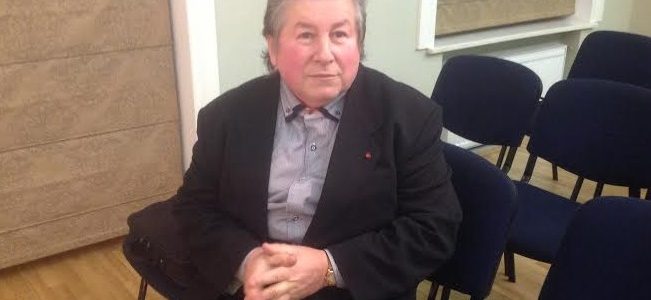
Participants are to include his daughter Tamara Garon, son Eugenijus Garon, Fania Brancovskaja, Simas Levinas, signatory to the Lithuanian Restoration of Independence Act Česlovas Juršėnas, Faina Kukliansky, publisher Stasys Lipskis, Maša Grodnikienė and Milan Chersonski.

“Vilnius Jewish World” is a collection of articles published in periodicals in Yiddish by famous journalist Aaron Garon illustrated with archival photographs. Most of the texts in the book are eye-witness accounts of Jewish Vilna in the interwar period.

Garon was born in Vilnius and most of his life was connected with his beloved city.

For more information call (8 5) 261 3003.

Trump Names Anti-Semitism Czar

Trump Names Anti-Semitism Czar

United States secretary of state Mike Pompeo Wednesday appointed former soldier and prosecutor Elan Carr president Donald Trump’s special envoy for monitoring and fighting anti-Semitism.

World Jewish Congress president Ronald Lauder hailed Trump’s decision, expressing hope veteran Elan Carr would perform these complex duties of special concern well.

Anti-Semitism appears to be on the rise world-wide and in the United States, Lauder said, adding the US is long the leader in the fight against anti-Semitism, and that Trump by naming a special czar for tackling the issue had made a decisive and positive step confirming his government’s moral leadership in this area and calming fears in the Jewish community over support for Jews and insuring a secure life for Jews.

Rabbi Joel Meyers, president of the American chapter of the WJC, said anti-Semitism remains a constant problem and there was no hope it would simply disappear without specific and well-thought-out steps taken to eradicate it. During the shooting at the Pittsburgh synagogue Americans realized the danger of anti-Semitism, he said, saying people around the world must do all they can to stop these kinds of violent attacks. He said nobody–Jew or non-Jew–should have to live in fear of their life and property, and it is our duty to make sure that doesn’t happen.

Hike for Scouts

The Jewish Scouts of Lithuania invite children, teenagers and parents on a hike from the synagogue in Žasliai to the synagogue in Žiežmariai. If your child is 14 or older he/she may participate independently, but all younger hikers need to be accompanied by their parents. The event will include scouting entertainment, a bonfire, a guided tour of the newly-renovated synagogue in Žiežmariai and snacks. The hike will take place on February 17. The start of the hike is reachable from both the Vilnius and Kaunas central railroad stations and the plan is to return hikers to the Vilnius and Kaunas central bus stations. More information is available in Lithuanian here and you may also contact Renaldas at renaldas@lzb.lt for additional information. Parents need to sign a permission form here and send it to renaldas@lzb by February 11.

Lithuanian High School Students Win Holocaust Contest

Anastasija Narbutaitė and Olga Podvorskytė won a contest put on by the Russian Academic and Educational Holocaust Center called “Memory of the Holocaust: The Road to Tolerance” and Narbutaitė received the award presented them from Russian journalist Alla Gerber at a ceremony the Russian Jewish Congress held in Moscow January 28. The two Lithuanian high school students at the Santara Gymnasium in Vilnius surveyed the Lithuanian press from 2016 to 2018 for articles and accompanying internet comments about the Holocaust. Tatjana Bruskina, who teaches high school seniors English at the gymnasium, accompanied Narbutaitė and both took part in a We Remember event at the Lithuanian embassy in Moscow.

The Catholic Priest Who Discovered He Was Jewish

The Catholic Priest Who Discovered He Was Jewish

by Kostas Kajėnas

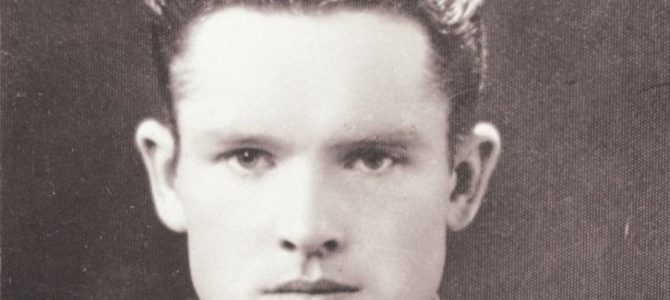
Since his birth Romualdas Jakubas Veksleris-Vaškinelis was raised Catholic and grew up to become a Catholic priest. He discovered later he was Jewish and travelled to Israel where he met his ultra-Orthodox relatives for the first time. The return to his roots was difficult. On the one hand there was the joy of discovering them, on the other: a confrontation on the rights of Jews to move to Israel.

The unusual life of this person with two names and two surnames began in World War II. He was born in Švenčionys, Lithuania, and became the only person in his family to survive the Holocaust. The infant survived because he was rescued by a Polish couple, Piotr and Emilia Waszkinel, who accepted him into their household when his parents Jakub and Batya Veksler asked them to during the destruction of the Švenčionys ghetto. The Polish couple baptized him and raised him as a Catholic.

Full story in Lithuanian here.

Lithuanian Conference on Stories of the Children of the Holocaust

Lithuanian Conference on Stories of the Children of the Holocaust

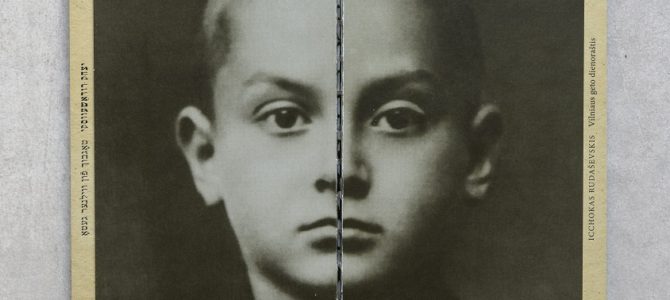
The pre-war and Holocaust experiences of Jewish children from Lithuania were the topic of a conference held January 25 in Ariogala, Lithuania, to mark International Holocaust Remembrance Day. A large group of students and teachers from over 25 Lithuanian schools with their own Tolerance Education Centers told stories of Jewish children and adolescents, making use of the recently translated ghetto diary of Yitzhak Rudashevski, the memoirs of Trudi Berger and others, a book about children rescued from the Kaunas ghetto, the work of Grigory Kanovitch and others. Ronaldas Račinskas, executive director of the International Commission for Assessing the Crimes of the Nazi and Soviet Occupational Regimes in Lithuania, which organized the conference, said it was important to tell the stories from before the war but especially during. Kaunas Jewish Community chairman Gercas Žakas said the performances by the young people gave him hope their generation wouldn’t be afflict by ethnic and religious stereotypes

Photo: Gustė Adamavičiūtė

Synagogues: The Difficult Road to Revival

Synagogues: The Difficult Road to Revival

by Kazys Kazakevičius

Of the almost one-and-a-half thousand synagogues in Lithuania before World War II, only about 80 have survived to the present. Only two are operational and all other buildings are being used for other purposes or stand empty. It takes a lot of money to revive a synagogue for new life. The Jewish communities don’t have it, and neither do the municipalities which often become the owners of synagogues where there are no Jewish communities. Some EU support helps, at least.

An opportunity for fully restoring a former synagogue in Alytus, Lithuania, has come up; after the war the synagogue became a salt storehouse and a chicken hatchery. In January the city mayor’s office signed an agreement with a contractor for the further capital renovation of the synagogue built in 1911 which has been undergoing some repairs for three years now. The plan foresees a year-and-a-half’s worth of work for 400,000 euros. Around half of that cost will come from EU funds with the municipality picking up the rest. Specialist Ingrida Leskevičienė of the Alytus mayor’s office’s department of finance and investments reported the building is to house a visual arts center as a branch of the Alytus Regional History Museum. The first floor is to be used as an exhibition hall to host exhibits, conferences, seminars, lectures, book launches and showings of films.

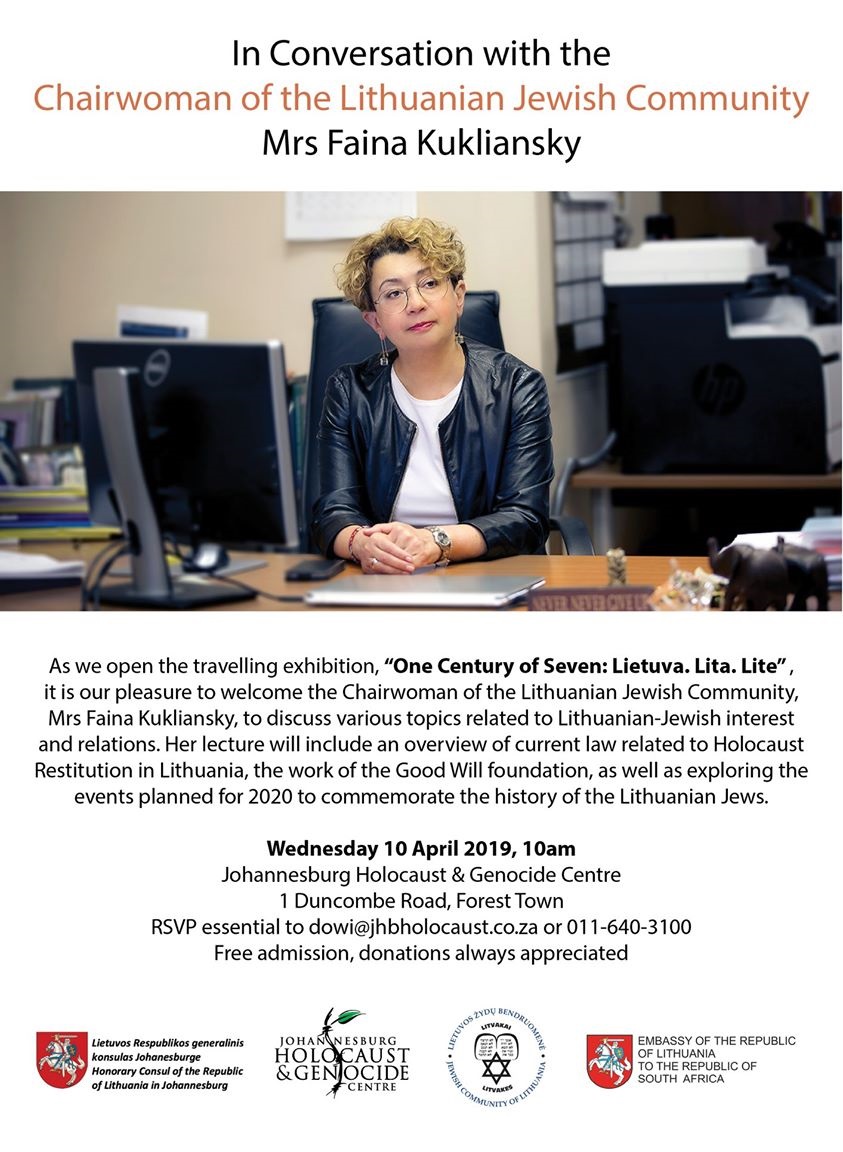
Lithuanian Jewish Community chairwoman Faina Kukliansky said, however, there are still synagogues whose fates are causing great concern. Renovating or rebuilding them, even if funds were available, wouldn’t make sense if there was no on to use the buildings.

Full story in Lithuanian here.

Holocaust Trauma

by Ruth Reches, excerpt from doctoral thesis on the experience of identity by Holocaust survivors

All researchers agree the Holocaust was a human-caused trauma which cost millions of lives and left painful after-effects in the life of survivors. What makes Holocaust trauma exceptional, and what are its effects?

Six millions Jews were systematically murdered in the Holocaust as part of Nazi policy, a plan to exterminate all Jews in occupied Europe. Those who managed to survive are called “Holocaust survivors.” These are people born before 1945 in countries occupied by Nazi Germany. “Survivors” include concentration camp victims, but also prisoners in labor camps and ghettos, those in hiding and who joined the partisan resistance, and those who survived using counterfeited documents.

People who survived the Holocaust are now more than 80 years old. During the war they were children or adolescents. Thus in discussing the special features of Holocaust trauma, it is important among other things to consider the characteristics of early trauma and its influence on aging.

Full excerpt in Lithuanian here.

International Conference Held in Vilnius for Holocaust Day, Fighting Discrimination

International Conference Held in Vilnius for Holocaust Day, Fighting Discrimination

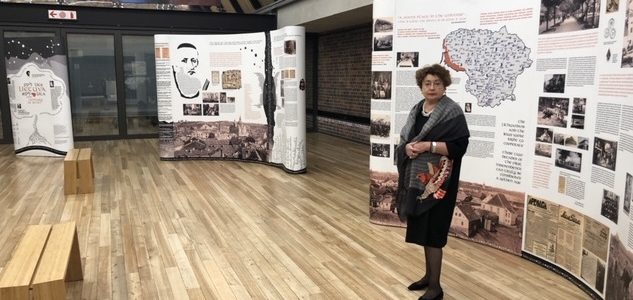
The Lithuanian Jewish Community and the Lithuanian Department of Ethnic Minorities held a conference in Vilnius January 25 both to commemorate International Holocaust Remembrance Day and to look at new ways of fighting discrimination and anti-Semitism in Lithuania. Speakers included Vytautas Magnus University professors, members of the Lithuanian Government, diplomats and academics from abroad. The conference concluded with a presentation of the exhibit “Lithuania, Lite, Lita: One Century of Seven.”
Lithuania’s foreign minister Linas Linkevičius, Ethnic Minorities director Vida Montvydaitė and LJC chairwoman Faina Kukliansky gave welcome speeches.

Foreign minister Linkevičius spoke to the significance of Holocaust Remembrance Day: “Anti-semitism, discrimination against Jews, is a scar on my country. Making apologies will no longer help make anything better. Discrimination led to the Holocaust. Currently in Lithuania there are many signs for Jewish mass murder sites which we can visit and say: never again. We have to remember the Righteous Gentiles, of whom there are about 900 [from Lithuania]. Each year as we honor the victims who were murdered, we cannot guarantee that similar mass murders will not be repeated in the world. In order to stop this, Jewish history and the Holocaust must be part of educational curricula,” he said.

Lecture Series

Roza Bielauskienė will speak on the topic “The Unified Kingdom: King Saul” at 1:00 P.M. on Sunday, February 3.

Maushe Segal, the Last Jew of Lithuanian Kalvarija

Maushe Segal, the Last Jew of Lithuanian Kalvarija

Since 2005 we have marked International Holocaust Remembrance Day (officially “International Day of Commemoration in Memory of the Victims of the Holocaust” as designated by the United Nations) and have remembered the once-large Lithuanian Jewish community 78 years ago. There have been no Jews left in the shtetlakh for a long time now, although the Jewish legacy endures in the form of the old towns and synagogues they built, and the cemeteries and mass grave sites. We spoke with Maushe Segal (Maušius Segalis), the last Jew of the town of Kalvarija in western Lithuania, about his life and what Holocaust Remembrance Day means to him.


Maushe with grandson at the Kalvarija synagogue. Photo: Milda Rūkaitė

Segal: It’s important to me to remember, because this is a day commemorating the once-large community now dead. For many years we Jews gathered at the cemetery on September 1, since that’s the day all of the Jews of Marijampolė [Staropol] were murdered. That was before, now there are no Jews left in Kalvarija or Marijampolė.

What do you remember seeing as a child, or did your mother tell you?

They took my father and me to be shot on September 1, 1941. They shot him, but my mother grabbed me, I was small, from the pit in Marijampolė after the shooting.

Remember Raoul Wallenberg

Swedish ambassador to Lithuania Maria Lundqvist and the Lithuanian National Martynas Mažvydas Library’s Judaica Center invite you to attend the opening of the Swedish Institute exhibit Raoul Wallenberg: I Don’t Have Another Choice, at the library in Vilnius at 5:00 P.M. on January 30. The exhibit will run till February 10.

Jewish Headstones Desecrated by Soviets to Return to Cemetery

Jewish Headstones Desecrated by Soviets to Return to Cemetery

By early Friday, January 18, the Protestant Evangelical Church in central Vilnius (during Soviet times the Kronika movie theater) had completed the removal of stone stairs leading up to the entrance which were in fact Jewish headstones placed there by Soviet authorities.

This represents a victory in the Lithuanian Jewish Community’s long-term efforts to insure respect for the dead and the Jewish legacy in Lithuania.

Since 2013 the LJC has been cooperating actively with the Lithuanian Cultural Heritage Department and the Vilnius Protestant Evangelical consistory (session, or governing council) to determine whether the stairs were in fact taken from Jewish cemeteries. It was determined Jewish headstones were used in the construction of the stairs, headstones taken from the old Jewish cemetery in the Užupis neighborhood of Vilnius. Since that determination, the LJC has been appealing constantly to the institutions involved for the stairs to be removed. A number of LJC members have been involved actively in making this happen, as have some Lithuanian public figures, including late professor and MEP Leonidas Donskis.

Litvaks, Jews in Lithuania and Anti-Semitism: Lithuania’s Jews Persevere

Litvaks, Jews in Lithuania and Anti-Semitism: Lithuania’s Jews Persevere

You don’t have to be born in Lithuania to call yourself a Litvak. There were many years in which Lithuania’s borders kept changing, so that many Jews born in any of Lithuania’s neighboring countries or in any of the countries that had ruled or occupied Lithuania, consider themselves to be Litvaks – especially if they can also speak Yiddish.

At meetings in Vilnius this past November, the first question put to the journalist from Jerusalem Post by both Faina Kukliansky, the chairwoman of the Lithuanian Jewish Community, and Fania Brancovskaja, Vilna’s last Holocaust survivor [sic], was “Do you speak Yiddish?” The interview with Brancovskaja, 96, was entirely in Yiddish, even though she is fluent in a half-dozen languages, including English. Kukliansky is also multilingual and even though the interview with her was conducted in English, every now and again, when she wanted to emphasize a point, she reverted to Yiddish.

Full story here.

Our Jewish Musicians: A Documentary Film by Saulius Sondeckis

Our Jewish Musicians: A Documentary Film by Saulius Sondeckis

The film “Mūsiškiai žydai muzikai” ([Our Jewish Musicians], 2017) by Saulius Sondeckis, Jr., documents the late world-famous conductor Saulius Sondeckis. It will be shown on Lithuanian public television’s LRT PLIUS channel at 9:45 P.M. on January 24.

In the film professor Sondeckis talks about Litvak musicians who contributed so much to the education of Lithuanian musicians, the maturity of the artistic community and the global music history. The film includes interviews with Sondeckis’s colleagues and students.

The 115-minute documentary employs documentary and visual material from archives, museums and private collections in Israel, the USA, Russia and Lithuania. It features 26 Litvak musicians from the first half of the 20th century to the present and contains 882 photographs and excerpts from 50 works by 33 composers.

Motke Chabad’s Best Joke

Motke Chabad’s Best Joke

Motke Chabad and His Best Joke* (Jewish humor)

by Pinchos Fridberg,
[an old Jew who was born and raised in Vilnius]

<Rebe>, will there ever come a time when the words <Vilne un Yidish> [Vilne and Yiddish] will be inseparable again?”
“<Saydn nor mit Meshiekh’n in eynem> [Not unless it comes with the Messiah].”

§§§

Would you like to know what an old Jew does after a delicious and satisfying lunch?
I’ll tell you: he lies <af a sofke> [<a sofke> – diminutive of sofa] <un khapt a dreml> [and grabs a nap].

And then what?

And then he dreams that …

A few days ago I received an e-mail from motke.chabad@xxxxx.com containing an incredible proposal: the author asked me to prove to him that I really am an old Vilna Jew <an alter vilner Yid>. I wouldn’t tell you these <bobe-maise> [old wives’ tales] if not for the way he suggested proving this.

Golden Globe Winner Grateful to Litvak Ancestors

Golden Globe Winner Grateful to Litvak Ancestors

Patricia Clarkson, winner of the Golden Globe award for best supporting actress in a series, miniseries or television film in 2019 for her role as Adora Crellin in the HBO series Sharp Objects, says Lithuania is part of her, and she grew up with stories of her baba, the great-grandmother who came from Lithuania and died before she was born, according to the Lietuvos Rytas newspaper.

Born in New Orleans in 1959, Clarkson was graduated from the Yale School of Drama with an MFA.

Clarkson’s great-grandmother Sophie Bass-Berengher was born in the Kaunas guberniya in 1886. Her daughter Sophie (née Berengher) and Johnny Brechtel had daughter Jacquelyn Brechtel Clarkson. born in New Orleans on January 17, 1936. She served as a councilwoman on the New Orleans city council and has been the honorary counsel of the Republic of Lithuania in New Orleans since late 2014. She is also Patrica Clarkson’s mother.

Full story in Lithuanian here.