Declaration of the Government of the Slovak Republic on the 80th anniversary of the so called Jewish Code



The Lithuanian Jewish Community is pleased to announce a concert by St. Christopher chamber orchestra from Vilnius and other classical, jazz and folk performers to commemorate the 80th anniversary of the Holocaust in Lithuania.
Program:
Premiere of Symphony from the Jerusalem of the North by composer Jievaras Jasinskis
Special guest: Israeli multi-instrumentalist Yaron Cherniak
The concert begins at 7:00 P.M. on Thursday, September 23, in the courtyard of the President’s Office at Daukanto street no. 3 in Vilnius (gate opens at 6:00 P.M.).
Prior registration before September 20 and proof of vaccination(s) at the gate required. Register here.
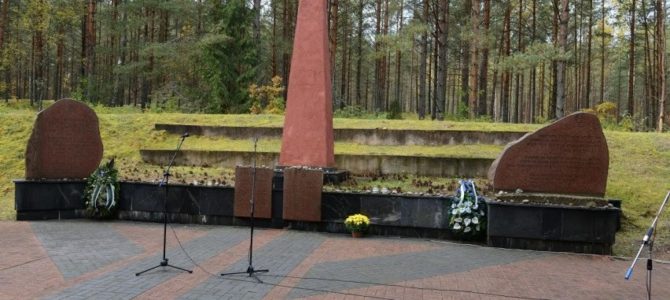
It has become a tradition now to meet on the first Sunday in October at the Menorah in the park in Švenčionys to remember and honor the large Jewish community of Švenčionys who had their own culture and traditions, and to remember their tragic fate.
I am please to invite everyone to attend the Holocaust commemoration at the Menorah statue in the Švenčionys city park marking the boundary of the Švenčionys ghetto. The commemoration starts at 11:00 A.M. on October 3, 2021.
Program:
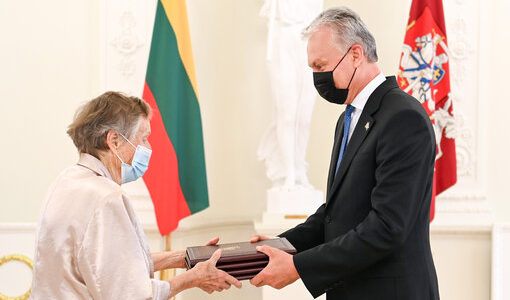
Lithuanian president Gitanas Nausėda held the annual ceremony at the President’s Office September 14 to award rescuers of Jews from the Holocaust and their descendants the Lithuanian Order of the Life-Saver’s Cross.
“Every September as we mark the Day of Remembrance of Lithuanian Jewish Victims of Genocide, we pay respect to memory of Lithuania’s Jewish citizens murdered during World War II. We also honor the rescuers of Jews, those people who dared oppose the occupational regime without regard to the mortal danger this posed to them and their families,” he said at the ceremony.
The Lithuanian president recalled the historical context in which these rescuers operated, with anti-Semitism dripping from the pages of the press, the mass murder of Jews underway. Despite this, they dared hide the condemned Jews and resist the occupational regime.

Photo: The Pope’s visit to Slovakia and meeting with members of the Jewish community was called historic.
“Here, in this place, the name of God was dishonored,” Pope Francis said at a Holocaust memorial in Bratislava. During World War II Slovakia was governed by a Nazi puppet regime headed by Catholic priest Jozef Tiso.
Pope Francis paid tribute on Monday to the thousands of Slovak Jews who were murdered during the Holocaust.
The comments came during the pontiff’s official visit to Slovakia against the backdrop of accusations around the Catholic Church’s role in Holocaust atrocities in Slovakia.
What did the pope say?
Speaking at a former Jewish neighborhood in the capital Bratislava, Pope Francis sharply criticized “the frenzy of hatred” in World War II and continuing anti-Semitism.
Full story here.
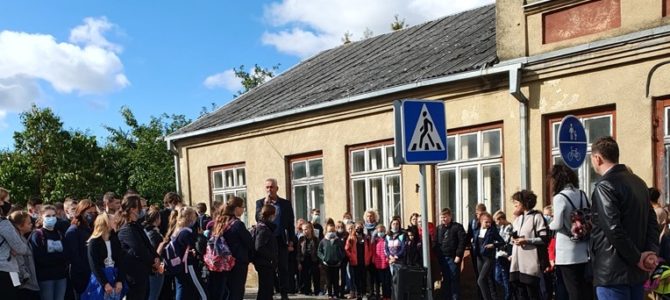
Krakės, a small town in the Kėdainiai district in central Lithuania, marked the 80th anniversary of the onset of the Holocaust there on September 2. On that date in 1941 about 1,125 Jews from Krakės and the surrounding settlements Gudžiūnai, Pociūnėliai, Baisiogala, Grinkiškis and Dotnuva were murdered at Peštiniukai village near Krakės.
The commemoration included a march with local high school students and the reading of the names of the victims at the mass murder and mas grave site in Peštiniukai village.
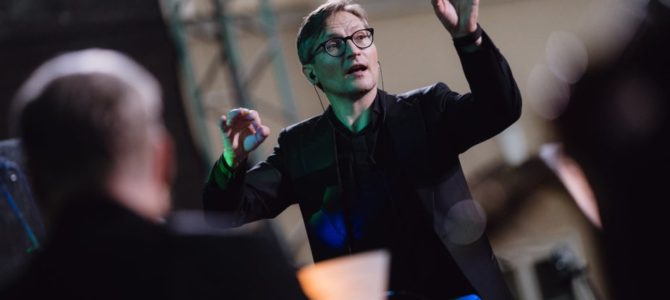
Vilnius’s St. Christopher Chamber Orchestra has concerts scheduled for September 16 at St. Kortyna’s Church in Vilnius, September 17 at the renovated synagogue in Žiežmariai and September 18 at the Red Synagogue in Joniškis to showcase the music of Litvak and modern Israeli composers and their ties with Lithuania.
More information in Lithuanian available here.
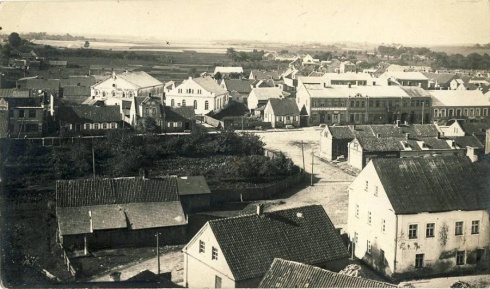
The Šiauliai Jewish Community has announced a program of Holocaust commemoration events scheduled for Sunday, September 12, beginning with a procession from the parking lot next to the Vilkiaušis Forest.
Program:
11:00 A.M. Meet at the parking lot next to Vilkiaušis Forest. Procession to the Jewish genocide site in the Vilkiaušis Forest. Ceremony to honor the victims.
12:30 P.M. Leave for Žagarė. Commemoration on market square.
2:00 P.M. Procession to Naryškinas Park.
4:00 P.M. Ceremony to commemorate the 80th anniversary of the Jewish genocide in Lithuania.
4:20 P.M. Leave for Jewish cemetery in Žagarė.
5:00 P.M. Rafailas Karpis and Darius Mažintas’s artistic program “Kaddish for the Dead” at Jaunimo street no. 1 in Žagarė.
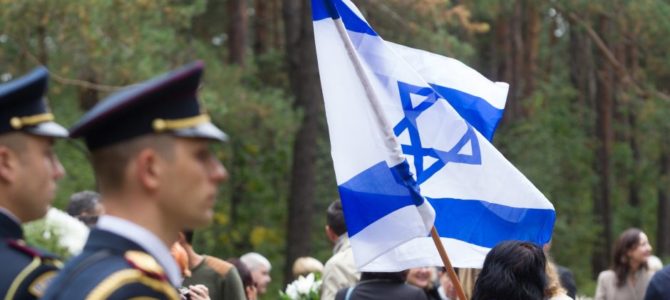
Wednesday the city of Alytus south of Vilnius marked the 80th anniversary of the beginning of the Holocaust with a procession before noon from the Old Town to a mass murder site in the Vidzgirdas Forest.
A commemoration ceremony was held at the memorial at the Holocaust site.
Jewish community members from Kaunas and Vilnius, Lithuanian foreign minister Gabrielius Landsbergis, MPs, local government officials, foreign ambassadors, students from schools in the area and local residents participated.
Following the ceremony the renovated synagogue building on Kauno street was opened as the new home of the Alytus Audio-Visual Arts Center with a concert by Rakija Klezmer Orkestar.
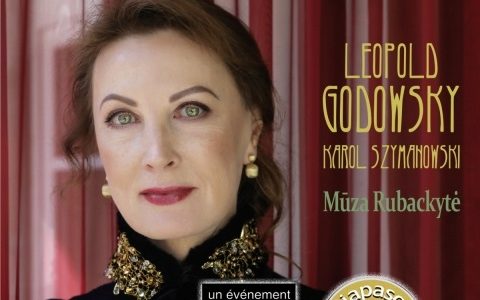
I am very glad that Litvak Leopold Godowsky’s sonnets 1 and 2 will reach the wider world. I would like to inform you my concert on September 23 at the Gaveau in Paris will be dedicated to Holocaust victims and to the date September 23, 1943, the date of the liquidation of the Vilnius ghetto. Please find the program attached.
Sincerely yours,
Mūza Rubackytė
September 9, 2021
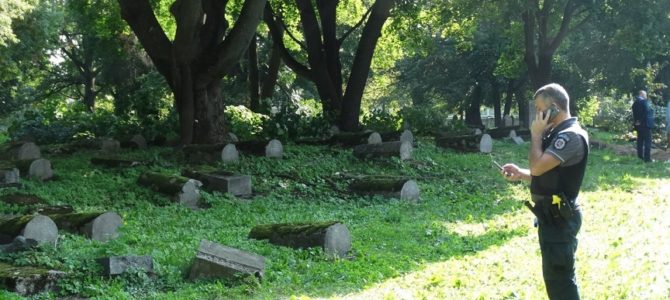
Unknown criminals desecrated the old Jewish cemetery on the Radvilėnai highway in Kaunas, exhuming at least three graves in what might have been an attempt steal valuables from the dead.
The Kaunas municipal agency charged with maintaining cemeteries noticed the disturbed graves Thursday morning while clearing tree branches at the site.
The three graves well all adjacent to one another in the southern section of the cemetery near the fence. Maintenance personnel found several pits which seemed to be dug towards the upper body section of the corpses. The pits were about a half meter deep and were partially filled in.
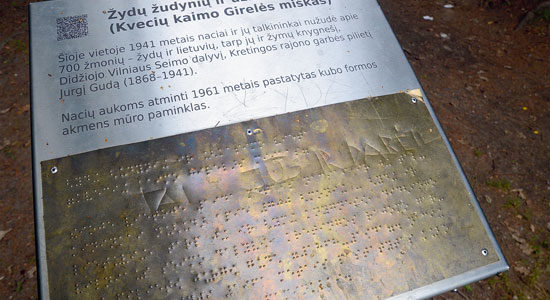
While Lithuanians and Litvaks spent much of June, July, August and now September of this year marking the 80th anniversary of the beginning of the Holocaust in locations around the country, vandals attacked a Holocaust memorial in the Kretinga region for the second time in two years.
The memorial marks the spot where about 700 local Jews were murdered in 1941. Kretinga alderwoman Sigita Riepšaitė said the monument was first attacked two years ago just four months after it was erected, and that the cost of repairs was roughly half the total cost for the monument to begin with, which was around 900 euros.
Lithuania’s LNK News reported the alderwoman had made a police report regarding the metal plaque attached to a large stone at Kviečiai village in the Girėlė Forest. Riepšaitė said the police were taking the report seriously at least partially because this is a repeat crime.
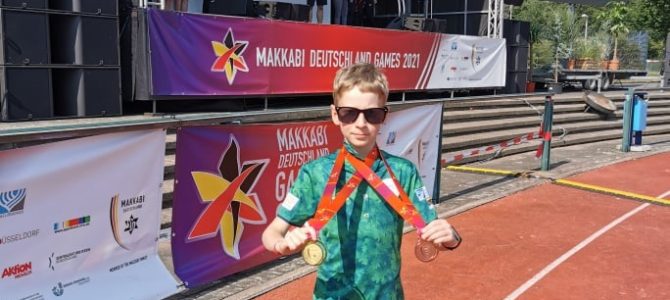
The German Makkabi Games 2021 took place in Dusseldorf from September 2 to 5 and athletes from the Lithuanian Makabi Athletics Club took part. Over 600 athletes were there to compete from Germany, Lithuania, Austria, the Netherlands, Poland and other countries.
All six of our Lithuanian makabites earned medals. Danielius Dubrovinas took first prize in rapid chess matches. Our youngest athlete, 12-year-old Danielius Šeras, took first place in matches in the under-14 category and came in at fifth place in the entire fast chess category. Danielius Šeras earned third place in the overall category in the “lightning round.”
Swimmer Virginija Valadkaitė takes home three gold medals in three distance competitions.
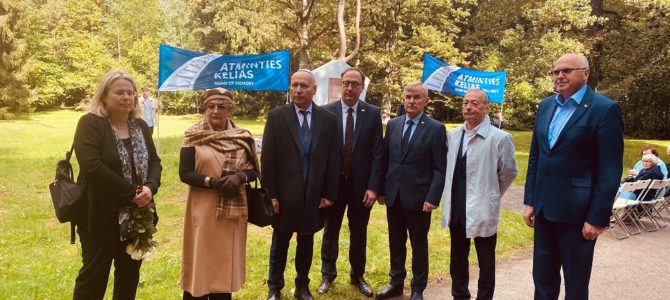
The traditional commemoration of Holocaust victims took place on the first Sunday in September in the Pivonija Forest outside Ukmergė (Vilkomir). This is the third-largest mass murder site in Lithuania. Members of the Lithuanian, Kaunas and Ukmergė Jewish Communities took part as did representatives of the International Commission to Assess the Crimes of the Nazi and Soviet Occupational Regimes in Lithuania, various Tolerance Centers around the country and representatives of the Road of Memory 1941-2021 commemoration project. A large group travelled from Vilnius for the event, including Israeli ambassador to Lithuania Yossef Avni-Levy, US ambassador to Lithuania Robert Gilchrist, German embassy cultural attaché Anja Luther, Lithuanian Jewish Community chairwoman Faina Kukliansky, members of Lithuanian parliament Viktoras Pranckietis, Juozas Varžgalys and Emanuelis Zingeris and Ukmergė regional administration mayor Rolandas Janickas
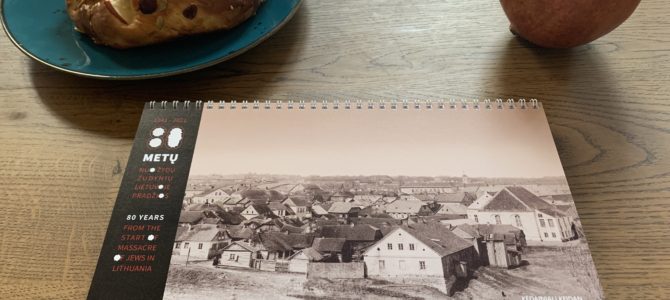
The Lithuanian Jewish Community is happy to announce our annual Jewish calendar has been printed and is ready for distribution. This year’s calendar, for the year 5782, features the communities and people who lived in Lithuania before the Holocaust, with period photography from shtetls across the country. The format this year is smaller and hopefully more convenient and functional but contains the features from past years, including local times for Sabbath, fasts and holidays. It will be made available to the public starting Thursday, September 9, at the Bagel Shop Café.
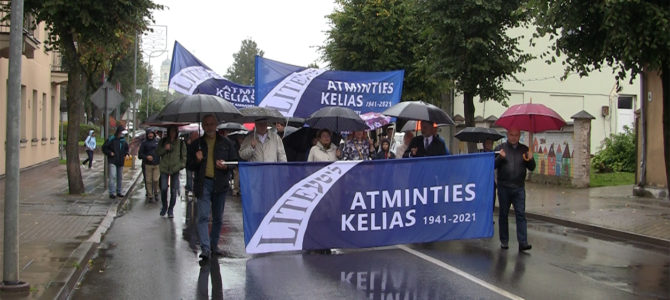
The Lithuanian city of Molėtai, located about 60 miles north of the capital Vilnius, marked the 80th anniversary of the beginning of the Holocaust on August 29. On that date in 1941 more than half the population of Molėtai, the local Jewish community, was murdered.
Five years ago a large Jewish commemorative march was held in Molėtai, attracting international attention. Tzvi Kritzer, the organizer of that event, was made an honorary citizen of Molėtai by the local municipality.
This year’s event began with the unveiling of a monument at the site where the town’s four synagogues once stood. The monument is a commemorative plaque affixed to a large field stone in the town center with a silhouette of the former synagogues and inscriptions in several languages saying this is where the synagogues once stood. Saulius Pilinkus, an art historian who was directing this event, called upon Lithuanian Jewish Community chairwoman Faina Kukliansky, Molėtai regional administration mayor Saulius Jauneika, screenwriter and cartoonist Ilja Bereznickas and the creator of the plaque, Aurimas Širvys, to help in the unveiling.
Speaking at the unveiling ceremony, administration mayor Saulius Jauneika and Molėtai Regional History Museum director Viktorija Kazlienė both said Molėtai is striving to restore historical memory.
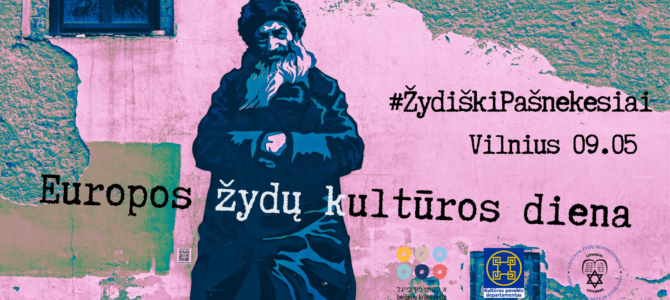
The Lithuanian Jewish Community again marks the European Day of Jewish Culture with a series of events on Jewish culture and the Litvak legacy to contributions to Lithuanian history and culture.
The theme this year is dialogue.
Please register, space is limited.
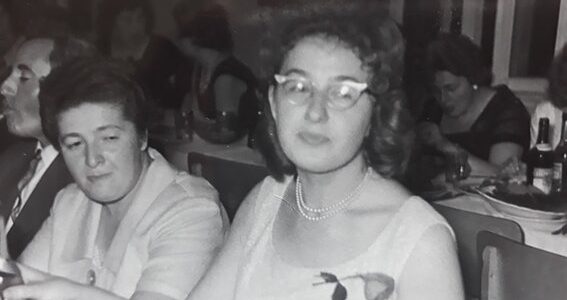
Photo: Olga Šteinberg with Veronika Vitaitė, from Veronika Vitaitė’s collection
The Lithuanian Academy of Music and Theater will mark the milestone 100th anniversary of the birth of pianist, professor and Lithuanian musical giant Olga Aleksandrovna Šteinberg at 6:00 P.M. on September 9 in the main hall there. The event was postponed from April 20 of last year due to health concerns. Her students will perform and share their memories and a film about her life will be shown.
Olga Šteinberg was born in Roston-on-Don on April 20, 1920. Her first teacher was her aunt Sara Kan, a concert pianist, who taught her at home. Her family moved to Odessa where she studied music at the school located inside Piotr Stoliarky’s home. Even then she performed with her future husband Shaya (Alexander) Livont. She began studies at the Odessa Conservatory in 1939 but when the war broke out she was forced to quit classes. She and her mother first fled to Udmurtia where she gained much work experience reading musical notation and working with artists at the Musical Comedy Theater in Izhevsk. Later she matriculated at the Sverdlovsk (Yekaterinburg) Conservatory in 1942 under Heinrich Niehaux. From 1943 to 1947 she studied at the Tchaikovsky Conservatory in Moscow under Yakav Zak, matriculating with a recommendation from Livont.
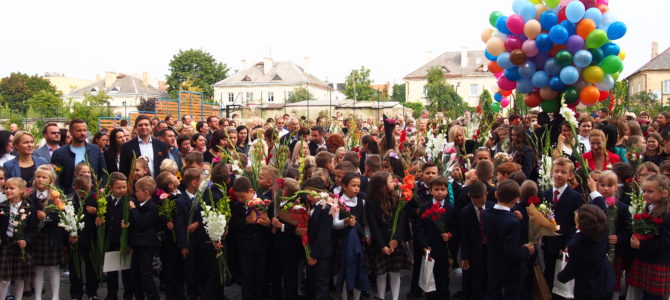
Dear children, parents and teachers,
Greetings on the September 1 holiday. We wish you perseverance is seeking the heights of learning while remaining endlessly creative.
No man on earth is truly free. All are slaves of money or necessity. Public opinion or fear of prosecution forces each one, against his conscience, to conform. A man’s most valuable trait is a judicious sense of what not to believe. Question everything, learn something, answer nothing. Whoso neglects learning in his youth loses the past and is dead for the future.
–Euripides
In sadness we report the death of Righteous Gentile Morta Kalendraitė Jakutienė at the age of 97.