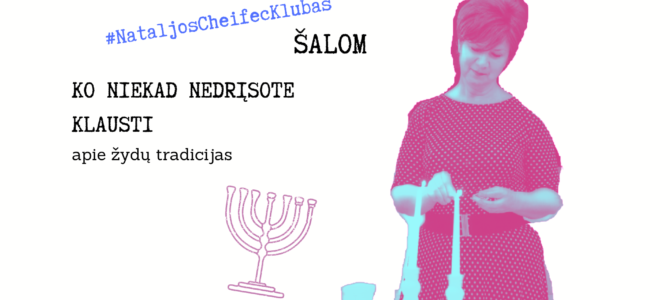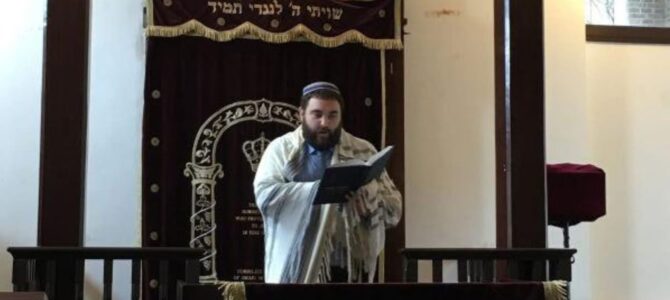

Natalja Cheifec continues her internet discussion club with a special lesson the High Holy Days at 6:00 P.M. on September 18. To participate, register here.
Happy 5786!

Natalja Cheifec continues her internet discussion club with a special lesson the High Holy Days at 6:00 P.M. on September 18. To participate, register here.
Happy 5786!

Niva Pillay as head of a special panel convened by the United Nations Human Rights Ciuncil, presented the panel’s report Tuesday accusing Israel of genocide against the Palestinians in the Gaza and said Israel had met four out of five criteria qualifying the crime of genocide, including, she said, targeting Gazan children for death, and bizarrely Israel’s destruction of frozen embryos.
She accused prime minister Benjamin Netanyahu, president Isaac Herzog and former defense minister Yav Galant specifically as having incited genocide through their statements and actions. Pillay went on to say at the press conference that member-states should intervene in the conflict immediately to stop the alleged genocide. She said member-states “don’t need” to wait for a ruling from the UN’s body responsible for trying the crime of genocide, the International Court of Justice.
In 1999 UK prime minister Tony Blaire and US president Bill Clinton used the ‘higher necessity” argument of preventing genocide of ethnic Albanians in Kosovo to invade Serbia and carpet-bomb Belgrade and Novi Sad for around 60 days and nights. The UN treaty for the prevention of genocide and the Nuremberg courts claim prevention of genocide supersedes national boundaries and sovereignty, and demands outside states intervene.
The European Commission responded to Pillay’s call almost in real time, promising to slap sanctions on Israel on Wednesday in contravention to the Israeli-EU trade agreement.

To mark Lithuania’s Jewish Victims of Genocide Remembrance Day, Audra Girijotė will give a presentation about Dovydas Matishohu Lipmanas at the synagogue in Čekiškė, Lithuania (Tsaykishok in Yiddish). Lipman was perhaps the most famous writer from the small town, and focused on the history of the Jewish community there, in Kaunas, Žemaitija and in Lithuania in general. He also wrote about the Vilna Gaon and was a frequent contributor to Yiddish periodicals. Born in 1888 in the village of Nemakščiai in the Raseiniai district, Lipman lived in and around Čekiškė from 1925 to his murder. He bought and ran a pharmacy there while writing a number of books. He was a qualified pharmacist with a degree from Dorpat (Tartu). He was murdered just outside the village in late July, 1941, by Stanislovas Gudavičius, a commander of local Lithuanian white-armbanders, according to Lithuanian historian Alfredas Rukšėnas.
Audra Girijotė is a writer and journalist who has been researching the life and death of Dovydas Lipmanas over the last several years.
Time: 1:00 P.M., September 23
Place: Čekiškė synagogue, Lašišos street no. 21, Čekiškė, Kaunas district
JewishGen yizkor for Tsaykishok here.
More biographical information in Lithuanian and English here.

The 21st annual European Day of Jewish Culture held on the first Sunday in September had the theme People of the Book this year. The Lithuanian Jewish Community celebrated in Vilnius with learning as well as song, dance and food during a day-long program that went well into the late evening.
The main venues were the Choral Synagogue with basic Yiddish and Hebrew lessons and a tour, and the Cvi Park Israeli street food kiosk and performance space at Petras Cvirka Park across the street from the LJC. Tours, sampling of food, Jewish Vilna toursm concerts by Fayerlakh and klezmer groups, entertainment by writer, thinker and self-professed professonial clown Arkadijus Vinokuras and a concert by the Kiryat Ono youth quartet were just some of the activities that day.
Photographs follow.

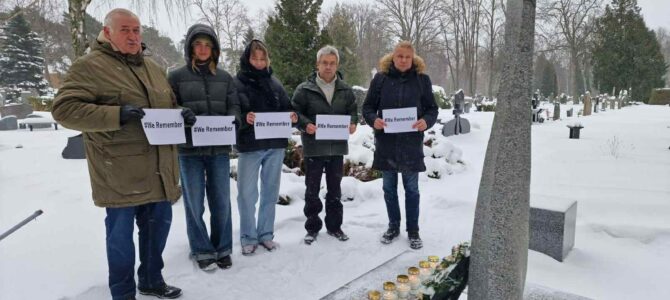
September 23 is a national day of mourning, marking the significance of the loss of Lithuanian Jewry in the Holocaust and the loss to Lithuanian society.
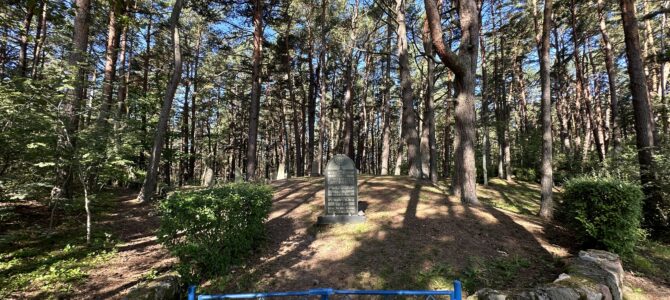
The village of Subačius, the shtetl Subotch, had a large Jewish population engaged in wholesale, shopkeeping, running bars and taverns and all sorts of other business endeavors. Almost all the Jews there were exterminated in 1941 in the Ilčiūnai Forest, also known as Lapkalnis, two kilometers from Subačius. From 80 to 300 Jews from Kupiškis andr Subačius were murdered there, according to different sources. A monument marks their mass grave. There were Righteous Gentiles there as well who saved Jews.
The ceremony to mark Jewish Genocide Remembrance Day in Subačius will include a descendamt of one family who rescued Jews, the Markevičiuses. The ceremony includes a presentation of the book “Kupiškėnai – žydų gelbėtojai” [Kupiškis Residents Who Rescued Jews] put together by historian and Kupiškis Museum specialist Aušra Jonušytė. Students from the Kupiškis Art School will provide a musical component.
Time: 11:00 A.M., September 23
Place: Subačius House of Culture, Aukštaičių street no. 14, Subačius

A new documentary on Litvak, Holocuast survivor and life-long Holocaust educator, the late Irena Veisaitė is scheduled for release in late October.
Variously titled “A Goodnight Kiss,” “Irena” and “For Irena” the Lithuanian Catalog of Cinema describes the film this way:
The film chronicles the incredible life of professor Irena Veisaite, a survivor of the murderous Holocaust and Stalinist reign in Lithuania. She is today a cultural icon, uniting people of different ages, religions, nationalities from all over the world. As she approaches her 93th birthday and shows no signs of slowing down, we follow Irena as she addresses our contemporary issues and revisits her painful past. A film that shows that the power of love can overcome trauma, and transform it into the art of living.
Irena Veisaitė passed away December 11, 2020.
Lithuanian state radio and television and the news website 15min.lt report the film will premiere October 24 in Lithuania. The Kino Pavasaris film festival and movie theater association announced the premiere of the documentary in a press release last week.
Description and more information here.

The Bnei Maskilim association, the Lithuanian Jewish Community, Art of Shabbat and the Abraham Geiger college invite you to come celebrate Rosh Hashanah. Rabbinical college student Daniel Zekhry will lead the ceremonies.
There will be the traditional blowing of the shofar horn, traditional Rosh Hashanah foods and blessings and accommodations for vegans.
Everyone is welcome. The cost is 20 euros and registiation is required by emailing viljamas@lzb.lt.
Time: 6:30 P.M., September 22
Place: Lithuanian Jewish Community, Pylimo street no. 4, Vilnius

The Panevėžys Jewish Community invites you to mark the Day of Remembrance of Lithuanian Jewish Victims of Genocide on September 23. The commemoration begins at 2″00 P.M. at the Sad Jewish Mother statue in Memory Square on Vasario 16 strret in Panevėžys.
The commemorative date was adopted by the Lithuanian parliament in 1994 based on the nominal date for the liquidation of the Vilnius ghetto in 1943. The Panevėžys ghetto was liquidated in mid-August, 1941, meaning the 13,500 Jews there were murdered ib the immediate area.
Program:

The Lithuanian National Library will host a discussion called “Young Voices: YIVO Autobiography Competitions and Their Multilingual Participants” with Polish researchers Kamil Kijek and Małgorzata Litwinowicz in the library’s conference hall on the fifth floor at 6:00 P,M, on Tuesday, September 16. Kijek will discuss biographies by young people written in Yiddish and submitted to writing contests sponsored by YIVO. Litwinowicz will present youth biographies written in Polish and submitted. Judaica Research Center director Lara Lempertienė will moderate. The event will be in English.
More information in Lithuanian available here.

by Anthea Gerrie, Hewish Chronicle, August 24
The Jews of Šeduva were murdered 84 years ago. Now a new museum will commemorate their shtetl way of life
Eighty-four years ago more than 600 Jews, men, women and children, of the shtetl of Šeduva in rural Lithuania were executed in the forest outside the town. Now the finishing touches are being made to a museum which will commemorate the shtetl way of life which was extinguished in the Holocaust, not just in Seduva or Lithuania, but all over Eastern Europe.
The Lost Shtetl Museum will use cutting-edge technology to recreate the sights and sounds of everyday pre-war Jewish life, based on the history of Šeduva and more than 200 similar small Lithuanian towns, and the thousands more communities in neighboring Latvia, Belarus, Poland and Ukraine which were wiped off the map forever.

From September 21 to October 21, 2025, the Lithuanian capital will host the Vilnius Shalom Festival. The month-long Jewish music and culture festival will bring together the unique Shofar March (unprecedented in the region), educational activities and high-level classical jazz, and klezmer music concerts. The festival will feature the Be’er Sheva Municipal Concert Band, the State Choir Vilnius, the St. Christopher Chamber Orchestra and renowned performers from Lithuania, Israel, Germany, Ukraine and the USA.
We believe these events will gather lovers of Jewish culture and music from across Lithuania and abroad in Vilnius, often called the Jerusalem of the North.
Thanks to our sponsors and partners, all festival events are free of charge. Advance registration required here: www.shalom.lt
Program:

For the second time in two years the Kaunas train station became the venue for concerts celebrating the European Day of Jewish Culture last Sunday.
Kaunas Jewish Community chairman Gercas Žakas welcomed the audience to the concert.
Young soprano Giedrė Kisieliūtė who sang in English, Lithuanian, Yiddish, Hebrew and French, was accompanied by a classical music quintet directed by Tadas Daujotas. Daujotas a;so b;ew the shofar horn at the event.
Photographs by Rūta Ravinskaitė below.
Mira Imbrasas has died. She was born ub 1937. She was a member of the Lithuanian Jewish Community and a client of the Saul Kagan Welfare Center. We extend our deep condolences to her daughter and many friends and family.
Raisa Savalyeva has passed away. She was born in 1934. She was a member of the Lithuanian Jewish Community and a client of the Saul Kagan Welfare Center. Our deepest condolences go to the son she leaves behind and all who knew and loved her.

Natalja Cheifec carries on her internet lecture series and discussion club this Thursday with a lesson on Litvaks and Hassidim.
The concept of Litvak today isn’t just Jews from Lithuania and the lands of the Grand Duchy of Lithuania, but for centuires now has included the idea of Litvaks as the Misnagidim (mitnagidim) who fiercely oppose the Hassidim. How do these two currents of Judaism differ? WHere does the opposition of these two groups originate? Tune in Thursday to hear the full story, from centuries ago to the present time.
Everyone is welcome to participate. To receive zoom credentials, click here.
Time: 6:00 P.M., Thursday, September 11
Place: internet

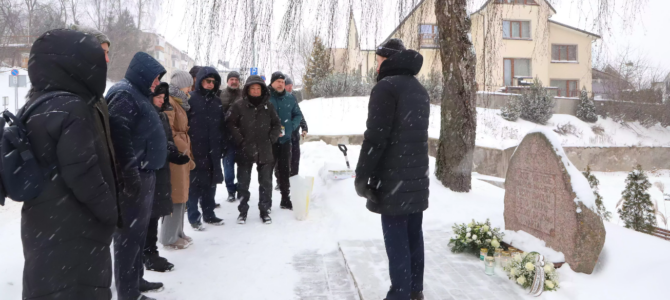
The 84th anniversary of the mass murder of the Jews of Vilkomir (Ukmergė) in the Pivonija Forest jut outside the town was commemorated on the first Sunday in September, the traditional date selected for honoring these victims of the Holocaust.
The entire Jewish population of Vilkomir and surrounding villages was exterminated ruing three mass murder operations in 1941. A sole survivor hid in the forest and later told the tale to the world.
Pivonija is the third-largest Jewish mass murder site in Lithuania after Ponar and the Ninth Fort.

The Lithuanian Consulate and Lithuanian consul Sandra Brikaitė hosted an evening called “History, Heritage and Diplomacy” earlier this mont, bringing together the Lithuanian-American community, the Lithuanian Jewish Community, the local Valley Outreach Synagogue, diplomats and other interested parties.
The Lithuanian Consulate is located in Calabasas in the southwestern end of the San Fernando Valley in Los Angeles County.
Consul Sandra Brikaitė, Valley Outreach Synagogue Rabbi Ron Li-Paz and Lithuanian Jewish Community chairwoman Faina Kukliansky all spoke at the event and all three discussed together the deep roots of Litvak culture, the Holocaust and Righteous Gentiles, among other things.
“The Jewish heritage is part of the soul of Lithuania,” Brikaitė said.

Sunday is the annual European Day of Jewish Culture. This year the theme is People of the Book. The Lithuanian Jewish Community has a full day of events planned starting in the morning. Some events require prior registration, see below. Unless otherwise noted, events will take place at the Lithuanian Jewish Community at Pylimo street no. 4. The outdoor Cvi Park space is across the street from there. The Choral Synagogue is located about 300 meters away on Pylimo street as you go towards the train and bus station.
Program:
10:30 A.M. Beginner’s Hebrew lesson with Ruth Reches at the Choral Synagogue in Vilnius. Register here.

Marking 100 years since the YIVO was founded in Vilnius, the Martynas Mažxydas National Library in Vilnius will open an exhibit at 5:00 P.M. on Thursday, September 4, and running till the end of the year entitled “YIVO Centennial: Origins, Journey, Legacy.”
The opening ceremony with keynote speech and a musical performance takes place on the third floor at 5:00 P.M. The action then moves to the 5th floor with a presentation and tasting of Litvak cuisine, culminating in a guided tour by National Library Judaica Center director and exhibit curator Lara Lempertienę.
The event is free and open to everyone.

The French Institute will show a documentary film by Loïc Salfat on the history of the Great Synagogue of Vilnius at 5:30 P.M. on September 10. The French Institute is located at Didžioji street no. 1 in Vilnius.
The film includes ancient lore regarding the synagogue complex and the Vilna Gaon, damage from bombs during WWII, removal by Soviet authorities after the war and archaeological digs over the last several decades there. The French film has English and Lithuanian subtitles.
The event is free but registration is required by filling out the form here.
The screening of the documentary is part of an educational program called “Make No Idols,” For more information about that program in Lithuanian, click here.