
Learning, History, Culture

For the Love of Yiddish

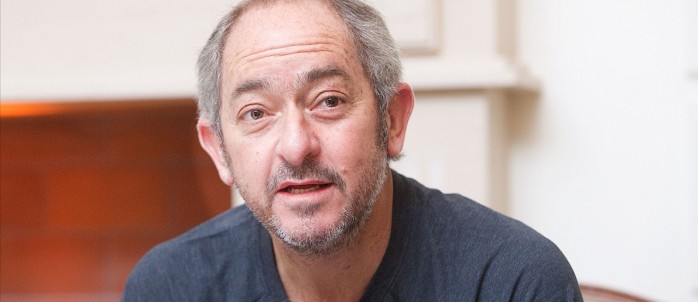
Sara Ziv, chairwoman of the National Authority for Yiddish Culture, is optimistic about the future of the mama-loshn in Israel.

When Eliezer Ben Yehuda was reviving the modern Hebrew Language a century ago, Yiddish was the lingua franca for the majority of Europe’s Jews and even further afield as the great waves of migration spread Yiddish culture and language to the America’s and even to Palestine.

In 1939, around 11 million of the world’s Jewish population of 16 million spoke Yiddish, but then the Holocaust decimated the great Yiddish speaking masses and in the nascent state of Israel, Yiddish ran up against the emergence of Hebrew culture and was sidelined and even frowned upon.

Full story here.
jpost

Houses That Talk: A Book about Vokiečių Street in Vilnius

You’re invited to the presentation of the book “Houses That Talk: Sketches of Vokiečių Street in the Nineteenth Century” by Dr, Aelita Ambrulevičiūtė at 6:00 P.M., January 22, at the Jewish Culture and Information Street at Mėsinių street no. 3 in Vilnius.

The book provides a picture of the commercial life of the street in the 19th century. It details in English and Lithuania the history of 32 former buildings on the street, their owners and the commercial enterprises which operated in them. There is a presentation of stores and store owners and goods, banks and other businesses. The book is full of photographs from the late 19th and early 20th century.

The author and Sigita Pūkienė, director of the publishing house Aukso žuvys, are scheduled to attend the event.

Israeli Embassy Photo Exhibit of Pope in Israel Opens in Panevėžys

panpop4

A photo exhibit of Pope Francis’s visit to Israel in 2014 was unveiled in Panevėžys on January 14, 2016. The exhibit was the initiative of the Israeli embassy and ambassador Amir Maimon spoke at its Panevėžys opening, thanking organizers including the Panevėžys Jewish Community, the Panevėžys Catholic bishopric and the Panevėžys municipality, as well as the audience for coming.

Echoes of Memory Photo Exhibit by Irena Giedraitienė Opens

DSC_0344

The ceremonial opening of an exhibition of photo albums and photography by photography artist Irena Giedraitienė called “Echoes of Memory” was held at the Lithuanian Jewish Community on January 14. The exhibit features images of survivors of ghettos and concentration camps in Lithuania and abroad, and of rescuers of Jews.
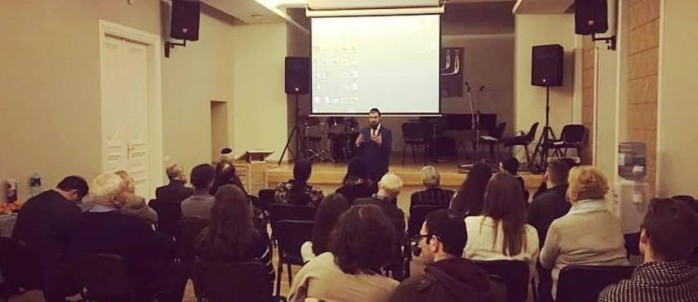
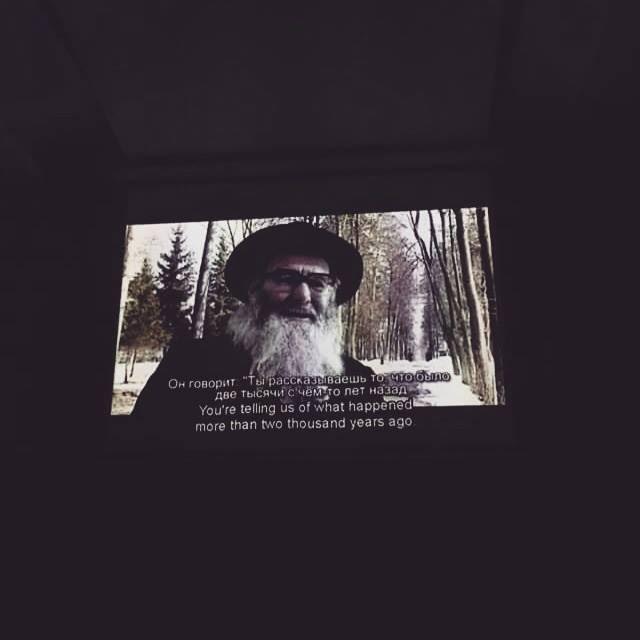
Lithuanian Jewish Community chairwoman Faina Kukliansky introduced the artist and her work to the international audience at the event. Israeli embassy deputy chief of mission Yehuda Gidron commented the faces in the portraits on exhibit not only captured moments in time and the personalities and characters of the people, but also showed some of them smiling, conveying optimism and hope. Tobias Jafetas, a representative of the Union of Former Concentration Camp and Ghetto Prisoners, thanked the artist for her work commemorating Holocaust survivors in photos which will inform future generations. Other speakers spoke about the artist’s work and life as well.
Lithuanian Jewish Cookbook Wins Award in South Africa

taste o israel

Lietuvos rytas, Lithuania’s largest daily newspaper, reported the English translation of Nida Degutienė’s book “Izraelio skoniai: šventės ir kasdiena” has been awarded the title of best Jewish cookbook in South Africa for 2015. The translation was published as “A Taste of Israel: From Classic Litvak to Modern Israel” by Struik Lifestyle, a division of Penguin Random House South Africa, in 2015. The Lithuanian book was published by the author in 2014.

The newspaper didn’t specify who issued the award, but said the cookbook would compete as a South African entry at World Cookbook Awards 2015 ceremony to be held May 28 in Yantai, China.

Nida Degutienė is the wife of former Lithuanian ambassador to Israel Darius Degutis. She presented her cookbook at the Lithuanian Jewish Community on Friday, April 24, 2015, as the final speech at a celebration of the 67th anniversary of Israeli independence.
Kaunas Jewish Community Invites You to a Concert

Location: Great Hall, Vytautas Magnus University, Gimnazijos street No. 7
Time: 3:00 P.M., January 17, 2016

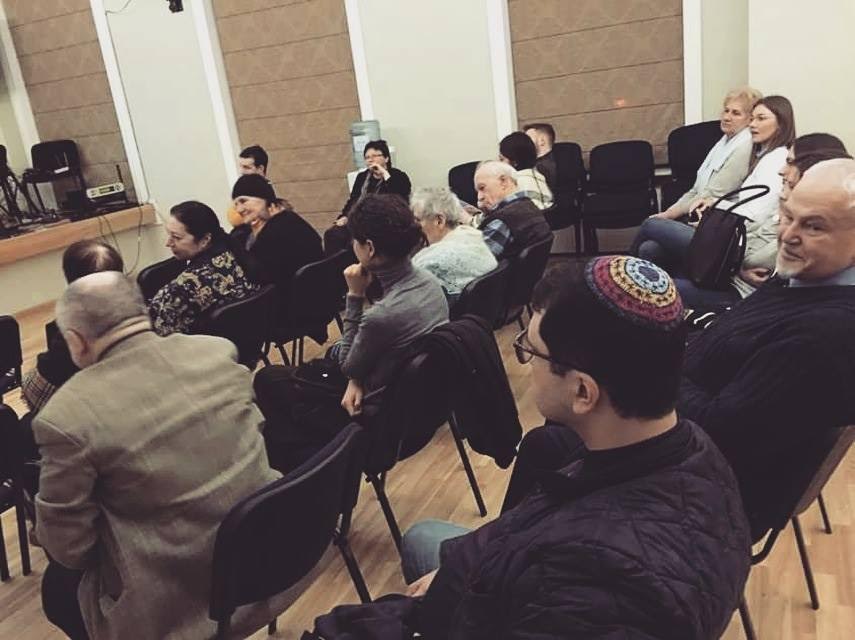
The Kaunas Jewish Community and the Sugihara Foundation “Diplomats for Life” have the pleasure of requesting your attendance at a concert. The concert dedicated to the 100th anniversary of the birth of Vladas Varčikas will feature his students, including:

professor Petras Kunca (violin),Vilija Vitkutė Pranskienė (violin), Kristijonas Venslovas (violin), Daiva Valentaitė (alto), Andrius Pleškūnas (alto), Benas Ulevičius (vocals, guitar),

Pre-War Cookbook Becomes Best Seller

Did you know Fania Lewando operated an extremely popular vegetarian restaurant between the two world wars in Vilnius, a city which had few vegetarians? Diners included Marc Chagall and Itzik Manger, the Yiddish writer, who also left their impressions in the restaurant’s guest book.

The restaurant owner also had a cooking school and kept her healthy and tasty vegetarian recipes in her personal recipe book. It was long thought that book was lost following her death, but it unexpectedly resurfaced at an antiquarian book sale and became an international best seller. Now it has appeared in Lithuanian as well.

TMP_001

Lithuanian Jewish Community Webpage Adds Academic Section to Mark 25 Years of Lithuanian Independence
Many scholars and academics took part in the early days of the Lithuanian Jewish Community during the period when Lithuania was reestablishing national independence. They formed their own Union of Scholars. This organization is no longer active. The Community would like to revive the Union of Scholars in the name of its noble founders who did so much for Lithuania and the Jewish Community, including historian and sociology professor Izraelis Lempertas; physics professor Adolfas Bolotinas; philologist, lexicographer and Lithuanian language reformer Chaceklis Lemchenas; and many others. The time has come to continue the Union’s work. We, members of the Lithuanian Jewish Community, are not just citizens of the Republic of Lithuania and consumers, we are creators. Scholarship and research is of utmost importance to us. We can set learning against the ignorance of anti-Semites. A new generation of productive scholars has matured in the Jewish Community. Although learning knows no communal boundaries, academic studies provide us with more self-confidence and significance, and therefore we will support in multiple ways scholarship and research in all fields. We begin our new Learning section with an introduction to the psychological and other effects of the Holocaust. Mazl tov!

Academic Insight into the Holocaust Experience

Academic Insight into the Holocaust Experience

Academic Insight into the Holocaust Experience

by Ruth Reches

A well-rounded understanding of the psychological and other effects of the Holocaust is relevant both in the academic and social spheres. It is imperative that we grasp the extent of the Holocaust and understand it fully in order to avoid such a disastrous phenomenon in the future. There are many academic sources which portray and fully examine the Holocaust from the moral, philosophical, economic, political and other points of view. Psychological research on the Shoahm however, has only just begun. Without such research an understanding of the extent of the Holocaust is incomplete and the evaluation of its meaning incorrect.

Catastrophes and especially their psychological impacts always capture the attention of psychologists. There is a wide variety of research focusing on the psychological effects of, for instance, natural disasters or military conflicts. A common feature in researching these catastrophes is the fact that scholars concentrate on temporally more proximate consequences. Usually such research is carried out right after the event takes place or in the course of a few years. Long-term psychological effects are under-researched but it is this particular area which is of key importance: it allows us to evaluate the fundamental outcomes which do not fade easily.

Grandson of Vilna Rabbis Awarded Prestigious Science Award

Solomb-Golumb_Nicer

JTA reports a son and grandson of Vilna rabbis has been named the winner of a prestigious science award for his work in mathematics.

Solomon Wolf Golomb, a University of Southern California professor, will receive the Benjamin Franklin Medal given out by the Franklin Institute for his work on the leading edges of science and engineering. Golomb is to receive the Franklin Institute’s 2016 Benjamin Franklin Medal in Electrical Engineering for his work in space communications and the design of digital spread spectrum signals–transmissions which provide security, noise suppression and precise locations for applications such as cryptography, missile guidance, defense, space and cellular communications, radar, sonar and GPS. The award will be presented at the Philadelphia-based institute at a ceremony in April of 2016.

The Franklin Medal was the most prestigious of the awards presented by the Franklin Institute since 1824. With other awards, it was merged into the Benjamin Franklin Medal in 1998. With this award, Golomb will join the ranks of previous Franklin Medal recipients and distinguished laureates, which include Albert Einstein, Marie Curie, Stephen Hawking, Elizabeth Blackburn and Andrew Viterbi PhD ’62, the alumnus for whom the USC engineering school is named.

Mourning, with Breaks

sergey
by Sergejus Kanovičius

Every time an important anniversary approaches, I get uncomfortable. Even frightened. Especially when the anniversary is connected with an incalculable, perhaps incomprehensible number of victims. Frightened, because soon those who according to rank must speak, will, with the prerequisite voice of mourning. Grave words filled with bureaucratic condolences and sympathy will ring forth, then vanish in emptiness, as if a wind had blown across the frozen fields and furrows of Lithuania.

Remembering the Holocaust Victims of Panevėžys

virselis1

The Panevėžys (Ponevezh) Jewish Community has compiled a small book called “Nežudysi” [“You Will Not Kill Us”]. It contains information gathered from issues of the newspaper “Išlaisvintas Panevėžietis” [“Liberated Ponevezher”] published in the early years of World War II. The surviving articles allow us to reconstruct images from the tragic moments the Ponevezh Jewish community experienced at that time. A new city administration was formed in June, 1941, which was led by a commandant and the Nazis. Very quickly a so-called Jewish Quarter was established through which passed more than 13,000 Jews. The ghetto lasted 40 days. All of its inmates were murdered so quickly and efficiently that even now it is impossible to make complete lists of the victims. The book also discusses the small portion of the Jewish population which managed to escape during the first days of war. It also details Jewish property in Panevėžys and its seizure, mass murder sites and Jewish cemeteries. The chapter called “Gatvės vaiduokliai” [“Ghosts of the Street”] tells the story of Joint Street, which the new city administration renamed June 22nd Street in the desire of pleasing the Nazi occupiers. There is also much space devoted to the Righteous Gentiles of Panevėžys who risked their lives to save entire families of Jews. The last part of the book provides a list of documents and articles at Lithuanian archives and libraries awaiting scholarly attention. The text is printed on a red background symbolizing the spilling of the blood of innocents to focus the reader’s attention on the meaning of the text. A ceremony to present the new book is scheduled for January 29, 2016 in Panevėžys.

  • virselis2

Review of Mini Limmud Conference 2015

2. sestadienis (340)
Organizer Žana Skudovičienė at the podium at Mini Limmud 2015.

The Mini Limmud conference is a large educational and entertainment event for Jewish families. The three-day program with overnight stays and entertainment at a hotel was instituted so that everyone might find something of interest and importance in learning about Jewish history, traditions, religion, Yiddish culture and current events. This year the organizer was Žana Skudovičienė. Responses by participants were positive and they expressed their thanks as well as a preference for more interesting speakers next year. Organizer Skudovičienė said they hadn’t been able to invite all the speakers they wanted this year.

“It’s hard for me to evaluate my success because this was the first year I was the organizer,” Skudovičienė said. “Junona Berznitski organized all the earlier Limmuds and I just participated as an MC, and I just had to worry about my clothes and appearance, create some scenes and write a text. But now it was a great challenge for me. I met all the potential speakers and selected only the most interesting people. These all agreed to participate, but there were others who wanted to participate but couldn’t because of plans made earlier. People requested we get reporter Viktor Topaller but everything was limited by funding. We were in touch with Viktoras Šenderovičius who wanted to come but couldn’t, but plans to next time. I wanted to find more Judaism and Jewish history experts, not necessarily from outside the country. Giedrius Jakubauskis delivered an extremely interesting presentation. Attendees were happy with the presentation of Saulius Šaltenis’s new book “Žydų Karalaitės dienoraštis” [“Diary of a Jewish Princess”]. They bought up all the copies of the book brought to Limmud, and we might have brought more from the publisher.”

Conference participants enjoyed meeting Israel’s ambassador to Lithuania Amir Maimon and were eager to learn about Israeli current events. There was a real discussion and people were concerned with why Israel always seems to be at the losing end of the propaganda war in the media. There wasn’t enough time for a comprehensive answer from the ambassador, but we hope to continue this discussion at the Community.

Report from the A Mehaye Winter Camp 2015

713

Pavel Guliakov, the LJC’s new director ew coordinator of youth programs, reports the A Mehaye winter camp is drawing to a close and was a wonderful success.

He said the winter camp is the largest annual youth program event with the greatest participation and requiring the most organizational work. This year a parents’ committee was called to help with organization and to draw up safety measures, rules and disciplinary measures, Guliakov reported.

A team of young but incredibly responsible and talented coordinators, counselors and professionals aided the camp leaders in their work this year. Guliakov noted there was a high level of comfort and familiarity because all of the members of the time except one (the Judaism coordinator) had themselves participated as children in Community youth programs, and besides working as camp guides were involved in all sorts of other outside activities including Jewish music and dance, art workshops and even professional cinematography.

Ukrainian President Calls on Israel to Take a Stand on Conflict with Russia


Poroshenko shakes hands with Knesset chairman Yuli Edelstein while Israeli president Reuven Rivlin claps during special session held December 23, 2015. Photo courtesy of Hadas Parush/Flash 90

“Russia supplied systems to Syria that can change the balance of power in the region,” Poroshenko warns in speech to Knesset

Israel should take a side in the Ukraine-Russia conflict, Ukrainian president Petro Poroshenko said in his address to the Israeli parliament the Knesset Wednesday.

“When evil wins in one place, it will try to continue to another,” Poroshenko warned. “We need to act in coöperation and Israeli politicians should make their stance towards Ukraine very clear.”

Poroshenko said that over the last 21 months, 9,000 Ukrainians were victims of “Russian-funded terror,” and warned that the 17,000 Jews on the Crimean Peninsula may find themselves in danger.

“The occupiers have started encouraging anti-Semitism,” he said.

Holocaust Information Exempted from EU Data Protection Measure

The International Holocaust Remembrance Alliance and the World Jewish Restitution Organization have both issued statements hailing a decision by the EU to exempt Holocaust materials from a draft regulation on data protection called the General Data Protection Regulation.

IHRA reports that although the law won’t be considered until next year, “after two years of research and analysis, IHRA had determined definitively that researchers and research organizations were already being denied access to Holocaust-related materials on the premise that the GDPR would not permit the use of these materials.”

When Czesław Miłosz Met Chiune Sugihara, Sort of

by Geoff Vasil

Czesław Miłosz is sometimes called Lithuania’s Nobel Prize winner, although he never claimed to be Lithuanian. Neither did he call himself Polish exactly. His “national identity” was as complex as that of his uncle, Oskar Miłosz, the “French symbolist poet” who was the son of a father from a noble family from the Grand Duchy of Lithuania and a Jewish mother.

Czesław Miłosz was born in the village of Šeteniai (Szetejnie) just outside Kėdainiai on June 30, 1911, a period when Lithuania was firmly inside the Russian Empire. He moved to Vilnius and attended the Sigismund Augustus Gymnasium, then studied law at Stefan Batory University (Vilnius University), visiting his uncle Oskar in Paris in 1931. Oskar Miłosz ran in exalted literary circles including some very famous names from the period. This might have influenced the younger Miłosz in helping found the Polish literary circle Żagary in Vilnius that same year. After being graduated from the law faculty he went back to Paris for a year, and then worked at Radio Wilno when he returned to Vilnius.

He spent the period right up to World War II in Vilnius before removing himself to Warsaw, where he helped rescue Jews and was eventually recognized as a Righteous Gentile as well as later becoming a winner of the Nobel Prize for Literature. He describes the period when Lithuania and Vilnius hung in geopolitical limbo in a chapter in his 1959 autobiography, Rodzinna Europa, published in English as Native Realm in 1968, called “Peace Boundary,” the name then used by both sides to describe the Molotov-Ribbentrop line under the peace agreed by Hitler and Stalin.