Learning, History, Culture

Lithuanian Request to Germany: Return or Help Us Find Property Nazis Stole from Jews

mm

Almost 75 years have passed since Hitler began Operation Barbarossa. These were long and exhausting years for Lithuania and the world. But now, when the consciousness of the peoples has cleared, there are ever greater efforts to repair the losses and persecutions experienced under the Nazis.

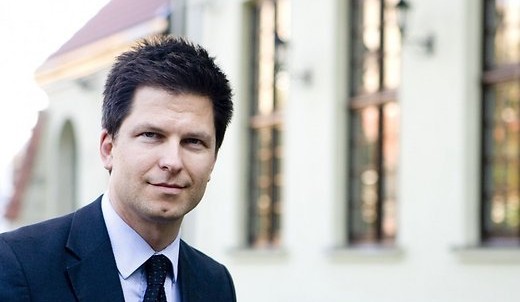
…Emanuelis Zingeris says he’s resolved to achieve the discovery and return of Jewish property looted by the Nazis to heirs and communities. The politician says he has already grabbed the end of the thread which should lead to a location for discovering that property.

Katerina and Benediktas Bagdanavičius: Last Hope of the Jews of Darbėnai

Bagdonavciai
by Romualdas Beniušis

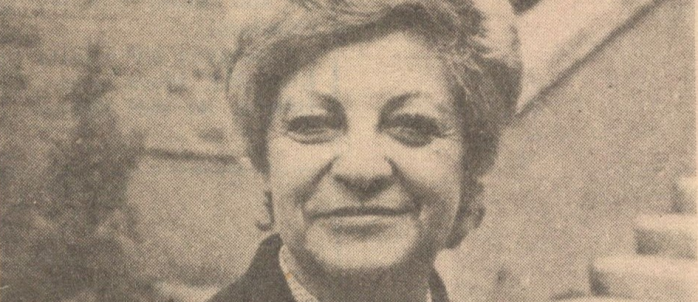
I recently discovered the case-file of the deportation of the Bagdanavičius family in the archives. It is a unique document from the Soviet period testifying to the will and sacrifice of the family during the Nazi occupation of 1941 to 1944 in rescuing completely innocent people of the small town of Darbėnai from genocide, and to the bitter lot of the deportees later.

Who were they, Katerina and Benediktas Bagdanavičius, the quiet heroes of the village of Būtingė who without regard to danger to them and their family reached out a helping hand to people condemned to death simply for having been born Jews?

Full story in Lithuanian here.

Kaunas Jewish Community Celebrates 125th Anniversary of Birth of Daniel Dolski

dolskis-7

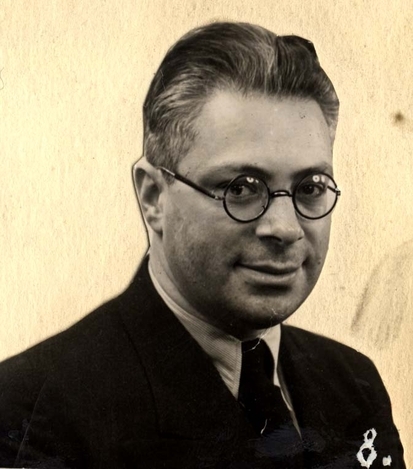
The Kaunas Jewish Community is celebrating the 125th anniversary of the birth of Daniel Dolski in Vilnius. Dolski was a pioneer of the Lithuanian stage. Highly educated and extremely charming, he debuted on the Russian stage, moved to Western Europe after the October Revolution and settled in Kaunas in late 1929, becoming a pioneer on the popular Lithuanian musical stage. He was one of the first to perform popular songs in the Lithuanian language, having learned it over the course of a half year upon his return.

Full story in Lithuanian here.

Israeli Ambassador Hails Lithuanian Makabi and Maccabiah Games Medal Winners

Israeli ambassador to Lithuania Amir Maimon and the Lithuanian Makabi Athletics Club held a reception April 14 to celebrate victories by Lithuanian Makabi athletes at the World Maccabiah Games held in Israel and the European Maccabi Games.

Lithuanian Jewish Community chairwoman Faina Kukliansky attended along with Lithuanian Olympic Committee leaders and Sholem Aleichem Gymnasium principal Miša Jakobas, members of the board of the Lithuanian Makabi Athletics Club, 25 Maccabiah medal winners, reporters and others.

The Israeli ambassador greeted the assembly and a film was shown about the first Maccabiada in Israel in 1932 and the last European Maccabi Games in 2015.

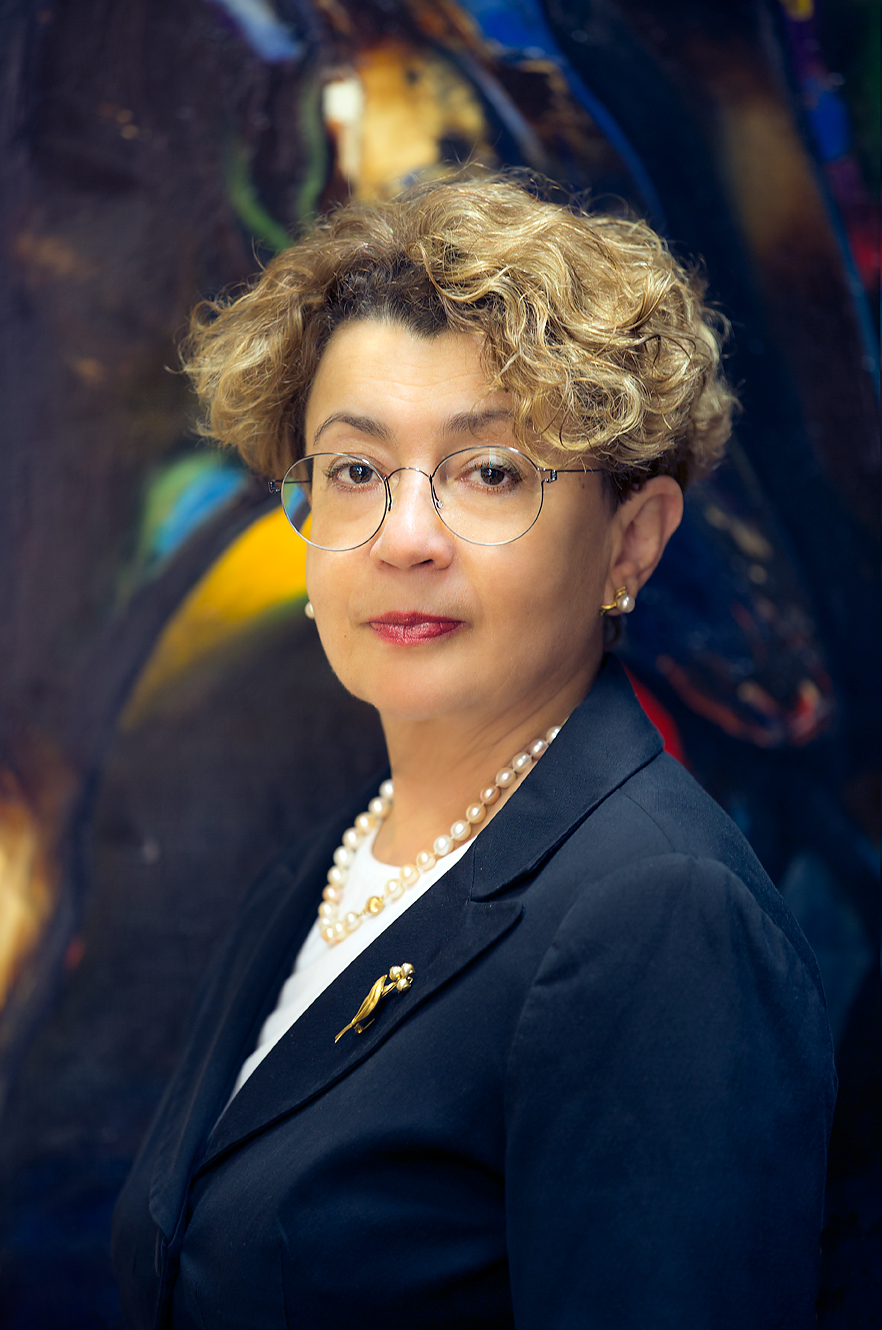
Chairwoman Kukliansky in her speech noted the major role the Lithuanian Makabi Athletics Club has played in Lithuanian Jewish life and the contributions made by long-time Lithuanian Makabi Athletics Club president Semionas Finkelšteinas.

Condolences

The Lithuanian Jewish Community notes with deepest sadness the death of Judelis Ronderis, an active member of the Kaunas Jewish Community, a World War II veteran, an enthusiastic supporter of Jewish culture and the man who began the search for Lithuanian citizens who rescued Jews from the Holocaust, who concerned himself with their welfare and with their commemoration. Our deepest condolences to his daughter Lėja, his family, his grandchildren, his long-time caregiver Stefanija Ancevičienė and to the many who knew and loved him.

Litvaks Didn’t Suffer Enough to Deserve Lithuanian Citizenship?

Grant profile pic

by Grant Gochin

Lithuanian officials state that Jews were not oppressed in Lithuania:

In an astonishing display regarding the ignorance of rampant anti-Semitism in inter-war Lithuania, Lithuanian Foreign Minister Linas Linkevicius stated that there was “no violence, repressions or anything like that at the time”, against Jews in Lithuania during the period 1918 – 1939. Based on this assumption, Lithuania intends to deny citizenship applications for descendants of Lithuanian Jews. The belief that Jews did not suffer enough, in Interwar Lithuania, to warrant citizenship is simply preposterous.

http://www.baltictimes.com/litvaks_continually_rejected_restoration_of_lithuanian_citizenship/

At the beginning of the 20th Century, Jews represented about 14% of Lithuania’s population. In May 1915, the Czarist regime deported and exiled approximately 100,000 Lithuanian Jews to the Russian interior. After the war ended, Lithuanian Jews, who had lived in Lithuania for centuries and often constituted half of the population of many towns, were promised that the new independent Lithuanian state would be tolerant to minorities. Jews provided considerable political support for Lithuania in international forums and enlisted into the Lithuanian army to defend their country’s independence. A great many war medals were awarded to these soldiers for their extraordinary bravery and many lost their lives fighting for Lithuanian independence. In return for their contributions, the government granted full autonomy to the Jewish community and created a Cabinet-level Ministry for Jewish Affairs. Unfortunately, these promises were not kept; in 1923 funding for this Ministry was withdrawn, and in 1924 the Ministry was abolished. Sadly, the Ministry had served little purpose, because in 1923 the Lithuanian Government reportedly rounded up and expelled Jews whom they considered to be “alien”.

Lesson about Passover with Rabbi Samson Isaacson

The Student Union of the LJC invites you to attend a lecture by Rabbi Samson Isaacson about Passover this Sunday at 4:45 P.M. at the Choral Synagogue in Vilnius.

We will conduct our own kind of exodus from a room decorated with Egyptian motids immediately following (ExitRoom.lt).

A good time is guaranteed.

Registration required. Send your full name to LUJSINFO@gmail.com

or see:

https://www.facebook.com/events/1065169300210620/

The Student Union is also holding a “youth seder” at 8:45 P.M. on April 23 at the kosher Rishon restaurant. Entrance is 5 euros.

Event program:

Havdalah ceremony with Rabbi Samson Isaacson;
delicious dinner with the tradition four cups of wine;
hunt for/theft of the afikoman;
reading of the haggadah and much more!

Space is limited so please register by April 20.

http://apklausa.lt/f/pesach-sederis-xkebhyc/answers/new.fullpage

For more information contact:
lujsinfo@gmail.com
869227326

ISIS Destroy Ancient Gate to Biblical City of Nineveh

gog

The Gate of God, also known as the Mashqi Gate, was one of a number of grand gates which guarded the ancient Assyrian city of Nineveh. Referenced in the Bible (Genesis 10:10, 2 Kings 19:36, Isaiah 37:37-38, Nahum, Zephaniah 2:13-15, Book of Jonah, as well as in the Christian Book of Tobit and the Gospels of Matthew and Luke in the New Testament), the settlement of the site which eventually became Nineveh dates back to about 6000 BC and in the 6th century BC it was the largest city in the world. Nineveh was central to the first book of the prophets, namely, Jonah, who was sent by God to make the Ninevites repent. The Book of Jonah describes the city as an “exceedingly great city of three days journey in breadth” whose population at that time was “more than 120,000.” On July 24, 2014, ISIS destroyed the tomb of Jonah in Ninveeh as part of a campaign to destroy idolatry, although Jonah has an entire chapter named after him in the Koran.

A source at the British Institute for the Study of Iraq confirmed the gate had been attacked.

The Antiquities Department in Baghdad didn’t deny the attack had happened, according to a source who also said there were unconfirmed reports the group was dismantling part of the walls of Nineveh to sell the stone blocks to antiquities collectors. There were also unconfirmed reports the Gate of God was being dismantled for sale rather than being completely destroyed.

Meet the American Virtuosi

AmerVirtuozai

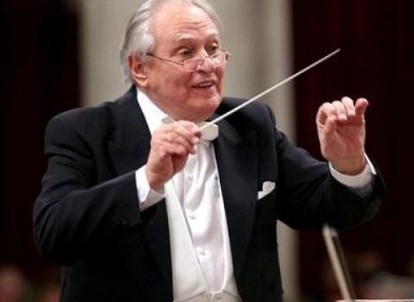
The Destinies series of talks will host an evening with the American Virtuosi musical ensemble moderated by professor Leonidas Melnikas. The event will be moderated in Russian and entry is free to the public. The event will be held at 6:00 P.M. on Tuesday, April 19 at the Lithuanian Jewish Community in Vilnius.

About Taverns, the Vilna Gaon and the Shared History of Lithuanians and Jews

by Nijolė Bulotaitė

American academic Glenn Dynner is teaching a module at the History Faculty of Vilnius University called “Socio-cultural History of Ethnic Minorities in the Central and Eastern European Context.” The professor specializes in the history of Eastern European Jews and has written several books, including “Men of Silk: The Hasidic Conquest of Polish Jewish Society” (Oxford University Press, 2008) and “Yankel’s Tavern: Jews, Liquor and Life in the Kingdom of Poland” (Oxford University Press, 2014). What prompted the professor to take an interest in taverns and Lithuanian and Polish Jews, and what has he discovered? We asked him those questions in Vilnius recently.

Q. Why Poland and Lithuania exactly? Was Jewish life here somehow special?

A. When I was a naïve American student, as soon as I started professor Antony Polonsky’s class at Brandeis University I learned the majority of the world’s Jews lived in Poland and Lithuania before the Holocaust. The professor was my doctoral dissertation supervisor later. I learned three quarters of the world’s Jews in the 19th century lived in Eastern and Central Europe. My problem was I didn’t know any languages. At first I had to learn Hebrew, then Polish, Yiddish and several more. Only then did all the rich sources become available to me. Not many Americans are able to do research in this area because the languages are rather difficult, and it’s difficult for us Americans to learn languages.

Full interview in Lithuanian here.

Bagel Shop Editor Published in Israeli Academic Journal

Radvilė
Radvilė Rimgailė-Voicik

Radvilė Rimgailė-Voicik, who writes and compiles the quarterly Bagel Shop newsletter, has had an academic article published by the Israel Journal of Plant Sciences. The article, called “Plant Community Associations and Complexes of Associations in the Lithuanian Seashore: Retrospective on the Studies and Tragic Fate of the Botanist Dr Abromas Kisinas (1899–1945),” pursues the topic Radvilė wrote about in a previous issue of the Bagel Shop newsletter.

Abstract:

The life and scientific activities and discoveries of Dr Abromas Kisinas (1899–1945, also appearing in the literature as Avraham, Abraham, Kisin or Kissin) are presented here for the first time. He was a botanist, a Lithuanian, a graduate of Vytautas Magnus University in Kaunas, a polyglot and a social figure. In 1936, Kisinas’ major phytosociological work “Plant Associations and Complexes of Associations in Lithuanian Seaside (without Klaipėda Region)” was published in the Works of Vytautas Magnus University Faculty of Mathematics and Natural Sciences. The publication was written in Lithuanian with a summary in German and summarized Kisinas’ PhD dissertation, which was defended in 1934 under the supervision of Prof. Constantin Regel. In his research, Kisinas applied ideas proposed by the Uppsala School of Phytosociology. For plant communities evaluation he used linear transects with 1 m², 4 m² and 16 m² sampling squares. In a 15 km seashore range Kisinas determined 63 plant community associations and 26 sub-associations. The fate of this gifted scientist was tragic. In 1941 he and his family were deported to the Kaunas Ghetto. In 1945 Kisinas died at the Dachau concentration camp in Germany.

Inventor of Israeli Flag Remembered in Klaipėda

l

A memorial plaque commemorating David Wolffsohn, a Zionist activist who created the Israeli flag, has been unveiled in Klaipėda, Lithuania. Earlier a plaque was placed in the same city to honor Wolffsohn’s teacher, Isaac Rülf. The new plaque has been placed next to that one.

“David Wolffsohn was born in Darbėnai. To avoid serving in the Tsar’s army his father sent him to Klaipėda to study. This is where he met Isaac Rülf,” Klaipėda Jewish Community leader Feliksas Puzemskis explained.

Wolffsohn attended the Israelite Religious School then located on Grįžgatvio street. He was born in 1856 and arrived in Klaipėda, then the German city of Memel, just after turning 16. Rabbi Rülf got him involved in Zionist activities. At the First Zionist Congress in Basel, Switzerland, Wolffsohn ordered made a flag to his specifications which was hung at the congress hall. It was accepted as the official Zionist flag at the Second Zionist Congress held in Switzerland in 1898, and the State of Israel later adopted the design as the official flag, upon declaration of Israel as an independent state in 1948.

Litvaks Told No on Lithuanian Citizenship

VILNIUS, Apr 11, BNS–Jews and their descendants living in Israel and South Africa who left Lithuania in the interwar period have been receiving negative answers about restoration of Lithuanian citizenship for some time now.

Since November of 2015 the Lithuanian Migration Department has rejected the majority of applications for restoration of citizenship for people who left Lithuania in the 1920-1939 period and their descendants.

Under Lithuanian citizenship law, people who left Lithuania before March 11 of 1990 and acquired citizenship in a different country can be citizens of Lithuania, as can their descendants. About 1,000 Jews living in South Africa have taken advantage of the legal provision, but the process of citizenship restoration was suspended for some people in mid-2015.

Joint Visits Panevėžys

JointPan
JOINT atstovai lankosi Panevėžyje

AN event was held at the Panevėžys Jewish Community April 6 to welcome honored guests during their brief visit. One of them, Lee Seidler, arrived with his family. American Joint Distribution Committee director Diana Fiedotin and JDC representative in the Baltic states Moni Beniosev also came and took an interest in the history of the Jews of Panevėžys, visited Jewish sites and viewed the stele on Zikaro street, which was named Joint Street in 1923 in honor of the Joint Distribution Committee.

Remembering Jewish Vilna in Painting

Vilnius topografija

The catalog of the exhibit of Lithuanian painting and photographs called “Zakhor. Remember. Topography of Images of Jewish Vilnius” will be launched at the Lithuanian Jewish Community at 7:00 P.M. on Thursday, April 14. The catalog and exhibit are the work of curators Linas Liandzbergis, Elke-Vera Kotowski and Gabrielė Žaidytė. The exhibit has been at show at the Old Town Hall in Vilnius and at the Konrad Adenauer Foundation in Berlin.

From May to August the exhibit will grace the halls of the Cape Town Jewish Museum and the Johannesburg Holocaust Museum in South Africa, then travelling on to Israel, Argentina and other destinations where sizeable populations of Litvaks live. The presentation, to be attended by Dr. Julius Schoeps, director of the Moses Mendelssohn Center and the Center for Jewish Studies Berlin-Brandenburg, is also to include a short film documenting earlier showings of the exhibit. Improvisational jazz is to be performed at the presentation by Lithuanian musician Kęstutis Vaiginis.

New Book on Litvak Art in Private Hands

TMP000_470

A new book/catalogue called “Litvakų dailė privačiose Lietuvos kolekcijose” [Litvak Art in Private Lithuanian Collections] was presented at the National Art Gallery on April 5. The book is bilingual in Lithuanian and English, and contains about 250 works by 44 Litvak artists, including paintings, water colors and sculpture, many of which have never been seen by the public before. The publication is the fruit of exhaustive research by Dr. Vilma Gradinskaitė, an historian at the Vilna Gaon State Jewish Museum’s History Department.

Lithuanian minister of culture Šarūnas Birutis spoke at the book launch and said: “This serious album spans more than 150 years from the mid-1800s to current artists working within the Litvak artistic tradition. I hope this publication will interest the broader public as well as professionals, hooking the reader and reminding us of the names and works of little-known and forgotten artists.” He said it was the only book in Lithuania which so broadly and comprehensively surveys Litvak ark, graphics and sculpture held in private collections.

litvak art

Rakija Klezmer Orkestar

Rakija klezmer1

Rakija Klezmer Orkestar is a klezmer group which formed three years ago in Kaunas, Lithuania. They have performed Hanukkah concerts at the Lithuanian Jewish Community.

Rakija Klezmer2

The group say they want to revive Litvak klezmer traditions. The four-set will soon become five with addition of Mantas Ostreika on saxophone. The other members are Darius Bagdonavičius, Mikas Kurtinaitis, Skirmantas Rumševičius and Povilas Jurkša.

International Meeting of Young Rabbis at Panevėžys Jewish Community

rabinaiP

Two groups of young rabbis from Canada, England, France, Israel, Japan and the United States came to the Panevėžys Jewish Community April 7, interested in Jewish life before World War II and now. The first group was led by Rabbi Meir Wunder, who leads trips by high school students to Panevėžys annually. The young people were interested in the life of Rabbi Yosef Shlomo Kahaneman.

Kahaneman was born in the village of Kuliai in 1886 and studied at the yehsivas in Plungė and Telšiai before going on to the yeshiva in Novogrudok, now in Belarus. He became yeshiva director. He lived with his family in Panevėžys from 1919 to 1940. In 1923 he became a Lithuanian MP. In Panevėžys he set up a poorhouse, an orphanage and the Yavne Jewish religious school for girls, and headed the yeshiva. Later he and his son moved to Israel where he continued to maintain Litvak religious traditions. On the wall of an orphanage he founded are the names of the yeshivas of Lithuania. The Panevėžys yeshiva was also restored in 1919 due to his efforts.

rabinaiP1

The second group was led by Rabbi Tuvia Konn and Rabbi Nesivos Tours. They spoke about how they had heard of the Bokhrim yeshiva and became interested in the city of Panevėžys, and when there was opportunity to visit, they gladly came in search of their roots. They visited Jewish sites in Panevėžys and viewed a film about the history of the Jews of Panevėžys which they said opened a window onto the past.