
Learning, History, Culture

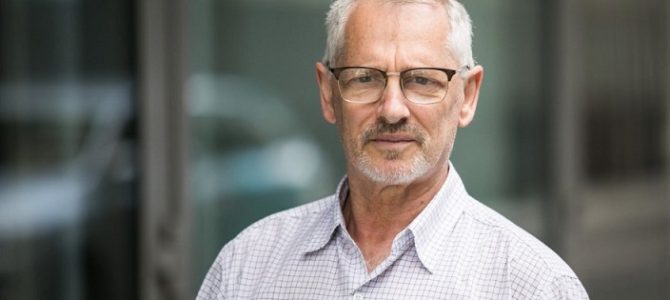
Leonidas Donskis: When Will the Truth Finally Set Us Free?

Leonidas Donskis: When Will the Truth Finally Set Us Free?

Bernardinai.lt

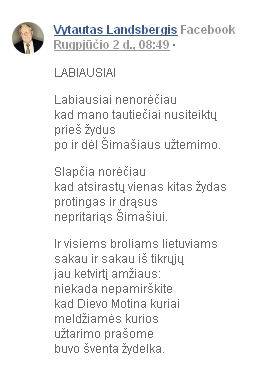
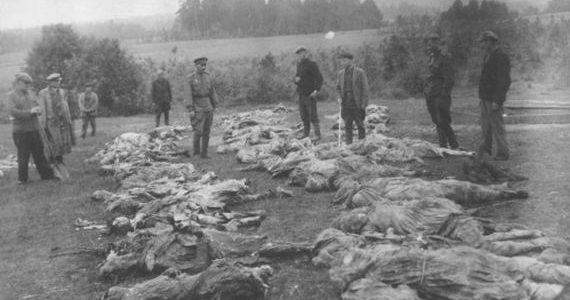
In marking the anniversary of the June Uprising of 1941, let’s look at what the late Leonidas Donskis wrote in 2010.

I will admit that reading commentaries by political analyst Kęstutis Girnius on the Lithuanian Provisional Government and the Lithuanian Activist Front, and the allegedly small amount of academic research and documentation on these phenomena, I find myself hardly able to believe that a person whom I consider one of the soberest and keenest of our political commentators could write this. Without quoting from his earlier statements on radio and in print on this issue, I will present a link to a new comment by Kęstutis Girnius.

Full story in Lithuanian here.

Enchanting Pflaumen-Tzimmes

Enchanting Pflaumen-Tzimmes

Bagel Shop Café cooks have been sharing some of the secrets of Litvak cooking this summer with the managers of a small restaurant in Merkinė, Lithuania, called Šilo kopa. They’ve been making bagels, herring and pflaumen-tzimmes together.

Pflaumen-tzimmes is a stew made of plums and beef often made for the Sabbath table and Rosh Hashanah.

Bagel Shop Café cook Riva remembers this dish well and still makes it according to a simple recipe: about 1.5 kilograms of beef (from the forequarter), bone, about 15 to 20 plums, about 1.5 kg of potatoes and 1 onion, which is later removed. Laurel leaves aren’t required, only salt. The flavor is enhanced by several tablespoons of caramelized sugar added at the end.

The beef is boiled with the onion for about 2 hours, the onion is removed, the plums are added for about an hour and later the potatoes. When everything has been boiled sufficiently, add 3 to 4 tablespoons of liquefied caramelized sugar.

Vilnius YIVO Headquarters Commemorative Plaque Ceremony Held

Vilnius YIVO Headquarters Commemorative Plaque Ceremony Held

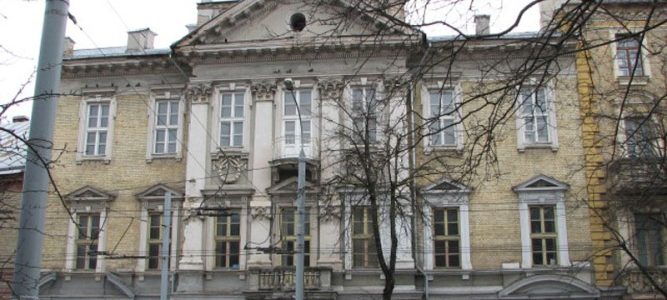
The Lithuanian Foreign Ministry and the Lithuanian Jewish Community invited guests and the public to a ceremony to unveil a plaque near the site of the former Vilnius headquarters of YIVO on Vivulskio street in Vilnius June 20. Those attending included deputy to the LJC chairwoman professor Leonidas Melnikas, the heads of YIVO, Lithuanian foreign minister Linas Linkevičius, Lithuanian culture minister Dr. Mindaugas Kvietkauskas, Jewish partisan Fania Brancovskaja and the mayor of Vilnius.

YIVO began in Vilnius in 1925 and was originally housed in the apartment of its founder and prime mover Max Weinreich on Basanavičiaus street (aka Pogulanskaya, Pogulnaka and Wielka Pohulanka street) in Vilnius. Dedicated to research on the language, literature, culture and history of Jews in Eastern Europe, the institute collected a large mass of documents and archive material from local Jewish communities before the Holocaust.

Architect and designer Victoria Sideraitė-Alon designed the new YIVO plaque.

Although much of YIVO’s material was lost during the war, some made its way to the provisional war-time headquarters in New York, which became world headquarters following the war.

Soloveitchik Family Exhibit Opens June 25 in Kaunas

Soloveitchik Family Exhibit Opens June 25 in Kaunas

Vytautas Magnus University pro-rector for international relations professor Ienta Dabašinskienė and Dr. Vilma Gradinskaitė are presenting a new exhibit about the famous Soloveitchik family of rabbis from Kaunas in Kaunas at the Valdas Adamkus Presidential Library located at Daukanto street no. 25 on June 25. Peter Salovey, an American psychologist, professor and president of Yale University, comes from this family and is scheduled to receive the regalia of an honorary doctorate at Vytautas Magnus University on June 20.

The Soloveitchik family is known for its many accomplished rabbis and Talmudic scholars. Their roots reach back to the early 18th century in Lithuania. They are Levites who are commanded by the Torah to sing in the Temple in Jerusalem. The surname comes from the diminutive of the Russian word for nightingale. The Kaunas branch of the family gave rise to the famous rabbinic dynasties in Volozhin and Brest-Litovsk.

The exhibit will run till the end of September.

Some Glimpses of the Unusual New Holocaust Memorial in Biržai

Some Glimpses of the Unusual New Holocaust Memorial in Biržai

A ceremony to unveil the unusual new Holocaust memorial in the Pakamponys forest outside Biržai in northern Lithuania took place June 16 with over 50 people from around the world attending. Also attending were Lithuanian MPs, ambassadors, visitors from other towns and local residents and young people.

Panevėžys Jewish Community chairman Gennady Kofman, a member of the executive board of the Lithuanian Jewish Community, represented the LJC at the ceremony and presented a thank-you letter to Biržai regional administrator Vytas Jareckas. Sofia and Michael Tabakina of Israel, who arrived in Panevėžys on June 14 and who are frequent visitors, also attended the ceremony. Sofia’s family came from Panevėžys, Šiauliai and Biržai. Her ancestors were murdered in Biržai. As many Litvaks living in Israel do, every year Sofia Tabakina visits sites where her relatives were murdered in Lithuania.

Visitors Flock to Panevėžys Jewish Community for Summer

Visitors Flock to Panevėžys Jewish Community for Summer

Achikam and Riva Shapira of Israel paid an unexpected visit to the Panevėžys Jewish Community on June 16 seeking information about their relatives, who previously lived in Kupiškis, then moved to Panevėžys with some relatives moving to South Africa. Achikam’s grandfather God Shapira and his wife Khana were born in Memel, which is now called Klaipėda and his grandfather’s brother David Shapira lived in Kupiškis and moved to Panevėžys.

Only migration saved the family from the Holocaust, except for the elder brother Mordechai Shapira who stayed in Lithuania and was murdered in Skuodas during the Holocaust. Family members still remember everything connected with their former life in Lithuania. Achikam donated some family photographs to the Panevėžys Jewish Community archives.

Sheryl Silber of the USA and Alin Silberg of Canada visited on June 17 after taking part in the unveiling of the new Holocaust memorial in Biržai, Lithuania. They told their family’s story. Their great-grandparents, Dora Dviera (née Zak, 1863-1932) and Harry Moishe Meirovitch were born in Panevėžys, as did their other great-grandparents Yakhvida and Liba Zak. Their great-great-grandparents moved to South Africa in 1906 while some of their relatives remained in Lithuania and died in the Holocaust. After viewing photographs at the Panevėžys Jewish Community, the two women expressed the desire to see Jewish heritage sites in city. The Panevėžys Jewish Community received new information about the Zak, Meirovitch and Silberg families.

Augustinas Savickas Memorial Plaque

The Augustinas Savickas Picture Gallery is pleased to invite you to a ceremony to unveil a plaque commemorating the late artist Augustinas Savickas. The ceremony will take place at the home where he lived and worked from 2008 to 2012, at Vytauto street no. 19 in Trakai, near Vilnius, at 12 noon on Tuesday, June 25. Participants include Lithuanian culture minister Dr. Mindaugas Kvietkauskas, Trakai regional administrator Edita Rudelienė, actor Juozas Budraitis, sculptor Zigmas Buterlevičius, art historian Saulius Pilinkus and the son of the winner of the national prize for literature and art, Raimondas Savickas. At 12:30 P.M. the exhibit “I Love Trakai” of works from the plein air outdoor art workshop of the Savickas Art School will open at the Trakai regional administration.

Project supporters:

Savickas Picture Gallery, Basanavičiaus street no. 11/Teatro street no. 1, Vilnius

Raimondas Savickas: +370 699 63522, Birutė Savickienė: +370 685 62637

www.savickogalerija.lt

Facebook

International Project Connects New York and Vilnius YIVO Archives

International Project Connects New York and Vilnius YIVO Archives

Lithuanian culture minister Dr. Mindaugas Kvietkauskas has met with YIVO director Jonathan Brent and YIVO head of archives Dr. Stefanie Halpern. In the meeting they discussed the implementation of YIVO’s Vilna project, a seven-year-long international effort to preserve, digitize and connect the pre-war YIVO archives in New York and Vilnius. The project aims at recreating the Strashun Library, one of the largest Jewish collections in Europe before the Holocaust.

The Lithuanian side expressed the hope that next year, when the Baltic country marks the Year of the Vilna Gaon and Litvak History, YIVO would loan the pinkas of the Vilna Gaon shul, a book of statistics kept by the Jewish community which is considered one of the most important documents testifying to the life and history of the Vilnius Jewish community.

Full story in Lithuanian on the Lithuanian Culture Ministry webpage here.

Help Identify This Woman

Stasė Jusaitė, a museum expert at the Ninth Fort Museum in Kaunas, is asking the public for help identifying the woman on the left in the photograph below. The woman on the right is Ona Fridmanienė, the wife of Vulf Fridman, who lived on Italijos (now Mickevičiaus) street in Kaunas before World War II. After her husband died she remarried, to a man named Gustas. Returning from some hiding place–it’s not clear where–she found a Jewish baby boy in a basket and brought him home. When the boy was about three years old, his mother and father came from Vilnius and took him home. When they boy was between 7 and 9, they came to visit Ona again. Ona’s great-granddaughter is searching for the woman and her son.

Amir Maimon: Lithuania Was a Journey I’ll Never Forget

Amir Maimon: Lithuania Was a Journey I’ll Never Forget

Photo: Amiras Maimonas © 2019 DELFI/Domantas Pipas

DELFI.lt

by Amir Maimon, Israeli ambassador to Lithuania, June 17, 2019 [translated to English from the Lithuanian translation]

It’s hard to believe four and a half years have passed and my journey to Lithuania is coming to an end. When I was posted as the first resident ambassador to Lithuania, I didn’t know much about the country, about its people, culture, landscape and history. As an average, self-confident person, I though I already knew everything, I was certain three months of preparation were completely sufficient to understand what Lithuania was, when I was going and what I would be doing.

Full story in Lithuanian here.

Exhibit on Slobodka

Exhibit on Slobodka

The Kaunas Regional State Archive invited the public to come celebrate International Archives Day on June 11, although technically June 9 is the date set as an annual day by the International Council of Archives.

On June 11 the regional state archive showed an exhibit called “The History of the Suburbs of Kaunas: Vilijampolë from Manor Estate to City.” Vilijampolë is the Lithuanian name of the former Jewish neighborhood of Slobodka which became the Kaunas ghetto during the Holocaust.

Archive director Gintaras Druèkus welcomed visitors and said the exhibit was the first in a new series of exhibits featuring the suburbs and neighborhoods of Kaunas. He began a discussion of Slobodka with Kaunas Regional State Archive senior specialist and exhibit curator Nijolë Ambraškienë, department director Vitalija Girèytë, Kaunas Regional Public Library local history expert Dr. Mindaugas Balkus, social activist Dr. Raimundas Kaminskas, Kaunas Jewish Community chairman Gercas Žakas, Jewish representative Michailas Duškesas and others, who informed the audience of different aspects of the history of the suburb.

Holocaust Memorial Unveiled in Biržai

Holocaust Memorial Unveiled in Biržai

A new Holocaust memorial was unveiled in the Biržai region on June 16. The 30-meter-long monument commemorates 522 known victims. About 2,400 people, 900 of them children, were shot in the Pakamponys (aka Astravas) forest in 1941, but not all names are known. Jews were an integral part of the culture and history of the northern Lithuanian town of Biržai.

Trees were planted along Žemaitės street to honor those who risked their lives to save Jews, the Biržai Jewish Culture and History Association reported.

A procession walked the same route Jews were forced to march to their deaths in 1941, from the site of the ghetto on Žemaitės street to the mass murder site in Pakamponys forest, where the new monument was revealed. This is only the sixth site in Lithuania where Holocaust victims are commemorated with inscriptions of names.

Joseph Rabie from France designed the monument. His great-grandparents came from Biržai and some of his relatives were murdered at Pakamponys. Abel and Glenda Levitt from Israel initiated the commemoration project. Philanthropist Ben Rabinowitz from Cape Town who also has roots in Biržai was a strong contributor to the project.

First Modern Litvak Scouting Summer Camp Starts July 28

First Modern Litvak Scouting Summer Camp Starts July 28

Registration is underway for the first modern Litvak scouting summer camp called “History Continues”

When? July 28-August 2
Where? Kernavė forest (coordinates 54.857231, 24.868243)
Who? renginiai@lzb.lt, telephone 867216114

Lithuanian Jewish scouts will have their own sub-camp at the summer camp of the Kernavė group of Lithuanian scouts.

Cost:

First stage of registration (by July 7):

Lithuania Marks Day of Mourning and Hope June 14

Lithuania Marks Day of Mourning and Hope June 14

Mass deportations to Stalin’s camps began on this day in 1941.

About 17,500 people were deported from Lithuania between June 14 and 18, 1941, (the fates of 16,246 have been determined so far), a number derived from the 4,663 arrested and 12, 832 people officially deported. The deportations were a huge loss and tragedy for Lithuania. Not all those deported were ethnic Lithuanians: about 3,000 Jews, according to various sources, were also deported and about 375 Jews died at the camps and in exile.

Jews deported to Siberia resisted the brutality and terror of the oppressive Soviet organs with a deep spirituality and faith. In 1941 about 1.3 percent of the total Lithuanian Jewish population were deported, and as a percentage constitute the largest group by ethnicity deported from Lithuania.

Santariškės Children’s Hospital doctor Rozalija Černakova tells the story of what happened to her grandfather and family. Her grandparents were deported with their families. Rozalija’s parents were still children when they were deported: her mother 11 and her mother’s brother 8. They were sent to the Altai region. That’s where Rozalija was born.

Happy Birthday to Konstantinas Chružkovas

Happy Birthday to Konstantinas Chružkovas

The Lithuanian Jewish Community sends birthday greetings to Panevėžys Jewish Community member Konstantinas Chružkovas on his milestone birthday. A long-time and active member, Konstantinas is a talented folk artist and blacksmith producing amazing objects. His work is on display in the headquarters of the Panevėžys Jewish Community and he also manufactured the menorah at the Choral Synagogue in Vilnius. One menorah he made was presented to Israeli ambassador Amir Maimon as a gift. Community chairman Gennady Kofman also sends his warm wishes, wishing Konstantinas even greater creativity, energy, resolution, good emotions, a long life and the love of family, wishes echoed by the LJC as a whole Happy birthday, Konstantinas.

Lithuanian Supreme Court to Hear Noreika Appeal

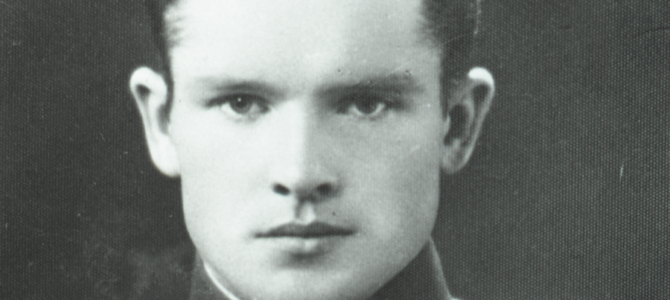
Grant Gochin, an LA-resident Litvak as well as a Lithuanian citizen and a member of the Lithuanian Jewish Community, has reported the Lithuanian Supreme Court will hear his appeal of a lower court’s dismissal of his case against the Center for the Study of the Genocide and Resistance of Residents of Lithuania regarding the latter’s finding WWII-era Lithuanian captain Jonas Noreika was not culpable in Holocaust crimes. As reported earlier, Gochin has been waging a battle for several years now to have the finding reversed and a commemorative plaque to Noreika removed from its location in central Vilnius. Following the earlier court’s finding Gochin didn’t have “standing,” the Center for the Study of the Genocide and Resistance of Residents of Lithuania issued a non-attributed document which the International Holocaust Remembrance Alliance (IHRA) said fell within its definition of anti-Semitism.

IHRA response here.

Gochin’s appeal here.

Commemorative Plaque to Mark Site of Former YIVO HQ in Vilnius

Commemorative Plaque to Mark Site of Former YIVO HQ in Vilnius

The Lithuanian Foreign Ministry and the Lithuanian Jewish Community invite the public to attend an unveiling ceremony of a plaque to commemorate the site of the former headquarters of YIVO in Vilnius at 3:00 P.M. on June 20 at the building now located at Vivulskio street no. 18 in Vilnius. YIVO, the most significant center for the study of Jewish culture, history and languages in Eastern Europe, was located near this site from 1925 to 1941. Its founder moved its activities to New York which became world headquarters following the German invasion in 1941.

Participants at the ceremony are to include YIVO director Jonathan Brent and YIVO board of directors deputy chairwoman Irene Pletka.

Vilna Gaon Texts Placed on Lithuanian Memory of the World Registry

Vilna Gaon Texts Placed on Lithuanian Memory of the World Registry

Lithuania’s Memory of the World registry now contains the manuscripts of the Vilna Gaon and a manuscript fragment by Simonas Daukantas, the Lithuanian National Martynas Mažvydas Library reported.

The 18th century manuscripts of Elijah ben Solomon Zalman, the Vilna Gaon, are a collection of works published in different cities and countries of Europe between 1799 and 1940. They include several very rare publications and almost all of them exist as a single copy in Lithuania.

The library said the Vilna Gaon never published any of his texts, but his teaching was scrupulously written down and compiled by his students, sons and sons-in-law and were edited and published after his death.

Polish Culture Fair in Panevėžys

Polish Culture Fair in Panevėžys

The sixth Polish Culture Festival kicked off in Panevėžys early Sunday. This year Panevėžys hosted many art collectives from cities around the Baltic Sea. The Panevėžys Jewish Community also took part. The Panevėžys Jewish Community has been working together for more than ten years with the organizers of the festival, the School for the Deaf and Hearing Impaired, and principal Danutė Kriščiūnienė. This year Panevėžys Jewish Community chairman Gennady Kofman welcomed attendees and praised the organization of the event demonstrating high respect for the various ethnic communities.

Many city residents turned out to listen to the Polish groups. The colorful ethnic costumes and performances by our neighbors charmed the crowds. Danutė Kriščiūnienė invited members of the Panevėžys Jewish Community to attend and they did attend numerous events enthusiastically.