Litvaks

Shtetlakh of Lithuania: European Day of Jewish Culture 2017

This year the theme is Lithuanian shtetlakh.

September 3, Lithuanian Jewish Community, Pylimo street no. 4, Vilnius

Program

9:00 – 12:00 Boker Tov bagel breakfast
location: Bagel Shop Café, Pylimo street no. 4, Vilnius
Presentation and sampling of authentic Jewish recipes

12:00 – 12:45 Yiddish language lesson with Fania Brancovskaja
location: Heifetz Hall
Mama-loshn

1:00 – 4:00 Ze Taim bagel brunch and presentation of fall menu
location: Bagel Shop Café, Pylimo street no. 4, Vilnius
Presentation of fall menu

1:00 – 1:45 Hebrew language lesson with Ruth Reches
location: Ilan Hall
Registration here.

2:00 Presentation of European Day of Jewish Culture
location: Heifetz Hall
Welcome speech
Faina Kukliansky and honored guests to speak.

4:00 Challa making lesson with Riva and Amit
location: Bagel Shop Café and White Hall
Registration here.

2:.30 – 4:00 “Shtetlakh of Lithuania” presentation
location: Heifetz Hall
Participants: Vytautas Toleikis, Fania Brancovskaja, Sandra Pertukonytė, Antanas Žilinskis, Rimantas Vanagas, Indrė Anskaitytė, Vita Ličytė and others.

6:00 Rakija Klezmer Orkestar performance
location: Šnipiškės

6:00 Faykerlakh concert Shtetlas
location: Heifetz Hall
Celebrating 45 years of the Jewish song and dance collective

Lithuanian Jews Thank German President for Attention to Holocaust Victims

Vilnius, August 24, BNS–As German president Frank Walter Steinmeier planned Friday to pay respects at a Holocaust commemoration at Ponar, Lithuanian Jewish Community chairwoman Faina Kukliansky said his presence gave rise to emotions of gratitude and joy.

“We are so very thankful for the respect being shown, and Ponar is the symbol of all the murdered Jews of Lithuania,” Kukliansky told BNS.

She also said the Nazi regime was responsible for the Holocaust, but not all Germans.

“The regime turned some people into beasts, and we must hold the rescuers in the highest regard for not surrendering to that… I actually have this ambivalent feeling, I have the urge to apologize to the president because I was raised to think Germans are evil, but neither Germans nor Lithuanians are evil, the regime was evil. We should just thank him and take joy in the fact the president is coming to Ponar to express his respects for the people who were murdered so brutally,” she said.

Kukliansky pointed to modern Germany as an example to follow in the country’s stance towards Nazi crimes.

President Steinmeier on his official visit to Lithuania will also visit German soldiers at the military base in Rukla, Lithuania, on Friday.

Chairs of Lithaunaian, Kaunas Jewish Communities Visit Kaunas Jewish Cemetery

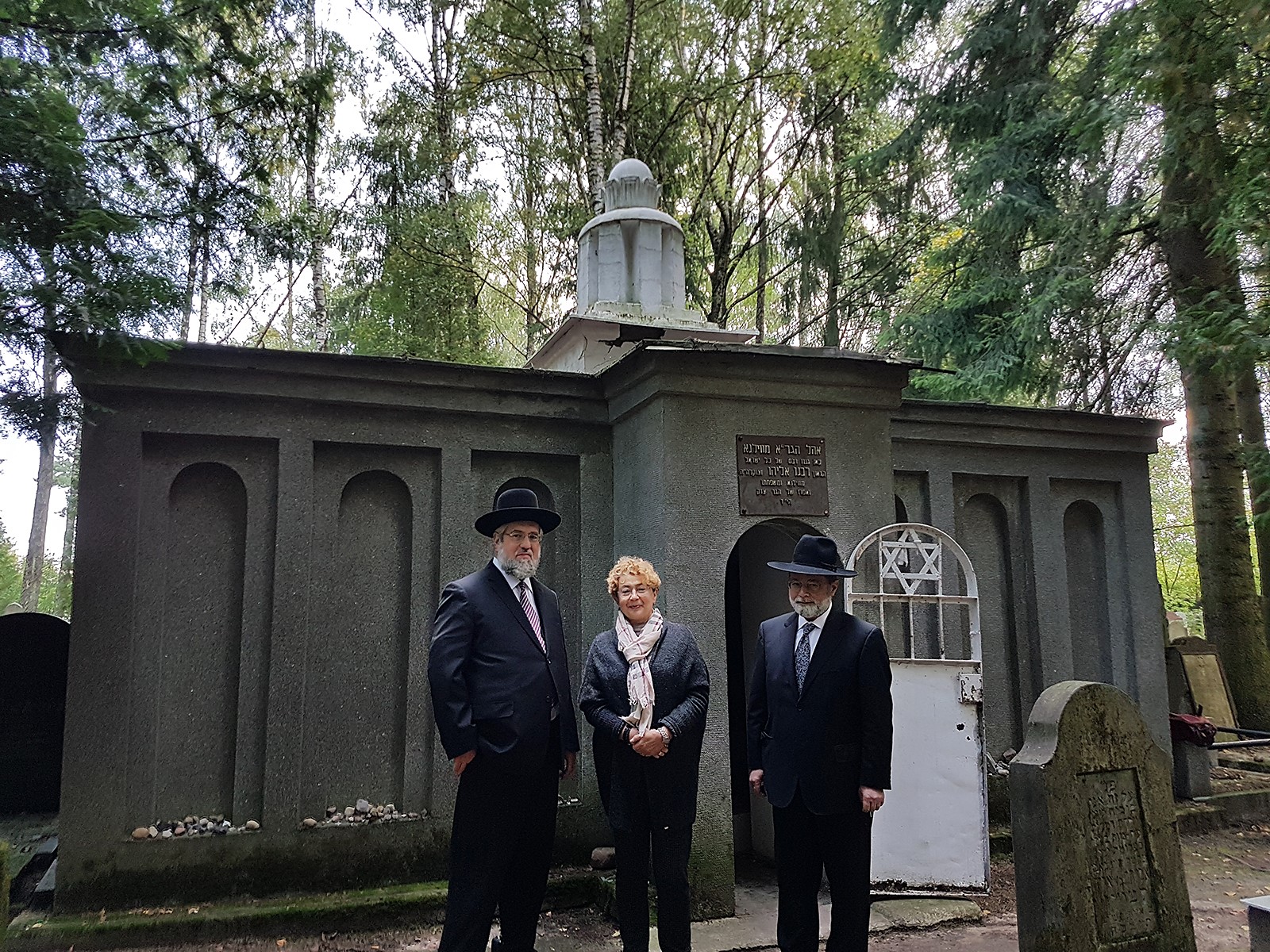
Faina Kukliansky, chairwoman of the Lithuanian Jewish Community, visited the old Jewish cemetery in the Žaliakalnis district of Kaunas August 15 at the invitation of the Kaunas Jewish Community. She and members of the Kaunas Jewish Community, Kaunas-area religious Jewish community and Kaunas Hassidic Synagogue Community and together they studied maps of the cemetery, toured the territory and learned about recent public controversy occasioned by a cemetery neighbor planting decorative trees in the area. Despite the state holiday, Jewish cemetery administrator Edmundas Mikalauskas of municipality’s cemetery supervision enterprise cheerfully agreed to attend the meeting. KJC chairman Gercas Žakas and other participants outlined their positions on the controversy: not only do they approve of the plantings in the area, but enthusiastically welcome and congratulate the person demonstrating this sort of initiative and their beautification of part of the cemetery, in stark contrast to the weedy bushes growing up in other parts of it.

What seemed to cause consternation and surprise wasn’t the landscaping, but the reaction by responsible parties to the artificial scandal generated by one Kaunas figure who always attempts to draw attention to himself through various destructive actions (all the more so since there are plots of land within the cemetery which have caused much more controversy, for example, people living within the cemetery territory for many years who have gardens and even keep animals next to their homes). The KJC chairman mooted the idea of revising the boundaries of the cemetery because the cemetery, which ceased operating in 1952, is constituted of 8 hectares, a large part of which includes empty plots of grass where no burials were ever made. The cemetery, established in 1861, was expanded several times with a view to the future when the Kaunas Jewish community was quite large to meet future demand. Currently there isn’t great demand for grave sites and the cemetery isn’t operational anyway. There is, however, a working Jewish cemetery in Kaunas on H. ir O. Minkovskių street. The LJC chairwoman said she would examine the information received and make a decision soon regarding the planting of decorative trees there.

Exhibit from Vitebsk at Zarasai Regional History Museum

The Zarasai Regional History Museum is holding an exhibit called “Pen and His Students,” partially financed by the Lithuanian Cultural Council. The exhibit is on loan from the Vitebsk Regional History Museum and will run until October 13.

The exhibit features the life and work of Yehuda Pen, who was born and grew up in Zarasai (then known as Novoaleksandrovsk), Lithuania, and his world-famous students. It includes 22 works of art. Local residents and visitors have a wonderful opportunity to view the works of the local artist and his famous pupils, who include Isak Borovsky, Piotr Zankevich, Isak Zeldin, Yelena Kabishsher-Yakerson, Piotr Yavich and Mikhail Kuznetsov.

The exhibit will move on to Vilnius later for an exhibition at the Vilna Gaon State Jewish Museum.

Concentration Camp Survivor Dita Sperling-Zupavičienė Visits Hometown Kaunas

by Danutė Selčinskaja

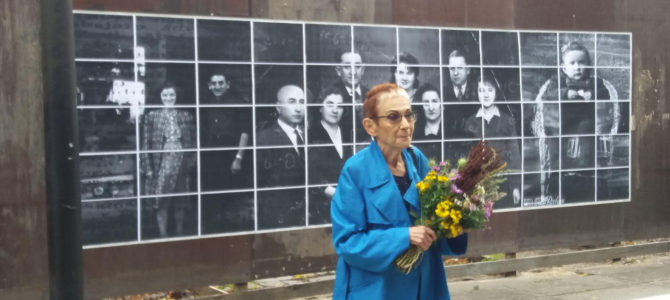
We return to Kaunas with Dita Sperling-Zupavičiene, to the same courtyard at Ožeškienės street no. 21 where she lived with her husband Juda Zupavičius before the war, from which she was expelled in the summer of 1941 and imprisoned in the Kaunas ghetto.

The artist Vytenis Jakas has brought the old residents of the courtyard back, Dita and Juda, Dita’s brother Hirsh, their mother and Juda’s comrade Ika Grinberg, the son of the owner of the building.

In the summer of 2014 Dita travelled from Tel Aviv to Lithuania with the hope of commemorating her husband Juda and his fellow members of the Kaunas ghetto resistance during the 70th anniversary of the liquidation of the Kaunas ghetto.

Vytenis Jakas, who lives in the building, unveiled his frescoes of former residents and Kaunas ghetto heroes Juda Zupavičius and Ika Grinberg on September 22, 2014.

In July, 2015, a memorial plaque commemorating Juda–a lieutenant in the Lithuanian military and a chief on the Kaunas ghetto police force–thanks to the efforts of Danutė Rūkienė and other Kaunas municipality staff. Dita Šperlingienė-Zupavičienė), Lithuanian Jewish Community chairwoman Faina Kukliansky, members of the Jewish community and municipal leaders attended the ceremony.

Dita is now 94 but has forgotten nothing and is glad to share her memories with anyone who asks. She said she was very glad to see her old courtyard again. We also saw paintings of the current residents on the wall as well as Jewish scholars. We were very happy to see our faithful old friends there as well, Fruma Kučinskienė and Vytenis Jakas. Thank you!

Kaunas Celebrates Sugihara Week

Sugiharos savaitės renginiai Kaune

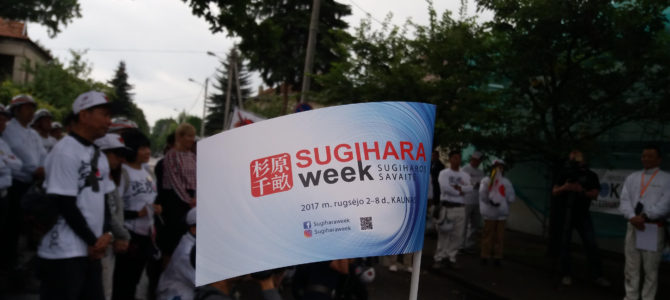
You’re invited to attend the events of the first-ever Sugihara Week celebrations in Lithuania from September 2 to 8 in Kaunas.

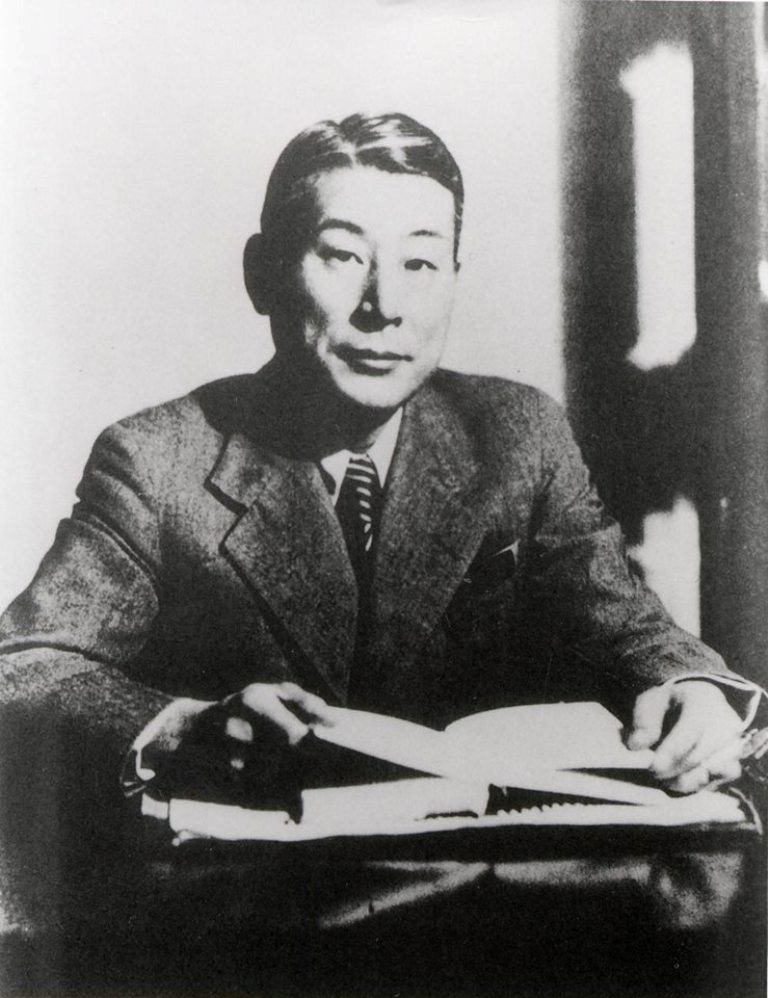
The week-long celebration commemorates Japanese diplomat Chiune Sugihara who saved not less than 6,000 Jewish lives in Kaunas together with Dutch consul Jan Zwartendijk.

Japanese ambassador to Lithuania Mr. Toyoei Shigeeda said: “Consul Chiune Sugihara is becoming ever better known in the world and it is pleasing that his great deed is being remembered in ever new ways. It is significant that the Sugihara Week initiative arose in Kaunas, which is the epicenter of the entire Sugihara story.”

Kaunas deputy mayor Simonas Kairys said: “Although Sugihara Week is being held for the first time, it has received major attention in both Lithuania and Japan. It’s incredible what a tie these two distant and different countries share. At the beginning of September many honored guests from Japan will arrive in Kaunas, including representatives of the Japanese Diet, Gifu Prefecture and the Japanese media.”

The deputy mayor invited Kaunas residents and guests to make time in their calendars to attend the wonderful events planned, free and open to the public. The events program includes concerts, symposia, screenings of films, public lectures, exhibits, creative workshops and others in different spaces and venues around Kaunas.

The Sugihara House Museum, housed in the diplomats former diplomatic residence and office, has more information available here.

Sugihara Week also has a facebook page undergoing constant update here.

A listing of events is available in PDF format in Lithuanian here.

Sugihara House may be reached directly by email at sugiharahouse@gmail.com

Happy Birthday to Semionas Finkelšteinas

Dear Semionas,

We are so happy to be able to celebrate your birthday together. We wish you the greatest success as head for 28 years now of the Makabi Lithuanian Jewish Athletics Club. After you completed your studies in economics at Vilnius University, you were one of the initiators behind the reconstitution of the Makabi club in Lithuania and have been its president since 1989. And you have been active in the work of the Lithuanian National Olympics Committee. May athletics always remain important in your life. You have won so many laurels in long distance, as a sprinter and a light athlete, and in the summer of 1990 we remember you together with a group of just over a dozen or so Lithuanians who ran around the Baltic Sea! The years together have been happy and meaningful, and with all our heart we wish success and great health will follow you closely forever!

Mazl tov!

Most Famous Litvak Ever?


The Zamenhof monument in Veisiejai, Lithuania, recalls how he began as a doctor.

The Polish Institute in Vilnius with the Lithuanian National UNESCO Commission and the Union of Lithuanian Esperanto Speakers are presenting an exhibition on Ludovik Zamenhof, the inventor of the artificial international language Esperanto and the best-known Litvak in the world. The exhibit is on display at the Lithuanian National UNESCO Commission gallery at Šv. Jono street no. 11 and celebrates the 100th anniversary of Zamenhof’s birth. It details the famous Litvak and his family, his life in Białystok, Poland and the birth and popularity of the Esperanto language. Classic literature translated into Esperanto is also on display. UNESCO declared 2017 the Year of Ludovik Zamenhof. In 2014 Poland’s Ministry of Culture and National Treasures listed the Esperanto language on its registry of intangible national treasures.

Born in Białystok, he also lived and worked in Warsaw, Kaunas, Moscow, Vienna and Plotsk, and began his practice as a doctor in Veisiejai, Lithuania, in 1885. In 1886 he was an ophthalmologist in Vienna and Plotsk. In 1879 he wrote a Yiddish grammar published in part in the magazine Lebn un visnshaft (Vilna, 1909) followed in 1887 by his book “Lingvo internacia” under the psuedonym Dr. Esperanto, which became the name of the language he invented. He died in 1917 and is buried in Warsaw.

The exhibit is open to the public without admission charge till September 19.

Full story in Lithuanian here.

Famous Producer Making Documentary about Jewish Vilna

kauno.diena.lt

As US archaeologists continue their research in Lithuania in search of traces of Jewish culture and history, a group of Canadian filmmakers have arrived and plan to release a documentary in fall of next year.

An international team of archaeologists led by professor Richard Freund of Hartford have been working at several sites in Lithuania over the last few weeks, including the Kaunas forts, the Great Synagogue site in Vilnius and the Jewish labor camp on Subačiaus street also in Vilnius, where they are looking for malinas, or hiding places. They also studied a Nazi POW camp in Šilutė, Lithuania. For some of the sites they employed non-invasive techniques enabling them to make discoveries without tearing down existing structures. The archaeologists are wrapping up their work in Lithuania this week.

The archaeological and documentary teams traveled together to Vilnius where the Canadian filmmakers concentrated on the HKP labor camp on Subačiaus street in Vilnius. The HKP repaired Germany military automobiles.

Stephanie Stolin Visits Panevėžys

Stephanie Stolin of Paris visited the Panevėžys Jewish Community August 10 looking for information about her grandfather Leo Berger. He was born in Subačius and studied at the Ponevezh yeshiva, and after reaching adulthood moved to London in 1910, and later to America. Her other relatives remained behind in Subačius. Her grandmother and her children daughter Leya Berger and son Mordechaim were murdered in Subačius in 1941.

Community chairman Gennady Kofman showed the guest old archival photographs and documents in which Stolin discovered the surname of her great-great-grandmother and photographic images of other relatives.

Stephanie Stolin thanked the chairman for his hospitality and aid in her search for traces and roots of her family, and promised to keep in touch with the Community in the future.

On the Radvilėnai Cemetery in Kaunas

Yesterday was a strange day. As if by prior agreement, Jewish residents of Kaunas and Vilnius called to ask the opinion of the largest Jewish religious community in Lithuania, the Vilnius religious community about “a botanical garden being built” in the Radvilėnai Cemetery in Kaunas.

I was caught by surprise and took a look on the all-powerful facebook. Actually, saplings and flowers are being planted in the cemetery, a sprinkler system has been set up and there is even a garbage dumpster on site.

For Jews cemeteries are a place of extraordinary respect and commemoration. This Jewish ethical position has been followed for centuries. This reminded me of the spiritual Holocaust which came in Soviet times, when Jewish, Christian and Orthodox cemeteries were “beautified” and “put to cultural use” as parks with fountains and benches for relaxing and reading Pravda.

Will Kaunas, which today is known for its innovative solutions and beautiful reconstruction, really let this happen? Will the city famous for its cultural traditions remain apathetic in the face of this malicious vandalism? It’s time to answer that question. Since my opinion was asked, I give it here.

The Kaunas city landscape is not a matter for the Jewish religious communities. We the living say: we are responsible for the memory of our dead and martyred brothers and sisters, for their rest and respect. Even a crooked, toppled, broken matseva (headstone) is extremely dear to us.

If someone is bothered by the view onto “unaesthetic Jewish graves” from the window of their home, let them install frosted windows. Or they should demonstrate civic pride, invite friends, invite the Jewish community, grab some brooms and rakes and clean up the cemetery. The unborn children and grandchildren of the victims of the Ninth Fort and the Lietūkis Garage in Kaunas have no opportunity to tend the graves of their relatives, no way to insure their eternal rest. Only we can do that now. Jews and Lithuanians. Citizens of the Republic of Lithuania.

Shmuel (Simas) Levinas, chairman
Vilnius Jewish Religious Community

Golda Vainberg-Tatz Concert

The accomplished pianist Gold Vainber-Tatz is returning to Vilnius and will perform at 6:00 P.M. on August 10 at the Lithuanian Jewish Community. Her performance is to include works by Bach (Busoni editions), Beethoven, Ravel, Debussy, Chopin and others.

Maceva Summer Camp to Study Kaunas Jewish Cemetery

This year Maceva has been invited to join the international project Oppression and Opposition: Opportunities of Civic movements in Europe’s Past and Present. Lithuania is one country along with three others–Greece, Italy, Hungry–who are hosting a special kind of summer camp this year. From the 6th to the 20th of August, 25 international volunteers from Germany, Austria, Ukraine and Lithuania and including Maceva representatives will be participating in various activities in Kaunas and Vilnius. The main activities of this summer camp will be complete documentation of the Žaliakalnis Jewish cemetery–who exactly was buried where and when–and the elaboration of all findings.

Maceva’s main partner in the summer camp project is Germany’s Action Reconciliation Service for Peace and this will be the third such summer camp organized by Maceva (www.litvak-cemetery.info) in Lithuania. Results from all four countries participating this year will be presented in Germany this November.

After successful participation last year, students from Vytautas Magnus University will be joining the summer camp again to help preserve the historical cemetery. We have and are receiving significant support from the Kaunas municipality who are paying close attention to the cemetery and doing their best to bring it back to a respectable state.

The Jewish cemetery in the Žaliakalnis district of Kaunas was established in 1861 and closed in 1952. It is listed on the registry of cultural treasures and is protected by the Lithuanian state as a cultural heritage site. Many famous and notable figures are buried there, including politicians, scholars, religious leaders and cultural figures such as the writer Jacques Lipchitz and the vocalist Daniel Dolski. The graves of more historical personalities will likely come to light after successful inventory and documentation this summer.

Besides the work in the cemetery, volunteers will have an opportunity to get to know more about Lithuanian Jewish history and culture. We look forward to meeting people from the Judaica Research Center, the International Center for Litvak Photography and Bella Shirin.

Maceva is an associated member of the Lithuanian Jewish Community.

Keen Interest Surrounds Archaeological Work at Kaunas Mass Murder Sites

The archaeological research being conducted by an international team led by Hartford professor Richard Freund in Kaunas is getting wide coverage in the Lithuanian press. The team studying the Holocaust sites at the Fourth, Seventh and Ninth Forts and the Žaliakalnis Jewish cemetery in Kaunas has been visited by US embassy staff and is working closing with different departments in the Kaunas city government and the Kaunas Jewish Community. They plan to announce their finds in fall and to present a comprehensive study to Klaipėda University archaeologist Dr. Gintautas Zabiela, who is accompanying the group and whose certification will be required for the discoveries to be recognized officially in Lithuania. Dr. Zabiela promised to present his report to the Kaunas Jewish Community as well.

Kaunas Jewish Community chairman Gercas Žakas showed the team an area in the Žaliakalnis Jewish cemetery where an Israeli archaeologist five years ago determined there was a mass grave. This could be the place where the victims of the Lietūkis garage massacre were buried. Residents in the buildings around the cemetery gave testimony they witnessed trucks arriving with corpses who were buried there in late June of 1941.

Many of the team members have Jewish and Litvak roots. Professor Freund is in communication with Avraham Gol, who has roots in Kaunas. Gol’s father Shloma Gol was one of the eleven prisoners who successfully escaped Ponar by digging an escape tunnel and testified at Nuremberg.

More about Gol’s testimony here.

Image of Roma and Jews: Brighter or Darker?

Romų ir žydų paveikslas: šviesiau ar tamsiau?
by Ieva Elenbergienė

Few Lithuanian people personally know real Jews or Roma, so their image is painted for us by the most accessible sources of information. This is an interview with Monika Frėjute-Rakauskiene who has researched how ethnic communities are portrayed in the Lithuanian media and on the internet. The interview is about the power of the media to paint their subject in a brighter or darker light.

Full story in Lithuanian here.

Litvaks in Love

Professor David Roskies delivered an interesting lecture to a medium-sized audience at the new Judaica Center at the Lithuanian National Library Thursday evening.

“Using the tools of a cultural historian, drawing upon my Litvak identity and turning feminism into a source of knowledge, I think I have successfully cracked the DNA of Jewish collective memory. I know what it is, and I know how it works. Jewish collective memory is organized around saints, sanctuaries and sacred times. In this way, each generation of Jews shape a model life, the model community and the model time. You don’t have to be a Litvak to unlock the DNA of Jewish collective memory, but it certainly helps, because Lite [Lithuania] is where this triple axis, this three-pronged model, emerged in bold relief. The model was so stable that it remained in place even when the world began to change. In Lite things really began to change with the rise of religious revival movement called Hassidism at the end of the 18th century. So long as the hassidim were limited to Podolia and Volhynia which, after all, are located south of the gefilte fish line, and where people spoke a different Yiddish, there wasn’t much to worry about. So there was talk about a new cultural hero named Yisroel Ba’al Shem-Tov, better known as Besht. He was a faith healer, a tzadik or saintly person, a righteous person, who engaged in all manner of non-Litvak behavior. He was an effective preacher and teacher, but he came into conflict with renowned Torah scholars, who were the elite of traditional society. Worse yet, he popularized the study of Kabbalah–Jewish mysticism–, he claimed to have paid periodic visits to Heaven and he encouraged mystical prayer performed with bizarre and ecstatic song and dance at all hours. Then, before you knew it, hassidic prayer houses were beginning to appear in Lite, too. The time had come for the rabbinic establishment to take action,” Rosskies said in a lecture which ranged seamlessly from the drier facts of cultural history to his own personal experiences and thoughts, employing moving Yiddish lullabies to make certain points.

Darius Udrys Uncovered How Unprepared We Are to Discuss Morality without Outrage


Darius Udrys. Photo by Kiril Čachovskij, DELFI, © 2017

by Andrei Khrapavitski

I have written a short facebook comment in Lithuanian regarding the latest meltdown within the local liberal circles, but this story is worth expanding on. The gist of the matter is that Remigijus Šimašius, the liberal mayor of Vilnius, fired Darius Udrys, the head of Go Vilnius development agency and my former colleague at the European Humanities University.

A formal reason for dismissal was lack of results, but this reason looks very improbable, given the short time both Darius and the agency had worked and could achieve those results. A more probable one is the scandal Darius provoked after posting a facebook comment in which he asked whether it was moral for forest brothers (Lithuanian partisans who waged guerrilla war against Soviet rule during the Soviet occupation during and after World War II) to kill organizers of kolkhozes, collective farms put in place by the Soviets on the occupied lands.

Darius raised a lot of eyebrows by simply asking on what moral grounds it was OK to kill the civilians who were organizing those kolkhozes. A group of conservatives immediately demanded his dismissal and put a lot of pressure on the mayor of the Lithuanian capital to do so. It seems quite likely that the liberal mayor gave in to the demands of the conservative members within the coalition and let Darius go. Apparently you can be fired in 21st-century Lithuania for asking a question about the morality of killing. The liberal mayor found neither the courage to stand for freedom of speech nor to acknowledge the real reason for the dismissal. As mentioned above, Remigijus tried to spin it by claiming that Darius lost his job for not demonstrating results.

Full text in English available here.

Litvaks in Love, a Lecture by David Roskies

David Roskies, professor of Hebrew University and the New York Jewish Theological Seminary, will deliver a lecture called Litvaks in Love at the Judaica Center of the Lithuanian National Martynas Mažvydas Library in Vilnius at 4:00 P.M. on July 27.

For more information, visit the Judaica Center’s webpage here.

Summer Dig Ends at the Groyse Shul in Vilnius

by Geoff Vasil

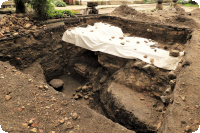
This summer’s archaeological dig at the Great Synagogue site in Vilnius wrapped up in the early evening of Friday, July 21, with volunteers working right up to the last minute.

This summer’s dig is the second by an international team led by the Israeli Antiquities Authority’s Dr. Jon Seligman and Hartford professor of Jewish history Richard Freund. The composition of workers and volunteers was significantly different this summer; only Shuli of Israeli Antiquities appeared again amid a group of others from Canada, Israel and the United States. Mantas Daubaras remained the chief Lithuanian archaeologist at the site and this year there were significant numbers of Lithuanian volunteers, almost all of them apparently university students. This year the focus was exclusively on the Groyse Shul or Great Synagogue site, whereas last year the Ponar Holocaust mass murder site was also part of the project, as documented recently in Owen Palmquist’s good documentary Holocaust Escape Tunnel, which aired on the PBS program NOVA earlier this spring. The lead archaeologists attended a Lithuanian screening of the documentary at the Tolerance Center a week before the end of their work at the Shulhoyf in Vilnius.