Jewish Cuisine

Sabbath Challa in Panevėžys

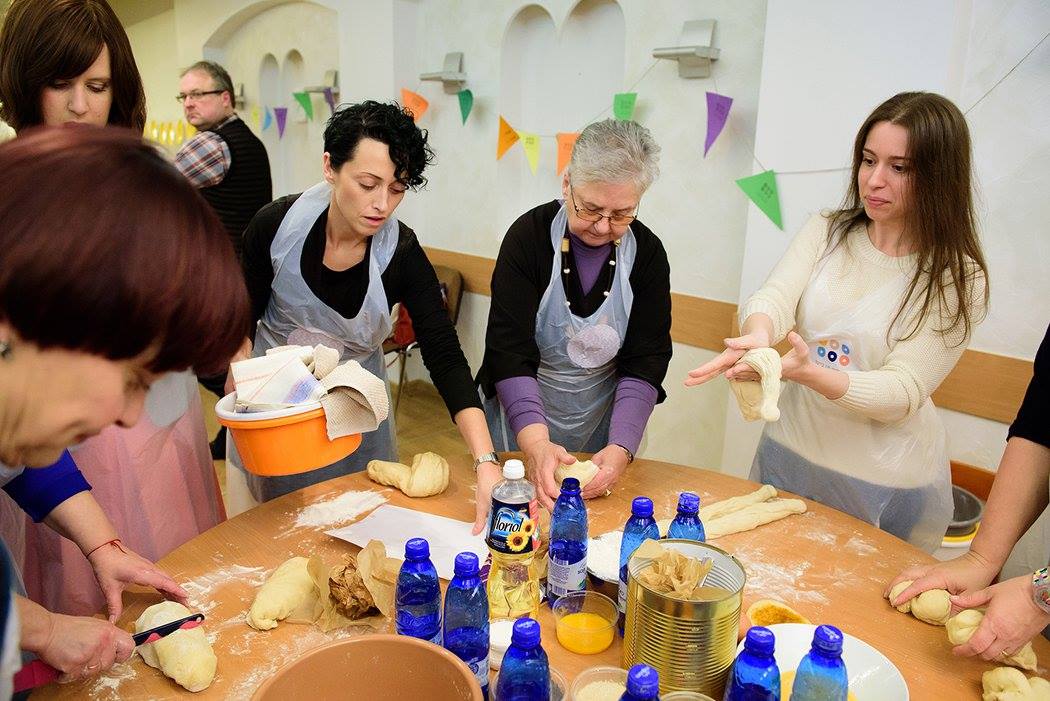
The Panevėžys Jewish Community joined the Shabbos Project November 11 to bake challa bread. Participants included staff from the educatio department, teachers and Community members.

Preparations for the baking event got underway in the morning and all the necessary ingredients were purchased: eggs, yeast, oil, salt and poppy seeds. The main ingredient was of course highest-quality flour. Kosher flour left over from last year worked perfectly for making the dough. Different recipes were suggested, but in the end the traditional recipe was used, because the Panevėžys Jewish Community’s oven is not large and can’t be used for large-scale production. Housewife Virginija prepared the dough.

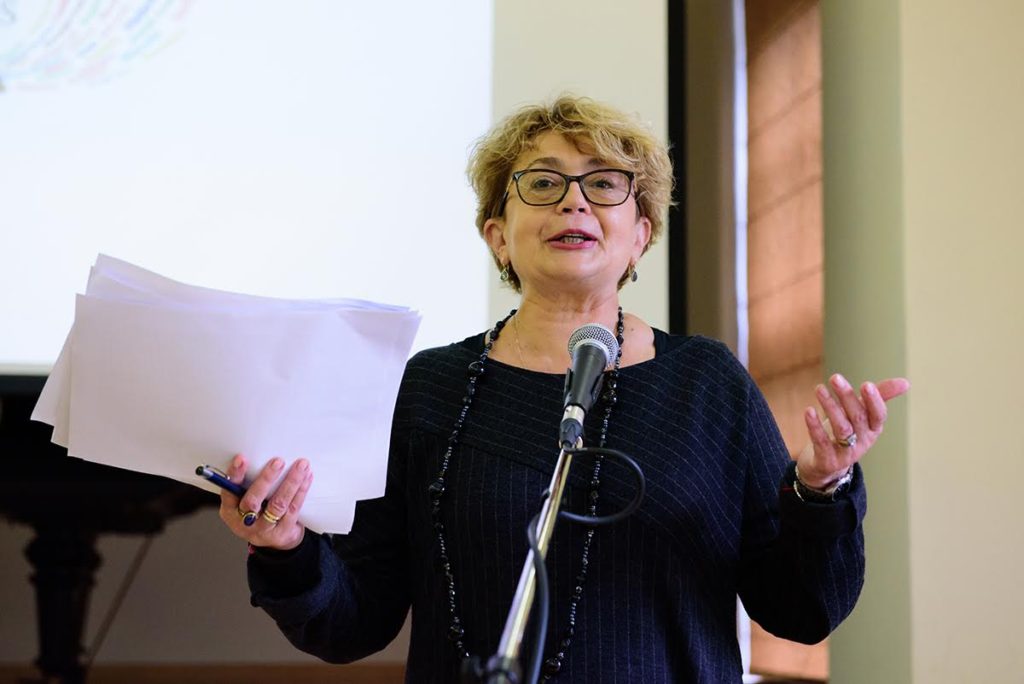
Administrator Lina gave a brief talk about challah-baking traditions in Jewish families. Although every housewife has her own recipe for challah bread baked for the Sabbath, the result is always the same: a blessed and delicious loaf of challa.

Shabbos Project a Great Success in Vilnius

ghg

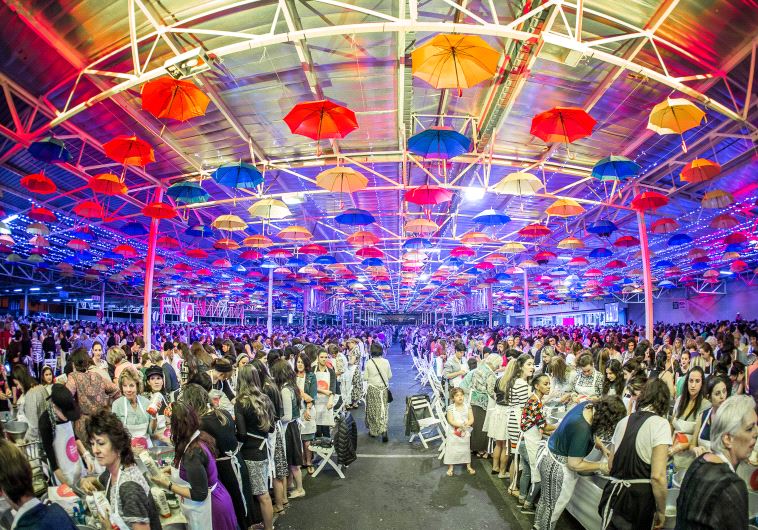
The Lithuanian Jewish Community’s Shabbos Project event on Thursday, November 10, attracted a large number of participants including a majority of young people.

The event was held in the large space behind the Bagel Shop on the first floor.

Mainly girls and women but also a few young men took up stations around a number of tables preset with ingredients and mixing bowls. Different tables had different dominant languages. The largest group pushed two tables together, and spoke mainly English with some Hebrew, members and friends of the Lithuanian Jewish Student Union mainly in their 20s. United States ambassador to Lithuania Anne Hall and LJC chairwoman Faina Kukliansky shared a table with staff from the Bagel Shop. Another table conversed in Russian, another in Lithuanian, and children and younger people predominated at a normal and a small table near the back, including several students from the Sholem Aleichem Gymnasium.

From the stage a presentation of challa and the Sabbath was provided, including a symbolic lighting of the Sabbath candles. A Sabbath song was performed by the cantor of the Choral Synagogue accompanied by violin. Rabbi Shimson Izakson was on hand for the entire event as well.

Shabbat Project at the LJC

Press release, November 9, 2016

For the third year in a row Jewish communities around the world will host challa baking events and Sabbath celebrations. More than 1,006 cities around the world are participating in this enchanting event, and this year Vilnius is one of them. The Lithuanian Jewish Community officially joins the Shabbat Project Thursday, November 10, when we will host an evening of baking that special Jewish bread called challa with Community members and friends.

Challa is a special bread baked for Sabbath and holidays among Jewish families. The process of making and breaking challa is deeply rooted in tradition and religion. The word’s primary meaning is that of loaf or bun, as recorded in the Book of Numbers or Bamidbar in the Old Testament or Tanakh, and was one of the first commandments given the Israelites as they were preparing to leave the wilderness for the Promised Land: “Ye shall offer up a cake of the first of your dough for an heave offering: as ye do the heave offering of the threshing floor, so shall ye heave it.” (Numbers 15:20)

The event will feature a brief history of the Sabbath, music and hymns, kneading the dough together and baking traditional Sabbath challa. Ester Izakson, the wife of the rabbi of Vilnius, will lead the event. She will present the ceremony of separating a portion of the dough for the cohen, the haFrashat khalva, one of the three commandments incumbent of women in Judaism.

We’ll begin activating the yeast at 6:00 P.M. on November 10 at the Bagel Shop Café, Pylimo street no. 4, Vilnius. The Lithuanian Cultural Council is supporting the event.

The event will be attended by Lithuanian Jewish Community chairwoman Faina Kukliansky with family members, foreign ambassadors and guests.

For more information, contact Dovilė Rūkaitė, director of projects for the Lithuanian Jewish community, at projects@lzb.lt


Shabbat Project Poised to Break New Records in 1000 Cities

The international Shabbat Project involves more than a million Jews in 84 countries

Tel Aviv is epicenter of global Shabbat initiative in Israel.

shabbat-project
Shabbat Project participants baking challah together in Johannesburg, South Africa.

The number of cities expected to join in this week’s annual global Shabbat is approaching 1,000, and organizers expect it to surpass that number.

This is the third year of the Shabbat Project since it launched in 2014, and the number of participants has grown exponentially from year to year, with an estimated one million having taken part last year in 919 cities and 84 countries across the globe.

This year, 57 new cities have committed to take part, from Lodz in Poland, to Hoorn in the Netherlands, Alphaville in Brazil and Hollywood, USA.

The tag line of this year’s Shabbat Project is “Shabbat can do that.”

“In 2014 and again in 2015, through the transformative power of Shabbat, we’ve seen individuals and communities accomplish great things; things that before were not thought possible,” explains the brains behind the initiative, South Africa’s Chief Rabbi Warren Goldstein. “We’ve seen walls torn down, families rejuvenated, deep feelings awakened, deep friendships formed. This is what Shabbat can do,” he adds.

Full story here.

Three Braids, Three Challas, Three Generations

fa-chala-project

The Lithuanian Jewish Community invites you to participate in the international Shabbos project!

We’re inviting all Community members to come bake challa and celebrate the Sabbath together on November 10 in Vilnius!

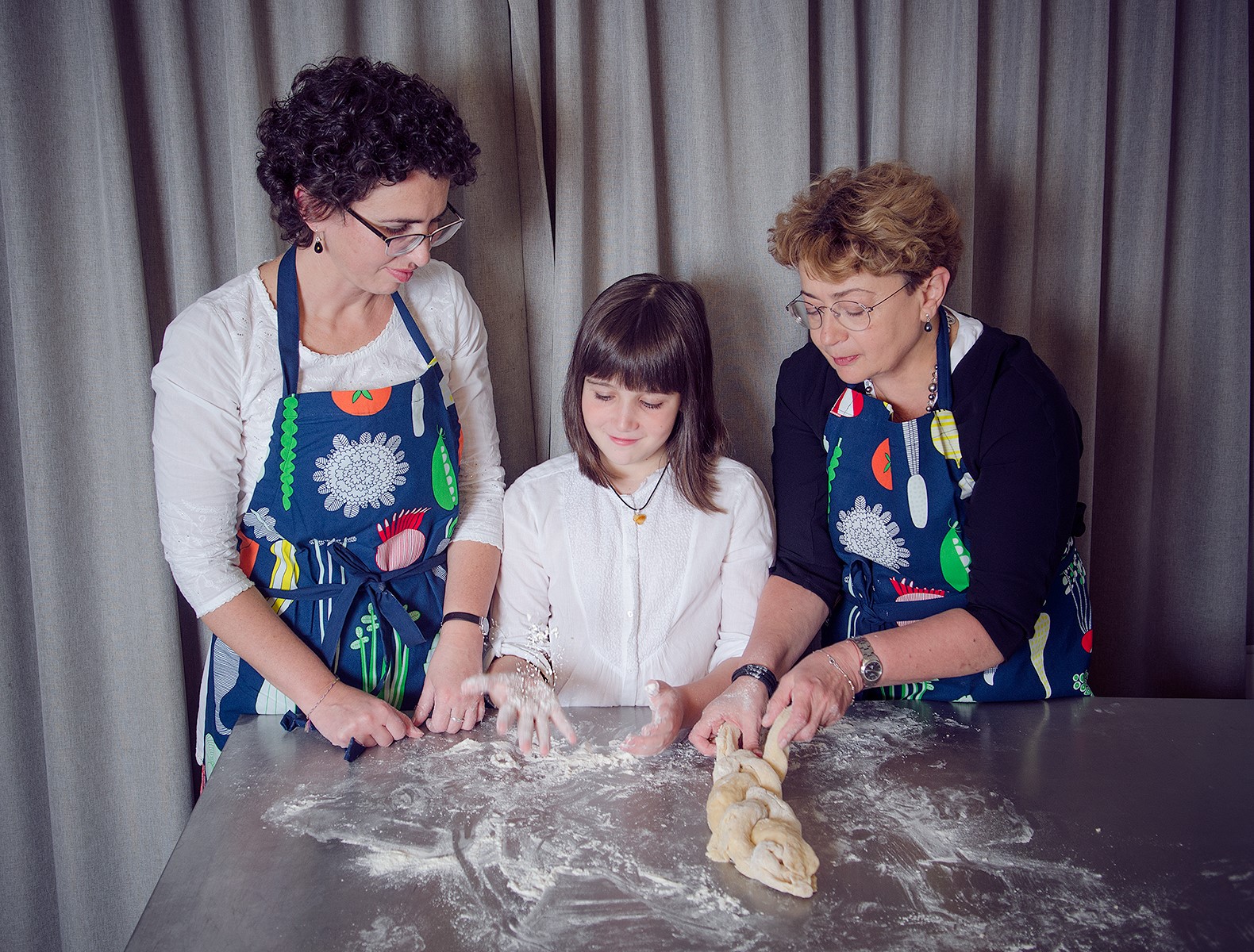
Jewish communities around the world will be baking traditional challa bread on November 10. This fun project has been going on for three years and includes Jewish communities in 65 countries. This is the first time the Lithuanian Jewish Community is participating. We’re inviting all regional communities, families, mothers and daughters to gather together and bake challa together in their own communities. Grandmothers, mothers, granddaughters, we’re hoping you will all come knead challa together at one table!

Registration is required because space is limited. goo.gl/fEmzp4

Program:

6:00 P.M. We activate the yeast and knead the dough

6:30 P.M. The story of the Sabbath

7:00 P.M. We braid the challa

7:30 P.M. We bake the challa

More information available here.

Beata Nicholson and Rafailas Karpis Talk about Jewish Lithuania

B. Nicholson ir R. Karpis atskleis, kokia yra žydiškoji Lietuva

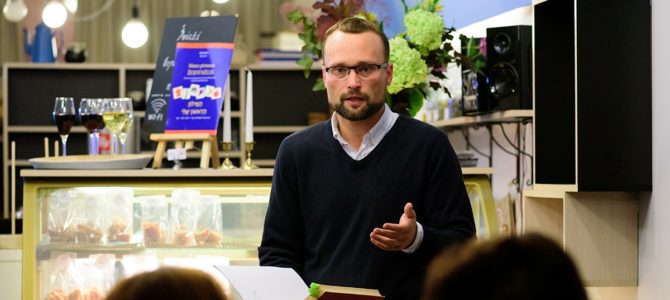
“Empty, boarded up, gone, pulled up the roots,” these are the words opera soloist Rafailas Karpis used to describe extant Jewish synagogues in Lithuania following a trip he made through northern Lithuania with Beata Nicholson, a noted Lithuanian journalist and television personality who produces a cooking show called “Keliauk ir ragauk. Lietuva” [Travel and Taste: Lithuania]. Karpis said the wooden synagogues of Lithuania used as store houses or sports gyms during the Soviet era are still being used as such in many locations. But not at the synagogue complex in Joniškis, rebuilt at the initiative of the local communities, where Beata and Rafailas will spend most of their time during the upcoming episode.

Full article in Lithuanian here.

Rabbi Kalev Krelin Invites Public to Teaching on Kosher Rules and Business in Judaism

This Saturday you are invited to an after-lunch tea and Judaism lesson/discussion with Rabbi Kalev Krelin.

From 2:00 to 2:30 P.M. will be the ABCs of Judaism for Beginners, a half hour of intense learning about the rules of kosher food, an explanation of prayers before different kinds of food and more. It’s important not to be late to this part of the teaching.

From 2:30 to 4:00 P.M. we’ll have a discussion and teaching about business in Judaism. You’re invited to ask questions, learn interesting facts and take one step closer to becoming a real expert on Judaism.

Languages: English and/or Russian, depending on audience.

Registration is not necessary but would be appreciated. It will help us decide which language to use. You can register here:

http://apklausa.lt/f/business-in-judaism-verslas-judaizme-qwvqala/answers/new.fullpage

For more information, contact infolujs@gmail.com

https://www.facebook.com/events/1248023268604192/
https://www.facebook.com/groups/296000767119214/

Israel Day Event in Jurbarkas

Izraelio dienos renginys Jurbarke

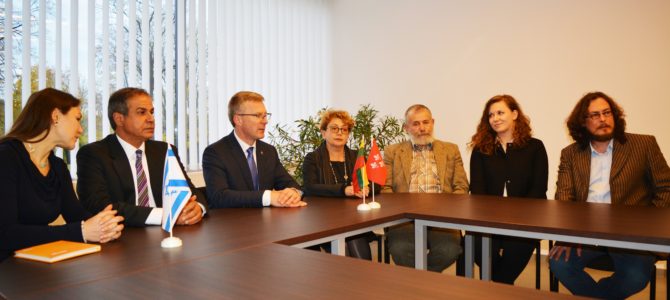
An Israel Day celebration took place in Jurbarkas, Lithuania on October 26, attended by Israeli ambassador to Lithuania Amir Maimon with embassy staff, representatives from the Jurbarkas regional administration, representatives from the Lithuanian Jewish Community and others.

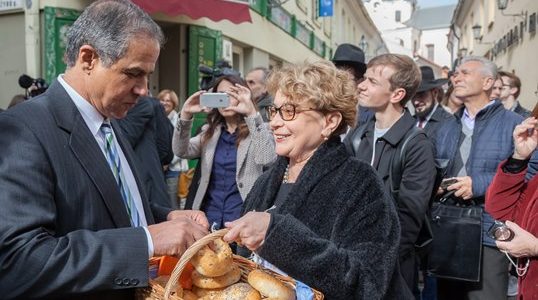
Before the event the Israeli ambassador and Skirmantas Mockevičius, the head of the Jurbarkas regional administration, met and talked with students from the Antanas Giedraitis-Giedrius Gymnasium in Jurbarkas, and later with Lithuanian Jewish Community chairwoman Faina Kukliansky and Community members visited the Jewish cemetery in Jurbarkas. The official event took place at the Jurbarkas Regional Administration Public Library in the afternoon, where the photo exhibit “Pope Francis’s Visit to Israel” was opened and a sculpture by sculptor Dovydas Zundelovičius dedicated to the memory of the Jewish community of Jurbarkas was unveiled. The winners of a student drawing contest called “Let’s Draw Jerusalem” were also awarded, photos of trips to Israel were displayed and Jewish cuisine was showcased.

Jewish Street Gets New Sign in Yiddish, Hebrew

Vilniuje Žydų gatvės pavadinimas užrašytas dar dviem kalbomis – ir יידישע גאס (jidiš klb.), ir רחוב היהודים (hebrajų klb.)

Žydų gatvė (Jewish Street, aka Yidishe Gas, aka ulica Żydowska), where the traditional Jewish quarter and the Great Synagogue of Vilnius was located, got a new sign in Yiddish and Hebrew Tuesday.

This was one in a continuing series of new signs in foreign languages, a controversial effort by Vilnius mayor Remigijus Šimašius to showcase the multicultural identity of the Lithuanian capital. Earlier signs in “minority” languages included ones for Islandijos [Iceland] street, Washington Square, Varšuvos [Warsaw] street, Rusų [Russian] street and Totorių [Tatar] street in Vilnius.

Support the Lithuanian Jewish Community

Even your small donation today can help the Lithuanian Jewish Community achieve great things tomorrow.

The Lithuanian Jewish community has roots going back 700 years. Only a remnant survived the Holocaust. Although the current community is small, we are extremely active and are working hard to foster Jewish identity, maintain traditions and culture, commemorate Holocaust victims, provide social services to our members and promote tolerance in society.

We invite you to contribute to reviving at least a small portion of the legendary Jerusalem of Lithuania. Perform your mitzvah (good deed) today!

New Bagel Shop Menu

The Community’s kosher café the Bagel Shop invites you to come in and try some of new menu items for fall, including new bagels, Israeli salads and fresh-squeezed juice. Our new menu is displayed below and you can download it as well, or just stop by at Pylimo no.4 in Vilnius during regular business hours and see if you don’t find something which makes your mouth water. Oh, and we’re baking fresh challa bread every Friday.

LJC Chairwoman Faina Kukliansky Thanks European Day of Jewish Culture Organizers

LŽB pirmininkė F. Kukliansky dėkoja Europos žydų kultūros dienos Lietuvos žydų (litvakų) bendruomenėje organizatoriams
Photo: Dr. Mindaugas Kvietkauskas, director, Lithuanian Literature and Folklore Institute, reads poems by Abraham Sutzkever

The European Day of Jewish Culture was celebrated September 4 in Vilnius with a klezmer music concert and Yiddish poetry readings. We are glad it was such a real holiday, and proud of its organizers!

Lithuanian Jewish Community chairwoman Faina Kukliansky thanks everyone who contributed to organizing the event and who sacrificed their time for the Jewish community’s benefit.

Faina sveikina

“Thank you to the staff of the Bagel Shop Café who prepared special Jewish treats for everyone. Only though joint effort can our small community organize celebrations of such high caliber and take pride in them along with a large group of friends and guests. Thank you to the small group of volunteers who truly helped. Thank you to the Vilnius Sholem Aleichem ORT Gymnasium, fostering students who honor and are interested in their roots and culture, the young Europeans for whom understanding of tolerance and civic-mindedness is an urgent matter. Thank you to the gymnasium students who took part in the celebration,” chairwoman Kukliansky said.

Gefilte Fish: Stuffed Fish, or Fish Ball? Secrets of the Litvak Kitchen Revealed

gefilte

by Dovilė Rūkaitė

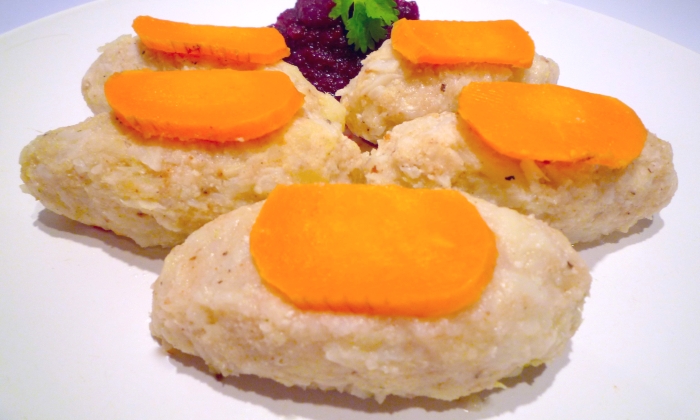
The issue of survival is an urgent one in the history of cuisine just as much as it is in the history of humanity. Do the fittest and most delicious survive? So what are we to make of the apparent success of this boiled ball, a brownish gray mass with a slice of carrot atop, either sweet or salty, framed by a pink jelly, or just as often with a sauce of indeterminate color? Gefilte fish is an established dish in world cuisine; in the kosher food section you can find several different types and it is an essential food during the holidays at European Jewish homes.

Gefilte fish is an Ashkenazi Jewish dish of epic proportions which has survived the challenges of the centuries remaining almost unchanged to the present time. Litvaks make this stuffed fish in the following way: the carp or trout is gutted, the bones are removed from, the fish fillet is combined with spices and the mixture is placed back within the skin of the fish or strips of it and boiled in a pot with carrots. The stuffed fish cools in the fish broth which gels into a jelly, is decorated with lateral slices of carrot and served with horseradish. Jewish housewives in Vilnius used to put bits of beet in the pot so the jelly would take on a pink color and a more interesting taste.

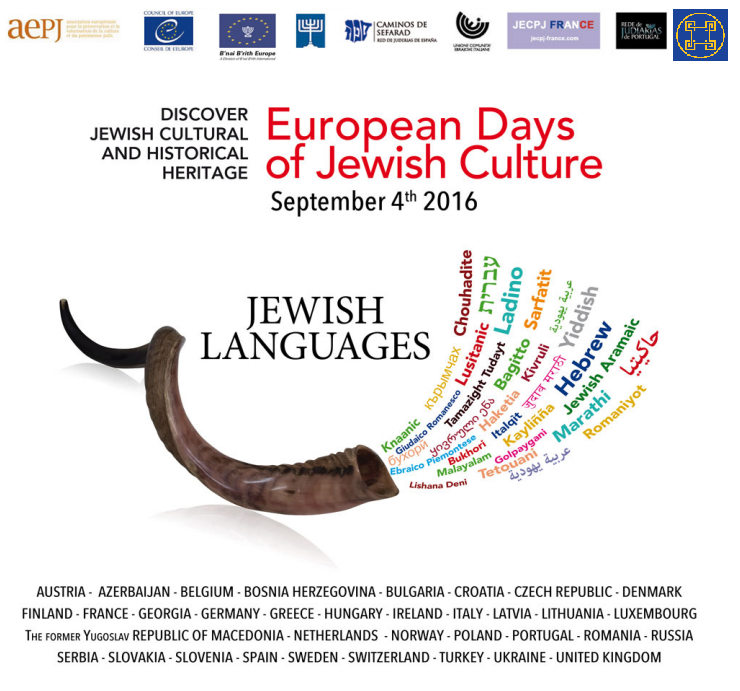
European Day of Jewish Culture 2016

European Day of Jewish Culture 2016
Vilnius speaks Yiddish again!

Sunday, September 4, 2016
Lithuanian Jewish Community, Pylimo street No. 4, Vilnius, September 4

Program:

10:00 Bagel breakfast Boker Tov-בוקר טוב – A guten morgn – Labas rytas!
Location: Bagel Shop Café, Pylimo street No. 4, Vilnius

11:00-11:45 Hebrew lessons for kids and parents with Ruth Reches, author of the Illustrated Dictionary of Hebrew and Lithuanian for Beginners, registration required
Meet at the Bagel Shop Café, Pylimo street No. 4, Vilnius

12:00-12:45 Rakija Klezmer Orkestar performance
Location: White Hall, LJC

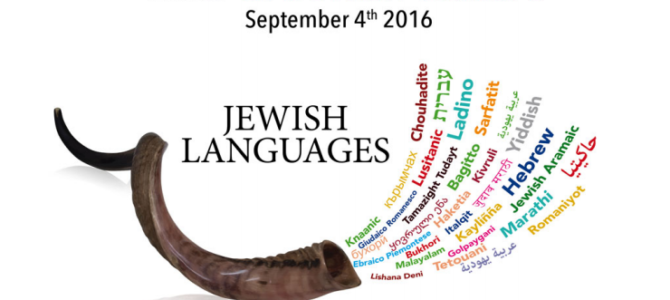
Jewish Languages in Lithuania

by Akvilė Grigoravičiūtė, Germanic studies doctoral candidate, Sorbonne

We invite those interested in Lithuanian Jewish culture and heritage to participate in walking tours, attend exhibitions, meetings and concerts and take part in other cultural activities scheduled for Sunday, September 4. The point is to regain a portion of our own historical memory, to disrobe it from a mantle of suppression and to add color beyond black and white to a rather amicable and good-willed former life together.

Full story in Lithuanian here.

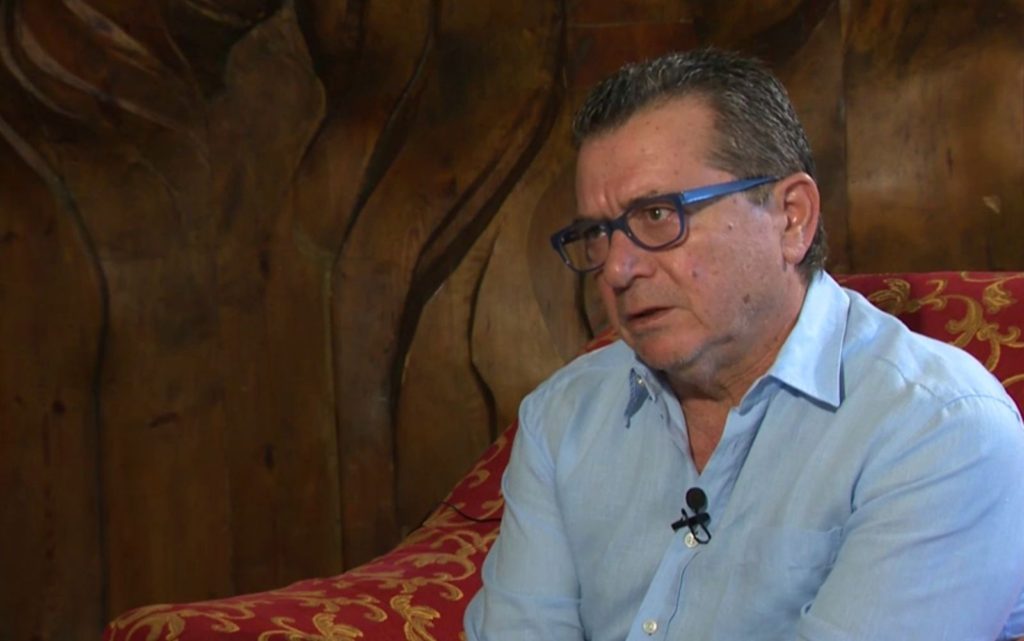
Tzvi Kritzer: I Was Horrified No One Would Remember the Mass Murder of Molėtai

Kritzerby Karolis Kaupinis, Lithuanian Radio and Television show Savaitė, from 15min.lt

There’s a street in Molėtai along which 2,000 unarmed people, the town’s Jews, were led to their deaths 75 years ago. The mass grave now lies on the edge of town, although it’s difficult to call the location a grave site. Relatives of the murdered flocked to Molėtai Monday from around the world to join a procession along the route to the mass murder site.

Writer and director Marius Ivaškevičius invited Lithuanians to join the march. “You don’t have to do anything, just walk several kilometers through the town of Molėtai together with our Jews. To be silent, together, to look one another in the eyes. I have almost no doubts someone will cry, because such scenes are moving. Someone among them, someone from our side. And that’s enough. Just that, to show them and ourselves we are no longer enemies,” Ivaškevičius wrote. The LRT TV program Savaitė interviewed Tzvi Kritzer, an organizer of the march who was born in Vilnius in 1973 and moved to his Israel with his parents at the age of 17, about the event in Molėtai on August 29.

Could you tell us briefly the story of your family who lived in Molėtai?

My father lived in Molėtai with his parents and two brothers. We had more relatives there, aunts, uncles. They owned a bakery where they made bagels. Even today when we were filming a film in Molėtai and talking with many of the old-time residents of Molėtai, many of them remembered there was this very famous bakery which made especially delicious bagels, but which is now gone.

Full interview in Lithuanian here.

Secrets of Kosher Food at the Frenkel Villa in Šiauliai

Frenkelio vila

A large stuffed dumpling floats in chicken broth. But what’s inside? Pork? No way. Jews don’t eat it. Chicken? It’s taste is impossible to identify. It will remain a mystery for a long time. At least, until the guide at the Chaim Frenkel villa in Šiauliai helps me solve the riddle. “The Secrets of Kosher Food” is one of those educational programs which attracts tourists to the villa like flies to butter. The price is 10 euros for adults and 9 for primary and high school students. The price includes not just a feast at the villa, but an explanation of what appears to our eyes as the strange foods Jews have eaten for millennia, and continue to eat. “I have worked here for a long time, but over the course of my job I have never seen Jews attend this sort of educational program. And that’s understandable. After all, it’s impossible to surprise Jews by foods they eat often. But this does surprise Lithuanians,” the guide said. Kosher food. What is it?

Full article here.

Rabbi Ben Tzion Zilber Visits Latvia and Lithuania

Rugpjūčio 15-16 Latvijoje ir Lietuvoje lankėsi rabinas Bentsiyonas Zilberis

Rabbi Ben Tzion Zilber, son of legendary Rabbi Yitzchok Zilber, visited Latvia and Lithuania August 15 and 16.

Rabbi Kalev Krelin of the Vilnius Jewish Community escorted Rabbi Zilber to locations where the latter’s ancestors lived. His father Rabbi Yitzchok Zilber belonged to a long line of scholars and suffered under Stalin, both at labor camps and under the atheist policies of the Soviet Union. Despite extremely difficult circumstances, Rabbi Yitzchok Zilber not only managed to hold steadfastly to his faith in the Creator and to keep His laws, but also to deepen his Torah study and teach others. After making aliyah to Israel Rabbi Yitzchok Zilber had hundreds of followers in whom he inspired faith in the Creator and adherence to the Torah.

Keeping the Faith in Vilnius

VilnaFaina
photo © Delfi/K. Cachovskis

Ellen Cassedy, author of We Are Here: Memories of the Lithuanian Holocaust (ellencassedy.com), has written about the Lithuanian Jewish Community and the Bagel Shop initiative.

Amit Belaite adores the long ode to the city of Vilna that was penned by writer and poet Moyshe Kulbak 90 years ago. Lines from the poem about Vilna’s stones and streets were running through her head on a warm summer afternoon as she led a walking tour through the narrow, winding streets of the city now known as Vilnius, the capital of the small Baltic nation of Lithuania.

Belaite, 23, heads the Lithuanian Union of Jewish Students. When she posted the announcement for the group’s tour of Jewish Vilnius, she expected a couple of dozen people to be interested. To her amazement, 400 signed up, many of them non-Jews.

“People know the city is rich in Jewish history,” she said. “They feel a big need to learn about it.”