

Holocaust

Kaunas Jewish Community Member Julijana Zarchi Remembers Life, Holocaust

Kaunas Jewish Community Member Julijana Zarchi Remembers Life, Holocaust

15min.lt

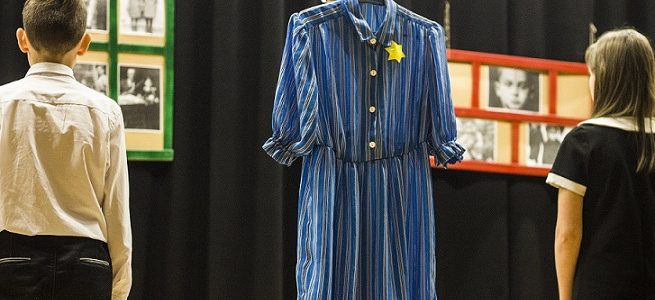
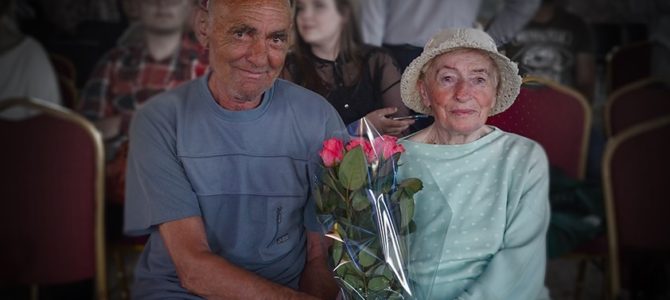
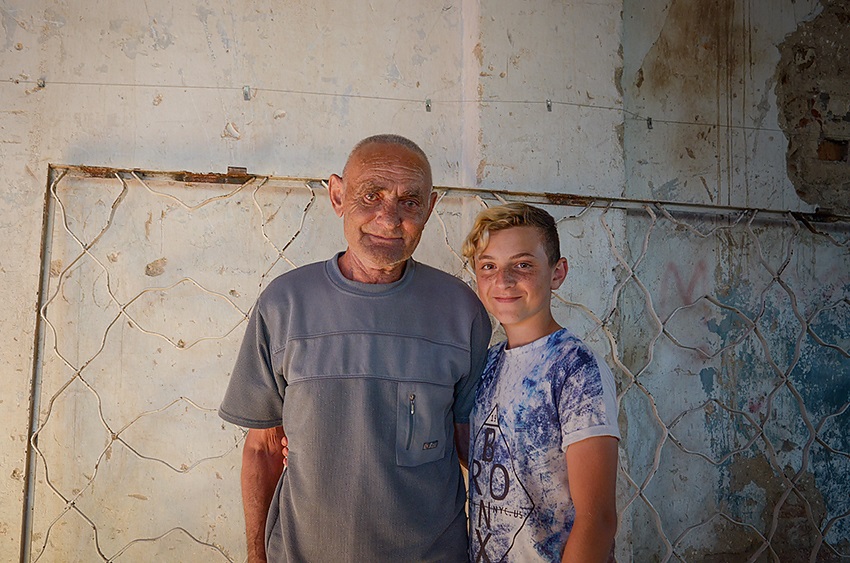
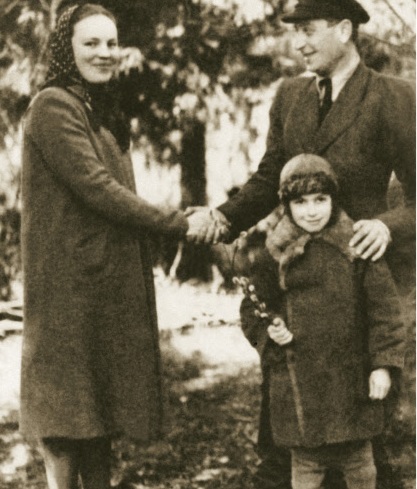
When she was three, Julijana Zarchi was smuggled out of the ghetto thanks to outside rescuers and so escaped death, but her family’s story begins in Germany and leads to the cotton fields of distant Tajikistan. Julijana and her mother were deported there. Zarchi, who related her and her family’s story for the program of Kaunas as the European capital of culture in 2022, said Naziism and Stalinism both had a bearing on the fate of her family. All of her closest family members except her mother were murdered. “The Nazis murdered all of them. Three times. That’s about how many mass murders there were,” she said. “I can’t find my relatives on my father’s side anywhere, and as one approaches old age one wants that sort of connection. I can’t find a single one, although the family was very large and the surname is a rare one. My grandfather, his brothers and sisters and many children…”

Aaron Klug Dead at 92

Aaron Klug Dead at 92

One of several Lithuanian Jews to have received the Nobel prize, Aaron Klug passed away November 20, 2018, at the age of 92.

Klug was born in Želva (aka Zelva, Zelvas) near the town of Ukmergė (Vilkomir) in the Vilnius region of Lithuania on August 11, 1926, to Lazar and Bella (née Silin) Klug. Lazar Klug received both a secular and Jewish religious education, and raised and sold cattle as his father did. Aaron Klug wrote he remembered nothing of his place of birth, and the family moved to Durban, South Africa, when Aaron was about two. Aaron Klug was graduated from the University of Witwatersrand in Johannesburg with a bachelor’s degree in physics, chemistry and biology. He married dancer and choreographer Liebe Bobrow in 1948. Klug received a master’s degree from the University of Cape Town where he did work on X-ray crystallography. He then went to the UK, where he received a PhD in solid state physics at the University of Cambridge in 1952. Klug then worked with X-ray crystallographer Rosalind Franklin at Birkbeck College, University of London, exploring the structure of the tobacco mosaic virus. The nucleoproteins of the virus were at that time too big for imaging with X-ray crystallography but too small to see with optical microscopes. Electron microscopes could only provide two-dimensional images, and Klug pioneered a method for making 3-D images, called crystallographic electron microscopy, for which he received the Nobel prize in chemistry in 1982. He was knighted by Queen Elizabeth II in 1988. Besides his many other contributions, he and his colleagues were responsible for mapping about one third of the human genome in the Human Genome Project. He taught at Cambridge and served as the president of Britain’s Royal Society from 1995 to 2000. He also worked with Francis Crick, who received the Nobel prize with Watson for discovering the helical structure of DNA.

Monument to a Monument Photo Exhibit

Monument to a Monument Photo Exhibit

Roža Zinkevičienė, the principal of the Saulėtekis school in Vilnius, invites the public to the opening of a photography exhibit there called “Monument to a Monument (Jewish Cemetery Destroyed in 1964)” by photographer Rimantas Dichavičius. The opening is to take place at 10:00 A.M. on January 17, 2019. The school is located at Kaminkelio street no. 10 in Vilnius. The exhibit is dedicated to marking International Holocaust Remembrance Day.

Litvak Takes Lithuanian Genocide Center to Court over Noreika

Litvak Takes Lithuanian Genocide Center to Court over Noreika

War Hero or Nazi Collaborator? Family Partners with Victim’s Kin to Expose Truth

Vilnius trial will see whether Jonas Noreika was whitewashed by Lithuania’s Genocide and Resistance Research Center; his granddaughter says he did his best to help Nazis kill Jews

by Robert Philpot

LONDON–Seventy years after he was shot by the Soviets, the reputation of Jonas Noreika goes on trial in Lithuania next week.

Noreika–a hero to many in the Baltic state for resisting Communist subjugation of their country–stands accused of being a Nazi collaborator complicit in the Holocaust.

The case before the Vilnius Regional Administrative Court charges the state-funded Genocide and Resistance Research Center of Lithuania with intentionally distorting the role of Noreika in the murder of Jews.

It has been brought by Grant Gochin, a Lithuanian citizen living in the US whose relatives were among Noreika’s victims.

In an extraordinary twist, Gochin’s effort is being actively supported by Noreika’s granddaughter. Silvia Foti has spent more than two decades investigating “General Storm,” as her grandfather is known to many in his former homeland. Her conclusion is brutal: “Jonas Noreika willingly played a role in cleansing Lithuania of Jews. He did everything in his power to help the Nazis kill Jews, and nothing to stop them.”

Full story here.

Note: The trial was postponed by the court, allegedly at the Government’s request, until March 5.

When Moshe (Misha) Arens Called from Vilnius, or, the End of World War II

When Moshe (Misha) Arens Called from Vilnius, or, the End of World War II

by Sergejus Kanovičius

The internet didn’t exist yet, and the way to connect from Israel with parents and friends left in Lithuania was by fax or telephone. There wasn’t a surplus of money and both means were very expensive, so hearing the voice of a loved one was the greatest gift; letters are fine, but human nature it seems is such that we need living emotion, moments which dissolve in the past… When you hear the voice of your Father, or Mother, or grandfather, it feels as if you are with them, much more than reading a letter which has been in transit for a long time. Sometimes the people who helped us in so many ways in saving our son knew the longing for loved ones, they knew what longing means, because they themselves had experienced these separations and knew what they meant. The independency of Lithuania was going slowly, so it was expensive to call from Israel to Lithuania and from Vilnius to Tel Aviv. As I remember it, from Vilnius you longer had to wait for a previously ordered international call, all you had to do was dial 8, wait for the tone and then enter the number. But it wasn’t raining and isn’t raining money anywhere, neither there where rivers of milk flow along banks of honey, nor there where pack-ice gently caresses the banks of the Neris. Sometimes the worst thing you could pull out of the mail box was a nostalgic numerical reminder for some month, sometimes the telephone bills were such that you wanted to take that apparatus to a bank and lock it in the safe.

Condolences

This year the Union of Former Ghetto and Concentration Camp Inmates lost ten of our members. The tenth was Anastazija Baltusevičienė of Kaunas, mother of Robertas Baltusevčius. She was born June 17, 1942, and passed away on December 25, 2018. Our deepest condolences to her son Robertas and sisters Filomena, Liucija, Elžbieta and Elena.

January 1 Is Lithuanian Flag Day

January 1 Is Lithuanian Flag Day

On January 1 every year a ceremony is held to replace the Lithuanian flag on the tower on the hill of Gediminas in central Vilnius, to mark Lithuanian Flag Day. Traditionally, the older flag is given over to the protection of one of the Lithuanian schools which has been noted for teaching civics and preserving historical memory.

The modern Lithuanian tricolor, the symbol of the independent Republic of Lithuania, was first raised on the tower on January 1, 1919. It was flown by a group of Lithuanian volunteers led by Vilnius city commandant Kazys Škirpa. The raised flag was saluted with gunfire and the volunteers sang the national anthem.

Today a small road next to the hill of Gediminas is named after Kazys Škirpa. For several years now the Lithuanian Jewish Community has been petitioning the municipality of Vilnius to change the name of the street named after a Holocaust perpetrator. The LJC’s position is quite clear: Kazys Škirpa Alley needs to be renamed if only to show respect for all the citizens of Lithuania.

Rudashevski Diary Book Design Wins Place in Tokyo Competition

Rudashevski Diary Book Design Wins Place in Tokyo Competition

Yitzhak Rudashevski’s ghetto diary published in Lithuanian by the Lithuanian Jewish Community was compiled and translated by Dr. Mindaugas Kvietkauskas. The unusual design of the book itself was the creation of Sigutė Chlebinskaitė. The Tokyo Type Directors Club has recognized the book design as worthy to be nominated along with another 2,860 books for their annual award in 2019, in the design category.

From the organizers of the Tokyo TDC Annual Awards 2019:

Dear Sigute Chlebinskaite,

Thank you very much for your entry to the Tokyo TDC Annual Awards 2019. We received 2,860 works from around the world. Among the entries, we are pleased to inform you that your entry below has been selected for our annual book. We hope the year 2019 will be a fruitful year for you.

Tokyo Type Directors Club

Information Board Teaches Visitors about Panevėžys Jewish Cemetery

Information Board Teaches Visitors about Panevėžys Jewish Cemetery

The Panevėžys Jewish cemetery marked its 300th anniversary this December 18. It opened on the outskirts of the city back in the 18th century, on a plot of land bought by Jews who were moving to Lithuania. People of all different walks of life were buried there, including rabbis, scholars, businesspeople and farmers. During World War I Jewish volunteer soldiers who fought for Lithuanian independence against the Kaiser’s Germany were laid to rest there.

The cemetery expanded in the 19th and early 20th century. It is now listed on the Lithuanian cultural heritage registry as an historic monument and enjoys the protection of the state. Jewish burials ceased after World War II because there were so few Jews left in the city. The cemetery was closed in 1955. In 1966 city officials liquidated the cemetery and created a city park on the site. A fountain was placed in the middle of the cemetery. Headstones were taken and used for construction in Panevėžys, for building fences in the city center and also incorporated into a decorative wall at the J. Miltinis Drama Theater. Way back in 1980 there were attempts to correct the damage done; the fountain was moved to Senvagė leaving an open pit in the cemetery. The newly recreated Panevėžys Jewish Community and friends from Israel, the USA, South Africa and other countries called for fixing the damage in 1991, and in 2003 they all supported Panevėžys Jewish Community chairman Gennady Kofman’s idea to commemorate the dead with a statue. The architect Vytautas Klimavičius designed the ensemble and Panevėžys sculptor Vytautas Tallat-Kelpša made the statue which stands there today, “Sad Jewish Mother,” unveiled in 2009.

Congratulations to Mindaugas Kvietkauskas, Lithuania’s New Minister of Culture

Congratulations to Mindaugas Kvietkauskas, Lithuania’s New Minister of Culture

The Lithuanian Jewish Community sincerely congratulates Dr. Mindaugas Kvietkauskas on his selection as Lithuania’s new minister of culture.

Dr. Kvietkauskas will be the first member of the Lithuanian Government to speak Yiddish in many years. Likely the last was Jewish affairs minister Jokūbas Vygodskis who left the post when the interwar Republic of Lithuania annulled official Jewish autonomy in the country.

Kvietkauskas has translated a number of Yiddish works into Lithuanian. After completing Lithuanian literature and language studies at Vilnius University, he studied at Oxford’s Centre for Hebrew and Jewish Studies. He also acquired skills in Yiddish from Fania Brancovskaja, the Jewish partisan and Vilnius ghetto inmate.

Jewish Heritage Experts Agree Guidelines for Commemoration of Great Synagogue

Jewish Heritage Experts Agree Guidelines for Commemoration of Great Synagogue

At the behest of the Lithuanian Jewish Community an international Heritage Advisory Group consisting of renowned global experts on Jewish heritage was formed, including:

Barbara Kirshenblatt-Gimblett, advisor to the director and senior curator of main exhibits at the POLIN Polish Jewish History Museum; Assumpció Hosta, general secretary of the European Association for the Preservation and Promotion of Jewish Culture and Heritage (AEPJ); Sergey Kanovich, founder of the Maceva NGO and project manager of the Šeduva Jewish Memorial Fund; Lyudmila Sholokhova, PhD, director, YIVO archive and library; Sergey Kravtsov, senior research correspondent, Jewish Art Center, Hebrew University; the Lithuanian Jewish Community was represented by LJC heritage conservation specialist Martynas Užpelkis and architect and designer Victoria Sideraitė-Alon.

The expert group now has issued a set of recommended guidelines for the memorialization of the Great Synagogue of Vilna.

Since it is basically clear that attempts to rebuild the Great Synagogue would send a false message, they instead recommended emphasizing the uniqueness of the site’s history and its current state. Commemoration should pursue the objectives of conserving what remains and proper education. The project should focus on recovering and expressing the centrality and unique meaning of the site in Lithuanian Jewish history and memory.

Condolences

Viktor Chramcov, born in 1927, a Holocaust survivor who was imprisoned at Dachau, has passed away. The Lithuanian Jewish Community sends our deepest condolences to his wife Svetlana and daughters Neli and Tatjana.

Choral Synagogue in Vilnius Celebrates 115th Anniversary


Preliminary design

bernardinai.lt

Marija Rupeikienė on the webpage autc.lt writes: “It is a compact space something like a cube with a cupola, constructed of bright yellow bricks with two unplastered façades and a tin roof. The building has two storeys, a basement and three small one-storey side buildings in the corners. The floor plan isn’t standard, with a many-cornered outer shape with steps, with an elongated entrance-way, stairs built on protruding sides and auxiliary spaces: the second storey is surrounded on three sides by a gallery. The main façade on the north east side facing the street is plastered with horizontal indentations. The two-storey portion dominates with short one-storey side constructions hugging it. Protrusions mark the sides of the two-storey portion while an elongated entrance-way in the interior leads to a half-rounded ark with a triangular shield bearing an image of the Ten Commandments on inscribed on stone tablets.”

In 1899 the leadership of the synagogue acquired a plot of land on Zawalna, now Pylimo street.
In 1902 architect Dovid Rozenhaus drafted blueprints for the synagogue.

Full story in Lithuanian here.
Choral Synagogue in Vilnius Celebrates 115th Birthday

Choral Synagogue in Vilnius Celebrates 115th Birthday

The Choral Synagogue was lit with festive lights December 16 as Rabbi Sholom Ber Krinksy and Vilnius Jewish Religious Community chairman Simas Levinas greeted Lithuanian Jewish Community members and guests to a celebration of the 115th anniversary of the founding of the synagogue.

Lithuanian poet, publicist and professor Tomas Venclova, Lithuanian essayist and film writer Pranas Morkus and other well-known figures attended the event.

Professor Donatas Katkus directed a concert by the Vilnius Chamber Orchestra at the birthday celebration.

A complicated early history of seeking permission from authorities to build what was called the Taharat HaKodesh synagogue finally led to the opening of the synagogue at its current location in 1903. Architect Dovid Rozenhaus designed the synagogue in the Moorish-Romanesque style. The only classical Vilnius Jewish synagogue to survive the Holocaust out of more than 110 Jewish houses of prayer operating in the city before the war, the Choral Synagogue became the focus of the post-war Vilnius Jewish community during Soviet times and remains so today.

Kaunas Jewish Community Chairman Gercas Žakas Recognized

Kaunas Jewish Community Chairman Gercas Žakas Recognized

Kaunas Jewish Community chairman Gercas Žakas received the Lithuanian state’s award “For Merit” on International Tolerance Day. Dainius Babilas, the director of Kaunas’s Ethnic Cultures Center, called Žakas one of the most active members of the city working in the cultural and social activities of the ethnic communities, both as head of the Kaunas Jewish Community and as the leader of various projects.

Since taking the post as Kaunas Jewish Community chairman in 2000, Žakas has rallied many Jewish people, initiated dozens of cultural projects and educated people on the history of Lithuanian Jews and the Jewish legacy during public events. Thanks to his resolution and consistency, the city of Kaunas remembers so many of its famous citizens who have made major contributions to Lithuania and humanity.

The newspaper Kauno diena has published an article in Lithuanian about Gercas Žakas and his work, available here.

International Association of Jewish Lawyers and Jurists Mark 70th Anniversary of Genocide Convention

Rafael Lemkin, the Jewish lawyer who at the end of World War II coined the term “genocide” and brought it to global awareness, understood that atrocities are all the more grievous when based upon race, ethnicity, religion or national origin. The systematic extermination of Jews in the Holocaust was the predominant event that led Lemkin to this understanding, but he was also motivated by other atrocities he had witnessed during his lifetime.

The world commemorates this week the 70th anniversary of the Convention on the Prevention and Punishment of the Crime of Genocide. It was designed to set in stone the well-known proclamation “never again”. The Genocide Convention was passed by the UN on December 9, 1948 and has been ratified to date by approximately 150 states. The Genocide Convention classifies genocide as an international crime and provides that all member states must prevent and punish genocide, its incitement, and any attempt to commit genocide. Israel ratified the treaty in 1950 and enacted the Crime of Genocide (Prevention and Punishment) Law that provides Israel with universal jurisdiction over this crime. Genocide is customarily referred to as “the crime of crimes” because it seeks to wipe out an entire group of people based upon nationality, ethnicity, race or religion. All states are called upon to prevent and punish the perpetrators.

Šiauliai Regional Jewish Community Celebrates 30th Anniversary

Šiauliai Regional Jewish Community Celebrates 30th Anniversary

The Polifonija music auditorium hosted a concert December 3 held to celebrate the 30th anniversary of the restoration of the Šiauliai Regional Jewish Community.

Most of our current members responded 30 years ago to an invitation published in the newspaper Šiaulių naujienos to attend a meeting of the Sąjūdis initiative group [Lithuanian independence movement] at the Planning Institute. About 100 Jewish residents of Šiauliai attended and the Šiauliai Jewish community was reconstituted, including the Jews of the region and formally called the Šiauliai Regional Jewish Community, the successor organization to the formerly large Šiauliai City Jewish Community which ceased functioning in 1941.

Šiauliai Regional Jewish Community chairman Naumas Gleizeris began the evening by welcoming and greeting the audience on Hanukkah and the 30th birthday of the organization. He thanked all guests for spending the evening with Community members.

New Book about Jewish Street in Vilnius

New Book about Jewish Street in Vilnius

A new book about Jewish Street in Vilnius by Aelita Ambrulevičiūtė, Gintė Konstantinavičiūtė and Giedrė Polkaitė-Petkevičienė was launched at the Paviljonas Book Weekend in Vilnius. “Prabilę namai. Žydų gatvės kasdienybė XIX-XX a. (iki 1940 m.)” [with the English subtitle/translation “Houses That Talk: Everyday Life in Žydų Street in the 19th-20th Century (up to 1940)” provided below the Lithuanian title on the cover] was published by the Aukso žuvys publishing house and comprises a kind of guide to the street, detailing the Great Synagogue, the Strashun Library, the house of the Vilna Gaon and the market and restaurants which operated there.

Lithuanian historian Aureljus Gieda presented the book and said it contains 166 illustrations of life in 14 buildings, 5 of which survive. He said the book has an index of names and extensive footnotes.

Full story in Lithuanian here.
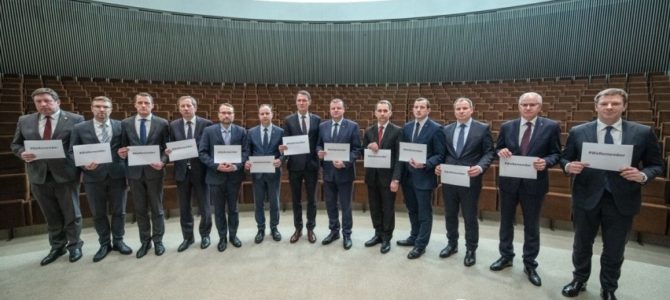
Looking Back at 30 Years of Hanukkah Celebrations

Looking Back at 30 Years of Hanukkah Celebrations

Maša Grodnikienė recalled for us the first Hanukkah celebration by the constituent Lithuanian Jewish Community back in 1988.

Lithuanian Jews who survived World War II celebrated Hanukkah quietly at home. In 1987 the Lithuanian Jewish Cultural Association formed and Emanuelis Zingeris became chairman.

On December 4, 1988, Lithuanian Jews came together and collected funds for a shared Hanukkah celebration. This was a memorable holiday in Vilnius, a big event with a beautiful group of people at the Dainava restaurant. Yiddish was spoken and sung. The cultural events group of the Lithuanian Jewish Cultural Association drafted the program and organized the event. The Fayerlakh Jewish ensemble with directors Griša Kravecas and Ana Kravec performed, as did the ethnographic ensemble conducted by Amos Traub and the Kaunas Jewish stage ensemble. Chaimas Gurvičius directed the concert. About 370 people attended. Chairman of the board of the Lithuanian Cultural Fund Česlovas Kudaba greeted the audience, and deputy chairman Tarvydas also took part. This was a grand Hanukkah evening celebration with a concert and speeches.

Remember what that time was like in Lithuania–the independence movement Sąjūdis had formed and Lithuanian Jews from different cities and towns came together and were part of Sąjūdis. Everyone was exhilarated, excited, happy that finally with the national rebirth of Lithuania the Jews of Lithuania could celebrate together that great holiday of the triumph of the spirit, Hanukkah. The majority sought to attend, there weren’t enough places and it was impossible to get in. At that time there were 17,000 Jews living in Lithuania.