Holocaust

Victory Day at the LJC

Victory Day at the LJC

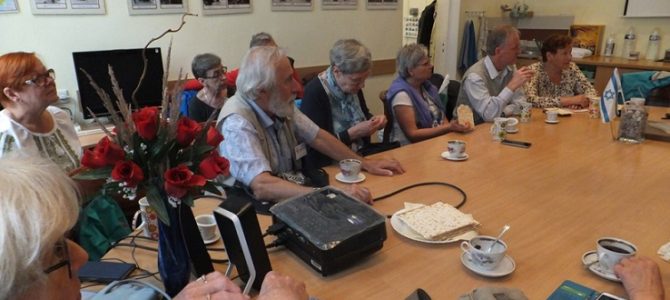
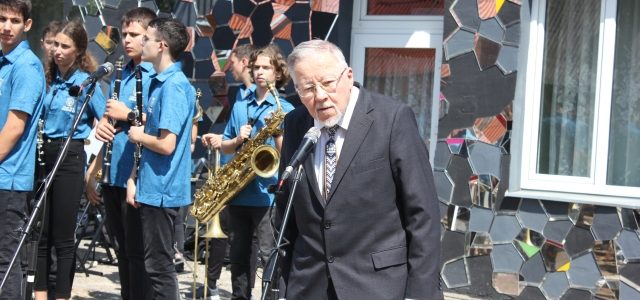
The world marks Victory Day, the end of World War II, on May 8 and 9, and every year the Lithuanian Jewish Community has honored the veterans and the fallen. This year Victory Day coincided with Israel’s national holidays to honor fallen Israeli soldiers and victims of terrorism as well as the anniversary of the founding of the state of Israel. This year Israeli veterans also attended the LJC ceremony.

As in prior years, veterans were singled out and congratulated and thanked, including this year Fania Brancovskaja, Riva Špiz, Tatjana Archipova Efros, Borisas Berinas and Aleksandras Asovsky.

LJC chairwoman Faina Kukliansky greeted veterans as did executive director Renaldas Vaisbrodas and Israeli ambassador Amir Maimon, himself a military veteran. Žana Skudovičienė moderated the ceremony.

Heritas: Special Focus on Litvak Heritage

Heritas: Special Focus on Litvak Heritage

The second Heritas International Exhibit on Heritage Recognition, Maintenance and Technologies held May 3 and 4 focused on Lithuanian Jewish or Litvak heritage.

In cooperation with the Lithuanian Jewish Community attendees had the unique opportunity to visit the Zavl synagogue currently undergoing restoration at Gėlių street no. 6 in Vilnius.

The seminar portion of the exhibit discussed a topic proposed by LJC heritage protection specialist Martynas Užpelkis, “Litvak Heritage: A Matter for the Jewish Community and/or Local Communities?”

Ceremony to Commemorate Ghetto Fighters and Murdered Ghetto Children

Ceremony to Commemorate Ghetto Fighters and Murdered Ghetto Children

Lithuanian Jewish Community members gathered at the Jewish cemetery on Sudervės road in Vilnius May 8 to commemorate those who fell fighting the Nazis and the victims of fascism.

They assembled at a monument to Vilnius ghetto FPO (Fareinikte partizaner organizatsye) leader Yitzhak Vitenberg and partisan Sheyna Madeisker.

LJC chairwoman Faina Kukliansky recalled the number of Jews living in Lithuania before the Nazi occupation and the horror and tragedy of the majority who were murdered. Jewish partisan Fania Brancovskaja spoke in Yiddish about the painful experience of the war and the loss of family. “Do not forget those who were murdered, they fought for your freedom,” she said.

Lithuanian Jewish Community Lays Wreath for Veterans on May 9

Lithuanian Jewish Community Lays Wreath for Veterans on May 9

The Lithuanian Jewish Community laid a wreath at the base of a memorial to the soldiers who died during World War II at the cemetery in the Vilnius neighborhood of Antakalnis on May 9, Victory Day in Russia, correspond to May 8, Victory Day in Europe, in Western Europe, the United States and Canada. It was just after midnight Moscow time on May 9,1945, that Nazi Germany surrendered to the Allies. In Western Europe it was still May 8. About 500 people including veterans and their family members assembled at the cemetery this year to mark the 74th anniversary of the end of World War II.

Artist Adasa Skliutauskaitė Records the Sincerity of Being

Artist Adasa Skliutauskaitė Records the Sincerity of Being

Photo: Lilija Valatkienė: Skliutauskaitė’s canvasses enchant with their freedom of improvisation and virtuosity

Today we visit painter, graphic designer and puppeteer Adasa Skliutauskaitė. Life hasn’t spared her pain, loss and disappointment. As if in response to that, as if to ransom that guilt, destiny has given her talent, optimism, a great sense of humor and longevity. On May 5 Adasa turned 88.

“To a genial artist, a good friend and an incomparable utterer of profanity, with the the most profound appreciation and gratitude,” the dedication of Grigoriy Kanovich’s book Candles in the Wind reads in praise of that book’s illustrator, Adasa Skliutauskaitė.

Full story in Lithuanian here.

LJC Statement on Adolfas Ramanauskas

LJC Statement on Adolfas Ramanauskas

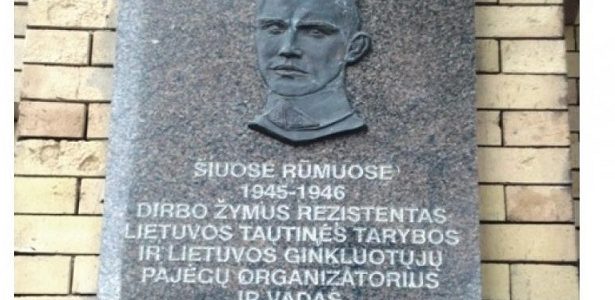
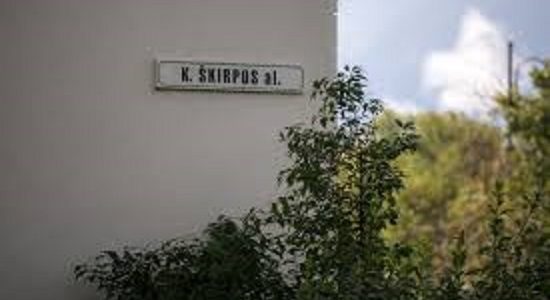
The Lithuanian Jewish Community in response to a difference of opinion regarding a monument commemorating Adolfas “Vanagas” Ramanauskas unveiled in Chicago underlines our support for the struggle by the Lithuanian nation for an independent Lithuanian state. The LJC does not question making monuments to honor those who fought for Lithuanian freedom so long as the facts don’t testify to more controversial facts implicating such fighters as Holocaust perpetrators. In the cases of Jonas Noreika, Krištaponis and Kazys Škirpa such facts are known. At the present time the LJC has no reliable information implicating Lithuanian partisan leader Adolfas Ramanauskas in Holocaust crimes.

Lithuania Monument for “Nazi Collaborator” Prompts Diplomatic Row

Lithuania Monument for “Nazi Collaborator” Prompts Diplomatic Row

by Paul Kirby, BBC

A monument to a Lithuanian hero in the US city of Chicago has prompted a row over World War Two after criticism from Russia and the Simon Wiesenthal Center.

Adolfas Ramanauskas-Vanagas commanded Lithuania’s resistance to Soviet occupation after World War II.

But the Simon Wiesenthal Center, which researches the Holocaust, says he also led a vigilante gang which persecuted Jews after the 1941 Nazi invasion.

Lithuania has accused Russia of making false statements.

The Lithuanian Foreign Ministry said Tuesday it had summoned the Russian embassy representative in Vilnius in protest and called on Moscow to stop spreading disinformation about Ramanauskas’s “impeccable reputation.”

It has also accused the Simon Wiesenthal Center of making false accusations.

But Efraim Zuroff, the Center’s head in Jerusalem, said that Lithuania had to confront its history. “They’re not telling the people the truth and they’re not facing the truth,” he told the BBC.

Full story here.

A Stranger in Her Own Land: Kaunas Resident Karolina on Her Lost Lithuanian Citizenship

A Stranger in Her Own Land: Kaunas Resident Karolina on Her Lost Lithuanian Citizenship

In a referendum in just a few days Lithuanian voters will decide whether people who have taken citizenship of another country meeting certain criteria may remain Lithuanian citizens. If the measure is adopted then the institution of dual-citizenship would include more people and provide migrants the opportunity to preserve their legal and political ties with their country of origin, Lithuania. The situation remains unclear for those who have lost Lithuanian citizenship already. Kaunas resident Karolina shared her thoughts with us regarding the issue.

Please tell us a little bit about yourself, your family history and when you left Lithuania. What were the circumstances surrounding your leaving?

My name is Karolina. I’m 27. I was born and raised in Kaunas until I was four-and-a-half-years old. My parents decided to leave Lithuania for Israel in 1997, to make use of the right of return to Israel by people of Jewish origin (aliyah). My grandfather and uncle were already living in Israel then.

How did it go, moving to Israel? What were your first impressions?

Holocaust Victims Commemorated at Ponar

Holocaust Victims Commemorated at Ponar

Victims of the Holocaust were commemorated at Ponar outside Vilnius April 2 on Yom haSHoah or Holocaust Day.

Lithuanian Jewish Community chairwoman Faina Kukliansky, Israeli ambassador to Lithuania Amir Maimon, members of the community and Holocaust survivors placed wreaths at the central monument there, offered up prayers and placed small stones at the edge of the killing pits.

Kukliansky said this year’s commemoration didn’t include a March of the Living from the Ponar railroad to the mass murder site and that Lithuanian politicians weren’t invited. She said there will be larger commemorations in Kaunas and Šiauliai in July.

“The anniversary of the liquidation of the Kaunas ghetto will be held on July 14 and that of Šiauliai July 15, and there is the 23rd [of August?], observed nationally. We decided to do without speeches, we will just attend,” she said.

Yom haShoah May 2

Yom haShoah May 2

For members who want to attend the Yom haShoah Holocaust commemoration on Thursday, May 2, in Ponar, a bus will leave the Lithuanian Jewish Community at 11:00 A.M. Registration is not required but there are only 45 seats.

Everyone is invited to attend a memorial concert at 6:00 P.M. at the LJC. Julija Sadaunykaitė on paino and Paulius Gefenas on flute will perform works by Ravel, Šenderovas, Mendelssohn, Debussy and Ibert.

Righteous Gentile Vladas Drupas Has Died

Righteous Gentile Vladas Drupas Has Died

Photo: Drupas in his Zlin 326A airplane, 2015.

With deep sadness we report the death of Righteous Gentile Vladas Drupas who rescued Jews as a young man. He was a rescuer and a pilot who flew up until his last breath. Let him go to his reward together with the other Righteous Gentiles who have passed on.

Drupas never considered himself a hero for rescuing Jews during the Holocaust. It was like pulling teeth to get him to even talk about the events of 1943 and 1944 in Šiauliai and environs where a silent battled against the Nazis took place in hiding individual Jews and Jewish families.

Virginija Skučaitė wrote about Drupas in the Kauno Diena newspaper in 2016. It was one of the last publications about the courageous man:

§§§

Winged Senior Saved Jewish Lives in Youth
by Virginija Skučaitė
October 3, 2016

It’s Easier to Rig a Memorial Plaque Than to Fix Lithuania’s Broken Reputation

It’s Easier to Rig a Memorial Plaque Than to Fix Lithuania’s Broken Reputation

by Markas Zingeris

In the last few days the restored memorial plaque was quietly replaced on the outer wall of the Lithuanian Academy of Sciences dedicated to Jonas Noreika. The mayor of Vilnius kept his promise. It’s not so simple, however, to piece back together the shards of memory about our complex past. I will admit that Noreika both repulses me and attracts me. Like a riddle which will never be solved. Such a mess has arisen over him between historians and journalists that it’s spilled over into the largest newspapers in the world (and also, by the way, as grist in the mill of the Kremlin’s propaganda machine; in March the Eurasia Daily reported on Stanislovas Tomas’s attach with a sledgehammer, claiming the alleged “law professor” lost his patience because a war criminal was being worshiped and grabbed a hammer). And I’m also left with a conflicted impression from that discussion between the blind and the deaf which in Lithuania is called a discussion by historians of our most painful issues of the past.

Full story in Lithuanian here.

Harbinger of the Holocaust: The Jewish Pogrom in Vilnius 100 Years Ago

Harbinger of the Holocaust: The Jewish Pogrom in Vilnius 100 Years Ago

When we speak of the suffering of Jews from Vilnius, we usually remember the Holocaust, the mass murders in Ponar, the Vilnius ghetto and so on. But the first pogrom in Vilnius happened much earlier. It began April 19, 1919, exactly 100 years ago. According to different sources about 60 Jews were murdered, and the perpetrators were never punished.

15min.lt

Full story in Lithuanian here.

Jews Confronted with Resurrection of Monument to Holocaust Perp on Passover

Jews Confronted with Resurrection of Monument to Holocaust Perp on Passover

The Lithuanian Jewish Community, honoring the rule of law, has condemned the wanton vandalism which destroyed a memorial plaque owned by the Vilnius municipality honoring Holocaust perpetrator Jonas Noreika.

Despite our condemnation of violence and vandalism, we are left wondering by what system of values Liberal Party Vilnius mayor Remigijus Šimašius on the day before the Jewish holiday of liberation, Passover, has “greeted” Lithuanian Jews with an order to create a facsimile plaque honoring the man who established the Šiauliai ghetto and to place it at the same location.

It seems the placement of memorial plaques in the Lithuanian capital corresponds to Šimašius’s personal likes and dislikes. In February of 2018 Šimašius criticized a commemoration of interwar pro-Zionist Lithuanian president Antanas Smetona, saying: “Vilnius is a cosmopolitan and open city and must symbolize these ideas. I am truly not a fan of the Smetona statue.” Apparently mayor Šimašius believes the multicultural legacy of Vilnius is much better symbolized by honoring a Lithuanian Nazi.

The Referendum and Legal Certitude: Vote on Preserving Citizenship Won’t Solve Deep Flaws in Existing Institution of Citizenship

The Referendum and Legal Certitude: Vote on Preserving Citizenship Won’t Solve Deep Flaws in Existing Institution of Citizenship

In a referendum this May, Lithuanian citizens will vote on amendments to article 12 of the Lithuanian constitution, the highest law in the land, to allow for the preservation of Lithuanian citizenship:

“Citizenship in the Republic of Lithuania is acquired through birth and other paths laid down in constitutional law. A natural-born citizen of the Lithuanian Republic who acquires citizenship of a country meeting the European and trans-Atlantic criteria chosen and defined by the Republic of Lithuania does not lose citizenship in the Republic of Lithuania. In other cases a citizen of the Republic of Lithuania cannot at the same time be a citizen of a different country, except through exceptions laid down in constitutional law. Constitutional law determines the procedure for the acquisition and loss of citizenship.”

Was There a Different Kind of Holocaust in Lithuania?

Was There a Different Kind of Holocaust in Lithuania?

Photo: Šiauliai Jews lined up before being taken to Kužiai to be shot, July, 1941. About 8,000 Jews from the Šiauliai ghetto were murdered in the Luponiai Forest near the village of Kužiai.

[Note: Lithuanian Jewish Community member Geršonas Taicas responds here to an “explanation” by the Lithuanian Genocide Center issued several weeks ago which claimed the Holocaust was different, the ghettos were different and the Nazi regime was different in Lithuania than they were in other European countries. That controversial “explanation” has been criticized by the LJC, the World Jewish Congress and the Association of Lithuanian Jews in Israel, among others. Presumably Genocide Center director Teresė Birutė Burauskaitė makes the claim–we don’t know, the “explanation” is unsigned–in the official apologetica for Lithuania’s native Nazis that Lithuania was the only country which pinned its hopes on independence on a Nazi invasion, among other falsifications of history (see Slovakia, Croatia, Estonia et al.). –translator]

by Geršonas Taicas, member, Lithuanian Jewish Community

Rudashevski Diary Now Accessible for the Visually Impaired

Rudashevski Diary Now Accessible for the Visually Impaired

The Vilnius ghetto diary of Yitzhak Rudashevski is now available as an audiobook in Lithuanian, read by Justinas Gapšys. According to the card catalog of the Lithuanian Library for the Blind in Vilnius, the insert in the CD includes a text in braille. The very limited-edition CD is available at 5 branches of the Lithuanian Library for the Blind around the country. The book itself is bilingual with excerpts from the diary in Yiddish starting from the back cover and moving inward. The audiobook does not contain a reading of the Yiddish section.

More information available in Lithuanian here.

David Irving Not Welcome in Lithuania

David Irving Not Welcome in Lithuania

Friends abroad have contacted the LJC regarding a visit planned by Holocaust revisionist David Irving to Lithuania, Poland and Latvia from September 1 to 9.

Irving is a notorious and convicted Holocaust denier, and the LJC would like to thank Lithuanian foreign minister Linas Linkevičius for his firm statement against Irving’s visit. Linkevičius said he had asked the Lithuanian Migration Department to add the British resident to the list of personae non gratae for whom entry to Lithuania is barred.

Poland’s foreign minister Jacek Czaputowicz said Poland would also bar Irving. ““Negation of the Holocaust is not allowed by Polish law, therefore he will not be welcome here in Poland if he wants to come and present his opinions,” the minister said Friday according to the Times of Israel and Reuters.

Full story in Lithuanian here.

Response to Statement by Genocide Center “On Accusations against Jonas Noreika”

Response to Statement by Genocide Center “On Accusations against Jonas Noreika”

A response to the statement of the Genocide and Resistance Research Centrer of Lithuania of March 27, 2019, “On Accusations against Jonas Noreika (General Vėtra)”

THE INTERNATIONAL COMMISSION FOR THE EVALUATION OF THE CRIMES OF THE NAZI AND SOVIET OCCUPATION REGIMES IN LITHUANIA

The Sub-commission for Evaluation of the Crimes of the Nazi Occupation Regime and the Holocaust

April 10, 2019

A RESPONSE TO THE STATEMENT OF THE GENOCIDE AND RESISTANCE RESEARCH CENTER OF LITHUANIA OF MARCH 27, 2019, “ON THE ACCUSATIONS AGAINST JONAS NOREIKA (GENERAL VĖTRA)