Holocaust

France Calls on Warsaw to Condemn Disruption of Holocaust Conference

France Calls on Warsaw to Condemn Disruption of Holocaust Conference

French authorities have called on Warsaw to publicly condemn actions by Polish nationalists to disrupt a conference on the history of the Holocaust in Poland, Radio France Internationale reported.

French and Polish scholars met at the L’École des hautes études en sciences sociales (EHESS) in Paris for a Holocaust conference on February 21 and 22. In the run-up to the conference, organizers received a spate of threatening telephone calls and emails demanding it be canceled.

The Polish Institute of National Remembrance (the state historical and archival institution that studies the activities of the state security organs of Poland, the Third Reich and the USSR) criticized the conference on social networks on the eve of its opening, and the Polish embassy to France conveyed these criticism via Twitter.

Will Lithuanian Law Enforcement Give Due Consideration to Anti-Semitic Acts?

Will Lithuanian Law Enforcement Give Due Consideration to Anti-Semitic Acts?

The Lithuanian Jewish Community is greatly surprised by the actions of law enforcement institutions regarding Marius Ivaškevičius. This write was summoned to a police interrogation on the accusation he had incited hate against the Lithuanian people because of his public identification of the problems troubling our society using historical facts connected with the direct participation of ethnic Lithuanians in perpetrating the Holocaust.
This is extremely depressing, unexpected and troubling, especially bearing in mind that violations with a clear anti-Semitic element usually go unnoticed by law enforcement. This passive reaction by law enforcement institutions towards expressions of anti-Semitism creates a sense of impunity, leads to the application of double standards in Lithuania, erodes the rule of law and the state and recalls dangerous examples from neighboring countries.

The LJC asks government representatives, law enforcement institutions and the public to assess the situation soberly based on justice and intelligence, in order to stop the spread of information campaigns harming Lithuania’s reputation by countries which are against our state.

We thank all those who have maintained a common-sense position and we also ask attention be brought to bear on statements made by Panevėžys politician Raimondas Pankevičius during elections debates on February 22 which had the features of incitement of ethnic hate and Holocaust denial. During the debates the politician made the false statement Jews in Lithuania had killed each other, ignoring the fact of Lithuanian complicity in the Holocaust. The LJC feels the behavior of this Panevėžys mayoral candidate, famous for actions which seem to display an unapologetic and habitual anti-Semitism, has never been subject to an appropriate legal response.

Political Correctness Lithuanian Style: Busted for Not Denying the Holocaust

Political Correctness Lithuanian Style: Busted for Not Denying the Holocaust

Photo: Andrius Užkalnis, © 2019 DELFI/Domantas Pipas

Lithuanian writer Marius Ivaškevičius, winner of the title Tolerant Person of the Year for 2017 and recipient of the Lithuanian National Prize for art and literature, was recently summoned to explain to police remarks he made on Lithuanian public radio about Lithuanians engaging in ethnic cleansing of Poles and the removal and mass murder of Jews during World War II. According to Lithuanian media reports, the Lithuanian General Prosecutor’s Office instructed Lithuanian police to investigate Ivaškevičius for hate-crimes against Lithuanians. The Lithuanian Writers Union, the Lithuanian Journalists Union, legal experts and some media have come to the defense of Ivaškevičius. The following is one of many editorials which have appeared recently.

The True Fascists Are Those Who Turned In Marius Ivaškevičius
by Andrius Užkalnis


This very angry text is about the playwright Marius Ivaškevičius, but you won’t find anything here about his work or the national prize he received.

The fact they demanded he not be given the [Lithuanian national] prize and that he received it nonetheless is one of the best things to happen in 2019, and no matter how Eurovision and the elections turn out, at least one good thing has happened. This is a great start to the year.

This article is about Ivaškevičius being summoned to the police to explain what he said on the radio about Poles and Jews.

The playwright didn’t call for killing, oppressing or insulting anyone. He spoke about our people’s (and Ivaškevičius is part of that people, too) historic crime against other peoples. There were people who considered this mocking the Lithuanian people and encouraging hatred of Lithuanians.

Ąžuoliukas Anniversary Concert at LJC

The Lithuanian Jewish Community and the Ąžuoliukas Music School will hold a chamber ensemble concert to celebrate the 40th anniversary of the school and the 60th anniversary of the Ąžuoliukas Boys and Young Men’s Choir.
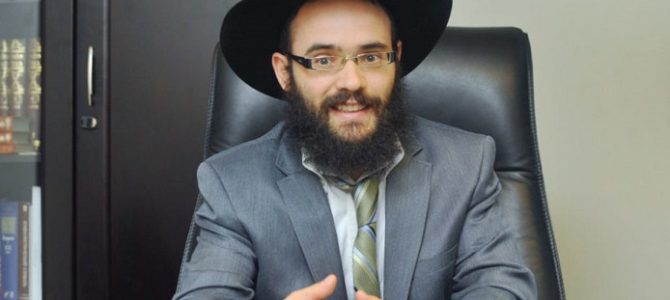
The concert begins at 5:00 P.M. on Thursday, February 28, at the Lithuanian Jewish Community, Pylimo street no. 4, Vilnius.

LJC’s Second Year at Vilnius Book Fair a Success

LJC’s Second Year at Vilnius Book Fair a Success

Almost 68,500 people visited the Vilnius Book Fair this year on its 20th anniversary. There were more than 550 events for visitors to chose from over four days. The Lithuanian Jewish Community had a table this year for the second year in a row presenting books published with partial support from the Goodwill Foundation.

The table was extremely popular with visitors all four days. Some came to browse, others to talk about Jewish culture and share their memories. There was much interested in Yitzhak Rudashevski’s Vilnius ghetto diary recently published in Lithuanian translation. This book was recognized by the Vilnius Book Fair as one of the best-designed books of 2018. Readers also expressed interest in and bought Uri Leviatan’s From Hand to Hand and Ruth Reches’s Hebrew dictionary in Lithuanian, among others.

Those wishing to purchase these books and others are invited to come to the Goodwill Foundation at Pylimo street no. 4 in Vilnius or to visit the foundation’s internet store at https://gvf.lt/e-parduotuve/

Director Gintaras Varnas Tolerant Person of Year for 2018

Director Gintaras Varnas Tolerant Person of Year for 2018

kaunas.kasvyksta.lt

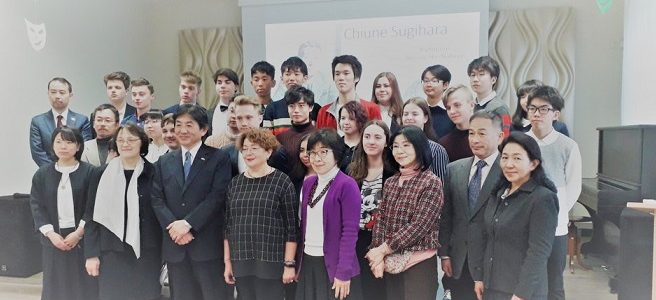
The Sugihara Foundation/Diplomats for Life awarded director Gintaras Varnas Tolerant Person of the Year for 2018 and presented their Leonidas Donskis prize to publicist Pranas Morkus at the Catholic Theology Cathedral of Vytautas Magnus University in Kaunas February 24, 2019.

Varnas was selected for the prize for his search for alternative language for theater and plays, especially in his latest works, Nathan the Wise and Ghetto, performed at the Kaunas State Drama Theater.

Varnas said his first reaction was complete surprise. “When I’m working I never think about these kind of things,” he said, adding he experiences a conflict in contemporary theater which often becomes nothing more than a way to make an audience laugh. “I am glad real theater is still needed, theater which discusses uncomfortable things, which speaks the truth,” Varnas said as he accepted the prize.

Rudashevski Ghetto Diary Wins Main Prizes at Vilnius Book Fair

Rudashevski Ghetto Diary Wins Main Prizes at Vilnius Book Fair

The Vilnius ghetto diary of Yitzhak Rudashevski, translated and published by the Lithuanian Jewish Community, has won the Book of the Year distinction at the annual Vilnius Book Fair currently being held in the Lithuanian capital.

Deputy minister for culture Gintautė Žemaitytė congratulated the designers and publishers, presenting them prizes and diplomas. The book was recognized as the best book in terms of design, taste and art for 2018. The Lithuanian Cultural Ministry has presented the prize annually 26 years now. Over 130 publications competed for the title this time.

Book designer Sigutė Chlebinskaitė won the main prize for sensitive aesthetics and holistic concept. Congratulations to Sigutė for her talent and for dedicating it to the boy from the Vilnius ghetto.

The LJC won in the category of publisher. We are so glad we were able to present this monument to the children of the Holocaust to the Lithuanian reader.

Born in Leviatan’s Clinic

Born in Leviatan’s Clinic

The Lithuanian Jewish Community hosted the launch of the Lithuanian translation of an unusual book on February 21. Professor Uri Leviatan’s book “From Hand to Hand” is unlike the academic works by this much-published anthropologist and sociologist who focuses on the modern phenomenon of the Israeli kibbutz. It is his own story, and that of his parents and grand-parents, which he began writing for his son Lior in 2014, the fruit of personal research stretching back decades, in which the author seeks to answer the question of his origins and what exactly happened to him as a child during the Holocaust.
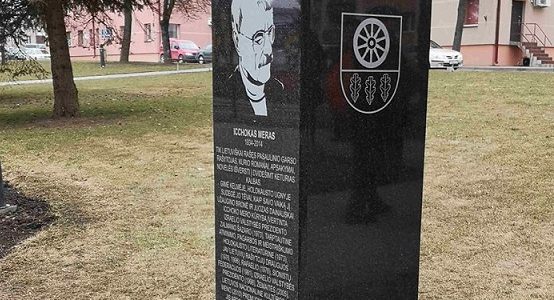
The autobiography reads like a thriller novel and the author himself describes it as a series of detective stories.

Asked to speak about his experience as a child of the Holocaust at a Holocaust survivor and Jewish partisan conference held in Israel in the ’90s, Leviatan realized he had actually been passed from one guardian to another at least seven times. Initially his parents had him smuggled out of the Kaunas ghetto, where they perished, but after that his path to Israel after the war became very foggy in his own mind. Hardly unusual for a child born in 1939 to not remember all of the horror of the Holocaust in his first few years, but Leviatan’s memory gaps seem to have always bothered him, and he managed over the decades to track down real documentation of himself as a Jewish orphan in Lithuania and later at the Sanhedria children’s home in Israel, now sporting a different first name following what he described as his “almost kidnapping” by a Jewish religious group which gathered up Jewish orphans in Europe. This group changed his name, falsified his date of birth and it was only when his aunt, already in Israel, went looking for him and happened to ask another child from Kaunas about Uri that he was rescued.

Presentation of Uri Levitan’s Book “From Hand to Hand” at LJC

Presentation of Uri Levitan’s Book “From Hand to Hand” at LJC

The Lithuanian Jewish Community kindly invites you to attend a presentation of the book “Iš rankų į rankas” [“From Hand to Hand,” translated from the Hebrew to Lithuanian by Victoria Sideraitė-Alon with an introduction by Dalia Epšteinaitė, who also edited the Lithuanian version] by head of the Sociology and Anthropology Faculty and head of the Kibbutz Institute of Haifa University professor Uriel Leviatan and a meeting with the author at 6:00 P.M. on Thursday, February 21, at the LJC in Vilnius.
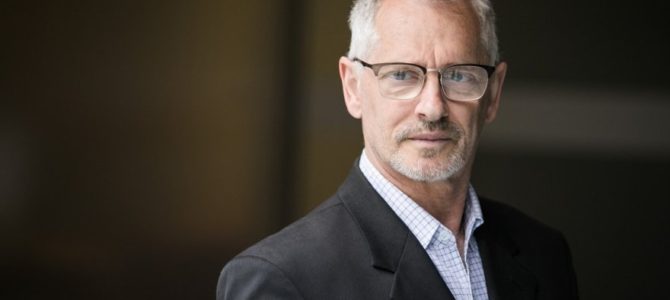
Professor Leviatan was born in Kaunas. His grandfather Isaac Leviatan was a renowned gynecologist in prewar Lithuania. The birthing clinic he created on Miško street in Kaunas in 1926 is still operating. Isaac Leviatan was a talented doctor and an active figure in Kaunas public life. He became chairman of the Zionist party Zionim Klaleem in 1935 and was the long-time representative of that party at Zionist congresses held in Europe.

Of the family of Isaac Leviatan renowned in Kaunas and throughout Lithuania, only Uriel survived through a kind of miracle. His parents sensed the coming liquidation of the ghetto in 1943 and made sure three-year-old Uriel was smuggled out of the ghetto…

Launch of Book about Jews of Švėkšna

Launch of Book about Jews of Švėkšna

Monika Žąsytienė, a Bagel Shop project volunteer and museum specialist, has written a book called “Švėkšnos žydų bendruomenė XVII–XX a.” [The Jewish Community of Švėkšna from the 17th to the 20th Century].

The Bagel Shop Café will host the launch of the new book at 6:00 P.M. on February 19. Register here.

According to the author, the book makes no pretense of being an historical work. Instead, Monika Žąsytienė sought to bring together local lore and regional history for future work on the subject. She made use of material from Lithuanian archives, Yad Vashem and the Holocaust Museum in Washington, D. C. Some of the information–testimonies, memoirs, correspondence in Yiddish, Hebrew, German and English–appears for the first time in Lithuanian in her book.

Aaron Garon’s Book Vilnius Jewish World Presented at LJC

Aaron Garon’s Book Vilnius Jewish World Presented at LJC

Aaron Garon (Garonas, 1919-2009) was born in Vilnius and most of his life was associated with his beloved home town. He moved to Israel in 1992 but always looked forward to the summers when he would return to Vilnius.

Garon became a witness to the phenomenon of the Vilnius Jewish world at a young age and harbored a life-long and deep love of Jewish culture and his native Yiddish language.

A reserved and proud Litvak, Garon painfully witnessed, too, the decline of Yiddish: “How can we erase a thousand years of Jewish cultural history?”

Garon’s terse tales of his home, parents and school–all of which he adored–served as a kind of return to paradise lost for him: “If there is anything positive in me, I must thank my parents and school and our wonderful principal Sofia Gurevich for this,” he wrote.

The Jewish world of Vilnius thrived for centuries but was wiped out in the Holocaust, although survivors continued to speak Yiddish with their families for decades. Most of them made their way to Israel, and Yiddish was no longer heard on the streets of Vilnius. This book–a Lithuanian translation of select articles by Garon the journalist and writer–is more than just vivid memories, it is a testimony to and a painting in Yiddish of a lost world which might teach future generations just how much the city lost. The new book is in both Lithuanian and Yiddish.

Exhibit by Kaunas Collector at Choral Synagogue in Vilnius

Exhibit by Kaunas Collector at Choral Synagogue in Vilnius

An exhibit of items in the collection of well-known collector Michailis Duškesas regarding pre-war Vilnius Jewish organizations is on display at the Choral Synagogue in Vilnius showing the rich and active life of Vilnius Jews before the Holocaust.

Thank you to Michailis and Natalija Duškesai of Kaunas who made the effort to organize and set up this unique exhibit in Vilnius.

The second floor of the synagogue is still hosting an exhibit of photographs of wooden synagogues as well. The photos were donated by Daumantas Todesas, director of the Jakov Bunka support and welfare fund.

Fate of Litvaks in the Holocaust in Yad Vasherm Documents and Projects

Fate of Litvaks in the Holocaust in Yad Vasherm Documents and Projects

Serafima Velkovich from Israel delivered a public lecture at the Chaim Frankel villa on February 14, 2019, called “The Fate of Litvaks in the Holocaust in Yad Vasherm Documents and Projects.” The event was intended to mark the 75th anniversary of the liquidation of the Šiauliai ghetto. The lecture was in English with simultaneous translation to Lithuania. Velkovich works in the archives of the Yad Vashem Holocaust memorial institute in Israel. The event was attended by members of the Šiauliai Regional Jewish Community, Lithuanian MP Stasiys Tumėnas’s advisor Nerijus Brazauskas, representatives of the local municipal and regional administrations, employees from the Aušra, Joniškis and Pakruojis Museums, high school students from Šiauliai and local public figures and members of the public.

The event was organized by the Šiauliai Regional Jewish Community. Partners included the Goodwill Foundation, the International Commission to Assess the Crimes of the Nazi and Soviet Occupational Regimes in Lithuania, the Aušra Museum in Šiauliai, the Klaipėda Jewish Religious Community, the Kaunas Jewish Religious Community, the Conference of European Rabbis, descendants of Litvaks abroad, the Panevėžys Jewish Support Association and the Jewish Cultural Heritage Route Association.

Dobrė Rozenbergienė: Before I Could Turn Around Mother Was Gone

Dobrė Rozenbergienė: Before I Could Turn Around Mother Was Gone

by Jurgita Lieponė

“It’s impossible to tell of that horror and hunger,” Kaunas Jewish Community member Dobrė Rozenbergienė said. Her story along with the stories of those who suffered a similar fate are buried deep. And if you encountered these people on the street or at the store, next to the dairy products, you wouldn’t even think that standing before you is someone who survived the impossible. Or that for him the word “action” isn’t associated with a sale at a shopping center at all, but with the some of the worst memories. Sometimes words are more than just words.

Dobrė Rozenbergienė was born in Jurbarkas in 1928, where she lived with her parents Motel Most and Brokhe Fidler and her brother Israel until World War II. The Most family shared the home with her mother’s cousin’s family. The war left its mark on the family’s fate and as a child Dobrė experienced the loss of her closest family members. She shared her memories with the curators of the Memory Bureau project of the Kaunas as European Capital of Culture program.

Full story in Lithuanian here.

Trump Names Anti-Semitism Czar

Trump Names Anti-Semitism Czar

United States secretary of state Mike Pompeo Wednesday appointed former soldier and prosecutor Elan Carr president Donald Trump’s special envoy for monitoring and fighting anti-Semitism.

World Jewish Congress president Ronald Lauder hailed Trump’s decision, expressing hope veteran Elan Carr would perform these complex duties of special concern well.

Anti-Semitism appears to be on the rise world-wide and in the United States, Lauder said, adding the US is long the leader in the fight against anti-Semitism, and that Trump by naming a special czar for tackling the issue had made a decisive and positive step confirming his government’s moral leadership in this area and calming fears in the Jewish community over support for Jews and insuring a secure life for Jews.

Rabbi Joel Meyers, president of the American chapter of the WJC, said anti-Semitism remains a constant problem and there was no hope it would simply disappear without specific and well-thought-out steps taken to eradicate it. During the shooting at the Pittsburgh synagogue Americans realized the danger of anti-Semitism, he said, saying people around the world must do all they can to stop these kinds of violent attacks. He said nobody–Jew or non-Jew–should have to live in fear of their life and property, and it is our duty to make sure that doesn’t happen.

Lithuanian High School Students Win Holocaust Contest

Anastasija Narbutaitė and Olga Podvorskytė won a contest put on by the Russian Academic and Educational Holocaust Center called “Memory of the Holocaust: The Road to Tolerance” and Narbutaitė received the award presented them from Russian journalist Alla Gerber at a ceremony the Russian Jewish Congress held in Moscow January 28. The two Lithuanian high school students at the Santara Gymnasium in Vilnius surveyed the Lithuanian press from 2016 to 2018 for articles and accompanying internet comments about the Holocaust. Tatjana Bruskina, who teaches high school seniors English at the gymnasium, accompanied Narbutaitė and both took part in a We Remember event at the Lithuanian embassy in Moscow.

The Catholic Priest Who Discovered He Was Jewish

The Catholic Priest Who Discovered He Was Jewish

by Kostas Kajėnas

Since his birth Romualdas Jakubas Veksleris-Vaškinelis was raised Catholic and grew up to become a Catholic priest. He discovered later he was Jewish and travelled to Israel where he met his ultra-Orthodox relatives for the first time. The return to his roots was difficult. On the one hand there was the joy of discovering them, on the other: a confrontation on the rights of Jews to move to Israel.

The unusual life of this person with two names and two surnames began in World War II. He was born in Švenčionys, Lithuania, and became the only person in his family to survive the Holocaust. The infant survived because he was rescued by a Polish couple, Piotr and Emilia Waszkinel, who accepted him into their household when his parents Jakub and Batya Veksler asked them to during the destruction of the Švenčionys ghetto. The Polish couple baptized him and raised him as a Catholic.

Full story in Lithuanian here.

Lithuanian Conference on Stories of the Children of the Holocaust

Lithuanian Conference on Stories of the Children of the Holocaust

The pre-war and Holocaust experiences of Jewish children from Lithuania were the topic of a conference held January 25 in Ariogala, Lithuania, to mark International Holocaust Remembrance Day. A large group of students and teachers from over 25 Lithuanian schools with their own Tolerance Education Centers told stories of Jewish children and adolescents, making use of the recently translated ghetto diary of Yitzhak Rudashevski, the memoirs of Trudi Berger and others, a book about children rescued from the Kaunas ghetto, the work of Grigory Kanovitch and others. Ronaldas Račinskas, executive director of the International Commission for Assessing the Crimes of the Nazi and Soviet Occupational Regimes in Lithuania, which organized the conference, said it was important to tell the stories from before the war but especially during. Kaunas Jewish Community chairman Gercas Žakas said the performances by the young people gave him hope their generation wouldn’t be afflict by ethnic and religious stereotypes

Photo: Gustė Adamavičiūtė

Holocaust Trauma

by Ruth Reches, excerpt from doctoral thesis on the experience of identity by Holocaust survivors

All researchers agree the Holocaust was a human-caused trauma which cost millions of lives and left painful after-effects in the life of survivors. What makes Holocaust trauma exceptional, and what are its effects?

Six millions Jews were systematically murdered in the Holocaust as part of Nazi policy, a plan to exterminate all Jews in occupied Europe. Those who managed to survive are called “Holocaust survivors.” These are people born before 1945 in countries occupied by Nazi Germany. “Survivors” include concentration camp victims, but also prisoners in labor camps and ghettos, those in hiding and who joined the partisan resistance, and those who survived using counterfeited documents.

People who survived the Holocaust are now more than 80 years old. During the war they were children or adolescents. Thus in discussing the special features of Holocaust trauma, it is important among other things to consider the characteristics of early trauma and its influence on aging.

Full excerpt in Lithuanian here.

Chiune Sugihara Remembered on Mount Zion in Jerusalem

Chiune Sugihara Remembered on Mount Zion in Jerusalem

Photo: Rolan Novitsky

A special ceremony to honor WWII Japanese diplomat in Lithuania Chiune Sugihara (杉原 千畝 “Sempo”) was held in Jerusalem on Holocaust Remembrance Day, January 27.

A memorial plaque to Righteous Gentile Sugihara was unveiled at the Chamber of the Holocaust or Martef haShoah on Mount Zion in Jerusalem.

Sugihara was Japan’s vice-consul in Kaunas, Lithuania, from March, 1939, to August, 1940, during which time he issued transit visas to Lithuanian and Polish Jews fleeing the approaching scourge of Nazi Germany, saving more than 6,000 lives. In 1985 the Yad Vashem Holocaust authority in Israel awarded him the title of Righteous among the Nations. A Russian Orthodox believer, Sugihara is also honored by that church and is a saint in the Japanese Orthodox Church. Sugihara passed away in 1986.

At the ceremony on Mount Zion the song Way of the Samurai by Natella Botyanskaya dedicated to Sugihara’s memory was performed to the audience of relatives of Jews who survived because of him, Japanese embassy staff and organizers including representatives of Limmud FSU, the Claims Conference and March of the Living.