Holocaust

International Roma Day

We marked International Roma Day April 8 and our partners the Roma Social Center invite readers to listen to the Roma anthem adopted by the World Romani Congress in 1971, “Gelem, Gelem,” an opportunity to love beyond pain. Our greetings to the entire Roma community.

On Yom HaShoah, Why We Must Remember the Holocaust…

On Yom HaShoah, Why We Must Remember the Holocaust…

Dear friend,

It is now 76 years since the death camp at Auschwitz was liberated. As we commemorate Yom HaShoah today, it is useful to take a look at how the Holocaust is affecting public morality all these years later — and how it is still being abused.

It is both helpful and not helpful to talk about the Holocaust when discussing the disturbing resurgence of antisemitism in the world today.

On the one hand, as reflected in ADL’s pyramid of hate, it is instructive to recognize, as the history of the Holocaust demonstrates, that things can escalate from stereotypes, to discrimination to anti-Jewish legislation to mass murder if hate is not addressed early on. The Holocaust continues to teach us that society cannot be complacent, so that so-called low levels of hate won’t mutate into much more serious and devastating manifestations, culminating in genocide.

100-Meter Dash Champion Mykolas Preis Dead at 104

100-Meter Dash Champion Mykolas Preis Dead at 104

Mykolas Preis died at the age of 104 in Israel March 31. He was twice the Lithuanian champion of the 100-meter dash in the interwar period. He was buried at the Har haMenukhot cemetery in Jerusalem next to his wife Olia. Preis’s family emigrated to Israel in 1973. The Lithuanian Jewish Community remembers Mykolas Preis as an outstanding doctor and athlete. Our deepest condolences to his family.

Preis was the last interwar Lithuanian track champion. He took first place two years in a row, in 1939 and 1940, running the 100-meter dash in 11.5 seconds both times.

Preis was the senior medical doctor at the Sports Medicine Center located on Rožių alley in Vilnius in 1948. His contemporaries spoke of him as a great organizer as well as athlete. According to the Makabi records he came to prominence as a runner in 1938. Preis shared his memories of childhood and adolescence in the book “Lietuvos sporto klubo ,Makabi 1916–2016” [Lithuanian Makabi Athletics Club, 1916-2016] and spoke about his many friends and the influence of his caring and warm teacher Rozalija Sondeckienė when he attended the Šiauliai Boys’ Gymnasium.

Symbolic Commemoration of Holocaust Victims at Ponar

Symbolic Commemoration of Holocaust Victims at Ponar


Press Release
April 7, 2021
Vilnius

Symbolic Commemoration of Holocaust Victims at Ponar

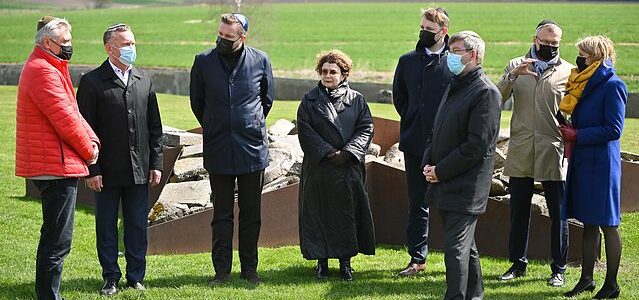
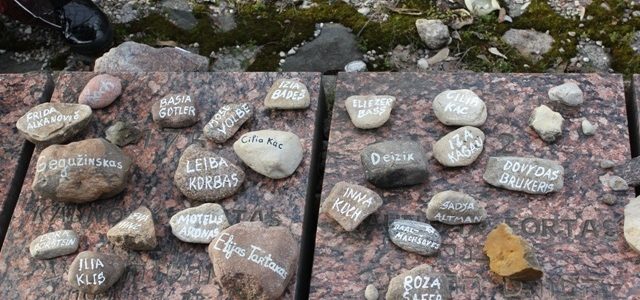
A symbolic ceremony to honor victims of the Holocaust will take place at 12 noon on April 8, Yom haShoa, the Israeli Day of Remembrance of Holocaust Victims and Heroes, at the Ponar Memorial Complex outside Vilnius. Adhering to all safety requirements, members of the Lithuanian Jewish Community, diplomats and surviving Vilnius ghetto prisoners will place stones and flowers at monuments and the mass graves and the cantor will perform kaddish, a prayer for the dead.

“The March of the Living traditionally took place on this occasion, repeating the final march of those condemned to death from the railroad station to the Ponar Memorial Complex, but due to the pandemic situation, this year this won’t be a mass commemoration. Only a few of us are gathering, carrying out the responsibility to preserve and pass on to future generations the memory of the Holocaust. This year is the 80th anniversary of the beginning of the Holocaust in Lithuania, after all. With us today is an eye-witness to those horrific events, Kaunas ghetto inmate Dovydas Leibzonas,” Lithuanian Jewish Community chairwoman Faina Kukliansky said.

This is How It Was Done in Vilne…

This is How It Was Done in Vilne…

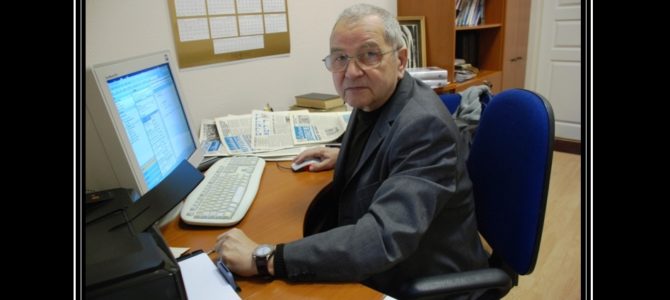
Photo: Pinchos Fridberg, the only Jew left in the Lithuanian capital of Vilnius who was born there before the Nazis invaded in 1941. By Brendan Hoffman for the New York Times.

by professor Pinchos Fridberg, an alter vilner id [an old Jew born and raised in Vilnius]

Rebe, will there ever come a time when the words Vilne and Yidish will be inseparable again?”
Saydn nor mit Meshiakh’n ineinem.” [Not unless it comes with the Messiah.]

Introduction

The article “Как это делалось ин Вилнэ…” [This Is How It Was Done in Vilne] became the main feature for issue no. 505 of the international magazine “Мы Здесь” [We Are Here] in 2015. More than 7,000 people read it, and I began receiving letters from people whom I didn’t know.

The largest Russian-language weekly newspaper in Lithuania “Обзор” [Review] reprinted this article on its website on March 8, 2021.

The article concerns the history of Jewish Vilnius.

I think it might be interesting to non-Russian-language readers as well. *

“This is How It Was Done in Vilne…”

As I was putting my archive in order, I came across a small program for a concert to celebrate the 10th anniversary of the Jewish volunteer collectives. This program is more than half a calendrical century old. I think the reader might be interested to see “how it was done in Vilne.” The program contains over 30 photographs. I will present a few of them. I believe it has long been time for them to be revived on the wider internet.

Choral Synagogue in Vilnius Opens Virtual Doors

Choral Synagogue in Vilnius Opens Virtual Doors

The Lithuanian Jewish Community is inviting the public to take a virtual tour of the only synagogue operating in Vilnius according to all Jewish laws, the Choral Synagogue. The virtual guided tour will demonstrate the synagogue itself and also offers tourists the chance to learn about Jewish cultural and culinary traditions and the High Holy Days.

The virtual tour covers the synagogue’s interior, the mikva, the kosher kitchen and the only surviving matzo-making machine in Lithuania, as well as Jewish religion, philosophy, traditional holidays, lifestyles and Jewish sacred songs. Virtual lessons are available in the kosher kitchen for those wanting to learn about the Jewish culinary tradition. Over six millennia strict traditions have developed for religious and secular holidays for making certain foods for specific holidays, for example, only round loaves of challa are baked and fish heads prepared for the Rosh Hashanah table, doughnuts and potato pancakes are fried for Hanukkah and hamantaschen, pastries filled with poppy seeds, are made for Purim.

Around 10,000 tourists visit the Choral Synagogue annually, many of them the Litvak descendants of Holocaust survivors living in diaspora around the world, and also local residents, students, and social partners in the field of culture and tourism in Lithuania and abroad. Visiting the synagogue is being restricted because of the corona virus, so a virtual tour has been set up for Lithuanians and for Litvaks living abroad who are able to visit at least virtually the synagogue of their parents’ youth or adolescence.

Lithuanian Jewish Community chairwoman Faina Kukliansky said the virtual introduction to Jewish culture and tradition strengthens the multicultural expression of the city community and popularizes Jewish cultural heritage.

The Lithuanian Cultural Council is financing the project called “Choral Synagogue of Vilnius: Prayer, Kitchen, Mikva.”

Art Creates Tolerance Project Features Samuel Bak

Art Creates Tolerance Project Features Samuel Bak

www.DELFI.lt

The Vilnius Gaon Jewish History Museum and the EZCO creative agency are presenting an initiative called “Art Creates Tolerance” inspired by the life and work of Samuel Bak.

The project’s goal is to use Vilnius-born Holocaust survivor Samuel Bak’s art “to encourage public discussion using modern multimedia on the past and socially-sensitive issues of the present, to find historical signs and to discover the value of tolerance,” according to museum director Kamilė Rupeikaitė.

The project will use the museum’s existing physical and virtual exhibits about Bak and expand them with new exhibits.

Full story in Lithuanian here.

The Seder Table: A Jewish Tradition Unchanged for Millennia

The Seder Table: A Jewish Tradition Unchanged for Millennia

Passover, the most important Jewish holiday which lasts for eight days, begins on March 27 this year. The date for celebrating Passover is set by the lunar calendar: the first full moon after the vernal equinox. The name of the holy day comes from “pesakh,” meaning passed over, recalling the story of the Angel of Death which passed over the Israelites before Moses led the slaves out of Egypt.

“The symbolic meaning of this holiday is that it wasn’t separate Jewish families which came out of Egypt, but a single, united Jewish people. The Jewish people throw off the yoke of slavery and leave in order to reach the Promised Land, and there create their nation,” Lithuanian Jewish Community chairwoman Faina Kukliansky explained.

Passover Traditions over the Millennia

Keeper of Jewish cultural and religious traditions Natalija Cheifec said although the exodus from Egypt occurred more than 3,300 years ago, Passover traditions have remained almost unchanged over the many centuries. The main feature of the eight-day holiday is the seder dinner when the Hagada is read out, prayers are made and people sit at the seder table and eat from the seder plate, or ke’are.

Maša Rolnikaitė, Girgoriy Shur Holocaust Books to be Given to All Lithuanian Schools, Libraries

Maša Rolnikaitė, Girgoriy Shur Holocaust Books to be Given to All Lithuanian Schools, Libraries

by Eugenijus Bunka

When you speak with those who aren’t there, it’s called Memory. Therefore Maša Rolnikaitė’s book “I Must Tell” [Turiu papasakoti] and Grigoriy Shur’s “Entries: Chronicle of the Vilnius Ghetto, 1941-1944” [Užrašai: Vilniaus geto kronika 1941-1944 m.] are books of Memory. And in memory of those whose lives were cut short, as they began or half-way through, who were consumed in the flames of the Holocaust.

Not one of the people mentioned in these books died a natural death. That inherent human right was taken from them.

They died without notice in World War II, but Maša and Grigoriy who had stood with them spoke loudly.

If a Red Army soldier hadn’t found Maša frozen, lying in a snow drift on the final death march from the Stutthof concentration camp, this book would not exist. The diary she kept hidden on her person would have been buried with her. But she survived and now in eighteen languages her story tells the world what humanity may never allow to happen again.

LJC Makes Virtual Sabbaths with Global Communities a Regular Thing

LJC Makes Virtual Sabbaths with Global Communities a Regular Thing

The Lithuanian Jewish Community has been using the Zoom platform to hold virtual Sabbath celebrations with Jewish communities around the world, including lessons on Jewish subjects and meetings with Liberal or Progressive Judaism congregations.

On March 19 the LJC held a joint virtual Sabbath with Rabbis Alexandra Rait and Igor Zinkov at the London Liberal Synagogue.

Rabbi Alexandra’s ancestors came from Plungė, Lithuania. Her great-grandfather N. Levit was also a rabbi. Her grandfather left Lithuania for New York, but ended up in Dublin instead. It seems the ship’s captain lied to the young man about their final destination.

Rabbi Alexandra Rait said her family visited Lithuania several years ago and toured Vilnius, Kaunas and Plungė. She recalled ushering in the Sabbath in an abandoned synagogue in Plungė where her ancestor had led prayer services. “There was no electricity and we read the prayers by candle light. There was loud thunder, and it rained. … We also visited the mass murder site in Plungė. My cousin was working with the Tolerance Center in Plungė.” She recalled how her family financed a commemorative marker at that mass murder site. “We also met the last Jew from that shtetl, the famous woodcarver and sculptor Jakovas Bunka, and his son Eugenijus,” Rabbi Rait said during the virtual Sabbath last week.

Rabbi Igor Zinkov was born in Chelyabinsk to a family of secular Jews with roots in Odessa and Kiev.

Historians Protest Genocide Center

Historians Protest Genocide Center

Lrytas.lt

“On Friday the working group adopted a conclusion proposing the parliamentary leadership ask the parliament to consider whether Adas Jakubauskas is the appropriate person to hold the post of general director of the Center for the Study of the Genocide and Resistance of Residents of Lithuania,” working group director MP Radvilė Morkūnaitė-Mikulėnienė told BNS.

Six members voted in favor and one against this conclusion. Radvilė Morkūnaitė-Mikulėnienė said everyone was interested in seeing a strong Genocide Center which would operate smoothly and represent the interests of the Lithuanian state.

“… It has become clear A. Jakubauskas has not been successful in insuring the smooth operation of the institution,” she said. “The director of the Center has not been successful in solving arising problems in a constructive manner. The method of operation selected has only increased stress and conflict within the center he directs. Also, the constant public reports about the situation in the Center diminishes the exemplary reputation of this institution.”

Peasants Party MP Jonas Jarutis voted against the finding, saying he was disappointed other members of the working group had taken the easy way out.

Over a dozen historians and academics staged a protest Friday outside the Genocide Center in Vilnius. They said they wanted to show support for historian Mingailė Jurkutė who was terminated. She also took part in the protest. Protestors also said they wanted to bring attention to Center director Jakubauskas’s attempts to restrict freedom of speech and inquiry.

The leadership of parliament, that institution’s nominal board of directors composed of the heads of major factions there, could initiate Jakubauskas’s removal from the post of general director, as could a parliamentary committee, or a call by MPs with one-fifth voting for this.

Full story in Lithuanian here.
.

History of the Alytus Synagogue: From House of Prayer, to Salt Storehouse, to Poultry Hatchery

History of the Alytus Synagogue: From House of Prayer, to Salt Storehouse, to Poultry Hatchery

Cultural Infrastructure Center

The Cultural Infrastructure Center of Lithuania is completing renovation work on the synagogue in Alytus. Emergency preservation work followed by renovation led to a fuller restoration and the building is now housing a section of the Alytus Museum.

The old synagogue on Kauno street in Alytus, Lithuania, appeared in total ruin just five years ago, with boarded-up windows and bricks falling from the walls. Experts saw even worse things at work.

“The condition of the outer wall was poor… In spots several bricks were missing, and in some places even larger sections of bricks had fallen out. The mortar on the lower portion was visibly damaged by moisture or salt which it will still take several years to drive out of the building walls. The façades on the southern side of the building were especially damaged. We found the interior also deeply damaged, with the floor dug up and windows and doors removed,” Cultural Infrastructure Center acting deputy director Viktoras Vilkišius said.

Strong Jewish Community Formerly Lived in Alytus

The first wooden synagogue was built in the western section of Alytus in 1856 apparently at the same site the currently restored synagogue occupies. It was a small building heated with a stove and housed a school and the rabbi’s living quarters.

Conservative Paulė Kuzmickienė to Head Lithuanian Parliamentary Commission on Historical Memory

Conservative Paulė Kuzmickienė to Head Lithuanian Parliamentary Commission on Historical Memory

Member of parliament Paulė Kuzmickienė has been chosen to succeed Valdas Rakutis as chairwoman of the Lithuanian parliament’s Commission on Battles for Freedom and State Historical Memory. Paulė Kuzmickienė is a member of the Conservative Party/Lithuanian Christian Democratic Party faction in parliament. Fourteen members of the Commission voted in favor of her, one against and one abstained Wednesday. The move must still be approved by the parliament.

Outgoing chairman Valdas Rakutis resigned the post in late January after causing scandal with his remarks on the Holocaust. On International Holocaust Remembrance Day he published an article saying Jews had collaborated with the Nazis and Soviets. His statements were criticized by the Lithuanian Jewish Community, foreign diplomats and leaders in the Lithuanian Christian Democratic Party.

Lithuanian Parliamentary Working Group to Present Conclusion on Genocide Center Friday

Lithuanian Parliamentary Working Group to Present Conclusion on Genocide Center Friday

Lrytas.lt

Radvilės Morkūnaitė-Mikulėnienė, head of the Lithuanian parliamentary working group convened to inquire into problems at the Center for the Study of the Genocide and Resistance of Residents of Lithuania, says while MPs hold different opinions regarding the state history institution, they were unanimous in the finding dialogue won’t bridge the divide between the Genocide Center’s leadership and some of its staff.

The working group plans to release their findings Friday.

“We decided to make a final decision Friday morning. The views of commission members are somewhat at odds, but basically everyone who spoke said the Center is experiencing problems and it doesn’t appear there is a desire to come to terms,” Morkūnaitė-Mikulėnienė told ELTA Wednesday.

She pointed to the Center’s leadership as the main culprits, saying that became clear when general director Adas Jakubauskas fired historian Mingailė Jurkutė.

Full story in Lithuanian here.

Trans-Atlantic Dialogues II: Teaching the Holocaust in Challenging Times

Trans-Atlantic Dialogues II: Teaching the Holocaust in Challenging Times

U.S. Department of State | Thursday, March 18, 2021 | 11:30 a.m.-12:30 p.m. EDT

The State Department’s Special Envoy for Holocaust Issues cordially invites you to a webinar on the challenges European and American educators face in teaching about the Holocaust to a new generation of learners. Holocaust educators will compare educational landscapes, discuss best practices and areas for cooperation, and speak to the challenges presented by rising anti-Semitism worldwide as well as the greater reliance on virtual schooling in a (post)-COVID world.

Please register by completing the form below.

This Zoom webinar will be in English. Participants will have an opportunity to submit questions in writing during the webinar or in advance by email to: SEHI-EVENTS@state.gov. This invitation may be shared with trusted colleagues and friends.

Featuring:

Condolences

Judita Mackevičienė, a long-time active member of the Kaunas Jewish Community, has died. She was born in 1936. She served as chairwoman of the Rescuers’ Committee and for many years planned and held events to commemorate those who rescued Jews from the Holocaust and carefully researched and documented these stories.

A survivor of the Holocaust herself, Mackevičienė didn’t harbor bitterness and always displayed love and goodwill towards the world and the people around her.

We send our deepest condolences to her daughers, grandchildren and many friends and relatives.

WJC President Applauds Pope Francis’s Unprecedented Visit with Holocaust Survivor

WJC President Applauds Pope Francis’s Unprecedented Visit with Holocaust Survivor

NEW YORK–Today Pope Francis made a Shabbat visit to Edith Bruck, an 89-year-old Hungarian-born Holocaust survivor, at her home in Rome.

“I have come here to thank you for your testimony and to pay homage to the people martyred by the insanity of Nazi populism,” the Pope told her, according to the Vatican.

World Jewish Congress president Ronald S. Lauder applauded the Pope:

“I am deeply appreciative of Pope Francis’s tremendous compassion in visiting Edith Bruck who survived the horror of several Nazi concentration camps, lost her family who were murdered in the Holocaust and has bravely shared her story. The Pope has demonstrated a sincere commitment to both personal kindness for the experiences of others and to the urgency of continuing to draw attention to the inhuman atrocities of genocides including the Holocaust. At a time when neo-Naziism, anti-Semitism and other bigotries are resurgent in many parts of the world, Pope Francis’s moral integrity and sense of history set the standard for other faith, political and community leaders to follow.

“My gratitude goes as well to Mrs. Bruck for her courage in telling the world about her trauma and in dedicating her life to educating people about the horrible truths of the Holocaust. As survivors age, their testimonies become increasingly priceless, and we owe our understanding of the very worst of humankind to the individuals who have taken it upon themselves to bear witness to all they have endured. Through such comprehension, we pray that such evil shall never happen again.”