
Holocaust

Remembering the Holocaust Victims of Panevėžys

virselis1

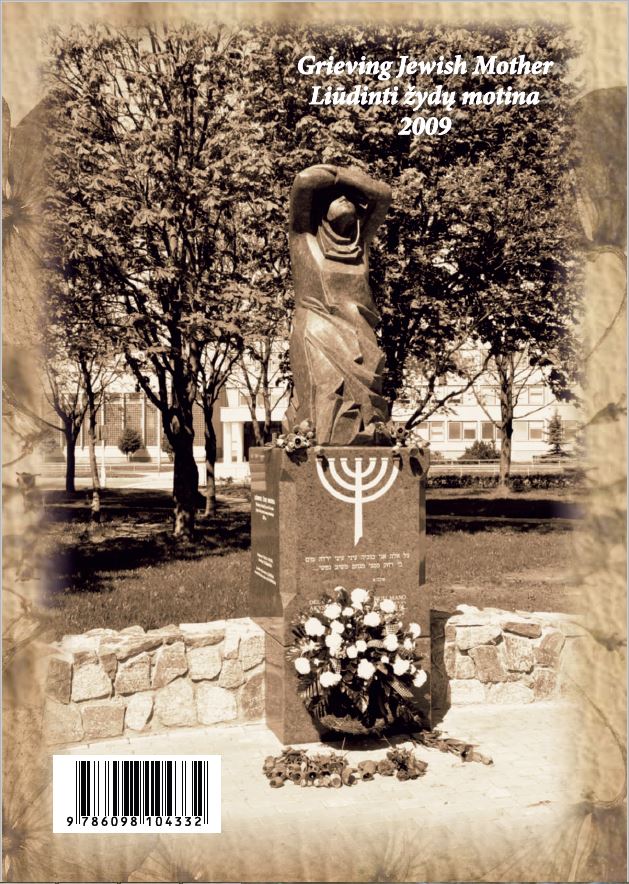
The Panevėžys (Ponevezh) Jewish Community has compiled a small book called “Nežudysi” [“You Will Not Kill Us”]. It contains information gathered from issues of the newspaper “Išlaisvintas Panevėžietis” [“Liberated Ponevezher”] published in the early years of World War II. The surviving articles allow us to reconstruct images from the tragic moments the Ponevezh Jewish community experienced at that time. A new city administration was formed in June, 1941, which was led by a commandant and the Nazis. Very quickly a so-called Jewish Quarter was established through which passed more than 13,000 Jews. The ghetto lasted 40 days. All of its inmates were murdered so quickly and efficiently that even now it is impossible to make complete lists of the victims. The book also discusses the small portion of the Jewish population which managed to escape during the first days of war. It also details Jewish property in Panevėžys and its seizure, mass murder sites and Jewish cemeteries. The chapter called “Gatvės vaiduokliai” [“Ghosts of the Street”] tells the story of Joint Street, which the new city administration renamed June 22nd Street in the desire of pleasing the Nazi occupiers. There is also much space devoted to the Righteous Gentiles of Panevėžys who risked their lives to save entire families of Jews. The last part of the book provides a list of documents and articles at Lithuanian archives and libraries awaiting scholarly attention. The text is printed on a red background symbolizing the spilling of the blood of innocents to focus the reader’s attention on the meaning of the text. A ceremony to present the new book is scheduled for January 29, 2016 in Panevėžys.
  • virselis2

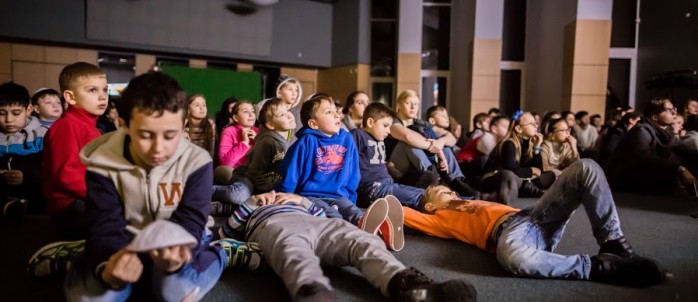
Report from the A Mehaye Winter Camp 2015

713

Pavel Guliakov, the LJC’s new director ew coordinator of youth programs, reports the A Mehaye winter camp is drawing to a close and was a wonderful success.

He said the winter camp is the largest annual youth program event with the greatest participation and requiring the most organizational work. This year a parents’ committee was called to help with organization and to draw up safety measures, rules and disciplinary measures, Guliakov reported.

A team of young but incredibly responsible and talented coordinators, counselors and professionals aided the camp leaders in their work this year. Guliakov noted there was a high level of comfort and familiarity because all of the members of the time except one (the Judaism coordinator) had themselves participated as children in Community youth programs, and besides working as camp guides were involved in all sorts of other outside activities including Jewish music and dance, art workshops and even professional cinematography.

Ukrainian President Calls on Israel to Take a Stand on Conflict with Russia


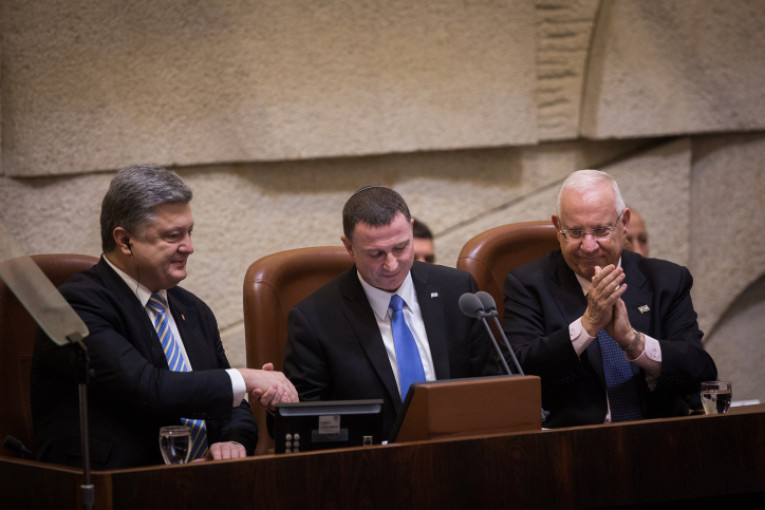
Poroshenko shakes hands with Knesset chairman Yuli Edelstein while Israeli president Reuven Rivlin claps during special session held December 23, 2015. Photo courtesy of Hadas Parush/Flash 90

“Russia supplied systems to Syria that can change the balance of power in the region,” Poroshenko warns in speech to Knesset

Israel should take a side in the Ukraine-Russia conflict, Ukrainian president Petro Poroshenko said in his address to the Israeli parliament the Knesset Wednesday.

“When evil wins in one place, it will try to continue to another,” Poroshenko warned. “We need to act in coöperation and Israeli politicians should make their stance towards Ukraine very clear.”

Poroshenko said that over the last 21 months, 9,000 Ukrainians were victims of “Russian-funded terror,” and warned that the 17,000 Jews on the Crimean Peninsula may find themselves in danger.

“The occupiers have started encouraging anti-Semitism,” he said.

Holocaust Information Exempted from EU Data Protection Measure

The International Holocaust Remembrance Alliance and the World Jewish Restitution Organization have both issued statements hailing a decision by the EU to exempt Holocaust materials from a draft regulation on data protection called the General Data Protection Regulation.

IHRA reports that although the law won’t be considered until next year, “after two years of research and analysis, IHRA had determined definitively that researchers and research organizations were already being denied access to Holocaust-related materials on the premise that the GDPR would not permit the use of these materials.”

When Czesław Miłosz Met Chiune Sugihara, Sort of

by Geoff Vasil

Czesław Miłosz is sometimes called Lithuania’s Nobel Prize winner, although he never claimed to be Lithuanian. Neither did he call himself Polish exactly. His “national identity” was as complex as that of his uncle, Oskar Miłosz, the “French symbolist poet” who was the son of a father from a noble family from the Grand Duchy of Lithuania and a Jewish mother.

Czesław Miłosz was born in the village of Šeteniai (Szetejnie) just outside Kėdainiai on June 30, 1911, a period when Lithuania was firmly inside the Russian Empire. He moved to Vilnius and attended the Sigismund Augustus Gymnasium, then studied law at Stefan Batory University (Vilnius University), visiting his uncle Oskar in Paris in 1931. Oskar Miłosz ran in exalted literary circles including some very famous names from the period. This might have influenced the younger Miłosz in helping found the Polish literary circle Żagary in Vilnius that same year. After being graduated from the law faculty he went back to Paris for a year, and then worked at Radio Wilno when he returned to Vilnius.

He spent the period right up to World War II in Vilnius before removing himself to Warsaw, where he helped rescue Jews and was eventually recognized as a Righteous Gentile as well as later becoming a winner of the Nobel Prize for Literature. He describes the period when Lithuania and Vilnius hung in geopolitical limbo in a chapter in his 1959 autobiography, Rodzinna Europa, published in English as Native Realm in 1968, called “Peace Boundary,” the name then used by both sides to describe the Molotov-Ribbentrop line under the peace agreed by Hitler and Stalin.

Sugihara Film Second Only to the New James Bond in Japan

v

Name-recognition of Lithuania’s second city Kaunas is growing like mushrooms after a heavy spring rain in far-off Japan. The Japanese premiere of the new film about the Japanese diplomat Chiune Sugihara, “Persona non Grata: The Chiune Sugihara Story,” took place in early December and has achieved huge success.

Lithuanian ambassador to Japan Egidijus Meilūnas said the film is currently being shown at over 300 theaters in Japan and is second only to the new James Bond film in terms of popularity. Brochures about Kaunas are also being provided to the public at the movie theaters and other public spaces. Japan seems to be buzzing about the film, with many television programs discussing it and broadcasting images of Lithuania and Kaunas.

“Kaunas is being advertised very heavily right now,” ambassador Meilūnas said.

Full story in Lithuanian here.

Film trailer here.

Official film site page in Japanese on Sugihara, Kaunas and Lithuania here.

Auschwitz Guard on Duty When Anne Frank Arrived to be Tried

An SS guard who was on duty when Anne Frank was brought to Auschwitz in 1944 has been found sufficiently healthy to stand trial for mass murder, the Daily Mail reports.

Hubert Zafke, 95, was examined by psychiatric doctors this week appointed by a court in Rostock and judged mentally sound to go on trial for his part in the murders of 3,681 people.

Full story here.

When Chiune Sugihara Celebrated Hanukkah in Lithuania

Hanukkah, 1939.
Kaunas.

I told him the story of how Judah Maccabee led his men into war against the powerful Greeks, who had defiled the temple, and how their tiny force defeated the much greater armies of Antiochus. Judah and his followers liberated Jerusalem, and set about rededicating the temple, but when they went to light the lamps they could find only enough oil to burn for one day. Keeping the faith, they used the one small cruse they had, and God made the oil burn for eight full days. This is how Chanukah became the festival of lights. Each evening the shammers, the one candle used to light all the others, was used to light one more candle, until on the eighth day all eight candles were burning.

The tables were laden with the best of food and drinks, including some Japanese food which [aunt] Anushka supplied from her shop. We also had veal with small roasted potatoes, roast duck in orange sauce, and many other wonderful things.

Mr. Sugihara also asked me about our family life and my hobbies. When I told him that I collected stamps, he invited me to come and visit him at the consulate. He said he would give me some stamps from Japan.

Review of Holocaust Fiction by Former Lithuanian Cultural Minister

The Lithuanian news, culture and religion website bernardinai.lt has published a review of a work of fiction by the former Lithuanian minister of culture about a Jewish child surviving the Holocaust in Lithuania.

Rimgailė Kasparaitė reviewed Saulius Šaltenis’s book “Žydų karalaitės dienoraštis,” or “Diary of a Jewish Princess,” published by Tyto alba publishers in Vilnius in 2015. The newspaper and website Lietuvos rytas provided a short synopsis of the book on their page kultura.lrytas.lt, describing it thus:

“‘Žydų karalaitės dienoraštis’ is a novel about young Jewish girl Estera Levinsonaitė’s life in Lithuania during and after the war in the family of a young couple in love. Naked and covered with blood, she crawls to the home of Vladas and Milda on their wedding night…

Lithuanian Jewish Community in Japan Times

Faina -Japonija
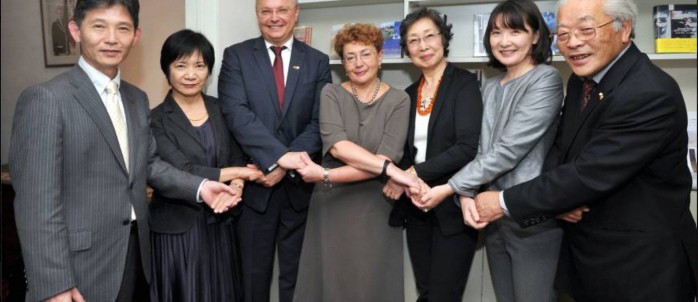
from left, vice-mayor Kazunori Nakayama, Tsuruga, Fukui Prefecture; Kazuko Shiraishi, ambassador for women, human rights and humanitarian affairs and ambassador in charge of Arctic affairs, Japanese Ministry of Foreign Affairs; Lithuanian ambassador Egidijus Meilūnas; chairwoman of the Lithuanian Jewish Community Faina Kukliansky; Michi Sugihara, executive director, Chiune Sugihara Visas for Life Foundation; Madoka Sugihara, vice-chairwoman, Chiune Sugihara Visas For Life Foundation and Shingo Akatsuka, mayor of Yaotsu, Gifu Prefecture, pose during the Chiune Sugihara event at the Lithuanian embassy in Tokyo on November 18. Photo: Yoshiaki Miura

LJC chairwoman Faina Kukliansky visited Tokyo, Japan in mid-November where she attended an event to honor the diplomat Chiune Sugihara at the Lithuanian embassy.

The large audience of Japanese were presented possibilities for cooperation in commemorating the Japanese diplomat who saved Jews during the Holocaust in Lithuania. They also learned about the cultural and intellectual legacy of the Litvaks, the Holocaust in Lithuania and the Lithuanian Jewish Community. The event created a stir and Jews who live and work in Japan participated. Chairwoman Kukliansky granted an interview to the Asahi Shimbun newspaper and their reporter showed great interest in the history of her family, their experiences during the Holocaust and impressions of Japan.

Niv Shimoni Asks LJC for Help Finding Jewish Roots in Aukštadvaris

The Lithuanian Jewish Community has received a letter from Niv Shimoni of Israel. He is interested in his Lithuanian roots which he discovered only recently. His grandfather lived in Aukštadvaris. If anyone is able to help, please contact us via the Communicate section located on the right-hand side of the webpage.

Aukštadvaris

My grandfather, Sneur Razin, was born in Aukštadvaris in 1910, a small village 50 kilometers from Vilnius. During World War II most of his family was murdered in the Holocaust. Before the war he began studies in Kaunas in order to become a pharmacist yet decided to drop everything and make aliyah to Israel. He was active in the Zionist movement which greatly influenced him and of course helped him in his decision to come and be a part of Israel. Now, more than a hundred years later, his children wanted to see where their parents came from (their mother was from Latvia). They returned from this journey filled with emotional impressions, especially because after they discovered a small and remote Jewish cemetery in Aukštadvaris, the final resting place of their grandfather. I have now decided that I, too, must see with my own eyes his resting place and to discover more about him. It is impossible to describe the feelings I would have standing next to my great-grandfather’s resting place which until only a few weeks ago I did not imagine could ever be found. I have a special connection with the city of Vilnius, its past and future and ancient Jewish heritage. It is heartbreaking to see how one of the largest Jewish communities has disappeared almost completely.

All of my big family live in a small village in the north of Israel. They are people who contribute to the State of Israel and the Zionist movement in agricultural education and security. Our grandfather always said it was important to contribute to the state as much as possible. To do more and talk less. My goal is strengthening ties among Jewish communities with the land of Israel.

http://nivshimoni.wix.com/niv-s
http://nivshimoni.wix.com/niv-s#!contact/c24vq

Panevežys Jewish Community Conference Report

p2

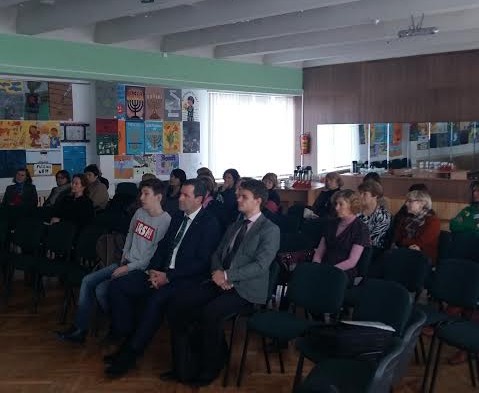
Principal Aida Adiklienė opened the conference “The History of the Holocaust: A Bridge from the Past to the Future,” financed by the Goodwill Fund and held on November 25 at the Rožynas Pre-Gymnasium in Panevežys, Lithuania. She emphasized the institution she heads supports the recognition of human rights. In consideration of that, the gymnasium constantly emphasizes local history, including local Jewish history. “It says in the Universal Charter of Human Rights that everyone is born free and equal, with intelligence and conscience,” the principal said. “When we talk about the Holocaust, we are truly talking about our own history. We need to be glad that we have addressed this topic for more than ten years now at the gymnasium.” Adiklienė said the Holocaust is one of the most complicated topics and not all schools want to deal with it. She was disappointed that even now not all people accept people of other religions and ethnicities. She said there were clear signs of intolerance at work in our society.

A Message from the Author Ellen Cassedy

This is our history, our memory

“This is our history, our memory. When one whispers the names and professions of the people who lived here, one can no longer forget.”

A project called “Vardai” (“Names”) is giving Lithuanians an opportunity to touch the nearly-vanished Jewish world, to remember, to mourn, and to connect.

Facing History in Lithuania, my article in Na’amat magazine, tells the story of how Lithuanians are engaging with Jewish heritage through educational curricula, museum exhibitions, plaques, and cultural events. These initiatives help people reflect on questions like these:

Blogger Focuses on Litvak Architecture, Cemetery Protection

photosdg

Among the 60 or so experts from more than a dozen countries at the multi-disciplinary conference on Jewish cemeteries in Europe organized by the Rothschild Foundation (Hanadiv) Europe and hosted by the Lithuanian Jewish community on October 25-28 in Vilnius, Lithuania, was Samuel Gruber. Gruber is a cultural heritage consultant who has consulted in the drafting of various documents, scientific research, conservation, exhibition and educational projects in the USA and Europe. He is an historian of architecture and an archaeologist, and an expert on Jewish artistic, architectural and historical sites. He is also a prolific blogger. His blog contains copious posts on Jewish sites, commemorative monuments and issues in Lithuania.

Some of his more recent postings include:

Lithuania: Test Excavations (2011) and Ground Radar Survey (2015) of Great Synagogue and Shulhoyf point to More Archaeology in 2016

Lithuania: The Pakruojis Jewish Cemetery as an Example Where Historic Boundaries Have been Diminished

Presentation of Book on Biržai Jews

DSCF7661sm

During a conference on November 13 to mark the 150th anniversary of the birth of Dr. Meir (reported here in earlier news items), a large book called “Žydai Lietuvos žemėlapyje. Biržai” [“Jews on the Map of Lithuania. Biržai”] was presented to the public in the Arsenal Hall of the Biržai Castle. Those who attended included Panevėžys Jewish Community members Yuri Smirnov and Tamara Antanaitienė, Panevėžys school teacher Asta Kurulytė and history teacher and head of the Rožynas school’s Tolerance center Genutė Žilytė. Israel’s ambassador to Lithuania, Amir Maimon, was invited and arrived early to look over the old Jewish cemetery in Biržai and pay his respects at the graveside of the last Jew of Biržai who recently passed away, Sheftel Melamed, and to visit the memorial for the Jews who were murdered in the Pakamponys Forest. Greeting the large audience who turned out for the event, the ambassador remembered the old proverb: “If you want to know where you’re going, you have to know whence you’ve come.”

Speaking of the Holocaust, the ambassador said the past cannot be forgotten so that it never happens again. “One of my priorities is the protection of Jewish heritage,” he also said. The ambassador managed to surprise even locals with his knowledge of Biržai Jewish history, citing prewar population figures and talking about the walks of life of local Jews.

Full story in Lithuanian and picture gallery here.

Terrorism Has No Religion? Unfortunately, It Does.

by Arkadijus Vinokuras

It’s at least 13. ISIS, the Islamic State. In 2003 it was a small, insignificant cult, but today it occupies a territory larger than the United Kingdom, rules over six million people and has an army of about 100,000 soldiers. What is ISIS’s religion? Islam. And what is the religion of the other terrorist organizations Hezbollah, Hamas, al Qaeda, the Taliban, Boko Haram and Shehab? Again, Islam.

All of these organizations taken as a whole have another 100,000 armed soldiers. Hamas rules about two million residents of Gaza. Hezbollah has become part of Lebanese society, a state within a state. Iran, a theocracy with sixty-six million residents and about one million soldiers, is the primary supporter of terrorism in the Near East. What is Iran’s religion? Islam. Not to mention the other Arab states.

Memorial Plaque in Memory of Jews of Salantai Unveiled

lenta

On November 12 a memorial plaque was unveiled on the eastern wall, facing Jerusalem, of the former Jewish synagogue, now the Salantai Cultural Center. The plaque bears the inscription “To the memory of the Jews of Salantai from the 17th to the 20th century. The synagogue was in this building, in which a ghetto operated from June to July, 1941.”

Full story in Lithuanian here.

Kristallnacht through the Years

francine-klagsbrun

Francine Klagsbrun
Special To The Jewish Week

Watching “Antique Roadshow” on PBS the other night, I was intrigued by one of the items on display. It was a doll someone had inherited, which the show’s expert evaluated at several thousand dollars in today’s market. It had been manufactured, he said, in the early 1900s by Kammer & Reinhardt, a well-known German doll-making company, in business from 1886 to 1932. It was the cutoff date that caught my attention—could this have been a Jewish company that closed down as the Nazis rose to power? The company’s logo on the doll’s back confirmed my suspicion. It showed the initials K and R separated by a Star of David. That star set my mind racing. Did the company’s owners end up wearing the proud symbol of their firm as the oppressive yellow star that marked Europe’s Jews during their darkest days?

This week we commemorated Kristallnacht, the Night of the Broken Glass, when, between November 9 and 10, 1938, Nazi thugs smashed thousands of windows in Jewish storefronts and houses all over Germany and Austria. It struck me as I contemplated, yet again, the horror of those days, how instant had been my reaction to the 1932 closing date of the German doll company, immediately assuming because of that date that the company was Jewish-owned. Those of us who were alive during the Holocaust years, even as children, will always make such associations, always filter 20th-century events through the lens of that century’s Jewish catastrophe.

And what of our children, grandchildren and great-grandchildren? It’s been said many times that as Holocaust survivors pass on, we have a greater responsibility than ever to keep their stories alive. But as the 21st century unfolds with its own stories of atrocities and desperate refugees, we also have to make sure that, while deeply sympathetic to suffering everywhere, succeeding generations of Jews understand the uniqueness of the Holocaust and its impact on all of Jewish life.

Interview with Chiune Sugihara’s Son Nobuki Sugihara

The Lithuanian version of the Economist IQ publication has published an interview with Nobuki Sugihara, the son of the famous war-time Japanese diplomat who rescued Jews from the Holocaust in Kaunas against instructions from his ministry. The youngest Sugihara son was in Lithuania partly to attend the premiere of a new film about his father called Persona Non Grata: The Chiune Sugihara Story.

Ieva Rekštytė asked him “What impression did you come away with after the premiere at the movie theater?”

Nobuki Sugihara responded: “The film was beautiful visually, the actors were good, but in no way are all the historical facts in it true. You have to realize that this is entertainment, after all, and not a film intended to expand knowledge. For example, my father wasn’t so soft and sentimental as he’s made out to have been. Further, his supposed lover Irinia plays a major part in his life in the film, but this is the first time I’ve ever heard of her. The impression is the film was created in a hurry, not even as a cinematic production, but as a television serial. I think the Japanese audience (to whom, most likely, the film is oriented) will like it, but it’s unlikely the international viewer will take an interest.

Full interview in Lithuanian here.