Holocaust

Condolences

Rolnikaite

Marija Rolnikaitė, aged 89, has died.

Born July 21, 1927 in Klaipėda/Memel, some have called her Lithuania’s Anne Frank. When she was 14 she and her family were imprisoned in the Vilnius ghetto. After that she survived two concentration camps. What was a adolescent pastime, keeping a diary, became an important testimony of the fate of Lithuanian Jewry.

She wrote a poem in Yiddish about the Strazdamuiža concentration camp in Latvia which became an anthem for the anti-Nazi resistance. After the war she worked on the staff of the Lithuanian National Philharmonic for a time and was graduated from the Maxim Gorky Institute of Literature in Moscow in 1955. She published memoirs about her time in the ghetto and concentration camps in 1963. She moved to Leningrad in 1964 where she wrote more books, articles and reviews and was an active member of the Leningrad Jewish Community.

The Lithuanian Jewish Community will not forget her or the bright trail she blazed and now leaves in her wake.

Lithuania and Germany Together Remember the Righteous among the Nations

President Dalia Grybauskaitė met with the initiators of a unique project carried out in Lithuania and Germany to support the rescuers of Jews. The project was launched at the initiative of the Order of Malta and the Lithuanian Jewish community. The aim of the project is to support people living in Lithuania who rescued Jews during the Second World War. President Dalia Grybauskaitė and German President Joachim Gauck serve as co-patrons of this initiative. “The Righteous Among the Nations attested humanity even in the very darkest hours of our history. Lithuania and Germany together remember their courage and sacrifice, we will always be grateful to the Righteous Among the Nations for their heroism and nobleness. This project unites people and countries, builds bridges between the past and the future, and does not allow indifference to prevail,” the President said.

From the web page of the Lithuanian President’s Office.

Righteous Gentiles Speak at LJC Press Conference

gelb11

Funds collected from a benefit concert in Munich organized by the Order of Malta Relief Organization will go to support Righteous Gentiles in Lithuania, of whom there are currently 87 living. The idea to help the rescuers of Jews during the Holocaust in this way came from Order of Malta ambassador to Lithuania baron Christian von Bechtolsheim and Lithuanian Jewish Community chairwoman Faina Kukliansky. “It was of great concern to us that our rescuers in their old age would get at least a little relief and be cared for,” Kukliansky said at a press conference held at the Lithuanian Jewish Community in Vilnius April 6. “There’s no such thing as being too grateful, neither can there be too much material thanks. We wanted to materialize at least a little that which we feel towards our rescuers,” she explained.

Order of Malta Relief Organization in Lithuania secretary general Eitvydas Bingelis said some of the monies generated from the benefit concert, which totaled over 123,000 euros, will be added to debit cards for the Righteous Gentiles to purchase medicine not covered by national healthcare and medical goods, with another portion held in the fund for use for the individual needs of each Righteous Gentile.

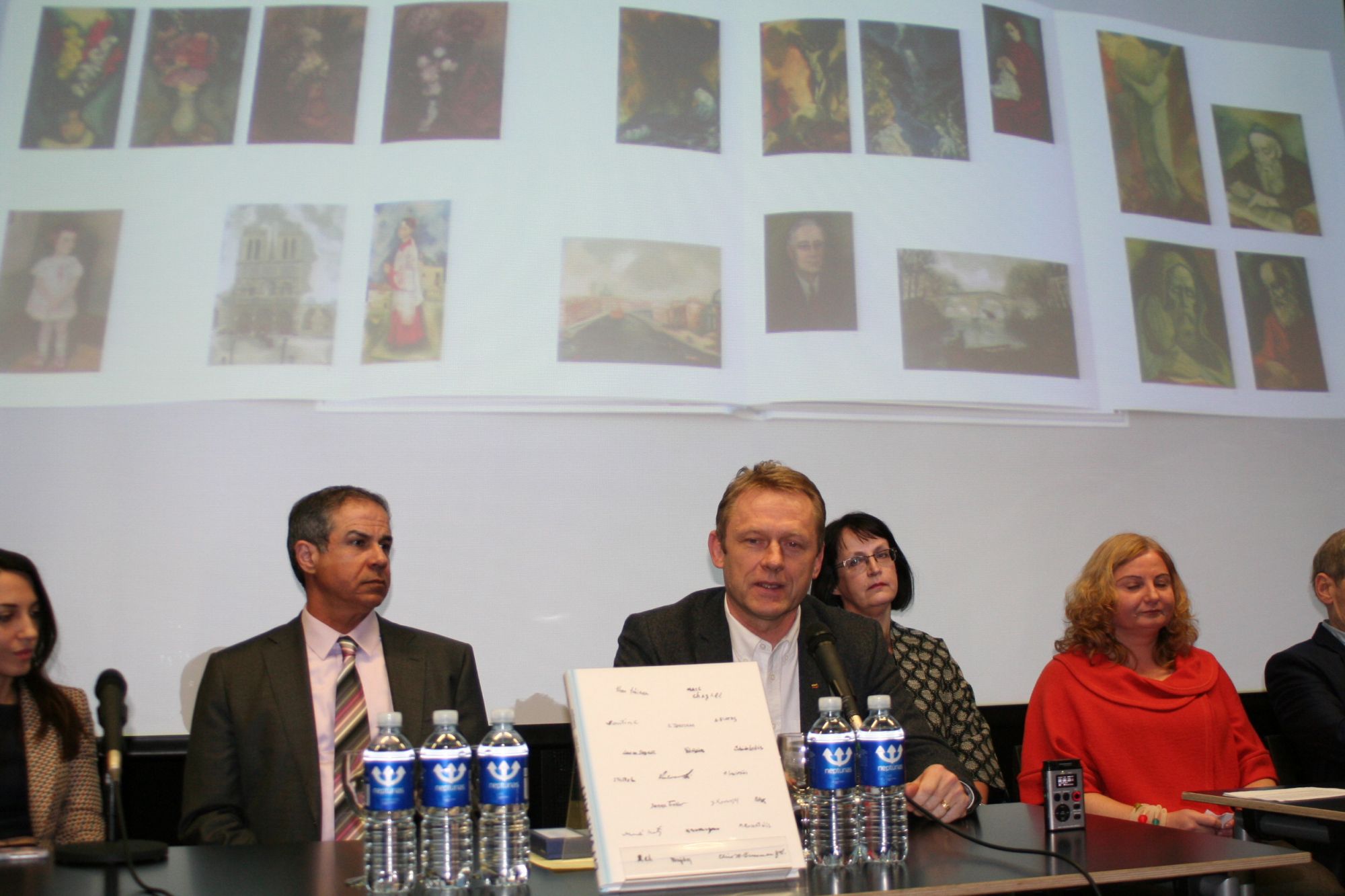
Photos from the press conference:

Report of New Righteous Gentile Awards to the Blažaitis Family

teisuoliu lenta

The Yad Vashem Holocaust Museum and Commemorative Authority has reported plans to award the title of Righteous Gentile or Righteous among the Nations to the Lithuanian family of Antanas Blažaitis, Adelė Blažaitienė and Valentina Blažaitytė for saving Jews during the Holocaust at the risk of losing their own lives. The names of the new Righteous Gentiles are to inscribed on the wall of the museum. The medals and certificates will be sent through the Israeli embassy which will host a ceremony to present the awards.

Yad Vashem report available here.

Slobodka Cemetery and Seventh Fort Mass Murder Site in Kaunas to be Cleaned Up

Viljam1

Following a meeting between the Israeli ambassador and the mayor and city council of Kaunas in early March, on the first Friday in April the Kaunas deputy mayors, municipal staff and the chairman of the Kaunas Jewish Community visited the Jewish cemetery in the Slobodka neighborhood [Vilijampolė] and the mass grave at the Seventh Fort. During this meeting in the field, it was resolved that the municipal body Kapinių priežiūra [Cemetery Maintenance] would set up an information stand at the entrance to the Slobodka cemetery and would post signs forbidding cars, smoking, walking dogs and lighting fires there.

Another resolution was adopted for the Seventh Fort mass murder site: the city maintenance department (represented by Jolanta Miliauskienė) is to clean up the site (clean flagstones and collect garbage) around the monument to the Jews murdered there. The environmental department (represented by Radeta Savickienė) is to cut down trees and bushes according to a request drafted by cultural heritage department head Saulius Rimas which includes a photograph showing what is to be cut down and with the consent of Gercas Žakas, chairman of the Kaunas Jewish Community.

Order of Malta Benefit Concert in Munich Raises 123,000 Euros for Righteous Gentiles in Lithuania

cekis
Faina Kukliansky, Christian von Bechtolsheim and Aloyzas Žukauskas

Vilnius, April 6, BNS–A benefit concert by the Lithuanian Jewish Community and the Order of Malta held in Germany has raised over 123,000 euros for Righteous Gentiles living in Lithuania.

Ambassador of the Order of Malta to Lithuania baron Christian von Bechtolsheim presented the symbolic check for the full amount to go to the Righteous Gentiles at the Lithuanian Jewish Community in Vilnius Wednesday.

“Righteous Gentiles are the true heroes of that time, they risked their own lives and those of their loved ones providing haven to people who would have been murdered by the Nazis. They hid them, fed them, provided a roof, and all of this demonstrates a human face during the darkest times in Europe,” the ambassador said.

Order of Malta to Aid Lithuania’s Righteous Gentiles

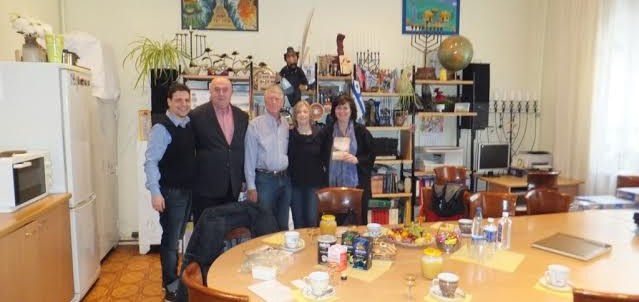
April 6, 2016–Lithuanian president Dalia Grybauskaitė met Wednesday with Righteous Gentiles, or people who rescued Jews during World War II in Lithuania. The ambassadors of the Order of Malta, Germany and Israel and the leaders of the Order of Malta Relief Organization and the Lithuanian Jewish Community attended the meeting.

During friendly conversation over tea, the outstanding achievements of these brave Lithuanians were remembered and thoughts were shared on their problems, concerns and the help they need. The Order of Malta project to aid Righteous Gentiles in Lithuania was presented. All Righteous Gentiles still living in Lithuania are quite elderly and many of them live in isolation and need help.

A benefit concert was held in Munich to raise money for the Righteous Gentiles in Lithuania. More than 123,000 euros were raised for this purpose from that concert.

Baron Christian von Bechtolsheim, the ambassador of the Order of Malta to Lithuania, said: “The Maltese in Lithuania take care of many ill, elderly and isolated people. But Righteous Gentiles are special. These noble and courageous people were not afraid and risked their own lives to rescue their neighbors and countrymen from death. Now it’s our turn to help them.”

More about the Righteous Gentiles Project with the Order of Malta

The countries of Europe was exhausted by bloody battles during World War II, but the Jewish people suffered especially and were murdered merely for being Jewish. They were murdered in all countries occupied by the Nazis including Lithuania. In Lithuania the Jewish communities were strong and maintained a strong cultural identity, and the country was referred to as the Jerusalem of the North sometimes, but even so, more than 95% of all Jews were murdered here during World War II, and out of approximately 250,000 only 5,000 survived.

In those dark days of chaos, violence and mass murder, however, some very brave, noble and resolved Lithuanians stepped forward to oppose what was happening around them, and sought ways to save at least a few lives of their fellow citizens. Rescuers of Jews risked their own lives and those of their families, and many were killed and sent to concentration camps. The title Righteous among the Nations, or simply Righteous Gentile, is awarded by the state of Israel to those who saved Jews. Currently a little under 100 people who have received this award live in Lithuania, and all of them are quite old. Many of them are living in poverty and suffering from illness. The morality and sacrifice it takes to save an innocent child, elderly person, a man or a woman, your own neighbor from the jaws of death is no less an heroic act than fighting for the freedom of your country. Wanting to help these heroic people, the ambassador of the Order of Malta to Lithuania, baron Christian von Bechtolsheim, launched an initiative and on November 2, 2015, a benefit concert was held in Munich, Germany. The conductor was world-renowned Enoch zu Guttenberg. Patrons included president of Lithuania Dalia Grybauskaitė and German president Joachim Gauck. The benefit was quite successful and raised more than 125,000 euros. These monies will be used for the welfare and benefit of Righteous Gentiles, many of whom are isolated, poor and in need.

Lithuanian President Meets with LCJ, Maltese Charitable Organization Head to Discuss Aid to Righteous Gentiles

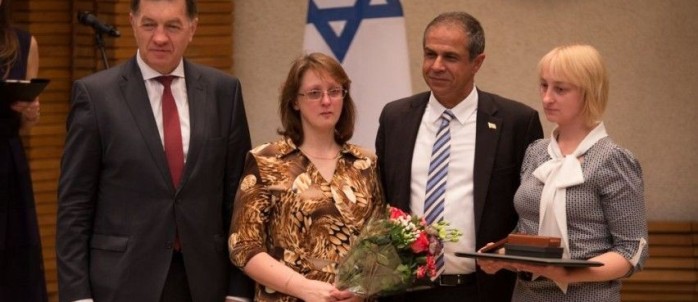
gelbetojai1
April 6, 2016

Wednesday, April 6, Vilnius. President of the Republic of Lithuania Dalia Grybauskaitė met with the initiators of a unique project to aid rescuers of Jews during the Holocaust in Lithuania and Germany. The unusual project for Lithuanian Jewish rescuers carried out in two countries was the initiative of the Order of Malta and the Lithuanian Jewish Community.

The goal of the project was to help people living in Lithuania who saved Jews during World War II. Lithuanian president Dalia Grybauskaitė and German Federal Republic president Joachim Glauck supported the initiative.

“Even during the darkest hours of our history, Righteous Gentiles demonstrated humanity. Lithuania and Germany together remember their bravery and sacrifice, and we will always be grateful for the heroism and nobility of the Righteous Gentiles. This project brings together people and countries and forms a bridge between the past and the future, denying victory to apathy,” the president of Lithuania said.

Lithuanian Psychologist: Three Years Ago I Believed the Double Genocide Theory

rb
Rasa Bieliauskaitė, photo: Ugnius Babinskas

Three Years Ago I Believed the Double Genocide Theory
by Geoff Vasil

So said Rasa Bieliauskaitė, a psychologist specializing in trauma therapy, at what was, for Lithuania, a remarkable meeting of the minds recently.

The Vilnius Jewish Public Library hosted a panel discussion featuring historians and psychologists on the topic of the Holocaust and collective memory.

In their introductory statements several of the speakers, including Bieliauskaitė, mentioned Rūta Vanagaitė’s new book about the Lithuanian Holocaust, and the unexpected popularity of that book became the backdrop for much of the conversation which lasted several hours and which became a much larger discussion when distinguished members of the audience chimed in towards the end.

Kaunas Jewish Community Marks 72nd Anniversary of Children’s Aktion

vaikuakcija4

On March 25, 2016, members of the Kaunas Jewish Community marked the 72nd anniversary of the Children’s Aktion (mass murder operation) in the Kaunas ghetto. The operation to kill all the children living in the ghetto and the elderly unfit for use as labor resulted in the murder of about 1,700 people. Children under 12 were torn from their mothers’ arms, thrown in trucks and driven away to be murdered. Other parents came back from forced labor to find their children missing. Tobijas Jafetas has spoken about his own rescue many times before, and this year was joined by Kaunas ghetto inmate Juozas Vocelka.

Old Prescriptions from the Interwar Period Recall the Kukliansky Pharmacy in Veisiejai

Receptas2

Danutė Selčinskaja, director of the Rescuers and Commemoration Department of the Vilna Gaon State Jewish Museum, has sent us an image of a new item worthy of display at a museum: prescriptions from the Kukliansky Pharmacy which operated in the period between the wars. This pharmacy, the only one in Veisiejai, Lithuania, operated right up until the Holocaust. The pharmacists managed to escape and were rescued by people from Sventijanskas. At the present time there is a Veisiejai Regional History Museum operating in Veisiejai. Museum director Regina Kaveckienė scanned two new items, prescriptions, which were brought to the museum by a relative of an elderly female pharmacist from the town who is no longer alive.

Danutė Selčinskaja sent the regional history museum the Vilna Gaon museum’s mobile exhibit “The Rescued Child Tells the Story…” which she created. This includes a film about the rescue of the Kukliansky family. The regional history museum shows the film to students every year. A young woman from the Kapčiamiestis School Museum who lives with her parents in Sventijanskas said everyone there had already seen the film, which is being passed around as a DVD from person to person, and it has caused a great deal of excitement there. The people understand what happened and recognize the people and places portrayed in the film.

When Will Our Mayors Take Down Monuments to Holocaust Perpetrators?

lr
Marius Lukošiūnas

More than 25 years ago I spoke on C-SPAN about the pogrom the Soviet troops had prepared after the 1991 putsch before quitting the Lithuanian Television and Radio building.

Live, I explained to Americans our path to independence and showed images and montages of our ravaged television studios. Studio guests and callers were angered by this pogrom.

Just as the show was ending, an elderly woman called and asked why the Lithuanian government was rehabilitating Holocaust perpetrators. I replied I believed that was a mistake which would be corrected. I assured her they would receive neither forgiveness nor honor in independent Lithuania.

Full story in Lithuanian here.

Lithuanian Conservative/Christian Democratic Party Member on Trial for Anti-Semitic Remarks

Teismas-Kofmanas-Pankevicius-10-virsus

The news website sekunde.lt reports Raimundas Pankevičius, leader of the Panevėžys faction of Political Prisoners and Exiles and a member of the Lithuanian Conservatives/Christian Democratic Party, has gone on trial for anti-Semitic remarks made during a meeting of the Panevėžys city council. The right-wing politician is accused of public statements to the effect Jews shot Jews during World War II in Lithuania.

As a member of the city council, Pankevičius is alleged during deliberations on the erection of a monument to commemorate the Joint Distribution Committee’s work there in September of 2014 of having denied Nazi crimes against the Jewish people by saying Lithuanian Holocaust victims killed each other and that the Jewish police in the ghettos in Lithuania sent thousands of their fellow Jews to their deaths in a single day.

That meeting of the city council apparently adopted unanimously a decision to erect a stele to commemorate the 100th anniversary of the Joint. Pankevičius, however, also said he didn’t see any evidence of the Joint’s work and suspected elements of fraud in the story. He said Jewish SS shot 5,000 Jews in southwestern Lithuania in one day during World War II.

Psychologist Explains Why Lithuanians Can’t Mourn Holocaust Victims

The Vilnius Jewish Public Library hosted a roundtable discussion called “The Psychological Problem of Integrating the Holocaust into the Collective Memory of the People of Lithuania” March 22.

“In childhood we ran around there, no one said even a single word about synagogues or where they were. They evaporated, and all of a sudden you realize that, as in the world of Harry Potter, something exists in parallel, but you don’t know what it is. It’s as if that world hadn’t existed, and there’s no one you can ask about it,” psychoanalyst Tomas Kajokas said. Dr. Kajokas says people don’t understand Jews are part of our society. The question of identification is extremely important, but, according to classical psychoanalysis, it can only be formed when you have lost and understand what it is you have lost. If you have nothing to lose, then in effect you cannot identify with those who have.

“Currently we are unable to identify with Jews exactly for this reason, that we don’t really comprehend the scale of loss,” Kajokas offered. He said Lithuanians will only be able to deal with the topic of the Holocaust when they are able to accept honestly their Soviet past.

Article in Lithuanian here.

Stay tuned to lzb.lt for fuller coverage of this discussion.

German Activist Visits Kaunas Jewish Community to Talk about Karl Jäger

Kaubendr1

A German man named Jürgen Dettling, described on facebook as the initiator of various social projects and public education programs, visited the Kaunas Jewish Community recently. He said he is currently involved in a project concerning Karl Jäger, the author of the infamous Jäger Report and mass murderer of Lithuanian Jews. He took photographs of mass murder sites in Lithuania and spoke with Holocaust survivors. He said he is planning a return trip in April and hopes to interview survivors for a film about the mass murderer. Jäger was commander of the SD Einsatzkommando 3a in Kaunas during World War II, which included command over the Rollkommando Hamann mobile death squad. He was captured after the war and hung himself in jail in 1959.

Lithuania to Investigate Jewish Treasures Stolen by Nazis

March 23, BNS–Investigation into cultural treasures the Nazis stole from Jews in Lithuania has begun, the newspaper Lietuvos žinios reports.

Last week a meeting of the International Commission for Assessing the Crimes of the Nazi and Soviet Occupational Regimes in Lithuania reached agreement on conducting several large studies, commission chairman Emanuelis Zingeris confirmed. He said the Rosenberg task force drew up lists of rare and valuable items held by Jewish organizations, libraries and museums before the war even started. “So we’re asking for additional research, which is being performed by researchers in Lithuania and abroad. I believe we will approach the German Government on with a request for clarification, because there shouldn’t be any lingering doubts regarding this,” Zingeris said.

He also spoke about the items listed in the book “Lietuvos inkunabulai” [Incunabula of Lithuania] by Nojus Feigelmanas from the Strashun library in Vilnius. “There are clear indications there were four incunabula in this library in Hebrew which the Germans took. The incunabula were printed in an Italian city in 1475. They are priceless,” Zingeris commented. His commission’s work was resumed by presidential decree in the fall of 2012. After a break of eight years, the renewed commission met again in 2013. As reported at that time, the commission only discussed technical and financial issues at that meeting. The chairman said the subcommittee investigating crimes of the Soviet occupational regime would meet in early summer this year.

BNS_logotipas

Poland Wrestles with Nation’s Role in Holocaust, Opens Museum Dedicated to Rescuers

Ulma atminimui

Poland’s president talks about anti-Semitism as not only a demonstration of hatred towards Jews, but also as disrespectful to the memory of those who risked their lives to save Jews during the Holocaust.

Poland’s president spoke of anti-Semitism as not only hateful to Jews, but also disrespectful to the memory of those who risked their lives to save them. Amid a public debate about Poland’s Holocaust-era record (as in Lithuania), the country’s president attended the opening of a museum for non-Jews who saved Jews during the genocide.

At a ceremony attended by approximately 2,000 people Thursday, Andrzej Duda spoke of anti-Semitism as not only hateful to Jews, but also disrespectful to the memory of those who risked their lives to save them. Those who “sow hatred between people, sow and foment anti-Semitism, at the same time trample upon the grave of the Ulma family,” he said of the family who gave the new museum in the southeastern town of Markowa its name: the Ulma Family Museum of Poles Who Saved Jews. On March 24, 1944, German police murdered eight Jews and several people who hid them: Jozef Ulma, his pregnant wife and their six children. The Ulmas were recognized in 1995 as Righteous among the Nations for their actions by Yad Vashem, Israel’s Holocaust museum.

Ulma šeima
Righteous Gentiles Jozef and Wiktoria Ulma

The Markowa museum’s opening is one of several new government initiatives to commemorate the Righteous, including plans and funding for a monument to be located next to the All Saints Church on Warsaw’s Grzybowski Square. Another monument, which is controversial for its location, is planned near the Museum of the History of Polish Jews at what used to be the Warsaw Ghetto. The Polish government allocated this year $53,000 for building a chapel in Torun near Bydgoszcz in central Poland dedicated to the Righteous.

At the same time, Poland’s rightist government, elected in 2014, has courted controversy by taking steps which are seen as inhibitive for confronting the actions of Poles who participated in the murder of Jews during the Holocaust.

President Duda in January requested a re-evaluation of the Knight’s Cross of the Order of Merit medal, which was given in 1996 to Jan Gross, author of the controversial 2001 book “Neighbors” about the 1941 pogrom perpetrated against Jews by their non-Jewish countrymen in the town of Jedwabne.

Full story here.

jpost

Post-War Vilnius: Legless Beggars, Bread Lines and Accusations of Murdering Christ

SamYosman

Mažoji leidykla publishing house, 2016

I am a post-war child. I was born in Vilnius October 8, 1946. I remember my life from about the age of four. Lithuanians, Jews (including Jews from the ghetto), Poles and Russians, we lived in an old building at the intersection of K. Giedrio and J. Garelio streets (now Šv. Ignoto and Dominikonų streets). Above us there lived Mr. Valteris, a former translator for the Gestapo. No one spoke to him about that, but everyone knew he had collaborated with the Germans.

For those living behind the iron curtain, for BBC radio listeners, Sam Yossman, who did the popular program Babushkin Sunduk (Grandmother’s Chest) and Perekati Pole (Tumbleweed), was better known by the pseudonym Sam Jones. Born and raised in Soviet Lithuania, Yossman decided after many years to record his memories in the book “Šaltojo karo samdinys” (Cold War Hired Hand).

Read more in Lithuanian here.

Prosecutor Responds to LJC Request to Investigate Priest Jonas Žvinys and Bronius Žvinys

March 10, 2016 No. 46

Office of Prosecutor General
Republic of Lithuania

March 8, 2016 No. 17.2. -3073
re: February 29, 2016 No. 190

To: Faina Kukliansky, attorney, chairwoman,
Lithuanian Jewish Community

Pylimo street no. 4
01117 Vilnius

cc:

Teresė Birutė Burauskaitė, general director
Center for the Study of the Genocide and Resistance of the Residents of Lithuania

Didžioji street no. 17/1
01128 Vilnius

On Assessing the Basis for the Rehabilitation of the Priest Jonas Žvinys and on the De-Rehabilitation of Bronius Žvinys

Upon examination of a request sent by the Lithuanian Jewish Community to assess the actions of the priest Jonas Žvinys and Bronius Žvinys and received at the Office of Prosecutor General, and having examined according to our competency that part of the request demanding the Prosecutor General, in light of conclusions and material supplied by the Center for the Study of the Genocide and Resistance of the Residents of Lithuania (hereafter CSGRRL), investigate whether the Supreme Court of Lithuania justly rehabilitated Jonas Žvinys, we respond to the applicant by explaining that such a demand can only be undertaken after the CSGRRL performs archival research on the general assertions (without any factual information) made in the request and provides its conclusion to the Office of Prosecutor General. The Prosecutor General has no information about the repression of, the reasons for the repression of or the restoration of civil rights (rehabilitation) of Jonas Žvinys.