
Holocaust

Jews: Lithuania’s Misfortune

moletaikids1
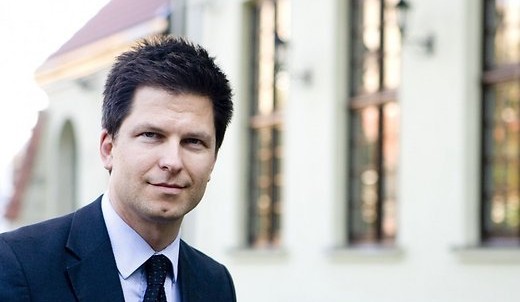
by Marius Ivaškevičius

It appears we can finally say exactly what all those who today speak publicly about the mass murder of Jews in Lithuania are truly seeking. Either they are doing PR for themselves through this, advertising themselves, because this is trendy in Europe, or their activities are being financed by the Jews themselves.

All of those shocking details, talk about smashing the heads of Jewish infants on trees to save bullets, is nothing other than the scratching of still unhealed wounds with dirty, dilettante fingers.

In this manner the attempt is made to traumatize yet another generation of Lithuanians, our children born in a free Lithuania, because these sorts of actions, instead of inviting repentance or at least sorrow, actually create even greater hatred of Jews, because this is how the natural defensive reaction of the nation operates. Every nation is different, so Germany’s experience doesn’t fit our situation, that is, healing and finally recovering by demonstrating and revealing through education and openness the brutality of the Nazi concentration camps. All that took place in the period after the war, when events were still vivid, but today the murderers and the witnesses have all but died off, so Lithuania must blaze her own trail. It’s not for no reason at all that our intellectuals, chroniclers and commentators say: don’t do it, don’t pick at that wound with your fingers, let it first heal, let it be forgotten. Sometimes forgetfulness is more worthwhile than remembering.

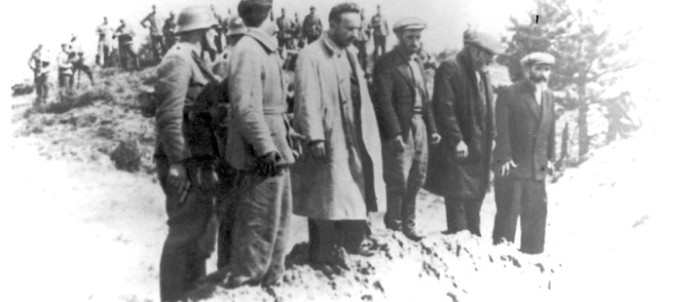
I am from Molėtai. A small town of extraordinary beauty with three lakes inside the town and another three hundred in the surrounding area. There’s no need to say much, everyone knows Molėtai, Lithuanian vacationers’ paradise. During the war, or more precisely, during one day in the summer of 1941, two thousand Jews were shot there. In other words, eighty percent of the population of Molėtai. More than two-thirds of the town’s residents vanished over the course of a few hours and were buried in a mass grave. German Nazis were in command of the massacre. Local Lithuanians did the shooting. These are the cold, hard facts and numbers.

YIVO Awarded $260,000 by NEH

YIVO Receives $260,000 Grant from the National Endowment for the Humanities
May 16, 2016

New York, NY – The YIVO Institute for Jewish Research (YIVO) is pleased to announce that is a recipient of a major grant from the National Endowment for the Humanities (NEH) for the Vilna Collections Project, a seven-year initiative to preserve, digitize and virtually reunite YIVO’s prewar archives and library located in New York City and Vilnius, Lithuania, through a dedicated web portal.

The NEH’s Division of Preservation and Access has awarded $260,000 over two years for the processing, conservation and digitization of rare archival documents rescued from the destruction of the Holocaust. The materials, looted by the Nazis and recovered with the help of the U.S. Army, were brought to New York in the late 1940s. They are a diverse resource on Jewish life, community and culture in Europe. They span the range from handwritten autobiographies by Jewish youth and humble folktales and folk songs to the archives of scholars, such as that of Simon Dubnow, known as the father of Russian Jewish history. They include photographs, Yiddish theater and political posters and the administrative records of Yiddish and Hebrew schools and yeshivas.

As City University of New York historian Jack Jacobs noted in a letter of support for YIVO’s application to the NEH, “It is simply impossible to write a dissertation or do any serious research project related to Eastern European Jewry without consulting the YIVO materials.”

Full story here.

Litvaks Visit Panevėžys

Psvec2

Gilla Back from Melbourne and Leanne Cohen and her daughter from Johannesburg visited the Panevėžys Jewish Community and toured the city recently to learn more about the land whence their ancestors came.

They examined displays of photographs at the community and talked about their ancestors who lived in the city. Cohen’s antecedents emigrated to South Africa in 1900. They signed the guest book and said it had been a real privilege to walk the streets and breath the air in the city, although the Ponevezh of their relatives no longer exists.

Psvec1

Lithuania to Grant 30,000 Euros to Vilnius YIVO Project in 2017

maxw

The Lithuanian Ministry of Culture plans to allocate 30,000 euros in 2017 for the Vilnius YIVO project.

The Vilnius YIVO project is a seven-year endeavor to preserve, digitize and join together virtually two pre-war YIVO collections in New York and Vilnius. The project will also attempt to recreate digitally the Strashun library, one of the largest collections of judaica in pre-war Europe. YIVO, the Lithuanian Central State Archives and the Lithuanian Martynas Mažvydas National Library are partners in the project.

The project covers approximately 10,000 rare and unique books and publications and around 1.5 million documents. Material includes literary works, correspondence, memoirs, theater posters, photography, rare books, brochures, newspapers, political pamphlets and documentation of religious and communal activities.

lrkm.lrv.lt

LJC Chairwoman Speaks on Lithuanian National Radio about Citizenship for Litvaks

MILDAR-0065web

Lithuanian Jewish Community chairwoman Faina Kukliansky was one of three distinguished guests on the late morning Aktualiju studijas [News Studio] program on Lithuanian radio May 12.

“This question keeps bothering me: when did the institution of citizenship, when did that institution stop, when was it interrupted? Was it when the person was imprisoned in the ghetto? When he was transported to the concentration camp? Nobody saved those passports anywhere. You see this is such an inhumane, such an unintelligent step when you look to the future. But as the chairwoman of the Lithuanian Jewish Community I would like to say, that Litvaks are welcome in our community, with or without a passport, and we would be very proud if our Lithuanian Jewish Community grew thanks to those people who left Lithuania. So we gladly invite and welcome them without regard to their political status,” Faina Kukliansky said during the discussion.

The main topic for the show as “Why don’t we want to grant citizenship to Litvaks?” The introductory blurb for the show was: “Lithuanian Jews–Litvaks–are not just people who have achieved great things in the world, they contributed greatly to the strengthening of the Lithuanian state as well. They sought Lithuanian independence and they fought in the battles for independence [in 1918-1919]. Unfortunately, almost all of them were murdered during World War II. Only a small portion survived. Today some Lithuanian bureaucrats don’t want to grant citizenship to the small group of Jews who want it. Why not?”

The other two guests were former Lithuanian prime minister, current deputy parliamentary speaker MP Gediminas Kirkilas and the historian Alvydas Nikžentaitis.

The audience was invited to call in and pose questions.

Murder of French Jews at Ninth Fort in Kaunas Remembered

Prancuzai1
Monument to Holocaust victims, Ninth Fort, Kaunas, Lithuania

A commemoration of the French Jews murdered at the Ninth Fort in Kaunas, Lithuania, took place May 10 at the Ninth Fort Museum. On May 15, 1944, convoy 73 from the Drancy concentration camp in Paris carried off 878 Jews to the Baltic states. Most were taken off the train and shot at the Ninth Fort in Kaunas. Others were transported to a camp in Pravieniškės near Kaunas and then to camps in Estonia. Members of the Association of Families and Friends of the Deportees of Convoy 73 have been coming to Lithuania semi-annually to honor the memory of their murdered loved ones.

Members of the Kaunas Jewish Community attend these commemorations at the Ninth Fort in Kaunas. Close relations between the association and the community have been on-going for more than 10 years now, with informal meetings outside of the official functions as well. Family members who lost loved ones in the transports from France to Lithuania have also forged ties with staff at the Vilna Gaon State Jewish Museum who have sought to furnish more information on the fates of specific train cars. The Kaunas Ninth Fort Museum has a separate exhibit dedicated specifically to the French prisoners murdered there, including French graffiti still extant on cell walls. In addition, the Nazis sent transports of Jews from Austria and Germany to be murdered at the Ninth Fort.

Ten Years of Cooperation

It’s been 10 years now since the Panevėžys Jewish Community and the Rožynas Pre-Gymnasium first began carrying out joint projects to encourage tolerance, education and friendship between the peoples who call Panevėžys home. This time the project was about Holocaust commemoration in the Panevėžys region. It’s called “A Bridge between Past and Present.” The project is financed by the Goodwill Fund. Around 200 students from the upper classes participated and learned about the history of the Holocaust. The Panevėžys Jewish Community shared information with Rožynas Pre-Gymnasium pupils and administrators, history teacher Genutė Žilytė and pre-gymnasium principal Aida Adiklienė and provided the information the Panevėžys Jewish Community possesses about the Holocaust in the city and region of Panevėžys.

Commemorating Sister Marija Rusteikaitė in Panevėžys

Rusteikaite2

A project to commemorate sister Marija Rusteikaitė was discussed with mother superior and general director Jūratė Marcinkevičiūtė and sister S. Klara–Hana Bivil of the God’s Love Monastery at the Panevėžys Jewish Community. The project to commemorate Rusteikaitė in Panevėžys and to teach city residents about her remarkable story in the rescue of 15 Jewish children during the Holocaust was prepared by the Panevėžys Jewish Community and presented to the city’s Architecture and Urban Planning Department.

The goal of the project is to commemorate Righteous Gentile Marija Rusteikaitė (1892-1949), the founder of the God’s Love congregation, by naming a new street after her and posting a memorial sign at the start of the street briefly describing her noble deeds.

Marija Rusteikaitė was an intellectual person, a social activist, a medic, a teacher and a nun who was very important to the city and area of Panevėžys. She grew up in the family of estate owners Stanislovas and Jadvyga, a family of nine children, four sons and five daughters. Marija was the third child. Her mother Jadvyga was dedicated to charity work, her children and homemaking. Both parents were extremely loving towards their children and guided their education, belief in God and moral development. The people of Vaiguva who knew her say her charisma was something akin to that of Mother Teresa in Calcutta. She spent her nights sitting up with sick patients, quietly praying.

Plans to Amend Lithuanian Citizenship Law for Litvaks

As the Lithuanian Migration Department and the courts issue rejections on applications for Lithuanian citizenship by Litvaks, parliamentarians are preparing to amend the Lithuanian law on citizenship, even though, they say, the current law provides for granting citizenship to the aforementioned people.

The Lithuanian parliament’s European Affairs Committee met Wednesday and decided to form a working group to prepare the amendment to the law.

Conservative opposition leader Andrius Kubilius proposed expanding the existing definition in the law on who should be considered a person who left Lithuania before March 11, 1990.

A Difficult Trip

by Linas Vildžiūnas

Rūta Vanagaitė’s [book] “Mūsiškiai” [“Our Own”] differs from other books about the Holocaust in Lithuania in that it was conceived and written as a best seller. As an appeal by the popular author who has a good understanding of public relations to the contemporary Lithuanian public, posing to them the most painful and urgent–although deeply repressed in the subconscious–problem of historical responsibility. The author doesn’t try to make it impersonal (and it would probably be impossible to do so anyway, because the issue involves personal attitudes and personal responsibility), and even sharpens the edges, using a macabre black humor, and also has a certain aplomb and a sense of heralding progress. The latter can be annoying, but the author has sufficient basis to do so. All of this could be perceived as an additional measure to create an effect in aiming for the top ten (or straight for the jugular), and her aim is true because it reached its mark.

Panevėžys Jewish Community Marks Victory Day

PPergales d 2

The Panevėžys Jewish Community marked Victory Day on May 8 and 9. On May 8 members laid wreaths at a monument to Jews murdered in the Holocaust. Candles were lit and honor was paid to the dead, both in the city and in Europe at large, to those who were murdered during World War II at mass murder sites in Panevėžys and more than 200 other mass murder sites around Lithuania. Almost no Jewish eyewitnesses survived in Panevėžys.

Israel at 68

iid

by David Harris
May 9, 2016

Israel celebrates its 68th Day of Independence this week. Let me put my cards on the table. I’m not dispassionate when it comes to Israel. Quite the contrary.

The establishment of the state in 1948; the fulfillment of its envisioned role as home and haven for Jews from around the world; its wholehearted embrace of democracy and the rule of law; and its impressive scientific, cultural, and economic achievements are accomplishments beyond my wildest imagination.

For centuries, Jews around the world prayed for a return to Zion. We are the lucky ones who have seen those prayers answered. I am grateful to witness this most extraordinary period in Jewish history and Jewish sovereignty–in the words of Israel’s national anthem, “to be a free
people in our land, the land of Zion and Jerusalem.”

Families of French Jews Murdered in Lithuania Pay Respects in Kaunas

KAUNAS, Lithuania, May 10, BNS–Families of Jews who were brought to Lithuania from France in the years of the Holocaust honored the memory of the victims at the Kaunas Ninth Fort in Lithuania Tuesday.

Over 800 strong and capable Jews were brought to Lithuania from France in May of 1944. They were told they would have to work but some were murdered in Kaunas and the rest were taken to Estonia.

Families of the victims usually come to Lithuania once every two years.

Kaunas Jewish Community Honors World War II Veterans

KauVeteranai17

The Kaunas Jewish Community includes two World War II veterans among its members, Liubov Jablonovič and Petras Zakroiskis. Age and infirmity doesn’t allow them to leave the house and they were unable to attend the celebration luncheon the Kaunas Jewish Community hosted for its members, including widows, children and grandchildren of veterans. A moment of silence was held to honor the memory of the dead.

Participants shared stories about experiences by their family members during and after the war. The stories included painful as well as funny incidents. Kaunas Jewish Community member Leonidas Levinas warmed the audience’s hearts with songs from the war era by Vladimir Vysotsky. The audience joined in and sang along.

Guests from Belarus Visit Panevėžys Jewish Community

THAI

A jazz group from the city of Bobruisk (Babruysk), Belarus visited the Panevėžys Jewish Community. The members of the band are Jews and Belarusians who teach at the Children’s Music School in Bobruisk. They formed their own group called Thia. Over tea Panevėžys Jewish Community chairman Gennady Kofman told them about the city of Panevėžys and the history of the Jews living there. The guests were very interested in city industry, what enterprises operate there and the economic situation. They spoke about the economic conditions in Belarus and discussed migration problems. Bobruisk is famous for its marshmallow-like candies which the guests said have a special flavor. They were impressed by Panevėžys, how clean and orderly it was and with such a nice natural environment. They were interested in local Jewish affairs. Their first stop upon arriving in the city was the Jewish Community. Jewish Community members Yefim Grafman and Mikhail Grafman also shared their memories of the former Jewish population with the guests. The guests spoke about the Jewish communities operating in their city and about the close cooperation and friendship between them.

Plans to Commemorate Zwartendijk in Kaunas

Jan Zwartendijk

BNS reports on plans to commemorate Holocaust-era Dutch consul in Kaunas Jan Zwartendijk, who issued end-visas to complement the “visas for life” transit visas Japanese diplomat Chiune Sugihara issued to Jews, saving thousands of lives.

Speaking to BNS, Dutch ambassador to Lithuania Bert van der Lingen said Sugihara was well known in Lithuania, while Zwartendijk was not.

In truth, both men worked together to save Jews trying to flee the Nazis in Soviet Lithuania. Sugihara issued visas for transiting Japan, thus allowing many to cross the USSR, but without a final destination visa, many weren’t allowed to even begin their journeys. Zwartendijk issued end-point visas for Curaçao, a Dutch territory in the Caribbean, but one which required no entry visa in any event. While there is no evidence Zwartendijk met with Sugihara–although van der Lingen says they did speak by telephone–both diplomats were aware of one another and knew exactly what they were doing.

Greetings to Our Veterans on Victory Day!

A group of women wearing dresses representing flags of the Allied powers (left to right: the USA, France, Britain and the Soviet Union) outside the Eglise de la Madeleine on VE Day in Paris, 8th May 1945. (Photo by Keystone/Hulton Archive/Getty Images)

Lithuanian Jewish Community chairwoman sends her greetings to members of the community on Victory Day, celebrated as Victory in Europe or VE Day in America and Europe on May 8.

I am grateful for the opportunity to honor our veterans and bow my head before them on this day. I wish you, dear friends, good health. You will not forget your heroism, the spiritual and physical suffering, the wounds and losses you experienced. The Community will take care of you to the utmost of its ability. We appreciate and are proud of you, and for living Jews, Victory Day, the victory against the Nazis, means they were rescued from concentration camps, Naziism was defeated, they survived and the shadow of death withdrew. Happy Victory Day, dear veterans, I congratulate you all!

Come Celebrate Victory Day!

The Lithuanian Jewish Community, the Social Center and the Abi Men Zet Zich Club wish you a happy Victory Day, also known as VE Day in the West, and invite you to come out and honor our veterans of World War II at a ceremony to be held at 3:00 P.M. on Tuesday, May 10, 2016 at the Lithuanian Jewish Community in Vilnius.

For further information please contact Žana Skudovičienė at 8 678 81514

Righteous Gentile Awards Ceremony Held at Lithuanian Government

Vyriausybeje apdovanoj

A ceremony to award the title of Righteous Gentile was held in Lithuania’s Government House May 5. The award recognizes those who saved Jews from the Nazis during the Holocaust.

Prime minister Algirdas Butkevičius said at the event the tragedy of the Holocaust 75 years ago took the lives of hundreds of thousands of Lithuanian citizens, our friends, neighbors and loved ones. The numbers would have been even higher if not for those who found the courage at the darkest moments to remain human, Butkevičius said.

“Righteous Gentiles are the real heroes. They risked their own lives and those of their families to provide shelter to people who would been murdered. They disregarded their own situation and paid no heed to reputation, they were led by the voice of the heart. They helped the victims hide, fed them, gave them a roof and embraced them,” he continued.

Holocaust Commemoration Features Criticism of Lithuanian Government for Denying Litvaks Citizenship

yhs1

Ponar, May 5, BNS–During the annual commemoration of Holocaust victims Lithuanian Jewish Community chairwoman Faina Kukliansky Thursday blasted decisions by migration officials not to grant Lithuanian citizenship to Litvaks–Lithuanian Jews–and their offspring who left the country between the two world wars.

During the official ceremony on Holocaust Remembrance Day at Ponar, Kukliansky said Lithuanian officials needed “history lessons.”

The event consisted of a march lasting under 20 minutes with marchers carrying Lithuanian and Israeli flags from the Ponar railroad station to the Paneriai (Ponar) Memorial Complex, where the commemorative ceremony too place. This is the route Jews of the Vilnius ghetto marched before they were murdered in the Ponar forest.