
Holocaust

Antanas Sutkus and His Photographs of Holocaust Survivors

Geto gyventojus įamžinęs A. Sutkus: prisiminti Holokaustą tikrai ne per vėlu
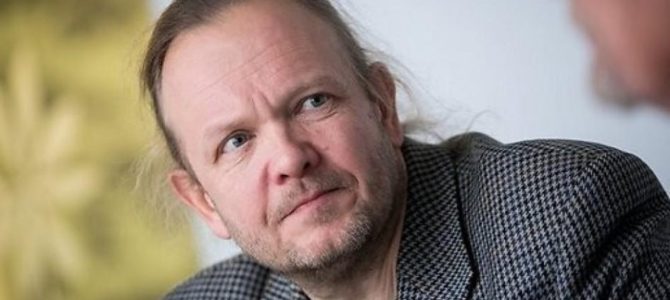
Antanas Sutkus, 2014. Photo by Jurga Graf

A little more than a month from now renowned Lithuanian photographer Antanas Sutkus will exhibit his photos of Holocaust survivors at the White Space Gallery in London. Most of the works come from his series of two decades ago called “Pro memoria: gyviesiems Kauno geto kankiniams” [In Memoriam: Living Martyrs of the Kaunas Ghetto]. The photographer says we must not forget the Holocaust and discussion of it is needed today more than ever.

Izabelė Švaraitė conducted an interview with the artist.

Your grandparents told you about the Holocaust. What did they say?

Village people didn’t talk much. But they very severely condemned and felt deep disgust for those Lithuanians who shot, transported and guarded Jewish prisoners.

In the catalog for your exhibit “Pro memoria: gyviesiems Kauno geto kankiniams,” the writer Alfonas Bukontas wrote you feel shameful about what happened in the Kaunas ghetto and Ninth Fort. Why do you feel ashamed?

The Holocaust isn’t some sort of ordinary crime. It was the highest metastasis of Naziism. Consider, for example, I live at home and a family of guests comes to me. At night bandits come threatening to murder me, and take them out in the yard and shoot them. Among the murderers is maybe a neighbor of mine. Although I didn’t shoot these people, and I didn’t have an association with those bandits, the scene would be burned into my eyes for the rest of my life.

I would say I feel sorrow and contrition that some many people died in Lithuania. Practically all the Jews in the country were shot… If Lithuania had come to the aid of Herkus Mantas [during the Prussian uprising of 1260 to 1274) or if Lithuania had saved its Jews, we would have progressed very far as a state.

Full interview in Lithuanian here.

GlassJazz International Symposium in Panevėžys

Panevėžyje vyko tarptautinis simpoziumas – projektas ,,GlassJazz“

The GlassJazz project/symposium was held in Panevėžys August 23. It is the only place in Lithuania, and perhaps all of Europe, where artistic glass meets jazz music. “Glass is unique, it can be improvised just like jazz. Improvising in the medium you can get indescribable forms. Jazz is like a meditation which stimulates artists to liberate themselves, to dive into creative thought, to experiment and look for unexpected forms,” GlassJazz initiator and glass artist Remigijus Kriukas said. He’s the director of the Glasremis artistic glass studio.

Participants from 16 countries attended the event at the Kupiškis Ethnographic Museum. The exhibit included 30 glass works of art.

The event was kicked off by Israeli artist Louis Sakalovsky’s exhibit of glass works and paintings called Return, named in honor of his parents and all his relatives who lived in Panevėžys and Kupiškis before the Holocaust. His mother and her relatives made aliyah to Israel before the war and all his father’s relatives were murdered in Panevėžys and Kupiškis.

Book about Ona Šimaitė, Righteous Gentile

Bernardinai logo

Epistolofilija by Julija Šukys. Biography of Ona Šimaitė. Translated from English by Marius Burokas. Lietuvos rašytojų sąjungos leidykla, Vilnius 2016. 256 pages

From 1941 to 1944 she visited the Jewish ghetto and work camps of German-occupied Vilnius and brought food, clothes medicine, money and forged papers to the people imprisoned there. She saved those who had lost hope, listening to their fears and replying to their letters, often the last letters ever written by these people. It is unknown how many lives she saved. It would have seemed strange to the librarian to count, and by intentionally forgetting the names and addresses of those she helped, she protected both herself and them. Instead of hard statistics, we have the personal stories, anecdotes and recollections of those who survived.

Full story in Lithuanian here

Kaunas Jewish Community Volunteers Clean Up Seventh Fort

Kauno žydų bendruomenės narių talka VII forte

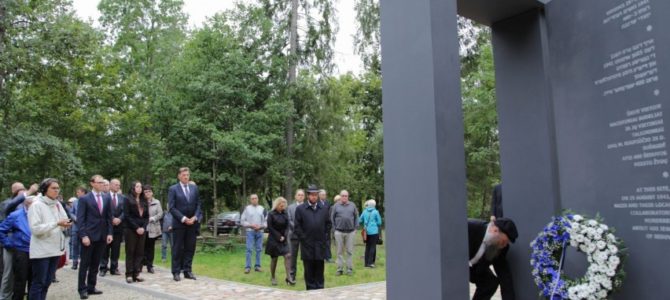
A group of Kaunas Jewish Community members responded again to a call from the Seventh Fort for volunteers to clean up the area around the Kaunas military fortification. They collected trash littering the Holocaust mass grave site where a commemorative monument is scheduled to be set up in September in memory of the Jews murdered at the Seventh Fort.

Happy 95th to Chasia Španerflig!

Sveikiname Chasią Španerflig 95-erių metų jubiliejaus proga

The Lithuanian Jewish Community wishes Chasia Španerflig a happy 95th birthday. Chasia was a ghetto prisoner and partisan fighter in World War II. Currently she is ill, so we wish her a full recovery and a very happy birthday!

LJC Chairwoman Faina Kukliansky on the Annihilation of Jewish Communities in the Lithuanian Shtetls

In the final days of August we mark the 75th anniversary of the extermination of the large Jewish communities who once lived in the Lithuanian shtetls (small towns). Neither the shtetls nor the Jews survived the brutal mass murder. For 75 years no one has spoken Yiddish any longer in those small towns. No one celebrates Sabbath, the synagogues are boarded up or are now storehouses or workshops. What does this anniversary mean to the Jews and the shtetls of Lithuania?

Fainos portretaa

We mark the anniversaries because the people are no longer with us. Those who still remember the Holocaust must mark the anniversaries of the mass murders, otherwise the small towns will forget entirely the murder of their Jewish neighbors, including men, women and children. Lithuanian society as a whole–and not without a lot of effort by the Jewish community–twenty-five years after Lithuanian independence has all of a sudden remembered that there were Jews here, and their contribution to everything we have in Lithuania today is huge. Jews created and built the centers of these small towns. They are no longer, or they are very few, and what will the old-timers in these towns tell their children and grandchildren?

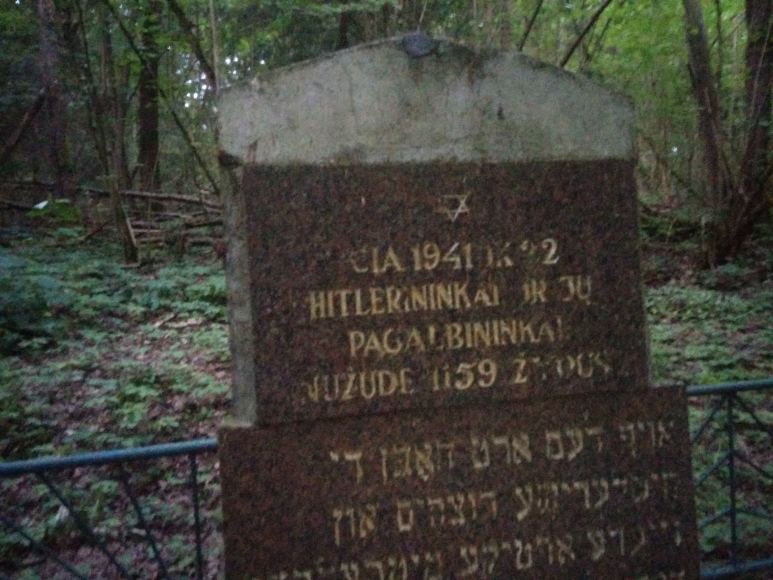
After World War II Jews maintained the keyver oves tradition (from Yiddish keyver, “grave,” + oves “parents, ancestors”) where Jews would visit the mass murder sites where their relatives were buried, to remember them. They used to do it on exactly the anniversary of the day when the Jews of that shtetl were exterminated. I remember from my childhood how we used to go visit our murdered grandparents, and how others went to visit their murdered sisters, brothers and parents. No one marched in a procession, there were no marching bands playing. Keyver oves was a sad occasion. People were repentant, they cried and they prayed, hoping it such atrocities would never happen again. They went to the mass murder sites, of which there are 240 in Lithuania, not to give speeches. What else can be said after all these years? They gathered not to talk, but so that the town community would think about where they lived and with whom they lived, and so that they wouldn’t be ashamed to look their children and grandchildren in the eye. You cannot hide the truth, after all. You don’t need popular novels, and large print-runs cannot replace open communication about what happened. Everything was known long ago. It’s not the Jews who need public commemorations, we already know it all, for us it is sufficient to stand and to pray. Telling the truth and talking sincerely and openly is needed in every small town where Jews lived before the war.

The Road to Death (75th Anniversary of the Murder of the Jews of Molėtai)

Attorney Kazys Rakauskas sent the following to the Lithuanian Jewish Community webpage.

On central Vilniaus street in Molėtai the flowers bloom and the brightly-painted kindergarten greets the eye of passers-by. The bridge next to the statue of St. Nepomuk is also festooned with garlands of flowers. Small fish flash in the sun in the pure lake water flowing into the river. Cars quietly pass and young people flex their muscles on bicycles. The people of Molėtai hurry to work on foot.

They are a different generation of people. Even their parents only heard vaguely of the terror, tears and suffering which once overtook this street. Seventy-five years ago hundreds of Jews of Molėtai realized where they were being taken at this bridge. They threw their things they had taken with them when they were removed from the synagogues under armed guard into the Siesartis river. This street leading from the three synagogues on Kauno street became the road to death for two thousand people. They had been held prisoner there [in the synagogues] for days without food or water.

March to Commemorate Murdered Jews of Molėtai, Lithuania on August 29

A march to commemorate the 75th anniversary of the mass murder of the Jews of Molėtai is scheduled for August 29 in Molėtai, Lithuania.

There will be a conference and exhibit at the Molėtai Art Gallery at 3:00 P.M.

A procession will then walk down Vilniaus street in Molėtai at 4:00 P.M.

Unveiling of a monument by Davidas Zundelovičius follows at 5:00 P.M. at the mass murder site and mass grave of the Jews of Molėtai. Teachers Ela Pavinskienė and Roza Bieliauskienė of the Sholem Aleichem Gymnasium in Vilnius have organized an exhibit about cleaning up the old Jewish cemetery in Molėtai with photographs by Yehuda Vagner and Maceva volunteer Marius Lukoševičius.

Holocaust Commemoration in Biržai August 28

A series of events in Biržai, Lithuania, to commemorate the Jewish community murdered there during the Holocaust are scheduled to begin at 11:00 A.M. on August 28. The events include an initial “March of the Living”-type procession culminating in a conference and discussion. For more information, contact Sania Kerbelis at 370 698 85131 or Simona Ražinskienė at 370 699 03023. There is a possibility those needing a ride from Vilnius might be able to get one provided by the Lithuanian Jewish Community; contact info@lzb.lt to find out.

Rabbi Ben Tzion Zilber Visits Latvia and Lithuania

Rugpjūčio 15-16 Latvijoje ir Lietuvoje lankėsi rabinas Bentsiyonas Zilberis

Rabbi Ben Tzion Zilber, son of legendary Rabbi Yitzchok Zilber, visited Latvia and Lithuania August 15 and 16.

Rabbi Kalev Krelin of the Vilnius Jewish Community escorted Rabbi Zilber to locations where the latter’s ancestors lived. His father Rabbi Yitzchok Zilber belonged to a long line of scholars and suffered under Stalin, both at labor camps and under the atheist policies of the Soviet Union. Despite extremely difficult circumstances, Rabbi Yitzchok Zilber not only managed to hold steadfastly to his faith in the Creator and to keep His laws, but also to deepen his Torah study and teach others. After making aliyah to Israel Rabbi Yitzchok Zilber had hundreds of followers in whom he inspired faith in the Creator and adherence to the Torah.

Commemoration in Dusetos of 75th Anniversary of Krakynė Massacre

August 26, 2016, marks the 75th anniversary of the massacre which was perpetrated in the Krakynė Forest (Degučiai alermanship, Zarasai region) when 2,569 Jews from Zarasai region and surrounding areas were murdered.

The unveiling of a commemorative monument will take place where the Dusetos Synagogue once stood on Independence Square in Dusetos, Zarasai district, at 2:00 P.M. We will commemorate the Dusetos Jews who were murdered between 1941 and 1944, visit the mass murder site in Krakynė Forest and distribute a publication called “Desetų žydai” (Jews of Dusetos).

Zarasai regional administration
Dusetos aldermanship
A joint project by the Dusetos aldermanship and parish community

Anniversary of Intellectuals Aktion, Mass Murder of Jews of Petrašiūnai

The Kaunas Jewish Community will mark the 75th anniversary of the murder of the Jews of Petrašiūnai and the Intellectuals Aktion on August 26, 2016. The ceremony will begin at 3:30 P.M. at the stele in memory of the Jews of Petrašiūnai. Then we will move to the Fourth Fort in Kaunas where the Intellectuals Aktion, the first mass murder of Jews imprisoned in the Kaunas ghetto, was perpetrated.

Lithuanian and Japanese Cities Join in Commemorating Righteous Gentile

Pasaulio tautų teisuolio atminimas sujungė Japonijos ir Lietuvos miestus ir žmones

Events to commemorate Chiune Sugihara, Japanese WWII-era consul in Kaunas and a Lithuanian festival were held in Sugihara’s hometown of Yaotsu, Japan, from July 31 to August 7.

Sugihara rescued thousands of Lithuanian Jews from the Holocaust and has been recognized as a Righteous Gentile and awarded the status of Righteous among the Nations by the Yad Vashem Holocaust memorial authority in Israel.

The week of commemorations was opened by the signing of a memorandum of cooperation by Yaotsu mayor Masanori Kaneko and Kaunas municipality representative Inga Pukelytė.

Acting Lithuanian ambassador to Japan Violeta Gaižauskaitė noted the events came on the 25th anniversary of the restoration of diplomatic ties between Japan and Lithuania and characterized ties between the people of Japan and Lithuania as sincere, and relations btween the two nations friendly. She also said both countries were dedicated to preserving the memory of the noble Japanese diplomat for future generations.

Vladimir Lazerson: Army Medic, Peace Psychologist

Vladimiras Lazersonas: karo medikas ir taikos psichologas
Valdimir and Regina Lazerson

by Jūratė Vaižgauskaitė
manoteises.lt

“We used to drink tea using the ‘look’ method: a lump of sugar was tied to a string and we’d look at it while we sipped tea. The tea wasn’t any sweeter for that, but we all had a good time,” Vladimir Lazerson’s daughter Tamara wrote in her memoirs. Lazerson was a professor and early practitioner of clinical psychology. They drank that imagined sweet tea in the Kaunas ghetto where they were imprisoned in June of 1941.

First professor Lazerson was thrown out of university. Then his house was taken away, his books burned and he was sent to Dachau. There he died. He had dozens of articles published and was the founder in Lithuania of several branches of psychology, and practiced clinical psychology as a military medic.

Army Medic, Peace Psychologist

Born in Moscow, Lazerson began his scholastic career at German and Swiss universities. He defended a dissertation thesis in psychology in 1911 and then went on to study medicine in Germany and Russia. His path to Lithuania was a winding one. Working as a military medic and associate professor in Kiev, he left when pogroms began and chose newly independent Lithuania as a destination.

Full story in Lithuanian here.

Commemoration of the Holocaust in Šeduva, Lithuania

UPDATE: Event organizers are providing transport from Vilnius and several free seats are left! Please register for a place before August 23 by sending an email to info@lostshtetl.com

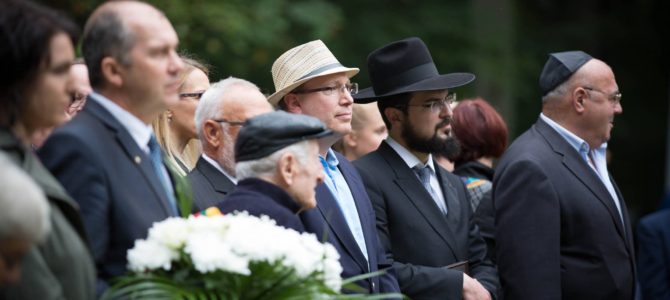
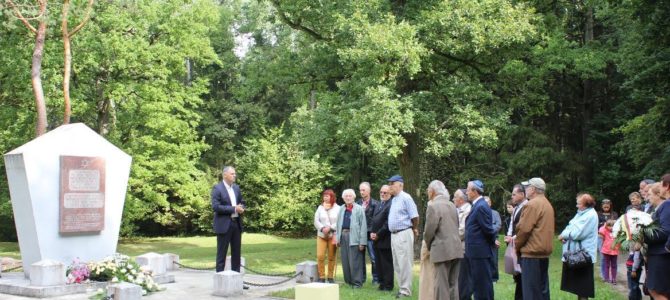
You are invited to an event to commemorate the Šeduva Jewish community murdered in the Holocaust. The event is on on August 30 and will be a kaddish at the 3 mass murder sites and the old Šeduva Jewish cemetery.

Commemorative program

9:00–9:30 Kaddish at the Jewish mass murder site in Pakuteniai forest
https://goo.gl/maps/tdN5Y3mrWJw

9:45–10:15 Kaddish at Liaudiškiai Jewish mass murder site I
https://goo.gl/maps/fhjnq5ubSfk

10:30–11:00 Kaddish at Liaudiškiai Jewish mass murder site II
https://goo.gl/maps/mYLnGLUmVuK2

11:15–11:45 Kaddish at the Šeduva Jewish cemetery
https://goo.gl/maps/ZuHGdK9EHvF2

12:00–12:30 Coffee break at the Šeduva Culture and Crafts Center

12:45-1:30 Mass at the Holy Apparition of the Cross Church in Šeduva

1:30–2:15 Yiddish song concert by Rafailas Karpis and Darius Mažintas at the church in Šeduva

Download PDF format event program

More here.

Lithuanian Debut at the Olympics: The Isaac Anolik Story

by D. Baranauskaitė
manoteises.lt

“All riders have reached the finish line and the injured have been brought by automobile, but we haven’t seen Mr. Anolik and he isn’t found among the injured. Everyone has left. The stadium is empty, but he’s still not here. Asked by telephone, all the checkpoints reported they didn’t know and that there was not a single cyclist left on the route. He only came back at 11 at night, cold and hungry.”

This is how the newspaper Sportas reported the debut of the Lithuanian state at the Olympic Games in 1924. The subject of the report, Isaac Anolik, was a Lithuanian athlete of Jewish origins and the country’s cycling champion many times over. His accomplishments didn’t matter during the Holocaust. The leading Lithuanian cyclist was shot at the Ninth Fort.

isakas-anolikas-395x480

Full story in Lithuanian here.

In Memoriam Fira Bramson

In an article published on the website of the literary and arts magazine Literatura ir Menas, Mindaugas Kvietkauskas shares his memories of the late Fira Bramson.

Esther’s Scissors
by Mindaugas Kvietkauskas

Nuotrauka iš asmeninio archyvo

I will call her by a biblical name, Esther. Now I may. That was how the rabbi called her to eternity so recently his prayer uttered before the first three handfuls of earth were sprinkled on her shrunken body, cut off from the world of the living.

In life it was different: she was Fira, sometimes Firochka. I smile when I think how unrecognizably the name of the queen of Persia, meaning morning star, has changed in our lands, in the daily language of the Yiddish dialect washed by the great Slavic languages. But now that she has entered a time of more perfect reckoning, Fira has again become Esther, the daughter of Israel, the morning star, Ester bat Israel.

Bramson Esfira Fira Bramson in 1949

Full piece in Lithuanian here.

Holocaust Rescuer Raoul Wallenberg Murdered by Soviets

rw
Raoul Wallenberg’s passport photo, June, 1944, Sweden.

The story of the disappearance in 1945 of Raoul Wallenberg, the Swedish diplomat who rescued thousands of Hungarian Jews from the gas chamber, is one of the greatest mysteries of World War II, the New York Times writes.

Suspicion in the disappearance of Wallenberg initially fell on the Soviet Union. After the Soviet occupation of the city Wallenberg’s contacts with high-ranking Nazis and Americans hinted at espionage, with the story of rescuing Jews from the Holocaust possibly a not-very-good cover story. The story of his disappearance has remained a mystery right through Gorbachev’s era of perestroika and throughout the years following the chaos which ensued from the collapse of the Soviet Union.

This summer, however, newly published diaries from a former head of the KGB found hidden in the walls of a dacha are shedding new light and for the first time it can be said with confidence Wallenberg was murdered in a Moscow prison. “I have no doubts that R. Wallenberg was murdered in 1947,” Ivan Serov, a Soviet military officer and director of the KGB from 1954 to 1958, wrote.

Full story in Lithuanian here.
Žydus gelbėjęs R.Wallenbergas nužudytas sovietų kalėjime

Bringing Nazis to Justice in Germany

jpost

by Efraim Zuroff

The new German prosecution policy is a far better reflection of the reality of the crimes committed by the Nazis during World War II than previous iterations.

Last week, while much of the world’s attention was focused on the Olympics in Rio, a news item from Germany with potentially dramatic implications barely merited a headline. According to news agencies, Jens Rommel, the relatively new director of the Central Office for the Clarification of Nazi Crimes in Ludwigsberg, Germany (Zentrale Stelle) announced that his agency had initiated the investigation of the crimes committed in three Nazi concentration camps, and was currently considering charging at least eight people, born between 1918 and 1927 and living in Germany, who had served in Stutthof, a concentration camp located near Danzig, with accessory to murder, a criminal offense which carries a sentence of five years in prison. Four of the eight people in question were men who had served as guards at the camp, while the remainder were women who had performed various functions in the camp office.

On the surface, the story should hardly have raised any eyebrows, but in the light of the history of the prosecution of Nazi war criminals in Germany during the past decade, this news indeed deserved a headline.

Jakub Wygodzki, Vilnius Doctor

Vygodskis Jakovas

In her memoirs Alexandra Brushtein, the only child of famous prewar Vilnius doctor Jakub Wygodzki, said her father was the only person who could explain to her why one or another person is stupid. She said it was sad her father didn’t have time to talk with her because he was a busy doctor.

Besides being a doctor, Wygodzki was a member of the council for the restoration of Lithuanian statehood, the minister for Jewish affairs in the first government and the chairman of the Vilnius Jewish Community.

But he is best known because of his good heart and selflessness. He treated poor patients and came back from operations at night so tired he couldn’t eat. Later, in old age, he saved Jews fleeing persecution, and his life was cut short at the Gestapo prison in Vilnius.

Full story in Lithuanian here.