History of the Jews in Lithuania

Vilna Gaon Texts Placed on Lithuanian Memory of the World Registry

Vilna Gaon Texts Placed on Lithuanian Memory of the World Registry

Lithuania’s Memory of the World registry now contains the manuscripts of the Vilna Gaon and a manuscript fragment by Simonas Daukantas, the Lithuanian National Martynas Mažvydas Library reported.

The 18th century manuscripts of Elijah ben Solomon Zalman, the Vilna Gaon, are a collection of works published in different cities and countries of Europe between 1799 and 1940. They include several very rare publications and almost all of them exist as a single copy in Lithuania.

The library said the Vilna Gaon never published any of his texts, but his teaching was scrupulously written down and compiled by his students, sons and sons-in-law and were edited and published after his death.

Sabbath with Designer Agnė Kuzmickatė

Sabbath with Designer Agnė Kuzmickatė

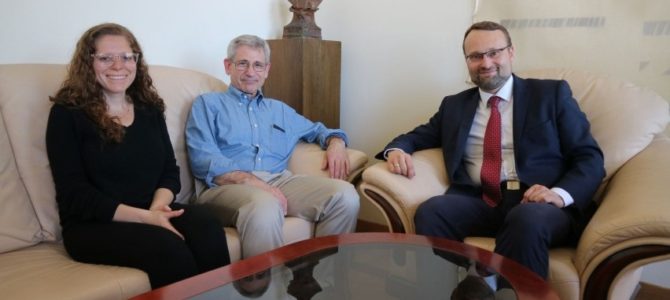
For a number of years now the Lithuanian Jewish Community has been inviting artists and special guests to celebrate Sabbath with the community. Last Friday LJC executive director Renaldas Vaisbrodas presented Lithuanian designer Agnė Kuzmickatė to members. She holds a doctorate and is sometimes called butterfly queen because of her use of her butterflies in her designs.

Renaldas led the discussion and tendered questions to the famous young designer, starting with questions about her family. Her father is the philosopher Bronislovas Kuzmickas, PhD, who was a founding member of Sąjūdis, the Lithuanian independence movement, who went on to become a member of parliament, a signatory to the Lithuanian declaration of the restoration of independence and served as deputy to parliamentary speaker Vytautas Landsbergis.

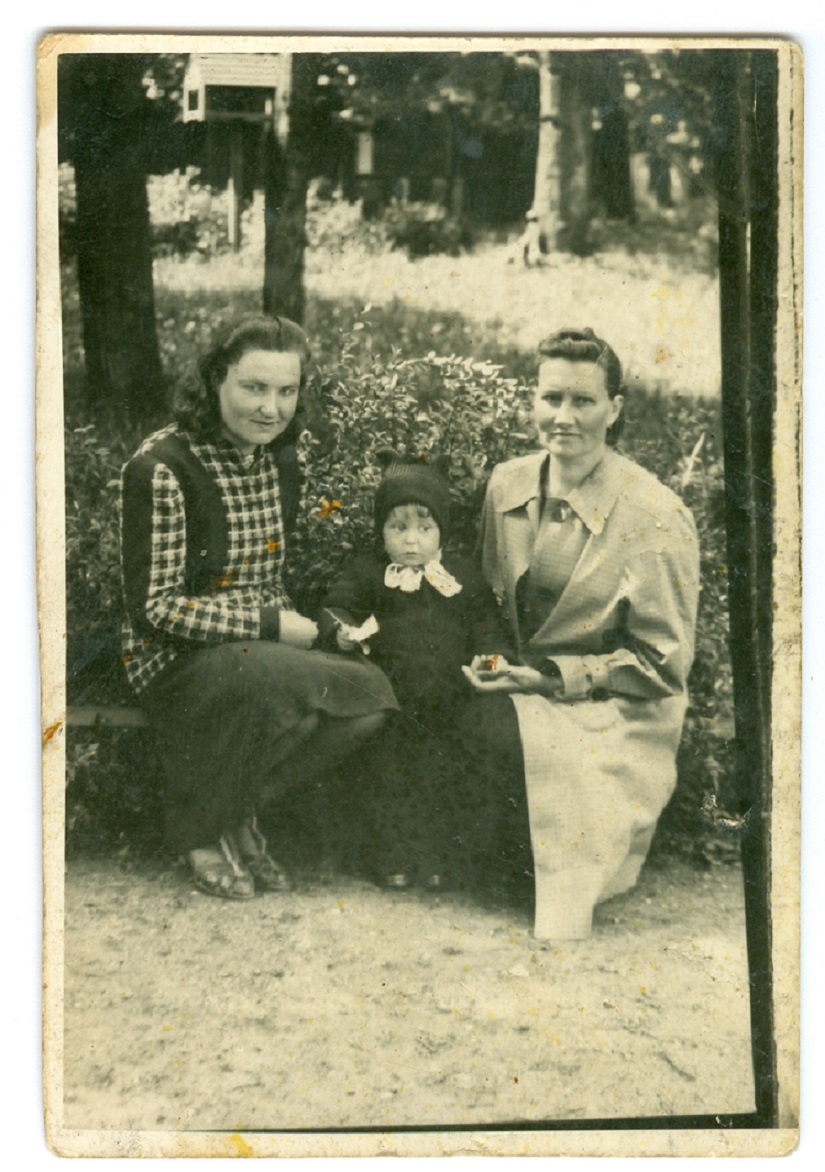
Agnė Kuzmickatė’s grandmother Gita Jekentienė was at a children’s summer camp in Palanga, Lithuania, when World War II arrived. She and some of the other children were evacuated to safer locations in the Soviet Union. When she spoke of her family, Agnė Kuzmickatė repeatedly returned to her grandmother Gita’s experience and said she only know understood how her grandmother’s environment shaped her. She said she and her grandmother often spoke about Jewish identity, about the Yiddish language and the tragic loss of family, all of whom, except for her grandmother’s brother, were murdered at the Ninth Fort in Kaunas. Returning to Lithuania after the war, her grandmother experienced all sorts of bullying and name-calling because she was Jewish. Agnė Kuzmickatė said she had never experienced this and everyone at school respected her because of her father’s activities on behalf of independent Lithuania.

New Litvak History Exhibit in Cape Town

New Litvak History Exhibit in Cape Town

URM.lt

The Lithuanian Embassy to South Africa presented a mobile exhibit at the South African Jewish Museum in Cape Town June 6 called “One Century Out of Seven. Lithuania, Lite, Lita.” The installation informs viewers of different aspects of Jewish history in Lithuania from the time of the Grand Duchy to the present. The exhibit travelled to South Africa’s second-largest city from the Holocaust and Genocide Center in Johannesburg.

Lithuanian ambassador Sigutė Jakštonytė welcomed the large audience including members of the Cape Town Jewish community and members of the parliament of the Republic of South Africa. She told them the Lithuanian parliament had named 2020 the Year of the Vilna Gaon and Litvak History in appreciation of the Litvak contribution to the Lithuanian state and to preserve the memory of Holocaust victims. The ambassador also thanked the museum in Cape Town for four years of close cooperation.

The exhibit at the South African Jewish Museum in Cape Town runs till the end of June.

Unusual Holocaust Memorial to Be Unveiled in Biržai

Unusual Holocaust Memorial to Be Unveiled in Biržai

DELFI.lt

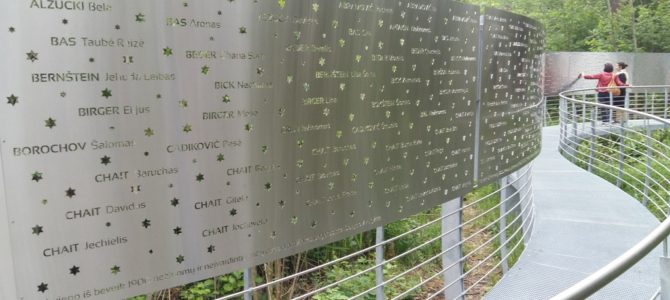
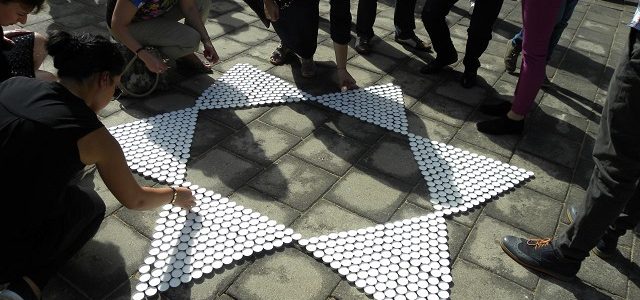
An event to commemorate the Jews of Biržai and Holocaust victims is to be held on Sunday, June 16, including honoring rescuers of Jews, a memorial procession and the unveiling of a 30-meter-long Holocaust memorial.

The Biržai Jewish Cultural and History Association, the Biržai regional administration and the Sėla Museum in Biržai are organizing the event. Partners include the Israeli embassy to Lithuania, the Lithuanian Foreign Ministry and the secretariat of the International Commission to Assess the Crimes of the Nazi and Soviet Occupational Regimes in Lithuania.

Conference to Mark the 130th Birthday of Anna Akhmatova at the LJC

Conference to Mark the 130th Birthday of Anna Akhmatova at the LJC

Osip Mandelshtam and Anna Akhmatova

The Lithuanian Jewish Community held a conference on Jewish influences in the life and work of Russian poetess Anna Akhmatova on June 5. The conference was initiated by poetess Elena Suodienė, a doctor of the liberal arts and recipient of the Golden Quill award from the European Academy of Art and Literature.

Dr. Suodienė presented at the conference her new and newly-published poem in Russian about Akhmatova. She wrote a special article exclusively for www.lzb.lt about the Akhmatova the great poetess and the extraordinary person.

Jewish Influences in the Life of Russian Poetess Anna Akhmatova

Jewish Influences in the Life of Russian Poetess Anna Akhmatova

The Lithuanian Jewish Community will host an event dedicated to celebrating the 130th birthday of the Russian poetess Anna Akhmatova and discussing Jewish influences in her life. The event will take place at the LJC beginning at 1:00 P.M. on June 5. At least five speakers will present various topics. A screening of a film about Isaiah Berlin will punctuate the program of speakers, with a discussion with the audience following the last speaker. The event is expected to be held mainly in Russian.

Jewish Community Remembered in Kalvarija

Jewish Community Remembered in Kalvarija

In the period between the two world wars, the Jewish population was the majority population in Kalvarija, Lithuania. The architecture of the old town, a unique synagogue complex (with a winter and summer synagogue and the Talmud school) and the only surviving Jew, Moishe Segalis–all of this stands as a testimony to that time. For four Saturdays in a row now, as spring blossoms forth, there have been readings from Icchokas Meras’s novel “Lygiosios trunka akimirką” held near the synagogues in Kalvarija and in their courtyards. Lithuanian Jewish Community executive director Renaldas Vaisbrodas attended the final reading on May 24.

Students and soloists from the Sonantem choir in Kalvarija read from the work about the life of the Vilnius ghetto and about life which can be decided by the movement of a single piece on the game board.

A youth initiative invited the local community to an informal meeting with the relatives of those who once lived in Kalvarija, with our ancestors and neighbors.

Vilnius: Jerusalem of the North, Jerusalem of Lithuania

Vilnius: Jerusalem of the North, Jerusalem of Lithuania

15min.lt

A New, Free Tourist Route: Why Vilnius Was Called the Jerusalem of the North

With those who fled coming back and traditional Jewish holidays again becoming part of city life, Jewish culture is experiencing a renaissance in Vilnius. Now there will be another opportunity to discover why Vilnius was called the Jerusalem of the North. A free new tourist route called “Discover Jewish Heritage in Vilnius” will help tell the stories of the Jews who lived and worked in Vilnius, according to a press release from the Vilnius municipal tourism and business growth agency Go Vilnius, which has compiled this guidebook as a way to learn about the world-famous Litvaks whose humble origins were in Vilnius, to discover what traces of them remain and to learn about the history of the Jewish community of Vilnius, including the best of times and the most tragic of times.

Full story in Lithuanian here.
Small but Significant Features of Jewish History in Vilnius

Small but Significant Features of Jewish History in Vilnius


bernardinai.lt

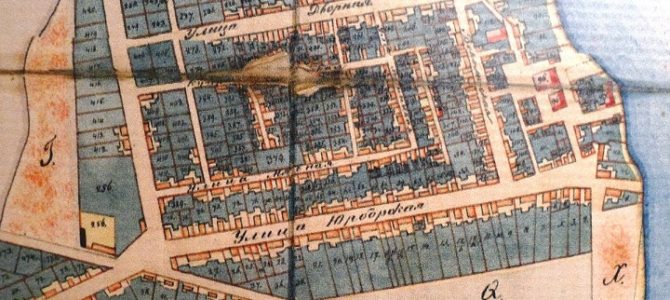
Before World War II a large Jewish community lived in Vilnius whose cultural, religious and social traces are only recalled today in statues and commemorative plaques. It’s a rare resident of the city who knows why Vilnius was called the Jerusalem of Lithuania, who knows what an active community life bustled on the narrow streets of the Old Town and how the tragic events of World War II changed forever the face of the Lithuanian capital.

For many years Vilnius was a Jewish spiritual and academic center. Besides some faded inscriptions in Hebrew characters on buildings which were part of the Vilnius ghetto, there are more surviving traces of the history of this people. Before World War II Jews accounted for more than a third of all city residents.

Today we invite you to discover with us some small details of this history, small but important to our city.

Full text in Lithuanian here.

Victory Day Celebration Snapshots from Kaunas

Victory Day Celebration Snapshots from Kaunas

The Kaunas Jewish Community enthusiastically celebrated Victory Day marking the victory against Nazi Germany, continuing a long-time tradition. This year no World War II veterans attended, but their widows and children, who heard their stories firsthand of the battles and horrors, did.

Many of those attending were personally freed by the Allies and their victory marked the end of their inhumane suffering and degradation. For them, this day is both one to commemorate the dead, but also an opportunity to celebrate life and its joys. Vocalist Aleksandras Rave performed his own songs and Michail Javič on saxophone enlivened the ceremony which was funded by the Goodwill Foundation.

Happy 65th Wedding Anniversary to Nelli and Ilja Goldbergai

Happy 65th Wedding Anniversary to Nelli and Ilja Goldbergai

Dear Nelli and Ilja Goldbergai,

The Lithuanian Jewish Community congratulates you on this wonderful and special occasion, your 65th wedding anniversary. You started a wonderful strong family and set an example for everyone. We wish you health, happiness and tranquility. May the love of family lend you happiness and strength.

Nelli and Ilja were married May 26, 1954. Their son Jevgenijus was born in Vilnius. Now they have three grandchildren. Nelli worked at the Sparta factory, first as a seamstress, then after completing courses at a light industry technical college she became an engineer there. She likes to sew. Ilja worked as senior mechanic at the Vilnius tobacco factory, later becoming the director there, following which he became senior engineer and a milk processing facility. He likes to fix things, wood-carving, chess and crossword puzzles. The aging couple now find it difficult to get outside and walk around, and spend most of their time in their apartment in Vilnius.

Mazl tov!

Markas Petuchauskas on the Presentation of His Book in Germany

Markas Petuchauskas on the Presentation of His Book in Germany

I’d like to expand on the information about the book presentations in Germany by talking about the topics which were discussed at the Leipzig International Book Fair and the presentation held at the Lithuanian embassy where, besides Grigorij H. von Leitis, Lithuanian honorary consul professor Wolfgang von Stetten and Michael Lahr, the executive director of the Lahr von Leitis Academy and Archive, also took part.

I talked about the presentations of the Vilnius ghetto theater which have lodged themselves so colorfully in my memory, about the people who started that theater, the remarkable artists of the Jerusalem of Lithuania. Their figures loom large among the ranks of the great Litvaks of the world: Chaim Soutine, Jacques Lipchitz, Neemija Arbit Blatas, Ben Shahn, Emmanuel Levinas, Jascha Heifetz, Romain Gary and others.

Much space in the book is devoted to the branch of the Petuchovski (Petuchowski, Petuchauskai) family who in the second half of the 19th century moved to Germany and attained world-renown as active rabbis and philosophers of the Litvak persuasion.

The first of those to speak about the Vilnius ghetto theater, I demonstrated how that cramped stage was able to contain a vast cultural continent, a unique theater now widely recognized as such. Thanks to the theater, the ghetto became a symbol of spiritual resistance to the Nazis. The ideas of patience, tolerance and unity came to the fore in the spiritual resistance of the Vilnius ghetto. These ideas called out with the entire experience of the European Holocaust, urging unity against Naziism, giving form to the goal of nations recognizing the principles of Western democracy to come and join together.

Markas Petuchauskas
Author of Der Preis der Eintracht [German translation of The Price of Concord]
May 21, 2019

Lithuanian Makabi Athletics Club Annual Reporting Conference

Lithuanian Makabi Athletics Club Annual Reporting Conference

Lithuanian Jewish Community chairwoman Faina Kukliansky greeted the participants at the annual Lithuanian Makabi Athletics Club reporting conference at the LJC on May 19.

The agenda included an annual report on governing bodies and presentation of the action plan for 2019. Lithuanian Makabi president Semionas Finkelšteinas in his speech recalled Lithuanian Makabi was the first Jewish organization in contemporary Lithuania, formed even before Lithuanian independence, on January 8, 1989. He delivered a report on Makabi activities for 2018, thanked those in attendance and said the organization was looking forward to the European Maccabiah Games to be held in Budapest this year, with 10 highly qualified competitors from Lithuania seeking medals there.

Lithuanian Makabi vice president Daumantas Levas Todesas, who has served in that post since the organization was formed in 1989, resigned, and president Finkelšteinas thanked him for many years of hard and successful work for the benefit of Lithuanian Makabi.

Markas Petuchauskas’s Book Price of Concord Presented in Berlin

Markas Petuchauskas’s Book Price of Concord Presented in Berlin

The Lithuanian embassy in Germany on May 15 hosted a presentation of Markas Petuchauskas’s memoires The Price of Concord now translated into German as Der Preis der Eintracht, published by the LIT Verlag publishing house in Germany. Mark Roduner translated the book which was originally published in English. The director Grigory von Leit, with Litvak roots, read excerpts from the book. A discussion with the author followed. The vent was organized by the embassy of the Republic of Lithuania to Germany in cooperation with the Lietis Academy and Archive and the Lithuanian Culture Institute.

This isn’t the first time the German translation of Litvak drama critic Markas Petuchauskas was presented in Germany. Back in March there were two presentations of the book at the Leipzig International Book Fair.

The Price of Concord is a compendium of more than five decades of conversation with a number of theater figures, artists and musicians in which keen observations and sudden realizations and correspondence with different well-known personalities turn into a seamless book, one of whose sections contains complex moments of a fairly diverse life. Petuchauskas goes beyond discussion of episodes remembered from childhood and loss of family members leading to the pain experienced during occupation, and recalls the goodness, understanding and help of so many people encountered in the course of life.

Sholem Aleichem ORT Gymnasium Holds Bar/Bat Mitzva Cermemonies

Sholem Aleichem ORT Gymnasium Holds Bar/Bat Mitzva Cermemonies

Fifty-six seventh graders from the Sholem Aleichem ORT Gymnasium in Vilnius celebrated their bar and bat mitzvas Monday. This coming-of-age ceremony is extremely important in Judaism. Following the ceremony a boy or girl is considered an adult. Whereas before his or her parents are responsible for the child following the traditions and laws of Judaism, after the ceremony the individual is himself or herself responsible and has the right to study Torah, follow its laws and is considered responsible for his or her actions.

Leron Blank celebrated his bar mitzva at the Choral Synagogue in Vilnius. Before the ceremony Rabbi Sholom Ber Krinsky spoke about how significant this ceremony is for every Jewish boy, his family and his friends.

“This is a great joy–publicly, following all the rules–to celebrate bar mitzva! My bar mitzva was at home with the curtains closed… We were, after all, afraid… It was dangerous… So we really appreciate what we have,” Sholem Aleichem Gymnasium principal Miša Jakobas said at the ceremony. Leron read a passage from the Torah out in public, an essential part of the ceremony. His parents, teachers, relatives and friends watched with obvious emotion.

Irish Litvaks Celebrate Sabbath at Choral Synagogue

A delegation of 26 Jews from the Republic of Ireland visited Lithuania last week and attended a special Sabbath celebration held Friday for them at the Choral Synagogue in Vilnius.

The tour was organized by the Irish Jewish Community with help from Irish ambassador to Lithuania David Noonan and his Lithuanian counterpart in Dublin, ambassador Egidijus Meilūnas. Most Irish Jews are descended from Litvaks with the major wave of immigration before World War I. Since then there has been little contact between Litvaks and Ireland and Litvaks in Lithuania. The Irish delegation is re-establishing contact while exploring their own roots, visiting their ancestral shtetls. Not all members of the delegation belong to the Irish Jewish Community, but all do share a connection with it.

Ambassador Noonan said: “I am very happy to see the visit taking place–the connection between the Jewish communities is one of the earliest connections between Ireland and Lithuania and deserves greater exploration. I was honoured to join the group on Friday for dinner and the Sabbath service; it was not my first time in the Synagogue but it was the first time I attended a service there. To attend with my fellow Irishmen and women made it a very special occasion indeed.”

Vilnius Jewish Religious Community chairman Simas Levinas said the Irish party had Sabbath dinner on the second floor of the synagogue and everyone was very satisfied with the event. Lithuanian Jewish Community chairwoman Faina Kukliansky said the Irish Jewish delegation were very religiously devout and did all the proper things to mark Sabbath. Israeli ambassador to Lithuania Amir Maimon also attended the Sabbath celebration.

German Translation of Markas Petuchauskas’s Book at Lithuanian Embassy Berlin

German Translation of Markas Petuchauskas’s Book at Lithuanian Embassy Berlin

The German translation of Markas Petuchauskas’s book “The Price of Concord” (Der Preis der Eintracht) will be presented at the Lithuanian embassy in Berlin May 15. The event will be moderated by theater director Gregorij H. von Leitis who is known for his work presenting and promoting Jewish culture. Von Leitis has Litvak roots.

This is not the first presentation of Petuchauskas’s book in Germany. Back in March it made a splash at the Leipzig International Book Fair with well-known personalities leading a panel discussion about the Litvak drama critic’s main work published originally in English.

Musical Evening “The Sounds of Music and Janusz Korczak”

Musical Evening “The Sounds of Music and Janusz Korczak”

Time: 5:30 P.M., May 15, 2019
Place: Central Library of the City of Vilnius

The Dr. Janusz Korczak Center and the Central Library of the City of Vilnius are pleased to invite you to an evening of music entitled Sounds of Music and Janusz Korczak.

Markas Volynskij and Marija Duškina will perform Yiddish songs.

Dr. Janusz Korczak Center director I. Belienė will be master of ceremonies.

Janusz Korczak’s real name was Henrik Goldshmit and was also known as Stary Doktor (Old Doctor) and Pan Doktor (Mr. Doctor). He was born in Warsaw on July 22, 1878, and died in August of 1942 at Treblinka. He was a doctor, teacher, writer, publicist and Jewish public figure. He was the originator of children’s rights and the idea that children should enjoy equal rights.

The Central Library of the City of Vilnius is located at Žirmūnų street no. 6 in Vilnius.

Šiauliai Regional Jewish Community Commemorates Fallen Soldiers

Šiauliai Regional Jewish Community Commemorates Fallen Soldiers

The Šiauliai Reigional Jewish Community this year as in years past commemorated the soldiers who fell in World War II, laying bouquets of flowers and observing a moment of silence with bowed head at the military cemetery in Šiauliai in memory of all who died.

Community members came together to socialize and share memories and experiences of those dark times after the ceremony.

Small gifts were presented to survivors of the war and the Holocaust.