
History of the Jews in Lithuania

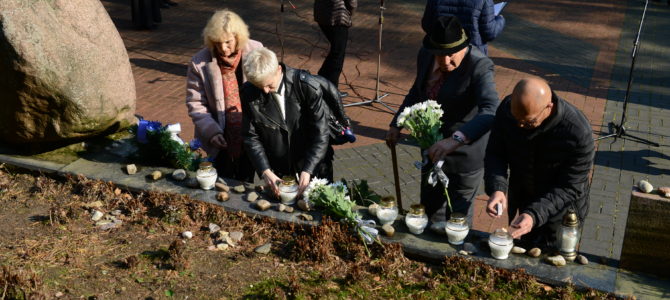
75th Anniversary of Mass Murder of Jews of Veisiejai on November 3

Lapkričio 3d. – Veisiejų žydų bendruomenės sunaikinimo 75-osios metinės
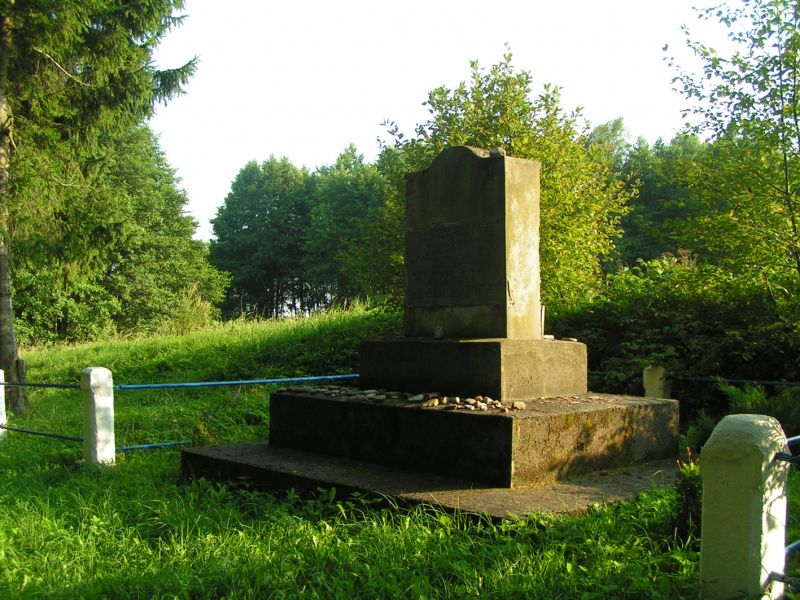
The Jews of Veisiejai and Lazdijai were shot in Kaktiškės

Lithuanian Jewish Community chairwoman Faina Kukliansky lost twenty-nine relatives during the mass murders, and only her grandfather and his children survived because of help by rescuers. There are several members of the LJC who are descendants of Jews from Veisiejai, Lithuania, who survived the Holocaust, including: F. Kukliansky, A. Levinsonas, I. Bereznickis, Junona Bereznicky , V. Sideraitė and the sisters R. and L. Ofčinskaitė.
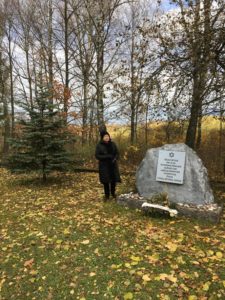
kaktiskesMonument to Holocaust victims in Kaktiškės

Saulius Kuklianskis. the pharmacist in Veisiejai, his wife the doctor Zinaida and their three children Moshe, Ana and Samuelis were living in Alytus when the war began in Lithuania. After the Nazis occupied the country, the family soon lost the young, cared, loving and beloved mother of three Zinaida Kuklianskienė, but the pharmacist and his children survived. The dramatic path to rescue for the family included fleeing occupied Lithuania, living in the Grodno ghetto for a year and a half, flight from Grodno and return to Lithuania, a road filled with danger and the continual fight for survival. After they returned to Lithuania in February, 1943, Saulius, Moshe, Ana and Samuelis hid for a year and half in the forests around Druskininai with the help of residents of the villages of Sventijanskas, Gerdašiai, Vainiūnai, Macevičiai and Bugieda.
Why Does Rabbi Krinsky Seek to Divide the Lithuanian Jewish Community and Our Believers?

LJC chairwoman Faina Kukliansky

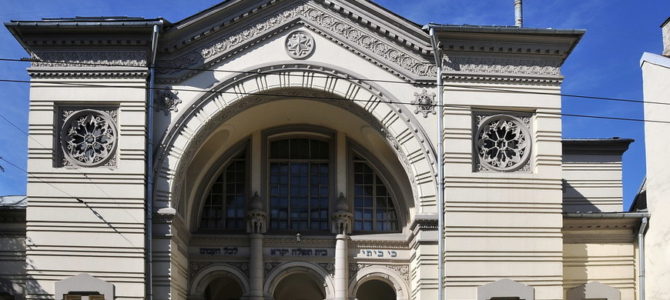
As announced earlier, the Choral Synagogue in Vilnius has been closed for repair work to be carried out, and in the meantime temporary measures have been put in place for the Lithuanian Jewish Community’s congregation of the faithful to pray at the Lithuanian Jewish Community (no special measures are needed by mitnagdim). As Community chairwoman I am surprised that regular repair to the Vilnius synagogue has caused a furor in the global media and on social networks. Entry to Jewish communities around the world entail restrictions, and it is hardly surprising that someone who is constantly disturbing the peace and bothering others is not allowed entry on tyhe grounds that person is intentionally creating conflict situations. The Community’s rabbis have asked that people who disturb religious services not be given entry. The tension caused in recent days by the inappropriate actions of Chabad Lubaviych Rabbi Sholom Ber Krinsky is not accidental. This rabbi has his own center on Bokšto street in Vilnius and he receives support from different Jewish organizations. We know about them and their intentions to divide the LJC are also known. It goes without saying that a community of a different orientation may receive support, but we have information it is being supported for an ulterior purpose. When to repair the synagogue is our business and our decision. I would ask the world Jewish community to let the Lithuanian Jewish Community live in peace and tranquility and to allow us the right to repair our synagogue when we see fit, not according to what Rabbi Krinsky wants, and if we need help, we’ll ask. The Lithuanian Jewish Community employs two rabbis who are actively involved with the community of believers, among whom there prevails a spirit of peace. A rebirth of Judaism is taking place in Lithuania right now.

Rabbi Kalev Krelin Invites Public to Teaching on Kosher Rules and Business in Judaism

This Saturday you are invited to an after-lunch tea and Judaism lesson/discussion with Rabbi Kalev Krelin.

From 2:00 to 2:30 P.M. will be the ABCs of Judaism for Beginners, a half hour of intense learning about the rules of kosher food, an explanation of prayers before different kinds of food and more. It’s important not to be late to this part of the teaching.

From 2:30 to 4:00 P.M. we’ll have a discussion and teaching about business in Judaism. You’re invited to ask questions, learn interesting facts and take one step closer to becoming a real expert on Judaism.

Languages: English and/or Russian, depending on audience.

Registration is not necessary but would be appreciated. It will help us decide which language to use. You can register here:

http://apklausa.lt/f/business-in-judaism-verslas-judaizme-qwvqala/answers/new.fullpage

For more information, contact infolujs@gmail.com

https://www.facebook.com/events/1248023268604192/
https://www.facebook.com/groups/296000767119214/

On Construction Planned Next to the Old Jewish Cemetery in Kretinga

logo-lzb

LITHUANIAN JEWISH COMMUNITY

October 27, 2016

To: Juozas Mažeika, mayor, Kretinga

Diana Varnaitė, director
Cultural Heritage Department to the Lithuanian Ministry of Culture, Vilnius

ON CONSTRUCTION NEXT TO THE OLD JEWISH CEMETERY AND MASS GRAVE IN KRETINGA AND EARTHWORK IN THE COMPLEX OF THAT LOCATION (CULTURAL REGISTRY UNIQUE SITE CODE 34983)

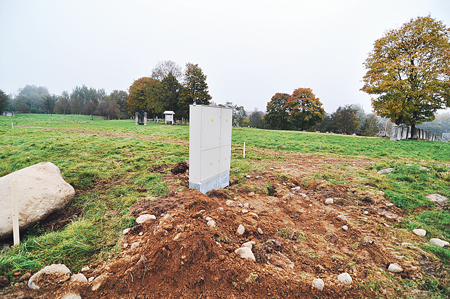
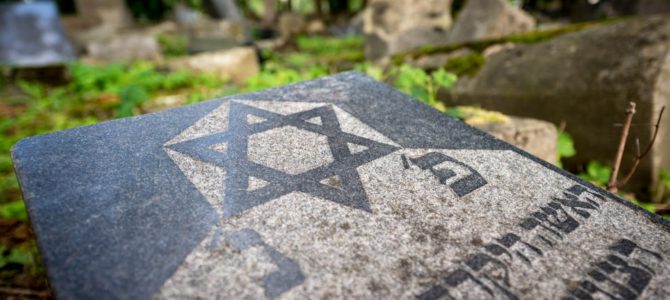
In our letter of August 9 of this year we brought your attention to a series of indications showing that the Old Jewish Cemetery of Kretinga and the Holocaust site located within it are not being protected and maintained adequately. Of special concern is the lack of a complete fence surrounding the cemetery and that the sections of the cemetery along the perimeter not fenced in are not marked in any way. Since these parts of the cemetery lie on the boundaries of private plots of land, there is the threat that economic activities could be carried out within the territory of the cemetery. This problem has been exacerbated, as we have learned from media reports, with the beginning of construction of a complex of individual residential homes right along the border with the cemetery.

Please assess quickly whether this above-mentioned construction does or does not pose a danger to the preservation of the site of the cultural treasure, and whether during construction or later as the buildings are being put to use and in the execution of commercial activities the eternal rest of the dead interred there will not be disturbed, whether access to the cemetery will be degraded and, if there is a foundation for this, whether or not to halt construction work until all necessary measures are taken to protect the cemetery and insure the integrity of the dead and access to the cemetery is insured.

Faina Kukliansky, chairwoman
Lithuanian Jewish Community

Housing Development Next to Old Jewish Cemetery

Kuriasi senųjų žydų kapinių kaimynystėje

Surveying and infrastructure construction are already going on next to the old Jewish cemetery. A residential and recreational complex is to be built here.

by Viktorija Vaškytė, Pajūrio naujienos

When you see the stakes being driven in and the infrastructure being built in the meadow next to the old Jewish cemetery, residents of Kretinga, Lithuania are concerned that business activity is taking place right next to the place of eternal rest. Chief and senior architect of the Architectural and Territorial Development Department of the Kretinga regional administration Reda Kasnauskė says the regional administration has ordered land surveys of the old Jewish cemetery, so locals have probably seen surveyors measuring the site. She says the territory of the old Jewish cemetery is surrounded by legal plots of land and each one them may be measured and marked.

statinys-planuojamas-kretingoje
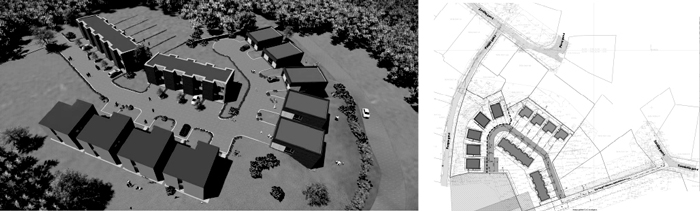
This is how the residential and recreational complex to be built next to the old Jewish cemetery will look. To the right: the topography of the future neighborhood.

Full story in Lithuanian here.

Jurbarkas Jewish Community: Signs and Memories

Jurbarko žydų bendruomenė: ženklai ir prisiminimai

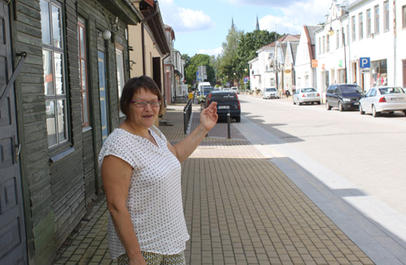
Leading tours of Jurbarkas, Nijolė Paulikienė tells tourists about Jews as well, because it is impossible to leave out the story of people who lived here for centuries. The guide gets her information from books and from Jurbarkas old-timers.

The large Jewish community who lived in Jurbarkas are now only commemorated on Kauno street, formerly called Didžioji and Vilniaus streets, where there are signs about genocide locations and graves. When Israeli ambassador Amir Maimon visited our town in June, Jurbarkas residents began to recall the legacy of the Jewish community more intently. At the end of October Israel Day events will be held at the public library, and there are plans for sites in the town to commemorate the memory of the Jews.

Guide and teacher Nijolė Paulikienė has much she can say about the Jews of Jurbarkas. She even dreams of setting up a Jewish museum there and is actively charting the vision for that museum. Individual old-timer residents of Jurbarkas still have memories of the Jews in the card-catalogs of their memories, as do the streets covered over in asphalt and the repainted façades of the Old Town. Before World War II Jews accounted for 42% of the population of Jurbarkas, but after the war only 76 were still alive.

Full story in Lithuanian here.

Israel Day Event in Jurbarkas

Izraelio dienos renginys Jurbarke

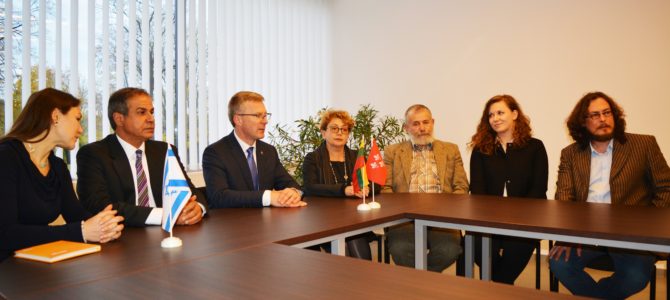
An Israel Day celebration took place in Jurbarkas, Lithuania on October 26, attended by Israeli ambassador to Lithuania Amir Maimon with embassy staff, representatives from the Jurbarkas regional administration, representatives from the Lithuanian Jewish Community and others.

Before the event the Israeli ambassador and Skirmantas Mockevičius, the head of the Jurbarkas regional administration, met and talked with students from the Antanas Giedraitis-Giedrius Gymnasium in Jurbarkas, and later with Lithuanian Jewish Community chairwoman Faina Kukliansky and Community members visited the Jewish cemetery in Jurbarkas. The official event took place at the Jurbarkas Regional Administration Public Library in the afternoon, where the photo exhibit “Pope Francis’s Visit to Israel” was opened and a sculpture by sculptor Dovydas Zundelovičius dedicated to the memory of the Jewish community of Jurbarkas was unveiled. The winners of a student drawing contest called “Let’s Draw Jerusalem” were also awarded, photos of trips to Israel were displayed and Jewish cuisine was showcased.

Cultural Historian Violeta Davoliūtė: Deportations to Siberia Were Lithuanianized, Catholicized

diskusija-apie-radikaliojo-nacionalizmo-nuotaikas-lietuvoje-51388c8860434-694x480

by Jūratė Juškaitė
manoteises.lt

Historians reckon about 17,000 people were deported from Lithuania during the first Soviet occupation. Cattle cars were sent deep into Russia from June 14 to June 18, 1941, and many of the deportees didn’t survive the first winter. Most people in Lithuania know these facts well, but June of 1941, often called the tragedy of the Lithuanian people, isn’t all that Lithuanian.

Research recently performed by cultural historian Violeta Davoliūtė soon to appear in the book “Population Displacement in Lithuania in the Twentieth Century” (Brill, 2016) attempts to bring the experiences of deported Lithuanian Jews back into collective memory regarding those days in June. The researcher says the narrative of deportations formed during the push for Lithuanian independence in the late 80s and early 90s contained ethnocentric elements and was often too “Catholicized.” Although the official politics of memory seem complicated if only for the widespread “Jewish Communist” stereotype, Davoliūtė says these and similar stereotypes have failed to divide this group of deportees, which is a tight-knit community based on shared experience.

In a recent discussion historian Dr. Arvydas Anušauskas was the first to call the 1941 deportations multiethnic. Why are they called this?

Ethical Will of Leonidas Donskis: Kaddish for Butrimonys

img_17_105
photo courtesy Milda Jakulytė-Vasil

In line with the expressed wish of the recently deceased Lithuanian philosopher and author Leonidas Donskis, a group will assemble in the Lithuanian town of Butrimonys Sunday, October 23, to say kaddish for the Jewish community murdered there in 1941.

“I would be happy, if while I am still alive, something similar would happen in Butrimonys… I feel a moral obligation to say kaddish there with Jews,” Donskis said in an interview on Delfi TV on July 31, 2016. The interview in Lithuanian is available here.

Kaddish will be performed by Lithuanian Jewish opera soloist Rafailas Karpis.

Time: 3:00 P.M. to 4:00 P.M., Sunday, October 23, 2016
Location: Jewish mass grave site in Butrimonys, Lithuania

Mini-Limmud 2016

The LJC and the EJF Mini-Limmud educational conference on Judaism will take place November 25 to 27, 2016, at the Trasalis resort and spa in Trakai near Vilnius, Lithuania. Participants must register between October 19 and 28. For more information contact Žana Skudovičienė, telephone +370 678 81514, email mini.limmud@gmail.com

Israeli Embassy to Present Awards to 3 Lithuanian Righteous Gentiles in Kaunas

The Israeli embassy in Vilnius is holding a ceremony to honor and award three Righteous Gentiles October 21 in Kaunas. The ceremony will confer the Yad Vashem title of Righteous among the Nations upon Antanas Blažaitis (1897-1949), his wife Adelė Blažaitienė (1903-1988) and their daughter Valentina Eugenija Blažaitytė Liutikienė (1927-1993). The Yad Vashem medals and certificates are being awarded posthumously and will be accepted by their children, grandchildren and great-grandchildren. The ceremony is scheduled for 1:00 P.M. on Friday, October 21, at the Kazys Grinius Pre-Gymnasium, Šiaurės prospect No. 97, Kaunas. Those who wish to attend should contact the Israeli embassy before October 20, telephone +370-5-2502510, fax +370-5-2502555, email press@vilnius.mfa.gov.il

Sara Lapickaja Has Died

Netekome Saros Lapickajos

Following prolonged illness Sara Lapickaja, 79, died in Ashdod, Israel, on October 11, 2016. An active former member of the Lithuanian Jewish Community, she was also a Yiddish language and literature expert and a held a doctorate in philology. The Lithuanian Jewish Community express our deepest condolences to her surviving family and relatives.

Sara Lapickaja was born in Kaunas on June 14, 1938. She and her 10-year-old brother managed to escape the Holocaust and flee to Russia without their parents, where they were sheltered at an orphanage in the Kirov oblast. Lapickaja was in the first class of the Vilnius Jewish School in 1945, but the school was shut down within several years and she transferred to a Russian school, then graduated from the Vilnius Music School where she received a degree in choir conduction. She taught high school in Vilnius and Kaunas until 1988 while devoting much of her energy to the Jewish community, setting up an amateur volunteer choir which she conducted and helping establish the Jewish kindergarten in Vilnius, among other things.

In 1988 with help from the Lithuanian Jewish community she travelled to Israel on a Soviet passport to study at Bar-Ilon University. In Israel she devoted herself to Yiddish language and literature and earned a master’s degree, then furthered her education in St. Petersburg, Russia, where she successfully defended her doctoral thesis, “Ber Gelpern: Editorial and Educational Work” in 1997. She taught Yiddish language and literature in Israel for many years at Bar-Ilon and other institutes of higher learning.

She had a deep and significant relationship with Vilnius’s famous writer Abraham Karpinovich who wrote in Yiddish. They often attended conferences together, including in Vilnius. Karpinovich devoted much of his creative fervor to Jewish life in interwar Vilnius and after his death in 2004 the Vilna Gaon State Jewish Museum set up a special room in his name containing much of his archives and other items.

Everyone who knew Sara loved her and we will remember her goodness, sincere and open nature and her goal of being useful to her people.

Let her rest in peace in the Land of Israel.

Panevėžys Jewish Community Visits Auschwitz, Birkenau

Panevėžio miesto žydų bendruomenė lankosi Aušvico ir Birkenau koncentracijos stovykloje

There were many events to commemorate the Holocaust in September at the Panevėžys Jewish Community. In August members of the Panevėžys Community took part in ceremonies marking the anniversary of the destruction of the Jewish communities of Biržai, Kupiškis and Rokiškis.

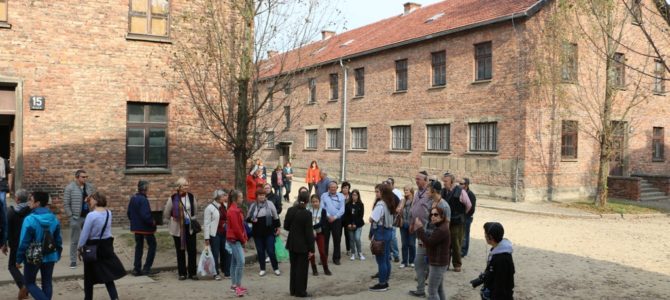
The series of commemorations of victims ended on September 30 with a trip to Poland where Panevėžys Jewish Community members visited the Auschwitz and Birkenau concentration camps.

During the trip Panevėžys Jewish Community members heard many tragic stories about the events of the World War II era. The tours of the death camps Auschwitz and Birkenau deeply affected children and parents. Over 1.5 million Jews, Russians, Roma and people of other ethnicities were murdered there. The Nazis murdered prisoners in the gas chambers and burnt the bodies of their innocent victims in the furnace.

Returned from Israel to Live in Lithuania

Iš Izraelio sugrįžo gyventi į Lietuvą

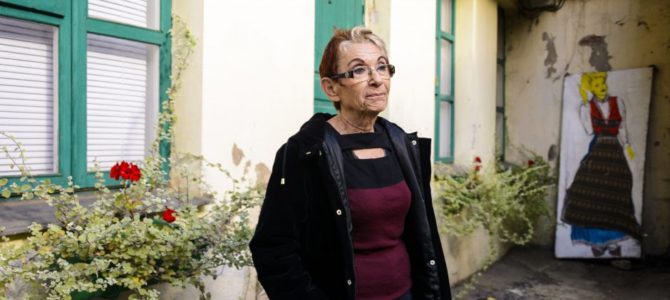
“So you’re a Jew-girl? Oh my, how fine!” Bella Shirin gets this reaction from a Lithuanian woman as they chat while waiting at the doctor’s. Born and raised in Kaunas, she went to Israel with her parents during the Soviet era, and two months ago she returned to live in Lithuania.

True Litvak Family

Bella isn’t upset by the stranger’s words. “All of us Jews are fine,” she replies to the surprised Lithuanian woman. “Lithuania and Israel are for me like two children of the same mother. I love both equally. Our families have been in Lithuania from the time of Gediminas. We are true Litvaks,” Bella exclaims with evident pride.

The energetic and svelte 70-year-old greets us in one of the old apartment houses on E. Ožeškienės street. Bella rents a room here. Her courtyard is well known; it’s the site of the “Courtyard Gallery,” with the walls of the surrounding buildings painted with portraits of the Jews who lived here until the Holocaust. “I wouldn’t like my picture taken in front of them. One should know history, recall the past, but look to the future. We need to talk more about bright examples, about living together peacefully,” she explains.

Full story in Lithuanian here.

Vytautas Magnus University Students Join City’s Effort to Revive Old Jewish Cemetery in Žaliakalnis Section of Kaunas

In the last several days work was completed in a month-long project to photographically document almost 6,000 headstones. “We are grateful to the Vytautas Magnus University community for this good-will contribution to restoring historical heritage in Kaunas. Eight students responded to our call and truly performed a great and significant deed. Each headstone was photographed from several angles so now we have several thousand photographs total. They will be included in a common data base which will serve in continuation of the project to restore the old Jewish cemetery. Additionally, a web page is being set up right now especially for this project where all the students’ work will be on display as well,: Kaunas city council member and project initiator professor Jonas Audėjaitis said.

The decision to inventory and identify the graves at the old Jewish cemetery in the Žaliakalnis neighborhood of Kaunas was made last fall. To do so comprehensively according to methods required, efforts to renovate the graveyard were undertaken first. The municipal enterprise Kapinių priežiūra [Cemetery Maintenance] removed brush and unwanted bushes, cut the grass, fixed up the fence and did other work urgently needing to be done, and the enterprise plans to continue fixing up the cemetery. Now video surveillance cameras have been placed around the perimeter of the location.

At the end of July there was a volunteer clean-up campaign. In order to revive the abandoned space and commemorate it, Kaunas city leaders and several dozen volunteers cleaned headstones and counted more than 5,800 graves. The decision was made not to move monuments knocked over by vandals at the present time.

Lithuanian Prime Minister Sends Birthday Greetings to Markas Petuchauskas

Premjeras sveikina Marką Petuchauską jubiliejaus proga

Lithuanian prime minister Algirdas Butkevičius has sent birthday greetings to art history and theater scholar Markas Petuchauskas on the occasion of his 85th birthday.

“You are an important creator of the cultural history of Lithuania and have dedicated many years of your life to the study of art and art history, and especially the development of our theater. Led by mature wisdom and relying upon your wide erudition, you have revealed to us the unique nature of works by famous artists and have painted detailed and colorful pictures of celebrated personalities. You have always been a person of wide horizons and constructive dialogue, and therefore have contributed much to the understanding and to the good cooperation between the Jewish and Lithuanian peoples.

“I sincerely thank you for your great contribution to the spiritual fortification of our state and enrichment of cultural life,” the Lithuanian prime minister said in his birthday greeting.

Book about Lithuanian Public Figure Irena Veisaitė Launched in Paris

Paryžiuje pristatyta knyga apie Lietuvos visuomenės veikėją I. Veisaitę

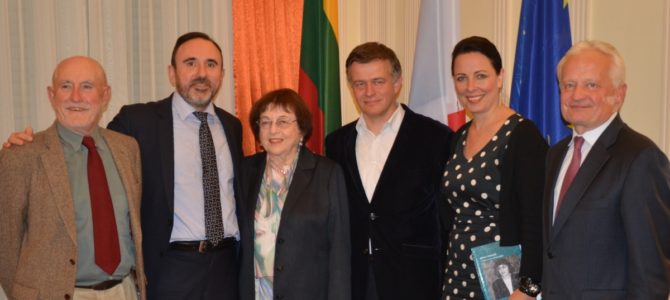
The Lithuanian embassy in Paris hosted the launch of Yves Plasseraud’s new biography in English, “Irena Veisaitė: Tolerance and Involvement,” October 3. Lithuanian ambassador to France Dalius Čekuolis spoke and said he was happy to have the opportunity to present a French author’s book in English about a noble Lithuanian person who has inspired and set an example of tolerance, and who is an active champion of European values.

The presentation was followed by a discussion with the author, academic and attorney Yves Plasseraud, and the guest of the evening, Irena Veisaitė herself, professor of literature, drama critic and human rights activist. The discussion was moderated by professor Šarūnas Liekis, dean of the Political Science and Diplomacy Faculty at Vytautas Magnus University in Kaunas. Veisaitė’s daughter Alina also attended with her son and friends.

Veisaitė, born in Kaunas in 1928, is a well-known public figure in Lithuania, a celebrated scholar of the theater, a professor of literature, one of the founders of the Lithuanian Open Society Fund and a member of the Lithuanian national UNESCO commission from 1999 to 2007. She is a member of numerous international and national NGOs and has received many awards and distinctions in Lithuania and other countries. Veisaitė has consistently emphasized the need for dialogue and tolerance even in the most difficult situations life has to offer in all her work.

Happy 85th Birthday to Markas Petuchauskas

The Lithuanian Jewish Community wishes professor habil. Markas Petuchauskas a happy 85th birthday! The doctor of art history has written many books on theater and drama over many years.

We wish him continuing health, continuing creativity and hope for another of his wonderful books. Let’s all wish him inspiration, success and love.

Today Markas Petuchauskas is the only person who can speak with real authority about the Vilnius ghetto theater which operated in 1942 and 1943. He was a ghetto prisoner and miraculously survived, as did his mother, after being rescued by good people. For many years he has sought to renew the interrupted dialogue between Lithuanians and Jews, which, he says, is best understood through art.

Happy Birthday! Mazl tov! May you live to 120!

Holocaust Commemoration in Švenčionys

Spalio 2 d. Švenčionyse vyko renginiai, skirti atminti 75 m. sukakčiai nuo Holokausto pradžios

The tradition of gathering and remembering the Jewish victims of the mass murder in Švenčionys on the first Sunday in October has been followed for many years. Jews from around the world and local residents gather to mark the tragic occasion and bow before the mass grave. Israeli ambassador to Lithuania Amir Maimon was there this year on October 2, as were Švenčionys regional administrator Rimantas Klipčius, Ethnic Minorities Department to the Lithuanian Government senior specialist Aušra Šokaitienė, Vilnius Sholem Aleichem ORT Gymnasium principal Miša Jakobas, Švenčionys regional administration commissioners, members of the Jewish community and students.

Wreaths were laid and candles lit at the Menorah monument to the victims of the Švenčionys ghetto at 11:00 A.M. in the Švenčionys city park. The victims were then remembered at the military base where they were massacred in the village of Platumai in the Švenčionėliai aldermanship.

The Holocaust Wound That Never Heals in the History of the World

by Algis Jakštas, Švenčionių kraštas

We will probably never find an answer to why expressions of mass genocide [sic] keep repeating in human history, why people are murdered for their ethnicity, race and religion. A few years ago as I watched the film Salt of the Earth (2014) about the photographer Sebastião Salgado who has spent many years photographing genocide committed around the world at the end of the 20th and in the early 21st century, I recalled the Holocaust carried out by fascists against the Jewish people as well. I have spoken many times with Moise Preis who lives in Švenčionys and who passed through all the brutality of the ghettos and concentration camps and through a miracle survived. Sometimes as I listened to his stories I found it hard to even imagine how a person could bear such atrocities and survive, and preserve his humanity.