History of the Jews in Lithuania

International Holocaust Remembrance Day in Brussels

ejc

The assembly of the European Jewish Congress and a ceremony to mark International Holocaust Remembrance Day were held in Brussels. Lithuanian Jewish Community chairwoman and the heads of other European Jewish communities participated at the events.

EJCasambleja2

More photos here.

Panevėžys Marks International Holocaust Day

On November 1, 2005, the United Nations General Assembly adopted a resolution and called upon the world to mark January 27 every year as International Holocaust Remembrance Day. On that day in 1945 as World War II was still going on the prisoners of the Auschwitz concentration camp were liberated. This was the largest Nazi death camp where about 1.5 million people including the elderly and children were murdered, of whom about 1 million were Jews.

Lithuanian is a member of the International Holocaust Remembrance Alliance which actively participates in international programs to combat anti-Semitism. In 1941 Nazi Germany occupied Lithuania and over a few months the majority of the Lithuanian Jewish community had been murdered. Some Lithuanian Jews were sent as labor to ghettos set up in the cities. The Panevėžys ghetto was liquidated on August 17, 1941. About 13,500 Jews were shot. Studies by the International Commission show 200,000 Jews were exterminated. There are more than 200 mass murder sites in Lithuania, and about the same number of old Jewish cemeteries.

Paa5 getas

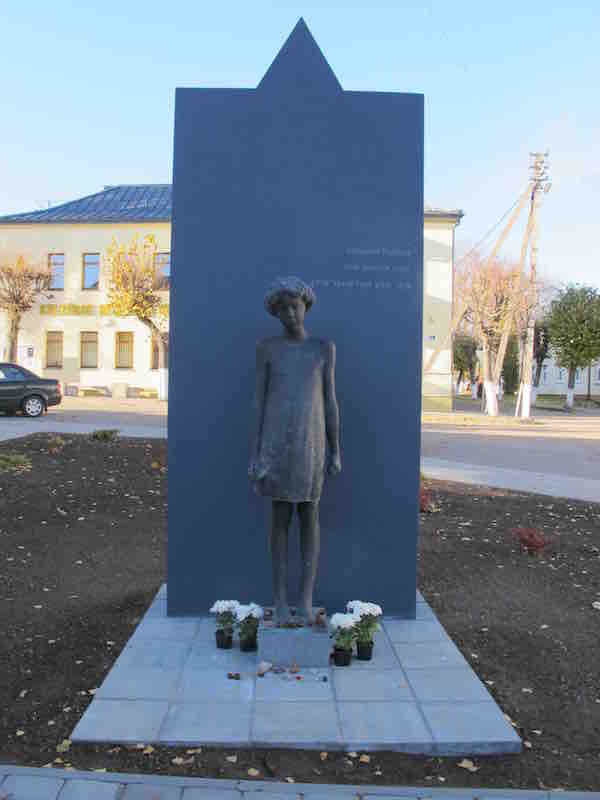
The date was marked on January 26 at the Sad Mother statue in Memory Square in the Jewish cemetery in Panevėžys. Participating were Panevėžys mayor Rytis Mykolas Račkauskas, Panevėžys city council member Alfonsas Petrauskas, teachers and students from the Margarita Rimkevičaitė Services and Business School and the J. Miltinis Gymnasium, members of the Panevėžys Jewish Community and city residents. Mayor Račkauskas spoke and laid a wreath, and city council member Petrauskas also spoke. Panevėžys Jewish Community chairman Gennady Kofman recalled the horrible facts of Jewish extermination, Lithuanian-Jewish cooperation and mutual aid, and thanked Lithuanians who rescued Jews. He laid a wreath before the memorial. Jewish calendars from the LJC and stars of David paid for by Panevėžys Jewish Community member Jurij Grafman were passed out to participants. Wreathes and flowers were also laid at the Ghetto Gates monument. A documentary film about the Auschwitz-Birkenau camp was screened at the Panevėžys Jewish Community, a conference was held and there was discussion on the facts in the cases of heroic rescuers of Jews.

Looking Forward to the Bagel Shop Café’s First Birthday


photo: Vidmantas Balkūnas / 15min.lt

The Bagel Shop Café is gradually becoming an unofficial Lithuanian Jewish Community tourism center. Although there is an official tourism center in Vilnius, it’s not as successful. So if you want to get the newest information about what to see, what to taste and with whom to speak, you’ll likely find it at the shop at Pylimo street no. 4. It should be noted it wasn’t supposed to serve this function. In 2014 the project, still in draft form, was born as a tolerance campaign against public expressions of anti-Semitism and hate. But in the end it became a real, cozy place.

beigeliu-krautuvele-vilniuje-5876492ae8f20

Full story in Lithuanian here.

Memorial to Lithuanian Jewish Holocaust Victims to Be Unveiled in Karl Jäger’s Home Town

church

January 27 has been marked as an official day to commemorate Nazi victims since 1996. On this occasion the film “Karl Jäger und Wir – die langen Schatten des Holocaust in Litauen” [Karl Jäger and Us: The Long Shadow of the Holocaust in Lithuania], a multi-generational project, is to be screened in Waldkirch, Germany. A monument commemorating the Jews murdered in Lithuanian and Holocaust victims from 1941 and 1942 is also to be unveiled there on January 29.

The City of Waldkirch, the “Waldkirch in the Nazi Period” workshop and the Catholic pastoral care unit in Waldkirch are to unveil the new memorial on January 29. The public is invited to attend the unveiling.

The “Waldkirch in the Nazi Period” workshop initiated the idea for the memorial in October of 2011 and it was approved by city council in 2015. It will be located by the Church of St. Margarethen and the Elztal Museum. The opening begins at 6:00 P.M. at the museum and will feature Mike Schweizer accompanied on saxophone.

The second part of the event is scheduled to take place in the church and will feature Katharina Müther, who is renowned for Yiddish, Sephardic, Sinti and Roma songs from Eastern Europe. German MP Gernot Erler, who served as state minister in the foreign ministry from 2005 to 2009, will deliver a speech, as will historian Dr. Wolfram Wette and pastor Heinz Vogel, with possible discussion and reflection afterwards.

The film “Karl Jäger und Wir – die langen Schatten des Holocaust in Litauen” is to be screened at the church at 8:00 P.M. The film is the fruit of a multigenerational project by Black Dog eV.

Representatives of the Lithuanian Jewish Community plan to attend the commemoration which has caused some surprise in Lithuania. It’s important to note Karl Jäger lived in Waldkirch as a young man, although he was born in Schaffhausen, Switzerland. Jäger, an SS colonel, was the main force behind the Holocaust in Lithuania. His report, known in Holocaust studies as the Jäger Report, is a detailed account of Nazi mass murder operations against Jews in Lithuania, listing mass murders by date and location and breaking down the number of victims in the categories of males, females and sometimes children.

Jegeris

After the war Jäger evaded capture by the Allies using a false identity. He worked as a farm hand until his report was discovered in March of 1959. Jäger committed suicide in Hohenasperg prison near Stuttgart in the German state of Baden-Württemberg awaiting trial in June of 1959. The Soviet Union only released the Jäger Report to West Germany investigators in 1963 during the trial of Hans Globke in East Germany.

The Jäger Report is one of the primary documents witnessing to the scope of the Holocaust in Lithuania. The Jäger Report details the murder of 47,326 men, 55,556 woem and 34,464 children in Lithuania, for a total of 137,346 Lithuanian Jews murdered in the first months of the Nazi occupation of Lithuania in the summer and fall of 1941.

Full story in German here.

We Remember at the Kaunas Jewish Community

“We Remember -Mes atsimenam” Kauno žydų bendruomenėje

Rememeber2

The Kaunas Jewish Community honored the memory of victims and took part in the international We Remember campaign on the eve of International Holocaust Day.

Photos: Members of the Kaunas Jewish Community, local residents in solidarity, students from the A. Puškinas and S. Darius and S. Girėnas gymnasia, whose students marked International Holocaust Remembrance Day on January 27, educational assistant Audronė Zamalienė (standing in final photograph with M. Duškesas).

WJC on Holocaust Remembrance Day: Thousands of We Remember Photos at Auschwitz-Birkenau

WJClogo


Press Release 

January 24, 2017

Ahead of International Holocaust Remembrance Day on January 27:

Thousands of We Remember photos to be projected at Auschwitz-Birkenau as World Jewish Congress campaign reaches millions world-wide

AUSCHWITZ-BIRKENAU – Thousands of photos of people holding “We remember” and “I remember” signs in honor of the victims of the Holocaust are on display on a giant screen at the former Nazi German death camp Auschwitz-Birkenau from January 24 to 26, 2017, ahead of International Holocaust Remembrance Day this Friday. The display next to the International Monument at Birkenau is part of a global social media campaign conceived and run by the World Jewish Congress whose aim is to raise awareness of the Holocaust.

More than 100,000 people from every continent have already taken part in the WJC’s campaign which calls on participants to post their photos to facebook, twitter and other social media sites along with the hashtag #WeRemember.

“The goal is to reach those who don’t know much about the Holocaust, or who might be susceptible to those who deny it, and to remind the world that such horrors could happen again. Using the tools of social media we hope to engage the next generation, because, soon, it will be their responsibility to tell the story and ensure that humanity never forget.

“Auschwitz-Birkenau was the Nazis’ biggest killing site and is the best-known symbol for the Shoah world-wide.

“We thank the Auschwitz-Birkenau Memorial and Museum for allowing the screening on the grounds of the former death camp, and for supporting our campaign,” said World Jewish Congress CEO Robert Singer.

A live stream of the screening is to be made available at the following link: https://www.facebook.com/WorldJewishCong/videos/vb.130945114804/10154953773549805/?type=2&theater&notif_t=live_video_explicit&notif_id=1485262793563023

e4a74295-c07e-4e29-8e21-c0945f611f7d

71b0f566-8831-40ce-8994-3d32a06f7b5d
Photo of the installation

Litvak Al Jaffee Gives Interview to Lithuanian National Radio

Lietuviškų šaknų turintis karikatūristas Alas Jaffee: „Nekuriu nieko nešvankaus“

Litvak cartoonist Al Jaffee of MAD magazine fame told Lithuanian state radio’s Week of Culture program so many crazy things happen in the world that one must choose from the world of politics and celebrity at what to laugh now.
Al Jaffe4

He explained he doesn’t like doing anything offensive, cheap, crude or sexual in his art. He simply likes to portray funny situations. When a politician says something outrageous, all he has to do is spin it a little in a certain direction to create one of his trademark caricatures, the 95-year-old cartoonist who holds the Guinness Book of World Records record for longest career in cartooning.
jaf

Full story in Lithuanian here.

Kaunas Jewish Community Celebrates 120th Birthday of Yudl Mark

Kaune paminėtos Judelio Marko 120-osios gimimo metinės
Yudel_mark_001

The Yiddish Club of the Kaunas Jewish Community is celebrating the 120th birthday of Litvak-American Yiddish philologist, educator and author Yudl Mark (1897-1975). Mark taught at the Vilkomir Jewish Gymnasium and was one of the founders of YIVO. He moved to the United States in 1936, and to Israel in 1970. Among his many great works stands the 12-volume Groyser verterbukh fun der yidisher shprakh (Great Dictionary of the Yiddish Language), which caused dispute with YIVO over the use of non-YIVO orthography.

Judel3

Reminder: International Holocaust Remembrance Day Events Begin Today

You’re invited today at 4:30 P.M. to attend a ceremony at the Choral Synagogue in Vilnius where candles will be lit in memory of the victims of the Holocaust and the El malei Rakhamim prayer will be sung. Afterwards all are invited to the Lithuanian Jewish Community at Pylimo street no. 4 in Vilnius to a discussion of Jewish history with professor Antony Polonsky, moderated by professor Šarūnas Liekis, at 6:00 P.M.

Scratch an Historical Lithuanian Town, You Might Get a Shtetl

The Lithuanian Cultural Heritage Department announced they are already planning for this year’s European Day of Jewish Culture and have selected a theme, “The Diaspora and Heritage: The Shtetl.” They characterized the choice as an intentional, mature and topical one for a country where the formerly large Jewish ethnic and religious minority thrived until the 1940s in shtetls.

They explained the word “shtetl” means small town in Yiddish. “When the Jerusalem Temple was destroyed in 70 C.E., Jews spread throughout the world, starting a new stage in the existence of the people, life in the Diaspora. Jews who settled in the Grand Duchy of Lithuania from the latter half of the 14th century and their descendants are called Litvaks. They are a branch of the Ashkenazi, Jews fleeing persecution in the German lands in the Middle Ages,” the department noted in a press release.

They continue: “It’s possible the origins of the shtetls reach back to the 18th century, but one shouldn’t get the mistaken impression that every historical Lithuanian Grand Duchy or Lithuanian town may be called a shtetl. Not so! Only a town where Litvaks comprised up to half, and often more, of the population and where the spirit of Litvak enterprise and intellectual ferment was felt can be called a shtetl without reservations.”

Vilna Gaon Museum Offers Free Tours, 2 Films and Discussion for Holocaust Day

du draugai

To mark International Holocaust Remembrance Day, the Vilna Gaon State Jewish Museum in Vilnius is screening two biographical films and opening a new exhibit about a remarkable friendship between a Pole and Hungarian which ended up saving thousands of lives. The events are open to the public at the museum’s Tolerance Center located at Naugarduko street no. 10/2, Vilnius.

On January 26 the museum debuts its exhibition called Sławik and Antall: The Great Rescuers. Heroes of Three Nations: Poles, Hungarians and Jews and screens the film Life on the Edge. Henryk Sławik, József Antall’s Senior (2014) with the film’s director Grzegorz Łubczyk participating. The film is being shown in cooperation with the embassies of Poland and Hungary and the Polish Institute in Vilnius.

The museum will offer a different take on the Holocaust on January 31, with the discussion at the Tolerance Center at 5:30 P.M. called “The Banality of Evil” with museum director and writer Markas Zingeris and historian Nerijus Šepetys. The discussion is to be followed by a screening of the biographical film Hannah Arendt, to be shown in cooperation with the German embassy to Lithuania. The film is about Arendt who wrote about the Eichmann trial in Jerusalem for the New Yorker magazine and in her own book. Arendt’s ideas about what she called the banality of the evil at work among up-and-coming young Nazi professionals has been met with both criticism and acclaim since she wrote her groundbreaking work.

On January 27, the 72nd anniversary of the liberation of Auschwitz-Birkenau, the Holocaust Exhibit of the Vilna Gaon Jewish State Museum at Pamėnkalnio street no. 12, Vilnius, will offer to the public free guided tours in English or Lithuanian.

Kvietimas_EN

Lithuanians Rediscover Their Own Anne Frank


Estera Kverelytė second from left

Romualdas Beniušis writing in the newspaper Lietuvos žinios tells the story of Estera Kverelytė, a Jewish girl from Darbėnai (Drobyan or Dorbyan in Yiddish), Lithuania, who kept a diary in the months leading up to her murder at the hands of postman and policeman Vladas Jašinskas presumably in early July of 1941. Kverelytė’s diary has been lost but is known to have existed and was used in a documentary called “Nebaigtas dienoraščio puslapis” [Unfinished Page of a Diary] released by the Lithuanian Film Studio in 1964 and still available for viewing on the internet archive of Lithuanian National Radio and Television, according to the author. Beniušis is trying to locate the diary and is asking the public for help.

Full story in Lithuanian here.

We Remember

weremember_website_banner3

Bendruomene We remember

Jewish Community members including a number of Holocaust survivors

16113910_1393314054034017_8722848022136507426_n (1)

As International Holocaust Remembrance Day on January 27 draws near, the World Jewish Congress is inviting everyone to join the global campaign We Remember. Please try to make sure your Community and its leaders visit schools, churches, synagogues, youth organizations and other institutions to deliver the message. Ask your friends, students and teachers who consent to be photographed to hold homemade We Remember signs as their portraits are taken and sent directly to facebook, twitter and/or instagram, and send a link to weremember@wjc.org

Why now?

In 2017 we have to remember the Holocaust.

Because so many more of the survivors are leaving us…

Because Holocaust denial is not getting weaker,

Because genocide is still happening…

And because it is so important to educate the coming generations.

Together, we want to remind the world about all that happened.

R.Rivlin We rememberReuven Rivlin, president of Israel

Radio Documentary: Lost Traces of Vilkaviškis

„Radijo dokumentika”: dingusio Vilkaviškio pėdsakais
Vilkaviškis synagogue

lrtradijas

The Lithuanian National Radio program Radijo Dokumentika aired the episode on at 11:05 A.M. on January 22. It is to be rebroadcast at 9:00 A.M. on January 24 just after the morning news program Ryto Garsai.

Feiga Koganskienė, who lived in the town in the Suvalkija region right up till World War II, says: “Vilkaviškis is only the name Vilkaviškis, it has nothing in common with the former Vilkaviškis.” When she returned to her home town after the war, the woman did not recognize it, and found none of her Jewish family or friends.

Vilkavišio ž buvusi gimnazija

The modern Vilkaviškis Jewish Gymnasium between
the wars, now the city municipal building.

Before the war Vilkaviškis was one of the most ethnically and culturally diverse towns in the region, but now it’s perhaps the most Lithuanian town in the entire country. Today only a handful of people remember Vilkaviškis in the interwar period, and even fewer are prepared to look into the town’s Jewish history. In the Lost Traces of Vilkaviškis episode, Radijo Dokumentika reporters walk with residents for whom the Vilkaviškis of that time is not just a collection of faded facts from history.

Lithuanian Jews behind the Iron Curtain: An Exhibit in Tblisi

Gruzija5vell

The David Baazov Museum of the History of the Jews of Georgia opened an exhibition January 18 called “Lithuanian Jews behind the Iron Curtain” about the Lithuanian Jewish community during the initial Soviet occupation of Lithuania in 1940. Members of the local Jewish community, diplomatic personnel and lovers of history were invited to attend the opening of the moving and historically informative exhibition of photographs and historical documents. Lithuanian ambassador to Georgia Giedrius Puodžiūnas and Tblisi Jewish Community chairman Jamlet Khukhashvili opened the exhibit and the Georgian minister of culture, the minister of reconciliation and civil equality and the Israeli ambassador spoke. The main focus of the exhibit was on individual efforts to resist restrictions on freedom, identity and historical memory. The exhibit is based on primary sources and items from the Vilna Gaon State Jewish Museum, documents from the Lithuanian Central Archives, the Lithuanian Special Archives and personal collections. The exhibit was prepared by the Vilna Gaon museum in Vilnius, Lithuania.

Lithuanian Political Illusions: The “Policy” of the Lithuanian Provisional Government and the Beginning of the Holocaust in Lithuania in 1941

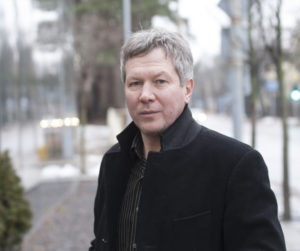
The Lithuanian Jewish Community is publishing a series of articles by the historian Algimantas Kasparavičius, a senior researcher at the Lithuanian History Institute.
kasparavicius

Part 3

As shown by rather abundant surviving archival sources, memoirs and historiography, the pro-German (more accurately pro-Nazi, since in principle there existed no other Germany at that time operating in the international arena as real geopolitical power) concept and strategy of liberation from Soviet occupation and annexation and restoration of the Lithuanian state [1] began to form during the first days of the Soviet occupation, i.e., the end of June, 1940, mainly at the initiative of Lithuanian diplomat in Berlin colonel Kazys Škirpa, who, for several years, had maintained good and even friendly relations with high Nazi Party figures [2]. The process accelerated immediately upon the annexation of Lithuania. As Stalinist repression growing into state terror and radical socio-political reforms took hold in Lithuania [sic]. An organized anti-Soviet resistance quickly began to coalesce by early October of 1940 in Kaunas. The main author of this strategy and its main ideologue, however, was none other than Lithuania’s long-time military attaché in Berlin, colonel Kazys Škirpa. [3] It was at his initiative and due to his efforts that the Lithuanian Activist Front was established in Berlin on November 17, 1940. The LAF established headquarters in Lithuania in Kaunas and Vilnius. Besides Škirpa, the main LAF figures in Berlin and Lithuania were E. Galvanauskas, Klemensas Brunius, Antanas Maceina and Karolis Žalkauskas, Leonas Prapuolenis, Vytautas Bulvičius, Juozas Kilius, Adolfas Damušis, Jonas Pajaujis, K. Antanavičius, J. Vėbra and others. [4]

In cooperation and consultation with German/Nazi political, military and diplomatic figures–field marshals Wilhelm Keitel and Walter von Brauchitsh, chief of the Abwehr admiral Wilhelm Canaris and Abwehr agent in charge of contact with Baltic anti-Soviet resistance organizations lieutenant colonel Herman Gräbe–a program began to be drafted for liberation from Soviet occupation and annexation. Methods, tactics and political strategy for Lithuanian partisan warfare and insurgency against the Soviets were developed. [5]

Holocaust Remembrance Day with Dr. Antony Polonsky

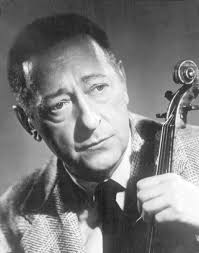
You’re invited to a public meeting and discussion with Dr. Antony Polonsky (the Albert Abramson professor of Holocaust Studies at Brandeis and the chief historian of the Museum of the History of Polish Jews in Warsaw) called The History of the Jews in Lithuania, Poland and Russia at 6:00 P.M. on Thursday, January 26, in the Jascha Heifetz Hall on the third floor of the Lithuanian Jewish Community (Pylimo street no. 4, Vilnius).

Moderator: professor Šarūnas Liekis.

Polonsky-2017-Web-EN-001