History of the Jews in Lithuania

US Author Writes Book of Childhood Impressions of Vilnius

by Ramūnas Gerbutavičius, Lietuvos rytas

“Vilnius is the city of my youth and I have put down roots in the city. Your mother is the first person in your life, and your hometown is your first love, happy or tragic,” Anna Halberstadt said.

The 68-year-old woman was born in Vilnius, educated in Moscow and lives in New York. She wrote poems as a child but never showed them to anyone. She works as a therapist, helping immigrants adapt to American culture. Poetry returned to her thoughts after many years, following the unexpected death of a friend. In 2014 her first book of poems, Vilnius Diary, was published, and was translated into Lithuanian this year.

“Meeting Russian literature teacher Rosa Glintershick at the Salomėja Nėris Gymnasium [in Vilnius] really affected my literary life. When I was 14 I began attending her Russian literature group.”

Full story in Lithuanian here.

A Jewish Orphan from Lithuania Who Became a Household Name in America

In 1897 a 16-year-old Jewish orphan from Lithuania named Lena Himmelstein arrived in New York City and found work in a sweatshop for $1 a week. After her first husband David Bryant died at a young age, Lena supported herself and her son by making and selling tea gowns. When she applied to open a bank account, someone misspelled her name as “Lane.” The clothing line Lane Bryant was born.

In 1907 a customer asked Lena to design her something to wear during pregnancy, unheard of at a time when pregnant women were usually secluded until after birth. With some elastic and an accordion pleated skirt, Lena invented maternity wear. Her dresses were a hit, though she often had to be inventive about advertising, since American society still couldn’t accept the shape of a pregnant woman.

Soon she branched out into creating fashions for plus-sized women as well. She met an eager audience. Together with her second husband and business partner Albert Malsin, Lane Bryant broke new ground by selling stylish, ready-to-wear clothing in larger sizes while offering employee benefits such as insurance plans and pensions.

Respecting all body types and the needs of employees, not a bad legacy for a poor orphan from Lithuania.

Full story here.

#AtmintisAtsakomybeAteitis

Lithuanian Jewish Community Chairwoman Faina Kukliansky’s Address to Conference on Commemorating Great Synagogue of Vilnius

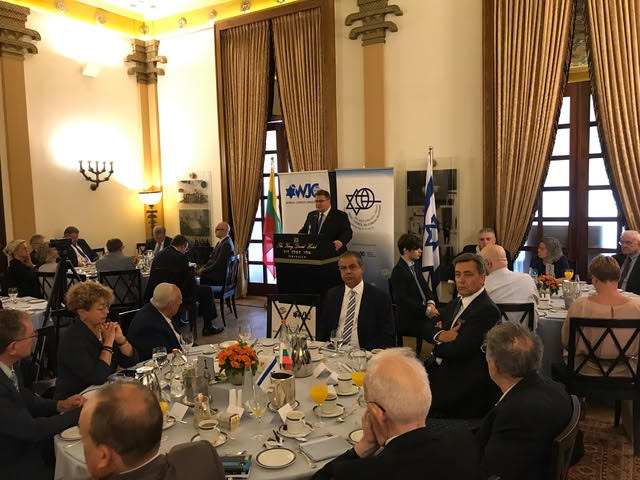
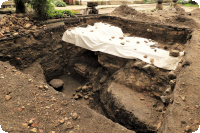
Executive director of the Lithuanian Jewish Community Renaldas Vaisbrodas delivered the following address by chairwoman Faina Kukliansky to a conference called “How Should We Commemorate the Site of the Great Synagogue of VIlnius?” on August 4, 2017:

Dear participants of the international conference How Should We Commemorate the Site of the Great Synagogue of VIlnius?”,

Thank you to the organizers for the opportunity to deliver a keynote speech in the name of the chairwoman of the Lithuanian Jewish Community.

I’d like to use this opportunity to address the conference and ask: who could answer the question posed by this conference better than the Jews of Lithuania? Thanks to the initiative and active efforts of the Lithuanian Jewish Community recently, important Litvak heritage monuments and symbols of culture again enjoy the possibility of being restored in our country, recalling the great past of the Jerusalem of Lithuania and preserving it for future generations.

Israeli PM Netanyahu to Visit Lithuania

Vilnius, September 4, BNS–Lithuanian foreign minister Linas Linkevičius invited Israeli prime minister Benjamin Netanyahu to visit Lithuania and the Lithuanian ministry reports the Israeli PM accepted the invitation made Monday.

The Lithuanian Foreign Ministry issued a press release which described Netanyahu emphasizing positive trends in bilateral economic cooperation, including volume of trade, increases in the tourism sector and successful cooperation in science, research and development and innovation. The two men also exchanged views on possible dangers in both regions and agreed to stimulate bilateral cooperation in the energy, defense and cyber-security spheres.

“A special connection binds Lithuania to Israel. We always emphasize, and always receive agreement from Israel on this, that this is more than just traditional politics,” Linkevičius said. He also noted this year marks the 25th anniversary of diplomatic ties between the two countries, and that there have been a plethora or events, initiatives and visits in Lithuania to mark this important occasion.

The Lithuanian formin also met with Israel’s president, Reuven Rivlin, and meetings are scheduled with Knesset chairman Yuli-Yoel Edelstein and other political figures as well.

Linkevičius is visiting Israel at prime minister Benjamin Netanyahu’s invitation. The Israel prime minister has Litvak roots. Among other family members, his grandmother hails from Šeduva, Lithuania.

Lithuanian Shtetlakh: European Day of Jewish Culture Celebration September 3 at LJC

Press release

The Lithuanian Jewish Community invites the public to attend an event dedicated to the Jewish shtetls of Lithuania to commemorate and remember together this period of Lithuanian history, interesting and dear to us but cut short by the Holocaust and which has become a subject of academic interest and heritage protection.

The theme of this year’s European Day of Jewish Culture on September 3 as confirmed by the Cultural Heritage Department to the Lithuanian Ministry of Culture is “The Diaspora and Heritage: The Shtetl.” This is an intentional, mature and topical choice for a country where the life of the largest ethnic and confessional minority, of the Jews, thrived namely in the Lithuanian shtetlakh until 1941.

The Lithuanian Jewish Community will host an event called “Shtetlakh of Lithuania” on the third floor of the community building at Pylimo street no. 4 on September 3 to celebrate the European Day of Jewish Culture in 2017.

The event will kick off with a bagel breakfast and a presentation and tasting of authentic Jewish recipes at the Bagel Shop Café on the first floor at 9:00 A.M. Following that everyone is invited to attend a short Yiddish language lesson. A brunch awaits the graduates at the Bagel Shop Café. At 2:00 P.M. guest speakers will begin delivering free public lectures on the shtetlakh of Aniksht (Anykščiai), Eishishyok (Eišiškės), Sheduva (Šeduva) and Vilkovishk (Vilkaviškis) and what remains of them. A challa-baking lesson and presentation of the Bagel Shop Café’s new ceramics collection begins at 4:00 P.M. The Jewish song and dance ensemble Fayerlakh will perform a concert at 6:00 P.M.

The Rakija Klezmer Orkestar will also perform a concert at 3:00 P.M. in the Šnipiškės neighborhood of Vilnius.

More information available here.

“The reality in Lithuania is that If you want to learn more about the material and immaterial cultural heritage of a given town in Lithuanian (including the architectural features and aura of buildings, demographic changes and consequent changes in the structure of the town, changes in political structure and the ensuing canonization of ideologized development patterns), you will, unavoidably, run into the word ‘shtetl.’ You will find no better opportunity to understand what this is and to discover the shtetl in the features of buildings still standing in the towns than the events for the European Day of Jewish Culture on September 3,” director of the Cultural Heritage Department Diana Varnaitė said.

The word shtetl is an old Yiddish diminutive for shtot, city, meaning town. The towns of Lithuania where Jews comprised half or the majority of the population, characterized by Litvak energy and the bustle of commercial activity, are often called shtetlakh, the plural of shtetl. It’s thought shtetls evolved into their modern form in the 18th century. Malat, Kupeshok, Zosle, Olkenik, Svintsyan, Vilkomir, Gruzd, Eishyshok, Utyan–these are just a few of the surviving Lithuanian towns.

Lithuanian Jewish Community chairwoman Faina Kukliansky recalls her parents’ shtetl:

“We didn’t travel to my grandparents’ village in the summer. We didn’t have any ebcause they were murdered in the Holocaust, or had moved from their shtetlakh to Vilnius or Kaunas because they could no longer live there without their loved ones and friends lying in the pits together with the bodies and souls of the other unfortunates.

“The Kuklianskys who survived, however, my father, my uncle who hid in trenches from the Nazis near the shtetl of Sventiyansk, were rescued by local village people, but for their entire lives longed for their home on the banks of the Ančia River in Veisiejai, Lithuania. There was no place happier or more beautiful than their native shtetl. Perhaps because their mother hadn’t been murdered yet.

“The eyes of my mother, who was born in Keydan (Kėdainiai) and spent her childhood in Shavl (Šiauliai), her eyes used to just shine when she remembered how they used to go to the ‘spa town’ of Pagelava near Shavl in horse-drawn cart.

“The shtetls… are no more. Now there are cities and towns, but they have no rabbis, no yeshivas, synagogues or Jews… all that remains is love for the place of one’s birth, but love is stronger than hate. The memories remain, too, and without them we wouldn’t be commemorating the shtetls and their inhabitants.”

Those who seek to find the traces of the lost and concealed presence of the Jews only have to find their way to the center of a Lithuanian town, to the old town, where the red-brick buildings still stand. All of the old towns of the small towns were built by Jews. The same goes for the former synagogues, schools, pharmacies and hospitals.

Cultural heritage experts tell us market day and the Sabbath were the main events of the week in the Lithuanian towns. Both were observed. After the Holocaust the shtetlakh were empty, the Jewish homes stood empty even if they still contained family heirlooms and the items acquired over lifetimes. Non-Jewish neighbors often moved into these houses and took over the property. Now no one uses the word štetlas in Lithuanian, it sounds exotic and needs to be translated to miestelis.

LJC Chairwoman Greets Community on September 1, Lithuanian Back to School Day

Dear members of the Jewish community,

I greet you and your families, especially those for whom today is a special holiday, families with pupils and students. I wish you the best on your way to school and in your studies, and may the desire to learn and improve never abandon you. September 1 greetings to the students and teachers of the Vilnius Jewish gymnasium! It is wonderful to know the number of those seeking to enter the Vilnius Sholem Aleichem ORT Gymnasium is growing every year. The excitement of September 1 never fades through life and it will always recall childhood and every September 1 holiday will always cause a small dust particle to irritate our eyes a little. I wish all the students great lessons, and for those who are just entering first grade this year, who became pupils just this morning, I hope the textbook becomes your good friend. Let’s take joy that we have a good Jewish school in Vilnius.

Faina Kukliansky, chairwoman
Lithuanian Jewish Community


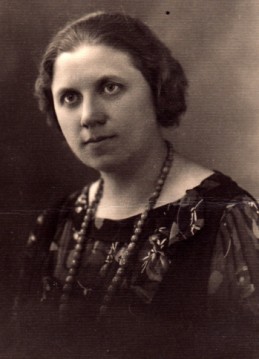
Photograph from Faina Kukliansky’s collection, when she entered first grade and took part in the September 1 back-to-school holiday.

On the Competition Which Took Place in 1990 for Commemorating the Great Synagogue

I report the information about the international tender held in 1990 for rebuilding the Great Synagogue, the architect Tzila Zak’s project being recognized the best and her winning the tender is false.

Honorary Lithuanian Jewish Community chairman Grigory Kanovich (the following document incorrectly spells his surname Konovich), Grigorijus Alpernas and I did not participate as judges in the commission and the use of our names is wrong.

It is possible other alleged members of the jury commission have been listed without their knowledge as well.

Daumantas Levas Todesas

0 monument competition announcement

Kaunas Jewish Community Marks 76th Anniversary of Mass Murder of Jews of Petrašiūnai and the Intellectuals Aktion at the Fourth Fort

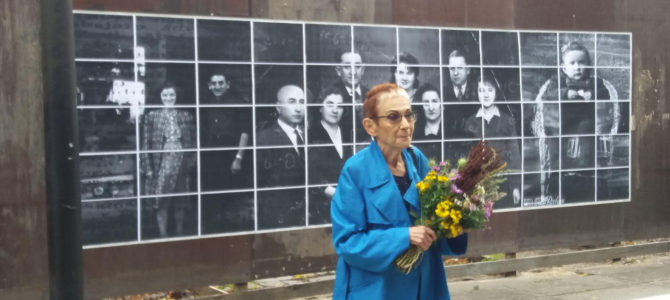
The Kaunas Jewish Community marked the mass murder of the Jews of Petrašiūnai and the Kaunas ghetto intellectuals’ aktion/mass murder at the Fourth Fort in Kaunas August 28. Members of the KJC, residents of Petrašiūnai, including some living eye-witnesses, and deputy Israeli ambassador to Lithuania Efrat Hochstetler, US assistant ambassador Howard Solomon and other US embassy staff, director of the Cultural Heritage Department of the City of Kaunas Saulius Rimas and representatives of the Kaunas Forts associations assembled to honor the victims of the Holocaust.

KJC chairman Gercas Žakas and embassy staff spoke of our duty to remember the Holocaust and the great loss not just to Jews but all Lithuanian citizens, the loss of possibilities and of people who might have achieved much in their home country and the need to remember the victims by name, not as statistics.

The Price of Disunity


Insights into the destruction of the Second Temple
by Rabbi Yonason Goldson

It was in the year 3826 (66 CE) that the excesses of Roman governance over the Land of Israel finally drove the inhabitants of Jerusalem to the breaking point. On the 17th day of the month of Iyar, the taunts and jeers of Roman soldiers provoked an uprising by the city’s populace more violent than either Jew nor Roman could have imagined. By the end of the day the Jews had retaken control of their capital. The Great Revolt had begun.

The victory in Jerusalem came at a painfully high price. Thousands of Jews across the region were massacred or sold into slavery as citizens in Hellenized cities of Caesaria, Alexandria, and Damascus responded to the Jewish uprising with riots and pogroms. But the official response from Rome was more calculated. To impress upon other nationalities throughout its empire the folly of rebellion, the Roman Senate dispatched a massive army to crush the revolution in Judea.

Faced with the approach of four Roman legions led by Vespasian, one of Rome’s most successful generals, it seems unimaginable that the Jews could have held out any hope of victory. But unlike secular history, the Talmudic record incorporates spiritual, as well as political, cause and effect. Just as the Roman occupation of Israel had been decreed on High in response to the Jews’ spiritual shortcomings, so too did the fate of the Jerusalem ultimately rest in the Jews’ own hands. Spiritually, as well as militarily, it was the Jewish people’s internal divisiveness that left them vulnerable to the power of Rome.

Jewish Solidarity

by Rabbi Berel Wein

One of the hallmarks of the story of the Jewish people over the millennia of our existence has been the fact that Jews, no matter what their political persuasion or level of religious belief and observance, always seem to care for one another. Though there always were divergent interests and different agendas present in the Jewish world, when Jews were in mortal danger the Jewish world somehow rose to attempt to help and defend our brethren who were threatened.

Many times our efforts were too little and too late. That certainly was the case regarding European Jewry during World War II. Till today, there is much controversy and bitterness, academic dispute and political debate regarding what was done and what more could have been done to rescue Jews from the jaws of the Holocaust.

It is a topic that gives us no rest and provides no proper solution. I remember how my own family personally anguished over the destruction of my uncles, aunts and cousins. They always asked themselves if more could have been done to somehow extricate them from Lithuania before 1940.

Conference “Jews of Palanga” in Palanga, Lithuania

The Palanga Spa Museum is hosting on September 4 an academic conference called “Jews of Palanga: A Lost Part of the City Community.” The museum is organizing the conference with the Baltic Regional History and Archaeology Institute of Klaipėda University. The event will begin at 10:00 A.M. on Monday, September 4 and the address is Birutės alley no. 34a, Palanga, Lithuania.

Organizers ask those who wish to participate to register by calling 8 4 605 7216.

Kaunas Jewish Community Commemorates 76th Anniversary of Mass Murder at Prienai and Surrounding Areas

On August 26 members of the Kaunas Jewish Community attended a commemoration of the mass murder of Jews in Prienai and the surrounding towns of Birštonas, Stakliškės, Jieznas, Balbieriškis and others 76 years ago. Also attending were Prienai regional administration head Egidijus Visockas and Balbieriškis Tolerance Center director Vitas Rymantas Sidaravičius. KJC chairman Gercas Žakas shared his thoughts and thanked those in attendance. KJC member and Kaunas ghetto inmate Fruma Kučinskienė spoke about the love affair between German composter Edwin Geist and Prienai resident pianist Lyda Bagrianskytė, about their friends and about their rescuers, Prienai resident doctor Juozas Brundza and Kaunas resident Františekas (Pranas) Vocelka. Balbieriškis primary school principal Stasys Valančius, teacher Reda Valančienė and their students also attended the event.

After the painful memories members of the KJC had a chance to speak with event organizers in an informal atmosphere. The Kaunas residents also visited Jewish sites in Prienai, although not many survive: the famous Bagrianski mill listed on the Lithuanian registry of cultural treasures, the former synagogue, a Jewish primary school and the ever-more-beautiful Birštonas spa.

Stories of Vilner Life Accompanied by Music


Arkadijus Gotesmanas, photo from the press release.

Klezmer music festivals are scheduled from August 10 to October 5 in Vilnius, Klaipėda, Kaišiadorys, Joniškis, Merkinė and other Lithuanian towns which will include a nine-concert series called Music for Failed Plays adapted from Abraomas Karpinovičius’s collection of tales The Last Prophet of Vilnius, festival organizers said in a press release.

Avant-garde jazz percussionist and modern music performer Arkadijus Gotesmanas is the force behind the festival. He says he wants to introduce the Lithuanian public to the original writer Abraomas Karpinovičius (1918-2004) who wrote in Yiddish.

His work commemorates the former Jewish life of Vilna, the Jewish drama theater and the Jewish community. Often his characters are odd, for example, Gedalkė Kantorius, who believed melodies could be frozen in a teapot and kept till spring, or the folklorist at the Halle market in Vilnius who collected profanities, or Rokhala who claimed to be a member of the royal court, or the woman who drew banknotes for the future state of Israel outside the Great Synagogue.

Shtetlakh of Lithuania: European Day of Jewish Culture 2017

This year the theme is Lithuanian shtetlakh.

September 3, Lithuanian Jewish Community, Pylimo street no. 4, Vilnius

Program

9:00 – 12:00 Boker Tov bagel breakfast
location: Bagel Shop Café, Pylimo street no. 4, Vilnius
Presentation and sampling of authentic Jewish recipes

12:00 – 12:45 Yiddish language lesson with Fania Brancovskaja
location: Heifetz Hall
Mama-loshn

1:00 – 4:00 Ze Taim bagel brunch and presentation of fall menu
location: Bagel Shop Café, Pylimo street no. 4, Vilnius
Presentation of fall menu

1:00 – 1:45 Hebrew language lesson with Ruth Reches
location: Ilan Hall
Registration here.

2:00 Presentation of European Day of Jewish Culture
location: Heifetz Hall
Welcome speech
Faina Kukliansky and honored guests to speak.

4:00 Challa making lesson with Riva and Amit
location: Bagel Shop Café and White Hall
Registration here.

2:.30 – 4:00 “Shtetlakh of Lithuania” presentation
location: Heifetz Hall
Participants: Vytautas Toleikis, Fania Brancovskaja, Sandra Pertukonytė, Antanas Žilinskis, Rimantas Vanagas, Indrė Anskaitytė, Vita Ličytė and others.

6:00 Rakija Klezmer Orkestar performance
location: Šnipiškės

6:00 Faykerlakh concert Shtetlas
location: Heifetz Hall
Celebrating 45 years of the Jewish song and dance collective

Lithuanian Jews Thank German President for Attention to Holocaust Victims

Vilnius, August 24, BNS–As German president Frank Walter Steinmeier planned Friday to pay respects at a Holocaust commemoration at Ponar, Lithuanian Jewish Community chairwoman Faina Kukliansky said his presence gave rise to emotions of gratitude and joy.

“We are so very thankful for the respect being shown, and Ponar is the symbol of all the murdered Jews of Lithuania,” Kukliansky told BNS.

She also said the Nazi regime was responsible for the Holocaust, but not all Germans.

“The regime turned some people into beasts, and we must hold the rescuers in the highest regard for not surrendering to that… I actually have this ambivalent feeling, I have the urge to apologize to the president because I was raised to think Germans are evil, but neither Germans nor Lithuanians are evil, the regime was evil. We should just thank him and take joy in the fact the president is coming to Ponar to express his respects for the people who were murdered so brutally,” she said.

Kukliansky pointed to modern Germany as an example to follow in the country’s stance towards Nazi crimes.

President Steinmeier on his official visit to Lithuania will also visit German soldiers at the military base in Rukla, Lithuania, on Friday.

Chairs of Lithaunaian, Kaunas Jewish Communities Visit Kaunas Jewish Cemetery

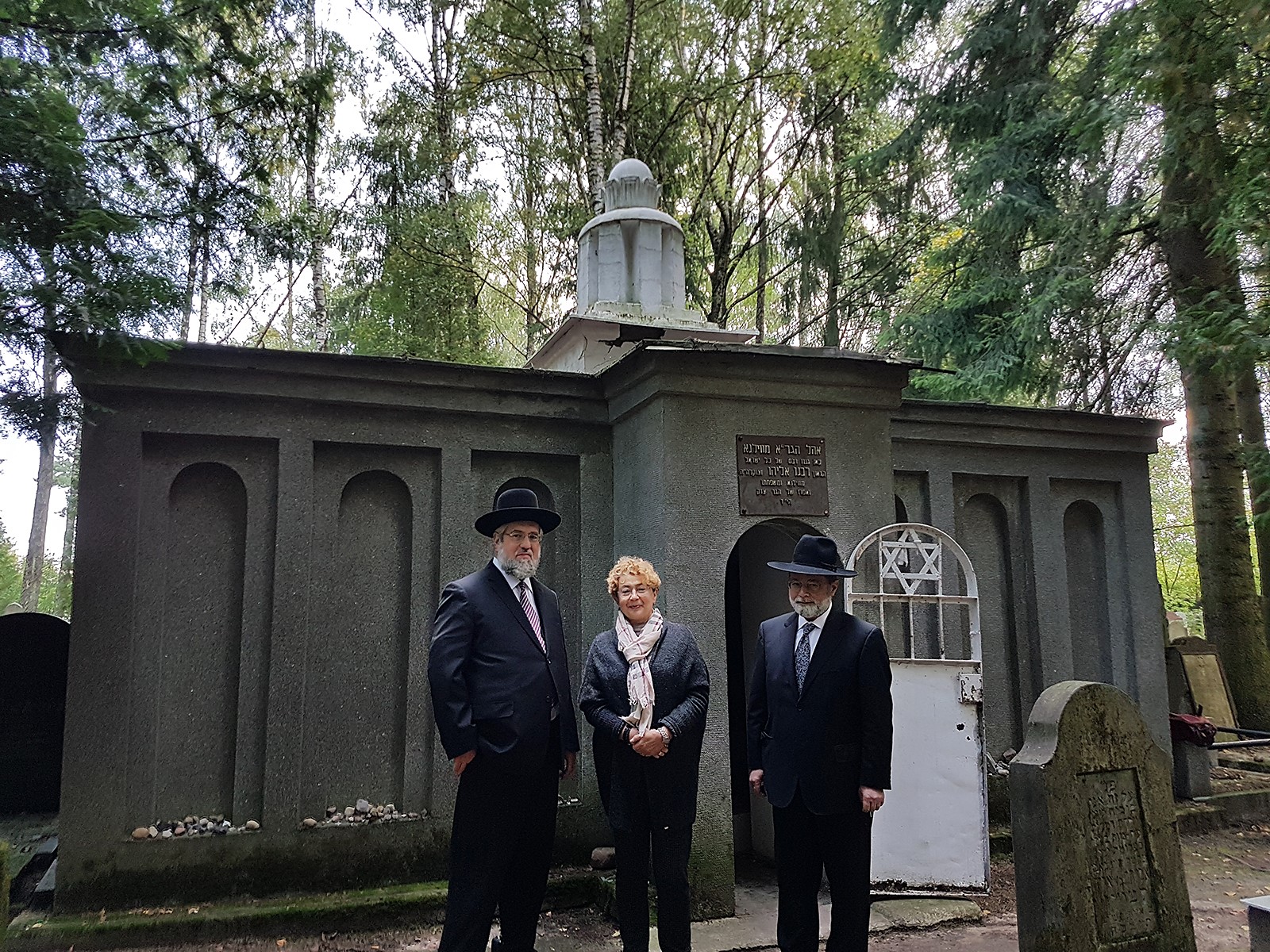
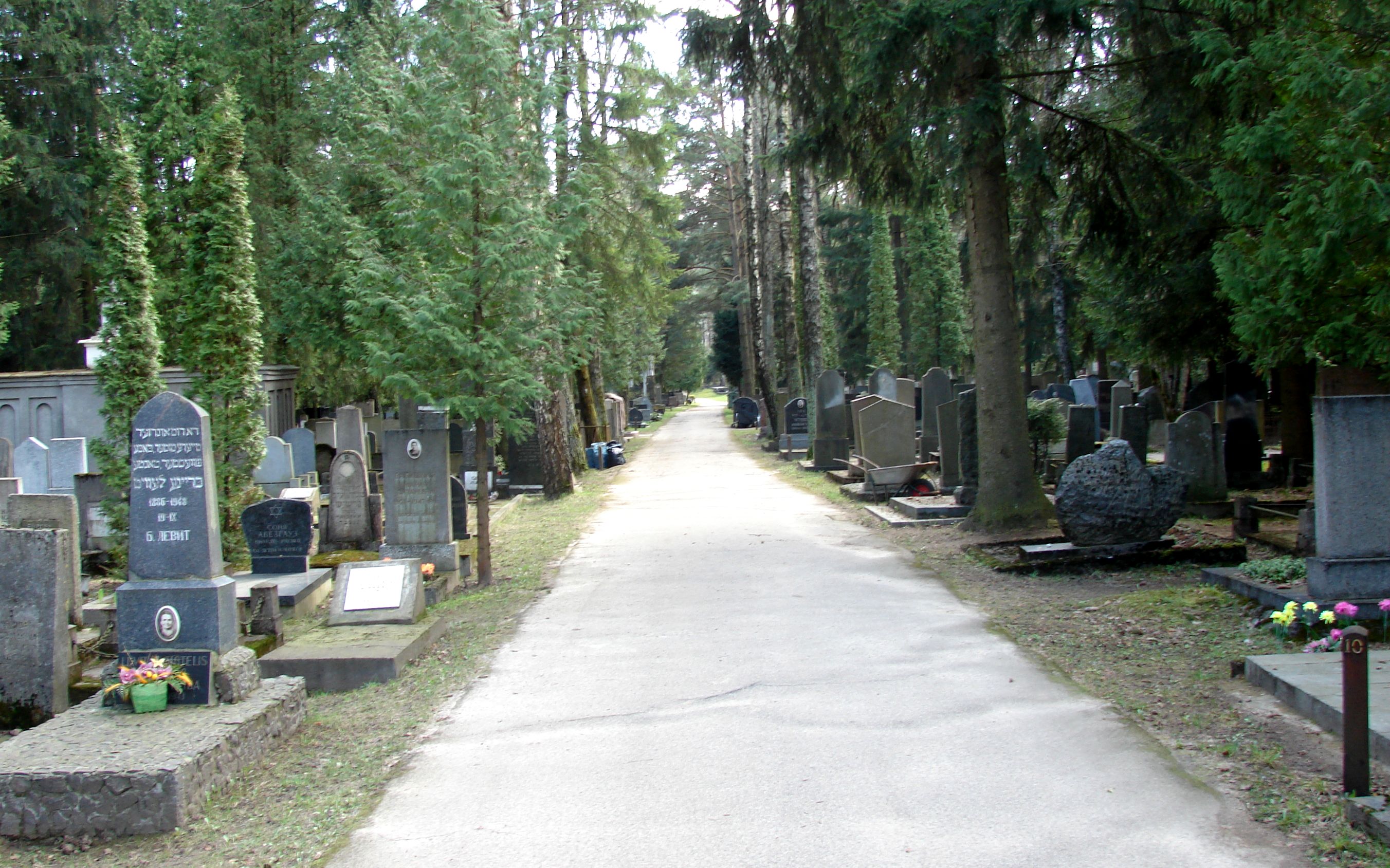
Faina Kukliansky, chairwoman of the Lithuanian Jewish Community, visited the old Jewish cemetery in the Žaliakalnis district of Kaunas August 15 at the invitation of the Kaunas Jewish Community. She and members of the Kaunas Jewish Community, Kaunas-area religious Jewish community and Kaunas Hassidic Synagogue Community and together they studied maps of the cemetery, toured the territory and learned about recent public controversy occasioned by a cemetery neighbor planting decorative trees in the area. Despite the state holiday, Jewish cemetery administrator Edmundas Mikalauskas of municipality’s cemetery supervision enterprise cheerfully agreed to attend the meeting. KJC chairman Gercas Žakas and other participants outlined their positions on the controversy: not only do they approve of the plantings in the area, but enthusiastically welcome and congratulate the person demonstrating this sort of initiative and their beautification of part of the cemetery, in stark contrast to the weedy bushes growing up in other parts of it.

What seemed to cause consternation and surprise wasn’t the landscaping, but the reaction by responsible parties to the artificial scandal generated by one Kaunas figure who always attempts to draw attention to himself through various destructive actions (all the more so since there are plots of land within the cemetery which have caused much more controversy, for example, people living within the cemetery territory for many years who have gardens and even keep animals next to their homes). The KJC chairman mooted the idea of revising the boundaries of the cemetery because the cemetery, which ceased operating in 1952, is constituted of 8 hectares, a large part of which includes empty plots of grass where no burials were ever made. The cemetery, established in 1861, was expanded several times with a view to the future when the Kaunas Jewish community was quite large to meet future demand. Currently there isn’t great demand for grave sites and the cemetery isn’t operational anyway. There is, however, a working Jewish cemetery in Kaunas on H. ir O. Minkovskių street. The LJC chairwoman said she would examine the information received and make a decision soon regarding the planting of decorative trees there.

Exhibit from Vitebsk at Zarasai Regional History Museum

The Zarasai Regional History Museum is holding an exhibit called “Pen and His Students,” partially financed by the Lithuanian Cultural Council. The exhibit is on loan from the Vitebsk Regional History Museum and will run until October 13.

The exhibit features the life and work of Yehuda Pen, who was born and grew up in Zarasai (then known as Novoaleksandrovsk), Lithuania, and his world-famous students. It includes 22 works of art. Local residents and visitors have a wonderful opportunity to view the works of the local artist and his famous pupils, who include Isak Borovsky, Piotr Zankevich, Isak Zeldin, Yelena Kabishsher-Yakerson, Piotr Yavich and Mikhail Kuznetsov.

The exhibit will move on to Vilnius later for an exhibition at the Vilna Gaon State Jewish Museum.

Concentration Camp Survivor Dita Sperling-Zupavičienė Visits Hometown Kaunas

by Danutė Selčinskaja

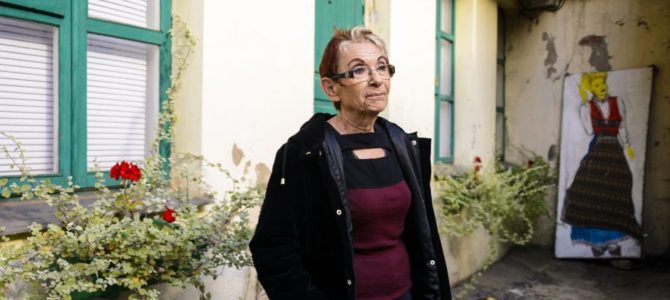
We return to Kaunas with Dita Sperling-Zupavičiene, to the same courtyard at Ožeškienės street no. 21 where she lived with her husband Juda Zupavičius before the war, from which she was expelled in the summer of 1941 and imprisoned in the Kaunas ghetto.

The artist Vytenis Jakas has brought the old residents of the courtyard back, Dita and Juda, Dita’s brother Hirsh, their mother and Juda’s comrade Ika Grinberg, the son of the owner of the building.

In the summer of 2014 Dita travelled from Tel Aviv to Lithuania with the hope of commemorating her husband Juda and his fellow members of the Kaunas ghetto resistance during the 70th anniversary of the liquidation of the Kaunas ghetto.

Vytenis Jakas, who lives in the building, unveiled his frescoes of former residents and Kaunas ghetto heroes Juda Zupavičius and Ika Grinberg on September 22, 2014.

In July, 2015, a memorial plaque commemorating Juda–a lieutenant in the Lithuanian military and a chief on the Kaunas ghetto police force–thanks to the efforts of Danutė Rūkienė and other Kaunas municipality staff. Dita Šperlingienė-Zupavičienė), Lithuanian Jewish Community chairwoman Faina Kukliansky, members of the Jewish community and municipal leaders attended the ceremony.

Dita is now 94 but has forgotten nothing and is glad to share her memories with anyone who asks. She said she was very glad to see her old courtyard again. We also saw paintings of the current residents on the wall as well as Jewish scholars. We were very happy to see our faithful old friends there as well, Fruma Kučinskienė and Vytenis Jakas. Thank you!

Kaunas Celebrates Sugihara Week

Sugiharos savaitės renginiai Kaune

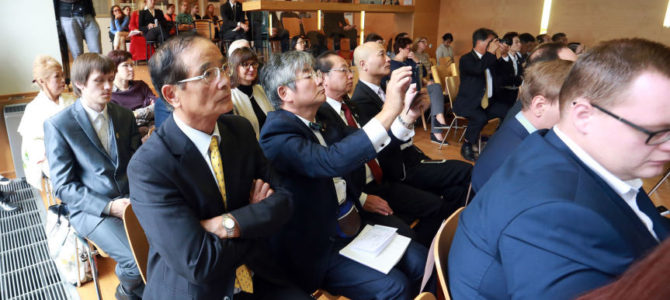
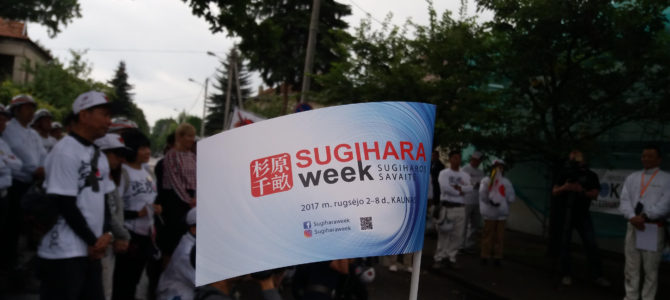
You’re invited to attend the events of the first-ever Sugihara Week celebrations in Lithuania from September 2 to 8 in Kaunas.

The week-long celebration commemorates Japanese diplomat Chiune Sugihara who saved not less than 6,000 Jewish lives in Kaunas together with Dutch consul Jan Zwartendijk.

Japanese ambassador to Lithuania Mr. Toyoei Shigeeda said: “Consul Chiune Sugihara is becoming ever better known in the world and it is pleasing that his great deed is being remembered in ever new ways. It is significant that the Sugihara Week initiative arose in Kaunas, which is the epicenter of the entire Sugihara story.”

Kaunas deputy mayor Simonas Kairys said: “Although Sugihara Week is being held for the first time, it has received major attention in both Lithuania and Japan. It’s incredible what a tie these two distant and different countries share. At the beginning of September many honored guests from Japan will arrive in Kaunas, including representatives of the Japanese Diet, Gifu Prefecture and the Japanese media.”

The deputy mayor invited Kaunas residents and guests to make time in their calendars to attend the wonderful events planned, free and open to the public. The events program includes concerts, symposia, screenings of films, public lectures, exhibits, creative workshops and others in different spaces and venues around Kaunas.

The Sugihara House Museum, housed in the diplomats former diplomatic residence and office, has more information available here.

Sugihara Week also has a facebook page undergoing constant update here.

A listing of events is available in PDF format in Lithuanian here.

Sugihara House may be reached directly by email at sugiharahouse@gmail.com

Happy Birthday to Semionas Finkelšteinas

Dear Semionas,

We are so happy to be able to celebrate your birthday together. We wish you the greatest success as head for 28 years now of the Makabi Lithuanian Jewish Athletics Club. After you completed your studies in economics at Vilnius University, you were one of the initiators behind the reconstitution of the Makabi club in Lithuania and have been its president since 1989. And you have been active in the work of the Lithuanian National Olympics Committee. May athletics always remain important in your life. You have won so many laurels in long distance, as a sprinter and a light athlete, and in the summer of 1990 we remember you together with a group of just over a dozen or so Lithuanians who ran around the Baltic Sea! The years together have been happy and meaningful, and with all our heart we wish success and great health will follow you closely forever!

Mazl tov!