
Heritage

Polish Constitutional Court Upholds Restrictive Restitution Law

Dear Friend,

Today we received disappointing news from the Polish Constitutional Tribunal. The Court affirmed the constitutionality of a law passed by the Polish Parliament that limits the rights of claimants to restitution for private property in Warsaw.

Please see the below article from today’s New York Times describing the law and its implications. This article, as well as other media stories, have highlighted our position. Hebrew speakers may also read this article on Ynet.

The World Jewish Restitution Organization wrote to then-President Bronisław Komorowski last year asking him not to sign the legislation. President Komorowski agreed, and sent the law to the Constitutional Tribunal. WJRO submitted a “friend of court” brief urging the Court to declare the law unconstitutional for violating former owners’ rights.

LJC Statement about the Seventh Fort in Kaunas

Statement by the Lithuanian Jewish Community concerning Cnaan Liphshiz’s article “This Lithuanian Concentration Camp Is Now a Wedding Venue” published at http://www.jta.org/2016/07/24/news-opinion/world/lithuanian-concentration-camp-is-now-a-wedding-venue

The Lithuanian Jewish Community thanks the author of the article and the news agency who have again brought attention to the problematic situation at the Seventh Fort in Kaunas. We also feel it is our duty to explain and add to some of the facts and circumstances brought up in the article.

In June and July of 1941 a concentration camp was set up at the Seventh Fort where up to 5,000 people were murdered, mainly Jews resident in Kaunas. During the Soviet era the fort was used for military purposes and the exact location of the mass grave was unknown and inaccessible to the wider public. In 2009 the Lithuanian State Property Fund, which had ownership of the complex, allowed it to be privatized. The Lithuanian Jewish Community never approved of this decision and numerous times wee expressed our position that this was a huge mistake which couldn’t be allowed to happen at similar sites. In any event, after the fort buildings were privatized, the new owner, Karo paveldo centras [Military Heritage Center], received the right to lease the land around the buildings, which belongs to the state. The mass grave site, whose exact location was not known then, thus fell within territory controlled by a private corporate entity.

Sulamita Lermanaitė-Gelpernienė Would Be 90 Tomorrow

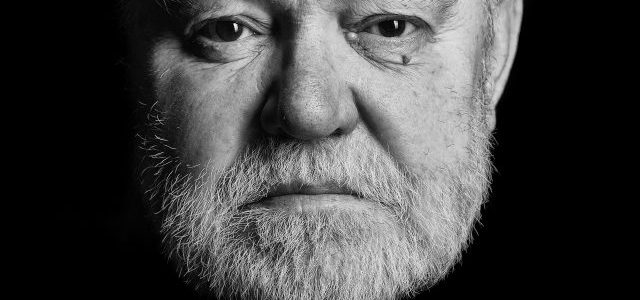
Antanas Sutkus
photo: Antanas Sutkus

Sulamita Lermanaitė-Gelpernienė would have celebrated her 90th birthday tomorrow, July 28. People who knew her remember her.

§§§

…After being graduated from the Vilnius Conservatory, she became a pianist, a concert performer and a concert master at the Lithuanian Conservatory.

Lithuanian Music Academy professor and cathedral head Leonidas Melnikas told [the magazine] Muzikos Barai about Sulamita Lermanaitė-Gelpernienė whom he met when he went to work at the Music Academy as a young man. The professor spoke with the reporter Asta Linkevičiūtė. An excerpt is provided below.

What sort of person, colleague, fellow worker was she?

This was a person to whom you could always go to ask for help of a professional nature, whom you could ask about something, who always sincerely offered advice. She gave advice on how to come up with a repertoire, what material to teach during the school year, how to educate students. Professional communication with her was important human communication and also very pleasant. She was an active member of the cathedral, a real patriot of the collective, she was a fan of the cathedral and the students. The people around Gelpernienė always felt her attentiveness, interest and support.

Work Continues to Remove Jewish Headstones from Power Station

transformatorine-olandu-gatveje-5550721510382
The transformer substation before removal work began. Photo by Lukas Balandis, courtesy 15min.lt

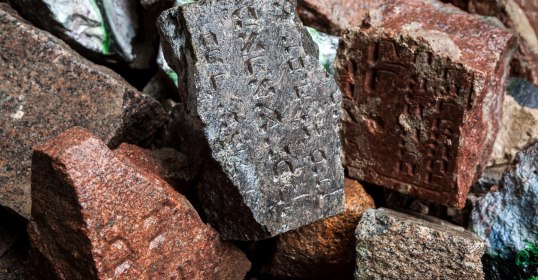
More than a year after a Vilnius resident reported his discovery an electric substation on Olandų street was constructed using Jewish gravestones, and following the announcement this June removal work had begun, the site is now littered with bits of headstones partially surrounded by a simple wire fence and some plastic tape. Most of the fragments are marked with graffiti on at least one surface, and several piles of larger pieces contain partial inscriptions in Hebrew characters, see pictures below.

Israeli Media Report on Parties at Seventh Fort in Kaunas

7thfort

Vilnius, July 25, BNS—Parties held at the Seventh Fort in Kaunas have received attention by the media in Israel following efforts last year to resolve conflicts between the fort’s owners and Jews concerned about the Jewish mass grave discovered there several years ago.

Cultural heritage protection specialists say there haven’t been any complaints recently about unethical activities at the Seventh Fort, and Lithuanian Jewish Community chairwoman Faina Kukliansky said the Israeli press was just bringing up “old stories.”

Discussion of entertainment events at the Seventh Fort came up last year when the Cultural Heritage Department sent the fort’s owners a letter calling upon them not to hold celebrations, games or similar events there.

An article in the Jerusalem Post Monday told the story of the fort’s privatization, the fee charged visitors to the museum territory there and parties held there despite the discovery there in 2011 of a Jewish mass grave.

The article said the Seventh Fort is a popular venue for graduation parties and wedding receptions and the space is available to be used for parties, for cooking on campfires and to host summer camps for children.

This Lithuanian Concentration Camp is Now a Wedding Venue

CROP2-1
A film crew preparing to record at the former concentration camp known as the Seventh Fort in Kaunas, Lithuania, on July 12, 2016. (JTA/Cnaan Liphshiz)

KAUNAS, Lithuania (JTA) — In this drab city 55 miles west of Vilnius, there are few heritage sites as mysterious and lovely looking as the Seventh Fort.

This 18-acre red-brick bunker complex, which dates to 1882, features massive underground passages that connect its halls and chambers. Above ground, the hilltop fortress is carpeted with lush grass and flowers whose yellow blooms attract bees and songbirds along with families who come here to frolic in the brief Baltic summer.

It’s also a popular venue for graduation parties and wedding receptions, complete with buffets and barbecues, as well as summer camps for children who enjoy the elaborate treasure hunts around the premises.

Most of the visitors are unaware that they are playing, dining and celebrating at a former concentration camp.

Preparations Under Way for Švenčionėliai Mass Murder Site Renovation

Ruošiamasi Švenčionėlių masinių žydų žudynių vietos tvarkymui

Work to renovate the Švenčionėliai mass murder site under the current plan is scheduled to begin in August and September, Švenčionys Jewish Community chairman Moisiejus Šapiro says. The period from June to November of 1941 was the most horrible and tragic period in the genocide, when about 80% of Jews in Lithuania were murdered. A ghetto was established in Švenčionys and mass murder operations were begun there. According to different sources, 7,000 to 8,000 Jews were shot across the Žeimena River in Švenčionėliai. A memorial marks the site.

Determining the exact identity of those murdered and buried near Švenčionėliai has been fraught with difficulty. After approaching numerous archives, only the names of seven Holocaust victims buried there were found. Chairman Moisiejus Šapiro is asking Holocaust survivors from the Švenčionys region and the small shtetls there and their children, grandchildren and relatives, wherever they might live now, to tell their stories and send him the names and surnames of those murdered at Švenčionėliai

He can be reached by email at moisa50@mail.ru

Israeli Antiquities Authority Reports Major Finds in Lithuania

2.Historical with team
Photo: Ezra Wolfinger/NOVA

Historical Discovery in Lithuania: The Escape Tunnel of the “Burning Brigade” in Ponar (Paneriai) Has Been Rediscovered

For the first time since the Holocaust the famous tunnel used by the prisoners of Ponar to escape from the Nazis has been located using new technologies for underground predictive scanning.

In an exciting new discovery using electric resistivity tomography at the Ponar massacre site near Vilnius in Lithuania, the escape tunnel used by the so called “burning brigade” to elude captivity and certain death at the hands of the Nazis has been pinpointed.

Some 100,00 people, of whom 70,000 were Jews originating in Vilna and the surrounding area, were massacred and thrown into pits in the Ponar forest near the Lithuanian capital during World War II. With the retreat of the German forces on the eastern front and the advance of the Red Army, a special unit was formed in 1943 with the task of covering up the tracks of the genocide. In Ponar this task was assigned to a group of 80 prisoners from the Stutthof concentration camp.

At night the prisoners were held in a deep pit, previously used for the execution of Vilna’s Jews, while during the day they worked to open the mass graves, pile up the corpses on logs cut from the forest, cover them with fuel and incinerate them. All the while their legs were shackled and the worked in the full knowledge that on the completion of their horrendous task, they, too, would be murdered by their captors. Some of the workers decided to escape by digging a tunnel from the pit that was their prison. For three months they dug a tunnel some 35 meters in length, using only spoons and their hands. On the night of April 15, 1944, the escape was made. The prisoners cut their leg shackles with a nail file, and 40 of them crawled through the narrow tunnel. Unfortunately they were quickly discovered by the guards and many were shot. Only 15 managed to cut the fence of the camp and escape into the forest. Twelve reached partisan forces and survived the war.

Ponar Escape Tunnel Found

Mokslininkai Lietuvoje rado tunelį, kuriuo žydai bėgo nuo nacių

An international group of scholars has completed nearly two weeks of archaeological digging at two sites of importance to Lithuanian Jewish history. They looked for a tunnel known from Holocaust testimonies and attempted to confirm information about the Great Synagogue and surrounding buildings in Vilnius. They used new non-invasive techniques: ground-penetrating radar and electrical resistivity tomography. The international group of scholars included scientists from Israel, Canada, the US and Lithuania. Project leader Dr. John Seligman is the head of the archaeological digging department of the Israeli Antiquities Service. US student volunteers helped at the sites. Some were in Eastern Europe and Lithuania for the first time.

Full story in Lithuanian on Vilnius University’s web site.

Boris’s Litvak Roots

Jungtinės Karalystės užsienio reikalų sekretoriaus Boriso Johnsono šaknys Lietuvoje

lrytas logo

Lithuanian Roots of UK Formin Boris Johnson

British foreign secretary Boris Johnson has said he’ll travel to Lithuania because he has roots here. What roots? The newspaper Lietuvos Rytas tried to find out. Lithuanian foreign minister Linas Linkevičius discussed Lithuanian immigrants in Britain with the UK’s new foreign policy strategist Boris Johnson the day before yesterday and invited Johnson to visit the land of his ancestors. Johnson reportedly accepted the invitation enthusiastically. The family tree of Johson, 52, shows an Elias Avery Loew born October 15, 1879, in Kalvarija in what was then the Russian Empire. He later changed his surname to Low and is the father of Johnson’s grandmother. Both of Eli Low’s parents were born in Lithuania: Charles Loew, a silk merchant was born in Kalvarija in 1855, and Sarah Ragoller in Kaunas the same year. Later the family emigrated to the United States. Lithuanian archives don’t preserve the vital statistics on Johnson’s ancestors. Galina Baranova, advisor to the director of Information and Dissemination Department of the Lithuanian History Archive who has worked successfully for many years with the Lithuanian Jewish archives, said there is no way to find out more about the British foreign secretary’s forefathers, although it is clear he had ancestors in Kalvarija. Those records don’t survive and vital statistics only go back to 1922 now. There was a Ragoler family in Kaunas from 1898 to 1925, according to Kaunas Jewish Community birth records, but there is no way to connect this family with Boris Johnson’s.

Full story in Lithuanian here.

Simnas Synagogue to Get New Life

Simno sinagogą bus bandoma prikelti naujam gyvenimui

Dzukija logo

The Alytus regional administration will look for ways to use the synagogue located in Simnas for cultural activities. The head of the regional administration discussed the issue with representatives of the Lithuanian Jewish Community, the Ministry of Culture and the Cultural Heritage Department.

The synagogue was built in 1905 to replace the old wooden synagogue at the same site and was reconstructed in the mid-20th century. In 1952 it became a palace of culture, and later a school athletics gymnasium. Currently it belongs to the Alytus regional administration.

Lithuanian Holocaust Atlas Author: “I Crawled through the Underbrush to Find Commemorative Stones”

The Lithuanian internet news site 15min.lt has published an extensive interview with Milda Jakulytė-Vasil, the author and prime mover behind the Lithuanian Holocaust Atlas, a hardcopy manual on every known Holocaust mass murder site in Lithuania complete with GPS location and directions for drivers in Lithuanian and English, with an extensive interactive version on the web.

Known in Lithuanian as “Holokausto Lietuvoje atlasas,” the Lithuanian version is available here:
http://holocaustatlas.lt/LT/

with a complete English version here:
http://holocaustatlas.lt/EN/

In the interview on 15min.lt, Milda Jakulytė-Vasil recalled crawling through the brush to find long-neglected mass murder site commemorative markers. She also spoke about compiling the atlas and the help she received from the IHRA, but also from local people, local officials and politicians at the national level, including conservative opposition leader Andrius Kubilius.

Full interview in Lithuanian here.
Bagel Shop Café Draws Attention of ARD-1 German Public TV Crew

Vokietijos Visuomeninės televizijos ARD-1 kūrybinės grupės ypatingas dėmesys LŽB „Beigelių krautuvėlei“

German public television channel ARD-1 filmed footage at the Lithuanian Jewish Community on July 13 with a focus on the Bagel Shop Café for a program to be called “Berlin-St. Petersburg,” according to director Christian Klemke.

He said although the itinerary for the film crew had been decided carefully prior to their trip through Poland, Lithuania, Latvia, Estonia and Russia, they had encountered interesting sites along the way which they will include in the final production.

When they were considering what to film in Vilnius, they discovered Vilnius’s rich pre-war Jewish cultural and spiritual life. “I wanted to know what there is now, so many years after the Holocaust,” Klemke said. Local producer Karolis Pilipauskas told him about the Bagel Shop Café. The Lithuanian Jewish Community facilitated meetings with members of the older generation, including Holocaust survivors. “I was very interested to hear their stories. Young members of the Jewish community also came to the café,” Klemke said.

Sholem Aleichem ORT Gymnasium Graduation Celebration

Šolom Aleichemo ORT gimnazijoje šiandien, liepos 15d. švenčiamos išleistuvės

The Lithuanian Jewish Community congratulates the students, parents and teachers on this significant day.

This year the Sholem Aleichem school graduated 18 high school students. This is the school’s 13th graduating class. Students come from a variety of ethnic backgrounds–Jewish, Lithuanian, Russian, Polish and others–and the school is a place of mutual respect and tolerance. Principal Miša Jakobas says he’s very proud because everyone passed their final exams, a major achievement in comparison to the problems encountered in other Lithuanian high schools. He said there were students who scored in the 96 to 97 percentile range, and one student scored 100% on the English language test, while the average scores were in the 70% range.

Judah Passow Thanks LJC Chairwoman Faina Kukliansky for Celebration for Return of Torah

Juda Passow dėkoja LŽB ir pirmininkei F.Kukliansky už Toros sugrįžimo šventę

“I just want to thank you once again for making possible such a moving and memorable day with the Lithuanian Jewish community,” Judah Passow said in the note.

“It was an honour and a privilege to be with all of you. I’m especially grateful to you for the time and effort you put into making what began as an idea a year ago into a reality,” he wrote.

Judah Passow’s father, professor David Passow at Philadelphia University, received a Rockefeller Foundation grant to commemorate Jewish life behind the iron curtain in 1960. When he went to Vilnius that same year, local Jewish leaders asked him to take away with him one of two Torah scrolls which were used in the Vilnius ghetto and survived the Holocaust intact, saying they were unsure what the future held for Jews in the Soviet Union. The Passows protected the Torah ever since then, for 56 years, and used it for three bar mitzvahs in the family. When he came to Vilnius last year for a showing of his photography work, Judah Passow met Lithuanian Jewish Community chairwoman Faina Kukliansky and the idea was fleshed out of returning the scroll to Vilnius. Just last week Passow returned the Torah dating from the time of Vilna Gaon, with a silver decoration his mother Aviva Passow made for the scroll.

Global Media Carry Discovery of Escape Tunnel at Ponar

News of the discovery of the tunnel used by the burners’ brigade to escape from the mass murder site of Ponar near the Lithuanian capital has been picked up by media around the world. The Lithuanian Jewish Community received a report from the Lithuanian ambassador to India that Indian media are reprinting an article about it from the Washington Post.

A team of experts from Israel, Lithuania, the United States and Canada found the escape tunnel, new killing pits, overgrown paths taken by the victims to the execution site and the distribution of human ashes and crushed bone at the site.

The burners’ brigade was formed by the Nazis to exhume the corpses of Jews shot at Ponar, burn them in large piles and crush to dust whatever bones or teeth survived the fire. They knew they were condemned to death and over a period of time excavated a tunnel from their place of confinement.

Picking Up the Pieces

top
by Geoff Vasil

“Don’t get too close!” an attractive and sunburned young Lithuanian warned at the edge of a large pit just behind what was the Great Synagogue of Vilnius. He’s friendly and it quickly becomes clear he’s the lead archaeologist on the dig, but he’s just as quick to point out he’s formally the lead archaeologist, but Dr. Richard Freund of the University of Hartford in Connecticut is the real force behind the whole initiative.

Mantas Daubaras is doing his doctoral thesis at the Lithuanian Institute of History on a Neolithic site far to the west in Lithuania. He has no personal connection to Jewish Vilna and approaches it as he would any site, dispassionately.

“Yesterday we found what we think is the ritual bath,” he explains, pointing to a small hole in the top of what looks like a vaulted brick ceiling. They sent a camera in to take a look and found a large space terminated by rubble and fill. Does it connect to the Great Synagogue? He doesn’t know yet, but it looks as if it extends right up to the line where they think the back wall of the synagogue once stood.

Jacques Lipchitz Exhibit at the Tolerance Center

Skulptūros iš nacionalinio Žoržo Pompidu meno ir kultūros centro jau Lietuvoje

The Tolerance Center of the Vilna Gaon State Jewish Museum is proud to present an exhibit of sculpture by Jacques Lipchitz (1891-1973). The sculptures are on loan from the Metropolitan Museum in New York, the Chicago Art Institute and museums located around the world. The exhibit opens June 1.

Museum director Markas Zingeris said organizing the exhibit was fraught with difficulties. “This exhibit, dedicated to the 125th birthday of the sculptor, was carefully planned over several years. To put it playfully, it would have been easier to get the president of France here than to borrow sculptures from Paris museums. First we had to convince representatives of the Pompidou Center and the Musée d’art et d’histoire du Judaïsme to consent to the transport of 5 sculptures and 2 paintings by Lipchitz. Once we had agreement, we had to ensure proper conditions for transporting the art works, since some of the sculptures are made of very fragile materials,” Zingeris recalled.