Heritage

Nechama Lifšicaitė Has Died

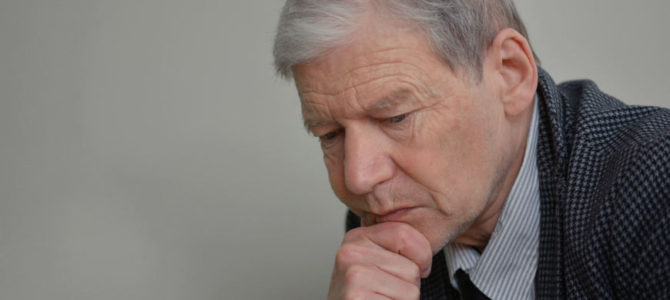
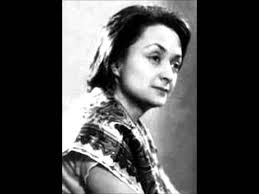
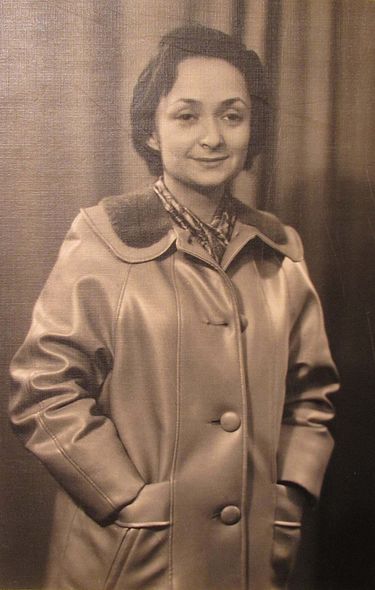
The Lithuanian Jewish Community is sad to announce the death of Nechama Lifšicaitė (Nekhama Lifshits, נחמה ליפשיץ) and we send our condolences to her daughter Roza. The older Litvak generation remembers well Nechama’s enchanting voice and her lyrical-coloratura soprano song. As we express our condolences, we say: let the ground be soft for her, and recordings of her songs will remind us all of the wonderful songstress and her interesting personality for a very long time to come.

Nechama was born in Kaunas in 1927 and grew up in a traditional Jewish family. She attended a Jewish school where her father Yehuda Tzvi was principal from 1921 to 1928. He later became a doctor. During World War II Nechama and her family found shelter in the Soviet Union and lived in Uzbekistan. They returned to Kaunas after the war. From 1946 to 1951 she studied at and was graduated from the Vilnius Music Conservatory. She performed concerts of her songs in Yiddish beginning in 1956. According to Solomon Atamuk, “Both in Lithuania and throughout the [Soviet] Union, Lifšicaitė provided refreshing national and spiritual sustenance to the Jews thirsting for their culture. Nechama’s songs expressed the deepest experiences and aspirations of the Jews of the Soviet Union; they were moving and spiritualizing.”

Overcoming limitations on doing her repertoire was not a simple matter during the Soviet era, but Nechama Lifšicaitė was able to turn her concert tour across many Soviet cities into a wake-up call for cultural and ethnic identity. Despite the negative view taken by government agencies towards the ethno-cultural activities in which Nechama Lifšicaitė was engaged, she was recognized in 1958 for her exceptional artistic expression and vocal abilities with first prize in the Soviet music maestro competition, and was granted permission to tour abroad. She performed in Austria, Belgium and France. Her songs were released on two records in 1960 and 1961, which were reissued several times in later years.

Nechama Lifšicaitė and her family made aliyah to Israel in 1969 where two more records of her songs were released that same year. She performed in cities and villages, on the radio and on television. Her appearances were great successes. In the period from 1969 to 1972 she did concert tours of the United Kingdom, Canada, the USA, Mexico, Venezuela, Brasil and Australia. In 1976, without retiring from her musical career, she completed library science studies at Bar-Ilan University and became director of the historical archive of the Tel Aviv Municipal Music Library.

Unique Interior Design of Pakruojas Wooden Synagogue Restored

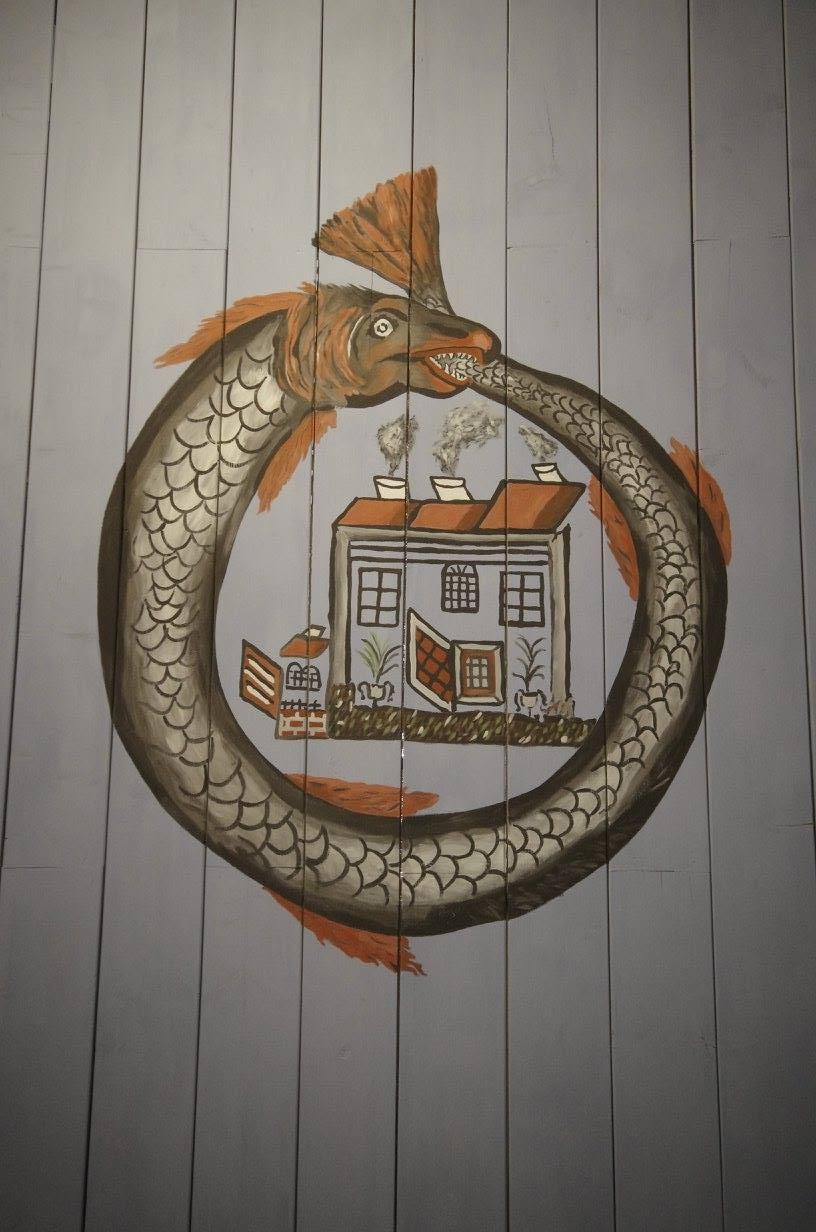
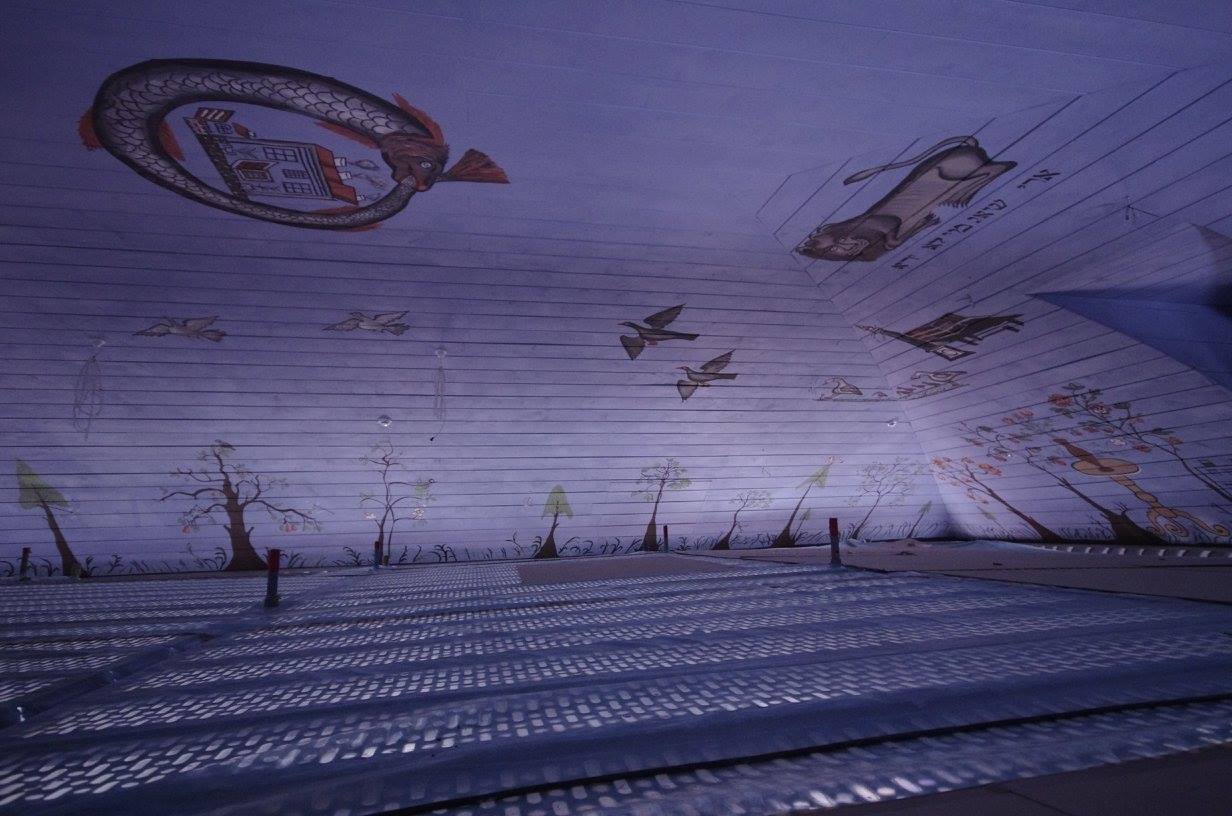
The administrators of the EEE and Norwegian Grants program and the Optus Optimum restoration group invite you take a look at the interior of the oldest wooden synagogue still standing in Lithuania in Pakruojas. The original paintings from the 19th century on the synagogue ceiling were restored according to surviving photographs and the original wallpaper was restored and recreated as well. Work on the interior is coming to a conclusion and the synagogue will be opened to the public again soon. EEE Grants and the Lithuanian state budget through the Lithuanian Ministry of Culture are carrying out the restoration program.

For more about the project see the Pakruojas Regional Administration webpage here.

More photographs of the restored interior are available here.

Never Give Up

There’s a song sung in Israel, and when the first bars ring out, most people stand. It’s called by several names–Zog Nit Keynmol, Don’t Say Never, We’re Still Here, the Partisan Hymn or Anthem–but the title isn’t important. The content is. And the content comes from the Vilna ghetto, a poem in Yiddish by the young Hirsh Glik, put to music by his friend Rachel Margolis, a young blonde, blue-eyed Jewish girl who joined the underground, survived, and spent much of the rest of her life engaged in Holocaust education.

Glik died during the Holocaust; Margolis passed away only a few years ago. According to Margolis, Glik read the poem to her on a cold winter day on a corner in the Vilnius ghetto where Rudninkų square is now located. She said there were buildings there then. As Glik read the poem, she began to hear music between the lines, from a Russian film she had seen. Both young people went to the FPO, the underground partisan organization in the ghetto, and asked permission to make the words and music the official anthem of the FPO youth section. The leadership agreed.

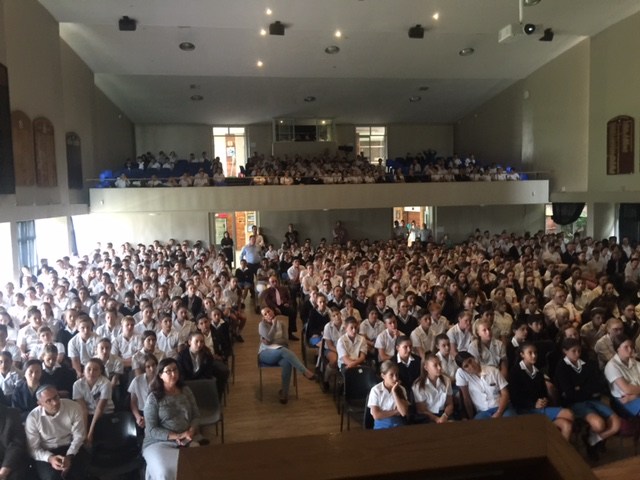
Now there’s a project for Jewish day schools around the world to teach the song to a new generation of young people. Eli Rabinowitz of Perth, Australia, is teaching children in Australia, Israel and South Africa and there are plans for new performances around Yom haShoah, Holocaust Day commemorated in Israel, this year on April 23.

The Jewish press in South Africa and Australia has done extensive coverage of the Partisan Hymn Project and the Vilnius ORT Sholem Aleichem Gymnasium in Vilnius is a pioneer in making the project happen. The World ORT organization is supporting the project and plans to post some video performances before Yom haShoah.

For more information, see here.

Holocaust Escape Tunnel

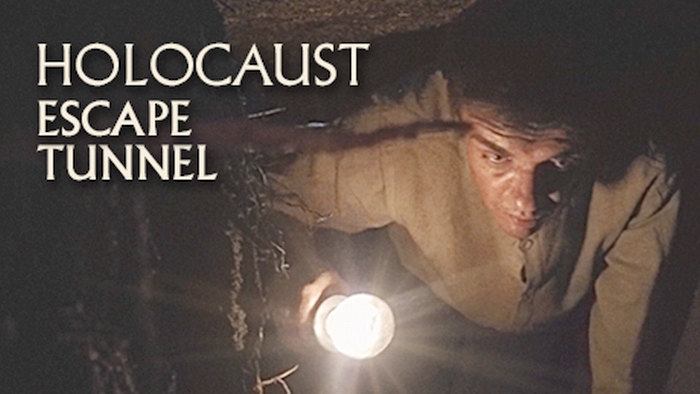
At ground zero for the final solution, scientists uncover a story of hope and bravery.
Airing April 19, 2017, at 9 P.M. on PBS

Program Description

For centuries, the Lithuanian city of Vilna was one of the most important Jewish centers in the world, earning the title “Jerusalem of the North” until World War II, when the Nazis murdered about 95% of its Jewish population and reduced its synagogues and cultural institutions to ruins. The Soviets finished the job, paving over the remnants of Vilna’s famous Great Synagogue so thoroughly that few today know it ever existed. Now, an international team of archaeologists is trying to rediscover this forgotten world, excavating the remains of its Great Synagogue and searching for proof of one of Vilna’s greatest secrets: a lost escape tunnel dug by Jewish prisoners inside a horrific Nazi execution site.

PBS program announcement here.

For more, see:
http://www.lzb.lt/en/2016/07/01/picking-up-the-pieces/
http://www.lzb.lt/en/2016/07/24/israeli-antiquities-authority-reports-major-finds-in-lithuania/
http://www.lzb.lt/en/2017/01/02/new-york-times-ponar-top-science-story-in-2016/

Shlisl Challa

Schlissel challah

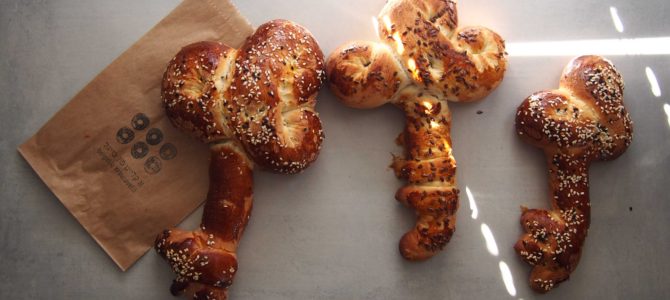
There is an interesting tradition still followed in some Ashkenaz Jewish communities of baking challa in the shape of a key for the first Sabbath after Passover. The challa may be shaped as a key, the dough be impressed by actual keys or it may contain a real key inside. It is called shlisl challa, from the Yiddish word for key. The tradition is still followed in Lithuania, Poland and Germany.

According to one version, shlisl challa is connected with a Passover prayer. The key recalls the door to Heaven or Paradise. It is said the upper gates of Heaven open during Passover, and after they close again. To open them, Jews place a key inside the challa loaf. Other Jews object to the entire practice as misguided, superstitious or even idolatrous.

AJC Delegation Tours Žiežmarai Wooden Synagogue


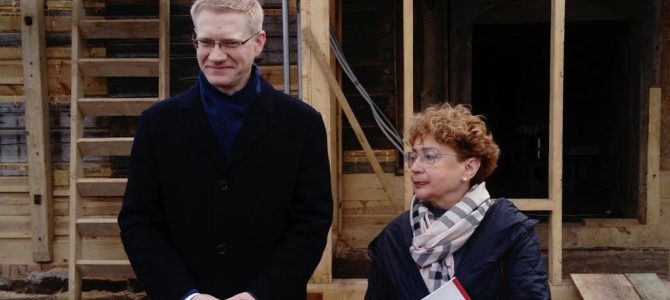
LJC chairwoman Fainia Kukliansky and Kaišiadorys mayor Tomkus, Žiežmarai, April, 2017

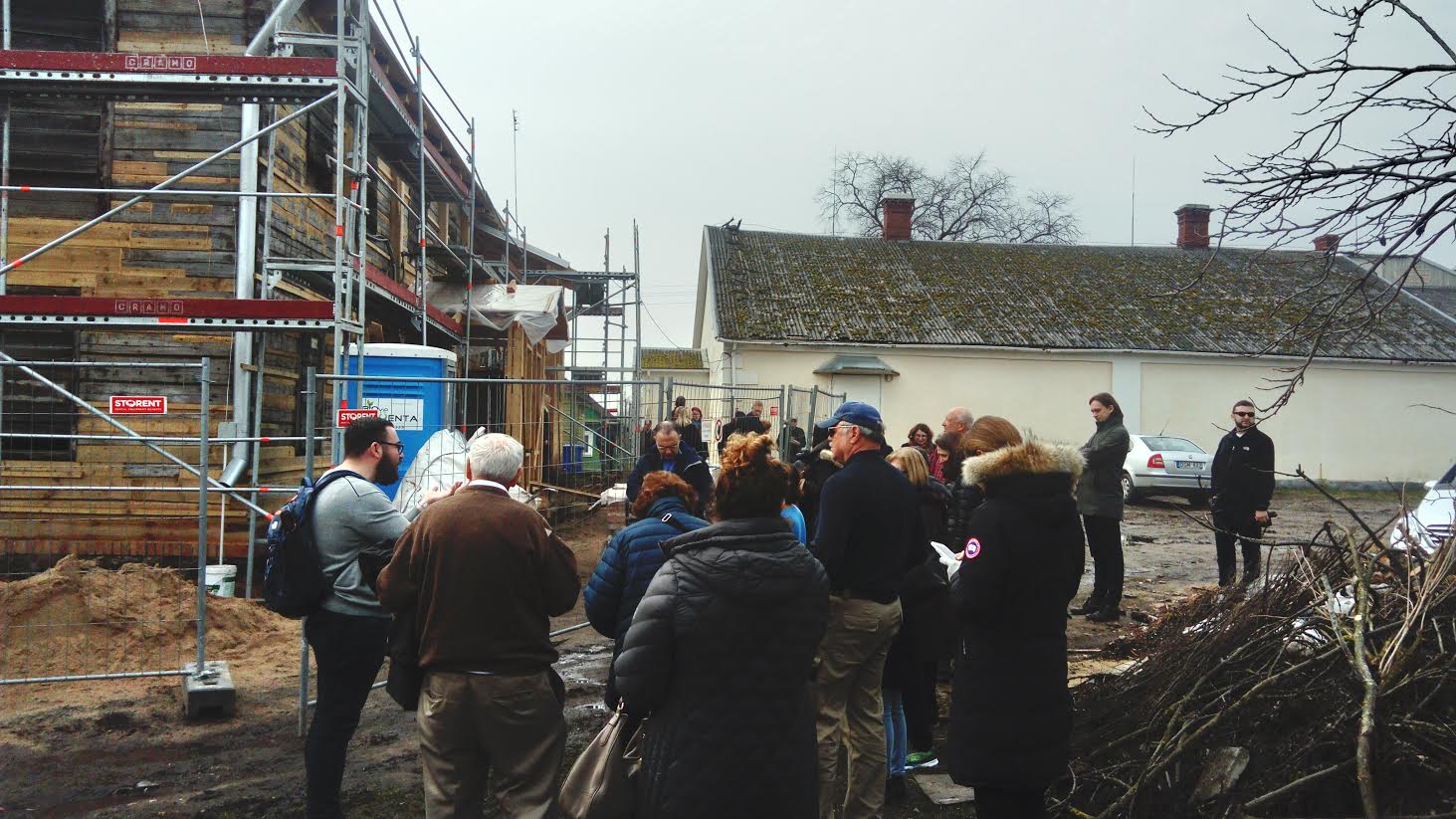
The ruined wooden synagogue in Žiežmarai, Lithuania, is being reborn for a new life. During the Holocaust it was used as a concentration point for imprisoning Jews awaiting execution. A large number of Jewish houses still stand near the synagogue, whose owners were murdered. The wooden synagogue is still an important heritage site, even if there is no one left to pray there. The Lithuanian Jewish Community contacted the mayor and council of Kaišiadorys about reconstructing the synagogue. Initially that request was denied, the council objected, and it took much effort to convince the local government the old synagogue really is a heritage site which besides holding interest to Jews around the world would also attract tourism and could be put to public use by the local population.

The Kaišiadorys city council approved the idea of adapting the building for public use in 2015 and applied for EU structural funds for renovation. A technical plan for renovating the Žiežmarai synagogue using funds from the Lithuanian state budget and the Goodwill Foundation was prepared and necessary studies conducted. After renovation the synagogue will serve as a monument to the murdered Jewish communities in Kaišiadorys and surrounding areas, and will be maintained to serve cultural functions for the local population.


An AJC delegation visiting Lithuania toured the synagogue site.

According to the Architecture and Urban Studies Center of Kaunas Technical University, the first synagogue in Žiežmariai might have appeared in 1690 following the granting of a charter of rights to the Jewish community there. This synagogue is mentioned in 1738. A 1782 description of the local church district and town says the synagogue was built under the grant of rights by Jan Casimir (noting it had to have been obtained before 1668) and that were two Jewish cemeteries. In 1868 Žiežmariai had a population of 1,190, of whom 604 were Jews, the majority. In 1897 there were 2,795 residents in Žiežmariai, of whom 1,628 were Jews. It is mentioned that all three synagogues in Žiežmariai suffered from the fire in 1918.

AJC Supports Idea of Jewish History Museum in Vilnius


Vilnius March 31, BNS—The American Jewish Committee supports the idea of establishing a Jewish history museum in Vilnius, representative Sam Kliger says.

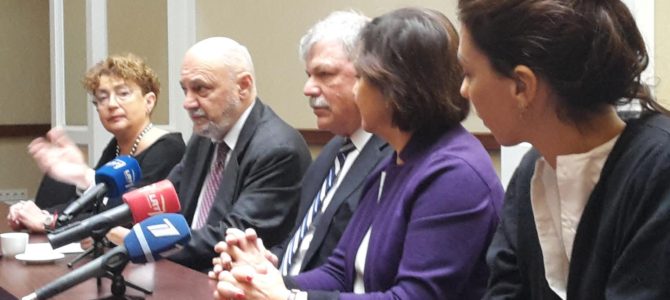
Speaking at a press conference Friday, the committee director of Russian affairs said his organization believes it is an important initiative which could become real with the Lithuanian Government’s help. He recalled his delegation’s visit to a museum in Warsaw a few days prior and called it impressive. A Jewish museum would be a good start or a good continuation of Lithuanian-Jewish relations, he told reporters. He also said Israeli ambassador to Lithuania Amir Maimon expressed support for the idea during a meeting Friday.

Chairwoman of the AJC board of directors Harrieta P. Schleifer said the museum should cover more than the Holocaust and include Lithuania’s rich Litvak legacy. It should include history from the beginning through the present to the future, not just the Holocaust, she said.

Vilnius Seniors Visit Panevėžys

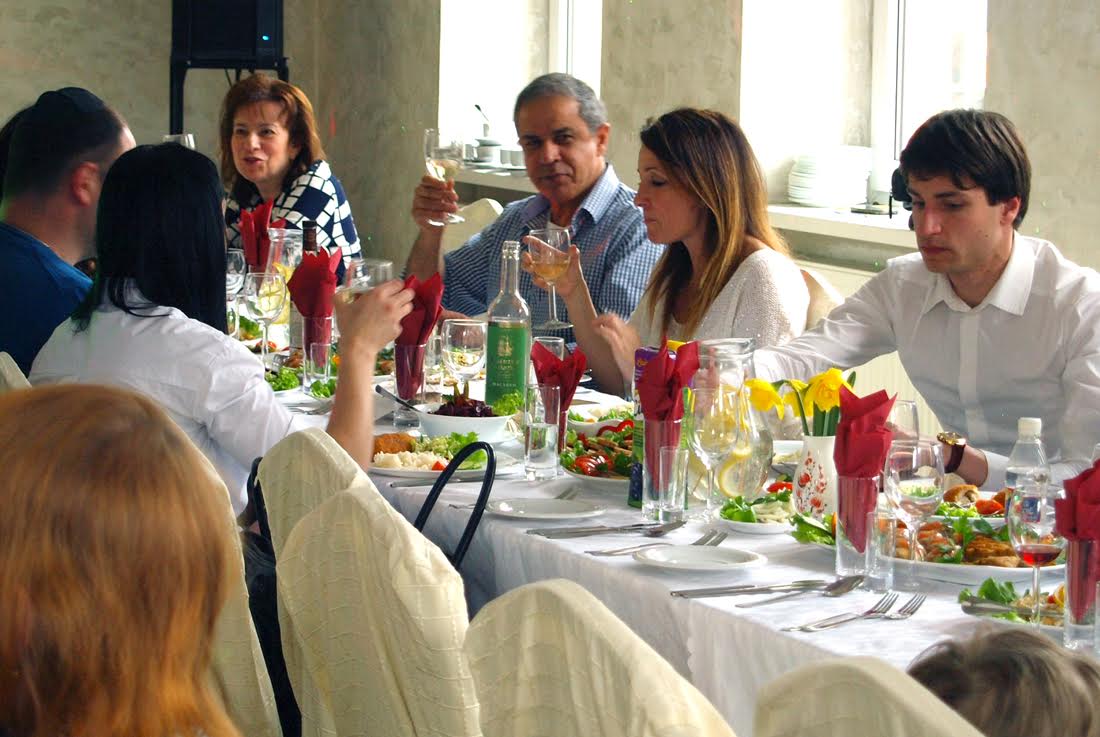
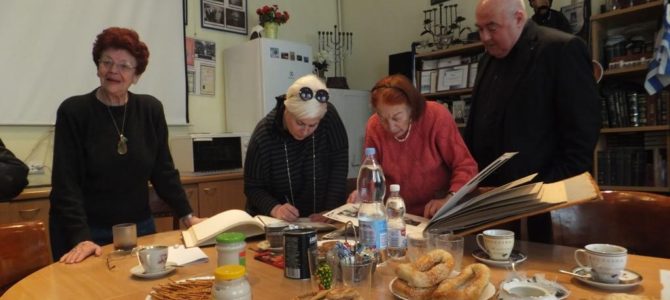
A group of members of the Vilnius Jewish Community’s Seniors Club, directed by Žana Skudovičienė, visited the Panevėžys Jewish Community. Panevėžys Jewish Community chairman Gennady Kofman spoke about the history and life of the Panevėžys Jewish Community in a pleasant setting, sipping tea around a table with fresh bagels brought from the Bagel Shop Café in Vilnius. Several of the Vilnius members’ parents had lived and worked in Panevėžys and were greatly interested in the Panevėžys Jewish Community’s Museum of History. Mutual interest led some of the seniors to tell about the life and fate of their parents in greater detail.

Guests visited the site of the Panevėžys Jewish cemetery and heard about its tragic destruction in 1966, and how headstones were used as decoration for the wall of the Juozas Miltinis Theater.

Žana Skudovičienė in the name of all club members expresses their gratitude for the warm reception.

Vilnius Synagogue Map Launched

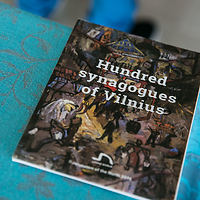
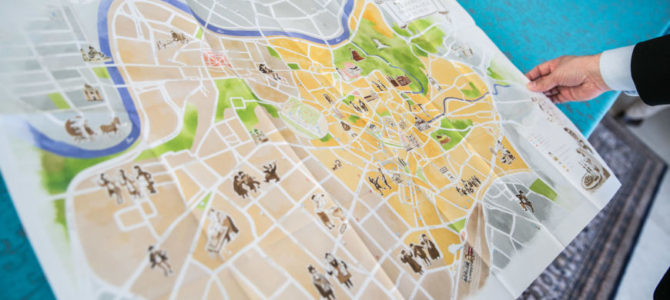
“When we speak of Jewish cultural heritage, we don’t mean a foreign people who lived apart from everything and one day decided to move. We’re talking about what was in Lithuania, about the Lithuanian nation’s heritage, not just of the Jews,” Israeli ambassador to Lithuania Amir Maimon said Friday at the launch of map of the synagogues of Vilnius held at the ambassadorial residence. One of the goals of the map project was to show just how interconnected Jewish and Lithuanian history is.

Of 135 Synagogues, Only One Remains

The map contains a total of 135 sites of synagogues which operated before the Holocaust. Most of the synagogues were located in the Vilnius Old Town, around the Jewish area of the city centering on the Great Synagogue and spreading along Vokiečių, Gaono and Stiklių streets. There were more than 30 synagogues located in that compact area, but none of them remain. The synagogues were razed and other buildings built in their place, or the sites were used as public spaces.

Full story in Lithuanian here.

Vilna Gaon Museum on New Jewish Museum Proposal

The Vilna Gaon State Jewish Museum has issued a statement via press release about a recent proposal by Lithuanian officials to set up a Holocaust-free new Jewish museum in the Palace of Sports or next to it on land which contains the centuries-old historic Jewish graveyard of Vilnius.

Let’s Create a Strategic Strategy for Jewish Heritage, Not Disneyland

The Vilna Gaon State Jewish Museum was disappointed by information appearing in the press last week about plans by government institutions to establish another Jewish museum in the Lithuanian capital instead of assuring support for existing projects.

The Vilna Gaon State Jewish Museum, whose sections are housed in authentic buildings closely connected with the Jewish history of Vilnius, has recently been undergoing an intense and productive period. We host international events at the highest level, for example, the International Holocaust Remembrance Alliance conference held on March 22 and 23, and the number of visitors is constantly growing. New permanent exhibitions are being created for installation in our historic buildings, including the opening this fall of a new Samuel Bak Museum, showcasing the Litvak painter’s life and works, and in the near future we also intend to open the Museum of Lithuanian Jewish Culture, aka the Litvak Center and a dedicated Lithuanian Holocaust and Vilnius ghetto memorial museum, which has attracted the attention of international museum organizations including ICOM.

The latter museum is to be housed in the historical building on Žemaitijos street (former Strashun street) which was listed as a cultural treasure last month. This is the building which housed the Mefitsei Haskalah library before World War II and the Vilnius ghetto library during the war. which organized cultural events inside the ghetto and served as a secret meeting place for members of the ghetto resistance organization. In 1945 Holocaust survivors established the short-lived Jewish Museum in the building, quickly shut down by the Soviet government. The Vilna Gaon State Jewish Museum intends to reutilize the building for Holocaust education. After the museum has these additional sections, a unique route will be created for the visitor to explore Jewish Vilna.

Vilnius Mayor, Lithuanian PM Decree: And There Shall Be Built a Jewish History Museum Next to the Palace of Sports

Vilnius, March 30, BNS–Lithuanian prime minister Saulius Skvernelis said there are deliberations on changing the project for the reconstruction of the Palace of Sports to include a equip a building to host a Jewish history museum and for conferences. There was consideration on holding concerts and other cultural events in the project initiated by the former Government.

Vilnius mayor Remigijus Šimašius proposed setting up a Litvak History Museum next to the Palace of Sports which the Government is planning to renovate. “I think the Government has done the right thing in halting the untransparent bid begun earlier. But there should be a conference center there without any doubt. We just discussed that it would be more sensible if next to the conference center or partially integrated with the conference center there were a museum of Litvak history. It is probably this could be accomplished wonderfully and would become an attraction. We agreed to develop the idea further. I’m glad my opinion and the prime minister’s coincide on this,” the mayor of Vilnius told BNS after meeting with Lithuanian prime minister Saulius Skvernelis Thursday.

“It should be able to be used for conferences. Now there is a concept, a conference and concert hall, so it should be conferences and a museum,” the prime minister told reporters at parliament.

Anti-Semitism in Soviet Lithuania: The Case of the Vilnius Money-Changers

Antisemitizmas Sovietų Lietuvoje. Vilniaus „Valiutininkų byla“

Bernardinai.lt

by Justas Stončius, doctoral candidate and lecturer at the Institute of the History and Archaeology of the Baltic Region, Klaipėda University

Fifty-five years ago on March 22, 1962, death sentences were issued to three Jews from the Lithuanian Soviet Socialist Republic. They were accused of violations in exchanging currency. The local press reported the trial in detail and the Western press covered it as well, viewing it (correctly) as traditional anti-Semitism, whose existence in the USSR was denied. Klaipėda University doctoral candidate Justas Stončius discusses the motivations and history of the Vinius Money-Changers Case.

The trial of the “Vilnius money-changers” lasted from January 30 to March 22, 1962. The Supreme Court of the Lithuanian Soviet Socialist Republic tried eight people of Jewish ethnicity who were accused of violating the rules for exchanging currencies and of currency speculation. The decision was made to hold a public trial and a special group of correspondents was formed to cover the trial in newspapers and magazines. Invitations were distributed at Vilnius city factories to the more active workers and activists in the production sector. During sentencing the death sentence was given Aron Reznitsk, Mikhail Rabinovich and Fyodor Kaminer, while Basia Reznitsk was sentenced to 15 years’ imprisonment, decreased to 10 years 6 years later.

The Vilnius Money-Changers Case received much attention in the West. On April 17, 1962, French newspaper Le Progrès reported “by order of the Vilnius Tribunal three Lithuanian Jews have been put to death” and noted the events had caused unrest in the Jewish community of the Soviet Union. France’s Le Monde newspaper stated Jews of the USSR were afraid “that they, too, might become scapegoats for the rampant lack of food stuffs in the Soviet Union…”

Full story in Lithuanian here.

Ponar Mass Murder Site Three Times Larger than Memorial Complex

Paneriuose nacių įkurta žudymo bazė buvo tris kartus didesnė nei dabartinis memorialas
Then-president of Israel Shimon Peres at Ponar in 2013. Photo: AFP/Scanpix

Vilnius, March 27, BNS–The mass murder site established by Nazi Germany in Ponar outside Vilnius during World War II was three times larger than the memorial complex there now, Lithuanian historians have discovered.

“The memorial is only a small part of the Ponar murder operation site. It might have covered 65 hectares, but the memorial complex/museum there occupies 19 hectares,” Lithuanian History Institute researcher Saulius Sarcevičius told BNS Monday. He said researchers working at the site since last year have discovered five new mass murder pits and additional research is being carried out on two of them.

Ponar a Precisely Built Efficient Murder Factory

Three years ago archaeological digs began and are on-going at the Ponar Memorial Complex, and in 2015 two more killing pits were discovered, previously unknown, and a more-accurate perimeter of the mass murder site was determined. Saulius Sarcevičius, director of the Urban Research Department at the Lithuanian History Institute, says these discoveries are not only new, they’re unique. “Ponar, established as a so-called base, was not just any mass murder site, but was a precisely planned–down to the finest details–and built and continuously improved murder factory. The incomprehensible action of this mechanism has literally gone to ground and the traces discovered in the reconstruction relief map makes us living witnesses to these crimes which the Nazis tried so hard to hide,” the Lithuanian History Institute historian told the audience at the first International Holocaust Remembrance Alliance conference held in Vilnius.

The Lithuanian Special Unit, or Ypatingasis būrys, subordinate to the Nazi security service, murdered around 100,000 residents of Vilnius and Eastern Lithuania based on racial considerations from 1941 to 1944, most of them Jews. The Ponar site on the edge of Vilnius is the largest Holocaust mass murder site in Lithuania and is well known internationally.

Full story in Lithuanian here.

New LJC Project to Make Recommendations on Anti-Semitism at EU Level

Remembrance. Responsibility. The Future. These are the sequential steps leading to real changes in society. The future of democracy and tolerance depends on memory and responsibility assumed, allowing for moving forward. A step towards the future–after surveying, judging and adopting expertise from the best initiatives aimed at fighting discrimination–this is the goal of this new start-up project.

The new project is called Development and Publication of Recommendations for Actions to Fight Anti-Semitism and Romophobia in Lithuania.

The project is supported by the Erinnerung, Verantwortung und Zukunft foundation or EVZ in Germany. This foundation supports systematic and long-term studies of discrimination against and marginalization of Jews and Roma in Europe.

The Lithuanian Jewish Community has brought together a group of leading experts from among Lithuanian human rights organizations, community activists, academics and specialists from abroad. This group is undertaking to come up with effective and valuable recommendations on actions for fighting anti-Semitism and Romophobia in Lithuania.

Former Vilnius Ghetto Library Receives Protected Status

bns_logo_v2

Vilnius, March 22, BNS–The building of a former Jewish library in Vilnius has been entered on the registry of cultural treasures and there are plans to house a Vilnius ghetto museum there.

The Cultural Heritage Department announced the building with a commemorative plaque at Žemaitijos street no. 4 is being provided legal protection for its valuable archaeological, architectural and historical characteristics. The first council for assessing real estate cultural heritage at the department made the decision.

Cultural Heritage Department director Diana Varnaitė the surviving building which was part of the Vilnius ghetto and where the Mefitsei Haskalah library operated and later the Vilnius ghetto library is not currently being used and belongs to the Vilna Gaon State Jewish Museum.

“At [the museum’s] initiative there are plants to set up a museum commemorating the Holocaust in Lithuania and the Vilnius ghetto which will exhibit the vast Jewish cultural heritage and the history of the Holocaust in Lithuania. The names of Holocaust victims are read out there annually to mark the day of Jewish genocide,” director Diana Varnaitė said.

Žemaitijos 4 250px-Vilna1

Insults to Jews under the Sponsorship of Ramūnas Karbauskis

Lzinios.lt

The newspaper Ūkininko patarėjas [Farmer’s Helper], 30% of whose stock is owned by Union of Peasants and Greens [ruling] party leader Ramūnas Karbauskis, is printing articles raising doubt and uncertainty concerning the conferring of a state award to former ghetto inmate and Soviet partisan Fania Brancovskaja, articles which are insulting to the Lithuanian Jewish community. Historian and MP Arvydas Anušauskas says he thinks these sorts of publications bring to mind Nazi propaganda and contribute to the sowing of ethnic discord.

“The Lithuanian Jewish Community strives to base its words on facts, documents checked a hundred times before making a statement. These sort of accusations and this kind of rhetoric being published by Ūkininko patarėjas is, in my understanding, at the very least unethical,” Lithuanian Jewish Community chairwoman Faina Kukliansky told [the newspaper] Lietuvos žinios.

She was talking about publications in Ūkininko patarėjas which raise doubts concerning the actions during World War II of Fania Brancovskaja. Brancovskaja was conferred the Order of the Cross of the Knight “For Merit to Lithuania” on February 16 this year. Some publications have claimed Brancovskaja, who fled the Vilnius ghetto and joined the Soviet partisans, is complicit in the mass murder of residents of the village of Kaniūkai [Lithuania] carried out in January of 1944, although research by experts from the Center for the Study of the Genocide and Resistance of Residents of Lithuania found she had not taken part in that operation.

Going on Speculation

The March 14 issue of Ūkininko patarėjas contained an article stating: “On February 21 Ūkininko patarėjas was the first media organ in Lithuania to report to the public the President’s Office on the occasion of February 16 [Lithuanian Independence Day], by awarding the ‘knightess’s’ cross to a Soviet agent of diversion, to member of the Jewish gang which exterminated the village of Kaniūkai in Eastern Lithuania Fania Brancovskaja, in truth awarded and rehabilitated all the perpetrators of the genocide of the Lithuanian nation.”

Full story in Lithuanian here.

Department of Ethnic Minorities Presents Virtual Tour of Heritage Sites

The Department of Ethnic Minorities under the Government of the Republic of Lithuania invited those interested in cultural heritage to the launch of their multimedia DVD March 16. The DVD presents moveable and non-moveable heritage objects and sites of ethnic minorities living in Lithuania. The disc contains panoramic photographs of Lithuanian ethnic minority heritage sites by photographer Kostas Šukevičius. This section of the disc includes heritage associated with the Polish and Jewish communities in Lithuania.

Speakers and participants at the event included Cultural Heritage Department director Diana Varnaitė, senior archivist of Lithuania Ramojus Kraujelis, acting director of the State Tourism Department Indrė Trakimaitė-Šeškuvienė, journalist and author Aurelija Arlauskienė who has written a number of books about Lithuanian cultural sites including about the Paulava Republic, and Lithuanian Jewish Community heritage specialist Martynas Užpelkis. Donatas Puslys, editor-in-chief of the website bernardinai.lt, was moderator.

Full story in Lithuanian here.

Holocaust Researchers Meeting in Vilnius

Vilniuje susitinka Holokausto tyrėjai

Vilnius, March 22, BNS–The two-day conference “The Beginning of Mass Murder: Identification and Remembrance of Mass Murder Sites from Summer and Fall of 1941” began at the Vilna Gaon State Jewish Museum in Vilnius Wednesday. Lithuanian Jewish Community chairwoman Faina Kukliansky was a speaker.

IHRA3

The International Holocaust Remembrance Alliance with 31 member-states and a number of historians, educators, museum specialists and other Holocaust researchers from around the world organized the conference. Lithuania acceded to IHRA membership in 2003 but this is the first time an international IHRA conference has been held in Vilnius, a museum representative said.
The two-day conference is being hosted by the Tolerance Center of the museum and is dedicated to identifying, marking and commemorating mass murder sites in the Baltic states, Romania, Ukraine and Belarus.