
Heritage

Kaunas Jewish Community Honors Rescuers

Kauno žydų bendruomenė pagerbė gelbėtojus

It is the duty of the Kaunas Jewish Community to remember the rescuers of Jews as well as the victims of the Holocaust, the quiet heroes and true apostles of humanity who risked life and family to help.

For more than two decades now the KJC has attempted to thank these Righteous Gentiles by inviting them to an annual event among friends. Of course it is inadequate and there is no way to truly thank them. As these heroes slowly fall to the attrition of age, their places among the ranks are assumed by their children and grandchildren in this gathering which has become a large family. The heads of school tolerance centers are also invited to attend and this year 8th graders Diana and Barbora performed dances and songs from the ghetto in Yiddish. The KJC thanks everyone for making this year’s event a success, including the great organizational work by KJC Rescuers Committee chairwoman Judita Mackevičienė.
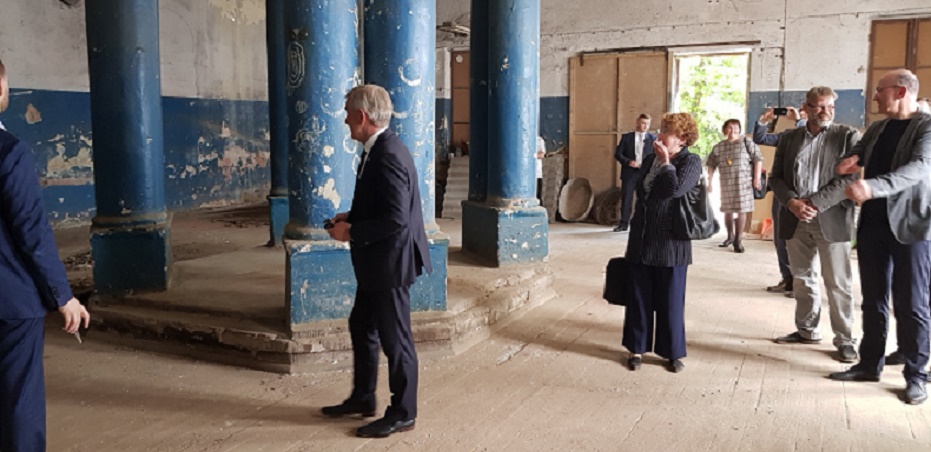
Discussion on How to Protect Disappearing Jewish Heritage in Kaunas

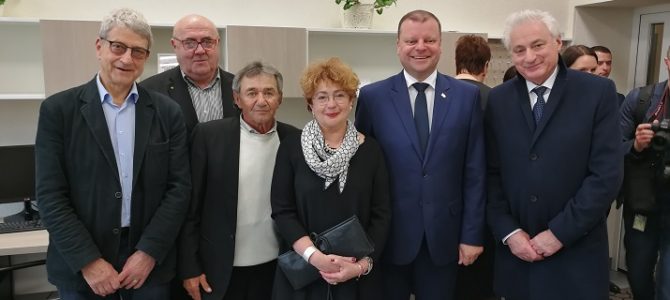
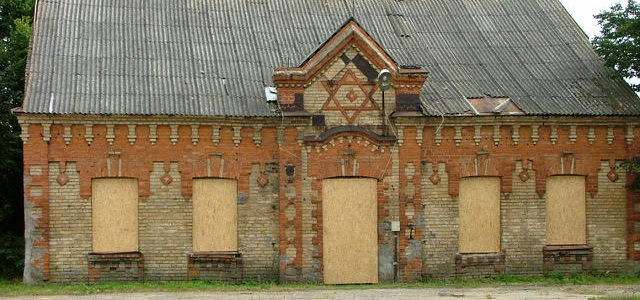
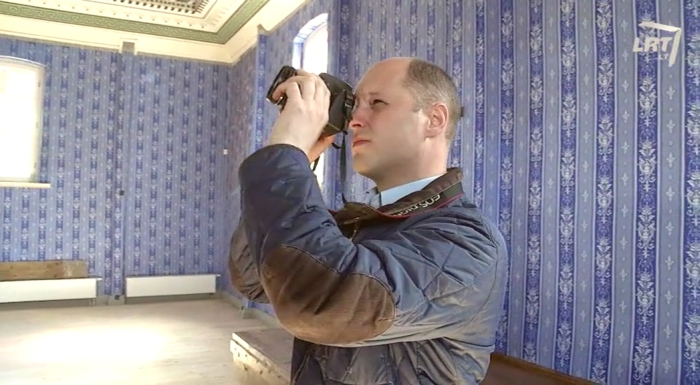
Lithuanian parliamentary speaker Viktoras Pranckietis and Lithuanian Jewish Community chairwoman Faina Kukliansky have visited the former Kaunas Hassidic synagogue now falling into ruin. They toured the building together with Kaunas Jewish Community chairman Gercas Žakas, Lithuanian Cultural Heritage Department Kaunas chapter senior state inspector Andrius Liakas, Vilnius Art Academy Kaunas faculty professor and Kaunas city council member Jonas Audėjaitis and others. The Vilnius Art Academy currently manages the property.

Participants discussed how to protect the Hassidic synagogue, an example of authentic Jewish heritage which is fast disappearing. Chairman Žakas and other members of the Kaunas Jewish Community presented to the parliamentary speaker the current needs of the Kaunas community and the need for a functioning synagogue. This synagogue was built in 1880 and following restoration would be one of only a handful of working synagogues in Lithuania, serving the religious and cultural needs of the local Jewish community. The Kaunas Jewish Community is the second largest Jewish community in Lithuania with more than 300 members.

Lost Shtetl Museum Construction Begins


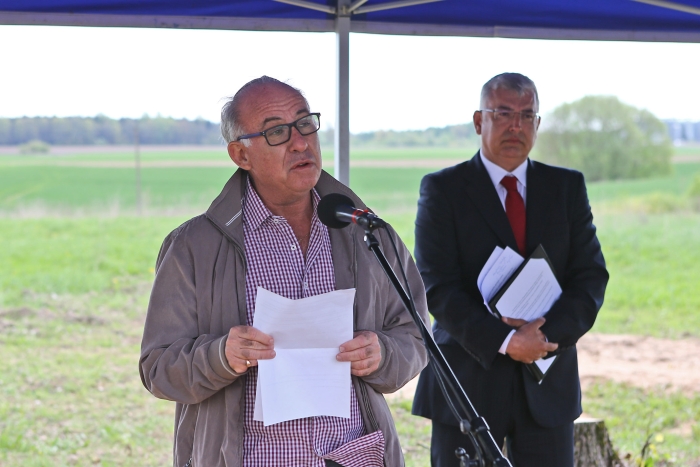
Photo: Gintaras Šiuparys

A ceremony was held Friday to mark the beginning of construction work on the Lost Shtetl museum in Šeduva, Lithuania. The museum will be a completely new kind of experience using modern technology to present the history and culture of and to commemorate the former Litvak shtetl.

Marija Dautartaitė delivered a welcome on behalf of Lithuanian president Dalia Grybauskaitė, followed by speeches by speaker of the Lithuanian parliament Viktoras Pranckietis, prime minister Saulius Skvernelis, foreign minister Linas Linkevičius, Lithuanian Jewish Community chairwoman Faina Kukliansky, Vilna Gaon State Jewish Museum director Markas Zingeris, US ambassador to Lithuania Anne Hall, Finnish ambassador to Lithuania Christer Michelson, genealogist and education Eli Rabinowitz from South Africa and Australia, Holocaust film director Saulius Beržinis and Šeduva Jewish Memorial Fund founder and museum project manager Sergey Kanovich.

Also attending were ambassadors and heads of mission from the embassies of the United Kingdom, Ireland, Sweden, France, Germany, Russia and Romania, as well as members of the municipal and regional governments and interested citizens from all parts of Lithuania.

Statue Unveiled in Kaunas to Abraham Mapu, Founder of the Modern Hebrew Novel

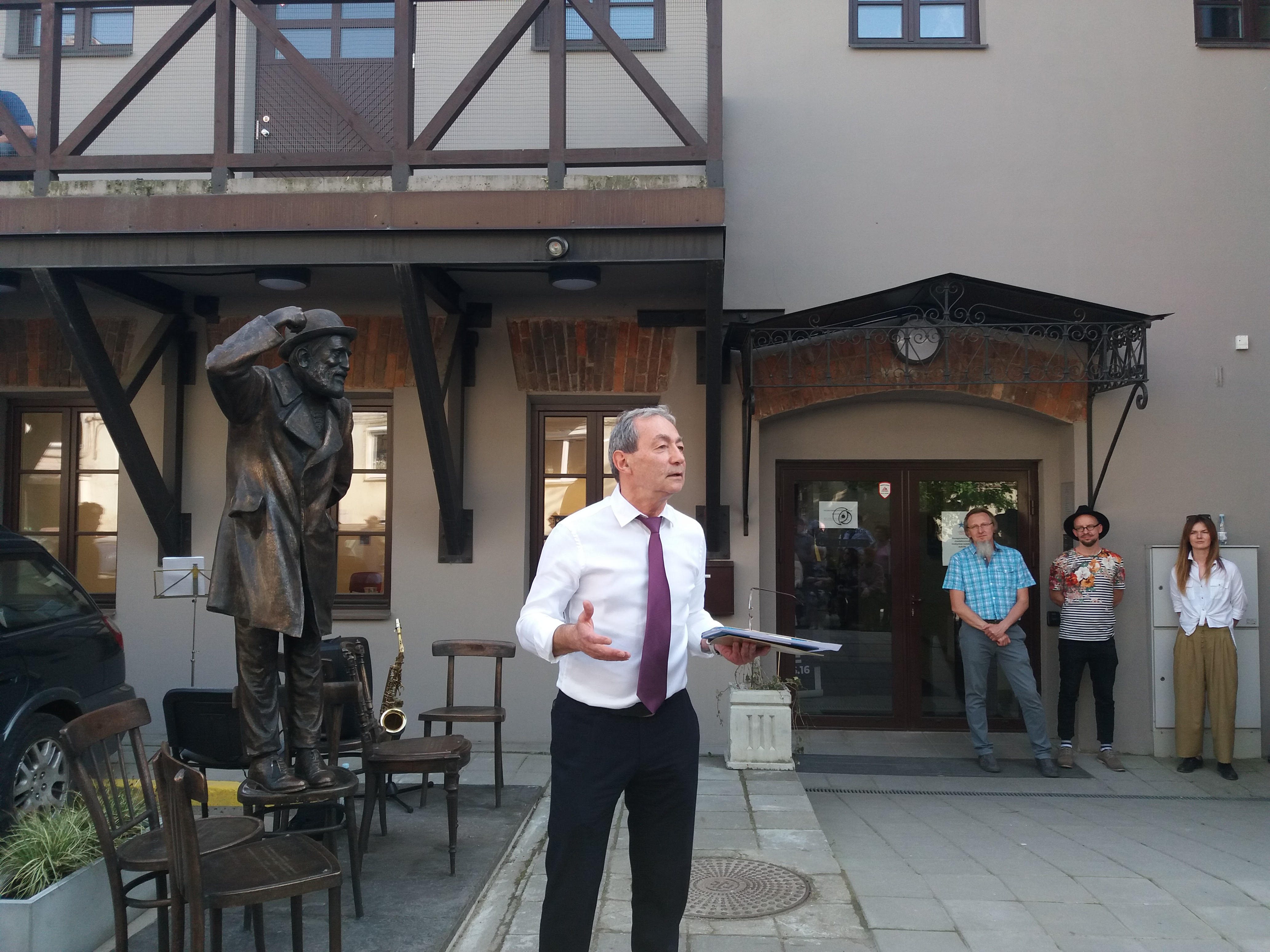
A sculpture to honor Abraham Mapu, the founder of the Hebrew novel who was born in Kaunas, was unveiled to the public at a ceremony held in the courtyard of the Ars et Mundus Gallery on Mapu street in Kaunas Thursday evening. Sculptor Martynas Gaubas made the statue commemorating Mapu (1808-1867), who was born and lived in Kaunas and was a beloved local literary figure.

Lithuanian Jewish Community chairwoman Faina Kukliansky thanked the Kaunas municipality for its favorable view on commemorating Litvak figures and noted Mapu is known and loved in Israel where even small towns have a street named after him. She praised the Kaunas Jewish Community for its unity and initiative and singled out Kaunas Jewish Community chairman Gercas Žakas for his success in cooperation and getting things done.

Chairman Žakas and Olegas Darčanovas, the prime mover behind the statue project, noted the large turnout for the ceremony but also said the statue had begun drawing people into the yard even before the ceremony, with locals and tourists flocking to get a look.

Members of the Kaunas city council Ina Pukelytė and Jonas Audėjaitis spoke of the Litvak contribution to the cultural, economic and social life of Kaunas, Lithuania and the world, and confirmed there would be continued commemoration of notable Litvaks who were born, lived and worked in Kaunas.

Kaunas Jewish Community Invites You to Unveiling of Mapu Statue

A presentation and ceremony to unveil a statue to commemorate Abraham Mapu will be held at 5:00 P.M. on May 3 in Kaunas. The ceremony will take place in the courtyard of the Ars et Mundus art gallery located at A. Mapu street no. 20 in Kaunas. The sculptor was Martynas Gaubas. The event will include Jewish music. Ars et Mundus is the author of the project and Artkomas and the Kaunas Jewish Community are partners.

Old Užupis Jewish Cemetery Renovation Proposals

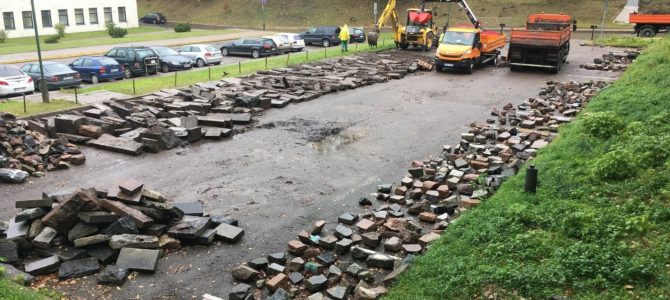
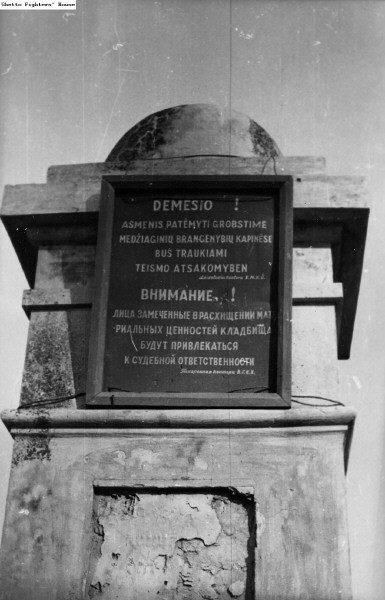
The Vilnius municipality is preparing proposals for renovating the old Užupis Jewish cemetery in Vilnius. The municipality’s planning agency Vilnius Plan has hired architect Victoria Sideraitė-Alon for this purpose and she has performed an examination of the territory and has provided proposals on how best to showcase fragments of headstones desecrated by the Soviets.

Sideraitė-Alon’s creative group (Samuel Bak is the author of the main symbol, A. Šimanauskas is the creator/designer, A. Perelmuter is the Israeli architect and consultant) has proposed a project called Arch, which was unanimously approved by an international advisory group on heritage issues established at the Lithuanian Jewish Community and by artists and intellectuals including P. Morkus, M. Ivaškevičius, S. Beržinis, S. Valius and by the Jewish Religious Community and the Lithuanian Foreign Ministry.

The Arch project proposal has not received the approval of the Vilnius Plan agency, which instead proposed a different project to commemorate the road blazed through the cemetery during the Soviet era, actually more of a ditch, called Kirkuto alley, but without any monument carrying a deeper semantic or emotional content. Instead, the alternate proposal is for arranging the headstones and fragments, more or less appearing now as stairs, in an artificial layer of soil above the parking lot where they are now housed to create the effect of a small “Jewish” graveyard there.

Lithuanian PM: Let’s Protect Our Common Lithuanian and Israeli Cultural Legacy

Lithuanian prime minister Saulius Skvernelis Thursday visited the Vilnius Sholem Aleichem ORT Gymansium to attend a celebration of Israel’s 70th birthday.

THe Lithuanian prime minister greeted principal Mišą Jakobas, Israeli ambassador Amir Maimon and other honored guests at the event on the occasion of Israeli independence day.

The Lithuanian PM thanked the Lithuanian Jewish Community for consistently defending the country and supporting its independence, and for making significant contributions to the development of Lithuania currently.

“Lithuania really appreciates our partnership with Israel. Youth exchange programs are growing, our economic mercantile cooperation has been stimulated, and we place great hopes on efforts by the international community to insure peace and security. We are hoping Israeli prime minister Binyamin Netanyahu will visit Lithuania this year. By June during our visit to Israel we are planning a discussion by both Governments on relations,” the Lithuanian prime minister said about expanding ties and pragmatic cooperation between Lithuania and Israel.

Full text in Lithuanian here.

Memorial Plaque Unveiled on Ninth Fort Mass Murder Field

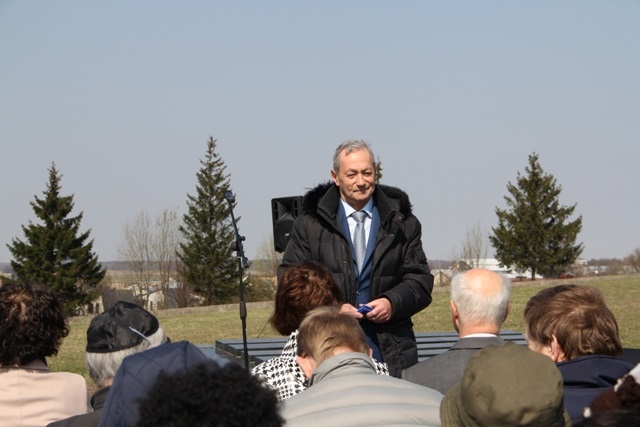
At the field of mass murder at the Ninth Fort in Kaunas a ceremony to unveil a memorial plaque took place April 13. The plaque commemorates the Jews deported from Frankfurt murdered on November 25, 1941, at the Ninth Fort.

Kaunas Jewish Community chairman Gercas Žakas, Israeli ambassador to Lithuania Amir Maimon, deputy Lithuanian foreign minister Darius Skusevičius, Kaunas municipality deputy director of administration Nijolė Putrienė, Frankfurt Administration Cultural Department director Johannes Promnitz and representatives of the Brueder-Schoenfeld Forum participated. The memorial plaque was the result of cooperation between the Kaunas Ninth Fort Museum, the Kaunas municipality, the Brueder-Schoenfeld Forum organization and the Frankfurt municipality.

Užupis Jewish Cemetery Commemorative Monument Proposal Approved by LJC Advisory Group


The heritage issues advisory group of the Lithuanian Jewish Community has learned of plans for renovating the Užupis Jewish cemetery tendered by the Vilnius municipality and a composition called Arch made of desecrated headstone fragments used as stairs during the Soviet era.

The international creative team behind the Arch are architect Viktorija Sideraitė Alon, creator/designer Albinas Šimanauskas and Israeli architect consultant Anna Perelmuter. The composition uses a symbol created by the Litvak American painter Samuel Bak.

The heritage issues advisory group of the Lithuanian Jewish Community helps solve outstanding Lithuanian Jewish heritage issues professionally and effectively. The group includes Barbara Kirshenblatt-Gimblett, POLIN Polish Jewish museum advisor to the director and senior curator of exhibits; Assumpció Hosta, general secretary of the AEPJ; writer Sergejus Kanovičius, founder of Maceva and the Šeduva Jewish Memorial Fund; professor James E. Young of University of Massachusetts, Near Eastern Studies, English, Judaism; Samuel Kassow, doctor of philosophy, POLIN senior researcher specializing in 19th century history and the history between the world wars; Lyudmila Sholokhova, PhD, YIVO director of archives and library; and Sergey Kravtsov, senior researcher, Jewish Art Center, Hebrew University.

Experts unanimously supported the artists’ idea for commemorating the Jewish cemetery and offered a number of useful suggestions and observations which will be taken into consideration.

This week members of the advisory group plan to discuss the project proposals with the mayor and city administration specialists.

Later the project ideas and visualizations will be presented to the public.

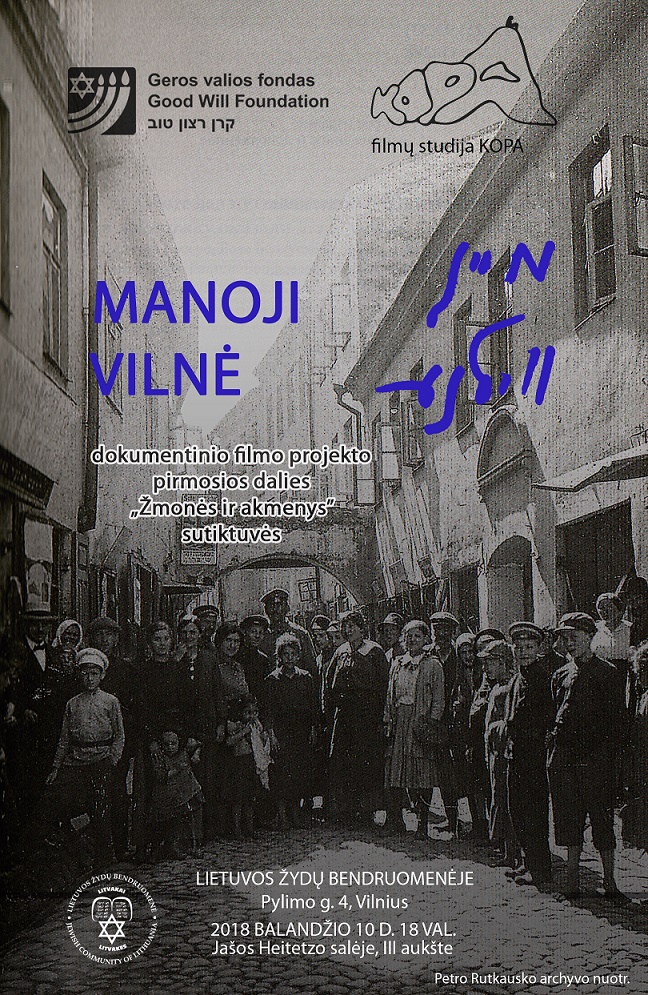
Come Watch Meyn Vilne Film

You’re invited to a screening of the first part, “People and Stones,” of the documentary film “Meyn Vilne” at 6:00 P.M. on Tuesday, April 10, at the Lithuanian Jewish Community in Vilnius.

Condolences

Sara Ginaitė-Rubinson died April 2. She was born March 17, 1924. She joined the underground resistance in the Kaunas ghetto, fought as a Jewish partisan, married a fellow partisan and was a professor of political science at Vilnius University after the war. She moved to Canada with her two daughters in 1983 following the death of her husband. She was the author of numerous books and was an outspoken proponent of Holocaust education in Lithuania. Her book “Resistance and Survival: The Jewish Community in Kaunas, 1941–1944” was published in Canada and won the Canadian Jewish Book Award for Holocaust History in 2008. She wrote several books about the Holocaust and lost Lithuanian Jewish communities in Lithuanian, including “Žydų tautos tragedijos Lietuvoje pradžia” [The Beginning of the Tragedy of the Jewish People in Lithuania].

The Lithuanian Jewish Community sends its deepest condolences to Sara’s entire family in Canada and her many friends in Lithuania. Her deep commitment to the memory of those murdered lives on.

Kalvarija Municipality to Renovate Synagogue Complex

Vilnius, April 2, BNS–Leaders from the Lithuanian municipality of Kalvarija have decided not to break off an agreement on the utilization of the synagogue complex there as they had planned and are considering how to continue with renovation, following a meeting with the Lithuanian Jewish Community and the Lithuanian Cultural Heritage Department.

Financing pathways using EU structural funds were presented to municipal leaders at the meeting with discussion of financing from the Cultural Heritage Department as well.

Under the project drafted by the LJC several years ago, the total cost of work to fix the synagogue complex came to just under 2 million euros, but no funding was found.

The municipality and the LJC signed a use agreement in 2014, under which the municipality pledged to protect and utilize appropriately the buildings until financing was found to begin restoration to adapt the complex for public cultural, educational and academic use, for tourism and other uses.

“We really don’t have this kind of money, this is a small municipality and we can’t save up such sums or spend that much on synagogues,” Kalvarija mayor Vincas Plikaitis told BNS.

Discovering Jewish Roots in Panevėžys

20180326_134846

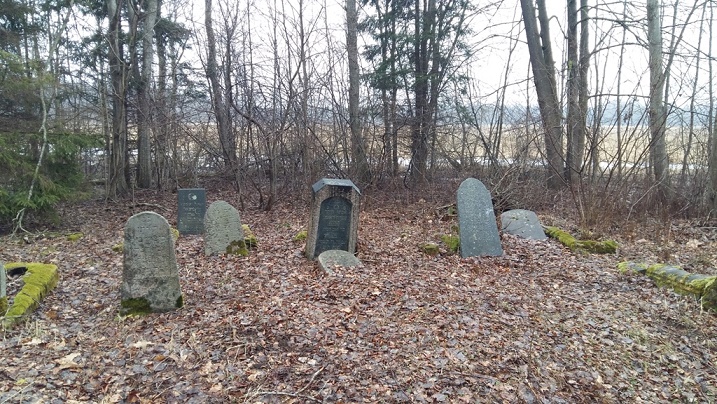
For the second time a group of 18-and-under young people from Odessa, Kiev, Minsk, Gomel, Moscow, St. Petersburg, Kherson and Krasnoyarsk–85 people in all–have visited Panevėžys as part of a project called Return to Roots. The goal of the journey was to learn about the culture, heritage and history of Litvaks in Panevėžys and Lithuania. Visiting surviving cemeteries, the synagogue and the school, the students witnessed Jewish heritage with their own eyes. Panevėžys Jewish Community chairman Gennady Kofman told the story of the destruction of a Jewish cemetery in 1966 to exploit the headstones as construction material. He said the local Jewish community had gone to great efforts to have the stones returned to the cemetery where the “Sad Jewish Mother” monument now stands. The students showed keen interest in the history of the Jews in the city and World War II. The delegation visited the former Ponevezh yeshiva established by the famous rabbi, Josef Kahaneman. After touring the city the students visited the town of Subačius and the Jewish cemetery there, where rainfall prevented any clean-up work. Alderman Vidmantas Paliulis came to meet the students there. Paliulis has exerted enormous efforts to clean up and maintain the Subačius Jewish cemetery, nicknamed “Paris.” He explained it was called that because of the name of the small neighboring village Paryžius.

The students were then received warmly and fed at the Panevėžys Jewish Community.

Jewish Theater in Inter-War Lithuania

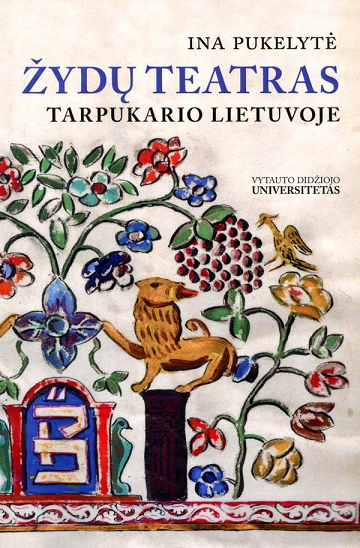
An event to launch the new book “Žydų teatras tarpukario Lietuvoje” [Jewish Theater in Inter-War Lithuania] by Dr. Ina Pukelytė will be held at 6:00 P.M. on the second floor of the Grand Dukes Hall in Kaunas on Wednesday, April 4.

All theater and book lovers are invited to attend to learn more about Jewish activities in Lithuania and other countries in the period between the two world wars, the place Lithuanian Jewish theater holds abroad and about the evolution of Lithuanian theater after the war.

Head of Vytautas Magnus University’s Theater Studies Cathedral Dr. Edgaras Klivis is to moderate the event.

Kaunas Jewish Community Honors Most Active Members

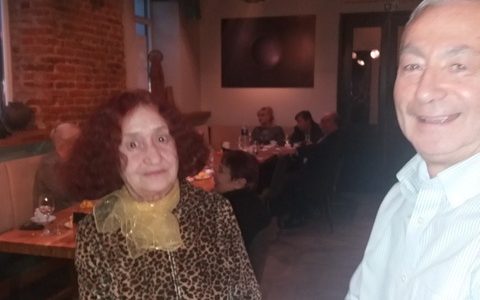
The Kaunas Jewish Community has been honoring its most active members for over two decades now. This year KJC chairman Gercas Žakas invited such members to an evening party to thank them for their sincerity, presence, communication and individual contributions of the most varied sort, including contributing homemade pastry for the Hesed Club, cakes cooked with love for various occasions, furthering traditions and the Yiddish language, honoring Holocaust victims, broadening individual horizons through excursions and cultural events, sharing memories and experience, participating at sporting events and extending a helping hand to other members of the community.

Live musical performances contributed to the fun with performances by the collective including Mihail Javič on saxophone, Arvydas Joffė on percussion, Rolandas Babraitis on keyboard and the young vocalist Viktorija. We all know small gifts can cement friendships and everyone who attended received valuable books.

Rudashevski Vilnius Ghetto Diary Presentation March 27

The literary monument of a fifteen-year-old chronicler of the Jewish ghetto to the suffering of the Holocaust, Yiddish culture, the will to survive and hope. For those who haven’t yet had a chance to learn about the Vilnius ghetto diary of Yitzhak Rudashevski, we invite you to come to the Lithuanian Jewish Community at 6:00 P.M. on March 27, 2018, for a public books launch. Participants: LJC chairwoman Faina Kukliansky, translator Dr. Mindaugas Kvietkauskas, designer Sigutė Chlebinskaitė, Holocaust historian Neringa Latvytė-Gustatienė. Dr. Lara Lempert will serve as moderator.

Pakruojis Wooden Synagogue Featured on Lithuanian Public TV Culture Channel

“Lithuania is slowly restoring the country’s rich legacy of synagogues. Synagogues are still standing in towns, the former shtetlakh, where not a single Jew has remained. Braver and cleverer mayors and communities, encouraged by the Lithuanian Cultural Heritage Department and the Lithuanian Jewish Community, have begun restoring what has now become the priceless Jewish legacy, wiped out by the Holocaust. The synagogues are coming back and are being used for the cultural needs of the towns.

“Lithuanian public television channel Kultūra is producing a series called Reflections devoted to heritage. On this page you will find and be able to watch a film about restored synagogues. At the beginning you will see the oldest surviving wooden synagogue in Lithuania, restored in 2017. The synagogue operated as such until World War II, when the Holocaust exterminated the Pakruojis Jewish community. The regional administration of Pakruojis has renovated the Pakruojis Jewish synagogue and adapted it for public use. The project was financed by Norway, Iceland and Liechtenstein. The restorers did great work and the interior is dominated by characteristically Jewish elements of decor and Jewish ethnic symbols, and the painting is filled with floral and faunal motifs. The former aron kodesh of this synagogue is especially decorative and impressive.

“After the Pakruojis synagogue, you will also see restored synagogues of Kaunas and Joniškis in the film”

Video program in Lithuanian here.

Lithuanian Jewish Community Booth at Vilnius Book Fair

Lietuvos žydų bendruomenės stendas Vilniaus Knygų mugėje

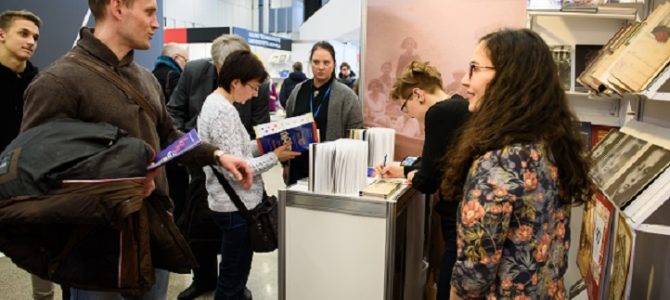
The Lithuanian Jewish Community has participated with its own booth at the Vilnius Book Fair for the first time, launching a Lithuanian translation of Yitzhak Rudashevski’s Vilnius ghetto diary. The booth featured other books about Jewish history and culture published with financial help from the Goodwill Foundation. Purim treats were also passed out. Visitors were interested in the publications, but also had plenty of questions about what the Community does and Jewish culture and traditions. They shared stories from their grandparents about the latter’s childhood spent in common with Jewish children.

Translators Mindaugas Kvietkauskas and Akvilė Grigoravičiūtė signed books.

The Return of Samuel Bak

by Markas Petuchauskas

Now that some time has passed since the opening of the Samuel Bak museum, I would like to look back. To remember how this world-famous painter’s return to Lithuania began. To remember what I experienced. And these experiences date back to 1943.

Bak was probably never more open about himself than in the introduction to the Lithuanian translation of his book Painted in Words. He tells how Vilnius “tortured” him, how he sought to forget the city and was never able to do so. For more than half a century the artist placed a taboo on thoughts of Vilnius. On the city of his happy childhood and the land drenched in the blood of his family, where he would never set foot again.

I dare say one of the first unexpected reminders of Vilnius after sixty years was Pinkas. It is very nice that Bak was reminded of Pinkas in 1997 in the Lithuanian magazine Krantai (not speaking the language, the artist believed incorrectly this was a publication from the Lithuanian Ministry of Culture). The special third issue of the magazine, this was a publication by the Lithuanian Jewish Cultural Club which I founded in 1994. The magazine was set up at my initiative using club funds, and was intended to commemorate the Vilnius ghetto theater during International Art Days. Lithuanian National Museum employee Simona Likšienė wrote about the pinkas conserved at the museum in the magazine and included the title page.

Jewish Attorneys Laid the Foundation of the State

As we mark the day of the restoration of the Lithuanian state and celebrate her 100th birthday, let’s also remember those who built this state, where the law is not just a paper concept but a category forming the foundation of the state and citizens and affecting our daily lives.

Jews comprised a large part of the community of Lithuanian attorneys. The majority of Jews had the experience of both being caretakers of the law and of having their legal rights taken away from them. The textbooks don’t talk about Jewish attorneys and it is only rare archival material which gives us a glimpse of their professional portraits. Very little is generally known about cases at the Lithuanian Special Archive which detail the fate of Vilnius attorneys arrested in 1939.

Full text in Lithuanian here.