

The Gesher Club and the Kaveret Club for young families at the Lithuanian Jewish Community invite you to attend a warm and cozy Sabbath celebration at 7:00 P.M. on November 11 on the third floor of the LJC at Pylimo street no. 4 in Vilnius. For more information please contact Žana Skudovičienė at telephone number +370 678 815 14.
Shabbat Project at the LJC
Press release, November 9, 2016
For the third year in a row Jewish communities around the world will host challa baking events and Sabbath celebrations. More than 1,006 cities around the world are participating in this enchanting event, and this year Vilnius is one of them. The Lithuanian Jewish Community officially joins the Shabbat Project Thursday, November 10, when we will host an evening of baking that special Jewish bread called challa with Community members and friends.
Challa is a special bread baked for Sabbath and holidays among Jewish families. The process of making and breaking challa is deeply rooted in tradition and religion. The word’s primary meaning is that of loaf or bun, as recorded in the Book of Numbers or Bamidbar in the Old Testament or Tanakh, and was one of the first commandments given the Israelites as they were preparing to leave the wilderness for the Promised Land: “Ye shall offer up a cake of the first of your dough for an heave offering: as ye do the heave offering of the threshing floor, so shall ye heave it.” (Numbers 15:20)
The event will feature a brief history of the Sabbath, music and hymns, kneading the dough together and baking traditional Sabbath challa. Ester Izakson, the wife of the rabbi of Vilnius, will lead the event. She will present the ceremony of separating a portion of the dough for the cohen, the haFrashat khalva, one of the three commandments incumbent of women in Judaism.
We’ll begin activating the yeast at 6:00 P.M. on November 10 at the Bagel Shop Café, Pylimo street no. 4, Vilnius. The Lithuanian Cultural Council is supporting the event.
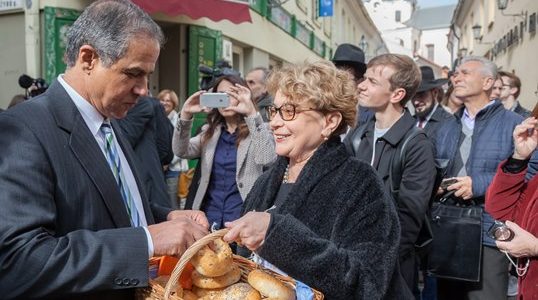
The event will be attended by Lithuanian Jewish Community chairwoman Faina Kukliansky with family members, foreign ambassadors and guests.
For more information, contact Dovilė Rūkaitė, director of projects for the Lithuanian Jewish community, at projects@lzb.lt
Shabbat Project Poised to Break New Records in 1000 Cities
The international Shabbat Project involves more than a million Jews in 84 countries
Tel Aviv is epicenter of global Shabbat initiative in Israel.
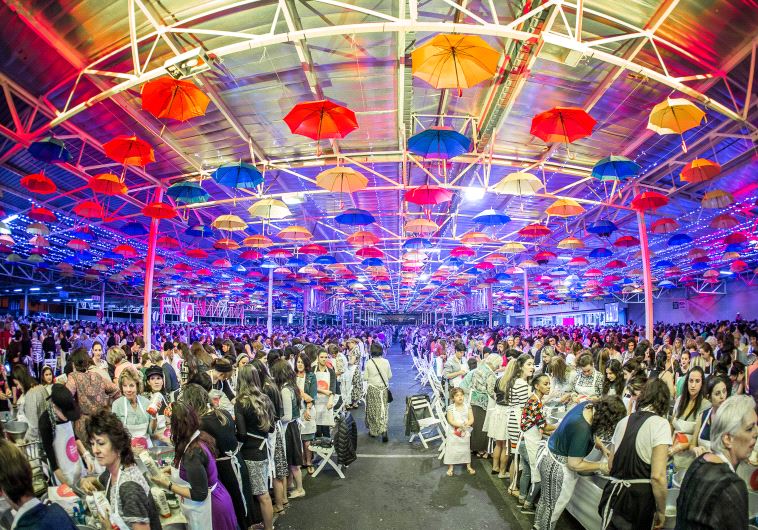
Shabbat Project participants baking challah together in Johannesburg, South Africa.
The number of cities expected to join in this week’s annual global Shabbat is approaching 1,000, and organizers expect it to surpass that number.
This is the third year of the Shabbat Project since it launched in 2014, and the number of participants has grown exponentially from year to year, with an estimated one million having taken part last year in 919 cities and 84 countries across the globe.
This year, 57 new cities have committed to take part, from Lodz in Poland, to Hoorn in the Netherlands, Alphaville in Brazil and Hollywood, USA.
The tag line of this year’s Shabbat Project is “Shabbat can do that.”
“In 2014 and again in 2015, through the transformative power of Shabbat, we’ve seen individuals and communities accomplish great things; things that before were not thought possible,” explains the brains behind the initiative, South Africa’s Chief Rabbi Warren Goldstein. “We’ve seen walls torn down, families rejuvenated, deep feelings awakened, deep friendships formed. This is what Shabbat can do,” he adds.
Full story here.
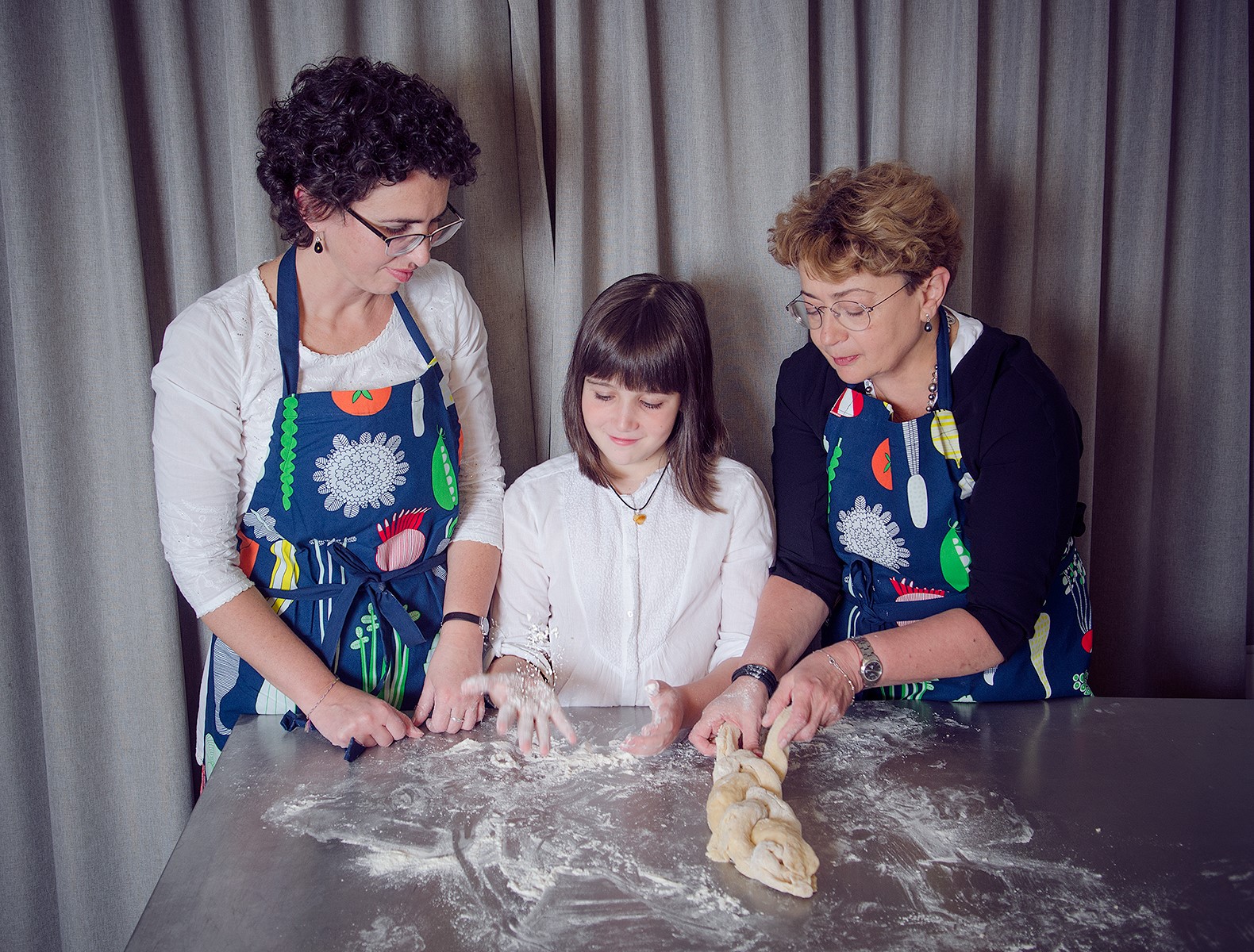
Three Braids, Three Challas, Three Generations
The Lithuanian Jewish Community invites you to participate in the international Shabbos project!
We’re inviting all Community members to come bake challa and celebrate the Sabbath together on November 10 in Vilnius!
Jewish communities around the world will be baking traditional challa bread on November 10. This fun project has been going on for three years and includes Jewish communities in 65 countries. This is the first time the Lithuanian Jewish Community is participating. We’re inviting all regional communities, families, mothers and daughters to gather together and bake challa together in their own communities. Grandmothers, mothers, granddaughters, we’re hoping you will all come knead challa together at one table!
Registration is required because space is limited. goo.gl/fEmzp4
Program:
6:00 P.M. We activate the yeast and knead the dough
6:30 P.M. The story of the Sabbath
7:00 P.M. We braid the challa
7:30 P.M. We bake the challa
More information available here.
Happy Sukkot!
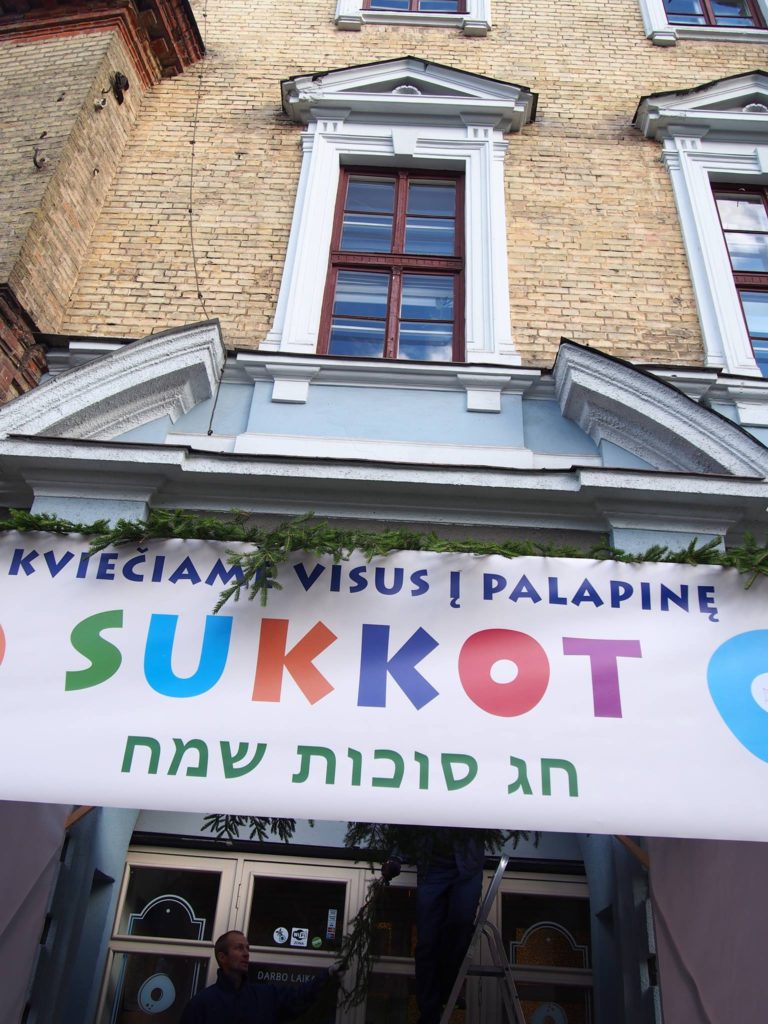 Sukkah at Bagel Shop Café on central Pylimo street in Vilnius
Sukkot, the Jewish feast of tents which is often translated in English as the feast of tabernacles, begins on the evening of October 16 this year, or Tishrei 15 on the Jewish calendar. A booth is built for Sukkot called a sukkah where for seven days the family has dinner, children play and as much time as possible is spent. That’s how it works in warmer climates, and today there are sukkah houses outside homes across Israel. Many Jews build the shelters in their yards or even on apartment balconies.
Why spend time in temporary shelters? The answer comes from Leviticus (Vaikra) 23:42-43: “Ye shall dwell in booths seven days; all that are Israelites born shall dwell in booths: That your generations may know that I made the children of Israel to dwell in booths, when I brought them out of the land of Egypt: I am the Lord your God.”
It’s traditional to place the four species or arba minim in the tent or booth during the holiday. These are the etrog (a specific kind of citrus fruit), and branches from palm trees, willows and myrtle trees. Leviticus 23:40: “And ye shall take you on the first day the boughs of goodly trees, branches of palm trees, and the boughs of thick trees, and willows of the brook; and ye shall rejoice before the Lord your God seven days.” The branches and fronds are traditionally used to decorate the booths and waved during the holiday.
Jews often take their evening meal in the shelter and recall the flight of their people from Egypt. However you choose to celebrate the holiday, the Lithuanian Jewish Community wishes you and your family a happy Sukkot!

Jewish Street Gets New Sign in Yiddish, Hebrew
Žydų gatvė (Jewish Street, aka Yidishe Gas, aka ulica Żydowska), where the traditional Jewish quarter and the Great Synagogue of Vilnius was located, got a new sign in Yiddish and Hebrew Tuesday.
This was one in a continuing series of new signs in foreign languages, a controversial effort by Vilnius mayor Remigijus Šimašius to showcase the multicultural identity of the Lithuanian capital. Earlier signs in “minority” languages included ones for Islandijos [Iceland] street, Washington Square, Varšuvos [Warsaw] street, Rusų [Russian] street and Totorių [Tatar] street in Vilnius.
Support the Lithuanian Jewish Community
Even your small donation today can help the Lithuanian Jewish Community achieve great things tomorrow.
The Lithuanian Jewish community has roots going back 700 years. Only a remnant survived the Holocaust. Although the current community is small, we are extremely active and are working hard to foster Jewish identity, maintain traditions and culture, commemorate Holocaust victims, provide social services to our members and promote tolerance in society.
We invite you to contribute to reviving at least a small portion of the legendary Jerusalem of Lithuania. Perform your mitzvah (good deed) today!
New Bagel Shop Menu
The Community’s kosher café the Bagel Shop invites you to come in and try some of new menu items for fall, including new bagels, Israeli salads and fresh-squeezed juice. Our new menu is displayed below and you can download it as well, or just stop by at Pylimo no.4 in Vilnius during regular business hours and see if you don’t find something which makes your mouth water. Oh, and we’re baking fresh challa bread every Friday.
LJC Chairwoman Faina Kukliansky Thanks European Day of Jewish Culture Organizers
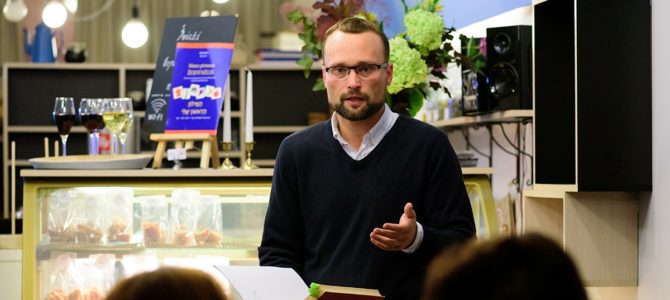
Photo: Dr. Mindaugas Kvietkauskas, director, Lithuanian Literature and Folklore Institute, reads poems by Abraham Sutzkever
The European Day of Jewish Culture was celebrated September 4 in Vilnius with a klezmer music concert and Yiddish poetry readings. We are glad it was such a real holiday, and proud of its organizers!
Lithuanian Jewish Community chairwoman Faina Kukliansky thanks everyone who contributed to organizing the event and who sacrificed their time for the Jewish community’s benefit.
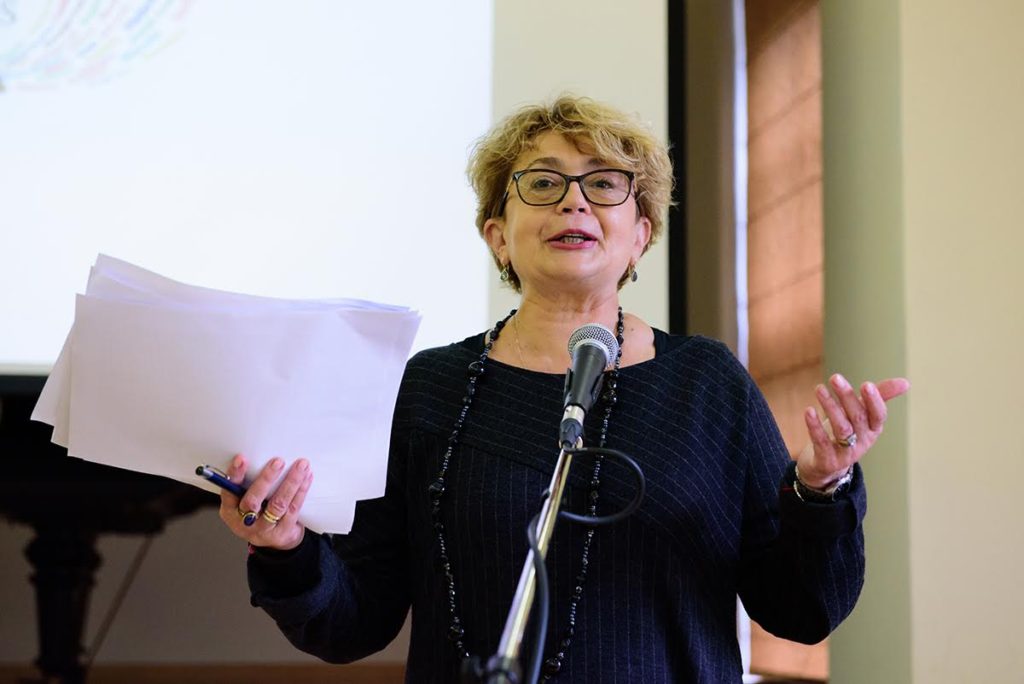
“Thank you to the staff of the Bagel Shop Café who prepared special Jewish treats for everyone. Only though joint effort can our small community organize celebrations of such high caliber and take pride in them along with a large group of friends and guests. Thank you to the small group of volunteers who truly helped. Thank you to the Vilnius Sholem Aleichem ORT Gymnasium, fostering students who honor and are interested in their roots and culture, the young Europeans for whom understanding of tolerance and civic-mindedness is an urgent matter. Thank you to the gymnasium students who took part in the celebration,” chairwoman Kukliansky said.
Gefilte Fish: Stuffed Fish, or Fish Ball? Secrets of the Litvak Kitchen Revealed

by Dovilė Rūkaitė
The issue of survival is an urgent one in the history of cuisine just as much as it is in the history of humanity. Do the fittest and most delicious survive? So what are we to make of the apparent success of this boiled ball, a brownish gray mass with a slice of carrot atop, either sweet or salty, framed by a pink jelly, or just as often with a sauce of indeterminate color? Gefilte fish is an established dish in world cuisine; in the kosher food section you can find several different types and it is an essential food during the holidays at European Jewish homes.
Gefilte fish is an Ashkenazi Jewish dish of epic proportions which has survived the challenges of the centuries remaining almost unchanged to the present time. Litvaks make this stuffed fish in the following way: the carp or trout is gutted, the bones are removed from, the fish fillet is combined with spices and the mixture is placed back within the skin of the fish or strips of it and boiled in a pot with carrots. The stuffed fish cools in the fish broth which gels into a jelly, is decorated with lateral slices of carrot and served with horseradish. Jewish housewives in Vilnius used to put bits of beet in the pot so the jelly would take on a pink color and a more interesting taste.
European Day of Jewish Culture 2016
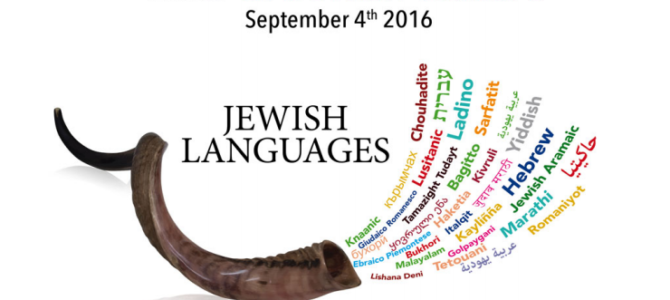
European Day of Jewish Culture 2016
Vilnius speaks Yiddish again!
Sunday, September 4, 2016
Lithuanian Jewish Community, Pylimo street No. 4, Vilnius, September 4
Program:
10:00 Bagel breakfast Boker Tov-בוקר טוב – A guten morgn – Labas rytas!
Location: Bagel Shop Café, Pylimo street No. 4, Vilnius
11:00-11:45 Hebrew lessons for kids and parents with Ruth Reches, author of the Illustrated Dictionary of Hebrew and Lithuanian for Beginners, registration required
Meet at the Bagel Shop Café, Pylimo street No. 4, Vilnius
12:00-12:45 Rakija Klezmer Orkestar performance
Location: White Hall, LJC
Learning about Jewish Heritage through Languages
We invite you to participate in events scheduled throughout Lithuania for September 2 to 5 to celebrate the European Day of Jewish Culture. This year the theme is Jewish languages. Events will include the now almost traditional excursions and tours of Jewish heritage buildings with a focus this time on Hebrew language and calligraphy lessons, discussions, exhibits, concerts, educational games and even bagel breakfasts!
Diana Varnaitė, director of the Cultural Heritage Department under the Lithuanian Ministry of Culture, said: “We still have a significant amount of architectural heritage in Lithuania despite the intense destruction of Jewish material and intangible culture carried out during the Soviet era. Most of it, especially in Vilnius and the other larger cities of Lithuania, as a consequence of Sovietization, is still undiscovered, unrecognized and ‘unread.’ We invite you to take a look at our Jewish cultural heritage, to take it in and to understand that it is not just our past, but also an opportunity for the future. By educating the public and developing cultural tourism, we can slowly impart new vitality to our cities and towns.”
Full story in Lithuanian here.
Jewish Languages in Lithuania
by Akvilė Grigoravičiūtė, Germanic studies doctoral candidate, Sorbonne
We invite those interested in Lithuanian Jewish culture and heritage to participate in walking tours, attend exhibitions, meetings and concerts and take part in other cultural activities scheduled for Sunday, September 4. The point is to regain a portion of our own historical memory, to disrobe it from a mantle of suppression and to add color beyond black and white to a rather amicable and good-willed former life together.
Full story in Lithuanian here.
Rabbi Ben Tzion Zilber Visits Latvia and Lithuania

Rabbi Ben Tzion Zilber, son of legendary Rabbi Yitzchok Zilber, visited Latvia and Lithuania August 15 and 16.
Rabbi Kalev Krelin of the Vilnius Jewish Community escorted Rabbi Zilber to locations where the latter’s ancestors lived. His father Rabbi Yitzchok Zilber belonged to a long line of scholars and suffered under Stalin, both at labor camps and under the atheist policies of the Soviet Union. Despite extremely difficult circumstances, Rabbi Yitzchok Zilber not only managed to hold steadfastly to his faith in the Creator and to keep His laws, but also to deepen his Torah study and teach others. After making aliyah to Israel Rabbi Yitzchok Zilber had hundreds of followers in whom he inspired faith in the Creator and adherence to the Torah.
Keeping the Faith in Vilnius
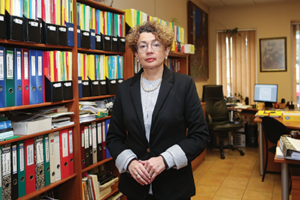
photo © Delfi/K. Cachovskis
Ellen Cassedy, author of We Are Here: Memories of the Lithuanian Holocaust (ellencassedy.com), has written about the Lithuanian Jewish Community and the Bagel Shop initiative.
Amit Belaite adores the long ode to the city of Vilna that was penned by writer and poet Moyshe Kulbak 90 years ago. Lines from the poem about Vilna’s stones and streets were running through her head on a warm summer afternoon as she led a walking tour through the narrow, winding streets of the city now known as Vilnius, the capital of the small Baltic nation of Lithuania.
Belaite, 23, heads the Lithuanian Union of Jewish Students. When she posted the announcement for the group’s tour of Jewish Vilnius, she expected a couple of dozen people to be interested. To her amazement, 400 signed up, many of them non-Jews.
“People know the city is rich in Jewish history,” she said. “They feel a big need to learn about it.”
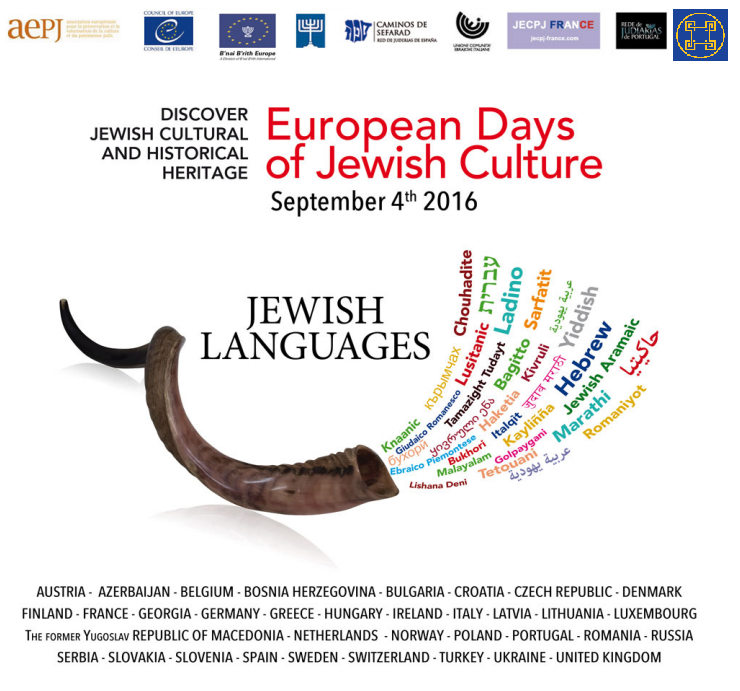
European Days of Jewish Culture: September 4
Come learn about the Jewish cultural and historical legacy. European Days of Jewish Culture, September 4. This time the theme is Jewish languages. Event begins at 2:00 P.M. on the third floor of the Lithuanian Jewish Community in Vilnius.
Event in Dieveniškės to Commemorate Regional Jewish History
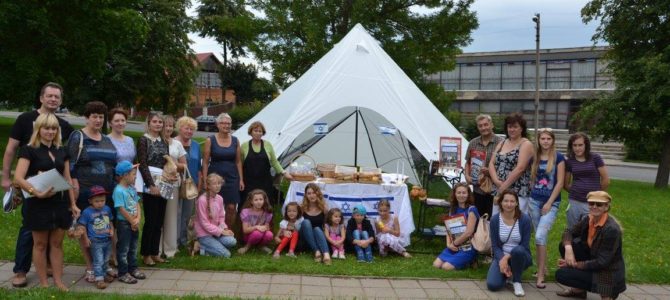
On August 4 Lithuanian Jewish Community representatives sold traditional Litvak bagels and sweets and spoke about Jewish tradition under the aegis of the LJC Bagel Shop Café at the Dieveniškės town square. The bagels quickly disappeared but local residents stuck around for the events to commemorate regional Jewish history.
The Dieveniškės Technological and Business School hosted the lectures “Jewish Funeral and Cemetery Traditions” and “Synagogues: How They’re Built, What Happens in Them and Why.” Participants manufactured models of synagogues from cardboard and other materials, and bricks made of clay to mark the locations of former Jewish buildings.
Bagel Shop Café Draws Attention of ARD-1 German Public TV Crew
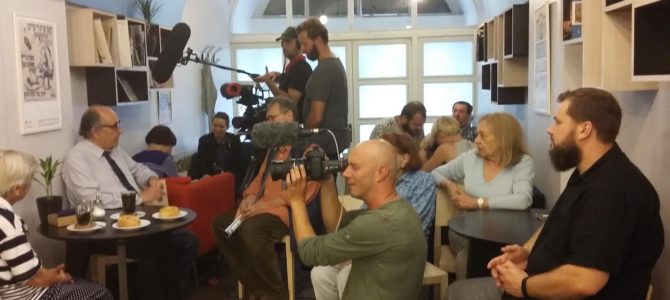
German public television channel ARD-1 filmed footage at the Lithuanian Jewish Community on July 13 with a focus on the Bagel Shop Café for a program to be called “Berlin-St. Petersburg,” according to director Christian Klemke.
He said although the itinerary for the film crew had been decided carefully prior to their trip through Poland, Lithuania, Latvia, Estonia and Russia, they had encountered interesting sites along the way which they will include in the final production.
When they were considering what to film in Vilnius, they discovered Vilnius’s rich pre-war Jewish cultural and spiritual life. “I wanted to know what there is now, so many years after the Holocaust,” Klemke said. Local producer Karolis Pilipauskas told him about the Bagel Shop Café. The Lithuanian Jewish Community facilitated meetings with members of the older generation, including Holocaust survivors. “I was very interested to hear their stories. Young members of the Jewish community also came to the café,” Klemke said.
Jewish Heritage Trip to Lithuania Visits Lithuanian Jewish Community
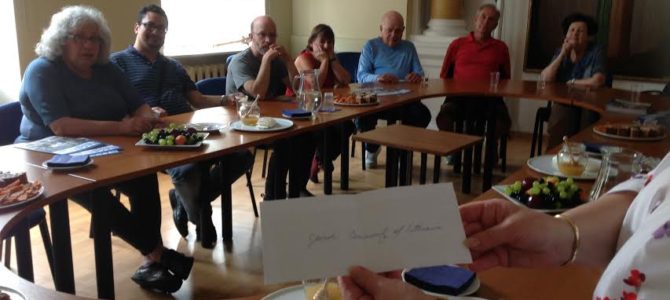
A delegation from the Jewish Heritage Trip to Lithuania led by Peggy Mosinger Freedman visited the Lithuanian Jewish Community July 1. The organization supports the “Food to Homes” program for the elderly conducted by the LJC Social Center. Members of the group are not infrequent visitors to Lithuania, where they always take a keen interest in Jewish life. This time the delegation included Canadian Alex Bronsteter, who said he can make the trip to the land of his roots now that he retired. He wants to bring his children to Kaunas next year as well. His mother survived the Kaunas ghetto, but most of her relatives were murdered.
Call for Recipes
Dear members,
This year the Lithuanian Jewish Community will be actively involved in the European Jewish Culture Day program and is organizing different events to present the Jewish languages and Jewish cultural heritage to the public. European Jewish Culture Day will happen September 4, 2016.
The Bagel Shop Café will have on offer Jewish culinary heritage and is asking you to recall dishes made by your parents and grandparents, to find handwritten recipes (including in Yiddish) and to share them. We will prepare the best examples and offer them to the public during the event, and publish the recipes and descriptions.