anti-Semitism

Lithuania’s Self-Generated Problem

Lithuania’s Self-Generated Problem

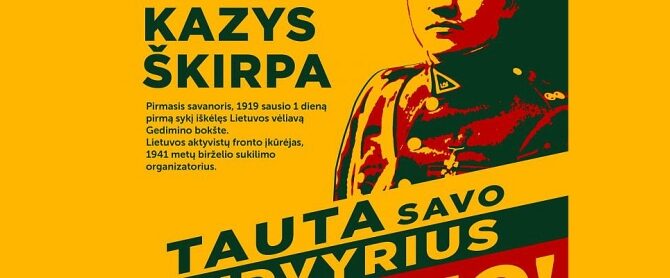
Photo: Poster honoring Kazys Skirpa. Translation: “A Nation which respects itself should know its heroes: Diplomat Colonel Kazys Skirpa First volunteer who raised the flag of Lithuania on Gediminas Tower on January 1, 1919, the head of the Lithuanian Activist Front, organizer of the June 1941 uprising. The Nation knows its heroes!”

Hate against minorities is supposedly illegal in Lithuania. Lithuanian MP Žemaitaitis spewed obscene tropes against Jews which did not make sense in the 1200s, nor in 1941, and not now, either. In subsequent posts, Žemaitaitis called for the ethnic cleansing of Jews from Lithuania.

The Austrian, German, American and Israeli ambassadors issued statements condemning Žemaitaitis, as did the prime minister of Lithuania. The Lithuanian Jewish Community has requested Žemaitaitis be referred to the public prosecutor for hate crimes charges.

Superficially, the case is straightforward. The crimes are obvious, the law is clear, there is no question of his guilt. Hate is simply hate. But, the Government of Lithuania has a problem.

Arkadijus Vinokuras Responds to Anti-Semitic Statements by MP Remigijus Žemaitaitis

Arkadijus Vinokuras Responds to Anti-Semitic Statements by MP Remigijus Žemaitaitis

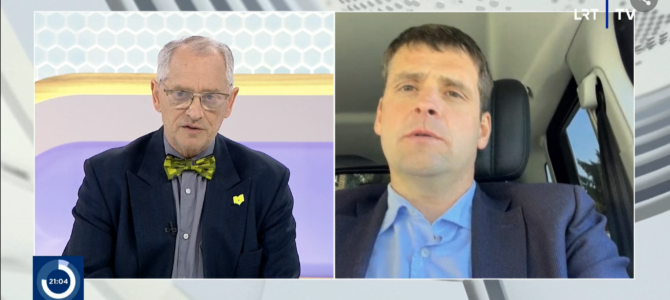
Writer, reporter and public figure Arkadijus Vinokuras has responded to anti-Semitic statements made by Lithuanian MP Remigijus Žemaitaitis on the Lithuanian state television program Dienos tema [Topic of the Day]:

“How should a democratic state respond to these kinds of statements by a member of parliament? We heard condemnation from the heads of state and from some of the intelligentsia. Should we not respond at all?” Mindaugas Jackevičius asked Arkadijus Vinokuras.

“We have to respond,” Vinokuras replied, “because this isn’t incitement to hatred against one people, but against all peoples. I also believe that interpolation [impeachment hearings] must be brought against Mr. Remigijus Žemaitaitis who, for reasons I don’t know, doesn’t understand what he has done,” Vinokuras said.

Full interview in Lithuanian available here.

Two Hundred Historians Back Polish Holocaust Expert under Attack

Two Hundred Historians Back Polish Holocaust Expert under Attack

In a letter of support, historians and scholars worldwide said that the Polish attack on Holocaust scholar professor Barbara Engelking harmed attempts “to understand the processes that allowed the Holocaust to take place.”

Two hundred historians, including senior Holocaust scholars from Israel and around the globe, signed a letter in support of professor Barbara Engelking, a Polish historian who has been under attack in her homeland after she said the Poles did not do enough to help Jews during the Shoah.

“We, the undersigned scholars of the Holocaust Era, the Second World War, and Modern and Jewish History, express our firm support for Professor Barbara Engelking and for academic freedom, in the face of an unbridled and unfounded attack by politicians, media, and other public figures. … We can attest to the fact that she is a scholar of impeccable personal and professional integrity. Her scholarship adheres to the highest academic standards, for which she has earned worldwide esteem,” the historians wrote.

Lithuanian MP Denounces Israel for Razing Palestinian School EU Financed

Lithuanian MP Denounces Israel for Razing Palestinian School EU Financed

Lithuanian MP Remigijus Žemaitaitis, chairman of the Freedom and Justice Party formed of two rival liberal parties to contest municipal elections in Vilnius in 2014, denounced Israel’s destruction of a school in Bethlehem in the Israeli-occupied West Bank. The US, Israeli and German ambassadors called for him to apologize for the remarks, first made on facebook on Monday, May 8, repeated in parliament Tuesday, the same day Israel started bombing the Gaza Strip in what it calls Operation Shield and Arrow. Despite the demands of the ambassadors and his fellow MPs, Žemaitaitis said he won’t apologize.

On Tuesday he told parliament assembled: “I want to emphasize this school was fully financed by the European Union, by Lithuania, Latvia, Estonia, Poland, Bulgaria, Germany, Spain and the other countries. … And if we believe that it’s alright to allow in the 21st century some country to blow up or destroy these kinds of sites of another country, then ask yourselves, what sort of moral and political values do you live by today? Mine are much higher than you think.”

Naval Guard Kills 4 at Tunisian Synagogue

Naval Guard Kills 4 at Tunisian Synagogue

A Tunisian naval guard shot dead four people at Africa’s oldest synagogue in an attack Tuesday that sparked panic during an annual Jewish pilgrimage on the island of Djerba.

He gunned down two visitors, including a French citizen, and two guards before he was shot dead himself, the Tunisian Interior Ministry said.

Another four visitors and five police officers were wounded in the attack.

Litvak Community Leaders Mark Victory Day in Israel

Litvak Community Leaders Mark Victory Day in Israel

On May 8, VE Day, or Victory in Europe Day, the heads of several constituent communities in the Lithuanian Jewish Community, including LJC chairwoman Faina Kukliansky, Kaunas Jewish Community chairman Gercas Žakas and others, marked the anniversary of the liberation of the Nazi concentration camps and the capitulation of Nazi Germany to allies during a trip to Israel.

Shmuel Yatom, the chairman of the Vilnius Religious Jewish Community, performed a prayer prayed by victims on the way to Treblinka in Sderot, Israel.

The Litvak leaders are in Israel for workshops sponsored by the European Commission for more effective implementation of the EC’s strategy for fighting anti-Semitism and fostering Jewish life in the European Union.

They visited Sderot on the border with the Gaza Strip which saw Israeli counter-attacks last night and into the morning of May 9. The Israeli town is known as Israel’s bomb shelter capital because of frequent rocket attacks from Gaza. They also planned to meet the mayor of Ashkelon, and to take part in a ceremony honoring Mordechai Aneliwicz, an organizer of the Warsaw Uprising. The LJC is planning a joint conference with the Poland’s Jewish Historical Institute this fall to commemorate the 80th anniversary of the destruction of the Vilna ghetto.

Joint Statement on the Dialogue on Holocaust Issues

Joint Statement on the Dialogue on Holocaust Issues

May 3, 2023

The text of the following statement was released by the Governments of the United States of America and the Federal Republic of Germany.

Begin Text

The Governments of the United States of America and the Federal Republic of Germany announce significant progress in their Dialogue on Holocaust Issues. Secretary of State Blinken and then-Federal Foreign Minister Maas launched the Dialogue in 2021 to counter the rise in Holocaust denial and distortion — a dangerous development that undermines freedom, democracy, and security — and to contribute to a world in which knowledge about the Holocaust is abundant, based on facts, and serves as a foundation for tackling today´s challenges at an early stage. The U.S. Department of State, the German Federal Foreign Office, the German Foundation Memorial to the Murdered Jews of Europe, and the U.S. Holocaust Memorial Museum participate in the Dialogue. They have completed initial projects in three priority areas:

Noreika Shrine Removed for Repair

Noreika Shrine Removed for Repair

The plaque commemorating Lithuanian Nazi Jonas Noreika has been removed from the wall of the Vrublevskiai Library in central Vilnius along with the candles and flowers placed by worshipers at the base of the brick column there as the library prepares for repairing its exterior walls. According to the news site delfi.lt the plaque was given to the ultranationalist Pro Patria party for safeguarding and will be replaced following the completion of construction work at the library.

Hungarian City Restores Jewish Street Name

Hungarian City Restores Jewish Street Name

Street in Kőszeg Gets Back Historic Name

Hungary Today, May 3, 2023

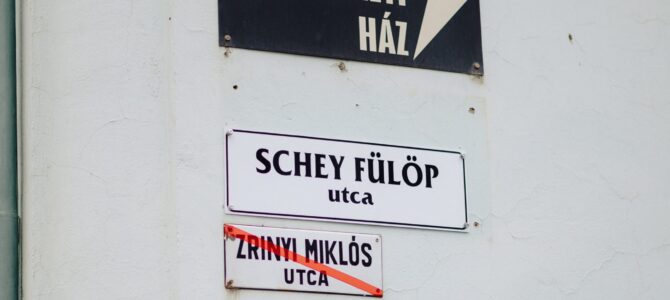
When the name of a public space in a municipality changes, it is usually associated with a political change. Perhaps the most striking example of this was when, after the fall of Communism, the names of public spaces given during the Communist period were changed en masse for ideological reasons. In the western Hungarian city of Kőszeg, the former Zrínyi Miklós Street was renamed Schey Fülöp Street on Tuesday, but the reason for the name change is different.

Fülöp Schey, the former patron of the town, the builder of the synagogue and a prominent figure of the local bourgeoisie, was commemorated in Kőszeg yesterday. Fülöp Schey’s descendants living abroad, members of the Schey-Ephrussi-de Waal family, also took part in the commemoration day organized jointly by the Kőszeg Municipality and the Institute of Advanced Studies Kőszeg (iASK; Felsőbbfokú Tanulmányok Intézete).

EU Anti-Semitism Working Group Meets in Bucharest

EU Anti-Semitism Working Group Meets in Bucharest

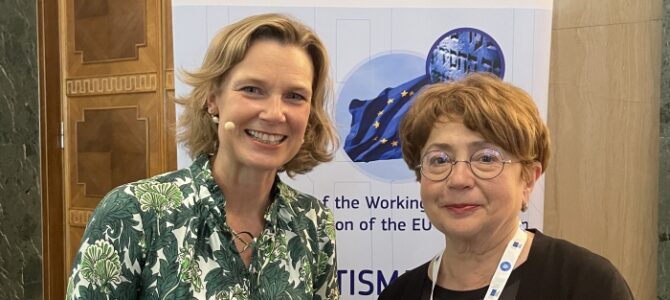
Photo: European Commission coordinator for combating anti-Semitism and fostering Jewish life in Europe Katharina Schnurbein and LJC chairwoman Faina Kukliansky.

The European Union’s working group for implementing strategies for combating anti-Semitism is meeting in Bucharest, the capital of Romania. Lithuanian Jewish Community chairwoman Faina Kukliansky is there discussing the issues in Lithuania and other countries with high-ranking European Commission and international organization officials.

More than 80 guests, European Commission officials, representatives of different international organizations and local Jewish communities along with specialists from across the EU as well as guests from the Ukraine and Moldova are attending the three-day conference organized by the Government of Romania and the EC. The point is to discuss how to fight anti-Semitism, including implementing national strategies, discussing progress made in implementing the EU strategy for combating anti-Semitism and fostering Jewish life in Europe, lurking dangers, Holocaust distortion and denial and the value of preserving memory.

Amit Goldman on Anti-Semitism: Society Needs Greater Sensitivity

Amit Goldman on Anti-Semitism: Society Needs Greater Sensitivity

Amit Goldman, then Amit Belaitė, walked down the street with a friend in Vilnius 15 years ago and was spit upon by a skinhead. Today, she says, when she and Jewish friends go to a bar in the Vilnius Old Town, the bartender greets them with “shalom.”

It might look at first glance like anti-Semitism is disappearing in Lithuania.

“I know there are people who see Lithuania as a blood-soaked land and who will never travel here,” she told a Lithuanian human rights publication in an audio interview.

The audio and portions of text from the interview in Lithuanian are available here.

Polish President Mentions Ponar at Warsaw Uprising Ceremony

Polish President Mentions Ponar at Warsaw Uprising Ceremony

April 18 marked the 80th anniversary of the Warsaw Uprising. Polish president Andrzej Duda invited the presidents of Israel and Germany, representatives of the major global Jewish organizations and others to a commemoration of the historic act of mass resistance during WWII which was held in Warsaw. Lithuanian Jewish Community chairwoman Faina Kukliansky also received an invitation and attended.

In his speech, Duda talked about the largest act of resistance by civilians to the Nazis. They knew they were outnumbered and faced defeat, but fought anyway, he noted. President Duda mentioned Ponar outside Vilnius as one of the main mass murder sites during the Holocaust. Some foreign media noted Duda failed to talk about Nazi collaborators, others said he wasn’t able to because of Poland’s new law forbidding discussion of Polish complicity in the Holocaust.

Premiere of J’Accuse with Lithuanian Subtitles Exclusively on 15min.lt

Premiere of J’Accuse with Lithuanian Subtitles Exclusively on 15min.lt


The Lithuanian news website 15min.lt announced they will be showing the Holocaust documentary J’accuse with Lithuanian subtitles on April 17 and 18. The focus of the film is Grant Gochin whose entire family were murdered by the Nazis in Lithuania, and Silvia Foti who published a biography of her grandfather Jonas Noreika, debunking his lionization by post-WWII Lithuanians and revealing his deep collaboration with the Nazis in Holocaust crimes.

The film documents the personal stories of Gochin and Foti in their search for truth and justice, and how their paths came together several years ago, both now demanding accountability and truth from the Lithuanian state in addressing the genocide committed against the Jews in Lithuania during WWII.

Foti’s book is in its second edition in the United States with translations in various languages around the world. Lithuanian publishing house Kitos Knygos is publishing the Lithuanian version of the book.

In the film Gochin talks about his numerous court cases in Lithuania seeking justice for his murdered family members. He talks about the anti-Semitism inherent in the Lithuanian bureaucracy in the first decade after independence from the Soviet Union when he sought Lithuanian citizenship based on family origin, and some of the strange decisions Lithuanian courts made regarding his numerous cases against the Center for the Study of the Genocide and Resistance of Residents of Lithuania to force them to tell the truth about Jonas Noreika. Foti also levels criticism against the Center for hiding the truth about genocide in Lithuania.

The film contains a wealth of photography and stories of Jewish life in Lithuania before the Holocaust. 15min.lt says it is offering its readers the rare opportunity to view the film with the original audio with Lithuanian subtitles for two days exclusively.

Full article in Lithuanian and link to the film here.

News from Kaunas

News from Kaunas

During the last few weeks the Kaunas Jewish Community hosted a number of events looking at history and commemorating significant figures. There was discussion at these events of timeless matters as well: adhering to one’s values, the resolution and choice to be free and preserve humanity, the courage to understand and accept the traumas of the past and being open to the truth however painful or unpleasant it might be.

Tadas Daujotas and the Gyvybės žygis [March of the Living] organization held a meeting with international March of Life/March of the Living founder and author of the book “Breaking the Veil of Silence” [Die Decke des Schweigens] Pastor Jobst Bittner from Germany.

The restored grave of Klaudijus Dušauskas-Duž [aka Kłaŭdzi Duž-Dušeŭski, Клаўдзі Дуж-Душэўскі, Клавдий Степанович Дуж-Душевский, Klawdziy Duzh-Dushewski] was also unveiled in a ceremonial setting. He rescued Jews in Lithuania during the Holocaust and created the red and white Belarussian flag. The ceremony took place on March 25, Belarus Freedom Day, commemorating the first independent but short-lived Belarussian state in 1918.

Sunday Quiz: Why Is This Night Like No Other?

Sunday Quiz: Why Is This Night Like No Other?

Next Sunday’s quiz at the Bagel Shop Café is called “What Is Passover?” As usual, accomplished circus clown and investigative journalist Arkadijus Vinokuras will lead the fun, and shut-ins will be able to at least watch on the Lithuanian Jewish Community’s facebook page. It all happens at 2:00 P.M. on Sunday, April 2. Be there or be late to the table.

New Holocaust Play from Klaipėda Coming to Vilnius

New Holocaust Play from Klaipėda Coming to Vilnius

The Klaipėda Jewish Community theater Šatil is preparing to stage the play “Man baisus pasaulis, kuriame nėra tavęs” [A World Without You Horrifies Me] based on the work of Maja Tarachovskaja (Майя Тараховская, Maya Tarakhovskaya) in Vilnius.

The play tells the story of a Jewish girl named Mirka who escaped from a train on the way to a death camp. She is forced by circumstances to make the hard decision to leave her son with the villager woman who rescued them in order to save her newborn baby.

“And I left, in the night, for nowhere, leaving to that woman two priceless gifts: I gave her you, and the only existing photograph of your father,” a heartbroken Mirka says in the play.

The play, directed by Nerijus Gedminas, is in Russian and will debut Tuesday, April 11, at the Russian Drama Theater at Jono Basanavičiaus street no. 13 in Vilnius.

New Publication of Shur’s Entries: A Chronicle of the Vilna Ghetto, 1941-1944

New Publication of Shur’s Entries: A Chronicle of the Vilna Ghetto, 1941-1944

Grigoriy Shur’s Vilnius ghetto diary has been reissued with support from the Goodwill Foundation, with a new cover and new introduction.

Perhaps the most informative of the several Vilnius ghetto diaries, Shur’s manuscript was originally published in Lithuanian translation by the Era publishing house in Vilnius in 1997 with partial funding from the Lithuanian Culture Ministry, and was roundly ignored by the general public.

The new edition is the same translation published by Era back in 1997 by Nijolė Kvaraciejūtė and Algimantas Antanavičius. It contains the same introduction by Pranas Morkus and forward by Vladimir Porudominsky, but adds a new and short introduction by the writer Vytautas Toleikis, who surveys recent Holocaust literature published in Lithuanian, including his keen observations about the book “Mūsiškai” [Our People] by Rūta Vanagaitė and Efraim Zuroff, or more precisely, how Lithuanian nationalists responded to it. Here’s a rough translation of part of Toleikis’s introduction:

Getting Acquainted in Panevėžys

Getting Acquainted in Panevėžys

The Union of People with Disabilities from the Panevėžys Region hosted a two-day getting-acquainted session with the Lithuanian Jewish and Roma communities.

The activities over the two days were intended to teach about other ethnic communities living in the same area, their traditions and culture, and to stop the spread of stereotypes anti-Semitism and Romophobia.

The program was prepared in concert with specialists from #PadėkPritapti #LietuvosŽydųBendruomenė and #Lietuvosžmogausteisiųcentras.

You can find out more about upcoming getting-acquainted sessions here:
https://www.lzb.lt/wp-content/uploads/2023/01/2-dienų-patyrimo-kelionė-INFO-4.pdf

YIVO to Digitize Treasure Trove of Leftist History

YIVO to Digitize Treasure Trove of Leftist History

New York Jewish Week–YIVO has launched an eight-year project to digitize its Jewish Labor and Political Archives, widening access to some 3.5 million pages related to Jewish revolutionary, socialist and labor movements in Europe and America.

The project, the largest archival digitization project in the history of the Jewish research institute, will shine a light on the Jewish Labor Bund whose archives survived the Nazis and form the core of the collection.

Founded in Vilna in 1897 by Jews influenced by Marxism, the Bund played a central role in organizing Jewish trade unions and aligned with various socialist parties in pre-WWII Europe. It administered a massive network of secular Yiddish schools, stood up against anti-Semitism and supported an underground network against the Nazi genocide, activities kept up by members who managed to flee to New York in the early 1940s.

That history is reflected in the journey of the archive materials which were seized by the Nazis but were later rediscovered in France after the German army’s retreat. In 1951 the Bund Archives was brought to New York, and transferred to YIVO in 1992.