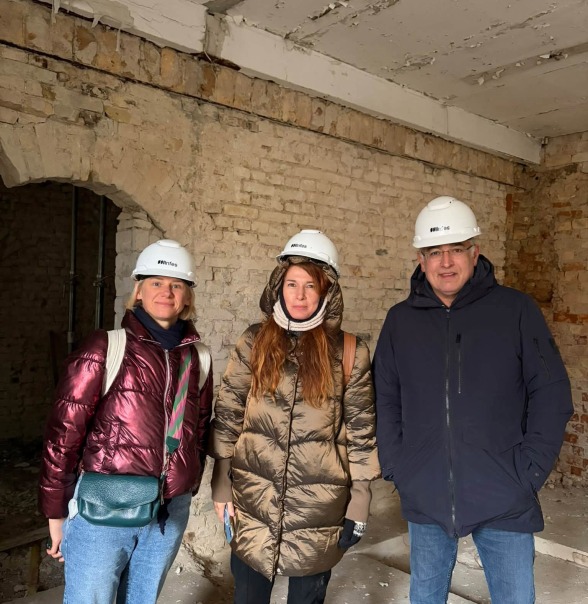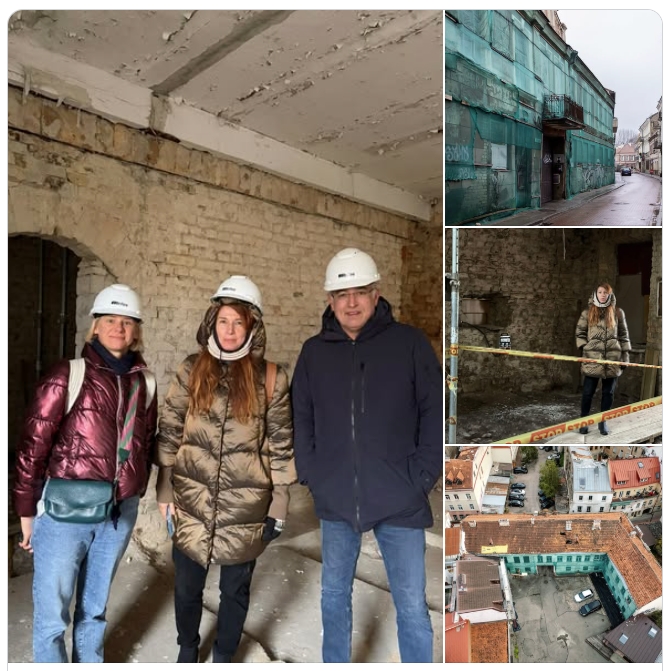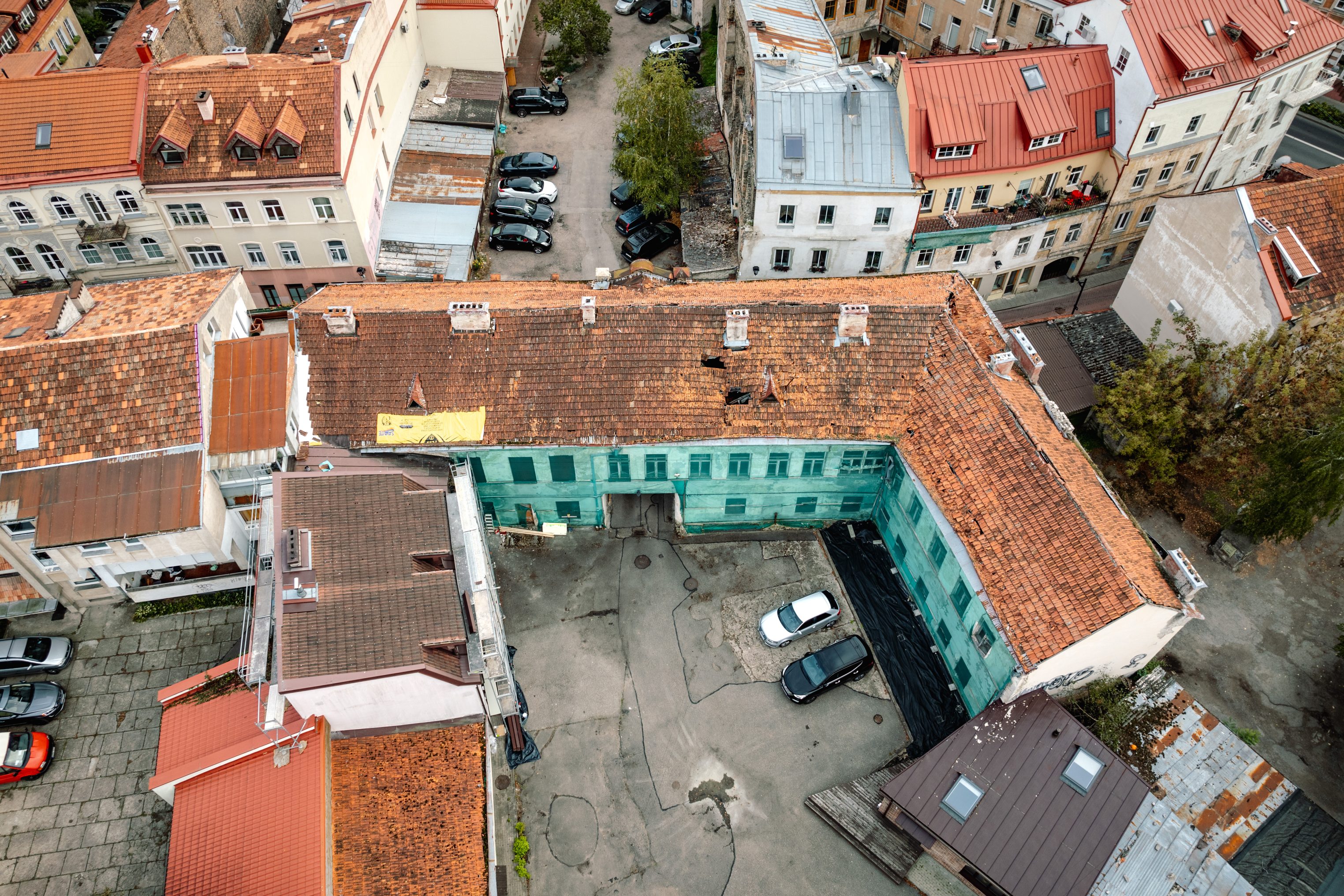

Vilna Gaon Jewish History Museum director Sergey Kanovich announced the allocation of funding from the Lithuanian Culture Ministry for refurbishing the premises of the Vilnius ghetto library and possibly the installation of a permanent museum there.
“I hope there will be a new museum,” Kanovich wrote on facebook.
The official Vilna Gaon Museum page called it an historical breakthrough and wrote:
“We have special news for Vilnius, Lithuania and the international community. After a two-year pause, thanks to the efforts of the leadership of the Culture Ministry having received solid funding, we are renewing refurbishing and capital renovation of the building of the former Vilnius ghetto library!
“This site in the Vilnius Old Town has special significance. In the period between the two world wars, the Mefitzei haSkalah library operated here, and during World War II the Vilnius ghetto library, which became the heart of the spiritual and armed resistance; later, after the war, it became the first Jewish Museum.
“For a long time work to rescue the building falling into ruin was halted because of the stoppage of financing, but today a breakthrough has occurred. We are renewing work to prevent the ruin of the building and to refurbish, restore and undertake capital renovation of the site.
“The Vilna Gaon Jewish History Museum has taken the steps necessary for the location to become a museum of the Holocaust in Lithuania and of the Vilnius ghetto library, … a site of living memory…”
The building located at Žemaitijos street no. 4 (formerly Strashun street no. 6) was the Mefitzei HaSkalah or Educational Library with holdings in multiple languages and catering mainly to Jewish readers. During the first days of the Nazi invasion of the Vilnius region the library fell within the boundaries of the Big Ghetto. Polish Jewish refugee and journalist Herman Kruk was appointed librarian by the Vilnius ghetto administration. He kept an extensive diary in Yiddish which is one of the best chronicles of the Vilnius ghetto and includes many stories about the daily life of the library. The library became a center for items collected by the Rosenberg Paper Brigade, a slave labor unit consisting of vilner intellectuals and writers charged with shifting through books, manuscripts and scrolls from the Strashun Library proper in the Shulhoyf complex for items of value to the Nazis. The ghetto library was also sometimes called the Strashun library because of the name of the street on which it was located, but the Strashun Library proper was next to the Great Synagogue in what was delineated as the Little Ghetto, whose residents were all murdered in the first month or so of the Holocaust.
Kruk’s ghetto library was also a meeting point for the Vilnius ghetto partisan organization the FPO: they used the basement for firearms training. “Jews, learn to shoot” was a phrase literally directing FPO soldiers to the library’s basement.
More information in Lithuanian here.