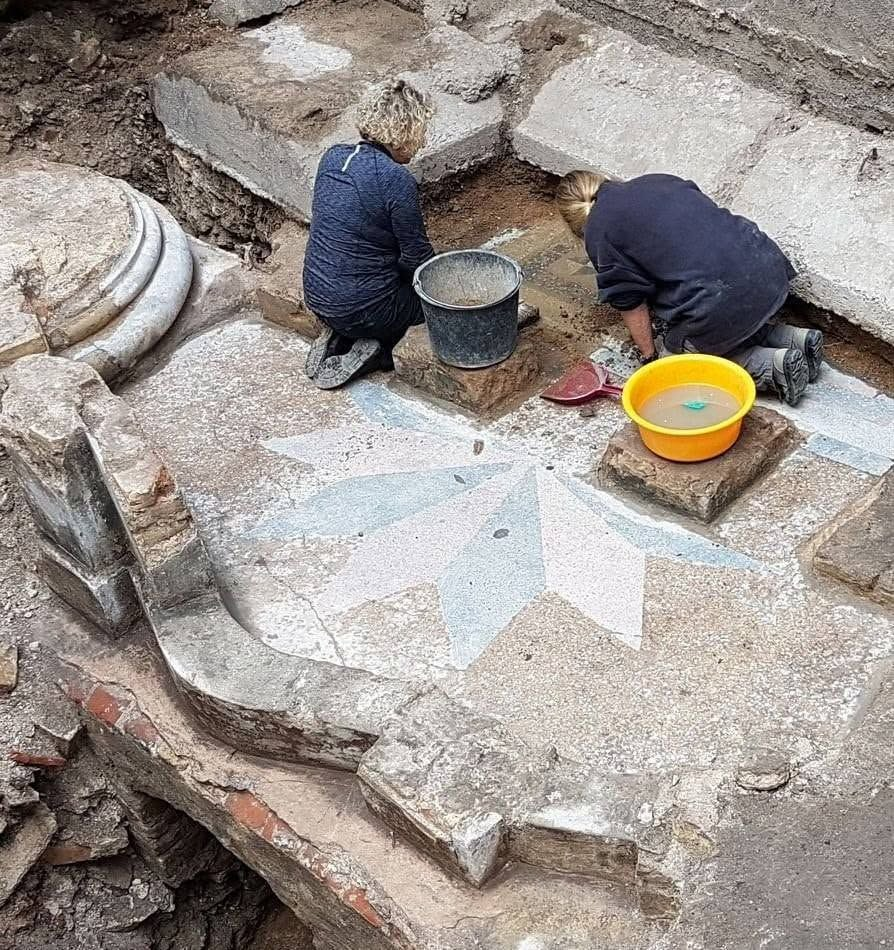
We know the Great Synagogue in Vilnius was mainly subterranean, because of Christian restrictions limiting the height of houses of prayer of other confessions. Until now, we only had period illustrations of the interior, lost when the shul damaged by Nazi bombardment was demolished by the Soviets in the 1950s. For about a decade now archaeologists from the Israeli Antiquities Authority in cooperation with Lithuanian archaeologists from the Department of Cultural Heritage have been excavating the Shulhoyf, and last year, directed by Jon Seligman of the Israel Antiquities Authority (there from 205) and Justinas Račas and Zenonas Baubonis of the Lithuanian Cultural Heritage Salvage Group (at the dig since 2018), they reached the floor of the main hall and uncovered most of the meter-high bimah, the central point in the main hall.
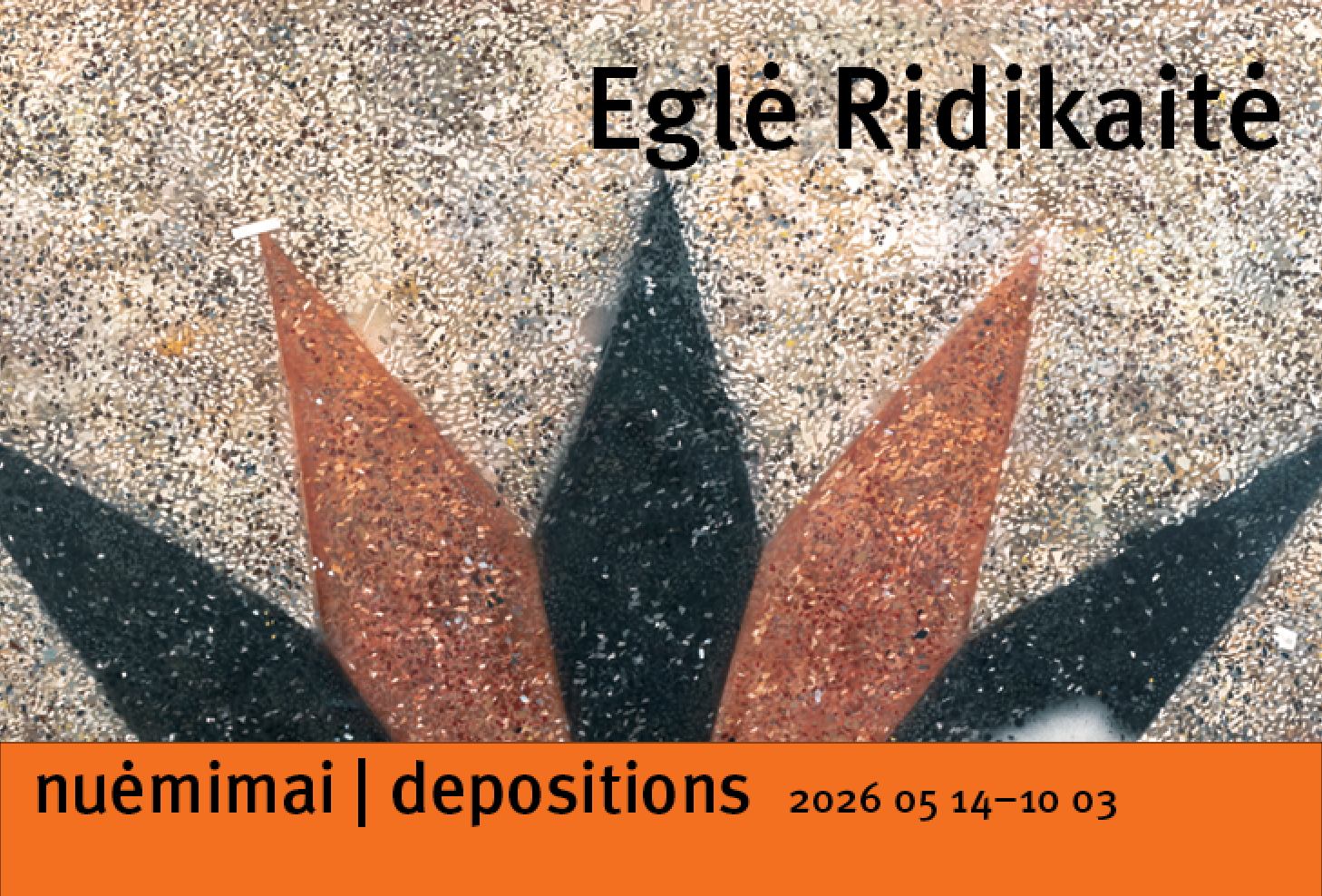
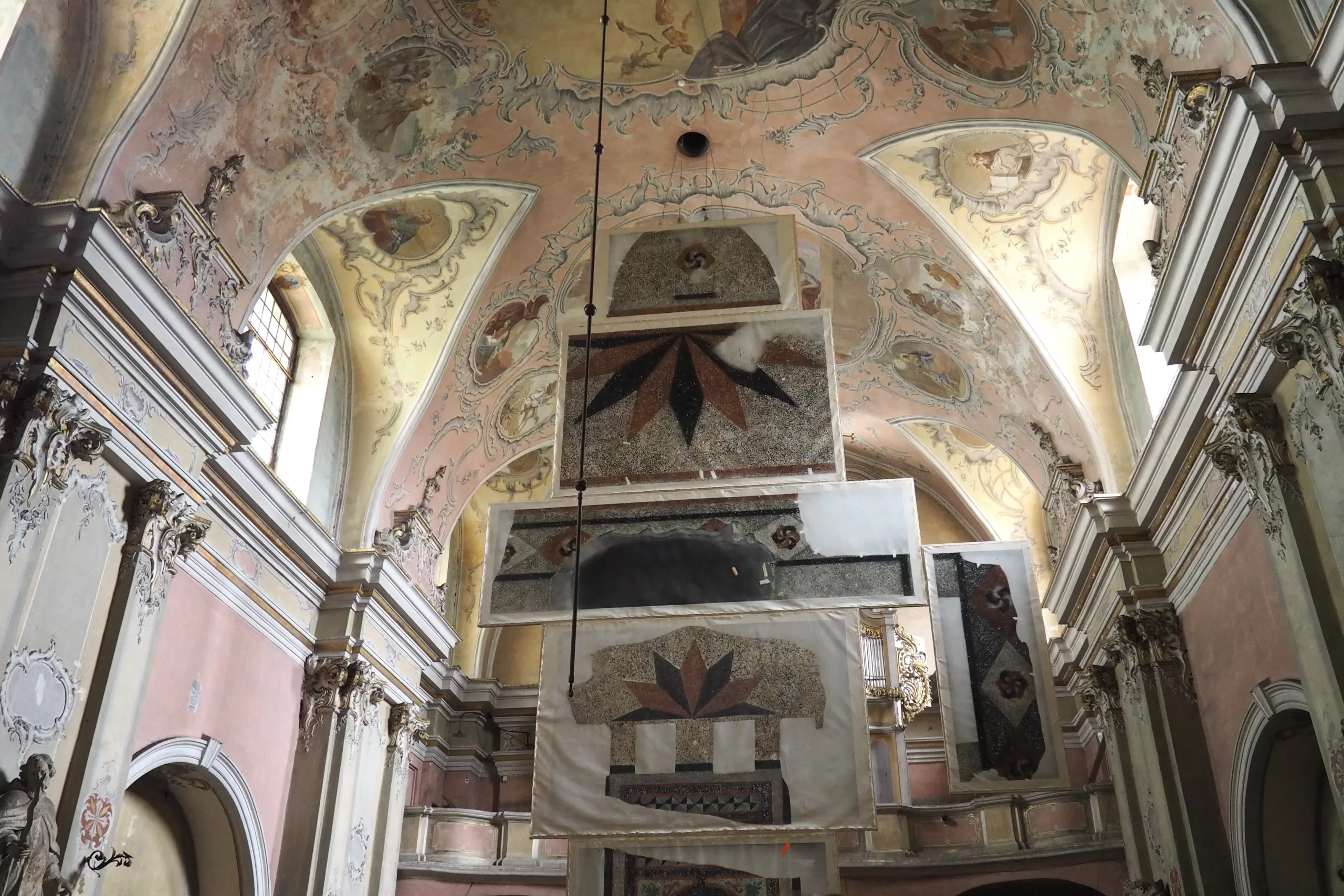
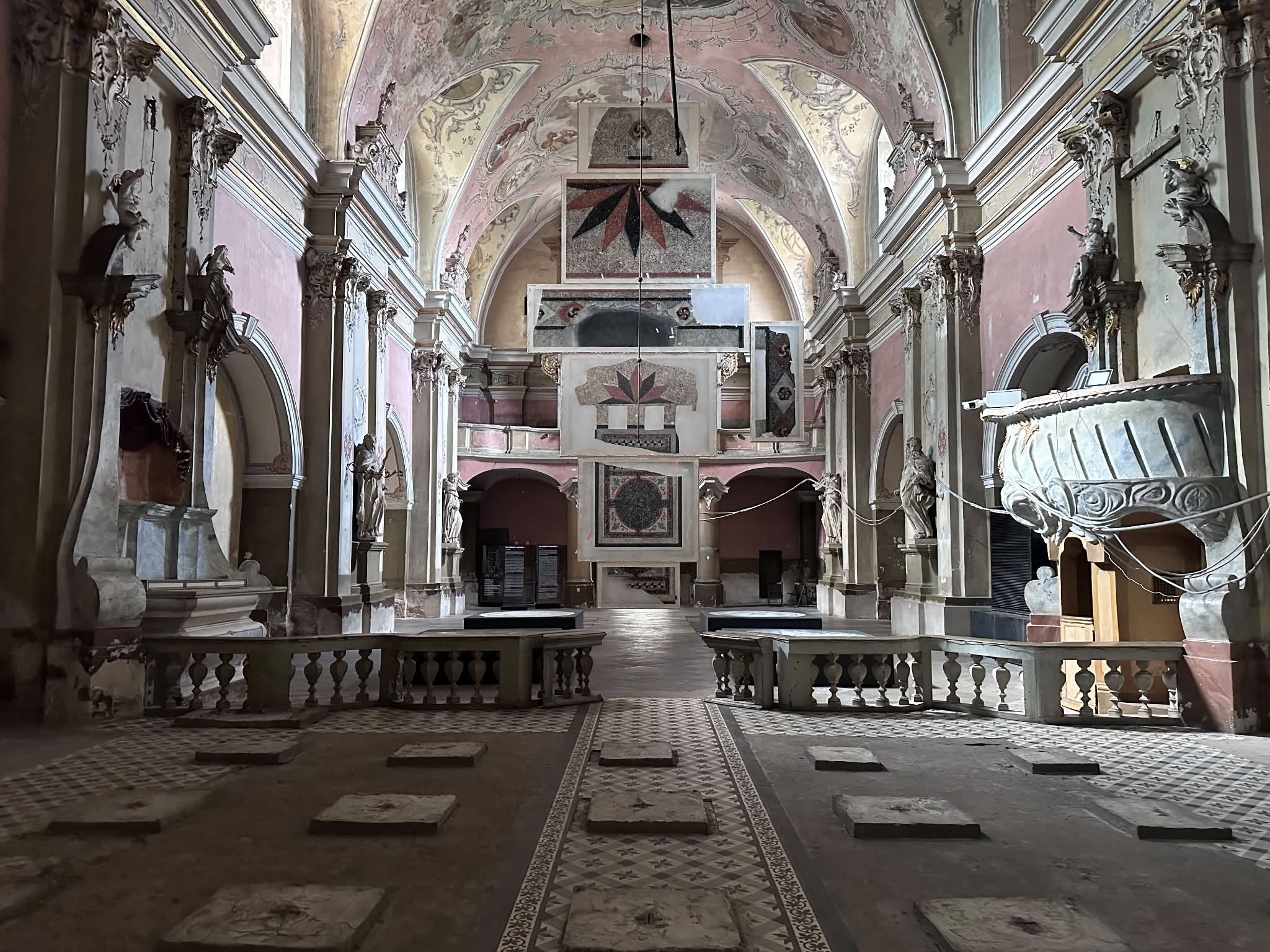
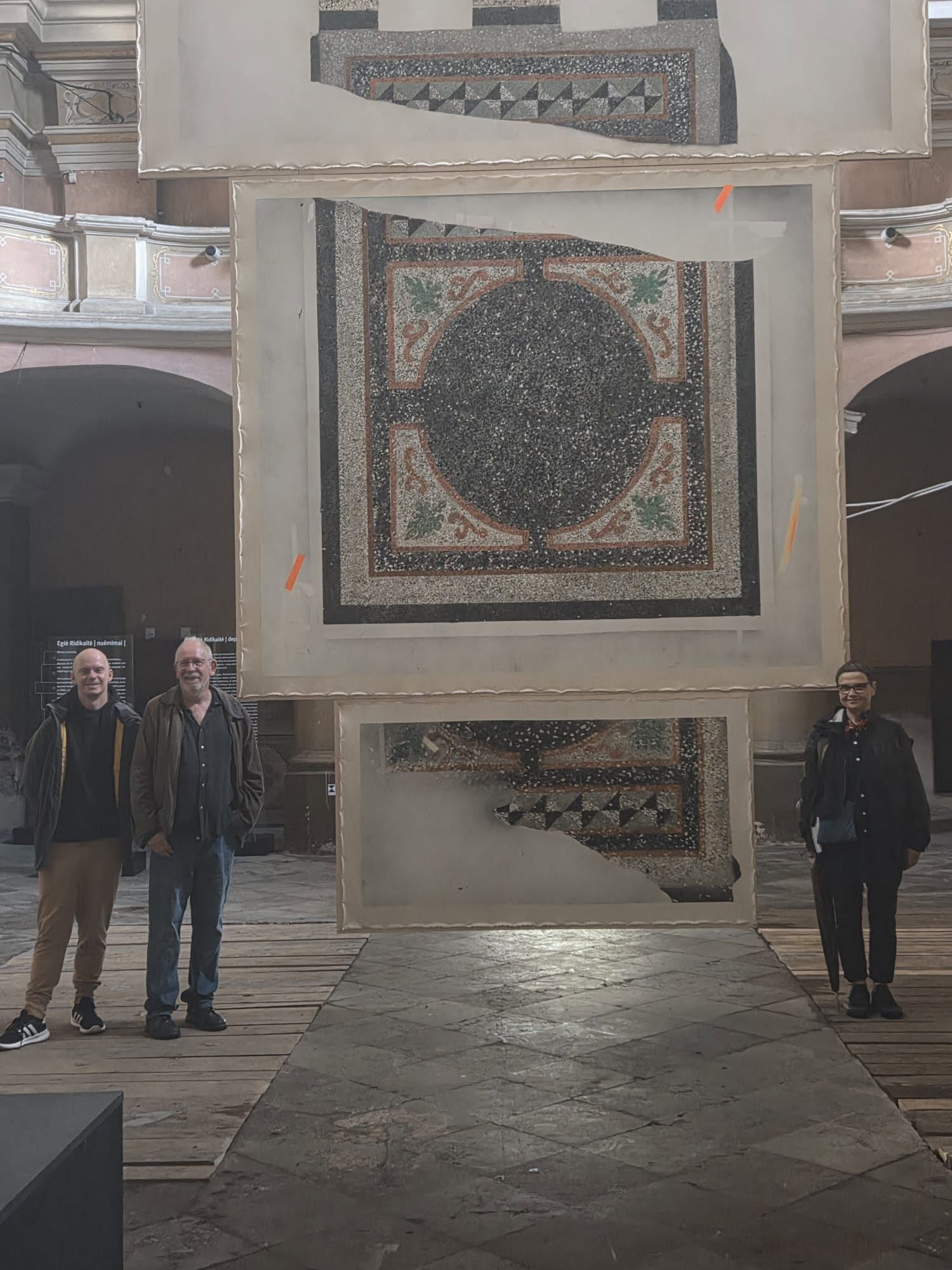
Their discoveries have inspired an exhibit of artworks by Lithuanian Eglė Ridikaitė called Depositions at the St. George the Martyr Church, K. Sirvydo street no. 4, in Vilnius, which opened May 14 and runs till October 3. Admission is from 5 to 10 euros and is payable by card only.
“Eglė Ridikaitė’s exhibition, through an unexpected artistic gesture, weaves together sites of faith, painful historical experiences, and a sense of present vulnerability. With striking clarity, serenity, and simplicity, Depositions unfolds as a silent yet conceptually dense narrative about the city. It invites us to experience, simultaneously, the layered histories of prewar Jewish and Christian Vilnius, while tracing processes of survival and extinction, life and its erasure in memory.
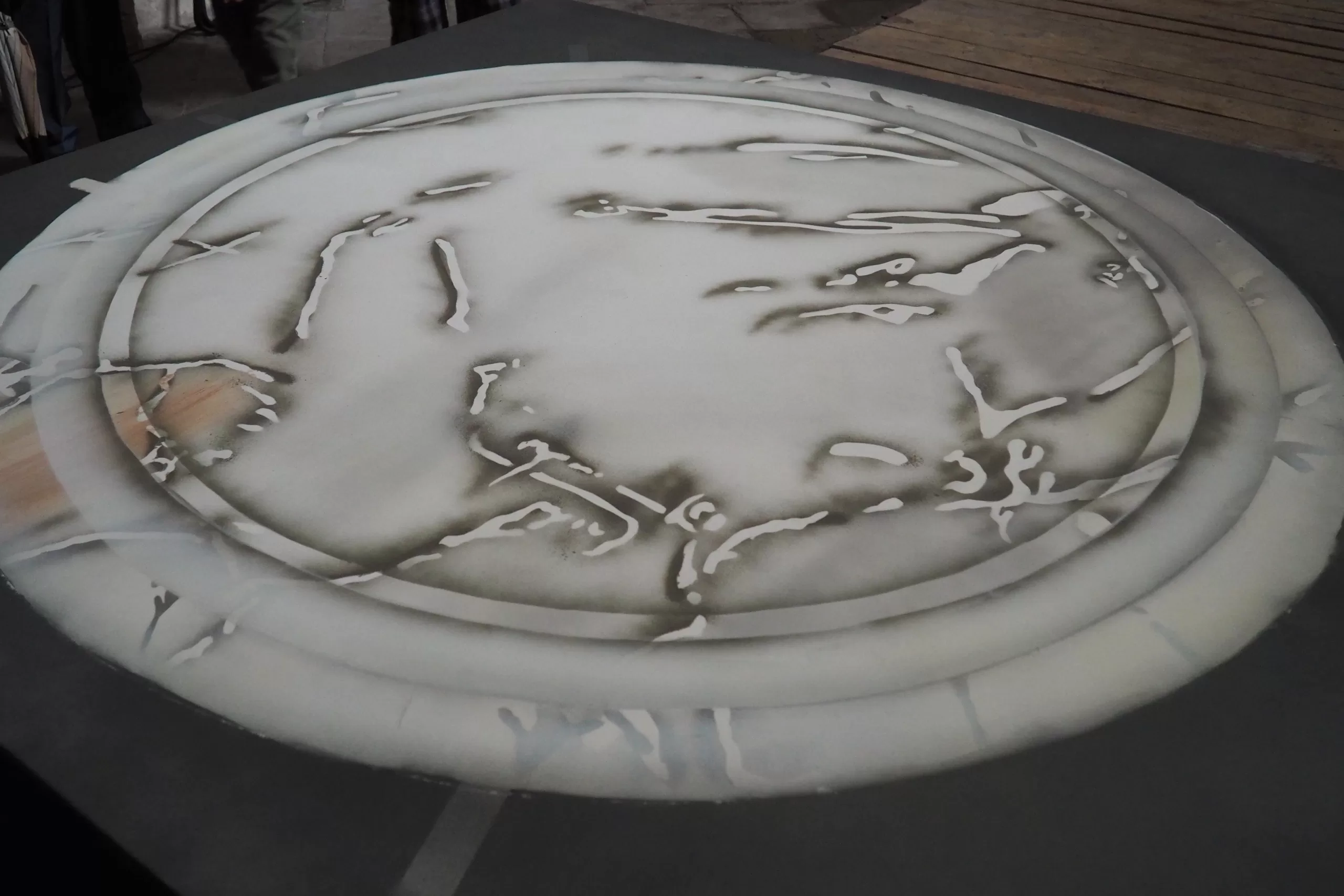
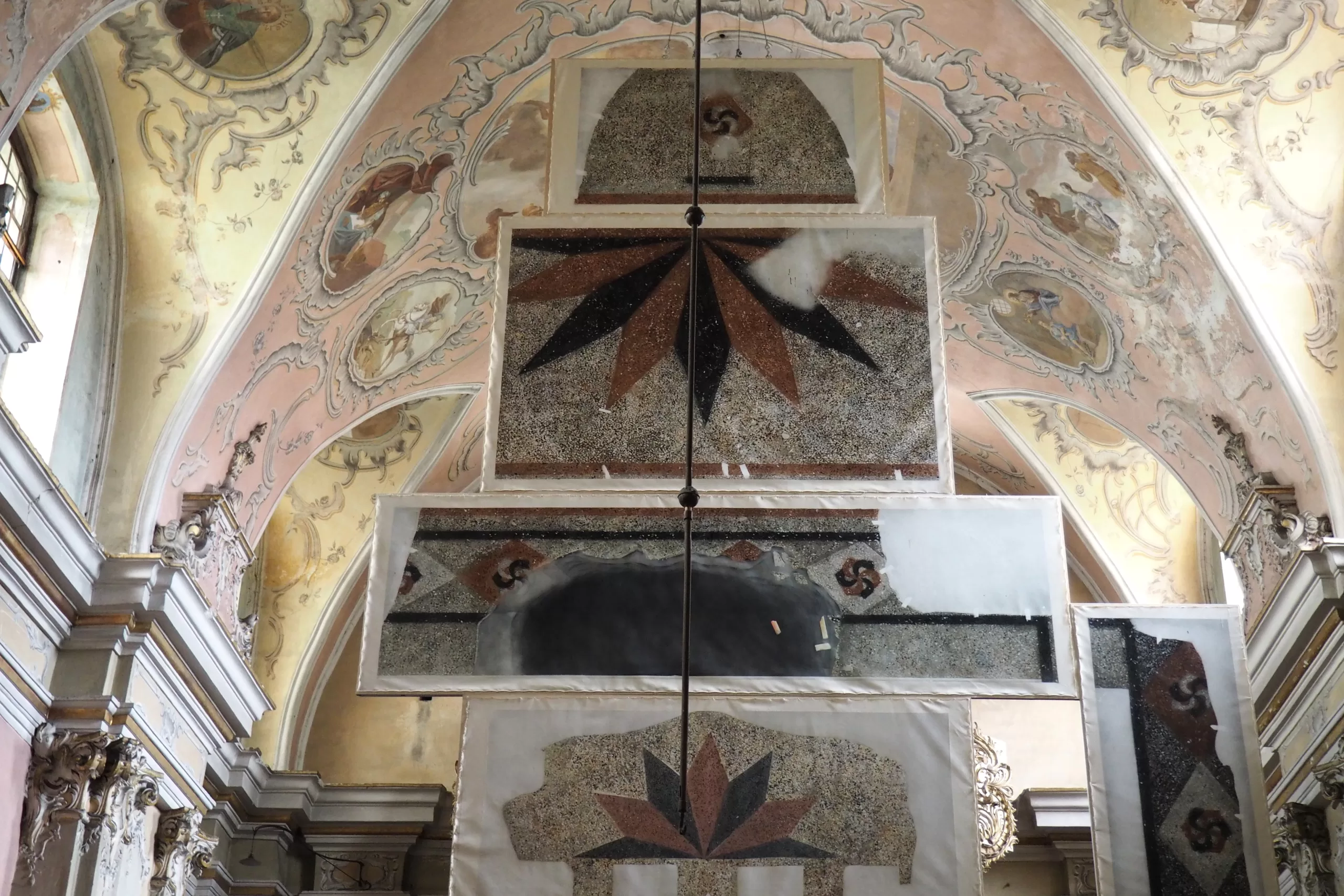
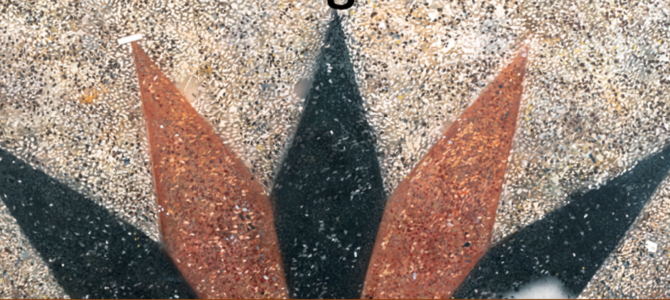
“The impetus for the work was the archaeological excavations of the Great Synagogue of Vilnius, demolished during the Soviet era. During these excavations, fragments of the synagogue floor were unearthed beneath the windows of the artist’s studio at the time. The beauty revealed in these remnants inspired Ridikaitė to capture them, translating into painting the life-size surfaces of the synagogue’s bimah (the platform for reading the Torah) and mikvot (ritual ablution baths), the moon-like bases of its columns, and other exposed fragments.
“These works evoke a sense of wonder, revealing beauty as a gift of time and place, and allowing us to perceive, in the humble floor once trodden by many feet, colorful mosaic concrete ornaments worthy of admiration. The floor of the Great Synagogue crafted by Vilnius artisans becomes an entry point into the city’s heritage: its makers as well as its destroyers.
“St. George’s Church was not chosen as the site for Ridikaitė’s installation by chance. Desecrated and converted into storage during the Soviet period, the space carries a renewed symbolic charge, as both a temporary refuge and a silent witness. When the sanctuary became a depository of the Book Palace, with dedicated librarians who secretly preserved it as part of the Jewish written heritage, including Torah scrolls. In the artist’s imagination, the floor of the Great Synagogue, having absorbed the sound of the Torah read aloud countless times, follows the traces of these scrolls to the place where they were hidden, where their lingering presence can almost be sensed. The fan of the bimah echoes the stars of the presbytery. Contemporaries, as if of the same generation, meet and enter into dialogue: the floor of the destroyed synagogue and the devastated church.”
Full story here.