Religion

Reminder: International Holocaust Remembrance Day Events Begin Today

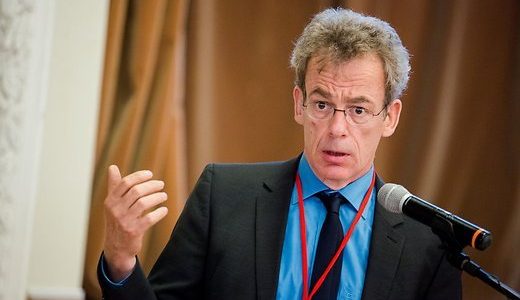
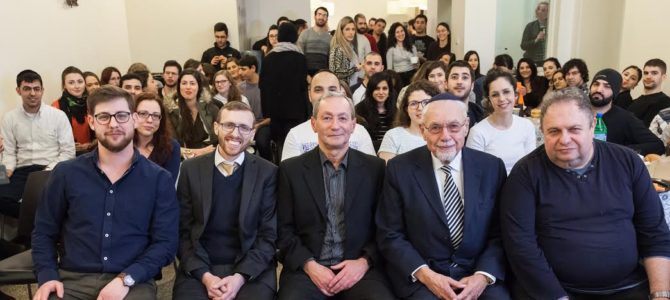
You’re invited today at 4:30 P.M. to attend a ceremony at the Choral Synagogue in Vilnius where candles will be lit in memory of the victims of the Holocaust and the El malei Rakhamim prayer will be sung. Afterwards all are invited to the Lithuanian Jewish Community at Pylimo street no. 4 in Vilnius to a discussion of Jewish history with professor Antony Polonsky, moderated by professor Šarūnas Liekis, at 6:00 P.M.

Scratch an Historical Lithuanian Town, You Might Get a Shtetl

The Lithuanian Cultural Heritage Department announced they are already planning for this year’s European Day of Jewish Culture and have selected a theme, “The Diaspora and Heritage: The Shtetl.” They characterized the choice as an intentional, mature and topical one for a country where the formerly large Jewish ethnic and religious minority thrived until the 1940s in shtetls.

They explained the word “shtetl” means small town in Yiddish. “When the Jerusalem Temple was destroyed in 70 C.E., Jews spread throughout the world, starting a new stage in the existence of the people, life in the Diaspora. Jews who settled in the Grand Duchy of Lithuania from the latter half of the 14th century and their descendants are called Litvaks. They are a branch of the Ashkenazi, Jews fleeing persecution in the German lands in the Middle Ages,” the department noted in a press release.

They continue: “It’s possible the origins of the shtetls reach back to the 18th century, but one shouldn’t get the mistaken impression that every historical Lithuanian Grand Duchy or Lithuanian town may be called a shtetl. Not so! Only a town where Litvaks comprised up to half, and often more, of the population and where the spirit of Litvak enterprise and intellectual ferment was felt can be called a shtetl without reservations.”

Radio Documentary: Lost Traces of Vilkaviškis

„Radijo dokumentika”: dingusio Vilkaviškio pėdsakais
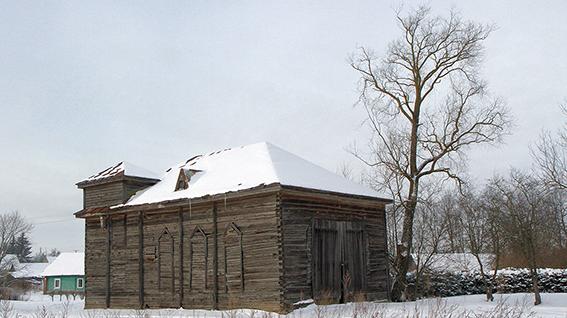
Vilkaviškis synagogue

lrtradijas

The Lithuanian National Radio program Radijo Dokumentika aired the episode on at 11:05 A.M. on January 22. It is to be rebroadcast at 9:00 A.M. on January 24 just after the morning news program Ryto Garsai.

Feiga Koganskienė, who lived in the town in the Suvalkija region right up till World War II, says: “Vilkaviškis is only the name Vilkaviškis, it has nothing in common with the former Vilkaviškis.” When she returned to her home town after the war, the woman did not recognize it, and found none of her Jewish family or friends.

Vilkavišio ž buvusi gimnazija

The modern Vilkaviškis Jewish Gymnasium between
the wars, now the city municipal building.

Before the war Vilkaviškis was one of the most ethnically and culturally diverse towns in the region, but now it’s perhaps the most Lithuanian town in the entire country. Today only a handful of people remember Vilkaviškis in the interwar period, and even fewer are prepared to look into the town’s Jewish history. In the Lost Traces of Vilkaviškis episode, Radijo Dokumentika reporters walk with residents for whom the Vilkaviškis of that time is not just a collection of faded facts from history.

A Mekhaye Winter Children’s Camp 2016

Camp6

The Lithuanian Jewish Community and the Joint Distribution Committee traditionally hold the A Mekhaye winter camp for Children and did so late last year in 2016 as well. The camp is held in Dubingiai, Lithuania. It usually includes about 90 children who spend the holiday period together. This year as in earlier years we assembled a great team, people who know their work and who have been part of camp staff for several years now.

This year the theme was “Hanukkah in the shtetl,” since the camp coincided with the holiday. Each day camp counselors introduced a new topic and taught the children about it. Besides just being fun, the camp is very educational, even if information comes through games, as it often does. The children and staff say they feel right at home in Dubingiai now, as if it were their second home.

Lithuanian Jewish Community Position on Reconstruction of the Vilnius Palace of Concerts and Sports and Its Use as a Conference Center

In light of the recent intensification of statements in the media on the alleged danger now threatening the conservation of the Šnipiškės Jewish graveyard in Vilnius (hereinafter Cemetery), the Lithuanian Jewish (Litvak) Community (hereinafter LJC) feel it our duty yet again to present the main facts in the case and the LJC’s well-founded position based on those facts regarding the issue of the reconstruction of the Vilnius Palace of Concerts and Sports (hereinafter Sports Palace) and its adaptation as a conference center.

1. To date no work for the reconstruction of the Sports Palace has been carried out, and therefore no possibly negative impact on the graveyard which was destroyed in the 1950s is being effected at the current time. The remains of the Vilna Gaon were removed to the Vilnius Jewish cemetery located on Sudervės street long ago and his headstone is located there.

False statements and rumors have been circulating for some time, so again it is necessary to explain the headstones in the Cemetery were destroyed long ago and the Sports Palace was constructed there back in the Soviet era. At the current time only pre-planning proposals have been drawn up, which could serve later as the basis for a detailed technical project for the renovation and adaptation of the Sports Palace which will be carefully examined and assessed by competent institutions.

2. The Cemetery is entered on the Registry of Cultural Treasures and has been declared a state-protected site, meaning any construction or reconstruction work in the area of the graves or in the buffer zone around it, and any plans for this sort of work, are carefully assessed and strictly controlled under the provisions of the law of the Republic of Lithuania on protection of real estate heritage and the specific requirements of a special protection plan for this Cemetery.

3. This special protection plan for the Cemetery was prepared under the requirements and principles contained in a protocol agreement signed on August 26, 2009, by the leaders of the LJC, the Committee for the Preservation of Jewish Cemeteries in Europe and the Cultural Heritage Department under the Lithuanian Ministry of Culture. All these institutions share responsibility for keeping the agreement and ensuring sufficient authority for doing so.

4. The protocol agreement of August 26, 2009, resolves that:

4.1. Earth-moving work is forbidden in the Cemetery;

4.2. Three additional possible buffer-function zones are defined; the Sports Palace falls into zone A where earth-moving work is proscribed except in cases involving engineering construction (utility pipeline, transportation and communication infrastructure) and/or work to maintain the Vilnius Sports Palace. Jobs involving the movement of earth require consent by the LJC and must be accomplished in the smallest scope possible. All work involving the movement of ground must be done under the supervision of an archaeologist and an authorized LJC delegate. To insure adherence to this requirement, the LJC makes all decisions regarding the conservation of the Cemetery and plans for the reconstruction of Sports Palace only with the knowledge and consent of the Committee for the Preservation of Jewish Cemeteries in Europe.

5. The Vilnius Sports Palace was constructed in 1973. The building and the Cemetery upon which it was built have been listed on the Registry and are protected as a cultural treasure since 2006.

6. According to the original construction documents presented to the LJC, the foundation of the Sports Palace extends 7.37 meters underground, so most likely all burials there were destroyed during building construction. Therefore pre-planning proposals for reconstruction of the Sports Palace are based on the assumption burials do not remain under the building. Despite the low likelihood there are still graves under the building, in the event of actual reconstruction of the Sports Palace the LJC will demand earth-moving work be of minimal scope and conducted under the supervision of representatives of the Committee for the Preservation of Jewish Cemeteries in Europe.

Therefore, bearing in mind that:

1) existing burials were destroyed during construction of the Vilnius Sports Palace;

2) currently not a single headstone remains at the Cemetery (the last monuments were torn down back in 1955), the Cemetery territory is in disrepair, and there are no signs in the huge territory of the Cemetery testifying to its history except for a symbolic statue and an information plaque set up a few years ago;

3) the Sports Palace building along with the Cemetery surrounding it are listed on the Registry of Cultural Treasures and it cannot be torn down, but in its current state cannot either be used and requires renovation;

4) the abandoned Vilnius Sports Palace is in a state of ruin and is unbefitting the city center and the Cemetery, and stands as a horrid symbol recalling the Soviet era when the headstones of the Cemetery were destroyed and the human remains there disturbed;

The Government of the Republic of Lithuania have the right to do as they please with the property in their possession, and certainly the right to merely consider the reconstruction of the Vilnius Sports Palace, adapting it for one or another use, and the LJC has no legal foundation or rational arguments for quelling these activities. Instead of engaging in unconstructive criticism, the LJC is undertaking all measures to insure these plans and their possible realization do not violate Jewish law and tradition, and believes the Government of Lithuania, as a responsible institution with a vested interest in maintaining its reputation, will also exhaust all efforts so that the project is carried out to the highest standards of transparency, quality and respect for heritage. If the project is carried out appropriately, the LJC would achieve our goal of preserving the Cemetery:

1) establishing in city planning and physically demarcating the limits of the Cemetery;

2) renovating the territory of the Cemetery and setting up walking paths there in line with Jewish law and tradition;

3) erecting a commemorative composition including the names of the people buried in the Cemetery;

4) installing necessary educational and information material on site.

Israeli Supreme Court Ruling Favors Women’s Prayer at Western Wall

jta
January 11, 2017, JERUSALEM (JTA) — Israel’s Supreme Court has ruled in favor of women being allowed to read from the Torah in the women’s section at the Western Wall and declared that an egalitarian prayer area set aside at nearby Robinson’s Arch does not constitute access to the holy site.

In an interim injunction announced Wednesday, the court gave the wall’s Orthodox administrators and state agencies 30 days to show cause why women cannot pray “in accordance with their custom” or allow them to pray as they choose.

It also declared that women should not be subjected to body searches before entering the plaza. The Western Wall Heritage Foundation, the Orthodox-run body that oversees activity at the site, has authorized such searches to prevent worshipers from entering the women’s side with Torah scrolls, prayer shawls, tefillin and menorahs.

Zygmunt Bauman is Dead

Zigmunt_Bauman

Polish philosopher Zygmunt Bauman passed away at the age of 91 surrounded by family at his home in Leeds Monday following illness. Bauman was born in 1925 in Poznan (Posen) and in 1939 fled Nazi-occupied Poland for Soviet-occupied Poland. In the Communist Polish military Bauman did political education, took part in the battles for Kolberg (Kołobrzeg) and Berlin and worked in Communist security and espionage institutions.

Bauman took up sociology at the Warsaw Social Sciences Academy after the war and then transferred to philosophy at Warsaw University. He published his first book in 1960. Born to a non-observant Jewish family, Bauman left Poland during the anti-Semitic wave of 1968 and moved to Israel, teaching at Tel Aviv University. He soon moved from there to Leeds where he taught at Leeds University. Since the move to Leeds he wrote in English.

Bauman authored about 50 books and more than 100 articles on the topics of globalization, modernity, post-modernism, consumerism, morality and the Holocaust. His views concerning the Holocaust were extremely nuanced and included at times denouncements of Western Holocaust commemoration as a culture of death and a new religion with its own list of martyrs, “the Names,” intended to act as a sort of surrogate Judaism for the non-observant and Gentiles, or as a completely new religion but offering nothing of value to the human soul. Bauman’s most famous book, Modernity and the Holocaust (1989), draws upon Hannah Arendt and Theodor Adorno’s books on totalitarianism and the Enlightenment. Bauman argues he Holocaust should not be considered exclusively an event in Jewish history nor a regression to pre-modern barbarism. Instead, the Holocaust is deeply connected to modernity and its attempts to impose order. Procedural rationality, the division of labor into smaller and ever more specialized tasks, ever more refined taxa for species and seeing obedience as morally good all played a role in making the Holocaust possible. He said for this reason modern societies have not fully grasped the lessons of the Holocaust. It is viewed, according to Bauman’s metaphor, like a picture hanging on a wall, static, without utterance or meaning.

The late Lithuanian philosopher Leonidas Donskis counted Zygmunt Bauman among his friends and greatly respected his work. In 2007 Vytautas Magnus University in Kaunas conferred an honorary doctoral degree upon Bauman.

Our condolences to his many friends and surviving family members.

Rav Moshe Shapiro Has Died

The Lithuanian Jewish Community reports with deep sadness the death of Rav Moshe Shapiro, the Petirah of Hagaon, the Litvak ultra-Orthodox community’s spiritual leader in Israel. The author of numerous seforim and the noted rosh yeshiva of Jerusalem’s Yeshiva Pischei Olam passed away January 6 at Hadassah Ein Kerem Hospital at the age of 82 following a lengthy illness.

His father Rav Meir Shapiro with his brother Rav Simkha Ziselom left Lithuania for Israel to study Torah at the Hebron yeshiva. Rav Moshe Shapiro studied both in Panevėžys and at the Hebron yeshiva. His mentors were the Rav Eliyahu Eliezer Dessler and Rav Yitzchok Hutner.

By the age of 18 Shapiro already new the entire Babylonian Talmud by heart. The Rav Avrohom Yeshaya Karelitz recommended he intensify his study of the Talmud.

Rav Moshe Shapiro is one of the first contemporary rabbis who performed Jewish outreach, returning Jews to the faith of their fathers and teaching Judaism.

Rav Shapiro visited Lithuania last year and spent some time in towns and cities connected with his family history. When he and Lithuanian Jewish Community chairwoman Faina Kukliansky met then, he told her the Lithuanian Jewish Community has a great future ahead.

The Lithuanian Jewish Community is deeply saddened by the death of Rav Moshe Shapiro and express our deepest condolences to his family, friends and students.

Baruch dayan ha’emet.

Lithuanian National Radio: Slobodka

lrtradijas

The Lithuanian National Radio and Television radio program Radijo dokumentika [Radio Documentary] for Sunday, January 8, rebroadcast Tuesday, January 10 after the morning news program at 9:00 A.M. The small area at the confluence of the Neris and Nemunas Rivers created by the Radziwiłłs in the 17th century, Slabada, a “serfdom-free zone,” was originally smaller and is called a village in the documentation, but by the second half of the 18th century the shtetl was a competitor in arts and crafts and trade with the city of Kaunas across the rivers. Industry developed quickly in the 20th century. Slobodka, as it came to be called, was the home to the world-famous Slobodka Yeshiva. Known in Lithuanian as Vilijampolė, the city on the Viliya River [a synonym for the Neris], the district became part of the city of Kaunas before World War II.

This is the eighth episode in a series dedicated to the Jewish shtetls of Lithuania in Lithuanian National Radio and Television’s retrospective on the forgotten past of the Jews of Lithuania.

What We Lost in WWII

by Marius Debesis
15min.lt

You could characterize Vilnius today as a city emerging from post-traumatic stress syndrome, covered with the wounds of war still visible to the naked eye, or sometimes only visible under profound examination, scars testifying to the city’s losses, slicing through the street plan but every year receding into the distance, into oblivion. To really understand Vilnius, one must consider the totality of losses, summing up what the capital lost during the war.

vilnius-1944-58653a4296640

Walking through the city looking for the “heritage” of the war, it’s useful to define several categories for what the Lithuanian capital lost during the war. The one to begin with is not cultural, but rather personal losses, from the loss of people who were an indivisible part of the city of Vilnius. Consider the most painful loss—the Holocaust of Vilnius Jews, which deprived the city of one of its greatest portions of identity, so significant that in Jewish culture Vilnius was bestowed the title of Jerusalem of the North. Although this text talks mainly about Jews, death hovered above everyone in Vilnius without regard to social status or religious or political conviction.

mazasis-getas-vilnius-po-58653a4459f50

Full story in Lithuanian here.

Vilnius Metropolitan Gintaras Grušas’s Hanukkah Greetings

grusas

December 21, 2016

To Faina Kukliansky, chairwoman
Lithuanian Jewish Community

I sincerely congratulate you and the entire Lithuanian Jewish (Litvak) Community on the holiday of Hanukkah.

Together with you I take joy in the miracles of the Creator, which He has done for your people and is now effecting in the life of every human being.

May the light of the Hanukkah candles, enjoining us to give thanks to our Creator, fill your community to overflowing with peace and joy, and encourage all of us to spread the goodness and hope of God to all people.

[signed]
+ Gintaras Grušas
Vilnius metropolitan archbishop

Kaunas Jewish Community Celebration

The Kaunas Jewish Community send their greetings for the New Year and Hanukkah, both of which members celebrated at a number of locations in Kaunas.

kaunm21

Festivities included lighting candles together, a violin and saxophone concert, a pancake-eating contest and potato pancakes and doughnuts for all.

Holiday celebrations were organized using Goodwill Foundation and LJC Social Program funds.

Challenges of History after the Hanukkah Miracle

ausra-pozeraite

Dr. Aušra Pažėraitė

The discussion rages on on the social networks about the wisdom or folly of lighting large menorah displays in non-Jewish cities, whether or not to say the blessing, and how much authentically Jewish is really left in the holiday of Christmukkah, as images of square and overturned Christmas trees with branches forming menorahs are exchanged. In respect to all this, we could turn back again to the historical opposition between Greek and Jew and the Jewish victory. The more salient aspect today, though, having in mind the different possible interactions of a religious or ethnic minority with the dominant host culture, is the history of what happened “Post-Hanukkah.”

It’s ironic that, as researcher Erich Gruen points out, after the Hasmoneans won the independence of the state of Judea and established a royal dynasty, and after they established the Torah as the law of the land (or constitution), the Hellenization of the country only increased, and accelerated throughout the period of the kingdom. Martin Hengel also believes the Judaism of Judea in the period was highly Hellenized, although he tries to frame it within “the conflict between the Judaism of Palestine and the spirit of the age of Hellenism” and is forced to explain the crisis of the Maccabee era did lead to a reaction in Judea which put a halt to syncretism, channeled intellectual activities to Torah study and blocked any criticism of the cult and the law. As many authors note, the influence of Hellenism in Judea is obvious, while literature written in the Land of Israel clearly differs from that written in the Diaspora. There Hellenistic literature was neither completely assimilated, nor was it entirely rejected. (As an analogue one might think about contemporary Israel which includes a completely modern secularism differing in none of its essentials from that of the West, and also extremely segregated religious communities.)

Historian Louis H. Feldman presents different artifacts discovered by archaeologists in the Land of Israel from Hellenistic times. Among them are representations of different Greek gods and figures in synagogues, private homes and other locations. Feldman says, based on Rab Gamaliel (first century CE) in the mishnah tractate Avoda Zara, the rabbis of the period weren’t frightened of the pagan deities and didn’t believe they could somehow engage Jews in the pagan cults. Gamaliel says the bath h went to was not the ornament of Aphrodite, but on the contrary, Aphrodite was the ornament of the bath, a mere decoration. This view might have been the one prevailing among the sages of Judea at the time, namely, that the use of Greek gods and other Greek elements in daily life was a degradation of these gods, in modern terms perhaps their “commodification,” and in no way their worship. Feldman shows third-century rabbi Yohan was likewise unopposed to mosaics portraying Aphrodite.

Remembering Osip Mandelstam, Litvak Poet, 125 Years after His Birth

Šiemet minimos 125-osios garsaus poeto, litvako Osipo Mandelštamo gimimo metinės

This year marks the 125th anniversary of the birth of famous Litvak poet Osip Mandelshtam. At the LJC’s Mini Limmud conference held in November, one of the lectures was dedicated to the work of the famous poet. The lecture was by Ellena Suodienė, who is the author of 16 books of poetry and defended her doctoral thesis on the Russian poetry of Marina Tsvetaeva. Suodienė was awarded the Golden Quill diploma of the European Arts and Literature Institute and taught at the Kaunas Liberal Arts Faculty of Vilnius University until the year 2000. She published three books of poetry while she was teaching. She is the currently the hostess of the Nadezhda Russian Meeting Club in Kaunas. Suodienė has dedicated much of her time and research to the life and work of Osip Mandelstam and even wrote a poem about him.

On the 125th anniversary of his birth we are again reminded Osip Mandelstam is one of the most famous Litvaks on the world stage. Many remember him as a brilliant poet who suffered under the persecution of the Stalin regime. Suodienė calls him a martyr to poetry.

Panevėžys and Ukmergė Jewish Communities Celebrate Hanukkah

On December 30 the Panevėžys City and Ukmergė Regional Jewish Communities celebrated Hanukkah together at the restaurant Vakarinė žara, where they have held such celebrations for several years now. The event was heavily attended by members of both communities, their families and honored guests, including Panevėžys mayor Rytis Račkauskas, Panevėžys Jewish Community patron Yuri Grafman, the historian Vidmantas Janukonis and city council members Galina Kuzmienė and Alfonsas Petrauskas, among others. Attendees appeared to have a wonderful time and there was much conversation and many greetings. Participants enjoyed traditional Hanukkah treats including latkes and doughnuts.

ukmcha7

Greetings from Japan

Mr. Takanobu Fuchikami, the mayor of Tsuruga, Japan, sends holiday and New Year’s greetings to the Lithuanian Jewish Community. Tsuruga is a Japanese port city which received Jewish refugees issued transit visas by Japan’s consul in Kaunas, Lithuania, Righteous Gentile Chiune Sugihara.

scan_20161230_095844435_001

Hanukkah at Choral Synagogue

Chanukos šventė Vilniaus Choralinėje sinagogoje 2016

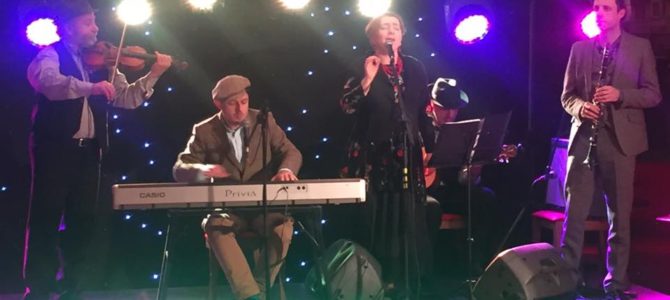
The Hanukkah celebration at the Choral Synagogue in Vilnius yesterday was both moving and fun with many esteemed guests and traditional Hanukkah foods including latkes and doughnuts. A warm and happy atmosphere prevailed and the klezmer group Rakija Klezmer Orkestar contributed to the festive mood with great performances of Jewish song. Lithuanian Jewish Community chairwoman Faina Kukliansky greeted celebrants of the Hanukkah miracle. The miracle of this year’s Hanukkah, she said, was Lithuanians celebrating the Jewish holiday with Jews at the synagogue and Lithuanians and people of other ethnicities performing Jewish music there. It is a blessing to be able to celebrate together with the Jewish community in one’s own land, she said.

Lithuanian parliamentary speaker Pranckietis, Israeli ambassador Amir Maimon, Lithuanian ambassador to Israel Bagdonas and US embassy deputy chief of mission Solomon attended.

chanukas3

Snapshots available here.

Video footage available here and here courtesy of Amit Belaitė.

Hanukkah and the Light of the Torah

ausra-pozeraite

Dr. Aušra Pažėraitė

The Talmud (Shabbat 21b) speaks rather laconically of the origins of this holiday:

“Kislev 25, the days of Hanukkah which are eight, there is no mourning, there is no fasting during these days. When the Greeks came into the Temple, they polluted all the oil in the Temple, and when the Hasmonean dynasty overcame and defeated them, they checked [the Temple] and found just one jug of oil, which was in its place, and was sealed with the seal of the High Priest. But in it there was oil [only sufficient] for burning for just one day. A miracle occurred in connection with it: it burned for eight days. The next year they established them [these days] as holy days for giving glory (hallel) and thanks.”

The retelling isn’t as comprehensive as found in the Christian Bible where the two Books of the Maccabees written in Greek are found. They tell a longer story of Jewish persecution during the reign of the Hellenistic king of Syria Antiochus Epiphanes, the Jewish revolt under the brothers Maccabee and their victory. The Greek telling is full of rhetorical details speaking to how widespread Greek culture had taken root throughout the nation, even among the priesthood of the Temple in Jerusalem: “Now such was the height of Greek fashions, and increase of heathenish manners, through the exceeding profaneness of Jason, that ungodly wretch, and no high priest; That the priests had no courage to serve any more at the altar, but despising the temple, and neglecting the sacrifices, hastened to be partakers of the unlawful allowance in the place of exercise, after the game of Discus called them forth; Not setting by the honors of their fathers, but liking the glory of the Grecians best of all” (2 Maccabees 4:13-15). Athletics were practiced in the nude, and so displayed the evidence of circumcision, which caused shame, since it didn’t fit with the Greek ideal of manly virtue, kalokagathia. It tells how the Temple was looted and desecrated, and renamed Jupiter Olympus. Demands by the “Greek” regime to violate the Torah are also enumerated, and the story of the martyrs who refused to do so is provided. Many of the details of the stories are unclear to historians, but a general picture of the times is more or less provided. And this includes not just the brutal actions of the Hellenistic regime, but also the attraction and endless temptation Hellenistic thought and the Hellenistic lifestyle exerted.