Religion

Zavl Shul Design Concepts

You’re invited to a sneak-peak of the newly renovated Zavl synagogue located at Gėlių street no. 6, Vilnius. at 4:00 P.M. on Sunday, October 1, 2017.

The synagogue on Gėlių street is one of only eight such buildings which survive in Vilnius. It is currently undergoing extensive restoration work.

We have brought together a team of young designers to address some important issues concerning the re-emergence of the building into the life of 21st-century Vilnius. It likely will play a role in the continuity of Jewish life in the city, but so far its future function hasn’t been determined.
The designers come from different backgrounds and have different ideas about “what design can do.” Most are alumni from the Vilnius Academy of Arts and six studied at the Design Academy in Eindhoven, the Netherlands, one of the world’s leading institutions for critically examining the role of design in society. Two Eindhoven graduates previously studied in Israel.

The presentation on Sunday will consist of ideas, associations and suggestions, not definite projects. They are all connected to the long history of the building and the Jewish presence in Lithuania but they are not intended as memorials. Instead, the presentations are intended to serve as a jumping-off point for future projects dealing with issues facing many communities in a globalized world: how to weave strands of culture, tradition, heritage, religion, identity and history into the fabric of contemporary life.

The presentation starts at 4:00 P.M. at Gėlių street no. 6, Vilnius.

We would very much appreciate your presence.

Koen Kleijn, Design Academy Eindhoven
Vytautas Gečas, Performance Design Association, Vilnius
Martynas Užpelkis, Lithuanian Jewish Community

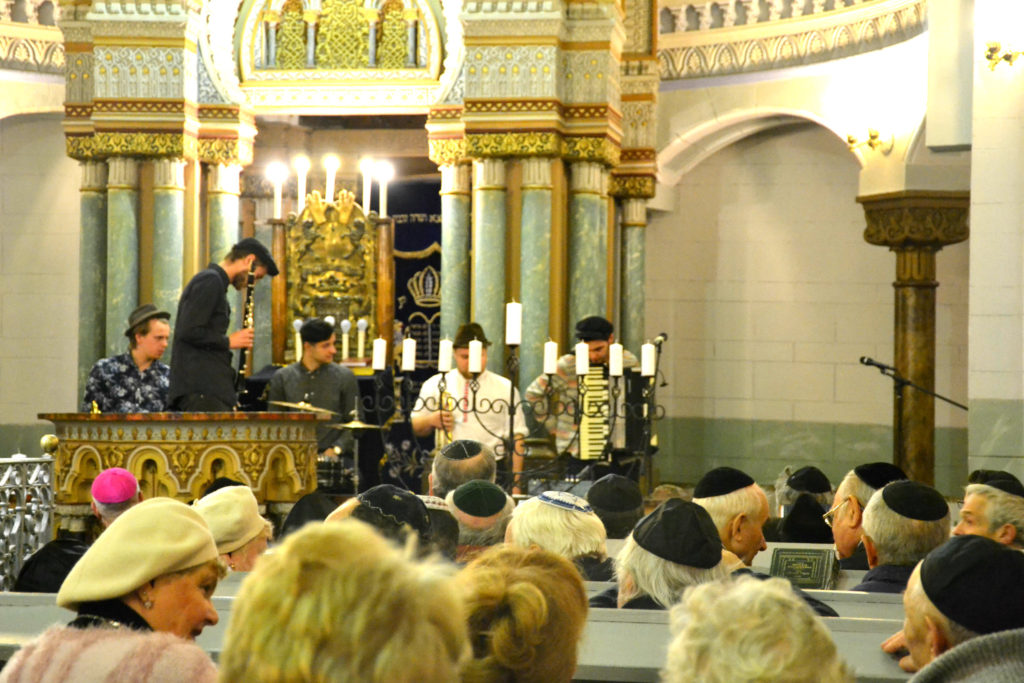
Yom Kippur at the Choral Synagogue

Yom Kippur at the Choral Synagogue

During Yom Kippur we must ask ourselves: have we really asked forgiveness from all whom we have hurt? Have we resolved all misunderstandings? Have we made amends for all the problems we have created? It is important to remember that during Yom Kippur we strive to put our relationships with other people and with our community in order.

Yom Kippur is the holiest day of the year, a day of good will and of atonement for sins before the Creator.

Yom Kippur at the Choral Synagogue:

September 28 (Thursday): 7:00 P.M. Preparations for Yom Kippur:
Kappores
Discussion about Yom Kippur

September 29 (Friday): At 2:00 P.M. the gabbai will begin writing down names to be read during the yizkor prayer and charity donations will be accepted (purely on a voluntary basis).
5:00 P.M.: Mincha
5:30 P.M.: Seudah haMafseket (last supper) before Yom Kippur
6:30 P.M.: Kol nidrei service

September 30 (Saturday):
9:00 A.M.: Prayer service
11:30 A.M.: Yizkor prayer
~6:30 P.M.: Ne’ilah service
~7:50 P.M.: Havdalah and snacks

Tsom kal v’gmar hasima tova!

Vilnius Jewish Religious Community

Rabbi Burshtein Presents Menachem Mendel Lefin Book

Rabbi Chaim Burshtein will present Menachem Mendel Lefin of Satanov’s work Cheshbon HaNefesh (Accounting of the Soul) at 6:00 P.M. on September 28 on the third floor of the Lithuanian Jewish Community. Lefin was a great rabbi and Musar teacher. The book examines the depths and treasures of the soul and the individual’s great service to the Creator, bringing the sons of Israel closer to the spiritual state which the Most High intended when He created them.

Inter-Institutional Cooperation for the Preservation of Lithuanian Jewish Heritage

A paper delivered by Lithuanian Jewish Community chairwoman Faina Kukliansky at the conference “Diaspora and Heritage: The Shtetl” held to mark the European Day of Jewish Culture and the Lithuanian Day of Remembrance of Jewish Victims of Genocide at the Lithuanian parliament on September 25, 2017.

The Lithuanian Jewish Community and the Jewish Heritage Today

According to the census of 2011, there are 3,050 Jews living in Lithuania. Other sources say the number is up to 5,000 Jews, of whom 2,000 live in the city of Vilnius. For comparison, in the mid-19th century there were 250,000 Jews living in what is now the territory of Lithuania. Lithuania lost more than 90% of her Jewish community in the Holocaust.

Today Lithuanian Jews are united in 28 non-governmental organizations which are in turn united in the association the Lithuanian Jewish Community. Heritage, although it is very important, is only one of the Lithuanian Jewish Community’s areas of endeavor. The Lithuanian Jewish Community is actively working in providing constant social support to Community members in seven regions of Lithuania, organizes educational programs, keeps alive the memory of Holocaust victims, is carrying out various project activities and is engaged in human rights advocacy.

Returning to the topic of heritage, Litvak heritage means relics of the cultural landscape created over more than 600 years by the community which once reached a quarter million people, spread throughout almost all the cities and towns in Lithuania today. This includes almost 200 cemeteries, more than 200 mass murder/mass grave sites and more than 40 synagogues which have been declared cultural treasures.

The Need for and Experience in Cooperation

The current, post-Holocaust Lithuanian Jewish Community would never be able to guard and conserve that which has been created over centuries throughout the country without the help of governmental and municipal institutions, NGOs and active citizens.

Commemorating Lithuanian Day of Holocaust Remembrance

At 1:00 P.M. on September 26 the public gathered at the main monument at the Ponar Memorial Complex to mark the Lithuanian Day of Remembrance of Jewish Victims of Genocide. The day is marked on September 23, the anniversary of the liquidation of the Vilnius ghetto, but the 23rd fell on a Saturday this year.

Boris Traub began the commemoration with a violin solo, followed by several young girls who read heart-wrenching Holocaust poetry in Lithuanian. Next Lithuanian prime minister Saulius Skvernelis spoke, pledging the Lithuanian people would never forget the Holocaust. This was followed by the laying of wreaths, first using an honor guard in the name of Lithuanian president Dalia Grybauskaitė. The Lithuanian Ministry of Culture also laid a wreath, as did Vilnius mayor Remigijus Šimašius and by Ronaldas Račinskas personally, the executive director of the International Commission to Assess the Crimes of the Soviet and Nazi Occupational Regimes in Lithuania. Foreign embassies and the Lithuanian Jewish Community, the Vilna Gaon State Jewish Museum and others also laid wreaths at the base of the monument in Ponar. The medium-sized parking lot at the memorial complex was almost filled with automobiles bearing diplomatic license plates. Some sported national flags, including those of Estonia, the Czech Republic and the Russian Federation.

Israeli ambassador to Lithuania Amir Maimon spoke with a very soft musical accompaniment in the background and reiterated the victims had names, and are not a statistic.

Stella Maris Didn’t Just Rescue Those Lost at Sea: How Father Galdikas Saved Jews

by Romualdas Beniušis
Pajūrio najienos

Stella Maris-Marija. Mary, the star of the sea. That’s what the brothers Galidkas—priest Jurgis (1883–1963) and Lithuanian volunteer soldier Valentinas(1902–1966)—called the wooden chapel they paid for and built in Pašventys village on the banks of the Šventoji River. The Catholics of Šventoji, Būtingė and the surrounding area had no church of their own and they had to go to Palanga, Laukžemė or Darbėnai to attend church.


Galdikas in exile in Germany, ca. 1918

Jurgis Galdikas was born in Lazdininkai village in the Kretinga district in 1883 to the family of an average farmer. He went to school in Lazdininkai and the Darbėnai primary school, then the Palanga pro-gymnasium, and upon graduation chose to enter the priesthood and entered the Kaunas Priests Seminary. He was consecrated as a priest after being graduated in 1907, then continued to study theology in Austria, Belgium and Switzerland. He defended his thesis to become a doctor of philosophy in 1911. After returning to Lithuania he was the vicar in Šiauliai and was then appointed parish priest after the outbreak of World War I. He established and headed a gymnasium there. In 1916 the occupational regime of Kaiser’s Germany deported him with a group of Lithuanian priests to Germany where he spent two years. Returning to Lithuania in 1919, he was appointed director of the Kražiai pro-gymnasium, whose curriculum was based on etiquette, ethics and morality and which became the Žiburys gymnasium in 1924. He was sent to Telšiai in 1927 to become a canon of the capitulum (collegium) in the Telšiai diocese and from 1927 to 1932 he was a teacher and inspector at the Telšiai Seimnary.

Dream about the Vanished Jerusalem

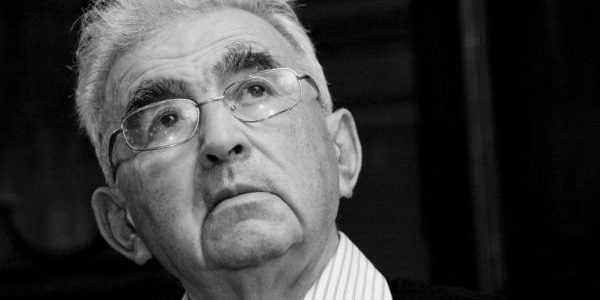
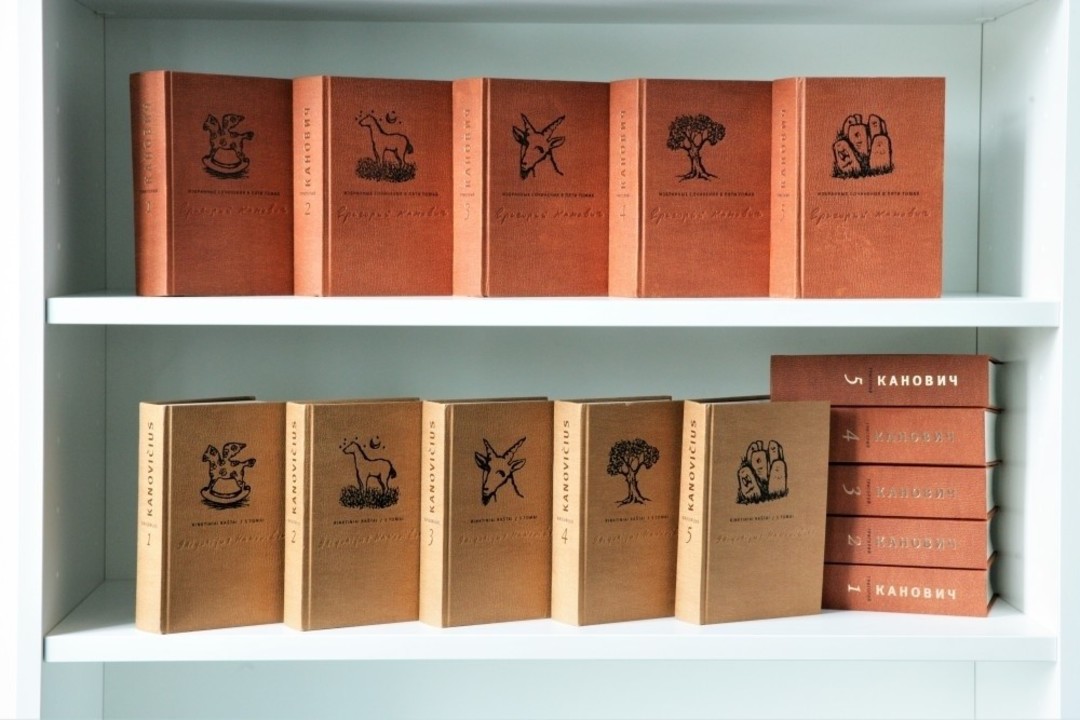
by Grigory Kanovich
translated from Russian by Yisrael Elliot Cohen

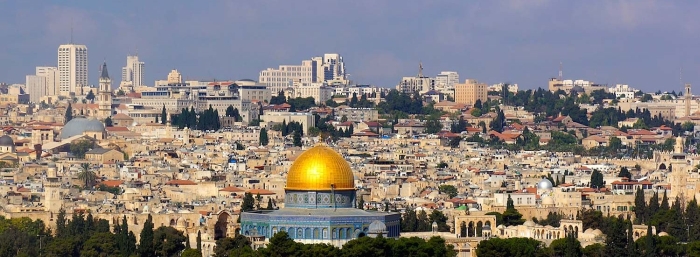
It seems that I dreamed about it when I was still in the cradle, long before I first saw it for real. Long before 1945, when it took me into its bleeding embraces that still reeked of the smoldering embers of war. Long before one could see there a burial hillock whose mud besmirched all my joys and forever stained, with a poison-yellow tint, all of my sorrows, because it was there that my mother (may her memory be blessed) found peace or perhaps did not find it.

In the course of my now already hardly short life, I have visited many cities — New York and Paris, London and Geneva, Toronto and Berlin, Turin, Prague and Warsaw. But not one of those majestic, inimitable, attractive cities ever entered my dreams.

I only dreamed about a single city in the whole world.

Week of Names Events to Commemorate Holocaust This Year

In the run-up to the Day of Remembrance of the Lithuanian Jewish Victims of Genocide, organizers of the civic initiative NAMES invite you to remember and honor the victims of the Holocaust. Now for the seventh year, the reading of the names of those murdered will include different groups and occupy an entire week.

The series of events will begin in Merkinė. On September 17 residents will read out loud the names of members of the community murdered more than 70 years ago, commemorating the tragedy which took place in the town.

On September 20 the reading of the names will take place at two locations in Vilnius: outside the former ghetto library (Žemaitijos street no. 4) and at the “memory stone” commemorating Fania and Lazar Lewando, founders and owners of a vegetarian restaurant (Vokiečių street no. 14).

On September 23 the names will be read out in Kaunas.

On September 24 residents of Lithuania are invited to visit Jewish mass murder sites located nearest to them.

“The Holocaust is one of the most painful topics in the history of Lithuania. Only by remembering and talking about the unpleasant past can we open up to the world. I think these readings are a strong and personal expression of this kind of remembrance and freedom,” NAMES coordinator Milda Jakulytė-Vasil says.

The list of initiatives isn’t final: all who want to may contribute by selecting an important location for Holocaust commemoration. The names and surnames of those murdered can be found in museums, libraries and institutions concerned with the preservation of Jewish heritage. More information about the readings and how to organize them yourself can be found here.

The period of one week isn’t coincidental; over this week several important Jewish religious and cultural holidays take place. Rosh Hashanah takes place on September 21 and 22 this year. This is, the Jewish New Year, a time for reflection. The Lithuanian Day for the Remembrance of Lithuanian Jewish Victims of Genocide falls on the Sabbath this year; according to Jewish custom it is forbidden to visit graves on this day.

Lithuanian Day for the Remembrance of Lithuanian Jewish Victims of Genocide is marked on September 23. This was the day in 1943 when the Vilnius ghetto was liquidated.

NAMES on facebook

Rosh Hashana Greetings from LJC Chairwoman Faina Kukliansky

Dear members of the Lithuanian Jewish Community,

I wish you a sweet 5778! I greet you wish you as much peace, goodness and calm as possible in your families and in the community, and to enter the New Year with a smile. The most important thing is that there be the least amount of anger possible, and that our health and moods might be better. May concord, understanding and a good communal feeling lead you.

Educational Rosh Hashana Evening

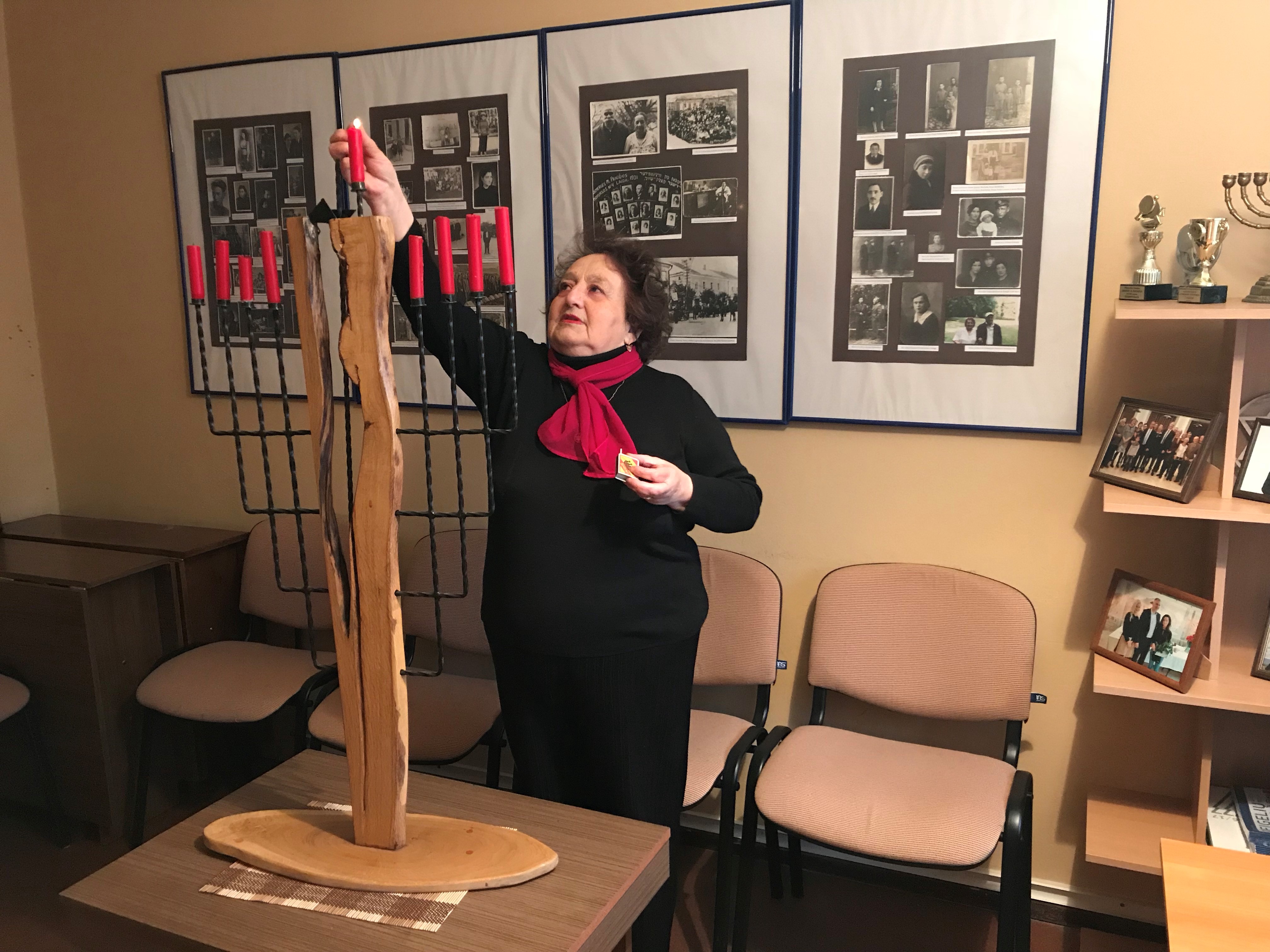
This evening we will not only have fun, try food and look at the new Jewish calendar for 5778, we’ll also renew our knowledge of this sweetest of Jewish holidays. Be there, 6:00 P.M., Tuesday, September 19, on the third floor of the Lithuanian Jewish Community.

AICE Update: Rosh HaShanah Fundraiser

The Jewish Virtual Library is the go-to source my students use for fact-based research pertaining to Judaism, Israel and the Holocaust.

We hear this all the time from teachers because the American-Israeli Cooperative Enterprise (AICE) is at the forefront of online Jewish/Israel education. We have worked hard to build the Jewish Virtual Library to include nearly 25,000 entries covering everything from anti-Semitism to Zionism. We are also proud to have reached more than 30 million visitors from more than 200 countries in the last three years.

In January, we gave the JVL a new look. We’ve made it easier to navigate and to find the information you need. We’ve also optimized the library so it is compatible with your smartphone and tablet. We have much more planned, including an App and material packaged for high school educators.

We need your help!

Happy (Jewish) New Year: L’Shana Tova U’Metuka

by Barb @ 1 Sentence Diary

The photo above is my shofar, an instrument made out of a ram’s horn, which is a traditional part of the Rosh HaShanah ceremony. Personally, I am unable to make any sound come out of the shofar, but both of my kids are quite adept at it. Don’t ask me how they learned it–I have no idea!

Today is the Jewish holiday of Rosh HaShanah, which is the Jewish New Year. According to Jewish tradition, Rosh HaShanah is the anniversary of the creation of the world. In Hebrew, we say L’shana Tova U’metuka (שנה טובה ומתוקה), meaning, for a sweet new year.

As the New Year, Rosh HaShana is a celebratory holiday, but there are deeper meanings as well.

The New Year for Globalists and Nationalists

Dear friends,

Georg Friedrich Hegel was to modern thought what Plato was to Greek philosophy. Most of the ideological movements of the 19th and 20th century see themselves as his heirs: from Marxists to nationalists and from existentialists to psychoanalysts, they all imbibed Hegel’s philosophy and methodology, especially the “dialectic”: thesis, antithesis, synthesis.

But we Jews were, as usual, a thorn in Hegel’s side.

Hegel developed, among many other things, a neat model of the life cycle of peoples. A group–say, the ancient Greeks–will develop its particular spirit (volkgeist) until they make their unique contribution to the universal spirit (weltgeist). Then they will fall into decadence, fade into history, and disappear. Jews, mused Hegel, had made their unique contribution, monotheism, but they stubbornly refuse to disappear.

LJC EVENTS CALENDAR SEPTEMBER 19-27, 2017

September 19, 6:00 P.M., Jascha Heifetz Hall, LJC, Pylimo street no. 4, Vilnius. Educational Rosh Hashanah evening. Besides having a good time, sampling foods and seeing the new calendar for 5778, we’ll also renew our knowledge of this sweetest of Jewish holidays.

September 20, 5:00 P.M. Traditional Rosh Hashanah celebration at the Choral Synagogue. Service begins at 6:30 P.M., with services on September 21 and 22 at 9:30 A.M.

September 22, 5:00 P.M. Art & Weisen concert in Heifetz Hall, LJC. The German quartet will perform subtle and enchanting interpretations of Eastern European and klezmer tunes.

Important note to members and visitors: on September 21 and 22 the Community administration and Social Programs Department will be on holiday.

September 24, 12 noon, Choral Synagogue. St. Christopher chamber orchestra concert “From a Forgotten Book.” For an invitation, call (8 5) 2613 003 or 867881514

September 24, 2:00 P.M. Rosh Hashanah for kids and young people at the Community.

September 25, 8:30 A.M. International conference “Diaspora and Heritage: The Shtetl,” building III, Lithuanian parliament. Registration required and identification required for entry. Registration open till September 21. Conference program here.

“Diaspora and Heritage: The Shtetl,” an International Conference at the Lithuanian Parliament September 25

An international conference called Diaspora and Heritage: The Shtetl will be held at the Lithuanian parliament September 25 dedicated to the Day of Remembrance of the Genocide of the Jews of Lithuania and the European Day of Jewish Culture.

Representatives of the Lithuanian and foreign Jewish community, scholars and heritage protection experts will give presentations and discuss Litvak history, memory and heritage. Conference participants and guests will have the opportunity to view a new exhibit financed by the Lithuanian Foreign Ministry called “One Century from Seven: Lithuania, Lite, Lita,” which will later travel to Lithuanian embassies. The new Lithuanian Jewish Community calendar for the year 5778 will also be presented. This year’s calendar features the wooden synagogues of Lithuania.

The Lithuanian Jewish Community and the Cultural Heritage Department under the Lithuanian Ministry of Culture are organizing the conference. The event is jointly financed by the Goodwill Foundation and the Cultural Heritage Department.

You are invited to attend. Please find the program for the conference and register at the following internet address:

https://www.lzb.lt/registracija-i-zydu-paveldo-konferencija/

Program in English also available here.

Volunteers Clean Up Sudervės Road Jewish Cemetery in Vilnius

Lithuanian Jewish Community members and staff gathered to clean up the Jewish cemetery on Sudervės road in Vilnius on Sunday, September 10.

Israeli ambassador Amir Maimon pitched in, as did LJC chairwoman Faina Kukliansky with her grandchildren. Community members, administrative staff and rabbis all came out to perform a small mitzvah in the run-up to Rosh Hashanah and Yom Kippur. They raked up leaves, gathered garbage and sorted it for recycling, tended abandoned graves and cleaned and beautified the only working Jewish cemetery in Vilnius.

Thank you to all the volunteers for your good work!

Great Synagogue Listed on Cultural Treasures Registry


information from the Cultural Heritage Department under the Ministry of Culture of the Republic of Lithuania and other sources

A commission for assessing cultural heritage real estate from the Cultural Heritage Department has provided legal protection to the remains of the Great Synagogue in Vilnius. The Great Synagogue of Vilnius was one of the largest religious institutions in Eastern Europe. It was renowned as an important Jewish spiritual and educational center and put Vilnius on the map as a center of Jewish scholarship. The Cultural Treasures Registry lists the construction (fragments of brick wall dating from the 18th century and entrance to the synagogue, southwest wall fragment with niche for the aron kodesh and eastern wall fragment), architectural features, remains of the former building complex including mikvehs dating from the late 19th century, a utility trench on Žydų street and cultural strata as valuable and protected features of the synagogue complex.

Originally the site hosted a wooden synagogue, believed to have been built around 1573. It burned down and was replaced at least once. In 1630 and 1633 royal grant was issued to allow a brick and mortar synagogue to be built there.