The Sabbath begins at 9:32 P.M. on Friday, July 25, and concludes at 10:44 P.M. on Saturday in the Vilnius region. Sabbath candles should be lit at 9:14 P.M. and completed before sunset at 9:32 P.M.


The Sabbath begins at 9:32 P.M. on Friday, July 25, and concludes at 10:44 P.M. on Saturday in the Vilnius region. Sabbath candles should be lit at 9:14 P.M. and completed before sunset at 9:32 P.M.

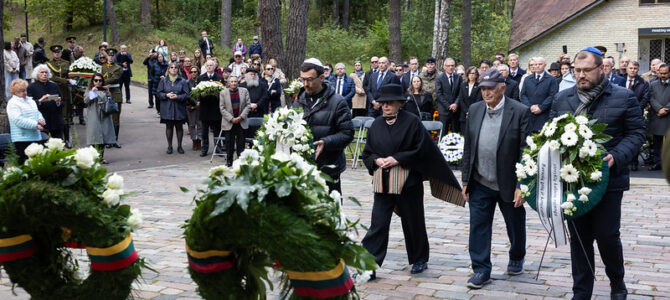
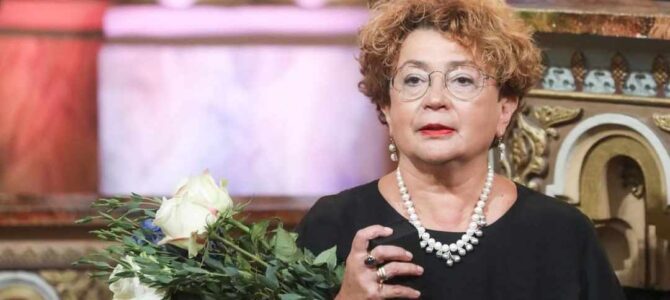
The Lithuanian Jewish Community, uniting 32 organizations across Lithuania and abroad, is deeply surprised by the unilateral decision made by the Government under the leadership of Gintautas Paluckas to disregard a project previously approved back in 2024 for the memorialization of the old Šnipiškės (Shnipishok, formerly Piromont neighborhood) Jewish cemetery and the existing commemorative site at the Palace of Sports. This project has been under development for several years and was carefully coordinated by a working group composed of representatives from the Lithuanian Jewish Community, the European Jewish Cemetery Preservation Committee, the American Jewish Committee’s Department of International Affairs and other organizations dedicated to preserving Jewish heritage.
The solutions proposed so far have ensured appropriate respect for the Jews buried in the cemetery as well as historical events related to Lithuania’s struggle for independence and the victims of the tragic events of January 13, 1991, at the Vilnius television tower.
We emphasize the decision to alter the intentand content of the memorial was made without prior consultation with the Lithuanian Jewish Community or any other Jewish organizations anywhere. We were not informed of any changes to the original plans.
The Lithuanian Jewish Community will refrain from further commenting on this decision for now because we have not received confirmed information regarding the content of this new plan nor the reasons behind this change in course.
Nevertheless, we wish to note that such actions undermine trust in our state and damage Lithuania’s reputation in the eyes of strategic partners.
Faina Kukliansky, chairwoman
Lithuanian Jewish Community

The Lithuanian and Russian news portals madeinvilnius.lt and ru.delfi.lt are reporting Lithuanian prime minister Gintautas Paluckas (Social Democratic Party) has renewed government plans to refurbish the former Palace of Sports complex in central Vilnius and to renovate the Jewish cemetery where it was built and which surrounds the building.
Paluckas is facing calls to stand a confidence vote in parliament following revelations of sweet-heart loan deals and large discounts for real estate purchases.
According to both news sites, Paluckas wants to renovate the large but decrepit building for use as a conference center, the same plan floated by earlier governments. This iteration of the on-going talk of renovation now includes plans by the PM to install a museum within that space for commemorating the first meeting of Sąjūdis there, and victims of the January 13, 1991, Vilnius television tower massacre. Sąjūdis officially became a political party there and went on to contest elections to the Lithuanian Supreme Soviet against the Lithuanian Communist Party led by Algirdas Brazauskas. Original member of Sąjūdis and later Brazauskas supporter Arvydas Juozaitis is currently completing a boom on the history of the early Lithuanian independence movement which includes a detailed description of that founding meeting, according to pre-publiicty from the author himself.

by Grant Gochin, July 18, 2025
Tisha b’Av, observed annually on the ninth day of the Jewish month of Av, is a solemn day of mourning in Judaism, commemorating a series of tragedies that have befallen the Jewish people, most notably the destruction of the First and Second Temples in Jerusalem. Over time, this day has also become a time to reflect on other catastrophic events in Jewish history, including the Holocaust, which saw the systematic murder of approximately six million Jews by Nazi Germany and its collaborators between 1941 and 1945. For many Jewish communities, Tisha b’Av serves as a moment to mourn the six million victims of the Holocaust, often through the recitation of kinnot, liturgical dirges that lament historical persecutions, including those of the 20th century. As we commemorate these profound losses, however, a troubling issue persists in Lithuania: the government’s ongoing efforts to revise and deny its historical role in the Holocaust, a matter I have confronted through extensive legal action. This article explores the intersection of Tisha b’Av’s remembrance, Lithuania’s Holocaust revisionism and my legal battles to expose this distortion, drawing on insights from my work and the broader discourse on antisemitism.
Tisha b’Av: A Day of Collective Mourning
Tisha b’Av is marked by a 25-hour fast and the recitation of the Book of Lamentations, which mourns the destruction of Jerusalem. Over centuries the day has evolved to encompass additional tragedies, such as the expulsion of Jews from Spain in 1492 and the Holocaust. Religious communities often incorporate special kinnot composed after the Holocaust, such as those by Rabbi Shimon Schwab in 1959 and Rabbi Solomon Halberstam in 1984, to honor the six million Jewish victims. This practice underscores the day’s role as a time to reflect on the enduring impact of antisemitism and the importance of historical truth. The Holocaust as a pinnacle of antisemitic violence is a focal point of this commemoration, making Lithuania’s revisionist policies particularly jarring in the context of Tisha b’Av.

from the newspaper Šiaulių kraštas
The Chaim Frenkl Villa of the Aušra Museum in Šiauliai hosted a celebration of the 100th anniversary of the birth of Leiba Lipshitz on July 16. Lipshitz chronicled Jewish life in Šiauliai, researched regional history and was a well-known publix figure. People called him a walking encyclopedia. He survived the Stuthoff and Dachau concentration camps but lost his entire family in the Holocaust. He went back to his hometown and dedicated the rest of his life to documenting Jewish history and life in Šiauliai.
Historian Jonas Kiriliauskas delivered a presentation of Lipshitz and his views on life at the ceremony.

The Sabbath begins at 9:43 P.M. on Friday, July 18, and concludes at 11:00 P.M. on Saturday in the Vilnius region. Sabbath candles should be lit at 9:25 P.M. and completed before sunset at 9:43 P.M. Sunday is International Chess Day.

Unpunished vandals continue to target spaces belonging to the Lithuanian Jewish Community. Last week, for the second time, perpetrators smashed the window of the Community’s Bagel Shop. Security camera footage clearly shows this was not an accident but a deliberate act aimed at one of the most frequently visited spaces of the :LJC. Sadly Lithuanian police seem incapable of recognizing crimes which exhibit the signs of anti-Semitism; instead they prioritize incidents solely based on material damage. While a few dozen or even a few hundred euros might not seem like a large sum, violence motivated by ethnic hatred is a hate crime punishable by imprisonment.
We emphasize this is not the first clearly anti-Semitic incident. Our Israeli flag was stolen and desecrated; glass near the children’s club in the Community building was smashed; the Vilnius Choral Synagogue was vandalized; the Šiauliai Jewish Community has been attacked multiple times and our Bagel Shop has repeatedly become a target for anti-Semites. Regrettably, in none of these cases did the Lithuanian police or prosecutors take meaningful action to identify and punish the perpetrators. This sends a dangerous message to malicious actors: they may spread hatred and endanger members of the community without consequence.

Natalja Cheifec continues her lecture and discussion series on Jewish tradition. The next internet zoom meeting on Thursday will focus on vegetarianism in Jewish life. From the story of Cain and Abel in biblical history, Nazi theories about subhumans to the 21st century controversial ad campaign “Holocaust on your plate,” she’ll cover the gamut of issues from the micro to the macro view on diet, including:
• When the dinner table transforms into a “sacred altar;”
• Joy from meat and wine: myth or truth? {from Maimonides);
• Jewish principles regarding meat consumption;
• The heirarcyh of all God’s creatures;
• Sympathy for animals in Jewish tradition, why people were given dominion over the animals, and the contradiction of pity for animals and meat consumption.
To receive zoom credentials, click here.
Time: 6:00 P.M., Thursday, July 17
Place: zoom vidphone app, internet

by Geoff Vasil
Pro-Hamas activists staged coordinated terror attacks on Jews in Australia’s second city Melbourne on Friday evening, July 4.
Police and fire were called to the East Melbourne Hebrew Congregation shul where around 20 members of the community were at Sabbath table under the direction of Rabbi Dovid Gutnik. A boy in the outer vestibule alerted celebrants the outer double doors were on fire. The fire was contained before it could spread beyond the doors. Fire inspectors quickly determined an accelerant had been used to light the blaze. Victoria State Police anti-terrorism officials used public surveillance cameras to track down the perpetrator, 34-year-old Angelo Lorez from western Sydney, and he was arrested that night in the Melbourne Central Business District. During the arrest police dsicovered he was armed with a banned weapon, but police didn’t report whether that was a gun or a knife. He is being held for two weeks prior to an initial hearing.
Almost simultaneously a group of around 20 people wearing hoods, masks and Palestinian scarves marched through Melborne’s core, the Central Business District or CBD, banging drums, waving signs and chanting “Death, death, death to the IDF.”

The Sabbath begins at 9:51 P.M. on Friday, July 11, and concludes at 11:13 P.M. on Saturday in the Vilnius region. Sabbath candles should be lit at 9:33 P.M. and completed before sunset at 9:51 P.M. Sunday is the anniversary of the Battle of the Boyne in Great Britain and the weekend plus Monday is the celebration of National Day in Mongolia.

Natalja Cheifec continues her lecture and discussion series Thursday with a lesson on what kosher food requirements means and how they affects Jewish life. To receive zoom credentials and view and participate in the discussion, click here.
Time: 6:00 P.M., Thursday, July 10
Place: internet

The Lithuanian Jewish Community has signed a cooperation agreement with Vilnius University for closer collabaoration in Jewish studies and Judaica research, including joint efforts initiating new educational and cultural projects.
LJC chairwoman Faina Kukliansky said: “This is a great honor and very useful for us … especially with Vilnius University with its centuries of learning and research. Jewish history and culture doesn’t start and end with the Holocaust. There is a millennium of the Yiddish language, a rich history and an abundance of deep and significant traditions which we want to pass on to future generations.”
Vilnius University rector and professor Rimvydas Petrauskas commented: “The Lithuanian Jewish Community is an important partner for us. This agreement is an opportunity to stimulate knowledge of the history and even the present-day of the Jewish community.”
Pro-rector for partnerships professor Artūras Vasiliauskas and organization contact coordinator Daniel Šematovič were also present at the signing of the historic agreement.

The Sabbath begins at 9:57 P.M. on Friday, July 4, and concludes at 11:24 P.M. on Saturday in the Vilnius region. Sabbath candles should be lit at 9:39 P.M. and completed before sunset at 9:57 P.M. July 4 is Independence Day in America and is a national holiday there with foreign embassies closed. July 6 is Coronation of Mindaugas Day in Lithuania, also a state holiday but fallis on a Sunday this year.

The Sabbath begins at 9:59 P.M. on Friday, June 26, and concludes at 11:31 P.M. on Saturday in the Vilnius region. Sabbath candles should be lit at 9:41 P.M. and completed before sunset at 9:59 P.M.

An international seminar for Lithuanian teachers dedicated to the 100th anniversary of the founding of the YIVO Institute (Jewish Research Institute) in Vilnius was held at the Martynas Mažvydas National Library, and a virtual museum was presented with a prepared methodological manual entitled “Beba’s Story,” based on the story of Beba Epstein, a girl who lived in Vilnius.
The opening of the seminar was attended by library director Aušrinė Žilinskienė, Israeli ambassador Hadas Wittenberg Silverstein, Lithuanian Jewish Community chairwoman Faina Kukliansky, MP Emanuelis Zingeris, diplomats from the USA and Germany and deputy Vilnius mayor Vytautas Mitalas.

The seminar was attended by 40 teachers from different locations in Lithuania who are interested in the history of Lithuanian Jews and the possibilities of using various historical sources in their curricula.
Speakers included Egidijus Aleksandravičius of Vytautas Magnus University, YIVO sirector Jonathan Brent, director of the National Library’s Judaica Center Lara Lempertienė and historian Saulius Sužedelis.
The seminar was organized by the YIVO Institute (USA) in cooperation with the International Commission for the Evaluation of the Crimes of the Nazi and Soviet Occupation Regimes in Lithuania, the Martynas Mažvydas National Library, the city of Vilnius, the Goodwill Foundation and the Lithuanian Jewish Community.

by Sergėjus Kanovičius, www.lrt.lt
When a half year ago German ambassador to Lithuania Cornelius Zimmermann asked me whether I’d object to an initiative by which soldiers from a Germany armored brigade would help document Jewish cemeteries in Lithuania, I was at a loss for words. The first thought which occurred to me was, why now Lithuanian soldiers?
But as I sat in the waiting room of the German embassy… Over 14 years in the life of Maceva (Matseva, Hebrew for monument), there’s been a bit of everything–Austrian and German volunteers, Christian, Lithuanian high school students, US embassy staff, visitors from Israel. But Bundeswehr soldiers maintaing Jewish cemeteries and documenting grave monuments? Why?

The Sabbath begins at 9:59 P.M. on Friday, June 20, and concludes at 11:32 P.M. on Saturday in the Vilnius region. Sabbath candles should be lit at 9:41 P.M. and completed before sunset at 9:59 P.M. In various countries the summer solstice is celebrated on various days from June 20 to 23, the longest day of the year and the official beginning of summer. In Lithuania June 24 is St. John”s Day and is a non-work day.

ewish scouting leader Michail Adomui Kofman is planning a scouting camp at the Vaitlunkis camp and recreation area in the Panevėžys district to be reached and exited by boat from July 2 to July 8.
The program includes abundant activities, four meals per day, amenities and camp badges and emblems.
The cost is 90 years for the full program, 15 euros per day for part-time participants and a donation of 30 euros from adult volunteers and older scouts. Part-time volunteers are asked to pay 5 euros per day. Parents and guests attending visitor’s day are asked to pay 10 euroes per day. Scout leaders supervising groups of young people are not asked to pay anything. There are discounts for two children from the same family at 75 euros per person, and 3 members of the same family pay just 6- euros each. Discouns don’t apply to adult family members.

Natalka Cheifec will deliver her weekly lecture on Jewish life followed by discussion on Jewish judicial commissions, i.e., Jewish courts. The internet lecture and dsicussion starts at 6:30 P.M. this Tursday, June 19, via the zoom platform.
Among the topics she plans to address:
• Criteria for selecting judges;
• Definition of theft and its eight species;
• Punishment for murder;
• Definition of unintentional homicide;
• The death penalty;
• Greater guilt of inciter over perpetrator;
• Definition of bribery;
• Sanctuary;
• Rules of war.
To receive zoom credentials, click here.

Soldiers from the German Bubdeswehr’s 45th armored brrigade and members of the Maceva Jewish cemetery preservation group spent four days last week cleaning up the old Jewish cemetery and Holocaust monument in Merkinė in southeast Lithuania.
Merkinė is the site of early if not the earliest Jewish settlement in Lithuania.
Brigade commander Christoph Huber, German ambassador to Lithuania Cornelius Zimmermann and Lithuanian Jewish Community chairwoman Faina Kukliansky visited the cemetery to see the soldiers’ work at a special ceremony for concluding the upkeep mission.
About 130 soldienrs working with people from Lithuania’s Maceva Jewish cemeteries initiative removed moss, polished headstones and cleared brush from the site. Members of Maceva photographed the markers and cemetery as well.
One German soldier stationed in Lithuania since April said: “It’s not an obvious thing to me that I as a German soldier can contribute to the meaningful work by Maceva at Jewish cemeteries. This was an especially moving experience for me, to look at our complicated page of history in Lithuania.”