
Religion

Two Rabbis Coming in February to Work in Vilnius

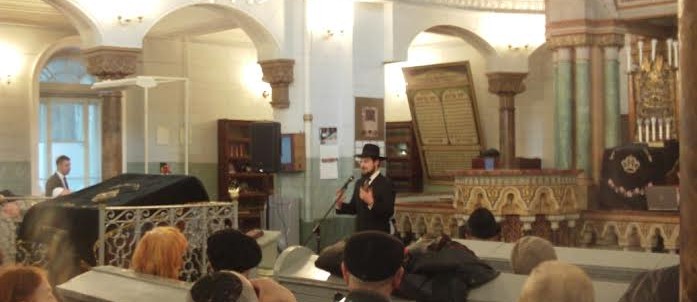
Vilniaus_sinagoga

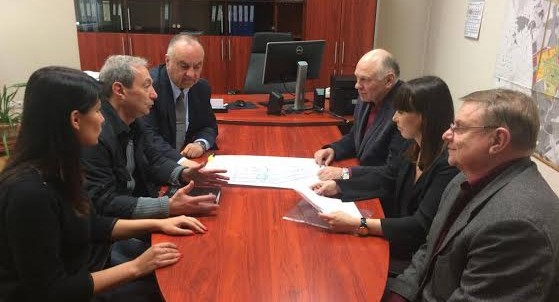
For just over a half year now the Vilnius Jewish community hasn’t had an official rabbi.

The Lithuanian Jewish Community and the Lithuanian Jewish Religious Community announced a public tender to find a new rabbi and received responses from over thirty honored rabbis from the USA, Germany, Great Britain, Israel, Belarus, Latvia, Russia and elsewhere.

The Lithuanian Jewish Community and the Lithuanian Jewish Religious Community are grateful for the response by all the rabbis, and for the concern and respect shown Lithuanian Jewish believers and their venerable past.

Wooden Synagogue Discovered under Brick Walls in Kulautuva, Lithuania

Kulautuva sinagoga

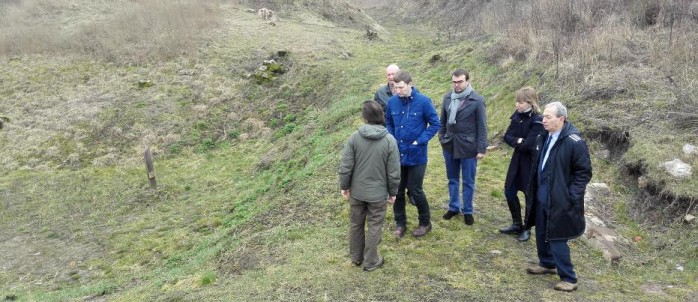
BNS–A wooden synagogue built between the two world wars was discovered as the brick walls of a building were torn down in Kulautuva, Lithuania.

The Kaunas section of the Cultural Heritage Department halted work at the site as consideration is given to what to do with the discovery, the newspaper Kauno Diena reported. Department employees said they learned of the demolition of the building over the weekend after photos were posted to facebook. Cultural heritage protection experts are mulling over the idea of making the synagogue a candidate for entry on the list of protected cultural treasures and even of moving the entire structure to the Lithuanian Folk-Life Museum in Rumšiškės outside Kaunas.

The synagogue was built in 1935 and its windows were boarded up and it was turned into storage space for the town after World War II. Major reconstruction work was performed on the building in 1967 and 1968.

BNS_logotipas

What Pope Francis Synagogue Visit Says about Catholic-Jewish Relations

by Ruth Ellen Gruber

(JTA) – When Pope Francis crosses the Tiber River to visit to Rome’s Great Synagogue on Sunday, he’ll become the third pontiff in history to do so. But his 1.5-mile journey to the towering Tempio Maggiore shows that what was once unthinkable is now the norm.

“Our meeting,” Rome Chief Rabbi Riccardo Di Segni told the Catholic newspaper L’Avvenire, “aims to convey a very topical, important and urgent message — that belonging to a faith, a religion, should not be a cause of hostility, hatred and violence, but that it is possible to build a peaceful coexistence, based on respect and cooperation.”

John Paul II’s visit 30 years ago marked a dramatic watershed in Catholic-Jewish relations. By crossing the threshold of the Tempio Maggiore, warmly embracing Rome’s then-chief rabbi, Elio Toaff, and famously referring to Jews as Christianity’s “older brothers,” the Polish-born pontiff broke down barriers that stretched back nearly 2000 years.

Full story here.
jta

Pioneering US Orthodox Female Rabbi to Take Up Congregational Position

www.lesliebarbaro.com

Lila Kagedan, who received her ordination from New York’s Yeshivat Maharat in June, was the first to take on the moniker usually reserved for her male counterparts.

The first Orthodox woman ordained in the United States to take on the title of rabbi, rather than the more commonly used rabbah or maharat, will soon take on a pulpit position at an unnamed synagogue, London’s Jewish Chronicle reported on Tuesday.

While women affiliated with the nascent Open Orthodox movement have been granted ordination for several years now, Lila Kagedan, who received her ordination from New York’s Yeshivat Maharat in June, was the first to take on the moniker usually reserved for her male counterparts.

Speaking at a Limmud conference, she stated that she decided to call herself rabbi because she “wanted to take a title in a position of serving the community, so that people would know exactly what it is,” adding that “change is difficult and frightening. We are very much used to a certain aesthetic when we say ‘rabbi.’” The issue of female ordination has been extremely divisive within the Orthodox community, with the ultra-Orthodox Agudath Israel of America and the more moderate Modern Orthodox Rabbinical Council of America issuing statements condemning the practice.

Review of Mini Limmud Conference 2015

2. sestadienis (340)
Organizer Žana Skudovičienė at the podium at Mini Limmud 2015.

The Mini Limmud conference is a large educational and entertainment event for Jewish families. The three-day program with overnight stays and entertainment at a hotel was instituted so that everyone might find something of interest and importance in learning about Jewish history, traditions, religion, Yiddish culture and current events. This year the organizer was Žana Skudovičienė. Responses by participants were positive and they expressed their thanks as well as a preference for more interesting speakers next year. Organizer Skudovičienė said they hadn’t been able to invite all the speakers they wanted this year.

“It’s hard for me to evaluate my success because this was the first year I was the organizer,” Skudovičienė said. “Junona Berznitski organized all the earlier Limmuds and I just participated as an MC, and I just had to worry about my clothes and appearance, create some scenes and write a text. But now it was a great challenge for me. I met all the potential speakers and selected only the most interesting people. These all agreed to participate, but there were others who wanted to participate but couldn’t because of plans made earlier. People requested we get reporter Viktor Topaller but everything was limited by funding. We were in touch with Viktoras Šenderovičius who wanted to come but couldn’t, but plans to next time. I wanted to find more Judaism and Jewish history experts, not necessarily from outside the country. Giedrius Jakubauskis delivered an extremely interesting presentation. Attendees were happy with the presentation of Saulius Šaltenis’s new book “Žydų Karalaitės dienoraštis” [“Diary of a Jewish Princess”]. They bought up all the copies of the book brought to Limmud, and we might have brought more from the publisher.”

Conference participants enjoyed meeting Israel’s ambassador to Lithuania Amir Maimon and were eager to learn about Israeli current events. There was a real discussion and people were concerned with why Israel always seems to be at the losing end of the propaganda war in the media. There wasn’t enough time for a comprehensive answer from the ambassador, but we hope to continue this discussion at the Community.

Lithuanian Jewish Community Chairwoman Takes Stock of Accomplishments over Past Year

MILDAR-0138web

Lithuanian Jewish Community chairwoman Faina Kukliansky said 2015 was an important year for the Community and that she is hoping for changes in school curricula in 2016 to take into account the Jewish contributions to Lithuanian history, Jewish culture and the Holocaust.

The year 2015 was an important one for us, the community. Important changes in Lithuanian-Israeli relations were seen. An Israeli embassy was opened in Lithuania and ambassador Amir Maimon began work here. Ambassador Maimon has dedicated a lot of time to the Jewish community and has proven a reliable partner in solving various problems. Lithuanian president Dalia Grybauskaitė and prime minister Algirdas Butkevičius paid serious attention to the Jewish community and both visited Israel in 2015 and met with top leaders of the Jewish state. It was said Israeli-Lithuanian relations have never been so good and efforts to expand economic and cultural ties continue.

The Lithuanian state began to pay more attention to preserving Jewish heritage and cemeteries. Old synagogues left in small towns without any Jews were the subject of utilization agreements with local municipalities to be used for cultural uses by the public. The Lithuanian National Martynas Mažvydas Library began a significant project to digitize the archive of YIVO, which operated in Vilnius until World War II, together with the YIVO institute now located in the USA.

The Lithuanian Jewish Community appreciates that representatives of our Community are included in state visits by top leaders. This is very important to us. I took part in almost all meetings, and this fact testifies not only to the respect shown the Community, but also to the opportunity to present information first-hand, which is important to the leader as well as the Community. We are taking a successful part at all international organizations and continue our many years of cooperation with the Joint Distribution Committee, and appreciate this global organization’s support for our Community. We also thank the ORT, EJC, WJC, AJC, the Goodwill Fund, the Lithuanian Human Rights Monitoring Institute, EEA Grants and the Howard Margolis Foundation for their help. Thank you all.

Currently I am seriously reviewing the operating rules of the Community’s Social Center. We have established a steering committee for the Social Center and are seeking to expand the circle of people eligible to receive social benefits, which should go not only to support the elderly, but more to children as well. Jews are also concerned that people evacuated during the war do not enjoy equal status with deportees. After all, they didn’t leave their homes voluntarily, but receive no pensions from the state.

We should not forget that last year saw the establishment of three governmental commissions. The first was the Commission for Teaching and Holocaust Education. The goal of this commission is to place greater emphasis in the schools on Jewish history and Jewish contributions to Lithuanian history. The second is the Heritage Commission which is tasked with taking care of cemeteries and mass murder sites as well as all surviving Jewish heritage sites in Lithuania. The third commission is for the restoration of property rights to private individuals who did not have Lithuanian citizenship during the period when the law for such restitution was in force. This issue will require negotiations with the Government. Another issue is a decision on non-inherited property which will never be inherited because it belonged to people murdered in the Holocaust. The program approved by the Government back in 2011 to rename the streets of Lithuanian cities and towns in honor of rescuers of Jews and famous Jewish figures, unfortunately, still hasn’t been implemented.

After the brutal terrorist attacks in Europe last year which shook the entire continent, we also hope the issue of the safety and security of members of the Lithuanian Jewish Community will receive more attention from state institutions.

The Šnipiškės cemetery and the cemetery on Olandų street were the subject of much discussion, but I’d like to say that all issues connected with the Šnipiškės cemetery are being and will be solved under supervision by rabbis, and an agreement was signed with the rabbis in 2009. We thank mayor of Vilnius Remigijus Šimašius and director of the Pavilniai Regional Park Vida Petiukonienė, among others, for their concern with and care of the Olandų street cemetery.

We consider ourselves Europeans but to make our Jewish identity real we still have to renew our knowledge of Judaism. This year we bade farewell to our rabbi whose employment contract ended. We intensively conducted a search for a new rabbi from among many candidates, the successors to the Gaon, who wanted to begin working in Vilnius and Lithuania, to continue the Judaic Mitnaged tradition in this country, to work not just at the Choral Synagogue in Vilnius, but also in the community.

I am pleased that the number of Vilnius residents joining the Community is quickly growing. Although we have always said that all Jews living in Vilnius are members of the Community, today we see them becoming true members and paying membership fees, which have been greatly reduced. And non-Jews are also taking part in the Community’s work, and just as we ask for tolerance for others, we strive to be tolerant people ourselves.

The Community is hoping for more participation by the youth because we are not just elderly people. Taking a more active part means each individual may contribute according to their desire, talent and ability. If an individual wants to preserve his or her Jewish identity and those of his or her children and grandchildren, we welcome any and all such initiatives.

Happy Holidays from the LJC!

image003

The Lithuanian Jewish Community, which recently celebrated the Jewish holiday of Hanukkah,

symbolizing Victory and the Miracle of Light, wishes all the friends and partners of the Community

a Merry Christmas and a Happy New Year. We wish you the best holiday experience ever!

Thank you for your friendship, help, ideas and for caring about the history and culture of the Jews of Lithuania.

We hope to share the next year, 2016, with you as well.

Lithuanian Jewish Community chairwoman Faina Kukliansky

How Hassidic Jews in the Diaspora Observe Christmas

The origins of Nittel Nakht customs are murky, and even the name itself is a matter of some debate.

NEW YORK–Christmas is a day like any other in most Hassidic neighborhoods in New York: children go to school, shops are open and tinsel and holly are nowhere to be seen.

But Christmas Eve occupies a special place on the Hasidic calendar as a kind of “silent night,” when beit midrash study halls fall silent.

Lithuanian Jewish Student Union Celebrates Hanukkah

61da7530-77e4-4fc6-ad81-19ab6248e415

Lithuanian Jewish Community Student Union director Amit Belaitė furnished the following information and responses from facebook.

This year we began celebrating Hanukkah at the Vilnius Choral Synagogue. Then we went to Roshon, the only kosher restaurant in Vilnius. It was great to see several dozen happy faces and that Rabbi Samuel Daniel Izakson joined our group. Before we began to eat dinner, we lit menorahs. Michaelis Frišmanas, who recently started his own beautiful family, led the getting-acquainted game in which we all shared our hopes and dreams. Hanukkah is inconceivable without playing the dreidel game. We decided to play in an unusual way, a true competition! Five players made it to the finalists’ table and the winners were Michaelis Frišmanas’s wife Gintarė and Rachmilas Garberis. The restaurant surprised us with a fantastic dessert: small kosher doughnuts in the shape of a dreidel! We would like to thank the staff of the Rishon restaurant very much, and especially Aleksandras Arončikas, for performing a Hanukkah miracle and helping us hold the celebration. We would also like to thank Lithuanian Jewish Community program coordinator Julija Lipšic, and the LJC for financial support. Now we know for sure that miracles really do happen during Hanukkah!

Wooden Synagogues as Tourist Attractions

The Lithuanian Cultural Heritage Department under the Ministry of Culture has posted a PDF file on their website about wooden synagogues in Lithuania and their potential as tourist attractions called “Road of Wooden Synagogues”:

The Road of Wooden Synagogues

The 16th and the 17th centuries were a period of rapid growth and expansion for Jewish communities in Lithuania. These communities could not exist without a synagogue which was their socio-economic, administrative and spiritual centre. The synagogue was where members of the community prayed, studied Torah, and dealt with the problems of the entire community or those of individual members. The synagogue was the first building which a newly established Jewish community would construct as soon as possible to fulfill their vital needs, and thus, of course, they would use the most widespread and cheapest material for constructing the building. The material that served this purpose in the territory of Lithuania was wood which was also used widely in Lithuanian folk architecture. Later, after becoming economically stronger, the Jewish community would build a stone synagogue right next to the wooden one thus forming a courtyard of synagogues. The importance of wooden synagogues would then decrease slightly. Jewish people gathered in wooden synagogues during holidays. Due to the risk of fire, these synagogues would in most cases not be heated therefore they acquired the name cold synagogues (in the territory of the Grand Duchy of Lithuania.)

Lithuanian Community in Israel Attend Hanukkah and Christmas Event

U

Holiday jazz rang out at the Felicja Blumenthal Music Center in Tel Aviv on December 11, in celebration of Hanukkah and anticipation of Christmas. The Nerija Lithuanian community in Israel invited compatriots and their family members, and all people with an artistic bent, to attend the second musical event called “Sounds of December: From Hanukkah to Christmas.” Lithuania’s ambassador to Israel Edminas Bagdonas and cultural attaché Saulius Pilinkus honored the community with their presence.

“Jazz is the universal language of the soul and freedom, it has no borders,” community member Ilona Sakalauskaitė, who ended up acting as hostess at the event, said. She invited the public to come hear one of Lithuania’s most talented saxophonists, Danielius Praspaliauskis. The pieces performed by him and Gary Libson, originally from Kaunas and resident in Israel now, received sustained applause. When the audience heard the duet had only formed several hours before the concert, they were amazed. “If this is what they can do after practicing together only once, just imagine what they could with more time!” ambassador Bagdonas exclaimed.

Full story in Lithuanian here.

A Happy Hanukkah for the Children of Panevėžys and Ukmergė

DSC_0110

It has become something of a tradition for the Panevėžys and Ukmergė Jewish communities to celebrate Hanukkah together. This year Hanukkah was celebrated at the Vakarinė Žara restaurant with a program drafted by both communities. About 100 members turned out for the holiday celebration including children and adults. Israeli ambassador to Lithuania Amir Maimon also attended with his wife Tal, as did Panevėžys mayor Rytis Račkauskas, members of the Panevėžys city council, Ukmergė regional administration Culture Department deputy director Julius Zareckas, Ukmergė Regional History Museum director Vaidutė Sakolnikienė, Ukmergė Tolerance Center director Vida Pulkauninkienė and other honored guests. The ceremony began with the lighting of the menorah. Israeli ambassador Amir Maimon lit the shamash candle and as Hanukkah music played lit the eight candles held by children.

The ambassador’s wife Tal Maimon lit the main menorah with mayor Račkauskas, Julius Zareckas, city council member Petrauskas, Panevėžys Jewish Community board of directors member Jurij Grafman, alderman Michail Grafman, Artūras Taicas and Panevėžys Jewish Community chairman Gennady Kofman. The room was filled with warmth and light, appropriate to Hanukkah, the festival of lights. Everyone danced to Hava Nagila.

Ambassador Maimon briefly told the story of Hanukkah and greeted all the participants with Hanukkah greetings. Panevėžys mayor Račkuskas also gave a greeting and wished for understanding, light and peace for all those present. Artūras Taicas passed on the greetings of Lithuanian Jewish Community chairwoman Faina Kukliansky. Chairman Gennady Kofman explained the holiday foods, what the pancakes and doughnuts symbolize, and told of the three miracles which occurred 2,160 years ago. Toasts were made and celebrants tried the pancakes and doughnuts. Halfway through the celebration gifts were presented to the children, the children improvised a concert, Jewish music was played and the children played dreidl.

  • DSC_0157
  • DSC_0172
  • DSC_0195

Sex and Judaism

Miami, December 13, 2015–Targum Shlishi is supporting two innovative programs developed by JOFA (Jewish Orthodox Feminist Alliance) to disseminate knowledge and foster greater understanding of the intersection between sexuality and Judaism: Chatan and Kallah Teacher Training Workshop and the Joy of Text Podcast.

“One might think that in an age of technology when knowledge is easily accessible, that the Orthodox community would be fairly educated about sexuality. Unfortunately, this is not true. Many enter marriages without adequate knowledge of biology, the mechanics of sex and the range of sexual acts permitted by Jewish law,” notes Sharon Weiss-Greenberg, executive director of JOFA.

These two programs are part of JOFA’s efforts to educate the Orthodox community about issues of Jewish law and sexuality, to improve marriages and to promote healthy sexual activity in the Orthodox community.

LJC Social Center Jewish Family Service Celebrates Hanukkah

VaikCha2

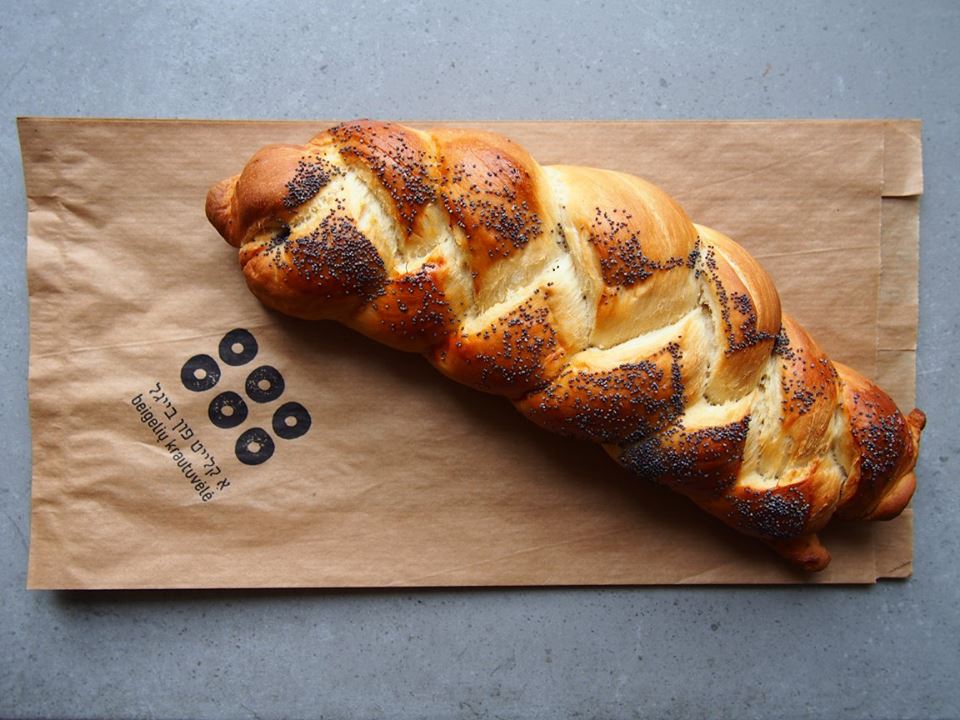
The Jewish Family Service of the Social Center at the Lithuanian Jewish Community held a Hanukkah celebration December 10 for children and parents which included a creative workshop. An experienced developmental psychologist who several years ago led Purim programs for children served as guide at the event. First the children watched a short film about Hanukkah and associated traditions, then in the art workshop portion of the program the children and their parents used colored sand to create a decorative menorah. The children enthusiastically used many different colors to represent the flames. They framed their pictures and then continued to work on them using different decorations. After the work was done, there was a treasure hunt for Hanukkah gelt, gift-giving, dreidl play and snacks of fresh doughnuts.

Approximately thirty children and parents participated. They reported having a lot of fun and said they would remember the event for a long time to come.

More snapshots from the event here.

When Chiune Sugihara Celebrated Hanukkah in Lithuania

Hanukkah, 1939.
Kaunas.

I told him the story of how Judah Maccabee led his men into war against the powerful Greeks, who had defiled the temple, and how their tiny force defeated the much greater armies of Antiochus. Judah and his followers liberated Jerusalem, and set about rededicating the temple, but when they went to light the lamps they could find only enough oil to burn for one day. Keeping the faith, they used the one small cruse they had, and God made the oil burn for eight full days. This is how Chanukah became the festival of lights. Each evening the shammers, the one candle used to light all the others, was used to light one more candle, until on the eighth day all eight candles were burning.

The tables were laden with the best of food and drinks, including some Japanese food which [aunt] Anushka supplied from her shop. We also had veal with small roasted potatoes, roast duck in orange sauce, and many other wonderful things.

Mr. Sugihara also asked me about our family life and my hobbies. When I told him that I collected stamps, he invited me to come and visit him at the consulate. He said he would give me some stamps from Japan.

Giant Menorah Lit in Klaipėda

photo_15_28252387
photo © 2015 Egidijus Jankauskas

The Klaipėda newspaper Vakarų Ekspresas reports the city mayor and representatives of the Chabad Lubavitch movement in the Lithuanian port city held a ceremony on central Lietuvninkų square to light the first Hanukkah lamp on the menorah erected there.

Full story and photo gallery here.

Kaunas Jewish Community Hanukkah Celebration

Kaunas du
Members of the Kaunas Jewish Community gathered on the afternoon of the first Sunday of December, 2015, at the cafe and music club Punto Jazz to light the first Hanukkah candle and celebrate the start of this eight-day holiday of light and miracles. One of the most senior and most active members of the Community, Šmuelis Šragė, was supposed to light the first candle, but he unexpectedly left us just a week before Hanukkah. His widow Basia Šragienė was called upon by her sons to light the first candle in his place. Despite the somber circumstances, participants managed to have fun at the event, aided by guests from Vilnius Michail Jablonskij and Leonard Zenkevič, musicians from the Fayerlakh musical ensemble. There was a latke-eating contests for the men and a doughnut-eating contest for the women, and a general quiz to test the participants’ knowledge of Hanukkah. Rabbi Efraim Piryampolski and his family who currently live in Kaunas attended and the rabbi addressed the participants. Their visit pleasantly surprised the audience and added spiritually to the Community’s holiday gathering.

Snapshots here:
http://www.lzb.lt/kauno-zydu-bendruomene-uzdega-pirmaja-chanukos-zvake/