

On February 3 Moisejus Fišmanas, a member of the Vilnius Jewish Community, passed away. He was born May 7, 1924. Our deepest condolences to his family and friends.
Lithuanian Jewish Community Birthdays in February
Vilnius Jewish Community:
Jelizaveta Rodionova (February 3)
Aleksandras Rutenbergas (February 7)
Viktor Chramcov (February 8)
Jefim Pesin (February 10)
Isaak Štargot (February 12)
Ravelis Kozlovas (February 14)
Šura Cechanovskaja (February 15)
Valerij Šulman (February 20)
Inesa Fainštein (February 21)
Valentina Ivanuškina (February 23)
Vladimir Savenkov (February 27)
Kaunas Jewish Community:
Feiga Tregerienė (February 17)
Maksimas Rudekas (February 19)
Klaipėda Jewish Community:
Michail Muruzov (February 15)
Igor Zamanskij (February 26)
Šiauliai Jewish Community:
Garold Vaisbrod (February 13)
Chaimas Šeras (February 24)
Raseiniai:
Antanas Kaplanas (February 22)
Nemenčinė:
Grigorijus Kušneris (February 2)
Jared Kushner, Trump Aide and Son-in-Law, Has Litvak Roots
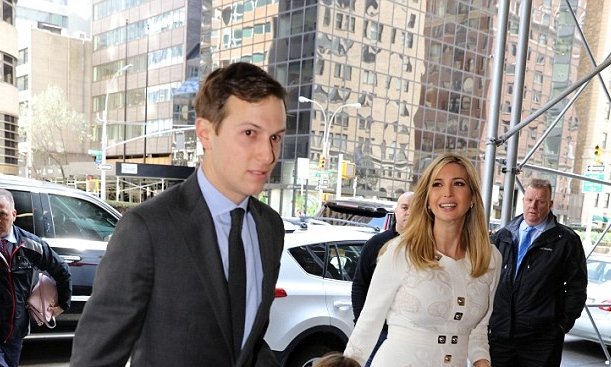
Jared Kushner is the son-in-law and chief adviser to US president Donald Trump. His roots are in traditional Litvak lands, the areas where Jews lived in the mediaeval Grand Duchy of Lithuania. His grandmother Reichel Rae Berkowitz-Kushner hailed from Novogrudok, known in Lithuanian as Naugardukas, south of Grodno (Gardinas) in Belarus. She was imprisoned in the famous ghetto there where prisoners dug an escape tunnel and fled to the Jewish partisans in the forests.
Born on February 27, 1923, Rae Kushner was the second-oldest of four children in Novogrudok, then part of Poland and spelled Nowogródek.
The city had a thriving Jewish population, comprising just over half of the town’s 12,000 inhabitants. In the summer of 1941, the Nazis invaded Poland at the start of Operation Barbarossa. Though rumors of mass killings had reached Novogrudok by that point, few Jews actually believed that the Germans would carry out such atrocities. Following several massacres, the remaining Jewish population was forced into a ghetto. Rae lived in the city’s courthouse with her family and nearly approximately 600 other Jews. Rae’s mother and older sister were killed in a subsequent massacre on May 7, 1943. Before long, Rae, her father and younger sister were among only 300 Jews left. These remaining Jews managed to dig and escape through a 600-foot tunnel during the nights, using special-made tools in the workshops and hiding the dirt in the walls of buildings. When completed, the 600-foot tunnel was only large enough for one person to crawl through. Upon emerging from it, the escapees were met with gunfire, darkness and disorientation. Consequently, only 170 survived out of the 250 that escaped. Rae’s brother was among the fallen, having lost his glasses during the crawl through the tunnel. Rae and her surviving family spent ten days hiding in the woods, eventually making their way to the home of an acquaintance. The woman fed them and allowed them to sleep in her stable with the cows for one week–a risk that carried the penalty of a violent death. Shortly thereafter, the Bielski partisans took in the escapees from Novogrudok–including Rae and her family.
Architect Leonidas Merkinas Has Died
Leonidas Merkinas passed away February 7. The Vilnius Jewish Community mourns the loss of their long-time member born February 27, 1948. We mourn his loss with his surviving family members, his wife Tatjana and his sons and daughter. Our deepest condolences.
A wake will be held for him tomorrow, February 8, from 11:00 A.M. to 2:15 P.M. at the funeral home on Olandų street in Vilnius. He will be buried at the Jewish cemetery.
Righteous Gentile Gražbylė Venclauskaitė Has Died
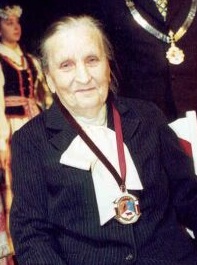
On February 1 at the age of 105 attorney and honorary citizen of the city of Šiauliai Gražbylė Venclauskaitė passed away. She was born in 1912 to a notable and special family, each member of which individually and as a family became part of history and inseparable components of the life and growth of Šiauliai and Lithuania. In deepest sorrow the Lithuanian Jewish Community mourns her loss. The Community had been preparing a greeting to her on her birthday, noting all the accomplishments of her and her family rescuing both Jews and Lithuanians. The State of Israel recognized Venclauskaitė’s bravery in saving Holocaust victims, bestowing the title of Righteous Gentile.
Venclauskaitė had become a symbol of the city of Šiauliai, embodying optimism and quick wit, and was a living legend. She will likely be buried next to her father Kazimieras Venclauskis, the first mayor of Šiauliai in independent Lithuania before World War II.
Lithuanian Holocaust Survivor Speaks at Lithuanian School
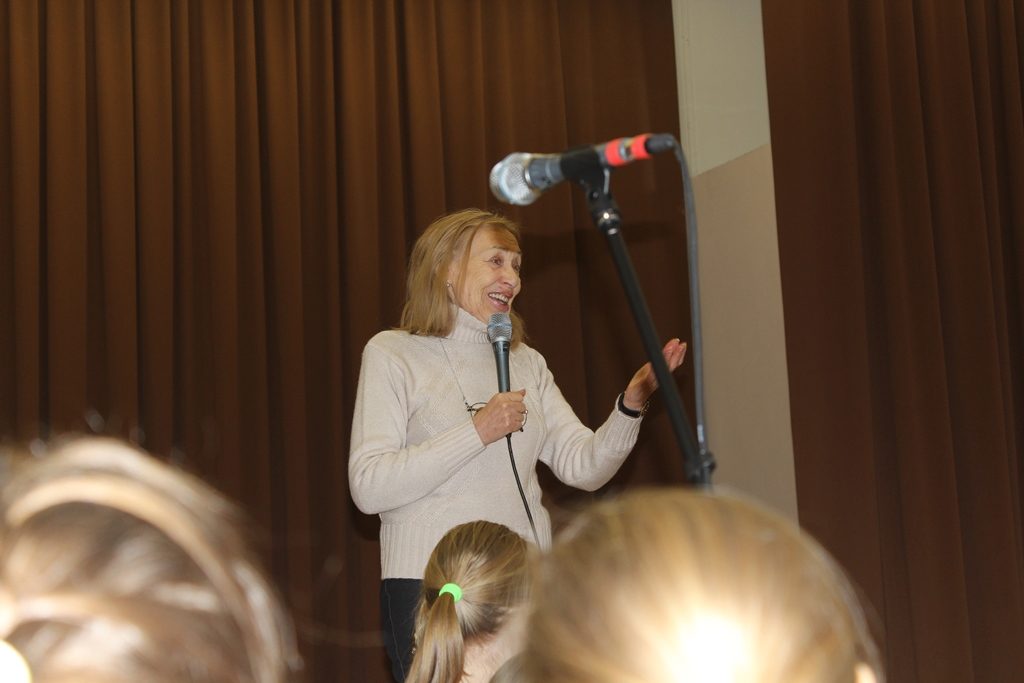
As part of the international project Face of Dialogue, Holocaust survivor Sulamita Lev spoke to 7th and 8th graders at the Pope John Paul II Pre-Gymnasium in Vilnius on January 24. She was accompanied by Lithuanian Jewish Community Executive Secretariat and Protocol Officer Monika Antanaitytė. The event began with a presentation by students of Lithuanian Jewish history, the performance of several songs and dancing to Hava Nagila.
Full story in Polish on the school website here.
Full story in Lithuanian on the school website here.
Letter from Šilalė Affirms Respect for Jewish Cemetery

The Lithuanian Jewish Community has received a letter following publication of an interview with the sole survivor of the Holocaust in Šilalė, Lithuania, Ruvin Zeligman, who spoke about the disrespect shown the memory of the 1,500 Jews murdered there and the lack of care shown the Jewish cemetery and mass murder site.
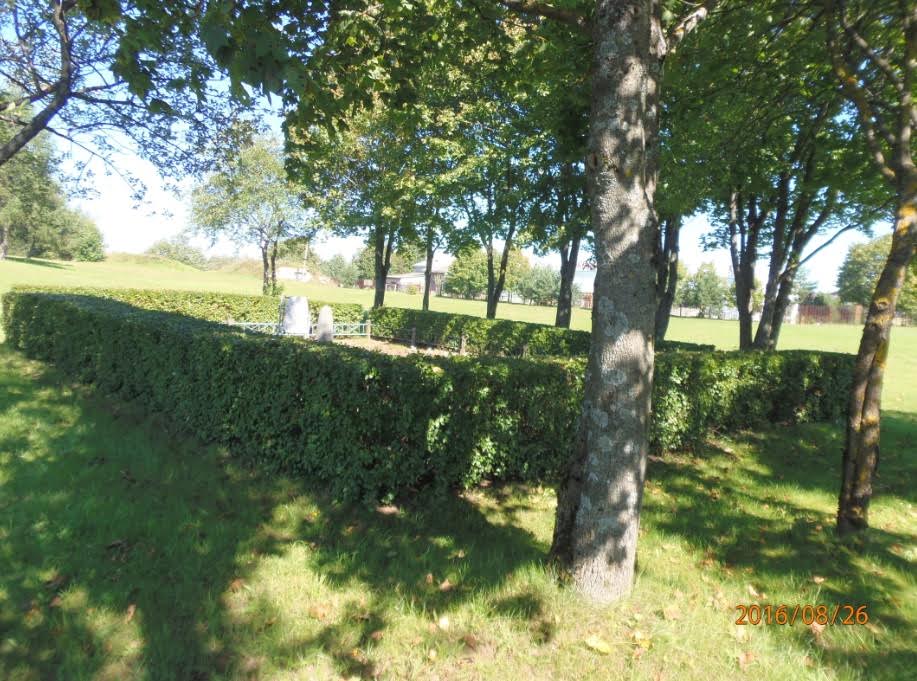
We received a letter from Jurgita Viršilienė, senior specialist of the Education, Culture and Sports Department of the Šilalė regional administration, and from the alderman of Šilalė, denying the facts about which Zeligman spoke.
Lithuanian Political Illusions: The “Policy” of the Lithuanian Provisional Government and the Beginning of the Holocaust in Lithuania in 1941
The Lithuanian Jewish Community is publishing a series of articles by the historian Algimantas Kasparavičius, a senior researcher at the Lithuanian History Institute.
Part 4
By their June 25, 1941, meeting, the Provisional Government resolved to “move towards the organization of police in Kaunas, and expand partisan activities in the countryside where gangs of Bolsheviks, Communists and Jews still remain.” [1] On June 26 the PG sent a request to just-arrived Wehrmacht commandant von Pohl, asking: “1) to step-up even more the cleansing operation, 2) to allow our partisan units to operate more widely.” [2] At the same meeting that day acting prime minister professor Juozas Ambrazevičius stated “the partisans of Lithuanian work in contact with the Lithuanian Activist Front and the Provisional Government,” and where military action had already subsided “the operation of the partisans becomes police functions and as sharp-shooters.” [3] These weren’t empty words. The mechanism which had been wound up began to spin. For instance, the Alytus TDA platoon noted in their operations report for the beginning of July that “according to reports from citizens 36 Communists, 9 Red Army soldiers and a larger number of Jews had been apprehended and are in detention.” [4] It’s characteristic the Lithuanian official accurately listed the number of Communists and Red Army soldiers arrested without bothering to count the Jews arrested. If anyone knows at least a little bit about the propaganda content of the calls to action issued by the LAF and has an understanding of the internal logic and semantics of the Lithuanian language, I believe that person has a clear understanding of what that signifies and why the situation was described in this manner and not a different manner in the report by the Lithuanian official.
On July 17, 1941, Alytus district administrator Antanas Audronis reported to Provisional Government interior minister colonel Jonas Šlepetis: “The are carrying out arrests and conducting searches, and fulfilling quotas for Communists, robbers and rumor-mongers. The quotas are turned over to the local German military command. By German order 82 Communists have been shot in the district. There are 389 under arrest and approximately 345 more Communists need to be arrested.” [5] If this document isn’t a typical example of Nazi collaboration, then what does collaboration even mean?
On July 16, 1941, Alytus district police chief and aviation captain Stasys Stasys Krasnickas–Krosniūnas gave a speech to his subordinates: “Jewry, as an inbred people who under the red banner as a cover want to enslave all of humanity through the means of the highest kind of sadism and turn us into animals, has been very quickly dealt with through the radical measures of the führer of the German people. We must consider that this problem has already been solved, but there still appears one or another Lithuanian, even a police officer, who attempts to solve this problem in their own way. I tell you there can not be two different opinions on this problem. There is and should be only one opinion, it must be executed 100%, and it is clearly set out in Adolf Hitler’s book Mein Kampf.” [6]
Sole Jewish Survivor of Holocaust in Šilalė Says Old Jewish Cemetery Cattle Pasture Now
Until World War II, the majority of the residents of the western Lithuanian town of Šilalė were Jews. The brick synagogue was built sometime around 1910 to 1914 at what is now the corner of V. Kudirkos street and Maironio street. There is a hardware store there now. The old Jewish cemetery is now pasture for livestock, with just the Holocaust mass murder site next to it fenced off.
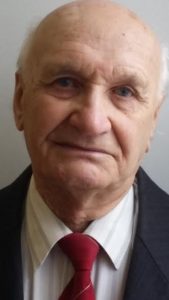
Lithuanian Jewish Community member Ruvin Zeligman is the sole survivor of approximately 1,500 Šilalė Jews murdered in the Holocaust. He was 10 when World War II began in Lithuania in 1941.
Although he hasn’t lived in Šilalė for many years now, when he speaks he still falls into the western Lithuanian dialect. His wife also comes from the region and they speak in dialect at home.
Zeligman remembers the great fire which ravaged the town in 1939, burning down his family home and the entire street, taking a terrible toll on the town’s mainly wooden buildings.
How do you remember Šilalė when you lived there with your parents and family?
At that time about 60% of Šilalė’s population was Jewish. My father was a religious figure: the cantor, mohel [performer of circumcision], a religious teacher and a reznik [a man educated in the rules of kosher slaughter]. My father graduated from the famous Telz yeshiva. He was a respected man and he helped the local residents of Šilalė with his knowledge of medicine, healing the sick. There were four of us children in the family. Mother took care of the home and the children. We lived well, back then each of us, the four children, had a golden goblet at home and mother used to bring out a silver candleholder for holidays.
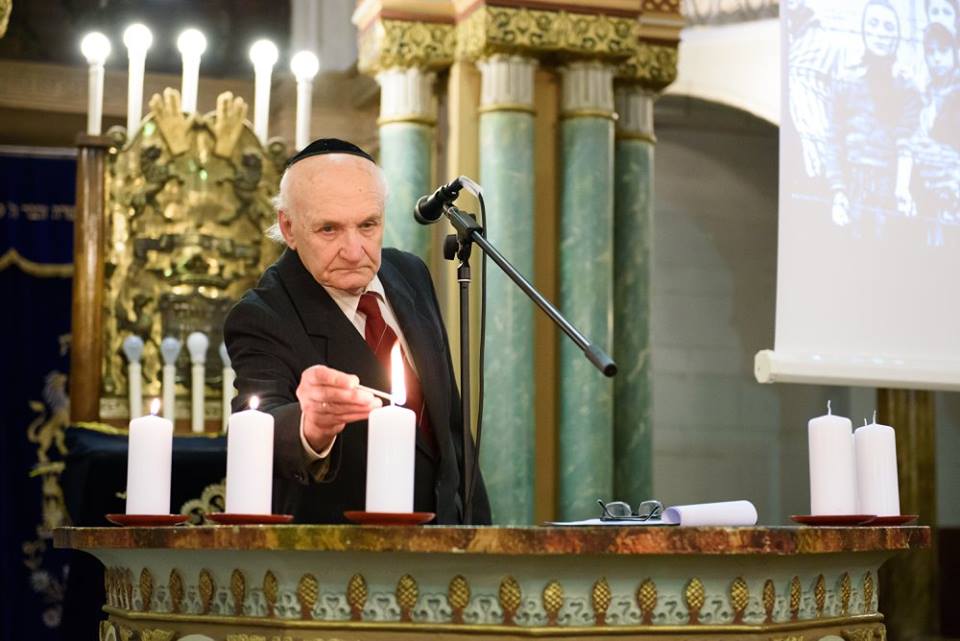
Zeligman lights candles for the murdered Jews of Šilalė at the Choral Synagogue in Vilnius
Holocaust Remembrance Day Commemoration in Šešuoliai
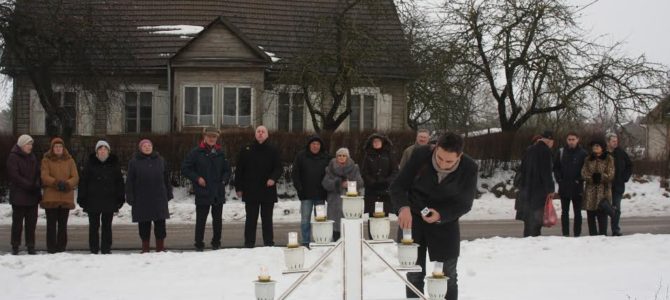
On January 27 Stanislovas Budraitis, the chairman of the community of villages of the Šešuoliai aldermanship, organized and held an observance of International Holocaust Remembrance Day. The Šešuoliai administration building hosted an exhibit of photographs called Jews Are Our Neighbors and an exhibit of the book Lietuvos žydai [Jews of Lithuania]. Šešuoliai alderwoman Jolanta Lukšienė gave a welcome speech to those who gathered for the event.
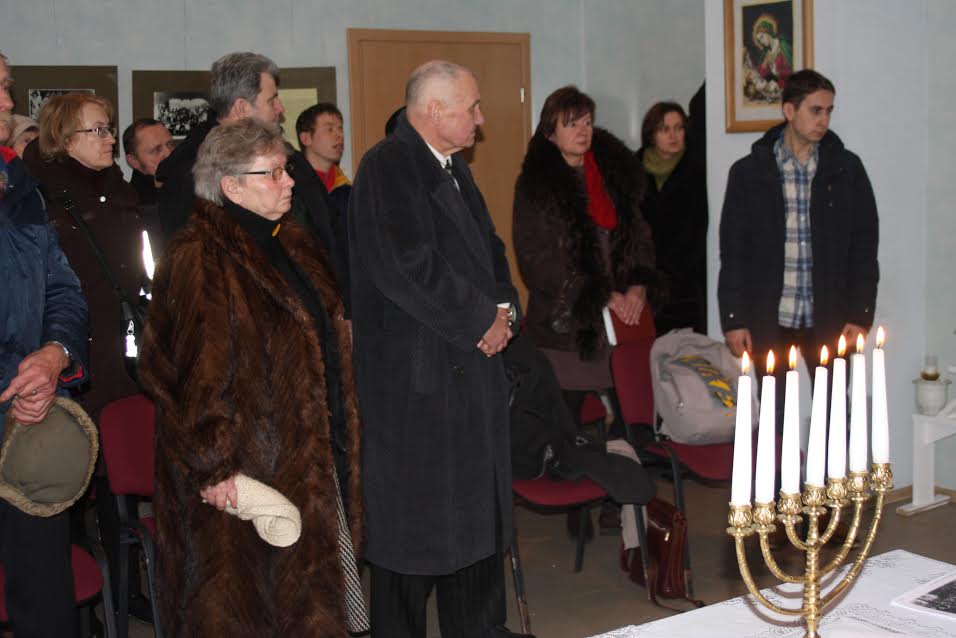
Stanislovas Budraitis, an historian, gave a presentation called “The Contribution of Jewish Culture to the History of Lithuania,” Želva Gymnasium Museum director Zita Kriaučiūnienė gave a report called “Jewish Life in Želva,” Molėtai Regional History Museum director Viktorija Kazlienė read her “Memories of Jews of the Molėtai Region,” Sketches of the Almanac editor Vytautas Česnaitis read “Jews of Ukmergė in the Pages of the Almanac” and Anita Albužienė, a member of the Ukmergė Jewish Community, recalled tragic events and shared them with those present.
A menorah with candles was lit at the former Jewish house of prayer and participants vitisted four mass murder sites 2 kilometers from Šešuoliai on the way to Želva. Members of the Ukmergė Jewish Community and the Gutman family, now resident in Vilnius but originally from Šešuoliai, participated in the commemoration.
Monument to Lithuanian Holocaust Victims Unveiled in Waldkirch
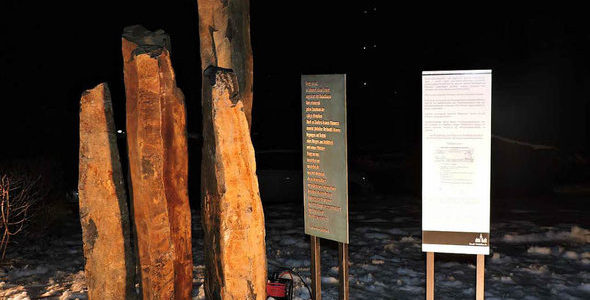
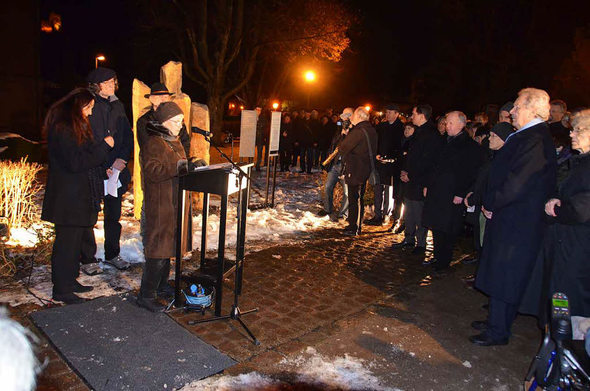

Waldkirch Unveils Memorial to the People Murdered in Lithuania
In 1941 Waldkirch resident SS officer Karl Jäger gave the order for the murder of 138,272 people in Lithuania. Last weekend a memorial to the victims, the vast majority of whom were Jews, was unveiled in Waldkirch.
The five basalt columns, representing the fifth commandment “Thou shalt not kill,” and two information plaques were unveiled by mayor Roman Götzmann and historian Wolfram Wette.
Memorial to Murdered Lithuanian Jews Unveiled in Germany
Vilnius, January 29, BNS–A memorial commemorating Lithuanian Jews murdered during the Holocaust was unveiled in the German town of Waldkirch Sunday. Karl Jäger lived in the town of city of Waldkirch and was a follower of Hitler who eventually led the mass extermination of Jews in Lithuania.
Jäger as SS colonel and chief of the of the Einsatzkommando 3 killing unit of Einsatzgruppe A compiled a precise list of the men, women and children murdered by his order from 1941 to 1942, totaling 137,346 victims.
A film about Jäger called “Karl Jäger and Us: the Long Shadow of the Holocaust in Lithuania” was shown in Waldkirch as well. Part of the film was made in Lithuania and uses documentary photographs and Lithuanian survivor testimony.
World Jewish Congress News

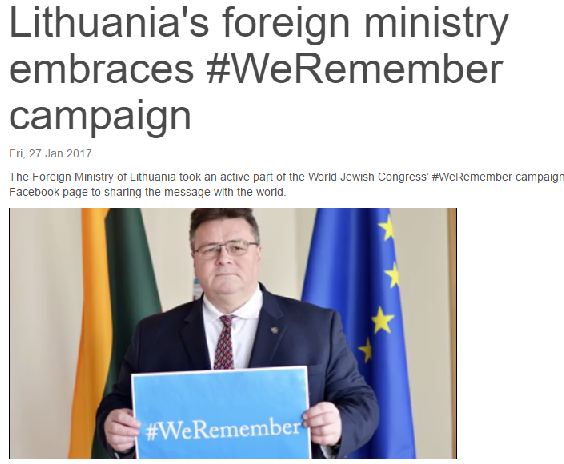
The Lithuanian embassy to South Africa launched an exhibition of photography by Raimondas Paknys January 26 called “Sounds of Silence” at the Holocaust Centre in Durban in the run-up to International Holocaust Remembrance Day. Ambassador Sigutė Jakstonytė said in an embassy press release the opening was part of the Lithuanian Foreign Ministry joining the World Jewish Congress campaign #WeRemember. Paknys’s 30 photographs portray synagogues and other material Jewish heritage in Lithuania which survived the Holocaust and was neglected by the Soviets. Visitors were also informed of Jewish heritage reconstruction projects underway in Lithuania. The exhibit was shown to the public in Vilnius, London, Jerusalem and Paris before coming to Durban.
UN Marks Holocaust Day with Sugihara Presentation
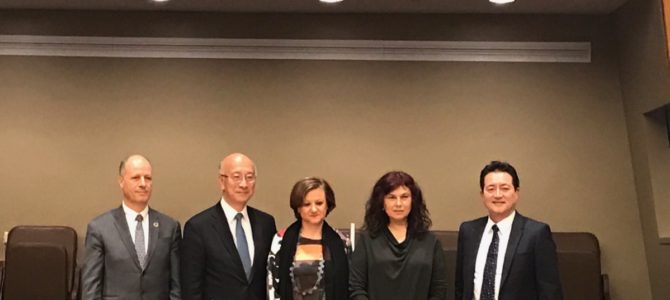
The film Persona Non Grata: The Chiune Sugihara Story (2014) was shown at the United Nations in New York to January 25 as part of International Holocaust Remembrance Day commemorations. Lithuania’s permanent representative to the UN Raimonda Murmokaitë spoke at the event and said Sugihara showed one man’s conscience, pity and courage can change the world.
Japanese permanent rep to the UN Koro Bessho and UN under-secretary-general for communications and public information Cristina Gallach also spoke, and director Cellin Gluck fielded questions about his film. More than 400 people attended. The event was sponsored by the UN and the permanent Japanese and Lithuanian missions.
The Memory of 6 Million Lives Burns inside Us
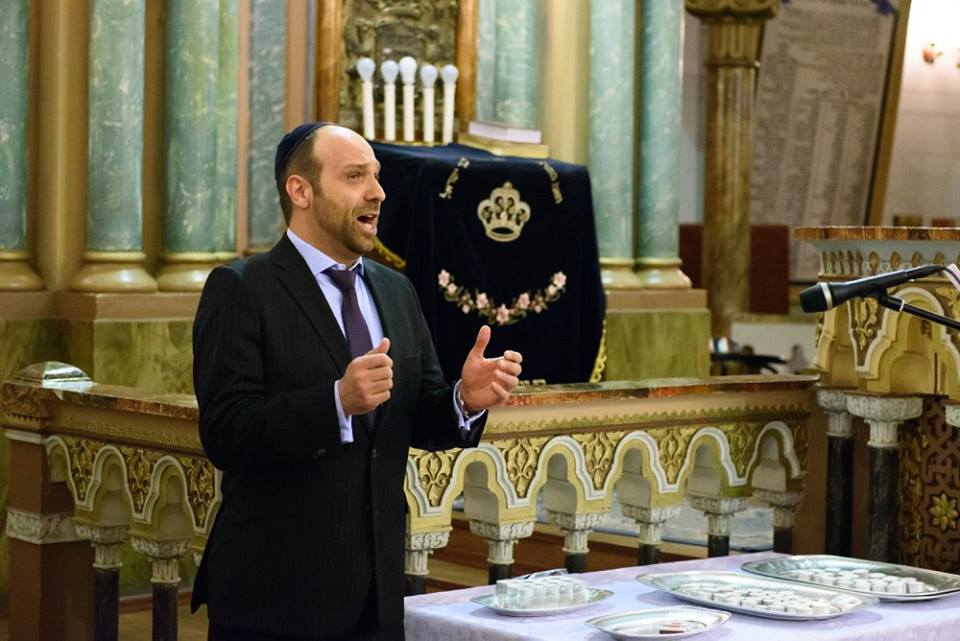
The Lithuanian Jewish Community marked International Holocaust Remembrance Day January 26 at the Choral Synagogue where Rabbi Samuel de Beck Spitzer from Great Britain performed the El malei Rakhamim prayer.
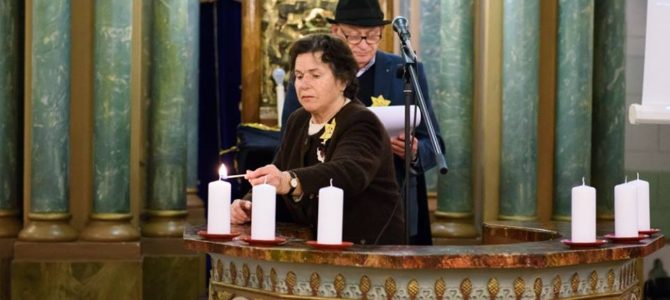
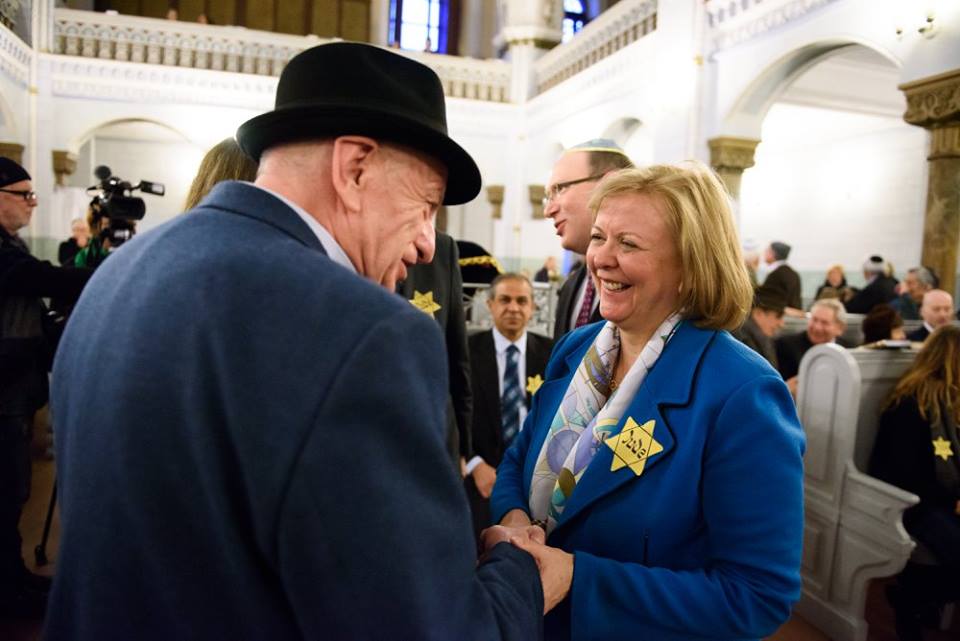
More photos here.
Meeting with Dr. Antony Polonsky

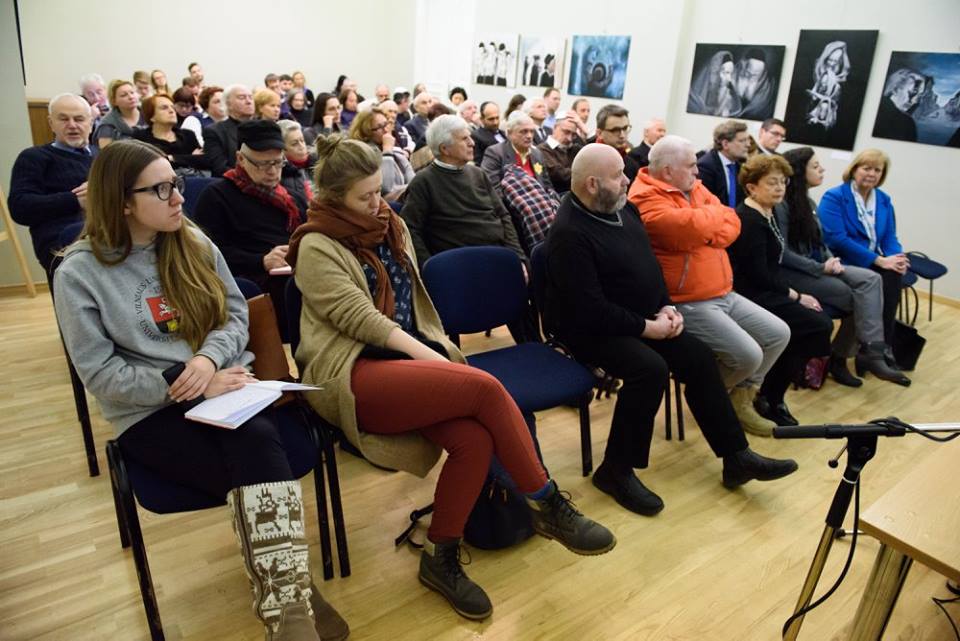
LJC members and members of the public attended a meeting with professor Antony Polonsky, whose book on Jewish history in Lithuania, Poland and Russia has been translated to Lithuania. Professor Šarūnas Liekis moderated the discussion.
The Brandeis professor is one of the most authoritative scholars of Eastern European Jewish history. His new book Jews in Poland and Russia provides an exhaustive view of the historical, political and cultural evolution of Jewish communities in these countries. Litvaks haven’t been left out, of course, and form a major part of the book.
In the 18th century the Polish-Lithuanian Jewish community was the largest in the world. The author elected not to look at Jewish history through the prisms of conflict and suffering, but instead to seek out the different principles by which the communities organized Jewish life and life with other communities.
International Holocaust Remembrance Day in Brussels
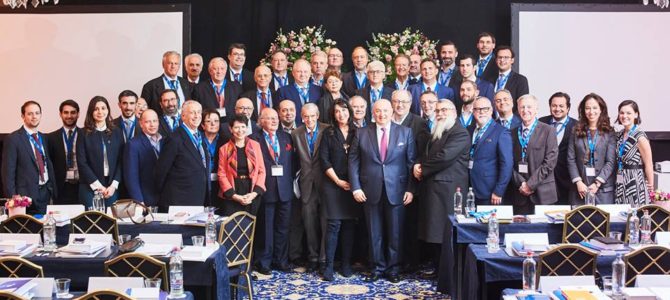
The assembly of the European Jewish Congress and a ceremony to mark International Holocaust Remembrance Day were held in Brussels. Lithuanian Jewish Community chairwoman and the heads of other European Jewish communities participated at the events.
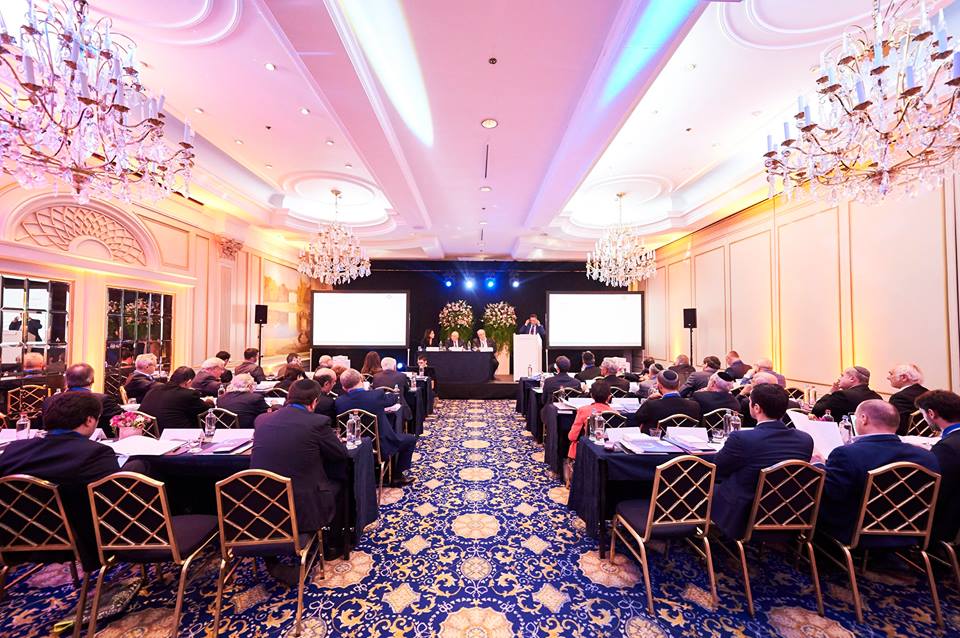
More photos here.
Panevėžys Marks International Holocaust Day
On November 1, 2005, the United Nations General Assembly adopted a resolution and called upon the world to mark January 27 every year as International Holocaust Remembrance Day. On that day in 1945 as World War II was still going on the prisoners of the Auschwitz concentration camp were liberated. This was the largest Nazi death camp where about 1.5 million people including the elderly and children were murdered, of whom about 1 million were Jews.
Lithuanian is a member of the International Holocaust Remembrance Alliance which actively participates in international programs to combat anti-Semitism. In 1941 Nazi Germany occupied Lithuania and over a few months the majority of the Lithuanian Jewish community had been murdered. Some Lithuanian Jews were sent as labor to ghettos set up in the cities. The Panevėžys ghetto was liquidated on August 17, 1941. About 13,500 Jews were shot. Studies by the International Commission show 200,000 Jews were exterminated. There are more than 200 mass murder sites in Lithuania, and about the same number of old Jewish cemeteries.
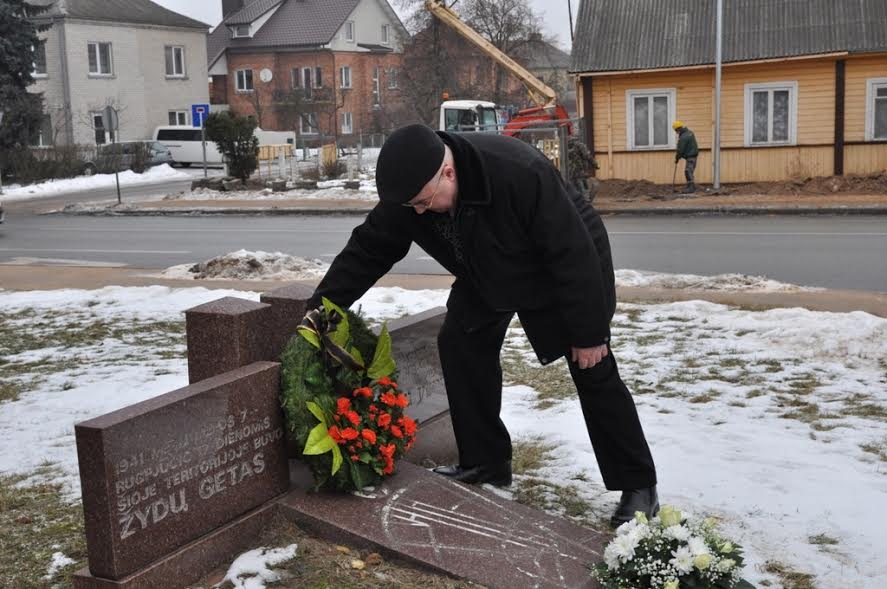
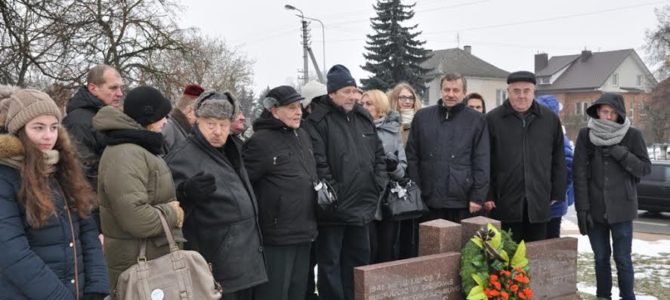
The date was marked on January 26 at the Sad Mother statue in Memory Square in the Jewish cemetery in Panevėžys. Participating were Panevėžys mayor Rytis Mykolas Račkauskas, Panevėžys city council member Alfonsas Petrauskas, teachers and students from the Margarita Rimkevičaitė Services and Business School and the J. Miltinis Gymnasium, members of the Panevėžys Jewish Community and city residents. Mayor Račkauskas spoke and laid a wreath, and city council member Petrauskas also spoke. Panevėžys Jewish Community chairman Gennady Kofman recalled the horrible facts of Jewish extermination, Lithuanian-Jewish cooperation and mutual aid, and thanked Lithuanians who rescued Jews. He laid a wreath before the memorial. Jewish calendars from the LJC and stars of David paid for by Panevėžys Jewish Community member Jurij Grafman were passed out to participants. Wreathes and flowers were also laid at the Ghetto Gates monument. A documentary film about the Auschwitz-Birkenau camp was screened at the Panevėžys Jewish Community, a conference was held and there was discussion on the facts in the cases of heroic rescuers of Jews.
Looking Forward to the Bagel Shop Café’s First Birthday
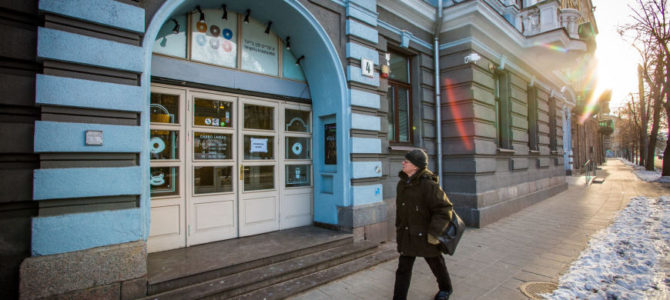
photo: Vidmantas Balkūnas / 15min.lt
The Bagel Shop Café is gradually becoming an unofficial Lithuanian Jewish Community tourism center. Although there is an official tourism center in Vilnius, it’s not as successful. So if you want to get the newest information about what to see, what to taste and with whom to speak, you’ll likely find it at the shop at Pylimo street no. 4. It should be noted it wasn’t supposed to serve this function. In 2014 the project, still in draft form, was born as a tolerance campaign against public expressions of anti-Semitism and hate. But in the end it became a real, cozy place.
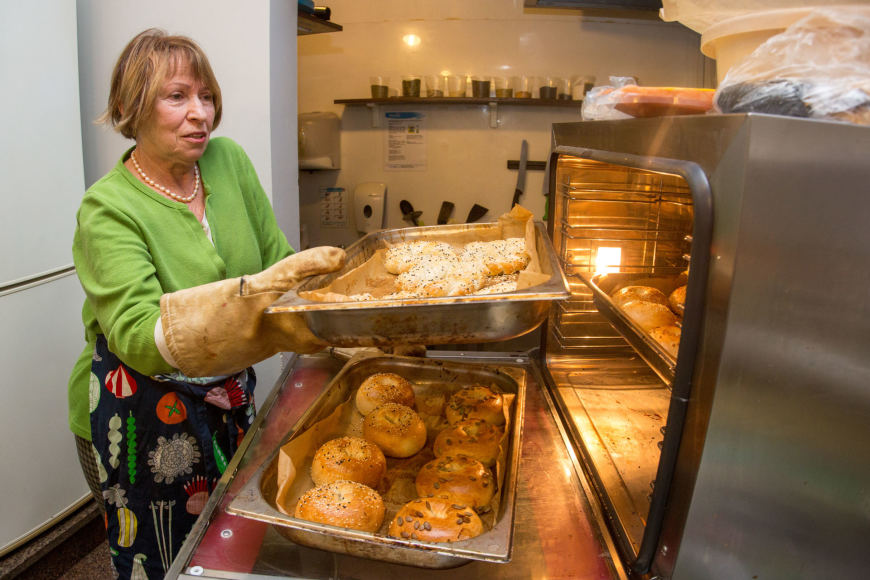
Full story in Lithuanian here.
We Bow Our Heads in Common in Memory of the Victims of the Holocaust
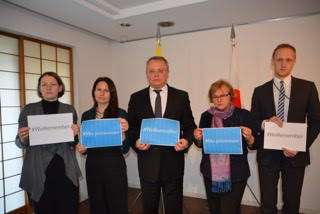
The diplomats and staff of the Lithuanian embassy to Japan mourn with you and hope the example set by Chiune Sugihara, Righteous Gentiles and all rescuers of Jews will lead to efforts to make sure it never happens again
Violeta Gaižauskaitė
plenipotentiary minister
Lithuanian embassy in Japan