
Holocaust

Thank You

November 28, 2017

Dear members of the Lithuanian Jewish Community,

I would like to thank the entire Lithuanian Jewish Community for the outpouring of love and support that has been extended to my family following the passing of my mother, Chasia Shpanerflig. I consider myself truly blessed to have the love and support of this amazing community.

Those who knew my mother knew her as a strong-willed and resilient woman. In ninety-six years, my mother was presented with some of life’s most difficult challenges–war, genocide, the loss of family, oppression; the list goes on and on. It is in the face of adversity where my mother, guided by her deep-rooted morals and values, distinguished herself as a human being. Circumstances that may have given others reason to abandon hope were the times that my mother was strongest and most resilient. Her selflessness and commitment to the well-being of her family and friends: exemplary; her will and her beliefs: unwavering; and her love for her community and family: unparalleled. It is these basic ideals that distinguished my mother and that she will be remembered for.

During the latter portion of her life, my mother was recognized her as an active member of the Jewish community in Vilnius. During times where she still had her youth and was physically capable, she actively participated in, and contributed to, all causes that promoted the well-being of her fellow community members. She took great pride in her level of involvement with the community, most notably in her tenure as an officer in the Veterans Division (secretary)–it gave her an unbelievable sense of purpose and brought her tremendous joy.

In the very late stages of my mother’s life, as her health deteriorated, the community which she gave so much of herself to was right there to return the good favor. The Social Services and the Ghetto divisions in particular, worked tirelessly to make sure she received all of the proper care and support when she wasn’t able to provide for herself. Being thousands of miles away, these times were incredibly difficult for me. Throughout this entire time, both divisions were right there by my family’s side, ensuring that my mother received the best possible care and that the lines of communication were constantly open for my own comfort and peace of mind. It is to them, and their leadership, that I am eternally grateful and would like to extend my deepest appreciation.

There is a popular saying that “time heals all wounds.” While her death has been difficult for my family and me, my mother lived a long and dignified life. The Lithuanian Jewish Community was a significant piece of her identity and she considered its members her family. I would like to thank everyone in the community for the lifetime of support they provided her and for being there for my family and me in these tough times.

Sofia Kats
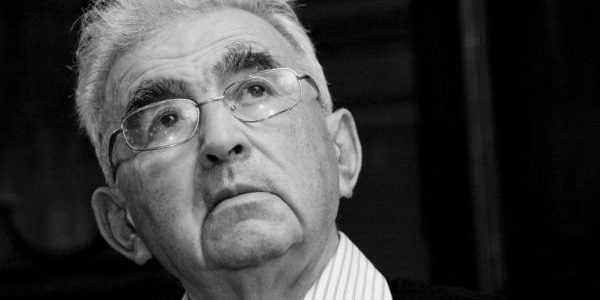
Grigory Kanovich: A Good Book is a Life Teacher

G. Kanovičius: gera knyga visada yra gyvenimo mokytoja
by Donatas Puslys, www.bernardinai.lt

Rūta Oginskaitė’s book “Gib a Kuk: Žvilgtelėk” recently hit the book shops, in which the author, Grigory Kanovich and his wife Olia paint a portrait of the Lithuanian writer and an entire era. On November 29 London’s Central Synagogue will host the launch of the English translation of Kanovich’s book “Shtetl Love Song.” We spoke with Grigory Kanovich about his relationship with his readership, love of homeland and the painful moments in our history.

There’s a proverb that a prophet is not recognized in his homeland. Your work is an important monument to the history of the Jews of Lithuania and their memory. The book requires, however, a reader who is able to enter into a dialogue with the text. Do you sense the presence of such readers in Lithuania, do you think there is a dialogue and discussion going on with your texts? Should we conclude from your recent works published abroad that your work is more interested to foreign than Lithuanian readers?

I hold to the view that prophets are rare in their homeland, and one more frequently encounters only clairvoyants and the righteous. I think “prophet” is hyperbole. I won’t deny that my novels are an attempt to create a monument to pre-war Jewish history and to commemorate my compatriots.

I wouldn’t dare claim some wide-ranging discussion is taking place between me and my readers in Lithuania, but I do receive a lot of good-willed responses from different locations from readers reading my work in Lithuanian and Russian. I can’t complain about that. I am happy foreign publishers are interested in my work. For instance, the recent publication of my Shtetl Love Song by a leading London publisher.

Full interview in Lithuanian here.

The Litvaks: 900 Years of History

You are invited to a multimedia presentation called “Litvaks: 900 Years of History” by the students of the Saulėtekis school in Vilnius. The Saulėtekis school has presented a number of plays on Litvak culture and the Holocaust. The school has a strong Holocaust education component. In addition, student choirs often perform songs in Yiddish and Hebrew, most recently at the Holocaust commemoration at Ponar at the end of September where they performed the Vilnius ghetto anthem, Zog Nit Keynmol.

The presentation will take place at the Russian Drama Theater at Basanavičiaus street no. 13 in Vilnius at 6:00 P.M. on Wednesday, November 29.

Admission is free.

Japanese Volunteer Teacher Visits Panevėžys Jewish Community

Svečio iš Japonijos Susumu Nakagawa vizitas Panevėžio miesto žydų bendruomenėje

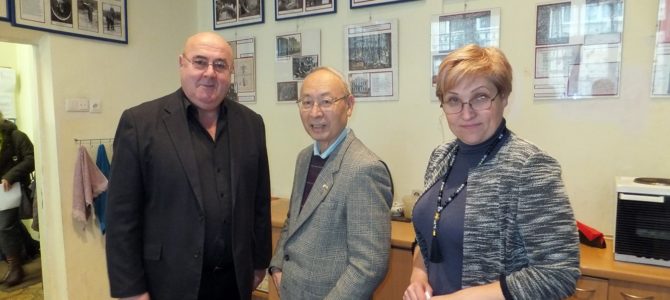
Last week Susumu Nakagawa from Japan visited the Panevėžys Jewish Community. Mr. Nakagawa is visiting Panevėžys for the second time as a volunteer teacher, teaching beginning Japanese at the Panevėžys Technology and Business Faculty of Kaunas Technology University. Mr. Nakagawa is building a bridge of friendship between the two countries, he says. He’s interested in Litvak history and culture, and when he learned there is a living Jewish community in the Lithuanian city, he decided to visit. He was accompanied by art teacher Loreta Januškienė.

Mr. Nakagawa and his family are Christians and interesting in the Old Testament and Jewish history and traditions. Panevėžys Jewish Community chairman Gennady Kofman told Mr. Nakagawa about the history of the Panevėžys Jewish community over tea, and showed him documents and photographs. Mr. Nakagawa posed a number of questions to the chairman, and they touched upon the legacy of Chiune Sugihara, the Japanese diplomat who rescued Jews in Kaunas during the first stages of the Holocaust.

Professor Says Lithuanian Holocaust Perps Not Just Lowlifes, Included Intellectuals

Professor Saulius Sužiedėlis claims Lithuania could have and should have done more to find and convict Holocaust perpetrators. He said Lithuania doesn’t need to take responsibility for murdered Jews, but needs to recognize Lithuanian collaboration in the Holocaust instead of trying to belittle the significance of Lithuanian participation. The historian said this is harming Lithuania’s reputation which is important for defending national sovereignty. Sužiedėlis said no one would come to the defense of a country with such a poor reputation.

Full article in Lithuanian here.

Faina Kukliansky Says Jews and Lithuanians Need to Resolve Disagreements


Photos: BNS
by Birutė Vyšniauskaitė, www.lrt.lt

Although the scandal caused by writer Rūta Vanagaitė’s statements on the partisan Adolfas Ramanauskas has subsided, Lithuanian Jewish Community chairwoman Faina Kukliansky believes the tranquility is only temporary. Vanagaitė’s book Mūsiškiai about the mass murder of Jews in Lithuania is soon to appear in English translation. She also enjoys the support of the European Jewish Congress and has many proponents in Israel. In an interview with LRT [Lithuanian Public Radio and Television], Kukliansky said we shouldn’t fear coming scandals.

“I really liked historian Saulius Sužiedėlis’s idea that it’s possible to read a given document or set of documents a number of times and come to different conclusions. It takes special training and understanding to study documents. An elderly grandmother could read the same documents, and while they might be interesting to her, she won’t be able to make sense of them. So, what if a book is written for public relations, seeking profit and to sensationalize readers and listeners?” Kukliansky told LRT regarding the aftermath of the Vanagaitė scandal.

Screening of “Aš turiu papasakoti”

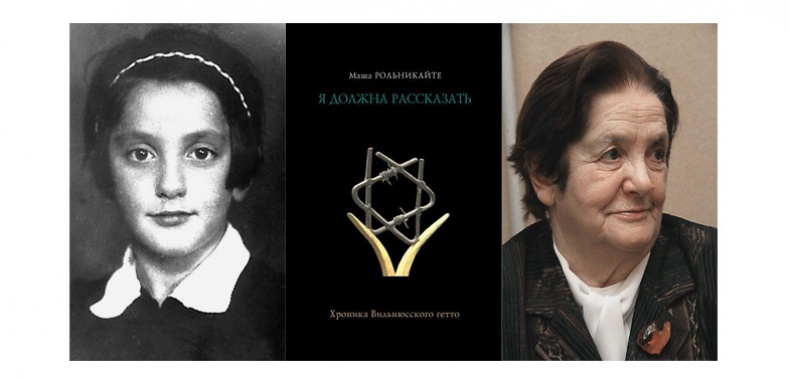
The film “Aš turiu papasakoti” (“Ya Dolzhna Rasskazat”) will be screened at the Lithuanian Jewish Community, Pylimo street no. 4, Vilnius at 6:00 P.M. on November 23. The movie is based on the book by Marija Rolnikaitė about surviving the Holocaust.

The film is open to the public and admission is free. Director Feliks Dektor and producer Eugenijus Bunka will be there.

Tens of Thousands of Jewish Documents Lost during Holocaust Discovered in Vilnius


YIVO announces the discovery of 170,000 Jewish documents thought to have been destroyed by the Nazis. Photo: Thos Robinson/Getty Images for YIVO

NEW YORK (JTA)–A trove of 170,000 Jewish documents thought to have been destroyed by the Nazis during World War II has been found.

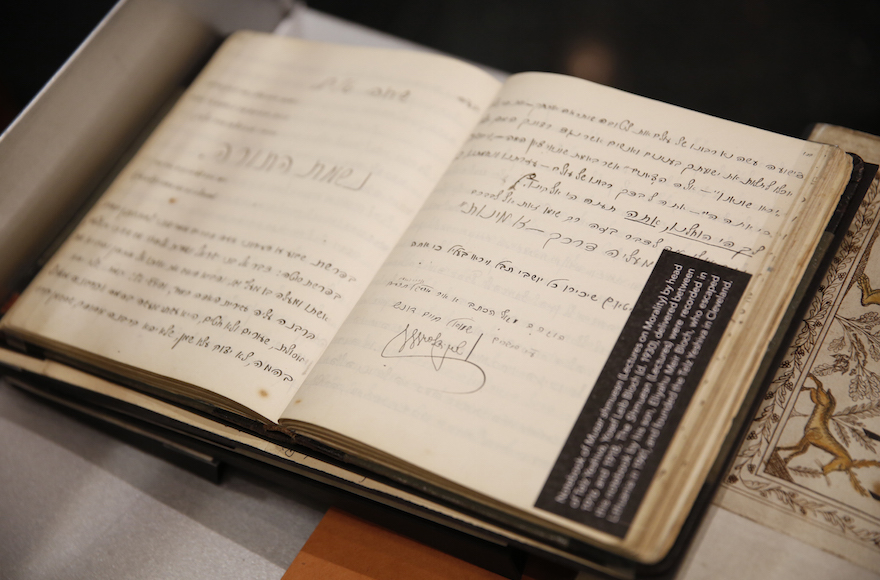
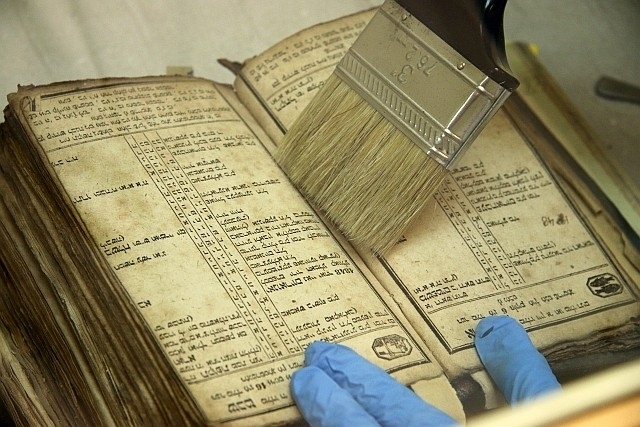
On Tuesday the New York-based YIVO Institute for Jewish Research announced the find which contains unpublished manuscripts by famous Yiddish writers as well as religious and community documents. Among the finds are letters written by Sholem Aleichem, a postcard by Marc Chagall and poems and manuscripts by Chaim Grade.

YIVO, founded in Vilnius in what is now Lithuania, hid the documents, but the organization moved its headquarters to New York during World War II. The documents were later preserved by Lithuanian librarian Antanas Ulpis who kept them in the basement of the church where he worked.

Most of the documents are currently in Lithuania but 10 items are being displayed through January at YIVO, which is working with Lithuania to archive and digitize the collection.

“These newly discovered documents will allow that memory of Eastern European Jews to live on, while enabling us to have a true accounting of the past that breaks through stereotypes and clichéd ways of thinking,” YIVO executive director Jonathan Brent said Tuesday in a statement.

United States Senate minority leader Charles Schumer, democrat from New York state, praised the discovery.

“Displaying this collection will teach our children what happened to the Jews of the Holocaust so that we are never witnesses to such darkness in the world again,” Schumer, who is Jewish, said in a statement.

Israeli consul general in New York Dani Dayan compared the documents to “priceless family heirlooms.”

“The most valuable treasures of the Jewish people are the traditions, experiences and culture that have shaped our history. So to us, the documents uncovered in this discovery are nothing less than priceless family heirlooms, concealed like precious gems from Nazi storm troopers and Soviet grave robbers,” he said.

Full story here.

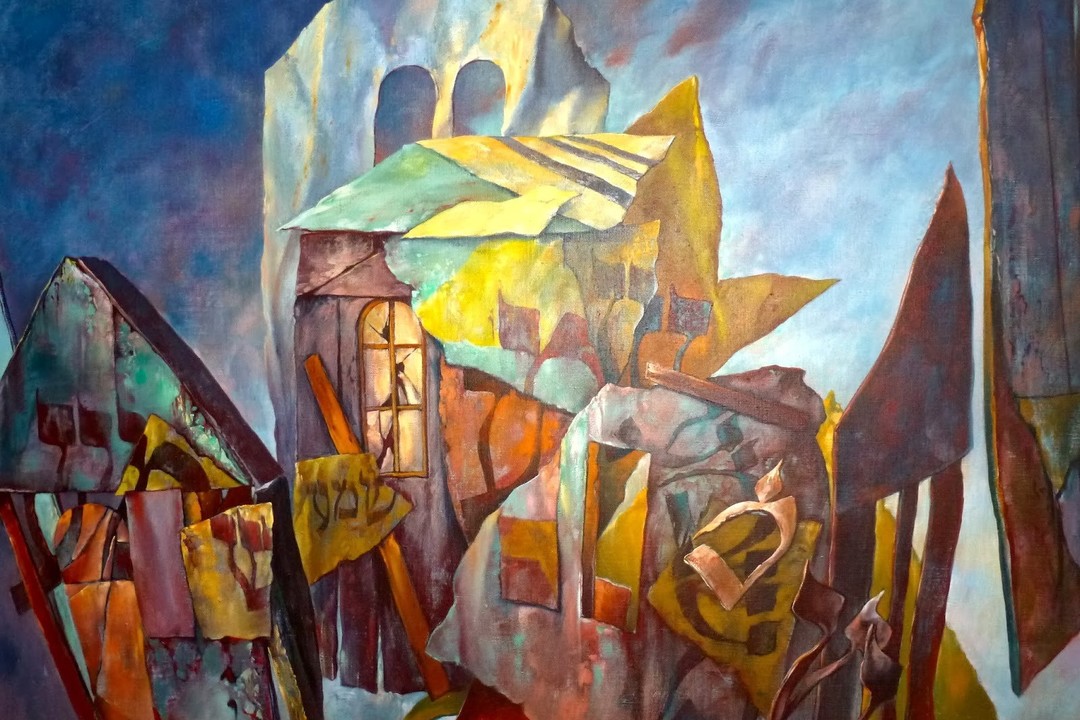
Samuel Bak Museum Opens

Painter and Vilnius native Samuel Bak attended a press conference in Vilnius Wednesday to announce the opening of a Samuel Bak museum in Vilnius.

Bak, now based in the US, donated over 50 of his artworks for the museum. Born in 1933, the Jewish painter is a Holocaust survivor. He began drawing and painting in the Vilnius ghetto. After the war he lived in Israel and Western Europe. He and members of his family plan to spend just over a week in Vilnius on their current visit.

Bak is scheduled to be awarded honorary citizen of Vilnius at a ceremony to be held at the Vilnius Old Town Hall. The museum is to open November 17. 2017.

LRT TV Program Author Vitalijus Karakorskis Wins Prize for Intercultural Communication

November 16 is UNESCO’s International Day of Tolerance. Under the UNESCO definition in its Declaration of the Principles of Tolerance, tolerance doesn’t mean a tolerant attitude towards social injustice, nor the renunciation of one’s principles and their replacement with someone else’s. It means everyone is free to hold their own convictions and recognizes the right of others to do the same. It means recognizing people are born with different appearances into different social conditions, learn different languages, behavior and values, and have the right to live in peace and preserve their individuality.

The Ethnic Minorities Department under the Government of Lithuania named winners of its prize for intercultural communication November 13. There were 37 separate works in the running this year, including television programs, articles and interviews.

The judges’ panel awarded the prize to journalist, editor and filmmaker Vitalijus Karakorskis for originality and for discovering incredible connections between the ethnic communities resident in Lithuania in his making of an episode of the Lithuanian public television (LRT) program Menora on the topic of Dr. Jonas Basanavičius and Lithuanian Jews, on the 90th anniversary of the death of the patriarch of the Lithuanian state. They also awarded the prize to Siarhey Haurylenka for exceptional treatment of the cultures of Lithuanian ethnic minorities and the Belarusian language in the LRT television series about culture and history called “Cultural Crossroads: The Vilnius Notebook.”

New Fall Issue of the Bagel Shop Newsletter

After skipping a beat this summer, the newest Bagel Shop newsletter has hit the stands. The fall issue includes a complete news round-up from spring to the present, the usual sections and articles about the history of the Bund, efforts to restore Jewish headstones removed from Soviet-era public works projects around Vilnius to their rightful locations and the history of the Jews of Skuodas. The Jewish Book Corner this issue features a book about the tractate Nazir from the Babylonian Talmud and the Telšiai Yeshiva.

Look for the newest issue at the Bagel Shop Café, available for free, or download the electronic version below:

Bagel Shop Newsletter No. 2, 2017

The Jewish Contribution to Interwar Kaunas

Žydų indėlis tarpukario Kaunui

In the previous century Kaunas had a Jewish population of over 30,000, but now that number barely tops 300. How did people of this ethnicity contribute to Kaunas’s prosperity in the years between the wars? Kaunas Jewish Community chairman Gercas Žakas and Jewish document collector Michailas Duškesas spoke to us about Jewish history.

Žakas said Kaunas became one of the centers of concentration for Litvaks. “Kaunas was the cradle of Litvaks, the capital. Before the deportations and mass murders more than 30,000 Jews lived in Kaunas accounting for about 20 percent of the total population. After World War II some came back, for example, my father and his brother returned from the Dachau concentration camp to Lithuania to look for family members. Ten thousand left for Israel, America and many went to Germany after World War II. I had the chance as well to go to America, but I stayed in Kaunas because it is my hometown,” Žakas said.

Document collector Michailas Duškesas stressed Lithuanian Jews, or Litvaks, are respected people in the world. “Litvaks in the world, this is a kind of super-brand, if you say you are a Jew from Lithuania you are considered exceptional, noble and honorable,” he said.

Full text in Lithuanian here.

Kaunas Jewish Community Invites You to a Conference

The Kaunas Jewish Community and chairman of the organizational committee Valentinas Aleksa, also chairman of the Sūduva Regional Scientific, Historical and Cultural Association, invite you to attend the conference “Diplomatic Document of Lithuanian National Self-Respect and Civic Courage in Nazi-Occupied Lithuania in World War Two” on November 14, 2017.

The conference is to be held at the Raudondvaris manor at Pilies takas no. 1 in Raudondvaris in the Kaunas region. Registration from 12:20 P.M. to 12:50 P.M., conference to start at 1:00 P.M.

The conference is dedicated to the 100th anniversary of the restoration of the Lithuanian state and to 75th anniversary of the signing of a memorandum by the three heroic Lithuanians third Lithuanian president Dr. Kazys Grinius and former Government members and MPs professor Jonas Aleksa and professor Mykolas Krupavičiaus.

Kaunas regional administration head Valerijus Makūnas is the patron of the conference.

Anti-Semitism Will Remain, But It’s Not Always a Threat, US Professor Says

by Rūta Kupetytė, LRT radio program Ryto garsai, www.lrt.lt

Just as anti-Semitism, xenophobia and Romophobia have long existed in the subconscious, so they will remain, but don’t pose an extreme threat. So said US professor of history Saulius Sužiedėlis in an interview aired on Lithuanian national radio.

He said history has shown these kinds of sentiments only became dangerous in certain situations, but in others a nationalist attitude can even be a healthy thing.

Professor Sužiedėlis was in Vilnius to give a presentation at the international conference “Remembrance, Responsibility, Future.”

Several years ago you said there is almost no such Holocaust denial in Lithuania as it exists in the West, because everyone knows the Jews were murdered here, but that there are certain problems of suppression and diminishing of significance, and attempts to down-play Lithuanian involvement in the process. You said that seven years ago. Has the situation now changed?

Sužiedėlis: Let’s remember one thing: there was no greater mass murder in Lithuania than the genocide of Jews in 1941. These are the very worst mass murders in Lithuanian history.

Full interview in Lithuanian here.

International Conference Remembrance, Responsibility, Future Held in Vilnius

Vilniuje vyko svarbi tarptautinė konferencija #AtmintisAtsakomybeAteitis

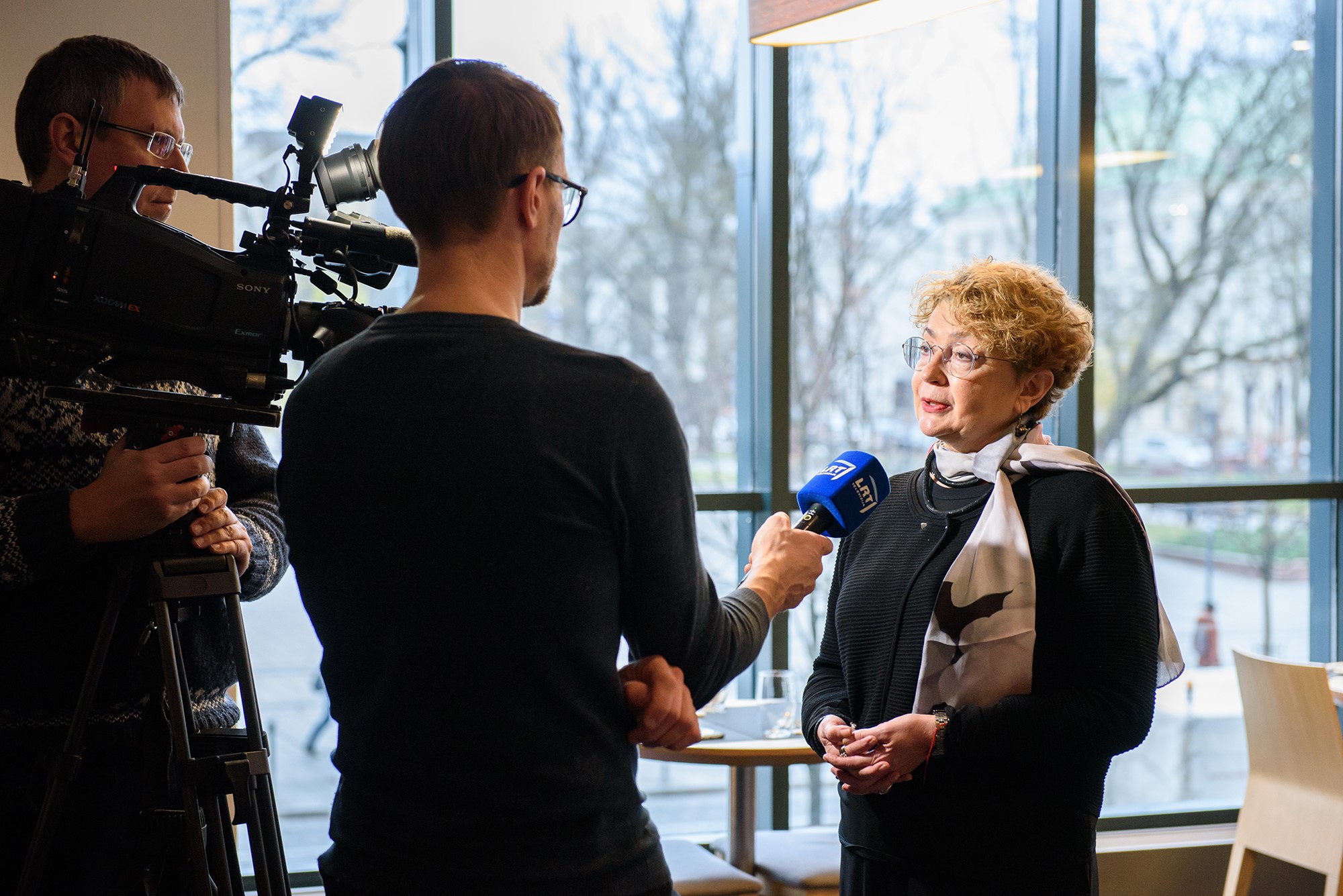
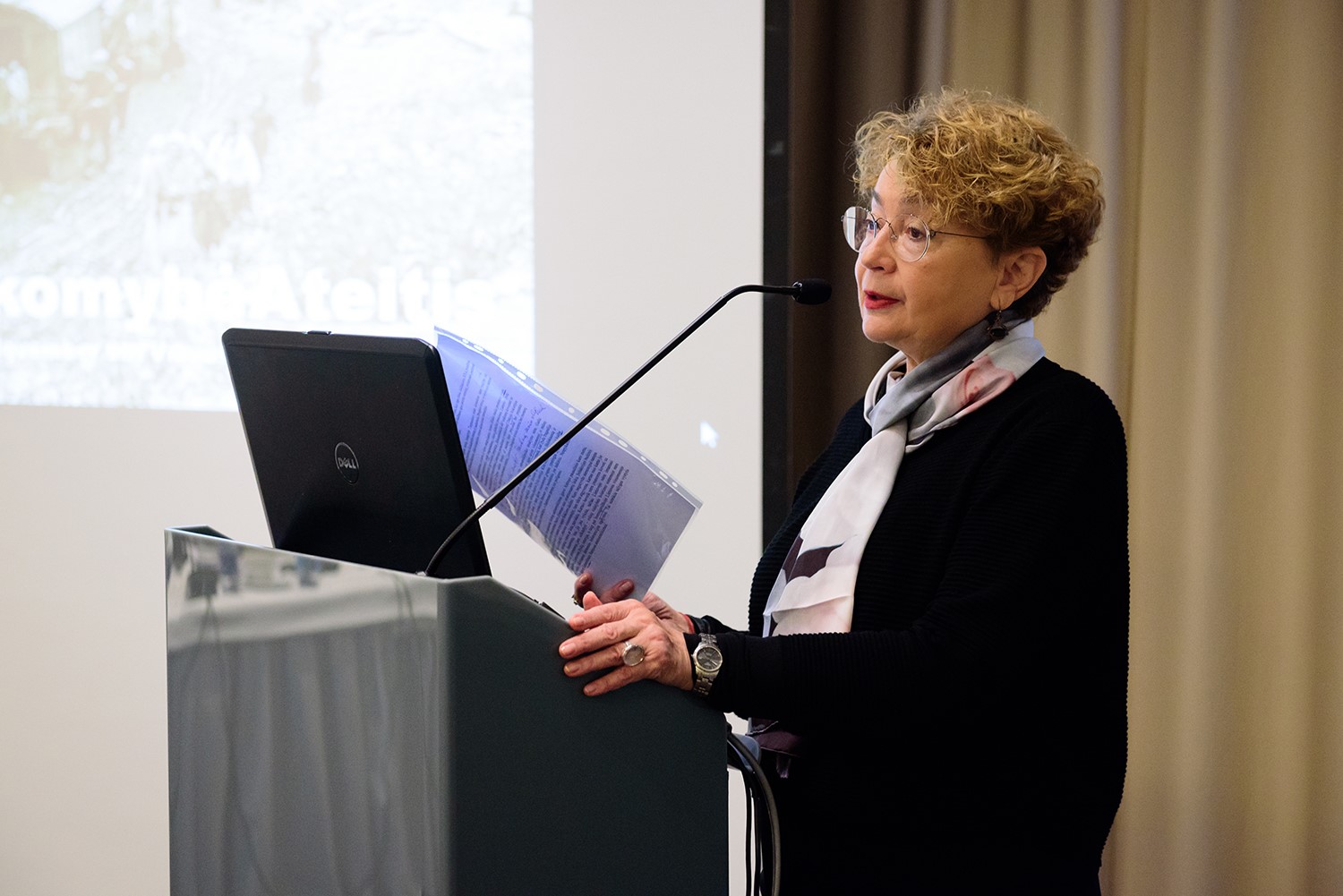
To mark the international day against fascism and anti-Semitism, the Lithuanian Jewish Community held a large international conference November 9 called “Remembrance, Responsibility, Future” which attracted well-known scholars and media attention. Speakers discussed whether commemoration of painful historical events can serve as a bridge to understanding contemporary politics and prevent such events in the future.

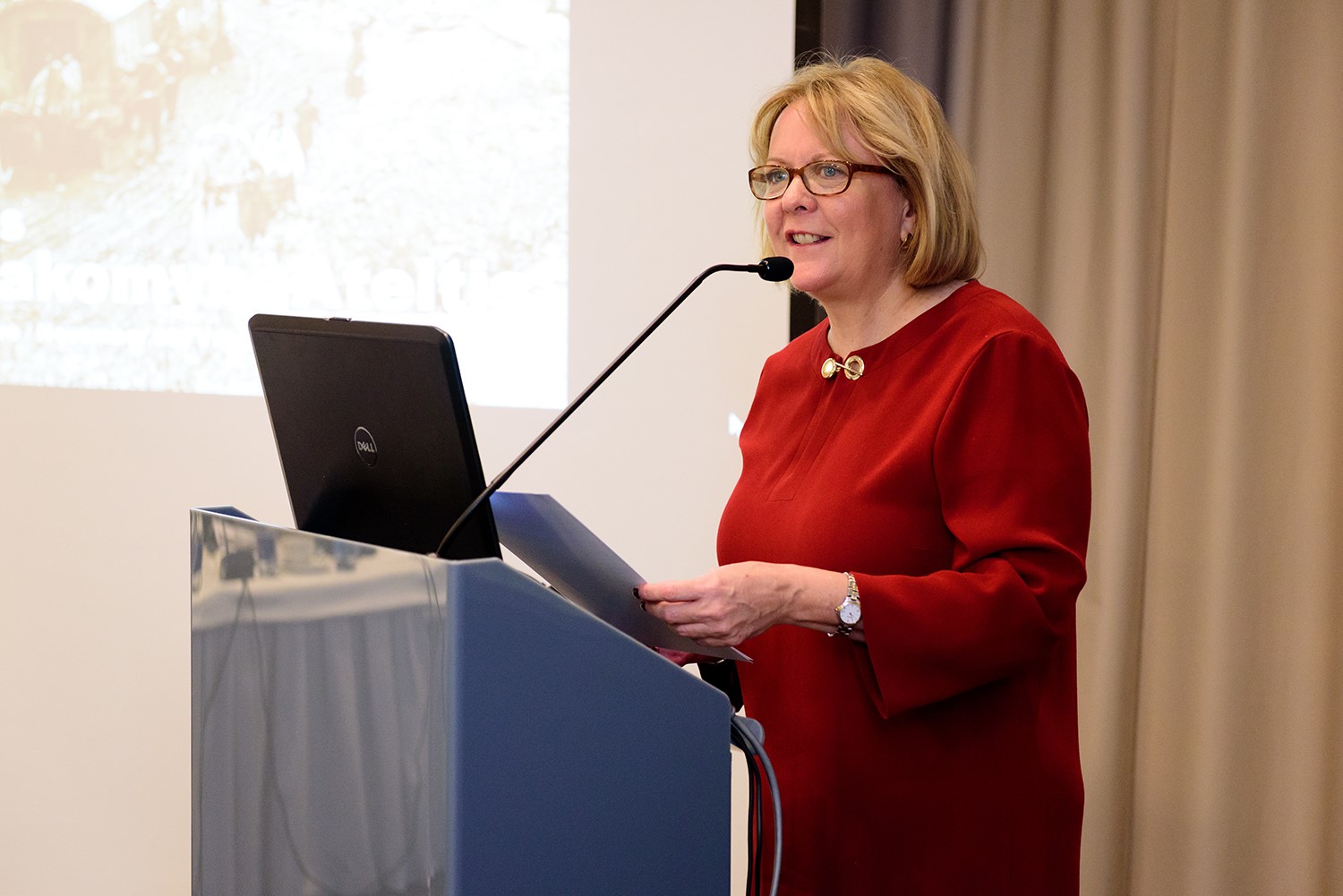
LJC chairwoman Faina Kukliansky, US ambassador Anne Hall, German ambassador Angelika Viets and deputy chief of mission for the Israeli embassy Efrat Hochtetler welcomed conference participants.

Unique Jewish Archive Emerges in Vilnius

Vilnius, November 3, BNS–As Judaica studies intensify in Vilnius, scholars have identified thousands of important Jewish manuscripts this year which had laid forgotten in a church basement during the Soviet years and were scattered to separate archives for two decades following Lithuanian independence.

Some of the newly identified documents are currently on display in New York City and there are plans to exhibit some of the collection in Lithuania in the near future as well.

Lithuanian National Martynas Mažvydas Library director Renaldas Gudauskas said the identification of ever more documents makes him confident the library currently conserves one of the most significant collections of Judaica in the world.

Hidden at a Church

Vilnius had hundreds of Jewish communal, religious, cultural and education organizations before World War II. YIVO, the Jewish research institute founded in 1925, was an important member of that group. YIVO did work on Jewish life throughout Eastern Europe, from Germany to Russia and from the Baltic to the Balkans, collecting Jewish folklore, memoirs, books, publications and local Jewish community documents, and published dictionaries, brochures and monographs.

Conference on Anti-Semitism and Romophobia in Lithuania

Press release

Marking November 9, the international day against fascism and anti-Semitism, the Lithuanian Jewish Community is holding an international conference called “Remembrance Responsibility Future” for notable scholars and specialists to seek solutions to pressing problems, including whether the commemoration of painful historical events can serve to educate in contemporary policy and help to insure the Holocaust never happens again.

The main goal of the conference is to come up with effective recommendations for fighting anti-Semitism and Romophobia in Lithuania. The conference is intended to demonstrate the intersection of historical memory and contemporary forms of hate in Lithuania. It is part of a project called “Drafting and Publication of Recommendations for Fighting Anti-Semitism and Romophobia in Lithuania” with support from the EVZ foundation in Germany. This foundation supports systematic and long-term studies of discrimination against and marginalization of Roma and Jews in Europe. The Goodwill Foundation is also supporting the Lithuanian project.

Professor Saulius Sužiedėlis is to deliver the main presentation November 9 called “Warning of History: Origins and Development of Anti-Semitism in Lithuania.”

Šarūnas Liekis, Vygantas Vareikis, Linas Venclauskas, Violeta Davoliūtė and Charles Perrin are also scheduled to give presentations.

The agenda includes a discussion of contemporary anti-Semitism.

Partners include the Roma Social Center, the Lithuanian Human Rights Center and the Women’s Information Center.

The conference begins 9:30 A.M., November 9, in the conference center of the Novotel Hotel at Gedimino prospect no. 16, Vilnius.

New Calls for Jewish Restitution


by Vytautas Bruveris, www.lrytas.lt

After adopting a law on compensating Jewish religious communities, Lithuania should go further and compensate Holocaust survivors for their private property. Both US officials and the Lithuanian Jewish Community are calling for this.

The Lithuanian prime minister’s advisor on foreign policy Deividas Matulionis said: “The issue of returning Jewish private property was raised earlier, but it’s being discussed more frequently now. I wouldn’t say there’s pressure, but the Americans have let us know return of Jewish property remains on the agenda.”

Matulionis was government chancellor in the earlier Government led by Andrius Kubilius when the law creating the Goodwill Foundation was adopted. Under that law the state pays out compensation for Jewish religious community property lost during the war, financing Jewish cultural, religious, educational and other socially useful activities.

The Lithuanian Government is obligated to pay 37 million euros in total to the foundation.

US Diplomat Visits

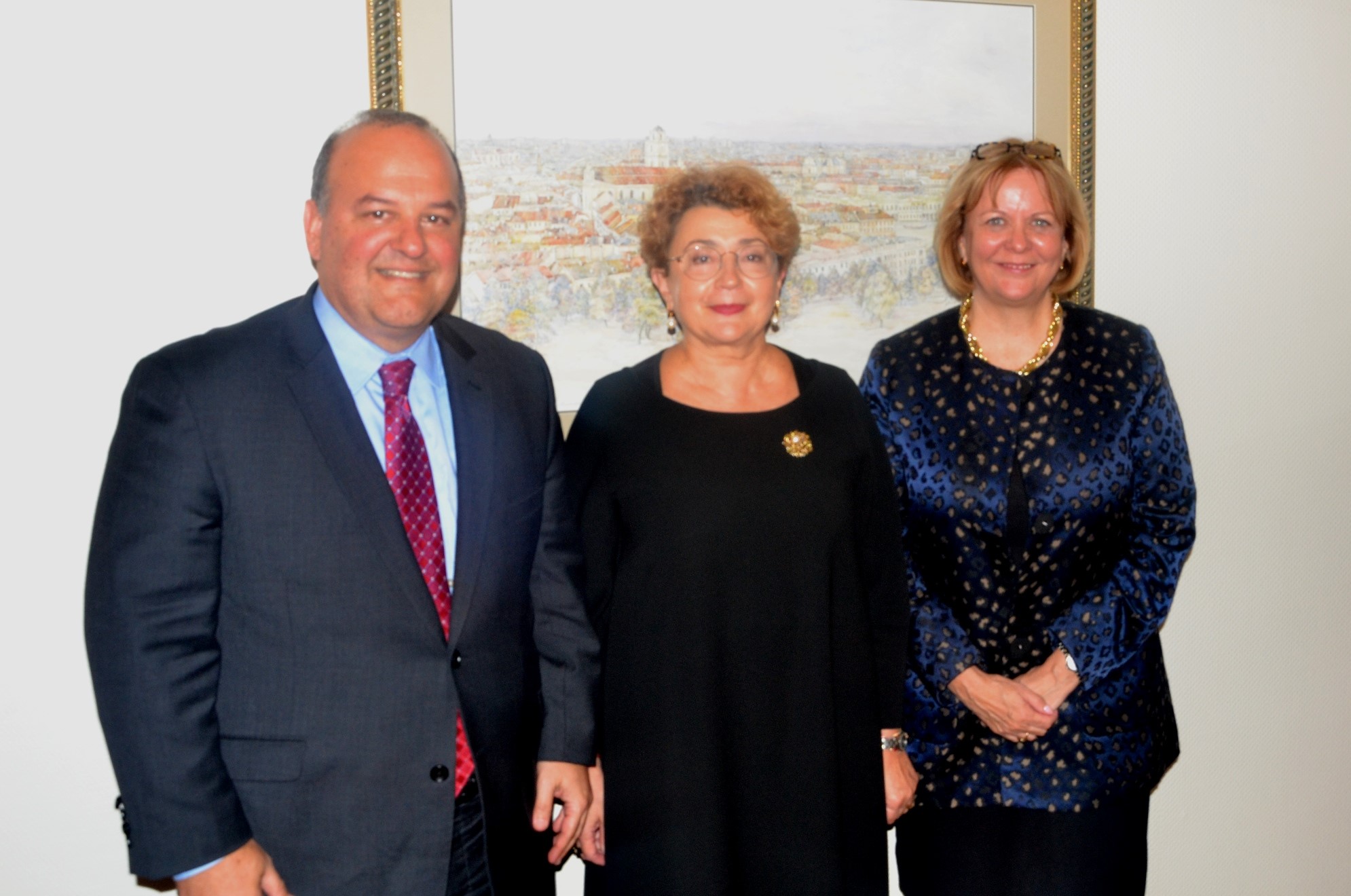
Matulionis recently spoke with Thomas Yazdgerdi, the US State Department’s special envoy for Holocaust issues, in Vilnius.

The American diplomat also met MPs and leaders of the Lithuanian Jewish Community.

One of the Yazdgerdi’s main topics of discussion was the continuing return of Jewish property.

He said Lithuania following the examples of other Central and Eastern European countries should keep moving forward by returning private property to Holocaust survivors and their descendants or by paying out compensation.