Holocaust

Jonas Noreika? Let’s Talk about Cucumbers Instead

Jonas Noreika? Let’s Talk about Cucumbers Instead

by Arkadijus Vinokuras

In reply to the Genocide Center

I read the reply from the Center for the Study of the Genocide and Resistance of Residents of Lithuania to my article “Why Is Genocide Center Defending a Lie?” The Genocide Center’s reply was unpleasantly surprising. The position of the person quoted was confused with my own personal position. Instead of polite discussion it turned quickly to ad hominem. Therefore to the honorable director of this institution I say: do not allow scribblers to reply to articles by professional journalists and writers.

Because this [reply], fallen into Communist hysteria, as if it weren’t 2019 at the present time but gloomy Stalinism instead, written in the KGB style with anti-Semitic glee, places all critics and opponents of the Genocide Center into one “anti-Geno-Centro-underground organization.” This does shame to the institution itself. Take a pill, calm down and remember that the Genocide Center is not some private headquarters of extremist nationalists but an institution of a democratic state. The parliament has tasked this institution with discovering the truth, not engaging in politics.

Full text in Lithuanian here.
Lithuanian President Visits YIVO

Lithuanian President Visits YIVO

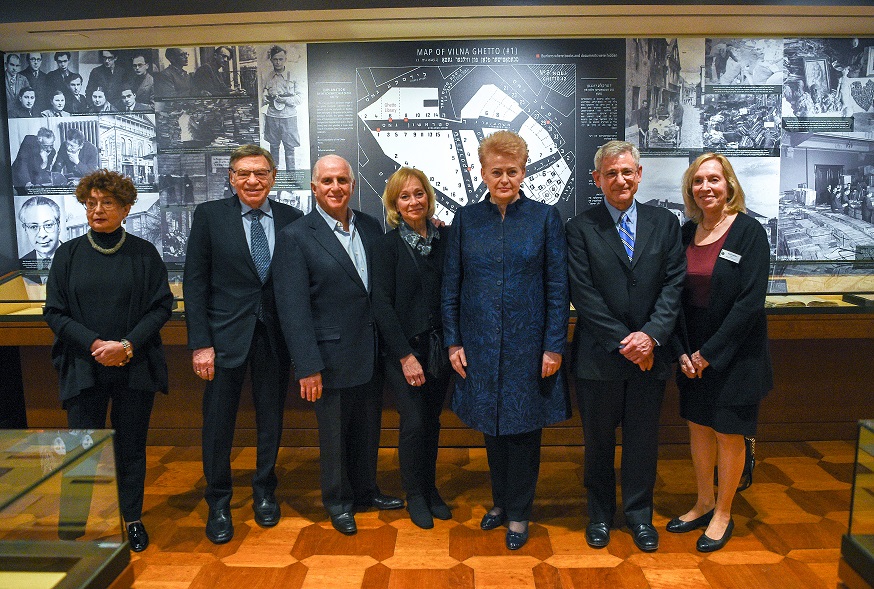
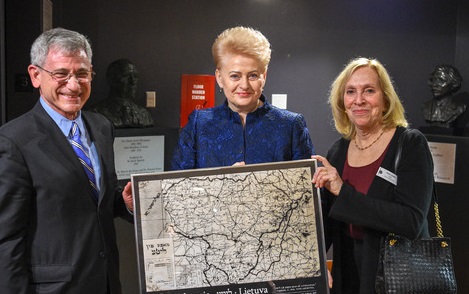
Lithuanian president Dalia Grybauskaitė visited YIVO in New York City March 13.

The YIVO institute was founded in Vilnius in 1925, collecting a large library of books and documents, Yiddish literature and material on Jews in Central and Eastern Europe. It moved to New York in 1939 when founder Max Weinreich was caught in Denmark as Nazi Germany invaded Poland on September 1 of that year. The New York branch became the headquarters as the Nazis looted YIVO archives in Vilnius.

YIVO director Jonathan Brent met the Lithuanian leader and spoke to her about the Strashun collection and important documents YIVO conserves.

The Lithuanian president said she was impressed by the collections demonstrating the priceless Litvak heritage and also by the courage and nobility of the people–Lithuanians and Jews–who saved the important documents.

Full press release in Lithuanian here.

Work Continues on the Žemaičių Naumiestis Synagogue

Work Continues on the Žemaičių Naumiestis Synagogue

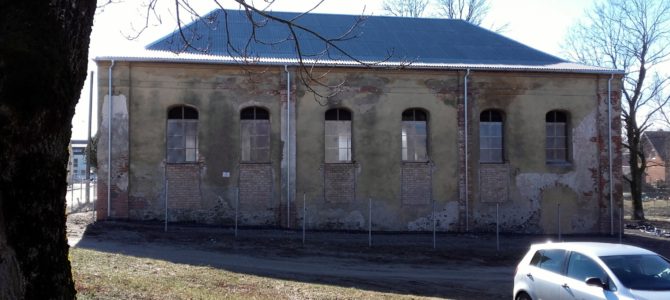
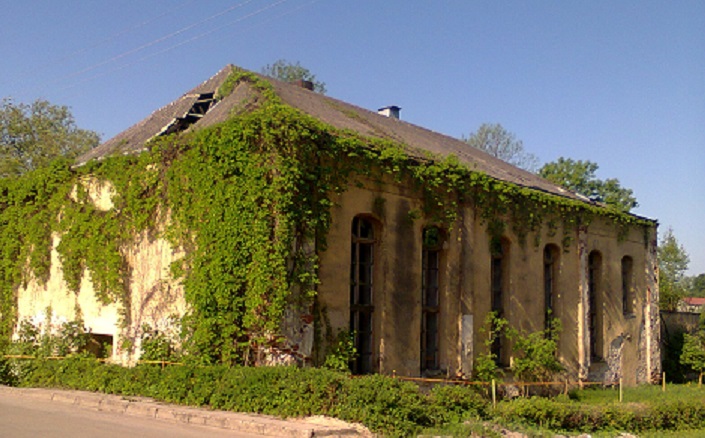
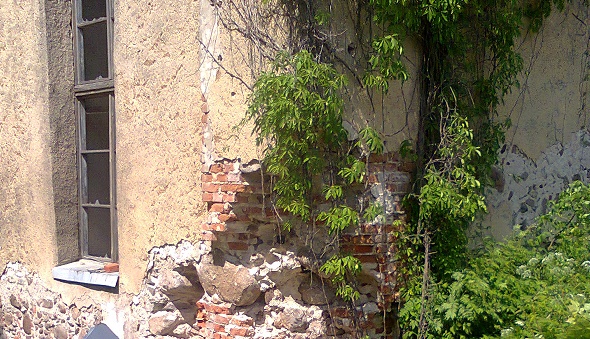
Work to restore the synagogue in Žemaičių Naumiestis, Lithuania, began in 2018 and on March 6, 2019, the work to date was surveyed.

The Šilutė regional administration allocated almost 100,000 euros for the renovation work.


Photos from before work began

The town had a large Jewish population before the Holocaust who built this brick synagogue in 1816. In the Soviet era the synagogue was used as a Palace of Culture.

News from the Noreika Trial

News from the Noreika Trial

The Vilnius District Administrative Court began deliberation of a case Grant Gochin filed against the Center for the Study of the Genocide and Resistance of Residents of Lithuania Tuesday, March 5. Gochin, a Lithuanian citizen and member of the Lithuanian Jewish Community, is seeking remedy for the Genocide Center’s “historical finding” exonerating Lithuanian Holocaust perpetrator Jonas Noreika. Gochin wants the Center to reconsider its exoneration in light of newly discovered documents which he says the Center has ignored.

Active LJC member Geršonas Taicas attended the trial and shared his impressions, translated below.

§§§

“The plaintiff’s attorney read quickly a 25-page document presented which lists new historical facts about Noreika’s crimes. …

Prosecutor Drops Charges against Ivaškevičius, Opens Case against His Persecutors

The Lithuanian Prosecutor’s Office announced Wednesday it had opened a case on the possible harassment of the playwright Marius Ivaškevičius.

It also announced law enforcement will investigate the illicit collection of private information about Ivaškevičius and the illicit sharing of such information.

The state prosecutor demanded an investigation be conducted after law enforcement agencies received information about an article on a webpage entitled “Death to Marius Ivaškevičius!”

The article indicated a database of “enemies of the homeland” was being prepared and asked readers to supply as much information as possible regarding the private life of the Lithuanian writer.

The internet posting said the information was needed to kill Ivaškevičius, the prosecutor reported.

The report said these facts amount to the “terrorizing” of the writer “because of his literary works which annoyed a portion of the public and for his public position, and thus constitute an illegal attempt to limit his creative and self-expression.”

Arkadijus Vinokuras: Why Is Genocide Center Defending a Lie?

Arkadijus Vinokuras: Why Is Genocide Center Defending a Lie?

by Arkadijus Vinokuras

At 10:00 A.M. on Tuesday, March 5, at Žygimantų street no. 2 in Vilnius, the Vilnius District Administrative Court undertook a special case. Lithuanian citizen Grant Gochin petitioned the Vilnius District Administrative Court to render a decision on whether the Center for the Study of the Genocide and Resistance of Residents of Lithuania is, in the plaintiff’s words, “blindly defending Jonas Noreika who has the blood of his fellow Lithuanian citizens, Jews, on his hands.”

The Genocide Center stands accused of lying, falsifications and down-playing obvious facts in its refusal to review newly-discovered documents showing Noreika participated in crimes of genocide against Lithuanian citizens.

How does Genocide Center director Teresė Birutė Burauskaitė respond to these accusations made againt her institution? On November 16, 2015, she posted a statement on the Genocide Center’s facebook page: “Neighbors from the East are organizing the desecration of Lithuania’s patriots. They are being aided not just by certain Jews, but a sufficiently large number of Lithuanians as well; their surnames are signed under requests to revoke medals and take down plaques and are the by-lines in libelous articles in the press… Some of them do this intentionally, others out of foolishness…”

Leaders, Ambassador Send Condolences on Death of Tobijas Jafetas

lzinios.lt, BNS

Lithuanian Jewish Community chairwoman Faina Kukliansky told BNS Tobijas Jafetas was “a highly respected, active and refined person of the community” who had met her father when World War II began. “As I recall his father had a business in England and came to Kaunas just before the war started. It so happened that Jafetas and my father were at a [children’s summer] camp in Palanga when the war broke out. Neither was able to flee and they were taken to an orphanage in Kaunas,” Kukliansky said.

Israeli ambassador to Lithuania Amir Maimon expressed condolences over Jafetas’s loss on facebook.

Jafetas and his mother were imprisoned in the Slobodka ghetto in Kaunas in World War II. He told the story of how he escaped the ghetto in 1944 after hiding in an attic. The Katinskai family in Vilnius rescued him.

LJC chairwoman Kukliansky said Jafetas spoke German and English and maintained close contacts with survivors of ghettos in Europe.

Monument to Icchokas Meras to be Unveiled in Kelmė

Monument to Icchokas Meras to be Unveiled in Kelmė

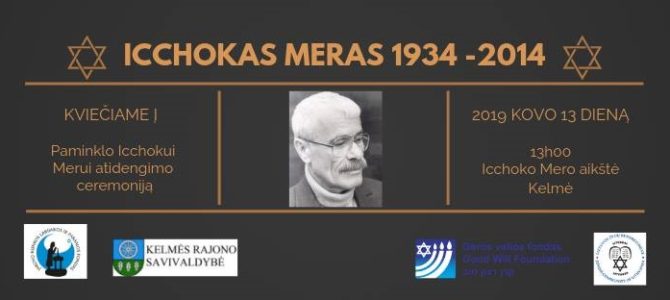
A monument to Litvak writer Icchokas Meras (October 8, 1934 – March 13, 2014) is to be unveiled on the fifth anniversary of his death on Icchokas Meras Square in his hometown of Kelmė, Lithuania, at 1:00 P.M. on March 13, 2019. Meras, a Holocaust survivor, wrote in Lithuanian and won numerous awards in Israel and Lithuania. His work has been translated into over 25 languages including Yiddish and Hebrew. He moved to Israel in 1972 and passed away in Tel Aviv in 2014 at the age of 79.

The monument is the fruit of cooperation between the Lithuanian Jewish Community, the Jakovas Bunka welfare and support fund, the Lithuanian Jerusalem Vilnius Jewish Community and the Kelmė regional administration.

Those wishing to attend are invited to send notice of their intention to renginiai@lzb.lt because the LJC plans to provide free transportation to and from the event if there is sufficient interest. Please send an email by March 11 or call 8 673 77257 for more information.

Granddaughter Silvia Foti Talks about General Storm, Lithuanian Partisan, Nazi

Granddaughter Silvia Foti Talks about General Storm, Lithuanian Partisan, Nazi

Growing up in the United States, Silvia Foti couldn’t have been more proud of her Lithuanian heritage, in particular her grandfather. Silvia’s family had crossed the Atlantic after the Second World War but she always knew that, back in Lithuania, her grandfather was seen as a war hero. She’d been told that he’d been executed at the age of 37 for standing up to the Soviet regime and trying to lead a rebellion against their occupation of Lithuania. Silvia tells Emily Webb how a chance conversation on a trip to Lithuania made her question everything she’d learnt about her past.

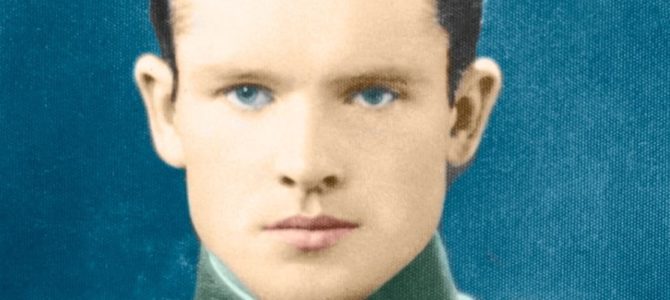
Image: Jonas Noreika Credit: Courtesy of Silvia Foti

Silvia Foti and Grant Gochin speak on BBC Outlook:

https://www.bbc.co.uk/sounds/play/w3cswl6b

Tobijas Jafetas, Chairman of Union of Ghetto and Concentration Camp Prisoners, Dies

Tobijas Jafetas, Chairman of Union of Ghetto and Concentration Camp Prisoners, Dies

The Lithuanian Jewish Community has learned with great sadness of the loss of chairman of the Union of Former Ghetto and Concentration Camp Inmates Tobijas Jafetas. Born in 1930, he was still a child when World War II came to Lithuania. He often said he only survived because of help from Righteous Gentiles.

Although he was from Vilnius, he was with his mother Berta and uncle Lazeris in Kaunas when the Nazis arrived. Other relatives were imprisoned in Latvia. All of this family was murdered and he was the only survivor.

He, his mother and the other Jews of Kaunas were forced into the Slobodka ghetto.

“Life in the ghetto was very hard and one of the biggest problems was figuring out how to get enough to eat,” Jafetas said one year ago. “Tradition and the necessity of maintaining Jewish identity were very important to us under such conditions. In April of 1944 ghetto prisoners sensed danger and the ghetto was surrounded and the guard increased. I managed to escape death by hiding in an attic under hay for rabbits being raised there. The soldiers didn’t find me. In April of 1944 my mother told me to flee the ghetto as quickly as possible.

“I was 14 when I escaped. My aunt and uncle, from Kaunas, had moved to Vilnius at that time. My aunt’s father was a military officer from the time of Smetona and asked his sister living in Druskininkai, Kotryna Katinskaitė, to take me to Vilnius. The Katinskai family saved me. When the front approached my uncle travelled to Šilalė where my cousin was working and my aunt and I stayed in Vilnius. The front arrived and we hid from the bombardment in the St. James Church in Vilnius. That’s how we survived. After the war I lived with the Katinskai family until I finished high school.”

His experience of the Holocaust didn’t break Tobijas. Wise, sincere and always with a warm and beautiful smile–that’s how the Jewish community will remember Tobijas Jafetas as we express our shock and condolences over his loss to his daughter Judita, all his grandchildren and everyone who had the honor to encounter this sensitive and extraordinary person.

France Calls on Warsaw to Condemn Disruption of Holocaust Conference

France Calls on Warsaw to Condemn Disruption of Holocaust Conference

French authorities have called on Warsaw to publicly condemn actions by Polish nationalists to disrupt a conference on the history of the Holocaust in Poland, Radio France Internationale reported.

French and Polish scholars met at the L’École des hautes études en sciences sociales (EHESS) in Paris for a Holocaust conference on February 21 and 22. In the run-up to the conference, organizers received a spate of threatening telephone calls and emails demanding it be canceled.

The Polish Institute of National Remembrance (the state historical and archival institution that studies the activities of the state security organs of Poland, the Third Reich and the USSR) criticized the conference on social networks on the eve of its opening, and the Polish embassy to France conveyed these criticism via Twitter.

Will Lithuanian Law Enforcement Give Due Consideration to Anti-Semitic Acts?

Will Lithuanian Law Enforcement Give Due Consideration to Anti-Semitic Acts?

The Lithuanian Jewish Community is greatly surprised by the actions of law enforcement institutions regarding Marius Ivaškevičius. This write was summoned to a police interrogation on the accusation he had incited hate against the Lithuanian people because of his public identification of the problems troubling our society using historical facts connected with the direct participation of ethnic Lithuanians in perpetrating the Holocaust.

This is extremely depressing, unexpected and troubling, especially bearing in mind that violations with a clear anti-Semitic element usually go unnoticed by law enforcement. This passive reaction by law enforcement institutions towards expressions of anti-Semitism creates a sense of impunity, leads to the application of double standards in Lithuania, erodes the rule of law and the state and recalls dangerous examples from neighboring countries.

The LJC asks government representatives, law enforcement institutions and the public to assess the situation soberly based on justice and intelligence, in order to stop the spread of information campaigns harming Lithuania’s reputation by countries which are against our state.

We thank all those who have maintained a common-sense position and we also ask attention be brought to bear on statements made by Panevėžys politician Raimondas Pankevičius during elections debates on February 22 which had the features of incitement of ethnic hate and Holocaust denial. During the debates the politician made the false statement Jews in Lithuania had killed each other, ignoring the fact of Lithuanian complicity in the Holocaust. The LJC feels the behavior of this Panevėžys mayoral candidate, famous for actions which seem to display an unapologetic and habitual anti-Semitism, has never been subject to an appropriate legal response.

Political Correctness Lithuanian Style: Busted for Not Denying the Holocaust

Political Correctness Lithuanian Style: Busted for Not Denying the Holocaust

Photo: Andrius Užkalnis, © 2019 DELFI/Domantas Pipas

Lithuanian writer Marius Ivaškevičius, winner of the title Tolerant Person of the Year for 2017 and recipient of the Lithuanian National Prize for art and literature, was recently summoned to explain to police remarks he made on Lithuanian public radio about Lithuanians engaging in ethnic cleansing of Poles and the removal and mass murder of Jews during World War II. According to Lithuanian media reports, the Lithuanian General Prosecutor’s Office instructed Lithuanian police to investigate Ivaškevičius for hate-crimes against Lithuanians. The Lithuanian Writers Union, the Lithuanian Journalists Union, legal experts and some media have come to the defense of Ivaškevičius. The following is one of many editorials which have appeared recently.

The True Fascists Are Those Who Turned In Marius Ivaškevičius
by Andrius Užkalnis


This very angry text is about the playwright Marius Ivaškevičius, but you won’t find anything here about his work or the national prize he received.

The fact they demanded he not be given the [Lithuanian national] prize and that he received it nonetheless is one of the best things to happen in 2019, and no matter how Eurovision and the elections turn out, at least one good thing has happened. This is a great start to the year.

This article is about Ivaškevičius being summoned to the police to explain what he said on the radio about Poles and Jews.

The playwright didn’t call for killing, oppressing or insulting anyone. He spoke about our people’s (and Ivaškevičius is part of that people, too) historic crime against other peoples. There were people who considered this mocking the Lithuanian people and encouraging hatred of Lithuanians.

Ąžuoliukas Anniversary Concert at LJC

The Lithuanian Jewish Community and the Ąžuoliukas Music School will hold a chamber ensemble concert to celebrate the 40th anniversary of the school and the 60th anniversary of the Ąžuoliukas Boys and Young Men’s Choir.

The concert begins at 5:00 P.M. on Thursday, February 28, at the Lithuanian Jewish Community, Pylimo street no. 4, Vilnius.

LJC’s Second Year at Vilnius Book Fair a Success

LJC’s Second Year at Vilnius Book Fair a Success

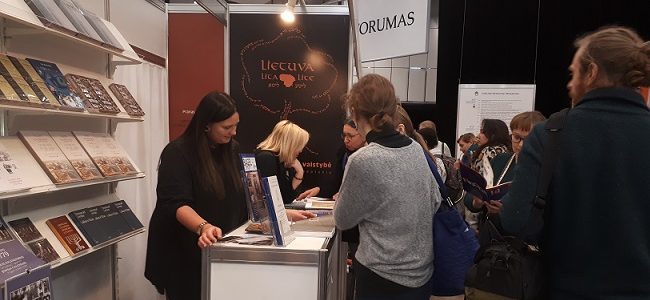
Almost 68,500 people visited the Vilnius Book Fair this year on its 20th anniversary. There were more than 550 events for visitors to chose from over four days. The Lithuanian Jewish Community had a table this year for the second year in a row presenting books published with partial support from the Goodwill Foundation.

The table was extremely popular with visitors all four days. Some came to browse, others to talk about Jewish culture and share their memories. There was much interested in Yitzhak Rudashevski’s Vilnius ghetto diary recently published in Lithuanian translation. This book was recognized by the Vilnius Book Fair as one of the best-designed books of 2018. Readers also expressed interest in and bought Uri Leviatan’s From Hand to Hand and Ruth Reches’s Hebrew dictionary in Lithuanian, among others.

Those wishing to purchase these books and others are invited to come to the Goodwill Foundation at Pylimo street no. 4 in Vilnius or to visit the foundation’s internet store at https://gvf.lt/e-parduotuve/

Director Gintaras Varnas Tolerant Person of Year for 2018

Director Gintaras Varnas Tolerant Person of Year for 2018

kaunas.kasvyksta.lt

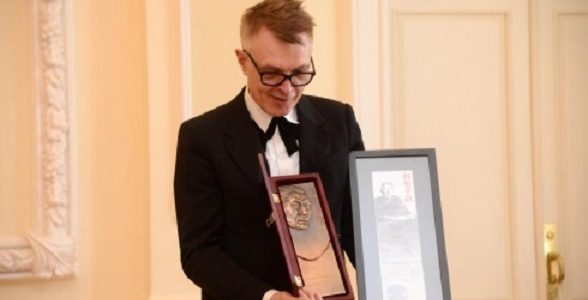
The Sugihara Foundation/Diplomats for Life awarded director Gintaras Varnas Tolerant Person of the Year for 2018 and presented their Leonidas Donskis prize to publicist Pranas Morkus at the Catholic Theology Cathedral of Vytautas Magnus University in Kaunas February 24, 2019.

Varnas was selected for the prize for his search for alternative language for theater and plays, especially in his latest works, Nathan the Wise and Ghetto, performed at the Kaunas State Drama Theater.

Varnas said his first reaction was complete surprise. “When I’m working I never think about these kind of things,” he said, adding he experiences a conflict in contemporary theater which often becomes nothing more than a way to make an audience laugh. “I am glad real theater is still needed, theater which discusses uncomfortable things, which speaks the truth,” Varnas said as he accepted the prize.

Rudashevski Ghetto Diary Wins Main Prizes at Vilnius Book Fair

Rudashevski Ghetto Diary Wins Main Prizes at Vilnius Book Fair

The Vilnius ghetto diary of Yitzhak Rudashevski, translated and published by the Lithuanian Jewish Community, has won the Book of the Year distinction at the annual Vilnius Book Fair currently being held in the Lithuanian capital.

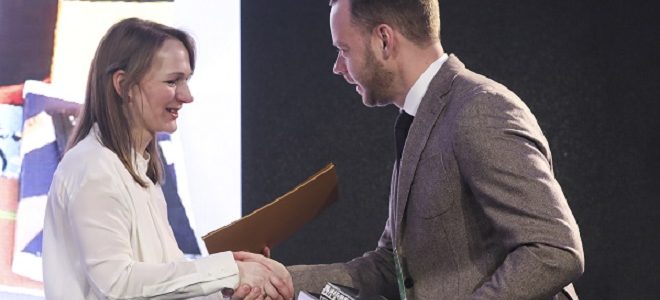
Deputy minister for culture Gintautė Žemaitytė congratulated the designers and publishers, presenting them prizes and diplomas. The book was recognized as the best book in terms of design, taste and art for 2018. The Lithuanian Cultural Ministry has presented the prize annually 26 years now. Over 130 publications competed for the title this time.

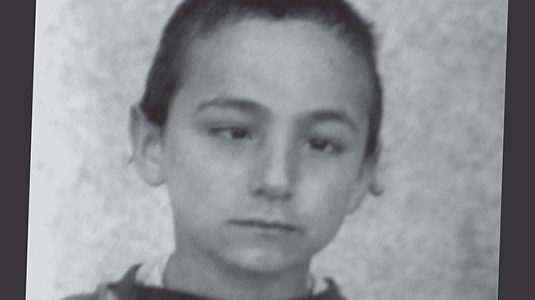
Book designer Sigutė Chlebinskaitė won the main prize for sensitive aesthetics and holistic concept. Congratulations to Sigutė for her talent and for dedicating it to the boy from the Vilnius ghetto.

The LJC won in the category of publisher. We are so glad we were able to present this monument to the children of the Holocaust to the Lithuanian reader.

Born in Leviatan’s Clinic

Born in Leviatan’s Clinic

The Lithuanian Jewish Community hosted the launch of the Lithuanian translation of an unusual book on February 21. Professor Uri Leviatan’s book “From Hand to Hand” is unlike the academic works by this much-published anthropologist and sociologist who focuses on the modern phenomenon of the Israeli kibbutz. It is his own story, and that of his parents and grand-parents, which he began writing for his son Lior in 2014, the fruit of personal research stretching back decades, in which the author seeks to answer the question of his origins and what exactly happened to him as a child during the Holocaust.

The autobiography reads like a thriller novel and the author himself describes it as a series of detective stories.

Asked to speak about his experience as a child of the Holocaust at a Holocaust survivor and Jewish partisan conference held in Israel in the ’90s, Leviatan realized he had actually been passed from one guardian to another at least seven times. Initially his parents had him smuggled out of the Kaunas ghetto, where they perished, but after that his path to Israel after the war became very foggy in his own mind. Hardly unusual for a child born in 1939 to not remember all of the horror of the Holocaust in his first few years, but Leviatan’s memory gaps seem to have always bothered him, and he managed over the decades to track down real documentation of himself as a Jewish orphan in Lithuania and later at the Sanhedria children’s home in Israel, now sporting a different first name following what he described as his “almost kidnapping” by a Jewish religious group which gathered up Jewish orphans in Europe. This group changed his name, falsified his date of birth and it was only when his aunt, already in Israel, went looking for him and happened to ask another child from Kaunas about Uri that he was rescued.

Presentation of Uri Levitan’s Book “From Hand to Hand” at LJC

Presentation of Uri Levitan’s Book “From Hand to Hand” at LJC

The Lithuanian Jewish Community kindly invites you to attend a presentation of the book “Iš rankų į rankas” [“From Hand to Hand,” translated from the Hebrew to Lithuanian by Victoria Sideraitė-Alon with an introduction by Dalia Epšteinaitė, who also edited the Lithuanian version] by head of the Sociology and Anthropology Faculty and head of the Kibbutz Institute of Haifa University professor Uriel Leviatan and a meeting with the author at 6:00 P.M. on Thursday, February 21, at the LJC in Vilnius.

Professor Leviatan was born in Kaunas. His grandfather Isaac Leviatan was a renowned gynecologist in prewar Lithuania. The birthing clinic he created on Miško street in Kaunas in 1926 is still operating. Isaac Leviatan was a talented doctor and an active figure in Kaunas public life. He became chairman of the Zionist party Zionim Klaleem in 1935 and was the long-time representative of that party at Zionist congresses held in Europe.

Of the family of Isaac Leviatan renowned in Kaunas and throughout Lithuania, only Uriel survived through a kind of miracle. His parents sensed the coming liquidation of the ghetto in 1943 and made sure three-year-old Uriel was smuggled out of the ghetto…

Launch of Book about Jews of Švėkšna

Launch of Book about Jews of Švėkšna

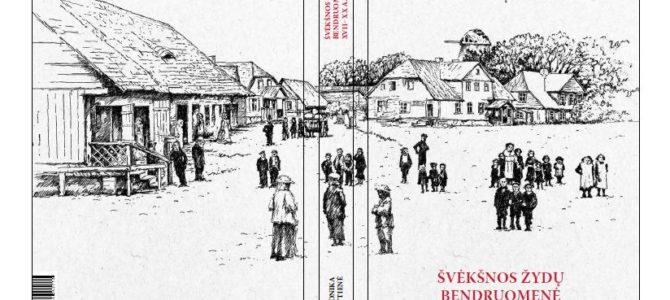
Monika Žąsytienė, a Bagel Shop project volunteer and museum specialist, has written a book called “Švėkšnos žydų bendruomenė XVII–XX a.” [The Jewish Community of Švėkšna from the 17th to the 20th Century].

The Bagel Shop Café will host the launch of the new book at 6:00 P.M. on February 19. Register here.

According to the author, the book makes no pretense of being an historical work. Instead, Monika Žąsytienė sought to bring together local lore and regional history for future work on the subject. She made use of material from Lithuanian archives, Yad Vashem and the Holocaust Museum in Washington, D. C. Some of the information–testimonies, memoirs, correspondence in Yiddish, Hebrew, German and English–appears for the first time in Lithuanian in her book.