History of the Jews in Lithuania

Jewish Life in Kaunas before the Holocaust

An exhibit curated by Vilma Gradinskaitė, PhD, from the judaica collection of Michailas Duškesas called “A Window on Jewish Life in Kaunas before the Holocaust” is to open September 25 and run till December 15 at the Multicultural Center in Kaunas located at Šv. Gertrūdos street no. 58. The exhibit will be open to the public from 11:00 A.M. to 6:00 P.M. on weekdays, and weekend tours can be accommodated as well by making prior arrangement by calling +370 698 19999 or by writing makabilita.duskes@gmail.com.

Reworking Trauma: Roma and Jewish History Research in the Baltic States and the USA

Reworking Trauma: Roma and Jewish History Research in the Baltic States and the USA

An international conference called “Reworking Trauma: Roma and Jewish History Research in the Baltic States and the USA” will be held at the Martynas Mažvydas National Library in Vilnius from 10:00 A.M. to around 5:00 P.M. on Tuesday, September 13. The goal of the conference is to take a closer look at the social, cultural and political mechanisms used by the Jewish and Roma communities to work through trauma experienced during the Holocaust and what significance these mechanisms hold now in the Baltic states and the United States. The national history narrative often lacks space for “small histories,” the memories and stories of marginalized and voiceless minority communities who suffered so gravely from the tragic events of the 20th century. The main goals are to educate the public on the history of the Roma and Jewish communities in our region, to support academic research in this field and to stimulate international academic cooperation in minority, memory and Holocaust studies.

Anthropologist and US Holocaust Museum researcher Krista Hegburg is one of the main speakers and honored guest. She will also speak at panel discussion at the Vilnius Museum at 6:30 P.M. on September 15.

Other speakers include Volha Bartash from Regensburg University, Dovilė Budrytė from Georgia Gwinnett College, Neringa Latvytė from the Vilna Gaon Jewish History Museum and Vilnius Univeristy, Sholem Aleichem ORT Gymnasium principal and psychologist Ruth Reches, Agnieška Avin from Vyautas Magnus University in Kaunas, Anna Pilarczyk-Palaitis from Vytautas Magnus and Eva-Liisa Roht-Yilmaz from Tartu University.

Program:

Holocaust Commemoration in Panevėžys

Holocaust Commemoration in Panevėžys

Dear reader,

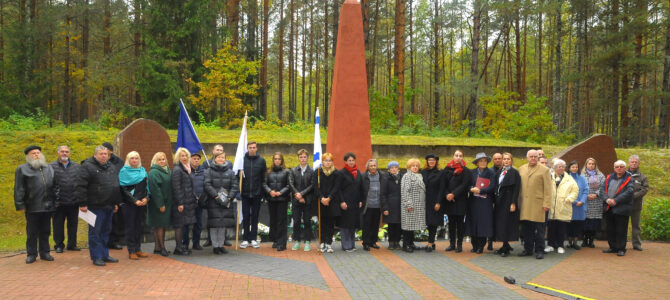
You and your family members are invited to attend a ceremony to commemorate the Holocaust in Panevėžys on September 23, 2022.

Program:

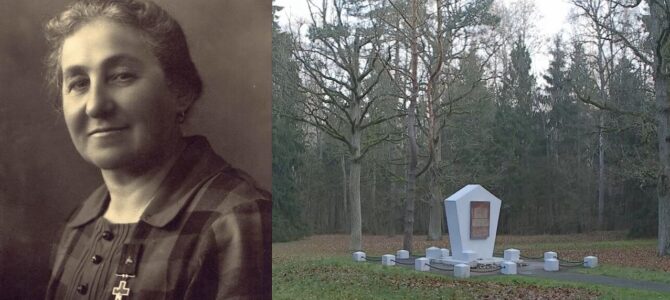
1:00 P.M. Beginning of ceremony at the “Sad Jewish Mother” monument at the Old Jewish Cemetery in Panevėžys
1:30 P.M. Continuation of ceremony honoring Holocaust victims at Ghetto Gate monument
2:00 Participants will be ferried by bus to mass murder site in Kurganava forest
2:20 P.M. Ceremony to remember the victims at the Kurganava mass murder site (following which participants will be returned to Panevėžys by bus).

Ex Libris Exhibit

Ex Libris Exhibit

The Immanuel Kant Public Library in Klaipėda is hosting an exhibit of ex libris plates called “Traces of Jewish Culture” which opened September 2 and will run till September 20. Josef Šapiro was an avid collector and creator of ex libris graphics and once ran the world’s only ex libris museum inside the building housing the Lithuanian Jewish Community. His book plates and others will be on display for the public, touching upon a variety of topics, including the Jewish people in Lithuania.

Snapshots from European Days of Jewish Culture Events in Vilnius

Snapshots from European Days of Jewish Culture Events in Vilnius

Our annual series of events to mark the European Days of Jewish Culture saw a good turnout all day Sunday, which turned out to be sunny but framed by clouds. There was cantorial song at synagogue, a tour of Jewish Vilna, a panel discussion on echoes of Jewish culture in modern Lithuania’s cultural scene, we baked challa and slowly cooked the legendary floimen tsimes and there was singing, playing and dancing for all. For some snapshots from different events, concerts, workshops and lectures, see below.

Lithuanian President Receives Credentials of Ambassador from Israel

Lithuanian President Receives Credentials of Ambassador from Israel

Lithuanian president Gitanas Nausėda has received and accepted the credentials of Israeli ambassador Hadas Wittenberg Silverstein. The head of the Lithuanian state said he was happy with increasing connections between the Republic of Lithuania and Israel. The two discussed the future of possible bilateral relations with a focus on innovative research and technologies, education and tourism, and also military cooperation in the two countries’ respective defense industries. The Lithuanian president noted wonderful cooperation at international bodies and Lithuania’s support for better dialogue between Israel and the European Union. Lithuania and Israel this year celebrate 30 years of diplomatic relations.

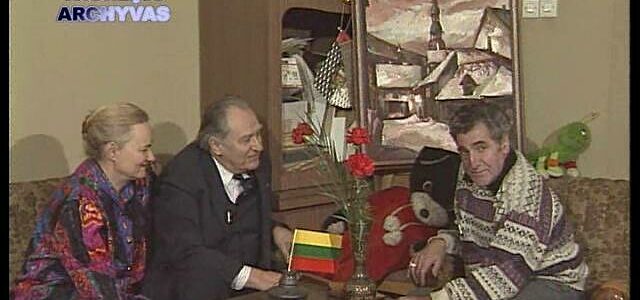
Lithuanian Cinematographer and Cultural Expert Pranas Morkus Has Died

Lithuanian Cinematographer and Cultural Expert Pranas Morkus Has Died

The Lithuanian Jewish Community mourns the death of the famous Lithuanian filmmaker and cultural scientist Pranas Morkus (1938-2022) and we extend our most sincere and deepest condolences to his family members and friends.

Morkus was born February 18, 1938, in Klaipėda to the family of theater actress Galina Yatskevich. From 1955 to 1957 he was a student at the Lomonosov Philology Department of Moscow State University, and from 1957 to 1960 at the History and Philology Faculties of Vilnius University.

From 1962 to 1964 he was attended the highest-level courses for scriptwriters and directors in Moscow. He was a member of the Lithuanian Union of Cinematographers. From 1960 to 1962 he was editor-in-chief of radio theater for the Television Radio Committee of the Lithuanian Soviet Socialist Republic, and from 1968 to 1970 he served as editor-in-chief for the creative body Lietuvos Telefilmas.

A Cry to Heaven

A Cry to Heaven

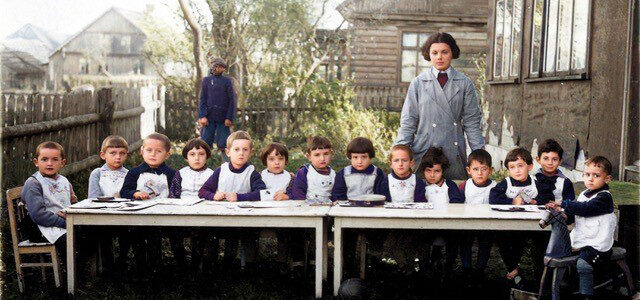
Photo: Jewish nursery school in Plungė, Lithuania. Almost no Jewish children survived in Lithuania. Photo source: Screenshot from the documentary J’Accuse

Renowned cantors unite to give their voices to Baltic Truth premiere

There were very few survivors from Lithuania. In the villages, there were almost none. We know what happened in some locations because we have testimonies from some survivors.

Yakov Zak testified about the Lithuanian Holocaust: “The rabbi of Kelmė, Kalmen Benushevits, who had escaped to Vaiguva at the outbreak of the war, had been brought together with the Jews from Vaiguva. He had been forced to kneel next to the pit the entire day. He had quietly whispered a prayer, watching while the Jews were shot. After all the Jews were shot, he was shot as well.”

And:

“The mystic religious melodies of the yeshiva students, their rabbis and leaders were eternally silenced. The town was ruined down to the foundations; the Jewish community of Kelmė was ruined forever. Peasants also related that while the yeshiva students were being taken to be shot, they did not weep. Like stone statues, they moved slowly, with their eyes raised to the sky, murmuring prayers.”

Jerusalem of the North Orchestra Camp in Preila

Jerusalem of the North Orchestra Camp in Preila

The Jerusalem of the North Orchestra Camp for children and young people was held in Lithuania’s sea-side resort Preila over the summer with about 20 young people from music schools in Vilnius, Kaunas, Trakai, Šiauliai, Panevėžys and Klaipėda attending. They held daily repetitions, improvisational evenings and music-reading at the public library in Preila in the evenings. The final joint concert with the Vilnius St. Christopher’s Chamber Orchestra was performed August 25 at a church in nearby Nida, attended by parents, local residents, vacationers and others.

In addition to music, students learned dance from physical therapist, psychologist and dancer Kamile Pundziūtė; attended lessons on Litvak history, traditions and culture under the tutelage of Algirdas Davidavičius and went on cultural tours of the local area with historian, guide and writer Raimonda Meyer.

Lost Shtetl Museum Takes Part in Blue Family Picnic in Šeduva

Lost Shtetl Museum Takes Part in Blue Family Picnic in Šeduva

On the last weekend of summer we participated in the Blue Family Picnic which has been held in the Šeduva city park for seven years now. The Blue Family Picnic is intended to strengthen community, reduce social inequality and carry on family traditions.

We came up with all sorts of activities for attendees, including recognizing Jewish religious regalia, teaching them to write their names in Hebrew, a puzzle made up of period photographs of the town/shtetl, how to make traditional Sabbath challa and how to set the Sabbath table. Younger attendees made models of the shtetl, learned how to arrange food items on the plate for Passover seder and spun and taught other children to spin the dreidl. We treated everyone to traditional Litvak dishes as well.

So many friendly and eager to learn families came to the picnic. We wanted to share with them in a fun way the culture and traditions of the Jewish community of Šeduva and to remind them of the town’s not-so-distant past, the shtetl of Šeduva where Jews and Lithuanians lived peacefully together. Two special guests attended, two women from Šeduva for whom the shtetl isn’t lost in the mists of time. They spent their childhoods in the shtetl and have shared their memories with us numerous times.

Memory Stones Laid to Commemorate Rabinovitch Family

Memory Stones Laid to Commemorate Rabinovitch Family

The Lithuanian Human Rights Center is responsible for the laying of six new memory stones dedicated to the memory of the Rabinovitch family at Gedimino prospect nos. 37 and 46 in Vilnius.

Lithuanian Jewish Community chairwoman Faina Kukliansky attended the unveiling ceremony and said: “Today I attended a very moving ceremony. Next to the buildings located at Gedimino prospect number 37 and number 46 six memory stones commemorating the Rabinovitch family were laid. They were murdered at Ponar. I am glad their memory and the memory of their relatives has come back to Vilnius. Thank you to the relatives who found the energy to preserve the memory of their loved ones and to travel to Vilnius for that purpose.”

European Days of Jewish Culture in Vilnius

European Days of Jewish Culture in Vilnius

This year will be the seventh the Lithuanian Jewish Community is holding events for the European Days of Jewish Culture. This year’s theme is renewal.

Renewal is woven into almost all aspects of Jewish life. Jewish life is continually building on the past in new ways, bringing a sense of constant change along with a reassuring sense of continuity. The Jewish New Year opens with the festivals of Rosh Hashana and Yom Kippur. These holy days through their traditions and prayers present an opportunity to reflect on and acknowledge our past actions while looking ahead with new resolutions, optimism and determination. During this period we reconcile personal and communal differences within ourselves and with others as we actively strive to renew our aspirations for the coming year, and beyond.

We invite you to attend the events, all of which are free and open to the public.

Register here, space is limited.

Program:

Condolences

We extend our deepest condolences on the death of Polina Zingerienė at the age of 101 to her sons Markas and Emanuelis and her many friends and relatives.

She was born in Kaunas where she was graduated from high school. Her adolescence was cut short by World War II. She was imprisoned in the Kaunas ghetto and later sent to a concentration camp. After the Allies liberated the camp, Polina returned to Kaunas.

Her painful experiences and struggle to survive the Holocaust led her to go into medicine. She received in diploma in natal and developmental nursing. She worked in her field of medicine till the age of 76.

Dybbuk Exhibit in Jerusalem

Dybbuk Exhibit in Jerusalem

The Jerusalem Theater Archive and Museum is hosting an exhibit to mark the 100th anniversary of the staging of S. An-sky’s “Dybbuk” at the Habima Theater in Moscow. The exhibit opened August 8 at Hebrew University on Mount Scopus in Jerusalem, according to Birobaidzhaner Shtern.

An-sky’s “Dybbuk, or, Between Two Worlds” was written in Yiddish. The Moscow production was translated to Hebrew by Evgeny Vakhtangov and Haim-Nahman Bialik. The Vilner Troupe presented the play in Yiddish in Warsaw in 1920, directed by Dovid Herman. The Polish film “Dybbuk” directed by Michał Waszyński was shot in 1937 and marks the birth of Yiddish cinema. The Hebrew-language production in Moscow, however, is considered special because its success became a kind of calling card for Habima, which in turn eventually became the National Theater of Israel.

Full article in Yiddish here.

Shalom in All the World Events in Klaipėda

Shalom in All the World Events in Klaipėda

The International Festival of Jewish culture “Shalom in All The World” returns to Klaipėda.

This year, the International Festival dedicated to learning about the history, culture, art, and traditions of the Jewish society will be held for the second time and is part of the program of events dedicated to the 770th anniversary of the city of Klaipėda. During the events of the Festival, the aim will be to emphasize the historical roots of the Jewish society in Memel, specifically the contribution of the Jewish residents to the development of the city in that time

Full of events, an enthralling and significant Festival will again invite everyone, regardless of their nationality, religion, beliefs, to meet at the concerts, talks, movie screenings, exhibitions, creative workshops, traditional Jewish dance lessons, excursions.

Youth, adults, families, regardless of age, education, interests are very welcome! All events are free of charge! Be with us and among us!

Full program here.

News from the Panevėžys Jewish Community

News from the Panevėžys Jewish Community

Every month the Panevėžys Jewish Community celebrates its members’ birthdays and anniversaries. In July and August we congratulated Diana Narevič and Rimantas Rimkus and Jurijus and Svetlana Grafman on their anniversaries.

We also provided and provide material support to our members.

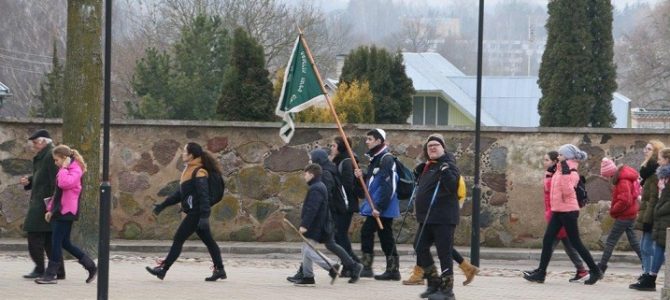
Despite summer vacations, cultural and athletic events are being held and members are participating in Panevėžys regional events and scouting activities.

In the summer we usually have a large number of guests who care about their family histories. They often talk about their families over a cup of tea at the Panevėžys Jewish Community. One of the newer stories is about a family who emigrated to South Africa, then later between 1900 and 1910 they went their separate ways to Canada, China, England and Israel. They came back to Lithuania to learn about the former shtetl where their forebears once lived.

Happy Birthday to Semionas Finkelšteinas

Happy Birthday to Semionas Finkelšteinas

We wish a very happy milestone birthday to Semionas Finkelšteinas, modern founder and president of the Lithuanian Makabi Athletics Club and head of Lithuanian Makabi delegations abroad. We wish you great health, happiness and a continued sharp wit. Mazl tov. Bis 120!

Jewish Headstones Removed From Vilnius Church, Returned to Jewish Cemetery

Jewish Headstones Removed From Vilnius Church, Returned to Jewish Cemetery

As restoration took place on the Evangelical Reformist Church [used as the Chronika cinema in Soviet times] on Pylimo street in Vilnius, it was discovered Jewish cemetery headstones had been used for the front stairs leading to the main entrance. They have been returned to a Jewish cemetery, the Lithuanian Cultural Infrastructure Center reported.

When restoration work began, local residents noticed some kind of inscriptions on the stones. Experts from the Lithuanian Jewish Community were able to determine the origins of the stones from the shallow inscriptions, in some places barely visible. They approached Lithuania’s Cultural Heritage Department and commission was formed which determined the stones were actually Jewish grave markers. The stairs were removed and the monuments were sent to the old Jewish cemetery.

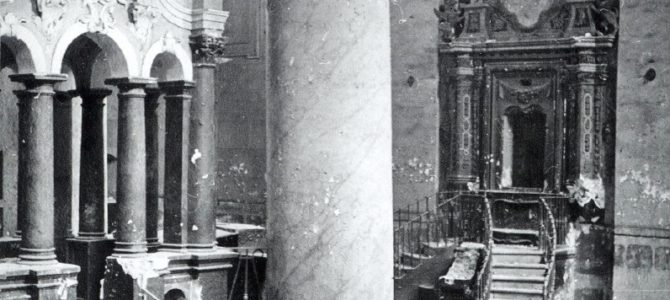
Lithuanian News Site on Pakruojis Synagogue

Lithuanian News Site on Pakruojis Synagogue

Pakruojis Synagogue is a Monument to All the Jewish Houses of Prayer Which Stood in Lithuania

15min.lt, reprinted from a facebook user

It’s believed there were about 500 or 600 different Jewish houses of prayer in our country, although no one knows the exact number. There might have been more than 100 synagogues in Vilnius alone.

Most of Lithuania’s synagogues were wooden, but today we only have about a dozen. On the other hand, no other European state has so many surviving wooden synagogues.

The question of restoring these historically and culturally very valuable wooden buildings is coming up more and more. One wonderful example of a restored wooden synagogue stands in the town of Pakruojis. After walking through its interior and getting a closer look at its careful restoration, I was pleasantly surprised at what had been returned from the ravages of time, people’s neglect and even fires.

Full text in Lithuanian here.

Jerusalem of the North Orchestra Camp

Jerusalem of the North Orchestra Camp

The Jerusalem of the North youth orchestra camp will take place from August 15 to 25 at the Preila Library in Preila on the Curionian Spit in Lithuania under the tutelage of renowned Lithuanian conductor professor Donatas Katkus, Martynas Švegžda von Bekker, Dalia Dedinskaitė, Gleb Pyšniak and Darius Mažintas. The 10-day orchestra workshop will conclude in a joint concert with Vilnius’s St. Christopher Orchestra and the new orchestra made up of young participants, performing a jointly-prepared program of Jewish music.

“The Jewish culture of education means the book, music and sports. It’s not for nothing that the Jewish people have been literate for more than 5,000 years. The Lithuanian Jewish Community is happy the orchestra convened at this camp will perform Jewish music. That there aren’t many Jewish children attending the camp this year is, I think, a tourism mistake. Israeli families would love to vacation in Nida while their children attend camp and learn. There should be greater state support brought to these sorts of private and NGO initiatives. The children and adults who will prepare this concert will learn about Jewish composers. We all know how to talk about tolerance, but not all of us know how practice tolerance through deeds. The LJC and the orchestra are doing tolerance, which is what the state institutions should be doing,” Lithuanian Jewish Community chairwoman Faina Kukliansky explained.