
Learning

Natalja Cheifec on Lag b’Omer

Natalja Cheifec on Lag b’Omer

Lag b’Omer falls on May 16th this year. The holiday lies midway between Passover and Shavuot on the 33rd day of the Counting of Omer. It is mainly celebrated with bonfires lit in the morning but has a number of deeper traditions and practices.

Natalja Cheifec invites the general public to a discussion of the holiday on the zoom platform at 5:30 P.M. on Thursday, May 8.

To receive zoom credentials, click here.

New Holocaust Education Initiative in Poland and Lithuania

New Holocaust Education Initiative in Poland and Lithuania

A new project called “Education against Anti-Semitism. Learn from the Past to Understand Today’s Challenges. A Selection of Multimedia Teaching Aids” began in April. Over 2 years project participants will create and publicize a varied selection of multimedia aids based on individual historical sources for use by Lithuanian and Polish teachers, history teachers, human rights educators and young people from 14 to 19.

The aim is to foster understanding of the current state of anti-Semitism and the danger of stigmatization and isolation through teaching about the Holocaust.

The coordinator is the Polish organization Ośrodka Karta. Partners include Fundacja Centrum Edukacji Obywatelskiej, Ośrodek Brama Grodzka — Teatr NN, Fundacja Pogranicze, Fundacja Otwarta Edukacja and the Lithuanian Jewish Community. The project is dunded by the EU but is editorially independent.

Congratulations to Rafael Gimelštein

Congratulations to Rafael Gimelštein

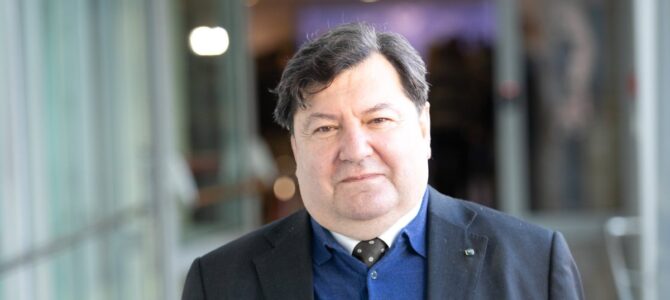
Photo: Rafael Gimelštein, right

Lithuanian Makabi Athletics Club member Rafael Gimelštein and his Kilvatai team from Vilnius have won in the second league of the Lithuanian table tennis championship, beating Vilnius Tech, Tamsta from Vilnius and Kaunas’s Red and Black teams.

The final match against a team from Šiauliai will determine the distribution of medals. If Klivatai loses that match, they take 5th place, and if they win, 1st. \\

Rafael Gimelštein coaches the after-school tennis club for young people at the Sholem Aleichem ORT Gymnasium in Vilnius.

Congratulations, Rafael!

Israeli Film Week, Everything Free

Israeli Film Week, Everything Free

The Israeli embassy presents the fifth annual Israeli film retrospective from May 6 to 9 at the Skalvija cinema in Vilnius. All films are free and open to the public. All films are in Hebrew with Lithuanian subtitles.

Seven Blessings, 2023: 6:00 P.M., May 6

Here We Are, 2020: 6:00 P.M., May 7

Art of Waiting, 2019: 6:00 P.M., May 8

Shorts Average Story, 2016; Boy, 2023; Black Slide, 2021: 6:00 P.M., May 9

Moishele, Mayn Fraynd

Moishele, Mayn Fraynd

An evening of music dedicated to the memory of Mikhail Filyopov-Jablonskis

Fayerlakh invites you to a special event dedicated to remembering and honoring the late Mikhail Filyopov, one of the most outstanding performers of Jewish music in Lithuania, a man who dedicated his life to music, the stage and culture.

Tickets are available starting from €20.00 here.

Time: 5:00 P.M., Sunday, June 8
Place: House of Polish Culture, Naugarduko street no. 76, Vilnius

Integration and Inclusion Forum

Integration and Inclusion Forum

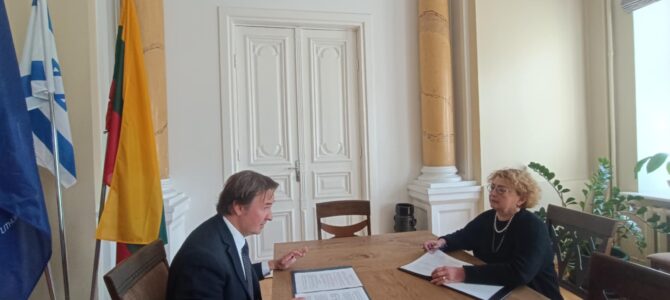
The Ethnic Minorities Department and the British Council are holding a two-day conference and discussion on integration and inclusion on May 22 and 23 at Novotel Hotel in Vilnius. Those wishing to attend should register by May 15 at www.inforum.lt.

The conference will host experts on minority integration and human rights, media representatives, politicians, members of Lithuania’s ethnic minority communities, foreign speakers and more.

The Integration and Inclusion Forum is part of events to celebrate Lithuania’s Ethnic Minorities Day May 21, which kicks off with an awards event at St. Catherine’s Church in Vilnius at 3:00 P.M. The awards will be given to those who have distinguished themselves through their work with Lithuania’s ethnic minorities.

Jewish Scouts Hike

Jewish Scouts Hike

Jewish scouts hiked the Neris Regional Park last week on the way to a campsite. Fording a river in the scouting manner, hikers took in beautiful forest and natural vistas, played a game they called “nature bingo” to learn more about nature and botany, sang songs and did other activities in the program.

More experienced scouts taught newer ones how to use a compass and maps, and how to determine cardinal directions in the natural environment. The scouts also cooked their own meal. The younger ones learned about semaphore flag signals and different groups tried to communicate over long distances using that system. More experienced scouts tried their hand at building shelters, tying knots and using them in the structures and setting up tents.

The program for the hike was made up largely by the older scouts at weekly meetings. Several months ago hiking skills were brought up and resulted in a teaching program for scouts where they performed various tasks and learned about prepared for hikes in the wilderness, how to wear backpacks more effectively, planning routes, navigating by compass, appropriate food needs and similar things, and then organized this recent hike.

Thank you to everyone who participated and to those who didn’t, more such events are being planned.

Remembering the Victims at Ponar

Remembering the Victims at Ponar

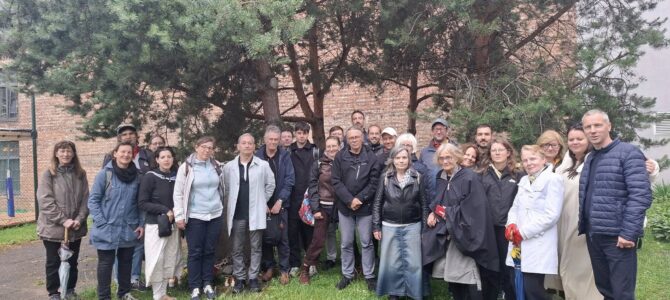
Members of the Lithuanian Jewish Community, Lithuanian foreign diplomats, politicians and members of the community at large marked Yom haShoah at Ponar Thursday with a solemn ceremony, an air-raid siren, a moment of silence and speeches. Yom haShoah is one of several days on the calendar dedicated to remembering the six million victims of the Holocaust in Europe. In Israel air-raid sirens sound and all activities cease in memory of the dead on this day.

“I call myself a Lithuanian woman of Jewish ethnicity and I would like to live in my own country not in fear, and it’s not Jews who must combat anti-Semitism, it’s the state which must provide for the safety of all its citizens,” Lithuanian Jewish Community chairwoman Faina Kukliansky said at the event. She also noted there is still no monument to the Righteous Gentiles who saved Jews from the Holocaust in Lithuania, despite seven years of discussion.

“History isn;t just lines in a textbook and facts. History includes feelings which we must pass on to our children, that they might understand what children who witnessed the murder of their parents felt. What anguish mothers experienced seeing their children murdered. These are what should be the lessons of history,” she continued. She is one of the few left in Lithuania who heard stories of the Holocaust directly from her parents and grandparents who were victims of it.

Yom haShoah in Ponar

Yom haShoah in Ponar

April 24 is Yom haShoah, the day to remember vicitms of the Holocaust.

In 1953 prime minister of Israel, David Ben-Gurion and president of Israel Yitzhak Ben-Zvi, signed into law Yom haShoah as an observance day. The original plan was to hold this observance day on the 14th of Nisan, which was the anniversary of the Warsaw ghetto uprising. This didn’t work, because that day preceded Passover. It was then decided to move the date to the 27th of Nisan, but not strictly. When it would fall on the Sabbath, Yom haShoah is moved a day back or forward.

The Lithuanian Jewish Community and others will mark the day at the Ponar Memorial Complex just outside Vilnius. A coach will leave from central Vilnius to bring people to and back from Ponar, but prior registration is required by sending an email to info@lzb.lt. Contact the LJC for exact departure time and location.

Time: 12:00 noon, Thursday, April 24
Place: Ponar Memorial Complex, Agrastų street no. 15A, Vilnius

Under Babylonian and Persian Rule

Under Babylonian and Persian Rule

by Yosef Eisen

Benefits of Babylonian Exile

This exile, although very traumatic, nevertheless had a great benefit to the Jewish people. There were no more corrupt kings or nobility–in Babylon the Torah scholars had complete authority. Moreover, the Babylonians were not anti-Semites per se; while they only wanted to destroy Judah as an independent political power, they harbored no ill feelings toward the Jewish religion. As such, Jews were given their own cities, where earlier exiled Jews welcomed them warmly. The Talmud tells us that G_d chose Babylon as the place of exile for several reasons: Aramaic, the language of Babylon, was very similar to Hebrew. Abraham was born in Babylon, so the Jews were not regarded as foreigners. And it was easy to make a living from the abundant date trees. All told, then, life was pleasant for the Jews once they reached Babylon.

The Jews in Babylon

Despite the relative ease of their exile, the Jews reacted in vastly different ways. Some of them, traumatized by the shock of heathens conquering Jerusalem, an occurrence they had previously deemed impossible, despaired of a future redemption, saying that G_d had severed His relationship with the Jewish people. Others settled down comfortably and planned to assimilate. Accordingly, the prophet Ezekiel addressed both of these concerns. To the first group, he shared his prophetic visions of the Heavenly Chariot and the Third Eternal Temple, telling them that G_d did not forsake them. He also revived the dry bones in the Valley of Dura, symbolizing the rejuvenation of the Jewish people. To the second group, he burst out with fiery denunciations, saying that G_d will never allow the Jewish people to assimilate. Nevertheless, many Jews did assimilate. Some Jews even rose to prominence at Nebuchadnezzar’s court. Daniel was appointed governor over the realm, while Hananiah, Mishael and Azariah also attained high positions in the government.

The Fiery Furnace

Vilnius Jewish Memorial Plans in Limbo: No Funding for Feasibility Study

Vilnius Jewish Memorial Plans in Limbo: No Funding for Feasibility Study

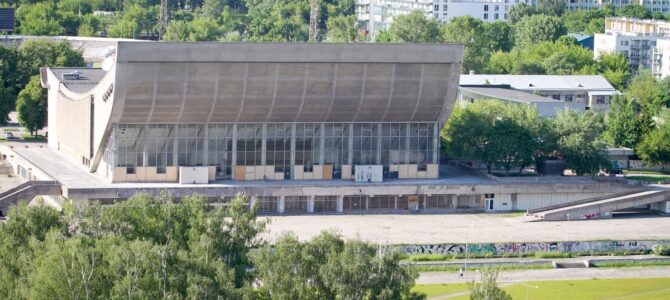
Photo: Palace of Sports in Vilnius, D. Umbrasas/LRT

BNS, April 22, 2025

BNS–Lithuania’s new prime minister Gintautas Paluckas said his Government is considering the previous Government’s proposal to build a Jewish memorial in and around the Vilnius Palace of Concerts and Sports, a now derelict, Soviet-era indoor arena, but this year’s budget does not include funds for a feasibility study.

“The process is ongoing. We’re evaluating, weighing options and holding discussions. So far nothing has changed, and if any decisions are made, the public will be informed,” Paluckas told Baltic News Service.

The previous government approved the idea of building a memorial on the site of the old Jewish cemetery in the Šnipiškės (Yiddish Shbipishok) neighborhood of Vilnius and inside the arena building based on recommendations from a working group.

Passover in Kaunas

Passover in Kaunas

The Kaunas Jewish Community always celebrate the holidays in an exceptional manner, the members are the dictionary definition of holiday spirit and there is never a lack of music and a avariety of delicious foods to sample, for many years now made by the wonderful Višta Puode or Chicken in the Pot restaurant in Kaunas.

This year was not the exception which proves the rule. In high spirits and with the warmest of wishes, the Kaunas Jewish Community celebrated Passover in the manner to which they are accustomed. Some snapshots, pale reflections of course of the real celebration, follow below.

Seniors Club Passover

Seniors Club Passover

Taking care of our elderly is a Jewish tradition. Our Seniors Club which operates throughout the year with concerts, lectures and lots of fun, attended a special Passover celebration and seder at the Lithuanian Jewish Community in Vilnius last week.

LJC programs coordinator Žana Skudovičienė came up with a special program for our seniors this year with music and prayer by cantor Shmuel Yaatom and a speaking event by Natalja Cheifec on Jewish history.

Lithuanian Jewish Community chairwoman Faina Kukliansky was on hand to deliver holiday greetings from the entire Community.

Reportedly every member of the Seniors Club attended.

Passover in Ponevezh

Passover in Ponevezh

Passover is one of the most important holy days. The name of the holiday in Hebrew means “to pass over.” This refers to an event recorded in the Torah when the final curse of ten was visited upon the Land of Egypt. When the pharaoh refused to release the Jewish people from slavery, Egypt was visited by ten plagues. In the last plague, the Angel of Death passed over the homes of Jews but took the firstborn of the families of the Egyptians. That’s where the name of the holiday comes from.

On the first night of Passover in 2025 the members of the Panevėžys (Ponevezh) Jewish Community and friends gathered at the holiday table to celebrate together with the traditional seder, the ceremonial holiday meal. The ceremony began with the traditional Hebrew prayer Kadesh intoned by Community board member Katerina Krasnočiarova. There were readings from the Haggadah, the story of the Jewish exodus from Egyptian slavery.

Panevėžys Jewish Community chairman Gennady Kofman greeted the assembly with the start of the holiday. The traditional four cups of wine were consumed, four being the number of promises God has given to the Jewish nation. The fifth cup remained untouched, intended for the prophet Elijah. Candles were also lit and prayers uttered and sung, the holiday spirit complemented with song and dance.

Seder with Israeli Embassy at LJC

Seder with Israeli Embassy at LJC

For the third year now the Lithuanian Jewish Community has hosted a small seder at the Community building in Vilnius with friends from the Israeli embassy in Vilnius and Sholem Aleichem Gymnasium.

Israeli ambassador to Lithuania Hadas Wittenberg Silverstein, chargé d’affaires Erez Golan, Israeli consul in Vilnius Vladas Bumelis and staff and students from the Sholem Aleichem ORT Gymnasium made this seder special and Sholem students provided a highly entertaining musical performance.

Some snapshots follow..

Happy Passover

Happy Passover

Dear Community members, friends, supporters and dear reader,

Greetings to all Jews on the great holiday Passover. This holiday crows the liberation of the Jews from the oppression of the Egyptian pharaoh and our becoming one people and a free people.

Passover isn’t a time of noisy gatherings. It is a traditional family holiday when the home is cleansed of leavening agents, children seek out the hidden pieces of matzo, when the whole family sits down at the seder table and reads the Haggadah.

We are so very happy that this year the majority of Litvak families are celebrating Passover in line with all traditions and rules, celebrating at home with their families. Our staff and homecare workers are also visiting our members who live alone that they might also feel cared for and share in the holiday spirit of warmth and joy.

I wish everyone a happy family Passover. Let’s always remain free and let’s always be happy.

Happy Passover! Hag Pesach sameach!

Faina Kukliansky, chairwoman
Lithuanian Jewish Community

Lithuanian National Library Presents New Book of Grigoriy Kanovitch’s Interviews and Speeches

Lithuanian National Library Presents New Book of Grigoriy Kanovitch’s Interviews and Speeches

The Martynas Mažvydas Lithuanian National Library in Vilnius will host the launch of a new collection of talks and interviews by the late Litvak novelist Griogiry Kanovitch at 6:00 P.M. on Wednesday, April 16.

The book is called “Tiesa gydo. Vieši žodžiai ir interviu, 1988–1993–2022” [Truth Heals: Public Speeches and Interviews, 1988-1993-2022] and was edited by Virginijus Gasiliūnas.

Virginijus Gasiliūnas, Kanovitch’s son and writer Sergejus,and literature researcher Rima Kasperionytė will engage in a panel discussion moderated by Dainius Vaitiekūnas. Lithuanian Jewish Community chairwoman Faina Kukliansky is to deliver an introductory speech.

The event is expected to last two hours and is free and open to everyone.

How Yiddish Writer Chaim Grade’s Last Novel Was Rescued and Wrestled into Print

How Yiddish Writer Chaim Grade’s Last Novel Was Rescued and Wrestled into Print

Photo: Chaim Grade’s Sons and Daughters was originally serialized in the 1960s and ’70s in New York-based Yiddish newspapers (from YIVO and Alfred. A. Knopf via JTA).

The editors discuss how a previously-lost decades-old manuscript was found and pieced together. It’s being called “probably the last great Yiddish novel”

by Andrew Silow-Carroll, April 7, 2025

JTA–Sixty years after he first began serializing it in the Yiddish press and 42 years after publisher Alfred A. Knopf acquired the book, Sons and Daughters–the last novel by the late, great Yiddish novelist Chaim Grade–lands in bookstores this week. To call it long-awaited is an understatement.

How the novel came to be published in English translation is a story of family intrigue, literary detective work and dogged creativity on the part of its translator and editors.

The result, a sprawling 600-plus-page book about a rabbi in 1930s Lithuania and the different paths taken by his children, is “quite probably the last great Yiddish novel,” the critic Adam Kirsch writes in the introduction. Dwight Garner in a New York Times review calls it “a melancholy book that also happens to be hopelessly, miraculously, unremittingly funny.”

Full story here.