
Learning

Kaunas Commemorates Lea Goldberg

Kaunas Commemorates Lea Goldberg

There’s a larger-than-life fresco painted on the wall of a building on Kęstutis street in Kaunas featuring a portrait of celebrated Israeli poetess Lea Goldberg, with a poem by her in Hebrew and Lithuanian. Her family fled their home in this building 85 years ago, with Leah making aliyah and settling in Tel Aviv in 1935, after receiving PhDs from universities in Bonn and Berlin in Semitic and Germanic languages.

Now the Lithuanian city is scheduled to become the European Union’s honorary European Capital of Culture for the year 2022. Now, in the run-up to that auspicious year, local and visiting Jews in Kaunas held a celebration of, perhaps, the town’s most famous poet, as well as its lost Jewish heritage.

Bella Shirin, who has been appointed “ambassador” of Kaunas, Capital of European Culture 2022, recited in selections from Goldberg’s corpus in Hebrew to musical accompaniment. Israeli exchange student Shahar Berkowitz sang Goldberg’s work.

Year of Eliyahu Exhibition

Year of Eliyahu Exhibition

The Torah itself witnesses: I am Wisdom, who found a haven in Eliyahu’s soul, and through him was revealed to the world.

This fragment of the epithet inscribed on the headstone commemorating Eliyahu ben Solomon Zalman reflects well the significance of the Vilna Gaon for Litvak and global Jewish culture. As Lithuanian marks 2020 as the Year of the Vilna Gaon and Litvak Culture, the Martynas Mažvydas National Library is contributing with an exhibit of publications and documents called “The Year of Eliyahu: The Vilna Gaon’s Influence on Litvak Culture.”

The exhibit showcases the Gaon’s biography, personality and intellectual and pedagogical activity as well as his influence over Vilnius Jews, on their mentality and culture. Documents illustrating the sage’s life and works by the Gaon and his followers will be displayed. One of the major items is the pinkos of the synagogue of the Vilna Gaon conserved by the YIVO institute in New York City. This document, a compendium of vital statistics of the Jewish community, will be exhibited using a holographic projection system. The exhibit will also showcase the abundant and diverse Judaica collection conserved at Lithuania’s National Library.

The opening ceremony will be held in the atrium on the third floor at 5:30 P.M. on Tuesday, October 20, and will include a musical performance and installation employing modern audio-visual technology to transform an ancient text into a tale, providing a hint into the Gaon’s thought-processes.

The exhibit will also feature the issue of the Bank of Lithuania’s 10-euro silver coin commemorating the 300th anniversary of the birth of the Vilna Gaon, designed by our own Victoria Sideraitė-Alon, Jūratė Juozėnienė and Albinas Šimanauskas.

Dr. Ruth Reches to Present Her Book on Identity among Holocaust Survivors

Dr. Ruth Reches to Present Her Book on Identity among Holocaust Survivors

Psychologist Dr. Ruth Reches will present her book called “Holokaustą patyrusių asmenų tapatumo išgyvenimas” [The Experience of Identity by People Who Survived the Holocaust] at a special event at 6:00 P.M. on Monday, October 19, 2020, at the Bagel Shop Café at Pylimo street no. 4 in Vilnius. The event in Lithuanian will include a panel moderated by Vytautas Magnus University lecturer and philosopher Algirdas Davidavičius. Guests will be asked to wear masks. Please report your intention to attend by sending an email to info@lzb.lt

EJC President Kantor Applauds Overdue Decision by Facebook to Ban Holocaust Denial

EJC President Kantor Applauds Overdue Decision by Facebook to Ban Holocaust Denial

Monday, October 12, 2020–European Jewish Congress president Dr. Moshe Kantor has welcomed the decision by Facebook to ban Holocaust denial and distortion and to better inform the public about the Holocaust.

“This is a long overdue but an important decision,” Dr. Kantor said. “Holocaust denial is not legitimate debate and is only used as an expression of hatred for Jews, so this decision is not about anything except limiting hate and anti-Semitism.”

Dr. Kantor, who is also the president of the World Holocaust Forum Foundation, welcomed concerted efforts by governments, IT companies and civil society to counter the proliferation of online hatred conspiracy myths and Holocaust denial.

“At a time when anti-Semitism is on the rise and knowledge about the Holocaust among young people is alarmingly low, it is crucial that online platforms continue to become part of the solution, not the problem,” Dr. Kantor said.

“This is an issue that the European Jewish Congress has long advocated for, and we thank Facebook for its regular and productive discussions with us and other Jewish organizations, both at the European and global level,” Dr. Kantor concluded.

Full statement here.

Come Learn Hebrew

Come Learn Hebrew

The Lithuanian Jewish Community is again offering Hebrew classes to the general public, starting October 18 and continuing every Sunday. Beginner and intermediate levels are available. To register, send an e-mail to ruthreches@gmail.com

Facebook Bans Holocaust Denial

Facebook Bans Holocaust Denial

Facebook has explicitly banned Holocaust denial for the first time.

The social network said its new policy prohibits “any content that denies or distorts the Holocaust.”

Facebook boss Mark Zuckerberg wrote that he had “struggled with the tension” between free speech and banning such posts, but that “this is the right balance.”

Two years ago, Mr Zuckerberg said that such posts should not automatically be taken down for “getting it wrong.”

“I’m Jewish and there’s a set of people who deny that the Holocaust happened,” he told Recode at the time.

Monument to Commemorate Makabi Stadium in Kaunas

Monument to Commemorate Makabi Stadium in Kaunas

Photo: A sculpture commemorating the Makabi Stadium in Kaunas. Photographs by Laimutis Brundza

A sculpture by Gediminas Pašvenskas will mark the spot where the Makabi Stadium was opened 100 years on Jonavos street in Kaunas. When you drive along the street today, you’d likely never think there was a soccer stadium here. Opened on October 19, 1920, by the Makabi Jewish athletics and gymnastics association, exactly one year later it was outfitted as a soccer stadium.

“The first stadium was in Ąžuolynas. The second was here, actually, a little bit away from this location where we’re standing now. There was a third in Panemunė, but back then Panemunė wasn’t part of the city of Kaunas, it belonged to the Kaunas district,” Kaunas Jewish Community chairman Gercas Žakas, who used to play soccer there, said at the ceremony to unveil the new sculpture.

The arena operated from 1920 to 1940 and held 2,500 people. It had a running track and other facilities as well. “Everything was fine if the ball didn’t go into the Neris River, at which point all the spectators would disperse. They didn’t wait the ten minutes it took to get the ball out of the water,” Žakas recalled.

Lithuanian Makabi president Semionas Finkelšteinas shared his own memories, not just balls going into the water, but water coming into the stadium. In 1931 the river overflowed and covered the entire field.

Righteous Gentile Aldona Radzevičienė-Norvaišaitytė Has Died

Righteous Gentile Aldona Radzevičienė-Norvaišaitytė Has Died

Sad news came from Kaunas October 2: Righteous Gentile Aldona Radzevičienė-Norvaišaitytė has passed away. Three years ago the Kaunas Jewish Community celebrated her 90th birthday where she even danced the waltz.

She and her family lived in Vilkaviškis where they rescued the Jews Alper Kirkilovski, Haim Chernevski and the sisters Shenka and Tsipka Verber who had escaped the Vilkaviškis ghetto just before it was liquidated and all of whom survived the war. In 1993 then-president Algirdas Brazauskas awarded Aldona the Life-Saver’s Cross and Yad Vashem recognized her as a Righteous Gentile on Junly 16, 2001.

The Lithuanian Jewish Community mourns the loss of Aldona Radzevičienė-Norvaišaitytė together with her family and many friends. Her memory will always remain vivid in our hearts.

St. Christopher Chamber Orchestra Holding Concert Dedicated to Sugihara

St. Christopher Chamber Orchestra Holding Concert Dedicated to Sugihara

lrytas.lt

As the cultural landscape shifts, new challenges arise, which the St. Christopher Chamber Orchestra of the Vilnius city municipality faces courageously.

At 7:00 P.M. on October 8 the orchestra will hold a concert at St. Kotryna’s Church in Vilnius dedicated to Japanese diplomat and Righteous Gentile Chiune Sugihara to mark the 80th anniversary of his activity in Kaunas and the 120th anniversary of his birth. This is the first time orchestra and its soloists will perform from different locations in countries around the world, connected by internet.

Full article in Lithuanian here.

Tickets available here.

Ilan Club to Celebrate Simchat Torah

Ilan Club to Celebrate Simchat Torah

The LJC and the Ilan Club invite children aged 7 to 13 to a fun Simchat Torah celebration at the Karvys manor. We’re meeting at the Lithuanian Jewish Community at 11:00 A.M. on October 11. Places are limited. Please register by October 9 by sending an e-mail to sofja@lzb.lt or for more information call +370 601 46656.

Lithuanian Parliament Ethics and Procedures Commission Censures Šimas

Lithuanian Parliament Ethics and Procedures Commission Censures Šimas

The Ethics and Procedures Commission of the Lithuanian parliament has adopted a resolution censuring MP Audrys Šimas concerning what appeared to be a sieg heil Nazi salute he made during a vote in the Lithuanian parliament’s National Security and Defense Committee last spring.

§§§

ETHICS AND PROCEDURES COMMISSION OF THE PARLIAMENT OF THE REPUBLIC OF LITHUANIA

FINDING
ON THE BEHAVIOR OF MEMBER OF PARLIAMENT AUDRYS ŠIMAS

No. 101-I-18
September 30, 2020
Vilnius

The Ethics and Procedures Commission of the Parliament of the Republic of Lithuania (hereinafter Commission)–Antanas Matulas, Aušrinė Norkienė, Petras Čimbaras, Viktorija Čmilytė-Nielsen, Virgilijus Poderys, Mazys Starkevičius, Dovilė Šakalienė, Ona Valiukevičiutė–having received a request from Lithuanian Jewish Community chairwoman Faina Kukliansky on May 29, 2020, to assess the behavior of member of parliament Audrys Šimas at the meeting of the parliamentary National Security and Defense Committee on May 20, 2020, and based on article 78, part 1, point 3 of the Parliamentary Statute of the Republic of Lithuania (hereinafter Statute), presents this finding.

Sukka at the Choral Synagogue in Vilnius

Sukka at the Choral Synagogue in Vilnius

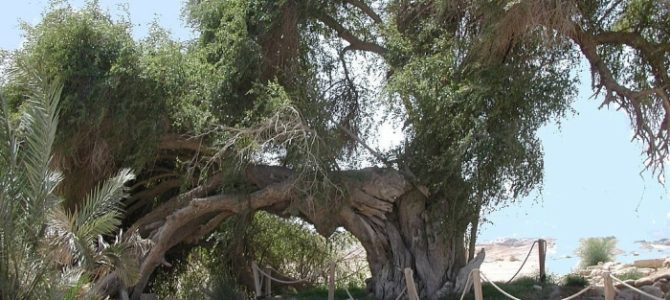
Despite restrictions because of the corona virus, the Choral Synagogue in Vilnius has constructed the traditional sukka there to celebrate the holiday of Sukkot. Traditionally called the Feast of Tabernacles in English, Sukkot is better translated as the Day of Tents in modern English. This year it began October 2 and it lasts for seven days. The idea is to “dwell” or spend time in the tent or temporary structure during each day of the week-long holiday. It is traditional to handle the etrog, a fruit in the citrus family, and to wave a palm frond inside the sukka, or dwelling, and to eat and celebrate, remembering the past when the Hebrews lived in tents after the exodus and liberation from Egypt. The Torah says one should wave the branches and fronds of three pleasant trees during the holiday, including palm fronds, willow branches and the branch of a leafy deciduous tree which the Talmud specifies is the myrtle. The trees and the etrog together constitute the four species. The palm fronds are first made into a bundle which becomes the first element, to which are added two willow branches, then three myrtle branches in a specific pattern, This three-fold branch and etrog are waved around on each day of the seven days by observant Jews in adherence to Leviticus 23:40. Visitors to the sukka are also supposed to have a good time there.

The sukka at the Choral Synagogue is only open during scheduled prayer services as part of entry restrictions designed to curb the spread of the corona virus. Please check prayer service schedules or call ahead if you intend to visit and spend time in the sukka.

Condolences

Condolences

The Lithuanian Writers Union reported Dovydas Judelevičius passed away at the age of 95 on September 23, 202, in Vilnius. Dovydas Judelevičius was a member of the union, a literature and theater critic and a translator. He was born October 5, 1925, in Kaunas.

The Holocaust through the Eyes of a Girl from Vilnius

The Holocaust through the Eyes of a Girl from Vilnius

July 19th, 1922.
Beba Epstein is born.

In 2017, a bundle of Jewish documents was found hidden in Lithuania, which are now being digitized as part of the Edward Blank YIVO Vilna Online Collections. One of them is the autobiography of a secular middle-class Jewish girl in the 1930s, whose life was not unlike that of many children today. While her experience doesn’t reflect the circumstances of every Jewish child at the time, we can learn a lot through her account. But first, let’s meet her!

Full interactive experience here.

A Book about the Future: Vanagaitė Interviews Dieckmann

A Book about the Future: Vanagaitė Interviews Dieckmann


by Aušra Maldeikienė

A half-year before her death, my aunt, who was then over 90, made a very unexpected comment: “Maybe it was a good thing they deported us to Siberia.” I simply froze for a second, unable to believe my ears, and my aunt went on: “Maybe God won’t be so wrathful when I die, and will forgive, because father gave that Jewish girl back to her relatives after three months. Maybe we have atoned for our guilt that way, because we were afraid of the neighbors.” That’s how I learned, three-quarters of a century from that horrific year 1941, another detail about the history of my family and also of my nation. A tragic detail.

The Holocaust isn’t just a great tragedy for our nation, it is the main stroke in the painting of our country’s future. The moral judgment of the Holocaust shows more than anything else the sort of society in which we live, and also what sort of future awaits us. There are two choices: either we honestly realize our moral responsibility for those events and, having come to terms with our limitations, create an ethical community, or we continue to look for justifications for what happened, and keep murdering over and over in that way. Not those who lie buried for decades along Lithuania’s dirt roads and forest margins, but now murder ourselves.

“How Did It Happen? Rūta Vanagaitė Interviews Christoph Dieckmann” is a book which every right-thinking Lithuanian needs to read. The book isn’t hysterical, every sentence is based on historical footnotes, the questions aren’t loaded, often compel thought, and the historian’s answers are terse and conspicuously complete. The authors of this book can be proud. Incidentally, the authors are a German historian who has been researching the Holocaust in Lithuania for over 20 years and Rūta Vanagaitė, whose reputation an aggressive mob has tried to ruin, but who remains unbowed.

The book is worth reading if you want to know how it all happened. But the most important thing isn’t just that: it’s not the tragic history of the Holocaust itself (which is more or less known) which compels reflection, but the raising of moral dilemmas concerning it or just the attempt to tie them together. “History is neither black nor white, it has many shades of grey,” Dieckmann says in the book, and it is exactly that messy, swampy wandering along the grey roads of considering the tragedy which lets us connect the past and future.

Seeking to answer the question of why during the war the absolute majority of the Jews who had lived here for centuries and almost 200,000 POWs were brutally, inhumanely violently murdered during the war, we have to take into consideration the souls of simple Lithuanians and the principles guiding the Lithuanian elite at that time, and the direction indicated by the moral compass, by the Church.

Full review in Lithuanian here.

Panevėžys Jewish Community Celebrates Sukkot

Panevėžys Jewish Community Celebrates Sukkot

Sukkot is a holiday when Jews remember their liberation from slavery in Egypt and their journey to the Holy Land. The holiday has two meanings: the mundane meaning of harvest and the sukka, Hebrew for tent, the temporary dwelling of the forefathers after they left Egypt.

The Panevėžys Jewish Community will celebrate Sukkot at 2:00 P.M. on October 4 at Community headquarters.

Members, partners, friends and children are invited to take part. Children will receive gifts. There will be a food service for everyone with fall harvest foods.

The Rokiškis people’s theater Nutildyta mūza will present a skit directed by Neringa Dainienė.

Panevėžys Jewish Community members will be provided masks and disinfectant.

Admission is 3 euros.

We eagerly await you in holiday high spirits. Please tell us if you plan to attend this event at the Panevėžys Jewish Community.

Gennady Kofman, chairman
Panevėžys Jewish Community

LJC Chairwoman Delivers Speech on Lithuania’s Day of Remembrance of Jewish Victims of Genocide

LJC Chairwoman Delivers Speech on Lithuania’s Day of Remembrance of Jewish Victims of Genocide

Lithuanian Jewish Community chairwoman Faina Kukliansky spoke at the Lithuanian president’s ceremony to award the Lithuanian Cross of the Life-Saver to those who rescued Jews during the Holocaust on Lithuania’s Day of Remembrance of Jewish Victims of Genocide.

§§§

Your excellency, honorable Mr. president Gitanas Nausėda, honorable first lady Diana Nausėdienė,

Honorable rescuers of Jews and family members, honored Holocaust survivors and dear guests,

It is a great honor for me to speak to you including in the name of the Lithuanian Jews words of gratitude to those who rescued Jews for the light of humanity they gave during the darkest of times. It is thanks to these greatest of people that I stand here today.

So many Lithuanians surrendered themselves to an unprecedented, systematized hatred during World War II, becoming henchmen sowing death or kowtowers in their native land. So giving the honor due and commemorative tribute to those who found themselves at a dead end of human values, to those who opened the gates of hope to the people were condemned to death, to those innocents sentenced to death, is the least our generation and the next generation can do.

The story of the rescuers needs to do more than sleep in the history textbooks, more than simply be celebrated in statues. The priceless lesson of humanity which these heroes gave us, gave Lithuania and gave to the entire international community is no less important today when democracy, civic-mindedness and historical truth are drowning in the rhetoric of crisis or getting lost in the maze of political narratives and interests.

Even in what seemed a hopeless situation, balancing between the suppressed truth and the sanctioned lie, the example of the rescuers reminds us there is always a choice between killing and saving. The choice to save was the choice made by about 900 Lithuanians based on basic conscience. This was a voluntary choice, neither purchased nor sold, but based on a free mind unfettered by fear and uneclipsed by false promises.

In marking this the Year of the Vilna Gaon and the Year of Litvak History, I invite you again to remember our heroes. I hope the name of each rescuer of Jews will inspire us, illuminate our consciousness with hope and belief, and strengthen our peoples and the generations building bridges of historical memory.

Yom Kippur at the Choral Synagogue in Vilnius

Yom Kippur at the Choral Synagogue in Vilnius

B”H

Sunday, September 27
5:45 P.M. Meal before fast
6:46 P.M. Start of fast
6:30 P.M. Kol Nidre prayer

Monday, September 28
10:00 A.M. Shacharit
12:30 P.M. Iskor (remembrance prayer)
5:30 P.M. Mincha

6:30 P.M. Final prayer Neila
7:55 P.M. End of fast/meal

Donations in the memory of loved ones (as written in the Izkor prayer) will be accepted on Sunday from 4:00 P.M. in the synagogue

Gumuliauskas and the Historical Plan for the Love of Lithuania

Gumuliauskas and the Historical Plan for the Love of Lithuania

by Arkadijus Vinokuras

I read the ramblings of MP professor Arūnas Gumuliauskas, the title of which should have been “How I Love Lithuania Tortured by Her Enemies.” He writes like a professor. I say “like” because there is doubt on the quality of the text itself. Because his entire long text could be expressed in a single sentence: “Everyone who thinks otherwise is an enemy and an agent of the Kremlin.” Back in Soviet times a CP member would have written it like this” “Everyone who thinks otherwise is an enemy and an agent of Washington.”

The generalized “all” dominates in the text, probably stemming from the elementary fear of naming specific liars and agents. Because it might turn out some of these unnamed critics aren’t lying. And they aren’t any kind of agent. Hence the author would be dressed down naked in court for libel. The professor had a good command of this sort of jargon back in Soviet times, in 1987 when he defended his doctoral thesis “Activities of the Lithuanian Communist Party in Developing the Theater Arts in the Republic.” That was the same year the Lithuanian Freedom League held a meeting under the Adam Mickiewicz statue in Vilnius. Forgive me, I’m not trying to joke around, but it is seriously difficult to impossible to think about Gumuliauskas as some sort of sincere nationalist. But this is not surprising, he is, after all, a member of a party which doesn’t confess any ideology, not even basic political morality.

So sometimes the Lithuanian Peasants/Green Union pretend they’re on the left, sometimes on the right, but its members agree on one thing at least: democracy is just stage decoration which can be toyed with as one likes. So it’s also no surprise that the search for and discovery of enemies lurking around every corner is programmed into this part. Gumuliaksuas is no exception.

Concert by Gidon Kremer and Georgiy Osokin a Gift to Jews of Lithuania

Violin master Gidon Kremer gave a special concert for members and friends of the Lithuanian Jewish Community September 24 which included Schumann’s sonata for violin and Polish-Jewish composer Meczyslaw Weinberg’s 24 preludes adapted for violin by Kremer himself.

During the concert photographs flashed across a screen by Antanas Sutkus, a renowned Lithuanian photographer, of the faces of Lithuanian Jewish survivors, adding to and adding significance to painful and unforgettable Jewish history. This was music for the heart and soul. The Lithuanian Jewish Community sincerely and deeply thanks Kremer and Osokin for the extraordinary concert. Because of fears of the virus, audience members were evenly spaced around the hall and wore masks.

We recall Latvian classical violinist gave his first recital in Vilnius way back when. Kremer’s orchestra travels the world giving concerts on the world’s great stages with the best orchestras and conductors.